In a fight with a laser-guided missile, don’t bring a motorcycle

7 Jul

By Lanny Morgnanesi

I think I’m trying to make a point with what follows. I’m just not sure what that point is. I will admit that for me the information I’m offering suggests some kind of gross, cosmic imbalance.

A Star Wars fanatic might call it a disturbance in the Force.

While Americans may not want to spend much on universal health care, we do spend a great deal to kill, whether we want to or not. Below is the long, indirect money trail that ultimately led to the execution of a man on a motorcycle. Intelligence agents had determined that he was a Taliban commander with plans to bomb a government building in Afghanistan. Details can be found in the New York Times.

Here’s the money trail:


$4.5 billion was spent on an aircraft carrier that assists in the Afghan war.

$100 million was spent for an F/A-18 strike fighter that sits on the carrier.

$100,000 was spent for an AGM-65E laser-guided missile aboard the fighter plane.

$160,000 was spent on the sortie that took the fighter off the carrier, into Afghanistan and up against the man on the motorcycle.


Having received his orders, the fighter pilot located Abdul Qayum riding along a dirt road on the back of bike driven by a very unlucky man. The fighter approached in a way that prevented Abdul Qayum and his driver from either seeing or hearing it.

The pilot released the AGM-65E laser-guided missile and accurately struck the motorcycle head-on, probably with about the force of a freight train.

There was very little left of the bodies or the motorcycle.

The world didn’t come to a halt because of this.  It was a simple consequence of war.

Still, it poses an important question:

Did our government do right or did it do wrong by Abdul Qayum and the American people? More specifically, is it immoral or just stupid to spend so much money and use so much technology to kill a single person? If so, what cost would be both moral and smart, and who determines that?

In my heart, I wish I had answers. Do you?

He’s not wearing pants, and they still don’t look

2 Jul


Because movies rely so heavily on visuals, film producers and directors  are good at describing complex concepts with just a few words.

I read such a description in a book review by Susan Balee in the Philadelphia Inquirer. It comes from film producer Michael Deane, who was trying to explain the importance of car crashes in movies.

It’s a great line, a true cultural barometer, and worthy of a posting:


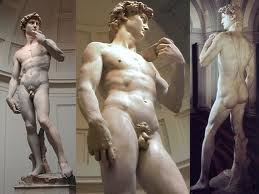
A thousand people drive past the statue of David.  Two hundred look. A thousand people drive past a car wreck. A thousand look.


Does a genius steal, borrow or reinvent?

30 Jun

Whimsy or truth:

Good artists borrow; great artists steal. – attributed to Pablo Picasso.

Art is either plagiarism or revolution – attributed to Paul Gauguin.

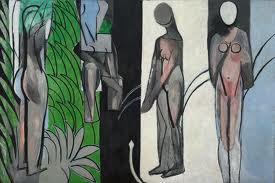
I just left the Philadelphia Art Museum and a show entitled “Visions of Arcadia.” It features work by Gauguin, Cezanne, Matisse and others. In that show I saw plagiarism, thievery, revolution … and genius.

“Visions of Arcadia” is designed around a theme rather than a style or period. The theme is the classical idyllic life associated with ancient Greece and the region known as Arcadia.

Even though the ancient Greeks seemed to be constantly at war, there is this myth of Arcadia as a land of simplicity, peace, virtue and the sensual pleasures of nature, wine and women.

The Roman poet Virgil, who wrote in the first century B.C., romanticized Arcadia in his work “Eclogues.” European artists became fascinated with his concept of Arcadia and sought to paint it, with some scenes taken directly from Virgil’s words.

These are the paintings in “Visions of Arcadia.”

Most are of either bathers or people in the woods having lots of fun.

Many of the paintings are from the late 19th and early 20th centuries. In the museum’s commentary, it is suggested that the artists found inspiration in a 17th century work by Nicolas Poussin, which hung in the Louvre. Admiring artists would visit the Louvre to study and copy the Poussin, then  base their own work on it.

Their derivatives inspired other artists, resulting in a whole lot of bathers being put on a whole lot of canvas. Some were sinfully like those that came before.

But is that stealing?

How many great literary works have taken titles from other great works? For Whom the Bell Tolls, The Grapes of Wrath, Song of Solomon, Inherit the Wind, Stranger in a Strange Land. In Faulkner’s Absalom, Absalom! an entire biblical story is retold.

In all artist efforts, there seems to be this unstoppable tendency for the great to hover around the great, to want to become kin, to show understanding of the legacy, to build on it and improve it.

Which is not really stealing.

It is more like worshiping a god in hope of becoming one.

“Visions of Arcadia” does, however, make one wonder why so many artists insisted on painting and repainting bathers. Touring the show, the viewer learns that many of these artists worked together, socialized together, philosophized together. Although egos often were huge, you can sense that the artists acted like a cultural community, with a single purpose; or that they even were a single entity with a single mission.

That mission started as plagiarism but ended as revolution.

That becomes obvious as you move past the Renaissance style paintings, through Impressionism and Pointillism and on to one of the last – a cubist rendition of bathers.

When you learn that the artists we idolize today were mostly outcasts whose work was considered unacceptable trash (sometimes called “fauve” or savage), you realize they could hardly be considered copyists.

If you are nearby, go see “Visions of Arcadia” at the Philadelphia Art Museum. Perhaps your reaction will be far from mine. I’m betting it will be.

Shakespeare’s time – when the great were modest and didn’t “high five.”

29 Jun

Humility is a lost art.

Polite modesty about one’s self has been replaced by end zone dances and their equivalent.

But once upon a time, humility was deriguer.

Here is an incredible passage to prove it. Below we have the greatest writer in the history of the English language artfully apologizing to the nobleman to whom he has dedicated the poem Venus and Adonis.

Exercising my own modesty, I will reveal that while I read this passage I did not read the poem. My loss.

Written to the Right Honourable Henry Wriothesly

Earl of Southampton and Baron of Tichefield.

Right Honourable,

            I know not how I shall offend in dedicating my unpolished lines to your lordship, nor how the world will censure me for choosing so strong a prop to support so weak a burden: only if your honour seem but pleased, I account myself highly praised, and vow to take advantage of all idle hours, till I have honoured you with some graver labour ….

Your honour’s in all duty,

William Shakespeare  

Canada – not flashy but likeable, and with an example to follow.

23 Jun

By Lanny Morgnanesi

Gerry always tried to be funny. He’d introduce himself this way: “Hi, I’m Gerry, a Canadian, bland and inoffensive.”

Like his country, Gerry was neither.

It was during the Vietnam War that I first realized Canada was different, hardly bland and willing to offend. Without fear of U.S. retribution, it welcomed Americans dodging the war, coming off like some hippie outlaw country. Later, in another context, I remember people talking disparagingly about “Canadian socialism.” They made Canada sound evil when I think it was just trying to be nice to its people.

More recently, comedian Dave Chappell used a satirical sketch to show at least one difference between Canada and the U.S. In the sketch, he posed as a political candidate with a solution to expensive American health care: Fake Canadian ID.

Canada is the country where people have lots of guns but don’t use them on each other. Canadians seem to be more comfortable with life, more at peace with themselves and each other, and less stressed. Their cordial mantra is the simple: Eh?

Internationally, they have few enemies.

While traveling, Gerry and I once met two young women from Eastern Europe, which then was Communist. President Reagan recently had taken a strong stance against their patron, the Soviet Union, calling it the Evil Empire.

Nothing like that had occurred in Canada.

The two women were strikingly beautiful but cold and dead serious. We tried to start a conversation. It didn’t take long before I noticed they would speak to Gerry but not to me. I asked why and they said they could not understand me because I wasn’t speaking Oxford English. So Gerry, in his inoffensive way, began acted as a translator, taking my English and “translating” it into — English. He did the same for them.

Funny, eh? We had recreated a bit from the film “Bananas,” but the Eastern Europeans didn’t get it.

But back to Canada.

In Montreal this spring, thousands of students took to the streets to protest an 80 percent increase in college tuition.

According to a newspaper report, tuition for higher education in the province of Quebec was to go from $2,611 a year to $4,700. It would be instituted gradually, $254 a year over seven years.

I was sorry to hear this. My sympathies, however, were not with the Canadian students but with American students, who must pay so much more. My concern was not with the Canadian government but with the American government, which clearly doesn’t value education as much as its northern neighbor.

While I haven’t done the math, and don’t want to do the math, I’m guessing one less war a year would provide more than enough funding to make college affordable; or the end of a subsidy to one or two highly profitable industries; or – dare it be said – taxing a bit more, or just cutting a few loopholes or simply being fairer about the whole process.

The goal would be to put money where it pays national dividends, and educating the populace tends to do this.

The U.S., by its own design, finds itself in the precarious and costly position of having to police the world. Meanwhile, nations that benefit from this use their money to build vibrant economies, keeping their infrastructure modern and their industries competitive . And some allow college students to sit in a  classroom for less than it cost to go to the movies.

If this pattern continues, the natural outcome is they will get stronger and we will get weaker. In time, the great American military won’t have much of a country left to protect.

A strong defense is important. What I find of questionable value is a strong offense.

Somehow, by someone, balance will have to be restored. The richest and most powerful country on Earth should be able to educate itself. Only when we have fallen from that top position will it be easier to understand that fending for one self must be the norm.

Then fake Canadian ID will really be important. I hope they don’t put up a fence.

To show or not to show … that should be a choice

15 Jun

Comfortable

Also comfortable

By Lanny Morgnanesi.

In high school I had a recurring nightmare that I’d be in class with my pajamas on. It was a horrifying thought.

Today, students wear pajamas to class by choice.

In the office, a man, unlike some woman, would feel awkward in a sleeveless shirt with a low neckline.

I’m not sure about necklines, but an old girlfriend, quite progressive, refused to wear short dresses at the height of their popularity. She preferred to hide what others preferred to show.

Modesty clearly is a relative thing.  It’s about individual comfort and peace of mind.

Knowing this, I’m willing to accept that many (not all) Muslim women choose and are not forced to wear head scarves and even burkas. I believe they feel comfortable in their modesty.

Yet today, those in the west often see the scarves and burkas as repressive, and the women as victims. I think the women would have been victims if they had been force to wear pajamas to school.

This stuff shouldn’t be so foreign to us because the modesty and decorum exhibited in the Muslim world has great parallels in the world of conservative Christians. Both show reserve and good judgment and a concern about how things might appear, avoiding even the appearance of questionable conduct. Similarly, I believe a single Hasidic Jewish woman cannot be alone with a man after dark. Or should I say “doesn’t want to be”?

Some things just don’t seem right to some people, so they don’t do them — Muslims, Christians, Jews and my atheist girlfriend.

Why is it that people who are strong advocates of freedom often want to cheat those who choose restraint? Is that fair? Is that even logical?

I would love to hear your comments.

Humans have no monopoly on intelligence

9 Jun

By Lanny Morgnanesi.

Animal intelligence is very much underrated.

Even when a creature does something really smart, humans just say it’s instinct – which suggests it does not involve real intelligence.

Human’s cannot grasp the full intelligence of animals because, I think, they don’t know the source of that intelligence. It would seem to me that it is the brain working with senses we don’t have and therefore don’t understand.

It would be like an alien coming to Earth. Suppose we didn’t flat out shoot him. Suppose we allowed him (her or it) to do something. We probably wouldn’t understand why or how it was done because we wouldn’t understand the physiology of the creature – especially if it was not anthropomorphic.

Same with animals.

When you live with them, however, you become very accepting of their intelligence. While they aren’t likely to grab paper and pencil and compose a sonnet, they seem to be aware of all that is going on in the household … when people fight, when they are sick, when there is something to fear and how to protect yourself against it, when someone is gone and when someone returns … the basic elements of life.

I have a cat that is getting old and can’t jump like he used to. So when he wants to get up on the counter, he cries. I, being intelligent, immediately know what he wants. But here is my question, and the reason for writing this post: Can anyone tell me how the cat knows I have the intelligence to understand his cry?

For the animal to know that alone takes a lot of intelligence.


In America, This is Nothing to Worry About.

2 Jun

By Lanny Morgnanesi

The produce store was between a customer rush and a delivery.

It was highly unusual, but the shelves were mostly bare. I walked in disappointed. Then, a slightly eerie feeling descended and there was a momentary panic on my part; a millisecond of fear; an adrenalin rush that ended before it was even noticed.

Quickly sober again, a cranial recess asked: Suppose something happened and the supply lines to food were cut. What would you do? Where would you go?

Then the delivery truck arrived.

Americans are used to seeing food on store shelves. We have a remarkable way of bringing things to market in steady, dependable, bountiful streams; on highways, by rail, air, sea and through pipelines. It just gets there; always; no matter where.

Not so in many countries.

Ipod components aside, are we immune from supply disruption or shortages? Will we always be? A few eccentrics don’t think so and stockpile. Good Mormons do, following biblical warnings about famine. I know I always feel better when the bottled water guy delivers an extra jug by accident.

Overall, however, I have great faith in supply chains because of the profit motive that drives them. Profit is like an all-powerful, invisible force that pushes things along and knocks down barriers with ease. It’s something we should appreciate but don’t. It’s something we should be conscious of but aren’t. It’s the fish’s water we don’t see or feel.

I’ve been in places where food supplies ebb and flow; been in spots where one has to adjust with less. In a jungle stopover in Asia, guests were expected to take care of morning hygiene with only a large pitcher of water and a basin. I did fine.

So I try to see the benefits we have in the states and enjoy them for the delight they bring.

During the Cold War, someone suggested we could defeat Communism simply by dropping thousands of Sears catalogs over Moscow. At home we all loved Sears catalogs but considered it a right rather than a privilege to freely purchase all those things, unlike the Russians back then who were lucky to get a cheap pair of ugly shoes that were either two sizes too big or too small.

I guess that playful panic in the produce store was just my way of remembering how good a fresh salad really is. I’m not sure who deserves credit for that salad, but it must be a cast of thousands. Prosperity, civilization and stocked shelves, after all, are joint efforts, with everyone playing a part. Therefore, everyone should reap the reward.

When we forget that, then we truly will have a problem.

This is what Lenny Bruce was talking about.

31 May

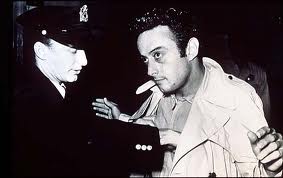
Lenny Bruce, who knew both pain and comedy

This funny line comes from a Memorial Day conversation, where people where talking about their lives. The speaker is smart and intelligent but was not trying to be funny. He was speaking from the heart, but in doing so he mouthed a Woody Allen-quality quip.

Wasn’t it Lenny Bruce who said something like, “Comedy is pain plus time.”

Here is my friend’s line, which is full of both pain and time:

“While growing up, I was so bad that when I reached the legal drinking age, I quit.”

Sicily – Where A Single Onion was Lunch

26 May

Towns like these were left nearly empty by starving peasants who left for America.

By Lanny Morgnanesi

I’ve been paging through a 1992 book by Jerre Mongione and Ben Morreale called, “La Storia: Five Centuries of the Italian American Experience.” In it, I learned something about blacks in the American South – mainly that Sicilians in Southern Italy may have had it worse.

By the year 1930, more than 4.5 million Italians had immigrated to the United States. When that many people leave a small country, the clear indication is that life there must be unbearable.

Still, there always are mixed feelings about leaving home.

During this era of the Great Departure, when there weren’t many people left in Sicily, village children would sing this in the streets:

Give me a hundred lire

And I’m off to America

Goddamn America

And the man who thought it up.

While America hasn’t always been the best place for some, there was never any measurable movement out. A huge migration occurred when industrialization in the North attracted blacks from the South, but the victims of segregation, discrimination and lynchings didn’t flee the country in vast numbers. Back to Africa movements never caught on.

In their prologue, Mangione and Morreale quote Booker T. Washington, an influential African-American leader from 1890 to 1915, who said this after visiting Italy:

The Negro is not the man farthest down. The condition of the coloured farmer in the most backward parts of the Southern States in America, even where he has the least education and the least encouragement, is incomparably better than the condition and opportunities of the agricultural population in Sicily.

It would seem that America, by comparison, is such a land of bounty that there is something even for those at the bottom. In Italy, the trickle down may have stopped way short of the bottom.

“La Storia” said that peasants who farmed other people’s land constantly battled starvation; that there just wasn’t enough food for them. After working hard in the fields, lunch, if there was lunch, often was a piece of bread and an onion. The book says that the new Italian immigrants in America took so well to cooking because food was something new and exciting for them.

I wish readers would share their thoughts on this one. Upon reading it, it was all new to me.