By Lanny Morgnanesi
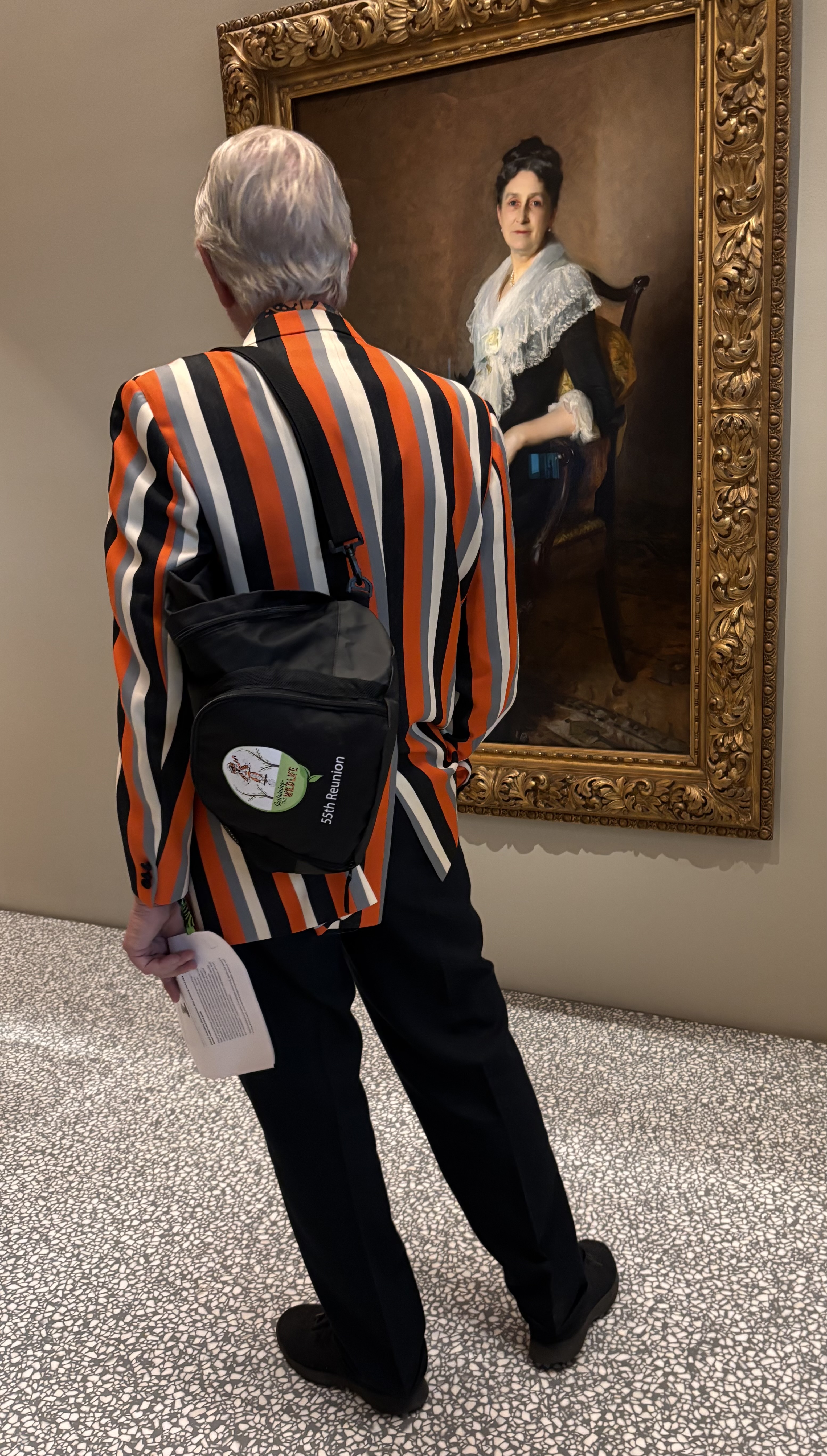
Recently, my wife and I masqueraded as members of the American elite, the kind of people who might own a multi-million-dollar painting by French impressionist Claude Monet and then casually donate it to a museum. We didn’t lie or cheat or pose. We did no harm. It was all a matter of circumstance that befell us. It was just a bit of fun.
The little adventure began when my wife’s cousin, who lives in Princeton, suggested we visit Princeton University’s newly constructed art museum, a 145,000-square-foot building that opened in October 2025. It houses 117,000 works of art that the university has been collecting since 1755. Some pieces date to antiquity, like a Chinese urn from 2,000 or so BC. There are Renaissance paintings, modern works, and everything in between. Most pieces were given to the college by collectors who attended Princeton and occupied positions of influence, power and wealth.
We put the museum on our list of places to visit, and in late May, on a Friday afternoon, got in the car and drove there. As we approached the hallowed Ivy League institution and its magnificent buildings in the Gothic and Georgian styles (the contemporary new museum is quite the visual contrast), I worried it might be graduation day and we wouldn’t find a parking space, a problem on a normal day in Princeton. On the main drag of Nassau Street, it was clear something big was happening. There was no parking, and cars in front of us and behind us were – like us – desperately searching for an open spot either in a lot or on the street, going around blocks in circle after circle. What’s more, the sidewalks were jammed with people. People all over. The curious thing about them was 75 percent wore jackets of orange and black, Princeton’s colors. The jackets of the younger people were in the style of athletic gear, and their college year was on the back – 2025, 20221, 2019, 2016. The older people, meanwhile, wore faded plaid or stripped sports coats of orange and black, something from another era. Not knowing much about Princeton or the Ivy League, I assumed the tradition was to issue jackets to graduates, and that over the years the designs and styles have changed. I further assumed these jackets mostly sit in closets all year and are brought out only when alumni gather.
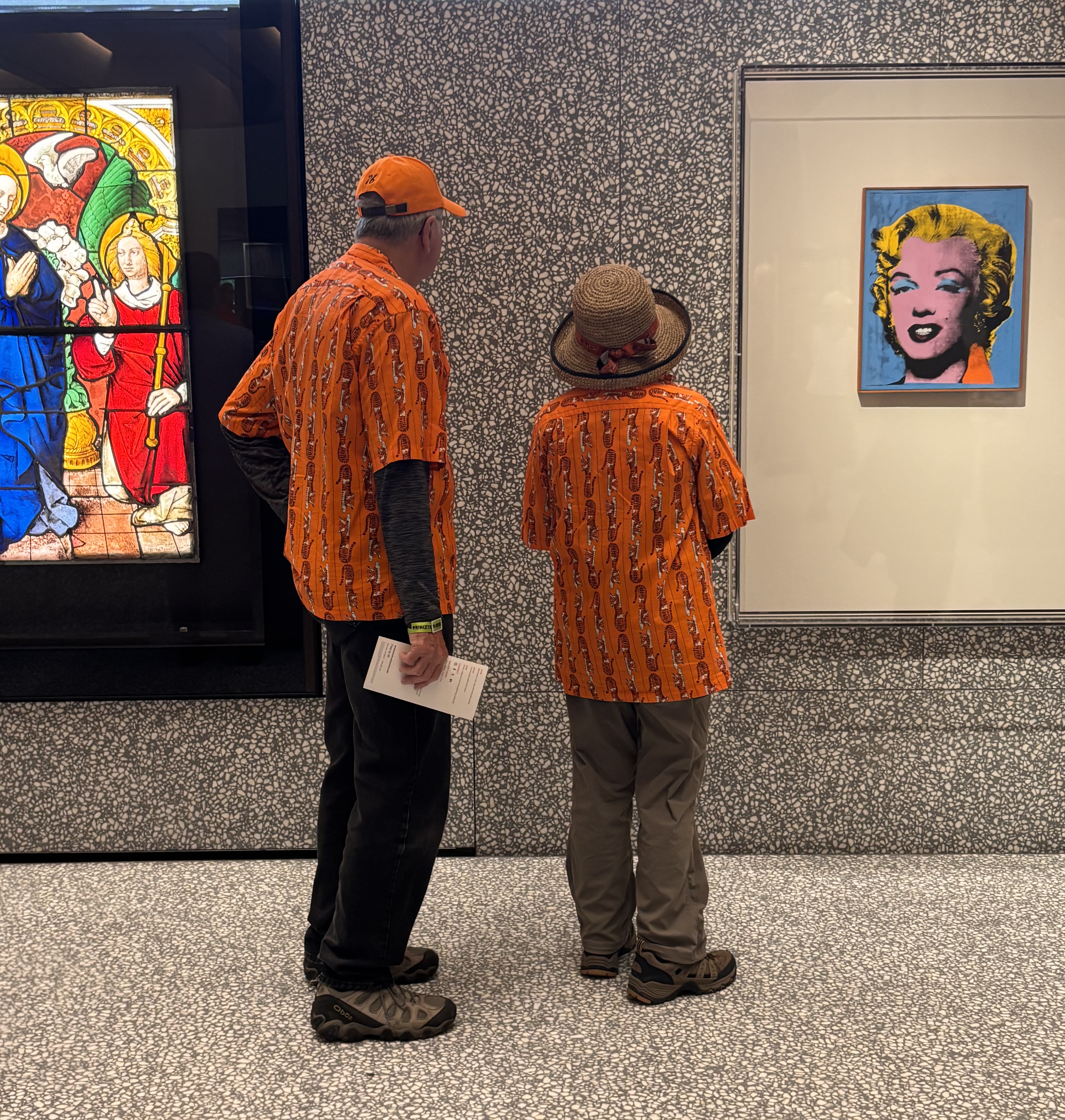
Eventually, while some distance from campus, a car pulled out in front of us and we took the spot. Damn lucky. This particular Friday, we soon learned, was not commencement but rather a four-day event called Alumni Reunions, where 25,000 graduates of all ages gather for awards, ceremonies, music, fireworks, sporting events, and a wide assortment of fun and festivals.
And there we were, pedigree-less, among the 25,000, as if we belonged.
From our perspective, we appeared to be alone among the non-alumni. The museum is free and open to the public, but overall, this day was not for us. Still, we made it this far and weren’t going home. We walked the streets with the alums, had lunch in a restaurant with them, then visited the art museum with them. They had no reason to believe we were not part of it all.
Princeton is one of the most elite colleges in America. It has an acceptance rate of between four and five percent, admitting 1,800 or so students a year from the 40,000 that apply. Years ago, my son applied (at my urging). We considered it a major accomplishment that he was granted an interview, but that was all he was granted.
While Princeton is a place where a graduate can become president of the college and later become president of the United States (Woodrow Wilson, Class of 1879), the mass of alumni walking the streets for Alumni Reunions looked pretty normal. They could pass for regular people, especially the younger ones. They didn’t look especially gifted or intelligent or accomplished or even poised. The older graduates, I guess, while hunched a bit and overly gray, carried a degree of gravitas and looked more like the patricians they were.
We entered the museum and were startled by the seriousness, the rarity, and the variety of the collection. Most startling was that nearly every piece was once owned by a Princeton alum. How does someone come to own such precious treasure? Such people exist in a world I don’t know or understand and can’t comprehend. But these are the people I’m walking around with. And they, I believe, think I am one of them. How far off then can they be from me? That’s a major philosophical question with dramatic and substantial implications for leadership, government, and the direction in which the world is taken and who takes it there. But let’s not get into all that now.
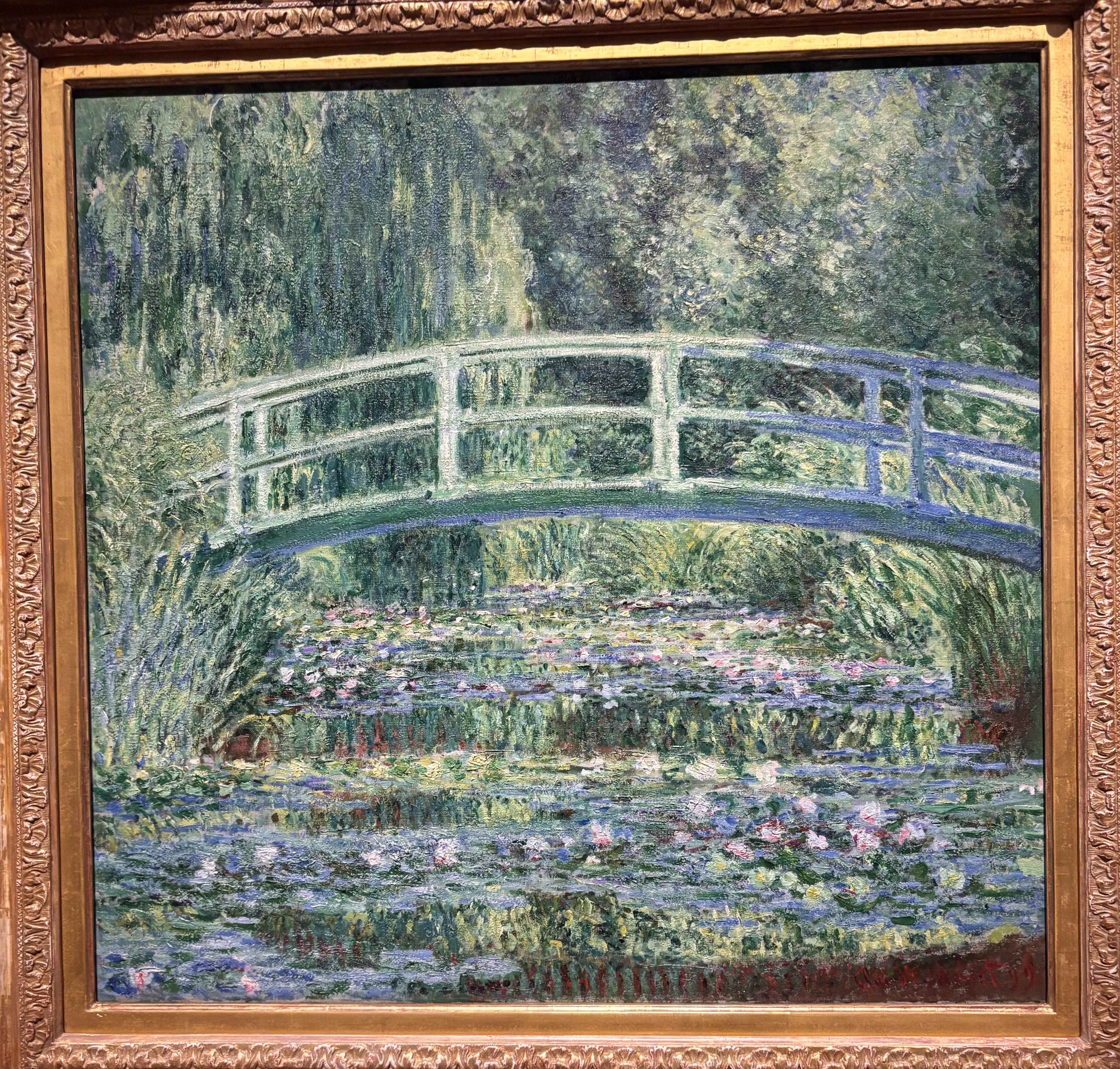
The most eye-catching piece at the museum was a very green painting by Monet created around 1900. It is entitled, Water Lillies and Japanese Bridge. My wife, an artist, asked, “What is this doing here? It’s supposed to be in The Metropolitan Museum of Art in New York. Is this a copy?” Not a copy. Monet actually painted this scene 250 times. One of those paintings was purchased by a Princeton alum, William Church Osborn, Class of 1883, who later became president of the Metropolitan Museum of Art. His family eventually gave the painting to Princeton. Today it is worth, give or take, $100 million.
We strolled easily and enjoyed everything, appreciating the fine works on display and taking note of the more unusual orange costuming. There was positive energy in the air and we fed off it. The event had great meaning and purpose to all those around us, and although we had no right, we consumed the excess.
We stayed for maybe an hour and a half. As we exited the museum, I wondered if later than night everyone was going to get drunk on free booze and reminisce. I wondered if we could extend our visit and nonchalantly walk into an alum party like we walked into the museum. There is so much trust and brotherhood going on here, I guessed we probably could have. Didn’t see anyone checking IDs anywhere.
Instead, we walked to our Toyota RAV4, got on Rt. 206, then I-295, and made it home by dinner time, where we ate leftover spaghetti and watched Love is Blind: Sweden. Our short time as faux members of America’s elite had ended. The date, however, went on our calendar for next year.
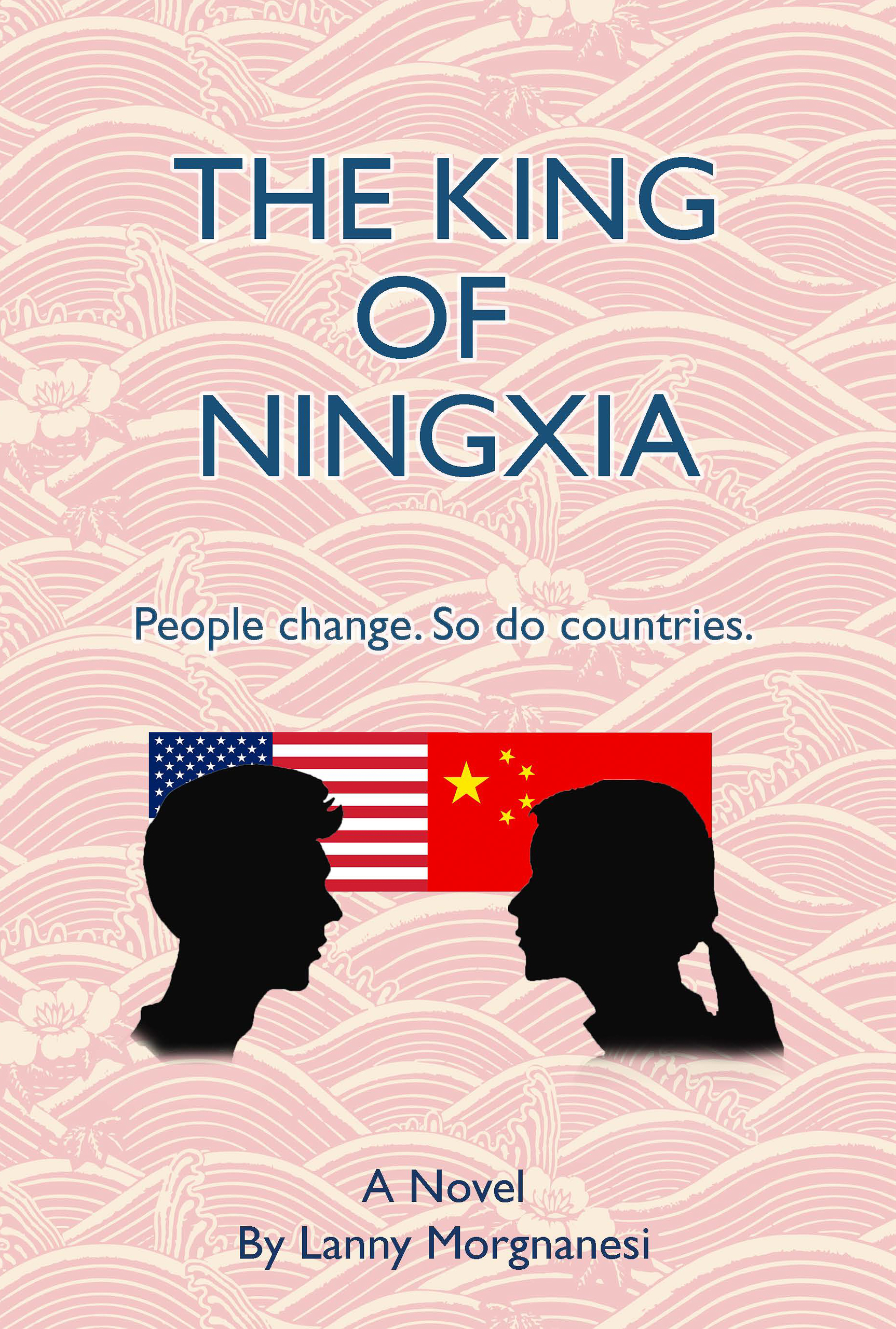
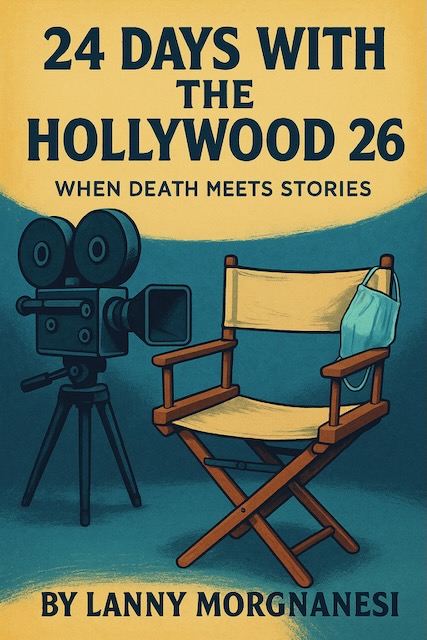
Lanny Morgnanesi is the author of the novel, The King of Ningxia, a cold love story partially base on his experiences in China during the mid-80s, and the book of short stories, 24 Days With The Hollywood 26, where retired screen writers tell tales while quarantined during COVID. Both are available on Amazon.

