
I’d like to share this piece I wrote for the Philadelphia Inquirer. It is about the great agony of not drinking coffee. Please let me know if you like it. It appeared May 25 on the op-ed page.
I’d like to share this piece I wrote for the Philadelphia Inquirer. It is about the great agony of not drinking coffee. Please let me know if you like it. It appeared May 25 on the op-ed page.
By Lanny Morgnanesi
The bumper sticker said something like, “I’m the NRA and I vote.”
It was similar to messages from an assortment of special interest groups on both the left and right. It could have been Planned Parenthood or the American Association of Retired People or the teachers unions.
No mater what the group, the intention is to express political power. What is obvious but unstated is this: People who get off the couch to vote have influence because most people don’t vote.
Democracy, after all these years, has never quite caught on. We’re happy it’s there, like an exercise machine in the basement, but don’t mind that it has gathered substantial dust.
Our country started out more as an aristocracy than a democracy. The leaders, including George Washington, were land speculators who owned hundreds of thousands of acres on the other side of the Allegheny Mountains. As long as the British controlled things, that land was essentially worthless.
So the aristocrats started filling the heads of artisans and common workers with ideas of democracy and revolution. They actually gave them guns and taught them to kill the British. After proving victorious, the artisans and common workers still had the guns and still had ideas of democracy – even though they remained obligated to tip their hats when passing a gentleman.
But throughout the land they formed Democratic Societies, which were looked upon by the elite like the American Communist party was looked upon in the 1950s.
The Democratic Societies, run by armed individuals, were frightening.
Historian John Ferling, in “A Leap in the Dark: The Struggle to Create the American Republic,” says James Madison reacted by designing the Constitution to preserve liberty while making it extremely difficult to bring about substantial change.
Ultimately, in the long run, the group once referred to by Washington as the “grazing multitudes” settled back and continued grazing (if you don’t count the Civil War).
Now, for the most part, they don’t even vote.
Requiring photo IDs to vote, as is done now in my home state of Pennsylvania, will mean even fewer voters.
At times, winning high office seems more about collecting money than votes. Had Madison put that in the Constitution, the Democratic Societies might have taken up arms again.
We don’t need anybody to take up arms today. But like the NRA and Planned Parenthood, the AARP and the teachers unions, we really should vote. Democracy must be preserved before it truly withers away, or, like the exercise machine, someone puts it out in the trash.
The late comedian Henny Youngman used to tell lots of jokes about doctors. A favorite is:
My doctor told me I had six months to live. I said, “Doctor, I can’t pay you.” He gave me another six months.”

Henny Youngman — he knew!
Comedians are very exacting when choosing their words, especially in short jokes. They much prefer funny words over unfunny words and will struggle to determine if, say, 66, is funnier than 85. So I find it interesting that Henny chose “six” for the number of months his doctor gave him.
I don’t think he did it because six is funny. I think he did it because when doctors tell you death is near, they almost always put it six months away.
Not to be funny, but have you every heard of a friend or relative who was given four months to live, or seven months to live, or 10 months? I never have.
All this comes to mind because someone I know was given six months to live. Sure enough, exactly six months later he was dead.
Did the doctor really know? Or was he just lucky?
In life, we all have to make quick judgments and guesses. In the field of finance there is a joke (funny only to people in finance) that goes:
Q. Why do economists use decimal points?
A. Because they have a sense of humor.
The point being that nobody really knows anything for sure, but all of us sure can fake it. Those who get it right probably get more credit than they deserve, like maybe Steve Jobs or some military strategists.

Lucky guess?
But we’ve all got to worship earthly gods and I imagine it is more appropriate to worship those who have guessed right than to worship those who have guessed wrong. So hats off to the doc who said “six months” to my friend.
I’ll leave you with this piece of advice:
If your doctor says you have just 10 minutes to live, do everything you can to assure him that his wife and you are just good friends.
Thanks, Henny.
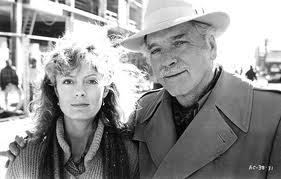
Burt Lancaster, playing an aging numbers runner.
By Lanny Morgnanesi
Years ago, before legal lotteries, small-timers from organized crime would visit neighborhoods. If you wanted to play a number, you gave them money. If the number hit, they would pay off.
When I was a very small boy, I remember my uncle getting a big new car and giving our family his old car. I asked my father why this happened and he said, “Your uncle hit the number.”
If you want to revisit the fading days of this type of gambling, watch the 1980 movie, “Atlantic City,” with Burt Lancaster and Susan Sarandon. It shows you how it worked, and how it could no longer work.
The illegal numbers system went into decline when governments decided they wanted in on the action. They saw big money in gambling; a way to raise revenue while holding down taxes. Single lotteries were approved and later expanded into multiple games and drawings.
Since then, the world apparently has gone upside down.
Governments now want out of lotteries, seeing them as an unnecessary expense. An April 29th story by Matt Katz of the Philadelphia Inquirer explains the new trend.
Governments are looking to save money in employee salaries. The lottery system in New Jersey, where privatization is being considered, employs 150, with seven people making more than $100,000. Plus, there are benefits and those very expensive pensions that are breaking the states.
There would be a short-term gain when a company (or companies) is awarded the contract. Long-term gain would come from taxing the profits of the privateers.
The Inquirer also points out the companies running lotteries for states make significant political contributions to those who gave them the contracts – a factor, no doubt, in any decision.
Still, I’m flummoxed by the economics of it all. It doesn’t work for me. I just can’t believe there is more money in not running a lottery than in running a lottery.
Organized crime never tried to get out of gambling.
Let’s not forget the possibility that privateers could rig the system. That, I think, is more likely than not. Whatever is done, is there any guarantee people will like it better? Maybe those Burt Lancaster-type guys will respond to public dissatisfaction and creep back into the neighborhoods.
Then what will government do?
New cops, after all, mean new pensions.
Best to leave things as is.
Below is an essay I wrote for Analog, the science fiction magazine. It was rejected, so I thought I’d publish it here. Comments are appreciated.
Decades after its phenomenal success, a reaction to a first reading of Asimov’s “Nightfall”

Author Isaac Asimov
By Lanny Morgnanesi
For more than a year there was a task entry in my Outlook program that said simply, “Read ‘Nightfall.’ ”
Although I am a fan of its author, I had never read this celebrated short story.
Some say it is the best science fiction story ever written. It certainly is Isaac Asimov’s most famous story. Hence, the note in Outlook, which I created after reading a passing reference to the story and its hallowed reputation.
I knew I could find the story quickly online whenever I wanted, and so never quite got around to it … like living in New York and not visiting the Statue of Liberty. I must have been waiting for a special moment, not wishing to consume the piece lightly.
That moment came in the form of a premonition, or something like one. I was attending a business meeting in a college library. During a break I went over to the stacks. Directly in front of me, at eye level, was, “Nightfall and Other Stories.”
I took it home.
The story was written in 1941 while Asimov was attending Columbia University and working in his father’s candy store. It was published in Astounding Science Fiction, whose editor was a man named John W. Campbell.
The anthology I brought home came out in 1969. It contains an introduction by Asimov that is almost as interesting as the title story.
Reflecting on something he produced almost three decades earlier, when he was 21, the author expressed amazement at the story’s popularity and endurance. At the time he wrote “Nightfall,” Asimov had published a dozen stories. Another dozen had been rejected. He would go on to become an incredibly prolific author but never considered himself a trained writer.
Still, in his anthology introduction, he seemed flummoxed that as a seasoned professional he could not duplicate the success of the novice who wrote “Nightfall.”
He says in the intro:
“Now let’s get something straight. I didn’t write that story any differently from the way I had written my earlier stories – or, for that matter, from the way I wrote my later stories. As far as writing is concerned, I am a complete and utter primitive. I have no formal training at all and to this very day I don’t know How To Write.
“I just write any old way it comes into my mind to write and just as fast as it comes into my mind.
“And that’s the way I wrote ‘Nightfall.’”
The tone almost seems resentful of his first great accomplishment.
Asimov had expected to be paid $120 for “Nightfall.” When the check came for $150 he thought it was a mistake. He called the editor, Campbell, who said there was no mistake. Such a good story deserved more.
Campbell had a personal interest in the work. In fact, he gave the idea to Asimov. It was based on his disagreement with a quote by Emerson … a quote that appears at the beginning of “Nightfall.”
This is the quote:
“If the stars should appear one night in a thousand years, how would men believe and adore, and preserve for many generations the remembrance of the city of God?”
Rather than create wonder and delight, Campbell believed the sudden appearance of stars (and darkness) after 1,000 years of daylight would drive everyone mad. That is what Asimov wrote about … a planet with multiple suns that is perpetually bright, except for one true night every 2,000 years or so.
The reader learns the planet has no recorded history of these infrequent nights because during each one, the world goes mad and civilization is destroyed.
Over the eons, life has been repeatedly rebuilt from nothing. There is, however, some scattered, vague knowledge of this that is prophesized by an eccentric cult.
Unequivocally, an extraordinary premise for a story.
Yet after so much anticipation, after so many accolades, I was sadly let down by “Nightfall.” I’d like to think it was the filter of time that took the edge off, but I know it was more than that.
How to explain my disappointment with a great, wonderful, brilliant man worshiped by people much smarter and more literate than me?
“Nightfall” maps out a wonderful and inventive idea, but the writer, in my reading, fails to finesse it; doesn’t creatively exploit its potential. I call this kind of writing “idea” writing. The work of Ayn Rand is the same. Concepts are strong; characters and story telling tend to be weak.
My favorite work of Asimov is the Foundation trilogy. Like “Nightfall,” it contains an exceptional scenario and complex, innovative, paradigm-breaking concepts. So rare; so different; so insightful. It is from the mind of someone very special. But it reads the same as “Nightfall.”
There also is the filter of time working against the Foundation series.
Asimov’s work from the 40s and 50s reads as if it were written in the 40s and 50s. It’s not that way with all science fiction of the era. Some writers tried very hard to steep themselves in an entirely new milieu. In an effort to do that, Asimov will give his characters names like Sheerin 501 but then have people smoking on spaceships and treating women passengers like stewardesses.
In “Nightfall” an important and influential character is a newspaper columnist. Newspaper technology, of course, is based on a 15th Century European invention. One wishes, perhaps unfairly, that he would have seen the digital world, or something else, coming.
Still, the young man from the candy store had his touches.
As the panicked mad men and women of “Nightfall” begin setting the world on fire as a way to re-create the light from their disappearing suns, Asimov ends his story this way:
“On the horizon outside the window, in the direction of Saro City, a crimson glow began growing, strengthening in brightness, that was not the glow of the sun.
“The long night had come again.”
That, from the best science fiction story ever written, gave me chills.
In the anthology, Asimov advises readers to closely look at the other stories to determine why – or if – “Nightfall” is better than the others. He can’t seem to tell. It is almost as if he is jealous of the early success and hopes the verdict elevates another candidate.
The strong reaction to “Nightfall,” apparently different from Asimov’s, suggests that the artist is really not in control of the art. Without permission, the work goes where it wants to go or where it needs to be, depending on the mind that absorbs it.
Now there’s a subject for a science fiction story … if only Isaac were around to write it.
Lanny Morgnanesi is a writer living in Doylestown, Pa. He can be reached at lannym7@gmail.com
When the names of authors began to appear larger on books than the titles, I felt something somewhere had gone wrong. I had that same feeling recently when I saw a supermarket product with a label that was a marketing tool for another product.
The product on the shelf – a bottle of Heinz ketchup — was easy to identify without its own label. It was on an end shelf at an Asian supermarket. The label was a mini billboard for new “Dip and Squeeze” packets of ketchup. With the traditional packets, the only option was to open and squeeze out the ketchup. The new packets allow a second option. They have a peel-off opening that makes for easy dipping … for French fries, I guess.
It just seemed odd. When I went to my regular supermarket there was only regular ketchup with regular labels. Were Asians being targeted, and why?
Could this represent a new approach to selling? Will all common products – corn flakes, perhaps – now be used as tools to sell newly launched items?
Maybe a marketer out there or Heinz can tell me.
In the very odd circumstance that you should want to see the Dip and Squeeze in use, here is a Heinz video. I don’t recommend it.
 On Thursday, in reaction to the claim by a congressman that 80 federal legislators were card-carrying Communists, Rex Huppke of the Chicago Tribune wrote an obit on the death of Facts.
If reporters had asked the right follow-up questions, Facts might not have died. Here are the questions I would have asked of Florida Republican Rep. Allen West:
1. If it is true that congressmen and women are card-carrying Communists, where do they actually carry the cards?
2. Do those who carry the cards also attend the meetings?
3. How do the Democrats and Republicans feel about multi-party membership?
4. Are any of the cards expired?
5. Do the 80 get free Cuban cigars?
Any more questions?

Where Irv met Ernest
In the post below I casually mention Ernest Hemingway, almost as if I had known him. I didn’t, of course. But I did know someone he drank with.
The man’s name was Irv Lippe, and he was nothing at all like Hemingway. Irv was short, slight and polite. He was a diplomat – literally — posted to Cuba when Hemingway was living and writing there.
When Irv retired, he took a part-time job stateside with the newspaper where I worked. We spoke a lot and he told me of his days in Cuba. Irv loved martinis and it was not unusual for him to drink three at lunch.
On one of his first ventures into an island bar for lunch, he noticed Hemingway. He asked the fellow next to him if that indeed was the famous writing. The chap said, “It is. But don’t dare talk to him. He’ll bite your head off.”
Irv followed the advice. He did, however, observe the man and thought it odd that such a tough guy would order a daiquiri.
“At the time, a daiquiri was considered a lady’s drink,” Irv said. “I’m surprised he wasn’t laughed out of that bar.”
(Hemingway would go on to make the daiquiri famous, for both sexes.)
One day, while Irv downed a martini at the same place, Hemingway came in and sat next to him. Irv said nothing. This happened several times. Two mute drinkers. The day finally came when Hemingway gruffly turned toward Irv and said, “Do you have the time?”
Irv gave him the time but said nothing else.
The next day Papa again sat next to Irv and said something like, “Nice day for fishing.” Irv said that indeed it was.
Before long, the two were having full and fast conversations.
“We actually, I guess, became friends,” Irv told me.
I loved Irv and speaking with him was always a pleasure, but I didn’t believe this story. I figured anyone who spent more than two minutes in Cuba during those years would claim Hemingway as a friend.
As Irv and I grew closer, he invited me to his home for lunch. He took me into his office and on the wall was a 2 foot-by-3 foot photo of a smiling, bear-like man with his arms tight around Irv, almost lifting the little guy off the ground.
It was signed: “To my good friend Irv — Ernest”
 Truth is one of the rarest commodities on Earth.
The reason may be that it’s actually an abstract concept, a moralistic illusion. Or maybe truth is just relative, with multiple versions floating about.
Hemingway was always barking about how hard it was to write a true sentence. Harry Crews, a writer of note who died this week, once said:
“If you’re gonna write, for God in heaven’s sake, try to get naked. Try to write the truth. Try to get underneath all the sham, all the excuses, all the lies that you’ve been told.”
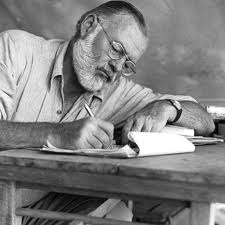
No ... that's not true, either.
In honor of Harry, I challenge everyone visiting this blog to go to the comment section below and write something true.
I’ll start:
“Digital communications has devolved into a lucrative confidence game where users knowingly or unknowingly reveal the most private pieces of information so that others can more easily sell them goods and services.”
Now you go ……..

These guys were nothing, compared to ...
There were superstar performers long before mass media and one of them was named Jenny Lind.
Jenny was known as the “Swedish Nightingale.” She came to the U.S. on a whirlwind tour in 1850 after retiring from European opera at age 29. Her American promoter was P.T. Barnum, who created such a stir that 30,000 people went to New York harbor to greet Jenny’s ship.
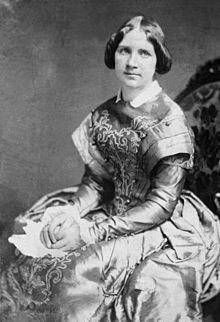
... the Swedish Nightingale
Because of the great demand for tickets, Barnum would auction them off. They would go for as high as $20 – an incredible price in 1850. By comparison, a ticket to see the Beatles in 1964 on the main floor at the Atlantic City Convention Center cost $3.90.
At some Lind concerts, a few very rich music lovers (or perhaps speculators) would offer to buy up every seat in the house. Barnum wouldn’t sell, claiming all should get a chance.
On her American tour, Jenny personally earned $350,000. She gave it all to charity. The Beatles never did that. Neither did Barnum.
Because of the illogical and unreasonable American response to Jenny, the term “Lind mania” was coined, and a songwriter named W.H.C. West composed a satirical piece entitled, “The Jenny Lind Mania.” Today there would be Internet memes and YouTube parodies about Jenny.
I learned about Jenny last Sunday when some of the songs she did on her American tour were performed by three-time Tony nominee Judy Kuhn, who appeared in Pennsylvania at a pops concert with the Bucks County Symphony.
Maestro Gary S. Fagin told stories about Jenny and the sensation she caused.
History tells us that P.T. Barnum was a master showman and probably could sell $20 tickets to watch of piece of stale cake. Still, it is hard to believe he could do what he did without the tools of TV or radio or even photographs in newspapers. It must be that people, with or without technology, on occasion enter into fits of collective madness. We clearly have a weakness for it. It must satisfy something in our nature.
There was no harm, I don’t think, when people went to see Jenny Lind. There was harm, however, when nearly everyone in American, rich and poor, wise and stupid, went out and bought homes they could not afford. That weakened a nation. An entire species was weakened when in the last century much of Europe, the rich and the poor, the wise and the stupid, embraced fascism, war and the lethal scapegoating of Jews.
Clearly, things can get horridly bad.
Hearing about Jenny Lind at the concert, I wondered what humans are capable of. I thought about the relativity of good sense, the fragile veneer of morality and the protean quality of religion. I should have just enjoyed the music. Instead I thought about the monster within me.
Not a good evening.
Yeah, Yeah, Yeah.

