Archive | Culture RSS feed for this section

The day Elvis died — my story

18 Aug


Elvis Presley died 35 years ago on Aug. 16, 1977. It’s a day I’ll never forget.

I’d like to tell the story of that day. It involved a nearly naked lady who said she knew Elvis and pleaded with me to help her.

I rose early that morning, my first as a reporter for a suburban Philadelphia newspaper. As I shaved, I listened to the radio.  A contemporary rock station was playing an old Elvis song, which was odd, since he was pretty much a forgotten relic by then. Then there was another Presley tune, and another.

Within moments I learned from the DJ that the King had died. I thought that sad, since he had been so great and influenced so many, but I moved on. Bigger things awaited me. I was a journalist now.

No sooner had I settle into my desk than the phone rang. Pretty cool, I thought. Someone knows I’m here.

“Are you a reporter?” a woman on the line asked.

Not a good first call. From that one sentence I could tell she was drunk and high.

“Yes, I’m a reporter,” I said. “How can I help you?”

She threw a bunch of nonsense at me then said, “Please make them stop. I don’t want any of their money. I don’t want anything. Please make them stop and leave me alone.”

She sounded truly upset.

“Don’t want any of whose money?” I asked.

“Elvis’. I don’t want anything. Can you tell them that?

I was on the verge of hanging up.

“Tell who?” I asked.

“I don’t know. His lawyers. They keep threatening me,” she said.

This was all quite ridiculous but I kept talking because I had nothing else to do that morning and maybe there was a local angle to Elvis’ death. That would play well in the next day’s paper.

“Why would they threaten you?”

“They think I’m coming after their money because I had Elvis’ child. But I’m not. I don’t want the money.”

That busted the wacko meter.

“Look,” I said. “I have to go.”

She raised the level of her lethargic monotone.

“No, don’t go. You’re the only one who can help. Come visit me and I’ll tell you the whole story.”

There was more pleading, and I took her address. I told my boss what I was doing and where I was going. He laughed and looked at me with a combination of pity and loathing.

The woman’s working-class neighborhood was only a few minutes away. It had small houses but everything was neat and well-kept. Then I came upon a lawn that hadn’t been mowed for months. There were two cars up on blocks and several of the home’s shutters were hanging off the windows.

Unsurprisingly, this was the home of my caller.

I knocked on the door.

The woman who opened it looked like a zombie, with vacant eyes and blotchy skin and messy long hair. Her body, however, was magnificent. I knew that because I could see it.  All of it. She was wearing a nightgown as sheer as cellophane.

“Come in,” she said.

The immediate question to myself was: Do I stay or go?

My racing mind told me there was trouble ahead but also that this probably would never happen again for as long as I lived.

I would stay.

She pulled me in, sat me down, encircled me with vine-like arms and began kissing me with her putrid mouth.

After some difficulty, I pulled her off.

“I came here for a story,” I said, knowing there most definitely was not one. “Let’s hear your story.”

“Would you like a drink?” she said.

It was 10 a.m.

“No. Just tell me your story. Tell me about Elvis.”

And she proceeded to tell about where and how they met; the liking he took to her; how he came onto her strongly and how she yielded simply because he was Elvis.

“Do you have photos of you and him together?”

“Not really,” she said, walking over to a cabinet. “Just these, from about that time.”

They were photos of her, younger and very beautiful. She looked just like Priscilla.

“What happened since then?” I asked.

“This,” she said, turning the back of her neck to me and pulling up her hair to reveal a large surgical X. “I had an accident and an operation.”

I should have pursued this but didn’t.

“So you say you had a son with Elvis. Do you have his picture?

She did, a number of them.

In each and every one he looked just like a teen Elvis. Remarkable. It was starting to seem as if there might be some truth to all this.

As we continued to speak about the threatening calls, an uncomfortable noise came from the bedroom.

We were not alone.

Then he emerged. Zombie Number 2.

Beer can in hand, having probably digested a few Quaaludes (very popular at the time), a boy who could have been 18 or 15 shuffled out slowly like Frankenstein’s monster. His face was swollen, marked and bruised.

He never lifted his feet; he just slid them along. He looked straight ahead and not off to the side at us. But when he reached the spot where we were, he paused and ratcheted his head toward me.

“Are you the reporter?” he asked.

“Yes,” I answered.

“Well . . . I just want you to know  . . . that I’m not f—- her.”

Then he screamed and nearly cried, “But her old man thought I was and he beat the shit out of my face with a flashlight.”

Silence took over the room.

Then the boy said to me quietly, “You know . . . there’s something going on here.”

“Yes, I know,” I said.

Then, with utter contempt and a snarl he said, “You don’t know.”

Silence again.

It was broken by a knock on the door. I had been on an edgy alert the whole time but this sent me into an adrenaline-laced panic. My assumption was the woman’s husband had returned, armed this time with more than a flashlight.

I packed up my notepad and chose the window out of which I would jump.

The knocking continued. It was ignored by both boy and woman, as if it wasn’t there.

Finally, the door opened and a weak female voice was heard.

“Jimmy? Jimmy? Are you there?”

Jimmy’s mother stepped into the house. She was as frightened as I.

“Jimmy, it’s time to go. We are going now. Let’s go.”

He stayed put but she grabbed his arm and tugged and tugged and got him out the door.

I was right behind.

Back in the newsroom, I set my stuff down and planned to tell the story to my editor. Before I could, the phone rang.

“Is this Lanny, the reporter?”

“Yes,” surprised that my name was known.

“You don’t know me,” the male voice said. “I’ll admit this is kind of a strange call, but you may be the only person who can help me.”

Two in one day!

“How?” I asked.

“Listen, I’m not crazy or weird. I’m an actor in New York who is just trying to make a living. Things were going OK then all of a sudden there is this talk up here about me being Elvis’ son. Do you know anything about that?”

The weird had become bizarre.

“I might. But not much.”

Pause . . .

“Do you know my mother?” he asked.

“I think I just left her house.”

“What did she look like?”

I figured I would lie, but for some reason quickly changed my mind and asked, “Do you really want to know?”

“Yes,” he said.

So I told him, and not gently.

“Well, she was very high and she was very drunk.”

“That’s my mother,” he said.

We spoke a little longer and I took his number. I said I would call if I learned anything new.

At that point I stopped reporting and dropped the whole story. I was curious, but this wasn’t journalism. I had real work to do. I went over and told the tale to my editor, who gathered a crowd and made me tell it again. I must have told it five or six times that day, and many times after.

Of course, I never wrote a word of it for the paper, and the mystery of what really happened was never solved. I did call the police and told them what I had witnessed. They told me they knew about her. That’s how it was in those days. People knew, but not much was done.

About a week later I was leaving the newsroom to go out on a story. Normally I would leave by the rear entrance, but this day I went out the front, near the reception area. As I did, a visitor called my name.

“Lanny. Is that you?”

She was wearing clothes this time and was completely sober.

I was assaulted again by those vine-like arms and she tried to kiss me. I pulled away.

“You are gay. Aren’t you?” she said.

When I returned from my story I asked the person at the reception desk, “What was that woman doing here?”

“She placed a classified ad.”

“Can I see it?”

“Sure.”

It read:

“To the lawyers, representatives and family of Elvis Presley. I make no claims whatsoever to the estate of the deceased performer.”

***

EPILOGUE

Everything written here is true and exactly as it occurred. Had I intended this to be a fabrication I would have devised a better ending. The only untruth is the lie that this was my first day on the job. Actually, I had been a reporter for two years and possessed a master’s in journalism. I should have known better than to waste time on that crank call.

But had I acted wiser and more professionally, I would not have had this story to tell.

On the 35 anniversary of his death, may he rest in peace, Elvis Aaron Presley, and may all his children, however many there are, find happiness and success.

— Lanny Morgnanesi

Imagine America with a Queen

29 Jul

I don’t think too many Britons say nasty things about their Queen.

They don’t object to her politics because she really doesn’t have any. They may get mad at all the money – their money – she spends on palaces and servants, but they get over that.

What she represents is them, the collective whole, and they seem to appreciate it, rally round it, and draw strength from it.

A keen memory of mine is from a dinner toast at a British embassy. It consisted of two words that meant 10,000. It was simple and so reverent:

“The Queen.”

The leader and figurehead of the United States, by contrast, is called names and blamed for all kinds of bad things. His motives are questioned, as if he refuses out of spite to use clear and easy solution to big and complicated problems. It is frequently suggested that he is out to destroy America — on purpose.

Not so with a queen.

I was never much for monarchy. In fact, a favorite movie line of mine comes from Monty Python after, I think, a noble personage advises a lowly peasant, “I’m your king,” and gets the answer, “Well I didn’t vote for you.”

But seeing Queen Elizabeth at the Olympics, sitting there as an honored representation of all Great Britain, inspired envy.

From afar, and perhaps in fact, the British seem to have a cultural homogeneity that the U.S. does not. While Britain is markedly divided by class and is mixed racially (from immigration), there is something holding all together.

You only have to listen to the way the Brits sing their anthem “Jerusalem” to know this. They did so at the Olympics and it moved even me, a non-Brit. The final, powerful verse is:


I will not cease from Mental Fight,

Nor shall my Sword sleep in my hand,

Till we have built Jerusalem,

In England’s green and pleasant Land


Americans love being Americans, but we are a country of individualists. We can be distrustful of each other. Our tendency is to work on our own to improve our lives, not to work collectively for a new Jerusalem. In Britain and much of Europe, there is a collective desire to see that all have health care, that all can afford higher education, that all can get around on trains, subways and buses.

We don’t have that in the states. We do have the Interstate Highway system, but only because the military needed evacuation routes in case of nuclear war.

The American continent does have a distant legacy of working as a tribe. But the ways of the Native American people never had an impact on the rugged, go-it-alone settlers.

Hardworking, innovative Americans have performed technological and economic miracles working alone. It was this kind of culture that allowed us to break from the English, better them and pretty much rule the world.

Still, I feel as if we lack something as a people. When I see the Queen of England, who I didn’t vote for, I have this wish that we could get behind our leaders in a forceful way that lifts our spirits and moves us ahead quicker. Of course, such a system would require that leaders be pure of heart and dedicated to the American cause and not their own.

This would be the hardest thing to accomplish, even if we gave them all palaces.

Google wounds the New York Times

28 Jul

It has been said that Freedom of the Press is restricted to those who own one.

With presses being of small importance today, that dictum has lost its punch. Today, he who controls transmissions in the digital world decides who goes on stage to shout.

Case in point: The New York Times, which ironically owns a press or two, lost more than $143 million in the last quarter mainly because a digital powerhouse – Google – changed an algorithm.

Google algorithms decide what pops up when a search is done. About.com, owned by the New York Times, once had a clear channel through the Google transmission line. When it clogged, favoring others and not About, the website lost traffic and revenue and its parent, the great media giant of the past, was laid low.

Fortunes have been made and lost trying to game the all-powerful Google algorithms. The algorithms are raging rivers of commerce, with gold at the end for those who can safely and consistently navigate them.

While it is frightening to think how quickly Google can change the information landscape, it must be said that About was a low-quality content farm (yet another irony) that was trashing up Google searches. Google acted to protect itself and better serve its customers.

Free speech was at a premium when it took an expensive press to get out a message. Now this, a big change … but not a change at all.


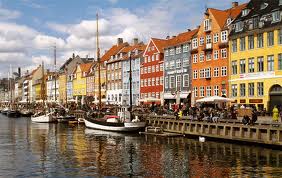
Unlike the U.S., the Danes are blissful, successful and highly taxed

18 Jul

There’s a happy little country in Europe that is so successful, foreigners pay to put money in its banks.

That’s called negative interest. Denmark, population 5.5 million, asks for it and gets it. Mounds and mounds of Euros from the troubled European nations are flowing into Denmark as a safe haven. According to Bloomberg Businessweek, the negative interest is low, with two-year debt yielding between minus .05 percent and minus .08 percent, but it shows the strength of that economy.

Unlike the U.S., Denmark has a positive trade balance, relatively low government debt and an unemployment rate of about 6 percent. (compared to about 9 in the U.S.) The Danes are said to be some of the most contented people in the world.

Oddly, or perhaps not, Denmark has the highest rate of taxes in the world.

Isn’t that ironic?

We in the United States are, for the most part, miserable and worried about our jobs, the economy and taxes. Our total taxes, according to the Organization for Economic Co-operation and Development, are 24 percent of GDP. In Denmark, people are completely satisfied with paying taxes equal to 48 percent of GDP.

“We have a luxury problem,” said Jacob Graven, chief economist at Denmark’s fourth largest bank.

Sometimes, solutions to seemingly unshakable problems can be found in the most unlikely, 180-degree alternatives. To often, however, the ether of the American culture has convinced us they are off-limits, extremely dangerous and will erode and ultimately destroy our way of life.

Why are we Americans, known for innovation, so averse to opening our minds? Who is responsible for closing them, and how did they manage to do such a great job of it?

At the beach on a sunny day, what would the old tell the young?

17 Jul

If you look deep, faces reveal stories. One day on the beach, with faces all around, thoughts leaped from them.

In the posturing young males there was a cocky yet fragile confidence; a faith in one’s self, one’s strength and one’s energy, but also a poorly hidden fear of the unknown. There was a willingness to stay in place and time, and the troublesome idea that knowledge may be more important than charisma.

In the young females there was desire and hesitancy; a need for some unformed quality not found in the males; a necessity to move forward in place and time; a deep yet unacknowledged realization of superiority kept in the shadows by overly cautious optimism.

In the old there was either satisfaction and peace or pain and disgust. The first group had goals, some modest, that were met. The second harbored resentment; unhappy with fate and exhausted of second chances.

Seeing young and old together made me wonder what the old might tell the young.

Here is the advice I would give:


  • Realize you are much smarter than you think but that you know almost nothing.
  • Accept that good work requires lots of bad work.
  • Learn a second language; it will get you a second soul.
  • Play an instrument . . . well.
  • Read the great stories and myths of your culture. Let them guide you.
  • Place honor before money.
  • Know that truth is relative, fluid and deceptive.
  • Never deny a person his or her dignity.
  • Don’t wait.
  • Happiness is attainable but difficult to recognize.


As the words surface, the young, for a short time, will be both blind and deaf and wonderfully preoccupied. Then they will politely move on, overwhelmed by their own brand of discovery and their own style of learning, a more important kind, the kind even the old hold in high, if unspoken, regard; the juice of life that lodges forever in the mind.

He’s not wearing pants, and they still don’t look

2 Jul


Because movies rely so heavily on visuals, film producers and directors  are good at describing complex concepts with just a few words.

I read such a description in a book review by Susan Balee in the Philadelphia Inquirer. It comes from film producer Michael Deane, who was trying to explain the importance of car crashes in movies.

It’s a great line, a true cultural barometer, and worthy of a posting:


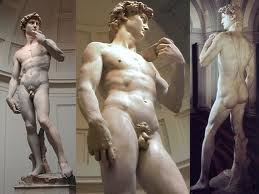
A thousand people drive past the statue of David.  Two hundred look. A thousand people drive past a car wreck. A thousand look.


Canada – not flashy but likeable, and with an example to follow.

23 Jun

By Lanny Morgnanesi

Gerry always tried to be funny. He’d introduce himself this way: “Hi, I’m Gerry, a Canadian, bland and inoffensive.”

Like his country, Gerry was neither.

It was during the Vietnam War that I first realized Canada was different, hardly bland and willing to offend. Without fear of U.S. retribution, it welcomed Americans dodging the war, coming off like some hippie outlaw country. Later, in another context, I remember people talking disparagingly about “Canadian socialism.” They made Canada sound evil when I think it was just trying to be nice to its people.

More recently, comedian Dave Chappell used a satirical sketch to show at least one difference between Canada and the U.S. In the sketch, he posed as a political candidate with a solution to expensive American health care: Fake Canadian ID.

Canada is the country where people have lots of guns but don’t use them on each other. Canadians seem to be more comfortable with life, more at peace with themselves and each other, and less stressed. Their cordial mantra is the simple: Eh?

Internationally, they have few enemies.

While traveling, Gerry and I once met two young women from Eastern Europe, which then was Communist. President Reagan recently had taken a strong stance against their patron, the Soviet Union, calling it the Evil Empire.

Nothing like that had occurred in Canada.

The two women were strikingly beautiful but cold and dead serious. We tried to start a conversation. It didn’t take long before I noticed they would speak to Gerry but not to me. I asked why and they said they could not understand me because I wasn’t speaking Oxford English. So Gerry, in his inoffensive way, began acted as a translator, taking my English and “translating” it into — English. He did the same for them.

Funny, eh? We had recreated a bit from the film “Bananas,” but the Eastern Europeans didn’t get it.

But back to Canada.

In Montreal this spring, thousands of students took to the streets to protest an 80 percent increase in college tuition.

According to a newspaper report, tuition for higher education in the province of Quebec was to go from $2,611 a year to $4,700. It would be instituted gradually, $254 a year over seven years.

I was sorry to hear this. My sympathies, however, were not with the Canadian students but with American students, who must pay so much more. My concern was not with the Canadian government but with the American government, which clearly doesn’t value education as much as its northern neighbor.

While I haven’t done the math, and don’t want to do the math, I’m guessing one less war a year would provide more than enough funding to make college affordable; or the end of a subsidy to one or two highly profitable industries; or – dare it be said – taxing a bit more, or just cutting a few loopholes or simply being fairer about the whole process.

The goal would be to put money where it pays national dividends, and educating the populace tends to do this.

The U.S., by its own design, finds itself in the precarious and costly position of having to police the world. Meanwhile, nations that benefit from this use their money to build vibrant economies, keeping their infrastructure modern and their industries competitive . And some allow college students to sit in a  classroom for less than it cost to go to the movies.

If this pattern continues, the natural outcome is they will get stronger and we will get weaker. In time, the great American military won’t have much of a country left to protect.

A strong defense is important. What I find of questionable value is a strong offense.

Somehow, by someone, balance will have to be restored. The richest and most powerful country on Earth should be able to educate itself. Only when we have fallen from that top position will it be easier to understand that fending for one self must be the norm.

Then fake Canadian ID will really be important. I hope they don’t put up a fence.

To show or not to show … that should be a choice

15 Jun

Comfortable

Also comfortable

By Lanny Morgnanesi.

In high school I had a recurring nightmare that I’d be in class with my pajamas on. It was a horrifying thought.

Today, students wear pajamas to class by choice.

In the office, a man, unlike some woman, would feel awkward in a sleeveless shirt with a low neckline.

I’m not sure about necklines, but an old girlfriend, quite progressive, refused to wear short dresses at the height of their popularity. She preferred to hide what others preferred to show.

Modesty clearly is a relative thing.  It’s about individual comfort and peace of mind.

Knowing this, I’m willing to accept that many (not all) Muslim women choose and are not forced to wear head scarves and even burkas. I believe they feel comfortable in their modesty.

Yet today, those in the west often see the scarves and burkas as repressive, and the women as victims. I think the women would have been victims if they had been force to wear pajamas to school.

This stuff shouldn’t be so foreign to us because the modesty and decorum exhibited in the Muslim world has great parallels in the world of conservative Christians. Both show reserve and good judgment and a concern about how things might appear, avoiding even the appearance of questionable conduct. Similarly, I believe a single Hasidic Jewish woman cannot be alone with a man after dark. Or should I say “doesn’t want to be”?

Some things just don’t seem right to some people, so they don’t do them — Muslims, Christians, Jews and my atheist girlfriend.

Why is it that people who are strong advocates of freedom often want to cheat those who choose restraint? Is that fair? Is that even logical?

I would love to hear your comments.

In America, This is Nothing to Worry About.

2 Jun

By Lanny Morgnanesi

The produce store was between a customer rush and a delivery.

It was highly unusual, but the shelves were mostly bare. I walked in disappointed. Then, a slightly eerie feeling descended and there was a momentary panic on my part; a millisecond of fear; an adrenalin rush that ended before it was even noticed.

Quickly sober again, a cranial recess asked: Suppose something happened and the supply lines to food were cut. What would you do? Where would you go?

Then the delivery truck arrived.

Americans are used to seeing food on store shelves. We have a remarkable way of bringing things to market in steady, dependable, bountiful streams; on highways, by rail, air, sea and through pipelines. It just gets there; always; no matter where.

Not so in many countries.

Ipod components aside, are we immune from supply disruption or shortages? Will we always be? A few eccentrics don’t think so and stockpile. Good Mormons do, following biblical warnings about famine. I know I always feel better when the bottled water guy delivers an extra jug by accident.

Overall, however, I have great faith in supply chains because of the profit motive that drives them. Profit is like an all-powerful, invisible force that pushes things along and knocks down barriers with ease. It’s something we should appreciate but don’t. It’s something we should be conscious of but aren’t. It’s the fish’s water we don’t see or feel.

I’ve been in places where food supplies ebb and flow; been in spots where one has to adjust with less. In a jungle stopover in Asia, guests were expected to take care of morning hygiene with only a large pitcher of water and a basin. I did fine.

So I try to see the benefits we have in the states and enjoy them for the delight they bring.

During the Cold War, someone suggested we could defeat Communism simply by dropping thousands of Sears catalogs over Moscow. At home we all loved Sears catalogs but considered it a right rather than a privilege to freely purchase all those things, unlike the Russians back then who were lucky to get a cheap pair of ugly shoes that were either two sizes too big or too small.

I guess that playful panic in the produce store was just my way of remembering how good a fresh salad really is. I’m not sure who deserves credit for that salad, but it must be a cast of thousands. Prosperity, civilization and stocked shelves, after all, are joint efforts, with everyone playing a part. Therefore, everyone should reap the reward.

When we forget that, then we truly will have a problem.

This is what Lenny Bruce was talking about.

31 May

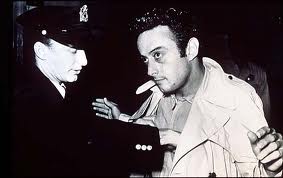
Lenny Bruce, who knew both pain and comedy

This funny line comes from a Memorial Day conversation, where people where talking about their lives. The speaker is smart and intelligent but was not trying to be funny. He was speaking from the heart, but in doing so he mouthed a Woody Allen-quality quip.

Wasn’t it Lenny Bruce who said something like, “Comedy is pain plus time.”

Here is my friend’s line, which is full of both pain and time:

“While growing up, I was so bad that when I reached the legal drinking age, I quit.”