How long before the great income grab is reversed? Not long.

9 Mar

cbpp income inequality 2011

The first real understanding of my value as a worker came during a company Christmas party.

I was a young reporter for a family-owned media company. My fellow employees and I had already received the gift of a free turkey, and now there was this party, grand and lavish.

It was a time when newspaper margins were around 40 percent. Printing a newspaper was like printing money.

The party was held in a big banquet hall. Hundreds attended. There was a generous buffet, music, dancing and an open bar for the entire evening.

In general, the company did well by its employees. The founder was a tough, bull-headed union-buster, but when I worked there raises were given four times a year, the food in the cafeteria was subsidized and supervisors were honored at an annual dinner.

Upon the death of the old man, his four grown children took over. By chance, I was sitting with one at the Christmas party. She was somewhat shy but sincere when she said to our table, “All of you are responsible for making this company what it is. It would be nothing without you. My family owes everything to you. Our success is your success.”

Prior to that, I had seen myself as an expendable, replaceable cog.

But this co-owner, this daughter of an entrepreneurial risk-taker, was shifting my view. I hadn’t recognized it yet, but she knew that without workers a hundred printing presses could not produce a single paper.

Still, she was neither ready nor willing to change the rules and divide the profits among workers. That’s a different ideology, one totally alien to our system, one that threatens and offends.

Then I went to New York City and found out it wasn’t.

I was still learning the way of the world and on this visit to see friends I discovered how lawyers became partners.

My friends were a former reporter and her boyfriend lawyer. He didn’t go to dinner with us that Saturday night because he was working on an investment banking deal. He was trying to make partner.

When we met up later at a bar, he was in good spirits and had no complaints. As an explanation for missing dinner, he told me a joke: “Why do investment bankers love Friday? Because it is only two more work days until Monday.”

I envied his chance to become a partner. Now that I think of it, he probably was the first person I knew who was capable of using hard work to earn equity ownership in a company.

Why was law different from other professions? To begin with, there is no huge investment needed to start up, nothing like a printing press. Also, lawyers tend to see themselves as professional equals. And there probably is some precedent, a near-ancient tradition, of taking on partners rather than employees.

What’s more, it is easy for the good ones – those who bring in big clients — to leave and hang up their own shingles.

A factory worker doesn’t have that kind of leverage.

But if there exists a universal law of fairness, a standard morality for the value and worth of labor, then leverage shouldn’t be a factor.

Of course, there is no morality in the marketplace. If people will work for substandard wages, that is what you pay them. And so unions came to be.

Unions got their start in ancient Rome

Unions got their start in ancient Rome

We think of unions as a modern concept but the idea and practice go way back. The founders of Rome, in 753 B.C., may be partially to blame. As Rome grew and incorporated other provinces, the new citizens didn’t integrate. They stayed in their towns, kept their habits and traditions and failed to adopt a Roman identify. So an edict was issued requiring people to relocate to districts organized around trades. If you were a carpenter, you lived among all carpenters.

Ethnic differences faded.

Naturally, trade associations formed. It was a new unifier.

In time, these associations became quite powerful.

Even the kings of France had to contend with them. In an age when candles were the chief source of lighting and a significant expense in a large palace, money could be saved by letting them burn to the end.  Practical, but the guild in charge of candles wouldn’t allow it. It required that candles be replaced when half burned.

Unions in the modern era continue to be associated with self-serving, costly inefficiencies. Unlike the lawyers who must enrich their firms in order to become partners, unions too often weaken their companies, making workers liabilities rather than assets.

And companies today are quick to get rid of liabilities.

What unions are good at, however, is their ability to show management the true value of labor. By unifying the powerless, power is created. In speaking with one voice – “no we won’t work for poverty wages” – unions effectively alter the marketplace. They grant the common folk a degree of dignity and allow them to pursue happiness.

But with global competition so fierce, it has become impractical and unwise for unions to advocate uncompetitive practices. What they should advocate is efficiency, innovation, profit and partnership – true equity partnership. Unions gave us the weekend but if the incentive of partnership is applied (making Friday two work days until Monday) companies could get them back.

Would companies actually make their worker’s partners? Under the current climate, no. Even discussing the idea seems ridiculous and beyond farfetched.

But why?

In the golden age of unions – after resistance that included shooting strikers — companies decided there was enough growth and profit to meet the demands of organized labor. With profit in mind, there was a willingness to share. Henry Ford would benefit if he could keep cars rolling off the assembly line and meet the heavy demand.

And besides, workers with money buy things – like cars.
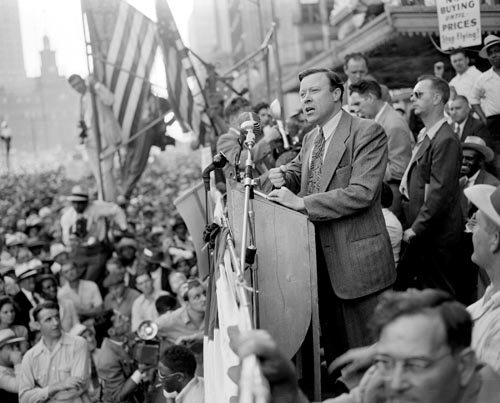
Walter Reuther knew the middle class fueled the economy.

Walter Reuther knew the middle class fueled the economy.

(There’s a great story about Walter Reuther, leader of the United Auto Workers, being shown an automated assembly line.  In a competitive dig, Henry Ford II asked him, “How are you going to get those robots to pay union dues?” Reuther retorted, “Henry, how are you going to get them to buy cars?”)

For the most part, the willingness to share is gone.

According to the Center for Budget and Policy Priorities and many other sources, a significant income gap between classes existed from the 1940s into the 1970s, but it did not grow. But after the early 70s and up to today, income concentration at the top increased dramatically. The last time the disparity was this great was prior to the Depression.

Various sources, including University of California at Santa Cruz Professor G. William Domhoff, in his blog “Who Rules America?,” report that in 2010 about 1percent of the U.S. population possessed 35 percent of the wealth. The top 20 percent had 89 percent, leaving the bottom 80 percent with 11 percent.

Also reported in various places, including the Los Angeles Times, is that from 1993 to 2012, income of the 1 percent rose 86.1 percent while income of the other 99 percent rose 6.6 percent.

As wealth became concentrated at the upper tier, billions in cash was stockpiled by American corporations.

In March, Forbes set the total at $1.45 trillion and listed the top 10 holders of cash, including:

Apple: $137 billion.

Microsoft: $68.3 billion.

Google $48.1 billion.

Pfizer $46.9 billion.

What changed?

For one, the labor market.

When Apple is ready to roll out a new iPhone, poor farmers in Katmandu drop their plows and fly to factories in Malaysia. This is not a rhetorical sentence.

Journalist Cam Simpson documents Apple’s labor supply chain in an incredible piece of investigative reporting for Bloomberg Businessweek.  His story tells how labor brokers fan out to the poor countries of Asia when Apple launches a new product. The people they find pay them for jobs and keep paying as the process continues. Often, they pay with borrowed money and go deeply in debt.

One was Bibek Dhong from Nepal. He paid a single broker the equivalent of six-months wages. The fee secured him a job in Malaysia with Flextronics, one of Apple’s chief suppliers. Before he could pay off his loans, production shifted to another country (better performance) and he lost his position.

His passport was held and he could not get home. He feared he would be arrested. Before he received help from Flextronics, he ran out of money and nearly starved.

Not exactly a union shop.

But as China has realized, when companies get richer, when commerce thrives, when corrupt leaders and their families amass great, visible wealth, expectations rise and workers lose their complacency. They demand more and often get it, until the factories move to a more accommodating country.

Sooner or later, corporations are going to run out of countries.

Sooner or later, a floor will form under the global labor market.  From there, workers will stand.

That’s when corporations are going to need a new plan.

And that’s why I’m suggesting one now.

In the U.S., people are finally waking up to the subtle yet systematic dismantling of the middle class, which has been occurring for decades. With less spending power, average families find it difficult or impossible to send their children to college – once the gateway to upward mobility. Those who do make it to college find it hard to get jobs when they graduate.

The bleakness and lack of opportunity, the malaise of our times, is truly settling in.

Books are being written with titles such as, “The War on the Middle Class,” “Screwed: The Undeclared War on the Middle Class,” and “The Betrayal of the American Dream.”

Income equality has become a topic in columns, blogs and editorial cartoons. The issue, once ignored, is now discussed by the president of the United States and the Pope. Billionaire Warren Buffett said that if class warfare truly exists, his class in winning. Even so, there are defections. One is global billionaire David Sainsbury, who calls for fairer wealth distribution through something called “progressive capitalism.”

To see inside this looming class crisis, look toward Seattle, the home of Boeing.

Timothy Egan, a Pulitzer Prize winning journalist and winner of the National Book Award, wrote an opinion piece in the New York Times Nov. 14 called, “Under My Thumb.” The title refers to Seattle’s position vis-a-vis Boeing.

Like many big corporations, Boeing hold jobs hostage as it demands and gets hefty tax breaks. As Egan points out, when anyone or anything shows resistance, companies like Boeing threaten to leave town.

Boeing is seeking concessions in exchange for keeping assembly of the new 777X jet in Washington State. For its part, the state of Washington provided a incentive package that included an $8.7 billion tax break, which Egan called the largest single state-tax giveaway in the nation’s history.

But Boeing also requires that workers accept cuts in pensions and health care benefits.

Unlike Washington, the workers said no.

Refusing to allow the “Walmartization of aerospace,” the machinists who would build the 777X turned down the offer by a 2-1 vote.

“I’m tired of being slapped in the face,” said John Gilman, who has worked at Boeing for nearly 40 years. “Building airplanes — it takes years of training and skill. The people who run this company used to understand that.”

In reaction to Egan’s piece, one reader commented, “This is just the beginning before Americans ‘storm’ any number of figurative ‘Bastilles.’ ”

Jump now, if you will, to the town of Richmond, California.

In Richmond, like most of the U.S., people were talked into taking home mortgages they couldn’t afford. When the housing bubble burst, they ended up owing more on their mortgages than their homes were worth.

Nothing unusual there.

What is unusual is the protective reaction, possibly unprecedented, taken by the town fathers on behalf of residents. Basically, they told the banks holding the bad mortgages to renegotiate the terms or Richmond would confiscate the properties through eminent domain.

Under this plan, the banks would receive 80 percent of each home’s current worth – much less than the original purchase price –and the town would reform the mortgages so owners can afford them.

Meanwhile, all across the country fast food workers are trying to nearly double their hourly wage to $15.

Not too long ago, the Occupy movement surprised everyone when it surfaced to protest almost everything. It stayed around much longer than anyone expected and started widespread discussion of the 1 percent and vast income disparities.

What else is out there waiting to bubble up? I sense there is a lot.

Nature and the human spirit, in time, tend to correct imbalances. I believe this correction has begun. When there is too much of one thing, the other thing comes.

And when the other thing comes, I hope we are ready for it. We might prepare by realizing that we all have a stake in each other’s well being, that each plays a role in the ultimate success of our society and that respect and dignity should be afforded to all. We are a tribe – we humans — and members of a tribe should look out for each other.

Right now we don’t.

I say, let’s act more like partners. Let’s all rise together.

That means valuing each other properly and recognizing that all roles are important, that we’d be in big trouble if one day no one wanted to pick up the trash.

Providing an equity interest to all workers – even a thin, thin sliver – is progressive and revolutionary. It may even be moral, wise and an effective business strategy. But for it to happen, something cataclysmic must occur, or the vision of something cataclysmic must appear.

In the meantime, it is likely that agendas will slowly change (perhaps preventing any cataclysm). This fall, for example, Bill de Blasio was elected mayor of New York after saying he would trim the gap between rich and poor.

Other politicians, in a discovering of new voting blocs, may decide to do the same and relieve the working poor of its distress, better balance wealth and create a more secure, just and – I think – more prosperous society.

A person with disposable income, after all, fuels the economy and is less of a burden on government.

Tax policy, a major cause of the wealth shift, also will have to change. An almost whimsical proposal comes from Robert Shiller, who on Dec. 8 received the Nobel prize in economics. To stop inequality from rising, he suggests raising taxes on the rich whenever their share of income starts to grow.

Should any of this actually happen, it won’t come solely out of true enlightenment. As always, it will come mostly as a way to preserve and protect – through concessions – the self-interests of the powerful. This is OK. It will come through changing market forces resulting from a shift in culture, attitudes, expectations and action. Those forces, nearly invisible now, seem to be coalescing. I don’t think they can be stopped.

When there is too much of one thing, the other thing comes. That’s the natural law.

Lanny Morgnanesi

In snowy Conshohocken, contemplating a shift of fate

17 Feb

Conshohocken

I invite everyone to read a commentary I wrote for today’s Philadelphia Inquirer. The editors there are skilled, and I believed they improved the essay by removing the final paragraph, which read:


Oddly, I felt it necessary to have a plan. After some thought I decided it would be this: For the night I would hide out in the CVS restroom. For breakfast I would have Valentine’s Day chocolates, an entire box. I’d attend 6 a.m. mass and be at the library the minute it opened. And all the while, shower-less and dejected, my heart would long for spring.


I leave behind this detached piece of verbiage as a prod that might get you to find out what the hell I was writing about. The photo is only a small hint.


Lanny Morgnanesi

How about, “She Love You, Yes, Yes, Yes?”

19 Jan
Great phrases, including those by Churchill, are often edited by the masses.

Great phrases, including those by Churchill, are often edited by the masses.


Once a writer gets deep into the art, craft and process of writing, there is a temptation to be more taken with sound and rhythm than with content.

I once read that Edgar Allan Poe very much liked the cadence of the words “cellar door” and hoped to fashion a poem around them. He failed, but compromised and used the similar-sounding “nevermore” to create “The Raven.”

When you read the Raven, you’ve got to think that Poe cared much more about the tap dance underneath his verse than what it actually said:


“Once upon a midnight dreary, while I pondered, weak and weary,

Over many a quaint and curious volume of forgotten lore—

While I nodded, nearly napping, suddenly there came a tapping,

As of some one gently rapping, rapping at my chamber door.

“’Tis some visiter,” I muttered, “tapping at my chamber door—

Only this and nothing more.”


But what’s important to the ear of the writer is not always important to the mind of the reader. The cliché (and name of a 60s rock band) “blood, sweat and tears” seems to have been authored by a mass of people who intentionally or unintentionally chose to edit a speech by Winston Churchill.

Churchill, Britain’s wartime prime minister, was trying to rally his people in 1940 when he said, “I have nothing to offer but blood, toil, tears and sweat.”

It was a certainty that the content and meaning of this speech was crucial to Churchill, but so was its sound, hence the alliterative “toil, tears” and the five-beat rhythm of da, da, da, da, da – a little like iambic pentameter. Still, for all Churchill’s literary and artistic intentions, the people ultimately had their way. Churchill’s words have pretty much been lost and their words have stayed.

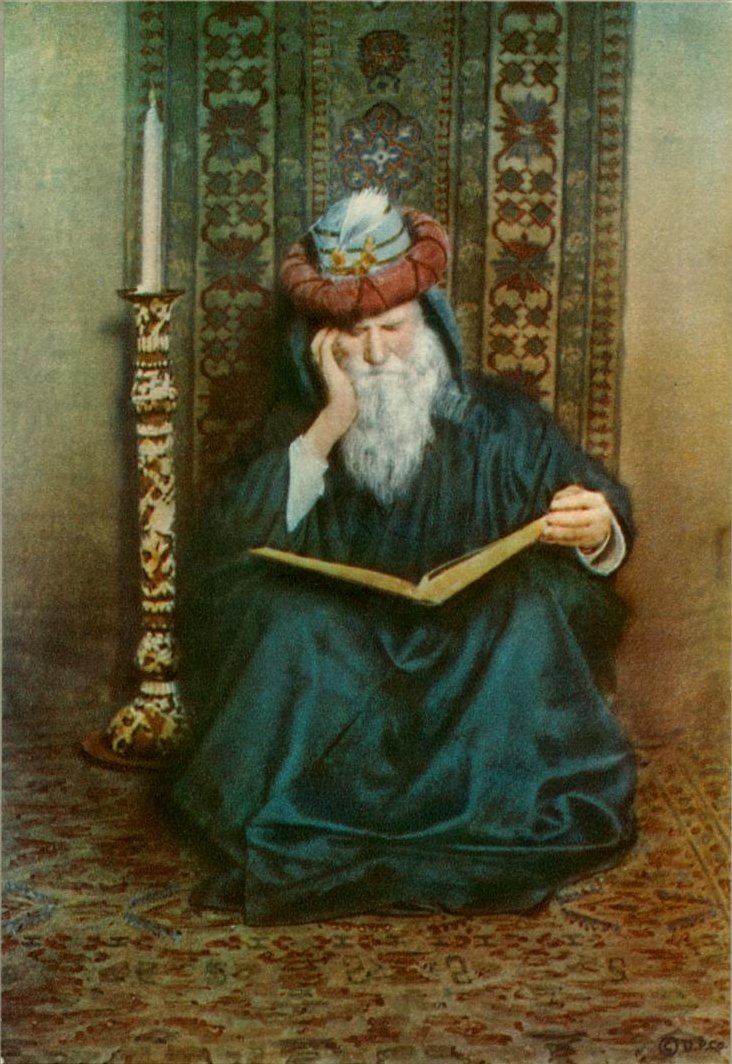
KhayyamIn college people would quote a line from the 12th century Persian poet Omar Khayyam. With romance in mind they would say, “A jug of wine, a loaf of bread, and thou.”

I had never read Khayyam and I’m not sure they ever did. But recently I learned they did to him what they did to Churchill.

Having stumbled upon a copy of Khayyam’s poems, which in English is call “The Rubaiyat,” I looked for that line and found:


“A Book of Verses underneath the Bough,
A Jug of Wine, a Loaf of Bread–and Thou.”


Again, a rhythm of four things was turned to three.

When Tonight Show host Johnny Carson would do a series of four jokes – and bomb – he’d turn toward his producer and say, “I told you four never works.”

And so the difference in opinion between those who create art and those who consume it remains.

We should be aware of this when we read great works like the Iliad or listen to traditional folk songs. Those things started out one way, and along the way people made what they considered improvements. The Iliad, for much of its life, was not written but recited. If a clever reciter made a good edit, it stuck and was passed on. Same thing with many songs whose original authors have been lost to history.

Which leaves us the question: Should literary greats like Homer and Churchill and Khayyam be altered by lesser literary lights? I don’t know, but it’s clear that a whole lot of people think they can do better. I think in some cases, they probably have.

By Lanny Morgnanesi

Art and the importance of suspending belief, even for Shakespeare

2 Jan

theater-disney

On my own, I’ve been studying filmmaking. I have even made a few short films, including this one. From my studies I know the craft is in turmoil due to vast changes in technology. Critical decisions have to be made on what new technology to use, how to use it and what from the old to keep. With high-definition digital cameras, a film can be as realistic as life, but most filmmakers see this as bad.

Audiences, they say, are used to the imperfections and inexactness of 35 mm film shot at 24 frames per second. For feature films, this “old look” brings the viewer into a world that is not his own, a world where he can suspend belief and enjoy the fiction being created on the screen. If a film is viewed in high-definition, all one may see is a bunch of actors walking around.

In such a case, the real world treads on the world of fantasy.

And so movies are shot with digital cameras but the images are converted later to a format that looks much like 35 mm film.

ShakespearI had a taste of this necessity to suspend belief during the Christmas holidays. It was not at the movies but rather at the gorgeous Academy of Music in Philadelphia. The Pennsylvania Ballet was performing George Balanchine’s version of “The Nutcracker.”

This was a first-class production. I was enjoying myself when suddenly, while watching costumed dancers swirl, jump and create visual poetry, I saw on the stage a painted sheet. Then I saw painted boards. Belief was no longer suspended; the magic had disappeared.

It was just for an instant and it occurred for no apparent reason. While outside the spell of the stage, my mind entertained a passing thought of using digital effects to duplicate a Russian winter. That thought quickly left. I returned once again to an illusion that I was willing and able to accept as real.

In the golden age of radio, that medium was referred to as “the theater of the mind.” But no less a personage than William Shakespeare has pointed out that even theater needs the cooperation of the mind.

I know little of this man and would not dare to interpret him. Still, it seems clear that in the prologue to “Henry V” he finds it necessary to ask his audience to suspend belief.

He seeks pardon for “the flat, unraised spirits that have dared on this unworthy scaffold to bring forth so great an object,” and ask rhetorically if the stage can “hold the vasty fields of France?” He explains, through his chorus, that one crooked figure will have to take the place of a million, and actors of no world standing will pretend to be historic figures, and that the imagination of the audience is required to dress the king.

He pleads, “Think, when we talk of horses, that you see them.”

This from a man who, with a few words, can induce hypnotic visions.

Had some muse or god given him the power to actually bring all of France to the stage and allow a thousand horses to romp across it, would he have accepted the gift? I think not, nor would the best of our filmmakers, nor would the Pennsylvania Ballet.

The power and force of fantasy is, after all, fantasy itself.

In the theater or at the multiplex, please do not watch too closely.

By Lanny Morgnanesi

Think people don’t want to work? Post a job and see

24 Nov

Job Fair Held In Midtown Manhattan

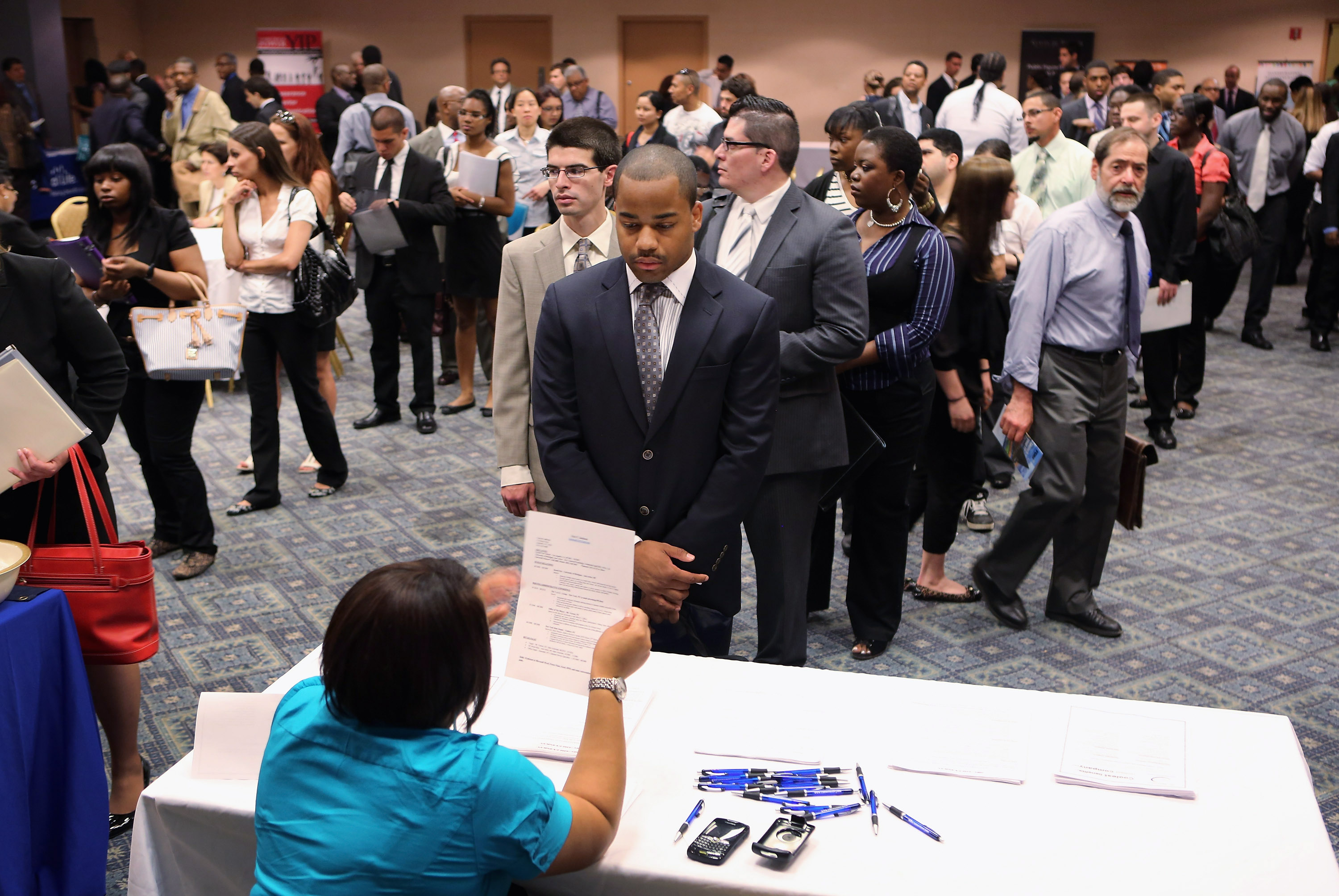
I hear more and more people complaining about shiftless hordes who don’t want to work. Maybe they know something I don’t, but when a supermarket near my house opened, 10,000 people applied for 400 jobs.

At a convenience market where I buy coffee, a cashier was complaining about her job, remarking how things are done differently at the other two places where she works.

There was a time when nearly everyone could work a single job, or perhaps two, and survive. Not so today. Wal-Mart has made billions for its founders but in Canton, Ohio, one store found it necessary to hold a food drive for its own employees.

The poor work, but still draw resentment.

John R. Kasich, the Republican governor of Ohio, told his cabinet, “I’m concerned about the fact there seems to be a war on the poor. That if you’re poor, somehow you’re shiftless and lazy.”

When the poor ask for more, the rich counter with charges of class warfare – hiding the fact that such a war actually is being waged in the opposite direction, and with great effectiveness.

I fully understand the propensity of the rich to take and hold all they can. Despite the efforts of Christianity and the other great religions, intense greed is endemic.

But why do so many average people believe that social programs primarily serve the indolent?

For sure, there are cheats. Lots. Nothing sends off a member of the middle class like watching someone use food stamps for groceries then buy cigarettes with cash. (This isn’t even cheating.) Such stories, sadly, prevent the recognition of real need.

In America, we are all tense and frustrated and filled with resentment and fear and sometime hate. For the angry Middle Class, the easiest target is the unemployed, who have come to represent a fault-filled force that siphons off taxes. Without such targets, many people would have a tough time getting through the day.

What can we do to stop this inner angst, this potentially explosive and destructive energy? We’d be so much better off without it.

Maybe the remedy is safe, secure, fair-wage jobs and the return of a culture of opportunity and equal advancement.

People find happiness in work, not welfare.

Corporations all over the U.S. are holding billions in cash. Might there be investment and jobs somewhere in those stashes? If we’ve all got to vent, why not send a little steam up instead of down? It’s time to stop wasting energy trying to disband a phantom nation of the lazy. It’s time to get to the real problem.

Lanny Morgnanesi


Meanwhile, the world is burning

8 Nov

Mannequin

When we think of Venezuela, and we often don’t, we think of a socialist country that makes trouble for the U.S. What we should think of is a South American nation obsessed with beauty queens and curvaceous figures.

To attain the ideal look in Venezuela, surgery of various sorts is employed.  Females who have it performed are known as “operated women.”

This is a bit of background for the success story of Eliezer Álvarez, who makes mannequins. (Can you see what’s coming?) His story was told yesterday in the New York Times.

Business was off for Mr. Alvarez. He analyzed the situation and realized his mannequins were not a fair representation of the model Venezuelan woman. So he augmented them, according to the Times, with “bulging bosom and cantilevered buttocks, a wasp waist and long legs.”

It worked. Business picked up. In fact, his “operated” mannequin has become the standard for all clothing stores in Venezuela.

We could look at this turn of events and conclude that such a nation, socialist or not, cannot possibly be a threat to us. Or, we can withhold judgment until the operated mannequins hit our own stores.

As a cultural influence, politics and religion cannot  compare with the undertow of forceful, tenacious displays of sexuality. In the presence of such displays, the intellect of men evaporates. I sense women fall prey to these traps for reasons beyond love, affection, attention and advancement. But I don’t know what they are.

The utter ridiculousness of it all is told in a joke that I don’t think was meant to have much meaning, but in a way it gives a subtext to all of history. I’ll sum it up:

Three women apply for a single bank teller job. The manager tries them out for a day. At closing time, the cash draw of the first is $50 under, the draw of the second is $50 over, and the draw of the third balances perfectly. Who gets the job? The one with the big ….

In the online comments section to the Venezuelan story, and Asian woman who said she is proud of her small breasts wrote:

All I can imagine is someday, future archaeologists will be able to find out so much about our civilization from all the surgical implants and devices found in our empty coffins.

Lanny Morgnanesi

Something I recently learned

2 Nov

Football-old time

In the early days of football, a touchdown was worth zero points.

A touchdown, however, gave you the right to kick the ball between two poles that were connected by a string. If the ball sailed over the string, the kicking team scored one point.

In those days, most of the rules were negotiated before each game – included how many players would take the field. In early football, there were no quarterbacks, wide receivers, first downs or forward passes.

By the way, 18 people died playing old-time football in a single year, 1905.

Read this and more in a book by John J. Miller called, “The Big Scrum: How Teddy Roosevelt Saved Football.”

Normal Mailer: Now there was a writer

25 Oct

Mailer-young

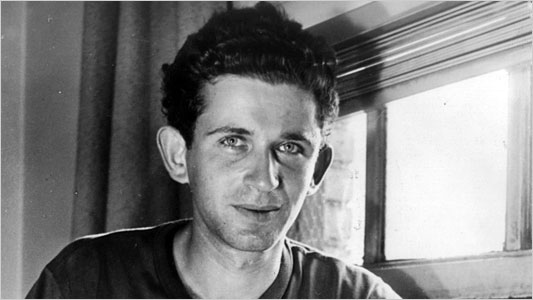
Growing up and trying to write, I admired Norman Mailer. Oh, he had his bad points, but I thought he was fantastic. His fame as a character/celebrity was a self-creation but as a writer he was genuine.


There is a new biography out on him. It is “Norman Mailer: A Double Life,” by J. Michael Lennon. I haven’t read it, but I did read a review of it in the New York Times by Graydon Carter, the editor of Vanity Fair.


Carter does a wonderful job of describing Mailer:


It could be said that Norman Mailer was a man and a writer halfway between fame and infamy and yet with little in the way of middle ground. He was, in varying combinations, a world-class drinker, feuder, provocateur, self-mythologizer and anti-feminist. He was a war protester, a mayoral candidate, a co-founder of The Village Voice, as well as a wife stabber, a serial husband (of six wives), and a father (of nine). He was a boxer, an actor, a filmmaker, a poet and a playwright. He was also a journalist and a novelist of enormous and singular narrative inventiveness and thrust, a two-time Pulitzer Prize winner, and one of the least boring and most tireless and tiresome public figures of the last half of the 20th century.


Mailer-bookI heard Mailer speak at the University of Missouri during the ‘70s. Always the showman looking to shock, he opened with a dirty joke.  It was a good joke. The most interesting thing about the joke was it knocked him down a peg or two on the masculinity chart. This is unusual for a he-man self-inflator.


Here is the joke, which I clearly remember after all these years.


“I ran into one of my ex-wives recently. She had gotten herself a young new lover and so I asked, ‘How does your boyfriend like that old, worn-out pussy of yours?’  She answered, ‘He likes it just fine . . . once he gets past the worn-out part.”


One thing about this great mind, who loved verbal combat: Sometime he tried too hard and flopped. He’d come off like an ass. This happened on the old “Dick Cavett Show” when he went up against both Cavett and his mortal enemy, writer Gore Vidal.


I had watched the original show and was so disappointed in him. A clip of the performance has been posted on Youtube and I’d like to share it with you. Your thoughts on Mailer and this video would be greatly appreciated. I would guess Mailer had many more enemies than fans. Which are you?

By Lanny Morgnanesi


A Sephardic Jew: Why discriminate against this person?

19 Oct

emmanuelle chriqui

The man whom I will call the Martin Luther King of Israel has died at 93.

He was Rabbi Ovadia Yosef, a leader in politics and religion.

It is doubtful anyone else has compared him to the American civil rights leader, but that’s how I see it. Just as there is black and white in America, in Israel there is Sephardic and Ashkenazi. The Sephardim are the underdogs. Rabbi Yosef was their advocate and protector.

Rabbi Ovadia Yosef

Rabbi Ovadia Yosef

Most Americans think of Israeli Jews as homogenous. This is because most American Jews are of European descent, which makes them Ashkenazi. Overlooked and mostly out of sight in the U.S. are the Sephardim, who are Jews from the Middle East, North Africa and Spain. This group has more in common with Arab culture than with European culture, hence the dichotomy and the basis for discrimination.

It is dangerous for a non-Jew, such as myself, to write about the social fabric of Judaism, especially when the writer has never been to Israel and never witnessed the relationship between Sephardim and Ashkenazim.  So let it be known that I write with interest rather than authority.

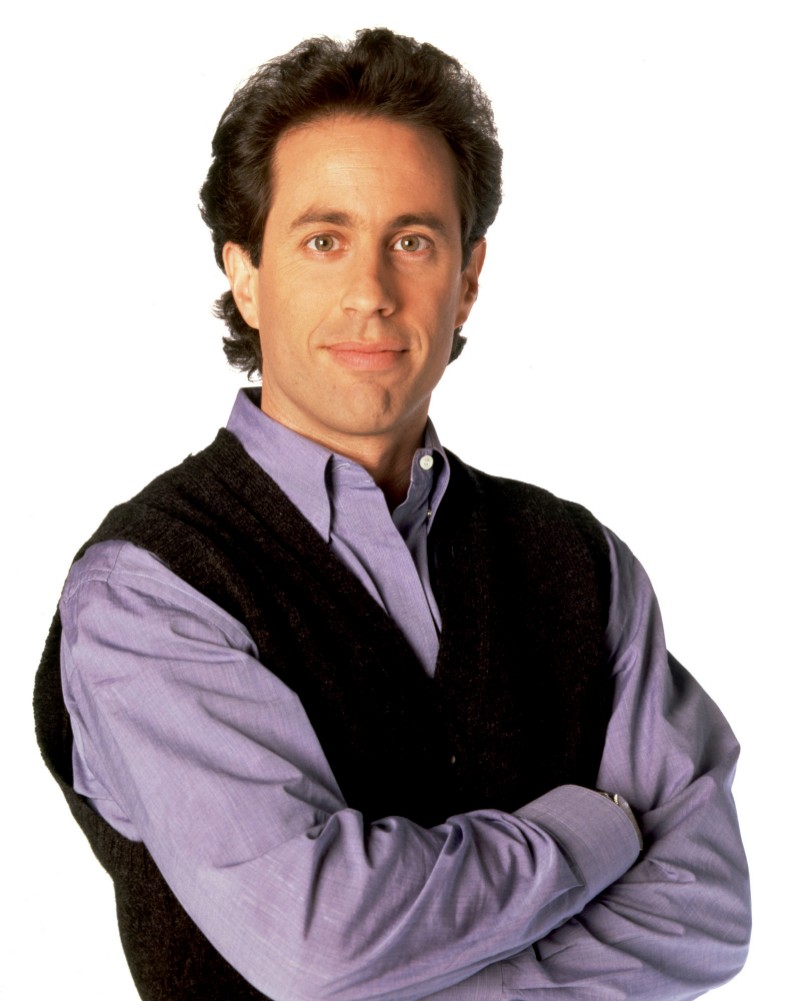
It is of little consequence here, but a casual friend is a Sephardic American. He has never mentioned the word in my presence, nor has he ever discussed any difference between himself and any other Jew. His ancestors are from Morocco. His mother lives in France, is very refined, quite fashionable and appears wealthy. She reminds me of Jackie Kennedy. These things are all counter to the negative stereotype of the Sephardim, which I learned of only through television.

Jerry Seinfeld: Sephardic Jew

Jerry Seinfeld: Sephardic Jew

I wish I could remember the name of the film, or on which channel it appeared. I would link to it to see if you found it as shocking as I. It was shot in Israel and documented the perception of the Sephardim by the Ashkenazim. Some of the dialogue could have been overlaid on a film about white and black Americans.

For example, many Ashkenazi, in a nod to tolerance, said the Sephardim are hip and cool and fun; that they set trends and styles. Some said they have friends who are Sephardic. Still, in subsequent conversations, they said Sephardic Jews are mostly poor, crude, criminal and not so intelligent.

Clearly, social barriers have been set. This was confirmed for me when I read Rabbi Yosef obituary.

Other comments didn’t parallel the black-white struggle in America, like the disgust shown for the Sephardim who watch Arab movies.

Basically, the documentary illustrates how the one group considers the other inferior and beneath them. Overall, the impression was that the Sephardim were just too much like Arabs.

The irony here is that so were Moses, Abraham, Isaac, Jacob and David.

Indeed, recent genetic testing has shown that the Ashkenazim may be far off the Hebrew bloodline. It was originally thought that the Jewish communities in Europe originated with men and women from the Near East.  Now it has been shown genetically that the ancestral roots of the Ashkenazim are in the union of non-Jewish European women and traveling Jewish traders.

Although the comparison between blacks and whites in America is somewhat accurate – an Israeli court, for example, had to force the integration of Sephardic and Ashkenazi school children — this intra-Jewish problem has additional layers of complexity. Unlike in America, differences in religious practices also keep the Jewish groups apart.

I referred to Rabbi Ovadia Yosef as the Martin Luther King of Israel, but, unlike King, he was for school segregation in the court case I mentioned. Religion, it seems, was taught at the school in question, and Rabbi Yosef wanted only pure and accepted Sephardic doctrine taught to the children of his followers, not a diluted, blended brand taught in a mixed school.

Religion aside, the life and work of Rabbi Ovadia – like those of Dr. King — indicate the pervasive need of Homo sapiens to form tight groups of very like people, to preach group superiority and to categorize others – even those who could easily be accepted into the group – as inferior and unworthy of advancement. It shows the incredible need to hold back rather than lift up.

What is the basis for this need?

Limited resources? Limited positions of power? Intrinsic insecurity? General nastiness? The necessity to have enemies as a motivating force for survival and civilization building?

Because of their differences, and because of our shortcomings as a species, it seems almost understandable that there is tension between blacks and whites, Jews and Arabs (even thought they are both Semitic people), liberals and conservatives. But why does each group draw circles within their circles to set even more people apart?

How can we solve global conflict when the people on the north side of Chicago distrust those on the south side?

The Jews possess a unique place in history as one of the first cultures – perhaps the first – to take stock of itself and say, “We are barbarians. This is unacceptable.”

For now and always, the People of The Book have documented their epic struggle for the perfect, enlightened society. Through darkness and light, catastrophe and near destruction, triumph, dire warnings, dire consequences and rebirth, they have never ceased to strive with God and themselves.

One would think that by now such a people could get along with themselves; that such a people might actually be the ones to bring peace to the entire Earth.

Who better?

While we wait for a new prophet, I would hope that all will soon dispense with finding disgust over another person simply because of his taste in movies.

Rest in peace, Rabbi Ovadia Yosef.

By Lanny Morgnanesi


Best Buy to customer: Did you just walk down the street and turn left?

6 Oct


Companies that monitor our cell phone, tablet and computer use are growing more and more sophisticated.

Many of us are aware that we are tracked –stalked, actually – by algorithms when we use our cell phone. Our phones are capable of telling advertisers – and I guess the government – when we get up, when we go to bed, the places we visit, what we buy, what we search for, even what we are thinking and certainly what we are saying. Now, according to an article in today’s New York Times, statistical modeling is being used to connect our cell phone use with our table use and the use of our work and home computers.

PrivacyThese devices may have absolutely no connection to each other, but heavy monitoring of digital networks, coupled with some pretty fancy math, links them and us to advertisers.

So while at work you may use your desktop to search for a Paris hotel.  Later that night, on your cell phone, you could receive an ad for the InterContinental Paris Le Grand.

As I have said before in other posts, digital communications – the Internet, apps, etc. – represent wonderful technology but also serve as the biggest con since Ponzi. The con amounts to this: Give us everything we need to effectively and dramatically market you and we will tell you who won the 1976 World Series, the best way to make waffles and the number of Academy Awards won by Robert Di Niro.

This gross invasion of privacy is both offensive and frightening, at least for me.

Maybe not so much for the guy who needs a room in Paris.

Still, there are flaws in the process.

I recently went on-line in search of a digital SLR camera. I found what I wanted and bought it. Since then, my devices have been serving up ads for digital cameras. Made me feel for sorry for the retailers who paid good money to target likely customers. The algorithms are smart, but not smart enough to know that I am among the least likely of customers.

In a way, that was quite satisfying.

By Lanny Morgnanesi