The Greatest Science Fiction Story of All Time: A Reflection

29 Apr

Below is an essay I wrote for Analog, the science fiction magazine. It was rejected, so I thought I’d publish it here. Comments are appreciated.

Decades after its phenomenal success, a reaction to a first reading of Asimov’s “Nightfall”

Author Isaac Asimov

By Lanny Morgnanesi

For more than a year there was a task entry in my Outlook program that said simply, “Read ‘Nightfall.’ ”

Although I am a fan of its author, I had never read this celebrated short story.

Some say it is the best science fiction story ever written. It certainly is Isaac Asimov’s most famous story. Hence, the note in Outlook, which I created after reading a passing reference to the story and its hallowed reputation.

I knew I could find the story quickly online whenever I wanted, and so never quite got around to it … like living in New York and not visiting the Statue of Liberty. I must have been waiting for a special moment, not wishing to consume the piece lightly.

That moment came in the form of a premonition, or something like one. I was attending a business meeting in a college library. During a break I went over to the stacks. Directly in front of me, at eye level, was, “Nightfall and Other Stories.”

I took it home.

The story was written in 1941 while Asimov was attending Columbia University and working in his father’s candy store. It was published in Astounding Science Fiction, whose editor was a man named John W. Campbell.

The anthology I brought home came out in 1969. It contains an introduction by Asimov that is almost as interesting as the title story.

Reflecting on something he produced almost three decades earlier, when he was 21, the author expressed amazement at the story’s popularity and endurance. At the time he wrote “Nightfall,” Asimov had published a dozen stories. Another dozen had been rejected. He would go on to become an incredibly prolific author but never considered himself a trained writer.

Still, in his anthology introduction, he seemed flummoxed that as a seasoned professional he could not duplicate the success of the novice who wrote “Nightfall.”

He says in the intro:

“Now let’s get something straight.  I didn’t write that story any differently from the way I had written my earlier stories – or, for that matter, from the way I wrote my later stories. As far as writing is concerned, I am a complete and utter primitive. I have no formal training at all and to this very day I don’t know How To Write.

“I just write any old way it comes into my mind to write and just as fast as it comes into my mind.

“And that’s the way I wrote ‘Nightfall.’”

The tone almost seems resentful of his first great accomplishment.

Asimov had expected to be paid $120 for “Nightfall.” When the check came for $150 he thought it was a mistake. He called the editor, Campbell, who said there was no mistake. Such a good story deserved more.

Campbell had a personal interest in the work. In fact, he gave the idea to Asimov. It was based on his disagreement with a quote by Emerson … a quote that appears at the beginning of “Nightfall.”

This is the quote:


“If the stars should appear one night in a thousand years, how would men believe and adore, and preserve for many generations the remembrance of the city of God?”

Rather than create wonder and delight, Campbell believed the sudden appearance of stars (and darkness) after 1,000 years of daylight would drive everyone mad. That is what Asimov wrote about … a planet with multiple suns that is perpetually bright, except for one true night every 2,000 years or so.

The reader learns the planet has no recorded history of these infrequent nights because during each one, the world goes mad and civilization is destroyed.

Over the eons, life has been repeatedly rebuilt from nothing. There is, however, some scattered, vague knowledge of this that is prophesized by an eccentric cult.

Unequivocally, an extraordinary premise for a story.

Yet after so much anticipation, after so many accolades, I was sadly let down by “Nightfall.” I’d like to think it was the filter of time that took the edge off, but I know it was more than that.

How to explain my disappointment with a great, wonderful, brilliant man worshiped by people much smarter and more literate than me?

“Nightfall” maps out a wonderful and inventive idea, but the writer, in my reading, fails to finesse it; doesn’t creatively exploit its potential. I call this kind of writing “idea” writing. The work of Ayn Rand is the same. Concepts are strong; characters and story telling tend to be weak.

My favorite work of Asimov is the Foundation trilogy. Like “Nightfall,” it contains an exceptional scenario and complex, innovative, paradigm-breaking concepts. So rare; so different; so insightful. It is from the mind of someone very special. But it reads the same as “Nightfall.”

There also is the filter of time working against the Foundation series.

Asimov’s work from the 40s and 50s reads as if it were written in the 40s and 50s. It’s not that way with all science fiction of the era. Some writers tried very hard to steep themselves in an entirely new milieu. In an effort to do that, Asimov will give his characters names like Sheerin 501 but then have people smoking on spaceships and treating women passengers like stewardesses.

In “Nightfall” an important and influential character is a newspaper columnist. Newspaper technology, of course, is based on a 15th Century European invention. One wishes, perhaps unfairly, that he would have seen the digital world, or something else, coming.

Still, the young man from the candy store had his touches.

As the panicked mad men and women of “Nightfall” begin setting the world on fire as a way to re-create the light from their disappearing suns, Asimov ends his story this way:

On the horizon outside the window, in the direction of Saro City, a crimson glow began growing, strengthening in brightness, that was not the glow of the sun.

“The long night had come again.”

That, from the best science fiction story ever written, gave me chills.

In the anthology, Asimov advises readers to closely look at the other stories to determine why – or if – “Nightfall” is better than the others. He can’t seem to tell. It is almost as if he is jealous of the early success and hopes the verdict elevates another candidate.

The strong reaction to “Nightfall,” apparently different from Asimov’s, suggests that the artist is really not in control of the art.  Without permission, the work goes where it wants to go or where it needs to be, depending on the mind that absorbs it.

Now there’s a subject for a science fiction story … if only Isaac were around to write it.

Lanny Morgnanesi is a writer living in Doylestown, Pa. He can be reached at lannym7@gmail.com


What a dip!

23 Apr

When the names of authors began to appear larger on books than the titles, I felt something somewhere had gone wrong. I had that same feeling recently when I saw a supermarket product with a label that was a marketing tool for another product.

The product on the shelf – a bottle of Heinz ketchup — was easy to identify without its own label. It was on an end shelf at an Asian supermarket. The label was a mini billboard for new “Dip and Squeeze” packets of ketchup. With the traditional packets, the only option was to open and squeeze out the ketchup. The new packets allow a second option. They have a peel-off opening that makes for easy dipping … for French fries, I guess.

It just seemed odd. When I went to my regular supermarket there was only regular ketchup with regular labels. Were Asians being targeted, and why?

Could this represent a new approach to selling? Will all common products – corn flakes, perhaps – now be used as tools to sell newly launched items?

Maybe a marketer out there or Heinz can tell me.

In the very odd circumstance that you should want to see the Dip and Squeeze in use, here is a Heinz video. I don’t recommend it.

An obit is written for the death of Facts

22 Apr

On Thursday, in reaction to the claim by a congressman that 80 federal legislators were card-carrying Communists, Rex Huppke of the Chicago Tribune wrote an obit on the death of Facts.

If reporters had asked the right follow-up questions, Facts might not have died. Here are the questions I would have asked of Florida Republican Rep. Allen West:

1. If it is true that congressmen and women are card-carrying Communists, where do they actually carry the cards?

2. Do those who carry the cards also attend the meetings?

3. How do the Democrats and Republicans feel about multi-party membership?

4. Are any of the cards expired?

5. Do the 80 get free Cuban cigars?

Any more questions?

I knew Hemingway’s friend!

31 Mar

Where Irv met Ernest

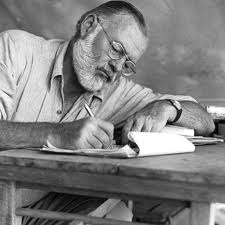
In the post below I casually mention Ernest Hemingway, almost as if I had known him. I didn’t, of course. But I did know someone he drank with.

The man’s name was Irv Lippe, and he was nothing at all like Hemingway. Irv was short, slight and polite. He was a diplomat – literally — posted to Cuba when Hemingway was living and writing there.

When Irv retired, he took a part-time job stateside with the newspaper where I worked. We spoke a lot and he told me of his days in Cuba. Irv loved martinis and it was not unusual for him to drink three at lunch.

On one of his first ventures into an island bar for lunch, he noticed Hemingway. He asked the fellow next to him if that indeed was the famous writing. The chap said, “It is. But don’t dare talk to him. He’ll bite your head off.”

Irv followed the advice. He did, however, observe the man and thought it odd that such a tough guy would order a daiquiri.

“At the time, a daiquiri was considered a lady’s drink,” Irv said. “I’m surprised he wasn’t laughed out of that bar.”

(Hemingway would go on to make the daiquiri famous, for both sexes.)

One day, while Irv downed a martini at the same place, Hemingway came in and sat next to him. Irv said nothing. This happened several times. Two mute drinkers. The day finally came when Hemingway gruffly turned toward Irv and said, “Do you have the time?”

Irv gave him the time but said nothing else.

The next day Papa again sat next to Irv and said something like, “Nice day for fishing.” Irv said that indeed it was.

Before long, the two were having full and fast conversations.

“We actually, I guess, became friends,” Irv told me.

I loved Irv and speaking with him was always a pleasure, but I didn’t believe this story. I figured anyone who spent more than two minutes in Cuba during those years would claim Hemingway as a friend.

As Irv and I grew closer, he invited me to his home for lunch. He took me into his office and on the wall was a 2 foot-by-3 foot photo of a smiling, bear-like man with his arms tight around Irv, almost lifting the little guy off the ground.

It was signed: “To my good friend Irv — Ernest”


Writing is easy; truth is hard (you have to get naked)

30 Mar

Truth is one of the rarest commodities on Earth.

The reason may be that it’s actually an abstract concept, a moralistic illusion. Or maybe truth is just relative, with multiple versions floating about.

Hemingway was always barking about how hard it was to write a true sentence. Harry Crews, a writer of note who died this week, once said:

“If you’re gonna write, for God in heaven’s sake, try to get naked. Try to write the truth. Try to get underneath all the sham, all the excuses, all the lies that you’ve been told.”

That’s in his obit.

No ... that's not true, either.

In honor of Harry, I challenge everyone visiting this blog to go to the comment section below and write something true.


I’ll start:

“Digital communications has devolved into a lucrative confidence game where users knowingly or unknowingly reveal the most private pieces of information so that others can more easily sell them goods and services.”

Now you go ……..

More popular than the Beatles: A 19th Century Swede

28 Mar


These guys were nothing, compared to ...

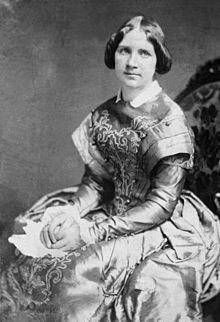
There were superstar performers long before mass media and one of them was named Jenny Lind.

Jenny was known as the “Swedish Nightingale.” She came to the U.S. on a whirlwind tour in 1850 after retiring from European opera at age 29. Her American promoter was P.T. Barnum, who created such a stir that 30,000 people went to New York harbor to greet Jenny’s ship.

... the Swedish Nightingale

Because of the great demand for tickets, Barnum would auction them off. They would go for as high as $20 – an incredible price in 1850. By comparison, a ticket to see the Beatles in 1964 on the main floor at the Atlantic City Convention Center cost $3.90.

At some Lind concerts, a few very rich music lovers (or perhaps speculators) would offer to buy up every seat in the house. Barnum wouldn’t sell, claiming all should get a chance.

On her American tour, Jenny personally earned $350,000. She gave it all to charity. The Beatles never did that. Neither did Barnum.

Because of the illogical and unreasonable American response to Jenny, the term “Lind mania” was coined, and a songwriter named W.H.C. West composed a satirical piece entitled, “The Jenny Lind Mania.” Today there would be Internet memes and YouTube parodies about Jenny.

I learned about Jenny last Sunday when some of the songs she did on her American tour were performed by three-time Tony nominee Judy Kuhn, who appeared in Pennsylvania at a pops concert with the Bucks County Symphony.

Maestro Gary S. Fagin told stories about Jenny and the sensation she caused.

History tells us that P.T. Barnum was a master showman and probably could sell $20 tickets to watch of piece of stale cake. Still, it is hard to believe he could do what he did without the tools of TV or radio or even photographs in newspapers. It must be that people, with or without technology, on occasion enter into fits of collective madness. We clearly have a weakness for it. It must satisfy something in our nature.

There was no harm, I don’t think, when people went to see Jenny Lind. There was harm, however, when nearly everyone in American, rich and poor, wise and stupid, went out and bought homes they could not afford. That weakened a nation. An entire species was weakened when in the last century much of Europe, the rich and the poor, the wise and the stupid, embraced fascism, war and the lethal scapegoating of Jews.

Clearly, things can get horridly bad.

Hearing about Jenny Lind at the concert, I wondered what humans are capable of. I thought about the relativity of good sense, the fragile veneer of morality and the protean quality of religion. I should have just enjoyed the music. Instead I thought about the monster within me.

Not a good evening.

Yeah, Yeah, Yeah.

Machines are smart, but can they think about thinking?

20 Mar

Computers can play chess, Jeopardy and now they can do crossword puzzles. In a competition last weekend with 600 of the country’s top puzzlers, a machine named Dr. Fill came in 141.

The term “artificial intelligence” is usually associated with computers that do such things. I have my doubts. I suspect smart humans are simply slipping their own knowledge into code which then exits a box that does not think. When IBM’s Big Blue was losing at chess, a small army of programmers quickly updated the code.

That’s almost like cheating at cards.

I believe a box is capable of thinking, but before it can someone will have to unlock a secret … uncover a currently unknown approach that will allow a human process to be trans-synthesized by something nonhuman. When this happens, machine intelligence really won’t be artificial. The will have to change the term.

In AI there is debate over whether a machine designed to think should do so like a person or like a machine. The former, once popular, is losing out to the latter. It’s because the former didn’t work very well.

I say it has got to be both. Consider this:

A human – me, for example – is asked a question. The question is: “How many rhymes are in the song Moonlight in Vermont?” The human, me, chooses not to answer immediately but to think: Why such a silly, out-of-context question?

Would the machine do that? Doubtful.

After mulling it over, I would agree with myself that the person asking the question did not do so to delight in telling me that my answer of eight is wrong and instead the correct answer is 10. There would be no satisfaction in that. No, the questioner wants me to say eight and then find joy in telling me the answer is either really high – say 500 – or really low – say one. Maybe it is zero.

In other words, I would use my intelligence to determine that “How many rhymes are in the song Moonlight in Vermont?” is a trick question. Does a computer know what a trick question is?

Only if it can think like a human.

Of course, it doesn’t have to think at all if it has access to every song ever written. All it has to do then is get the song and count. That is not AI.

So what is AI?

And how many rhymes really ARE in Moonlight in Vermont?

A musical legacy: Black, proud, loud and wet

18 Mar

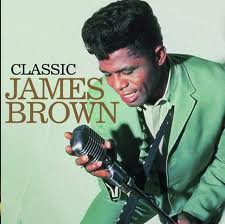
Hard work is to be admired, as is James Brown, the Hardest Working Man in Show Business.

There’s a new biography out on Brown, who was also known as the Godfather of Soul. The book is by RJ Smith and called, “The One: The Life and Music of James Brown.”

Dan DeLuca, in a review that appears today in the Philadelphia Inquirer, repeats an anecdote from the book illustrating the intensity of Brown’s performances. The story had the entertainer playing in Tbilisi, Georgia, in the former Soviet Union, where a swimming pool separated the audience from the stage. As the show peaked with the number, “Sex Machine,” Brown – at age 73 – leaped into the water. He sank, and band members jumped in after him.

Wet, the entire ensemble finished the show.

According to DeLuca, Brown would sweat so much on stage that band members couldn’t avoid sliding on the drippings. After shows, Brown was rehydrated with an intravenous hook up.

Brown was a perfectionist and very tough on his musicians. He’d fine them for playing the wrong notes, DeLuca reports. He wanted to be the best. After Elvis died, Brown was given a private viewing of The King and was heard to have said, “Elvis, you rat. You’re not number one anymore.”

The book apparently paints James Brown as self-centered (his hair was done three times a day) and non-empathetic. But he rose from poverty, took nothing and – from what I understand – gave a lot of money away to help children, lectured to school kids on the importance of education (he had little) and was a social activist credited with preventing riots after the assassination of Martin Luther King. (He agreed to a rare television concert the quelled anger and took people off the streets.)

He was patriotic, but bitter. Once asked to give advice to a rising Tiger Woods, Brown said, “Get him to understand how vicious this world is. Everything in this world disappears and vacates.”

Add to his many credits: Philosopher.

Where $350 gets you $19,000 — and it ain’t Wall Street

16 Mar

Image

He was short, wore a hoodie and was happy. A student at Penn, he had come in second at a World Series of Poker Tournament in Atlantic City this past week. His investment was about $350. After beating all but one of the 268 contestants, his prize was a little more than $12,000.

He was fun to watch because he smiled all the time.

The winner, a young man from Ohio, never smiled. He seemed sour and unhappy. For his efforts he received a little more than $19,000 and a huge gold ring.

Unlike most professional sports, poker is free to watch. The competition is keen and intense. Spectators can learn, and they can walk into the next room, sit at a table and apply what they’ve learned. You can’t do that at a hockey match.

The final table I watched represented a fairly low level of play. Play level rises when you pay more to get into the game. The winner of the main event, the top level, took home a ring and $191,194. I believe it cost about $1,500 to get into that game.

Some observations:

  • Watching poker in person is much better than watching it on TV, where there is selective editing, you can’t see all that is happening, and you don’t get a full grasp of the dynamics. Unlike TV, you can’t see the hole cards, so you don’t know what a person had when he folds after several raises. But that adds to the mystique.
  • I said when “he” folds. The sport is mostly male. Young and male. Mostly white, young and male, although the Asian presence is notable. At the table where I watched, however, a black guy was the chip leader most of the time.
  • Endurance is critical. There are breaks, but the tournament lasts three days. While you play, you can drink booze or coffee or orange juice or Red Bull. Whatever works. But if you don’t stay sharp, you lose. The chip leader I spoke of got tired, made bad plays in the last couple of hours and was knocked out (although he still won prize money). The Penn kid was alert and rallied back from a short stack.

The poker culture is interesting to follow; the language, the different ways to wear hoodies (almost a uniform), the ways to play with your chips, the various attitudes and poses. At Caesar’s, where the competition was held, a few players hired women to massage their backs while they played.

I’m convinced many life lessons can be learned in a poker match. I’m half tempted to start practicing and invest $350 the next time the WSOP comes around. It seems like a small price to pay for the experience.

Are there any tournament players who can share some of their thoughts here?

Don’t pull on Superman’s cape, and don’t mess with Bill Shatner

11 Mar

William Shatner is funny, very funny. But there is a tendency to laugh at him, not with him.

This happens to some people. With Shatner, it somehow is related to his role as Captain James T. Kirk on Star Trek. So many people loved that show, but with time it and the Kirk character became the butt of jokes.

The post-Trek work of Shatner, a one-time Shakespearean actor, has consistently stood out, winning top awards. I especially liked him in the TV show “Boston Legal” in the character of Denny Crane. But he remains haunted by Star Trek and appears quite sensitive about it.

Shatner has a one-person show that was on Broadway and is now on a national tour. It’s called “Shatner’s World,” and he wrote it. He recently went on the Colbert Report to plug it. Colbert opened the show saying Shatner would appear, mentioned the Kirk character and made a lame joke about Star Trek. Shatner came out later and was hostile. Really hostile.

Watching performers, I often wonder what is real and what is show business. The audience loved it when Shatner, in defensive mode, ripped apart Colbert, blunting all the attempted humor of the normally agile comedian. So it was a good bit; good for business. Maybe Colbert and Shatner worked it out ahead of time, but I doubt it.

Shatner so much as said he did not like Colbert, came on the show only for a plug, and wanted to get off as soon as possible. It was great theater. Colbert, unfortunately, came off looking like an amateur.

Shatner’s message was clear: It’s time to stop laughing at him and take him seriously.

I’d like to hear what people think of the Colbert-Shatner interview, if they agree the host was indeed an unwitting victim. Please watch the episode (linked above) and comment.