To show or not to show … that should be a choice

15 Jun

Comfortable

Also comfortable

By Lanny Morgnanesi.

In high school I had a recurring nightmare that I’d be in class with my pajamas on. It was a horrifying thought.

Today, students wear pajamas to class by choice.

In the office, a man, unlike some woman, would feel awkward in a sleeveless shirt with a low neckline.

I’m not sure about necklines, but an old girlfriend, quite progressive, refused to wear short dresses at the height of their popularity. She preferred to hide what others preferred to show.

Modesty clearly is a relative thing.  It’s about individual comfort and peace of mind.

Knowing this, I’m willing to accept that many (not all) Muslim women choose and are not forced to wear head scarves and even burkas. I believe they feel comfortable in their modesty.

Yet today, those in the west often see the scarves and burkas as repressive, and the women as victims. I think the women would have been victims if they had been force to wear pajamas to school.

This stuff shouldn’t be so foreign to us because the modesty and decorum exhibited in the Muslim world has great parallels in the world of conservative Christians. Both show reserve and good judgment and a concern about how things might appear, avoiding even the appearance of questionable conduct. Similarly, I believe a single Hasidic Jewish woman cannot be alone with a man after dark. Or should I say “doesn’t want to be”?

Some things just don’t seem right to some people, so they don’t do them — Muslims, Christians, Jews and my atheist girlfriend.

Why is it that people who are strong advocates of freedom often want to cheat those who choose restraint? Is that fair? Is that even logical?

I would love to hear your comments.

Humans have no monopoly on intelligence

9 Jun

By Lanny Morgnanesi.

Animal intelligence is very much underrated.

Even when a creature does something really smart, humans just say it’s instinct – which suggests it does not involve real intelligence.

Human’s cannot grasp the full intelligence of animals because, I think, they don’t know the source of that intelligence. It would seem to me that it is the brain working with senses we don’t have and therefore don’t understand.

It would be like an alien coming to Earth. Suppose we didn’t flat out shoot him. Suppose we allowed him (her or it) to do something. We probably wouldn’t understand why or how it was done because we wouldn’t understand the physiology of the creature – especially if it was not anthropomorphic.

Same with animals.

When you live with them, however, you become very accepting of their intelligence. While they aren’t likely to grab paper and pencil and compose a sonnet, they seem to be aware of all that is going on in the household … when people fight, when they are sick, when there is something to fear and how to protect yourself against it, when someone is gone and when someone returns … the basic elements of life.

I have a cat that is getting old and can’t jump like he used to. So when he wants to get up on the counter, he cries. I, being intelligent, immediately know what he wants. But here is my question, and the reason for writing this post: Can anyone tell me how the cat knows I have the intelligence to understand his cry?

For the animal to know that alone takes a lot of intelligence.


In America, This is Nothing to Worry About.

2 Jun

By Lanny Morgnanesi

The produce store was between a customer rush and a delivery.

It was highly unusual, but the shelves were mostly bare. I walked in disappointed. Then, a slightly eerie feeling descended and there was a momentary panic on my part; a millisecond of fear; an adrenalin rush that ended before it was even noticed.

Quickly sober again, a cranial recess asked: Suppose something happened and the supply lines to food were cut. What would you do? Where would you go?

Then the delivery truck arrived.

Americans are used to seeing food on store shelves. We have a remarkable way of bringing things to market in steady, dependable, bountiful streams; on highways, by rail, air, sea and through pipelines. It just gets there; always; no matter where.

Not so in many countries.

Ipod components aside, are we immune from supply disruption or shortages? Will we always be? A few eccentrics don’t think so and stockpile. Good Mormons do, following biblical warnings about famine. I know I always feel better when the bottled water guy delivers an extra jug by accident.

Overall, however, I have great faith in supply chains because of the profit motive that drives them. Profit is like an all-powerful, invisible force that pushes things along and knocks down barriers with ease. It’s something we should appreciate but don’t. It’s something we should be conscious of but aren’t. It’s the fish’s water we don’t see or feel.

I’ve been in places where food supplies ebb and flow; been in spots where one has to adjust with less. In a jungle stopover in Asia, guests were expected to take care of morning hygiene with only a large pitcher of water and a basin. I did fine.

So I try to see the benefits we have in the states and enjoy them for the delight they bring.

During the Cold War, someone suggested we could defeat Communism simply by dropping thousands of Sears catalogs over Moscow. At home we all loved Sears catalogs but considered it a right rather than a privilege to freely purchase all those things, unlike the Russians back then who were lucky to get a cheap pair of ugly shoes that were either two sizes too big or too small.

I guess that playful panic in the produce store was just my way of remembering how good a fresh salad really is. I’m not sure who deserves credit for that salad, but it must be a cast of thousands. Prosperity, civilization and stocked shelves, after all, are joint efforts, with everyone playing a part. Therefore, everyone should reap the reward.

When we forget that, then we truly will have a problem.

This is what Lenny Bruce was talking about.

31 May

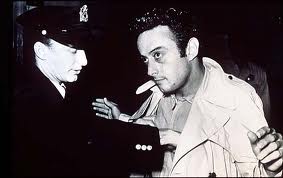
Lenny Bruce, who knew both pain and comedy

This funny line comes from a Memorial Day conversation, where people where talking about their lives. The speaker is smart and intelligent but was not trying to be funny. He was speaking from the heart, but in doing so he mouthed a Woody Allen-quality quip.

Wasn’t it Lenny Bruce who said something like, “Comedy is pain plus time.”

Here is my friend’s line, which is full of both pain and time:

“While growing up, I was so bad that when I reached the legal drinking age, I quit.”

Sicily – Where A Single Onion was Lunch

26 May

Towns like these were left nearly empty by starving peasants who left for America.

By Lanny Morgnanesi

I’ve been paging through a 1992 book by Jerre Mongione and Ben Morreale called, “La Storia: Five Centuries of the Italian American Experience.” In it, I learned something about blacks in the American South – mainly that Sicilians in Southern Italy may have had it worse.

By the year 1930, more than 4.5 million Italians had immigrated to the United States. When that many people leave a small country, the clear indication is that life there must be unbearable.

Still, there always are mixed feelings about leaving home.

During this era of the Great Departure, when there weren’t many people left in Sicily, village children would sing this in the streets:

Give me a hundred lire

And I’m off to America

Goddamn America

And the man who thought it up.

While America hasn’t always been the best place for some, there was never any measurable movement out. A huge migration occurred when industrialization in the North attracted blacks from the South, but the victims of segregation, discrimination and lynchings didn’t flee the country in vast numbers. Back to Africa movements never caught on.

In their prologue, Mangione and Morreale quote Booker T. Washington, an influential African-American leader from 1890 to 1915, who said this after visiting Italy:

The Negro is not the man farthest down. The condition of the coloured farmer in the most backward parts of the Southern States in America, even where he has the least education and the least encouragement, is incomparably better than the condition and opportunities of the agricultural population in Sicily.

It would seem that America, by comparison, is such a land of bounty that there is something even for those at the bottom. In Italy, the trickle down may have stopped way short of the bottom.

“La Storia” said that peasants who farmed other people’s land constantly battled starvation; that there just wasn’t enough food for them. After working hard in the fields, lunch, if there was lunch, often was a piece of bread and an onion. The book says that the new Italian immigrants in America took so well to cooking because food was something new and exciting for them.

I wish readers would share their thoughts on this one. Upon reading it, it was all new to me.


Coffee — When Something You Love Treats You Badly

25 May

I’d like to share this piece I wrote for the Philadelphia Inquirer. It is about the great agony of not drinking coffee. Please let me know if you like it. It appeared May 25 on the op-ed page.

http://www.philly.com/philly/opinion/153850975.html

The NRA Votes … do you?

21 May

By Lanny Morgnanesi

The bumper sticker said something like, “I’m the NRA and I vote.”

It was similar to messages from an assortment of special interest groups on both the left and right. It could have been Planned Parenthood or the American Association of Retired People or the teachers unions.

No mater what the group, the intention is to express political power. What is obvious but unstated is this: People who get off the couch to vote have influence because most people don’t vote.

Democracy, after all these years, has never quite caught on. We’re happy it’s there, like an exercise machine in the basement, but don’t mind that it has gathered substantial dust.

Our country started out more as an aristocracy than a democracy. The leaders, including George Washington, were land speculators who owned hundreds of thousands of acres on the other side of the Allegheny Mountains. As long as the British controlled things, that land was essentially worthless.

So the aristocrats started filling the heads of artisans and common workers with ideas of democracy and revolution. They actually gave them guns and taught them to kill the British. After proving victorious, the artisans and common workers still had the guns and still had ideas of democracy – even though they remained obligated to tip their hats when passing a gentleman.

But throughout the land they formed Democratic Societies, which were looked upon by the elite like the American Communist party was looked upon in the 1950s.

The Democratic Societies, run by armed individuals, were frightening.

Historian John Ferling, in “A Leap in the Dark: The Struggle to Create the American Republic,” says James Madison reacted by designing the Constitution to preserve liberty while making it extremely difficult to bring about substantial change.

Ultimately, in the long run, the group once referred to by Washington as the “grazing multitudes” settled back and continued grazing (if you don’t count the Civil War).

Now, for the most part, they don’t even vote.

Requiring photo IDs to vote, as is done now in my home state of Pennsylvania, will mean even fewer voters.

At times, winning high office seems more about collecting money than votes. Had Madison put that in the Constitution, the Democratic Societies might have taken up arms again.

We don’t need anybody to take up arms today. But like the NRA and Planned Parenthood, the AARP and the teachers unions, we really should vote. Democracy must be preserved before it truly withers away, or, like the exercise machine, someone puts it out in the trash.

Where Will You Be Six Months from Now?

19 May


The late comedian Henny Youngman used to tell lots of jokes about doctors. A favorite is:

My doctor told me I had six months to live. I said, “Doctor, I can’t pay you.” He gave me another six months.”

Henny Youngman — he knew!

Comedians are very exacting when choosing their words, especially in short jokes. They much prefer funny words over unfunny words and will struggle to determine if, say, 66, is funnier than 85. So I find it interesting that Henny chose “six” for the number of months his doctor gave him.

I don’t think he did it because six is funny. I think he did it because when doctors tell you death is near, they almost always put it six months away.

Not to be funny, but have you every heard of a friend or relative who was given four months to live, or seven months to live, or 10 months? I never have.

All this comes to mind because someone I know was given six months to live. Sure enough, exactly six months later he was dead.

Did the doctor really know? Or was he just lucky?

In life, we all have to make quick judgments and guesses. In the field of finance there is a joke (funny only to people in finance) that goes:

Q. Why do economists use decimal points?

A. Because they have a sense of humor.

The point being that nobody really knows anything for sure, but all of us sure can fake it. Those who get it right probably get more credit than they deserve, like maybe Steve Jobs or some military strategists.

Lucky guess?

But we’ve all got to worship earthly gods and I imagine it is more appropriate to worship those who have guessed right than to worship those who have guessed wrong. So hats off to the doc who said “six months” to my friend.

I’ll leave you with this piece of advice:

If your doctor says you have just 10 minutes to live, do everything you can to assure him that his wife and you are just good friends.

Thanks, Henny.

Giving Up Gambling

30 Apr

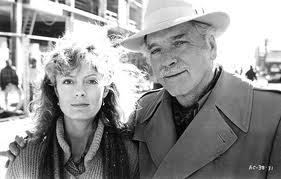
Burt Lancaster, playing an aging numbers runner.

By Lanny Morgnanesi

Years ago, before legal lotteries, small-timers from organized crime would visit neighborhoods. If you wanted to play a number, you gave them money. If the number hit, they would pay off.

When I was a very small boy, I remember my uncle getting a big new car and giving our family his old car. I asked my father why this happened and he said, “Your uncle hit the number.”

If you want to revisit the fading days of this type of gambling, watch the 1980 movie, “Atlantic City,” with Burt Lancaster and Susan Sarandon. It shows you how it worked, and how it could no longer work.

The illegal numbers system went into decline when governments decided they wanted in on the action. They saw big money in gambling; a way to raise revenue while holding down taxes. Single lotteries were approved and later expanded into multiple games and drawings.

Since then, the world apparently has gone upside down.

Governments now want out of lotteries, seeing them as an unnecessary expense. An April 29th story by Matt Katz of the Philadelphia Inquirer explains the new trend.

Governments are looking to save money in employee salaries. The lottery system in New Jersey, where privatization is being considered, employs 150, with seven people making more than $100,000. Plus, there are benefits and those very expensive pensions that are breaking the states.

There would be a short-term gain when a company (or companies) is awarded the contract. Long-term gain would come from taxing the profits of the privateers.

The Inquirer also points out the companies running lotteries for states make significant political contributions to those who gave them the contracts – a factor, no doubt, in any decision.

Still, I’m flummoxed by the economics of it all. It doesn’t work for me. I just can’t believe there is more money in not running a lottery than in running a lottery.

Organized crime never tried to get out of gambling.

Let’s not forget the possibility that privateers could rig the system. That, I think, is more likely than not. Whatever is done, is there any guarantee people will like it better? Maybe those Burt Lancaster-type guys will respond to public dissatisfaction and creep back into the neighborhoods.

Then what will government do?

New cops, after all, mean new pensions.

Best to leave things as is.

The Greatest Science Fiction Story of All Time: A Reflection

29 Apr

Below is an essay I wrote for Analog, the science fiction magazine. It was rejected, so I thought I’d publish it here. Comments are appreciated.

Decades after its phenomenal success, a reaction to a first reading of Asimov’s “Nightfall”

Author Isaac Asimov

By Lanny Morgnanesi

For more than a year there was a task entry in my Outlook program that said simply, “Read ‘Nightfall.’ ”

Although I am a fan of its author, I had never read this celebrated short story.

Some say it is the best science fiction story ever written. It certainly is Isaac Asimov’s most famous story. Hence, the note in Outlook, which I created after reading a passing reference to the story and its hallowed reputation.

I knew I could find the story quickly online whenever I wanted, and so never quite got around to it … like living in New York and not visiting the Statue of Liberty. I must have been waiting for a special moment, not wishing to consume the piece lightly.

That moment came in the form of a premonition, or something like one. I was attending a business meeting in a college library. During a break I went over to the stacks. Directly in front of me, at eye level, was, “Nightfall and Other Stories.”

I took it home.

The story was written in 1941 while Asimov was attending Columbia University and working in his father’s candy store. It was published in Astounding Science Fiction, whose editor was a man named John W. Campbell.

The anthology I brought home came out in 1969. It contains an introduction by Asimov that is almost as interesting as the title story.

Reflecting on something he produced almost three decades earlier, when he was 21, the author expressed amazement at the story’s popularity and endurance. At the time he wrote “Nightfall,” Asimov had published a dozen stories. Another dozen had been rejected. He would go on to become an incredibly prolific author but never considered himself a trained writer.

Still, in his anthology introduction, he seemed flummoxed that as a seasoned professional he could not duplicate the success of the novice who wrote “Nightfall.”

He says in the intro:

“Now let’s get something straight.  I didn’t write that story any differently from the way I had written my earlier stories – or, for that matter, from the way I wrote my later stories. As far as writing is concerned, I am a complete and utter primitive. I have no formal training at all and to this very day I don’t know How To Write.

“I just write any old way it comes into my mind to write and just as fast as it comes into my mind.

“And that’s the way I wrote ‘Nightfall.’”

The tone almost seems resentful of his first great accomplishment.

Asimov had expected to be paid $120 for “Nightfall.” When the check came for $150 he thought it was a mistake. He called the editor, Campbell, who said there was no mistake. Such a good story deserved more.

Campbell had a personal interest in the work. In fact, he gave the idea to Asimov. It was based on his disagreement with a quote by Emerson … a quote that appears at the beginning of “Nightfall.”

This is the quote:


“If the stars should appear one night in a thousand years, how would men believe and adore, and preserve for many generations the remembrance of the city of God?”

Rather than create wonder and delight, Campbell believed the sudden appearance of stars (and darkness) after 1,000 years of daylight would drive everyone mad. That is what Asimov wrote about … a planet with multiple suns that is perpetually bright, except for one true night every 2,000 years or so.

The reader learns the planet has no recorded history of these infrequent nights because during each one, the world goes mad and civilization is destroyed.

Over the eons, life has been repeatedly rebuilt from nothing. There is, however, some scattered, vague knowledge of this that is prophesized by an eccentric cult.

Unequivocally, an extraordinary premise for a story.

Yet after so much anticipation, after so many accolades, I was sadly let down by “Nightfall.” I’d like to think it was the filter of time that took the edge off, but I know it was more than that.

How to explain my disappointment with a great, wonderful, brilliant man worshiped by people much smarter and more literate than me?

“Nightfall” maps out a wonderful and inventive idea, but the writer, in my reading, fails to finesse it; doesn’t creatively exploit its potential. I call this kind of writing “idea” writing. The work of Ayn Rand is the same. Concepts are strong; characters and story telling tend to be weak.

My favorite work of Asimov is the Foundation trilogy. Like “Nightfall,” it contains an exceptional scenario and complex, innovative, paradigm-breaking concepts. So rare; so different; so insightful. It is from the mind of someone very special. But it reads the same as “Nightfall.”

There also is the filter of time working against the Foundation series.

Asimov’s work from the 40s and 50s reads as if it were written in the 40s and 50s. It’s not that way with all science fiction of the era. Some writers tried very hard to steep themselves in an entirely new milieu. In an effort to do that, Asimov will give his characters names like Sheerin 501 but then have people smoking on spaceships and treating women passengers like stewardesses.

In “Nightfall” an important and influential character is a newspaper columnist. Newspaper technology, of course, is based on a 15th Century European invention. One wishes, perhaps unfairly, that he would have seen the digital world, or something else, coming.

Still, the young man from the candy store had his touches.

As the panicked mad men and women of “Nightfall” begin setting the world on fire as a way to re-create the light from their disappearing suns, Asimov ends his story this way:

On the horizon outside the window, in the direction of Saro City, a crimson glow began growing, strengthening in brightness, that was not the glow of the sun.

“The long night had come again.”

That, from the best science fiction story ever written, gave me chills.

In the anthology, Asimov advises readers to closely look at the other stories to determine why – or if – “Nightfall” is better than the others. He can’t seem to tell. It is almost as if he is jealous of the early success and hopes the verdict elevates another candidate.

The strong reaction to “Nightfall,” apparently different from Asimov’s, suggests that the artist is really not in control of the art.  Without permission, the work goes where it wants to go or where it needs to be, depending on the mind that absorbs it.

Now there’s a subject for a science fiction story … if only Isaac were around to write it.

Lanny Morgnanesi is a writer living in Doylestown, Pa. He can be reached at lannym7@gmail.com