Archive | Economics RSS feed for this section

The lucrative tunnels of Gaza

18 Feb

gaza-tunnels


For those without it, money always seems to end up in the wrong hands.

A fool and his money are soon parted because there never will be a shortage of disreputable types willing to fleece the weak and unknowing. Writer Dorothy Parker said if you want to know what God thinks of money, just look at the people he gave it to. And the Bible itself, in Matthew 19-24, plainly and poetically states that heaven is not for the rich.

But while money has caused great misery in the world, it also has the remarkable, almost magical power of solving problems. It can literally break down barriers.

In the Middle East, in Gaza, there is a wall. On one side are people who need things they can’t get. One the other side are those things.

Due to the force and power of money, the wall and all its associated political obstructions have been circumvented.

They’ve been circumvented by tunnels, which in Gaza can make millions for their owners.

These outlaw entrepreneurs find the means to acquire the wood, concrete and excavation equipment needed to create 700-meter corridors of commerce. Some might even dig a tunnel by hand, even though it could be destroyed by Israeli bombs.

These tunnels are in the town of Rafah, which is split down the middle. Egypt controls one side; Israel the other. According to Bloomberg Businessweek, Gaza has 1.6 million people, with 40 percent living below the United Nations poverty line. Unemployment is at 31 percent.

Yet the tunnels can cause the economy to boom. Businessweek says that the tunnel system employs almost 15,000 and carries 75 percent of the good sold in the area.

One successful tunnel owner, Emad Shaaer, has family members on both side of the barrier, which greatly facilitates his business. Payment for his services vary. “Sometimes you got $200,000, and sometimes you got nothing,” he said.

Tunnel construction can cost about $200,000, but you only need $50,000 to get started. You don’t have to pay the labors and tunnel experts until the flow of goods starts.

Things became really good for the smugglers in 2007 when Hamas took control of Gaza from the Palestinian Authority. To punish Hamas and Gaza residents for taking a more radical stance, Israel closed the borders even tighter. If anything can make a smuggler rich it’s a tight border. But as success and profits grew, they attracted attention.

When Hamas realized how much money the tunnel owners were making, it began to tax the operations, raising an estimated $188 million annually. (Hamas denies this.) The local Gaza government also regulates the good that can be transported, outlawing all the things that make the most money. (Further outlawing what is already outlawed.)

Even so, it is doubtful the tunnels will go away. Taxes and regulations can be skirted. Or, maybe there is enough for both the tunnel owners and Hamas.

The only thing that can truly destroy the tunnel system is peace, a highly unlikely prospect. Still, it is possible that the day may come when there will be enough profit in peace that the power and force of money will have succeeded in making us civil.

In such a case, I would argue that the time has finally arrived to allow the rich into heaven.

By Lanny Morgnanesi


Economic growth: Is it an Aqueduct or an iPhone?

27 Oct

In the neighborhood where I grew up, everyone had one bathroom and one garage. I’m pretty sure those who moved away now have at least two bathrooms and garages.

That’s growth.

As a nation, the U.S. is very much worried about growth. We’re worried because we don’t have enough of it. Still, knowing I could live with a single bathroom and garage makes me wonder if growth really is necessary.

According to the latest reports, the U.S. economy grew at a 2 percent annual pace from July to September. This is good news, the reports said, because from April to June growth had only been 1.3 percent.

While I’m unsure about the inner workings of growth, I think it safe to say that growth involves increased economic activity and – ideally – increased profits.

Back in my old neighborhood, a new bathroom might have been added to some of the homes. If the family used additional income to hire a contractor, this would register as economic growth. It might even if the family borrowed the money.

There would be no economic growth, I think, if the family had no additional income and spent its vacation money that year on wood, drywall, plumbing and fixtures and installed the bathroom themselves.

If this type of activity were the only “growth” in America, stockholders would see little or no year-over-year improvement.  Stock prices would fall.

Yet people overall might be happy, especially those with new bathrooms.

In its Oct. 22 edition, Bloomberg Businessweek cites some interesting new studies on economic growth. It mentions that economic historians have determined there was virtually no growth in Britain from the 13th to the 18th centuries. In other words, no growth was the status quo, even through the Renaissance and the age of exploration.

Growth apparently didn’t come to England until the Industrial Revolution in the 19th century, with the advent of steam engines and railroads.

In the U.S., growth had been around 1 percent until the 20th century, when it was boosted by the effects of (surprisingly) indoor running water, the internal combustion engine and electricity.

Economist Robert Gordon, in a paper for the National Bureau of Economic Research, said growth has been downhill since 1950.

If the trend continues, Gordon says, by 2100 annual growth will have fallen to 0.2 percent.

Judging by the standards of 300 years, he doesn’t see this as anything unusual.

While some cultures require growth, others do not.

I recently attended a conference on water. Several speakers told of good-intentioned projects designed to help villages where the tradition was for women to do daily “water walks.” That means traveling five to 10 miles a day on foot to fetch water that was carried back in containers balanced on their heads.

Wanting to help, outsiders installed wells and irrigations systems. Too often, the speakers said, the villagers would return to the water walks after parts failed or things broke down through lack of care and maintenance.

The outsider sought growth and improvement. The villagers seemed content with the way things were.

For myself, I’m partial to cultures that say, “Our population is growing. We need water. Let’s build an aqueduct and bring it in from the Alps.”

But I don’t see the necessity for an increasing number of bathrooms and garages, or for a new iPhone every six months. If employment is at proper levels, I don’t know why strong, efficient companies like IBM, Google and others are required to show consistent year after year growth.

Can you image a world where prices don’t change much; where you buy something and use it for decades; where basic needs are met and life is not a struggle to maintain and acquire things unessential to happiness?

I enjoy progress, and this seems like it to me.

Growth actually may be a trick, the result of debt. With $16 trillion of debt, Americans has experienced great growth. As we eliminate debt, life and growth are bound to change.

The future could return us to historical norms, and maybe we all will be able take a deep breath and begin to relax.

By Lanny Morgnanesi

The End of Jobs

6 Oct

Imagine there were no jobs.

         Virtually none. There would still be someone running General Motors, but not a soul would be building cars.Nearly everything in America would be done with robotics, programming or overseas labor. This includes the service sector, law, medicine, education and government. Algorithms, for example, would take the places of judges, lawyers and the town council.

Cops, of course, would be cyborgs.

You get the idea.

Now the question.

If no one worked, could everyone still get paid?

Part of our economic problem today is unemployment. People who don’t work have no money and don’t consume, which leads to higher unemployment, recession and general nastiness. In some cases, businesses increase productivity and profits from layoffs. But with fewer and fewer employees overall, demand ultimately is bound to fall for all products and services.

There’s a story from the 1950s about Walter Reuther, then head of the United Auto Workers. He was taking a tour of a modern, highly mechanized Ford plant that used robots to build cars. Ford execs were on the tour and one said to Reuther, “How are you going to collect union dues from those guys?”

Reuther answered, “How are you going to get them to buy cars?”

You can’t, but you can still sell cars if you pay the people the robots replaced. Pay them for doing nothing. Give them the ultimate is a short workweek.

There was a time when the workweek was long. Not 40 hours or five days. It was at least six days, maybe seven. People put in 70 hours or more. This was necessary to produce the things we needed. With the advent of industrialization, people were able to work less – and still pretty much get the same pay.

Remarkable!

When the U.S. was a bold nation in the 50s, living well through science and experiencing the atomic age and the space age, there was this idea that greater efficiency in the work place would allow people to work less and have more leisure time. They were using the paradigm that reduced work from 70 hours to 40 hours.

Now, in a more realistic age, we know that doesn’t happen.

When you don’t need workers, you don’t reduce their hours. You fire them.

It seems ridiculous that people believed businesses and corporations would actually pass profit from productivity back to workers and let them go home early.

So what happens when there are no workers?

Maybe the paradigm shifts again.

If no workers means no consumption, and no consumption means no profit, then people might actually have to be paid for doing no work. It would be a cost of doing business. It would keep business running.

What I’ve described here is mainly a mental exercise that is much more exercise than mental. Can an economist out there, someone who studies such things, tell me whether this would work?

One final note:

In 1780, John Adams wrote something complex that later was boiled down to: “I’m a soldier so my son can be a farmer and his son can be a poet.”

He was expressing the utopian progression of civilization from barbarism to domesticity to enlightenment.

The no-job economy will either take us back to the first stage or ahead to the last. I’m not sure who will decide which.

Maybe an algorithm.

All right, now let’s hear from those economists.

—  By Lanny Morgnanesi


The 47 percent is really the 1 percent.

22 Sep

Let’s be logical for a moment.

If I have something of value, to whom am I likely to give it ?  Someone who gives me nothing in return, or someone who provides me with a replacement form of value?

We know the answer.

It is a reflection of human nature. It is the art and science of the marketplace.

You got nothing; you get very little.

The federal government possesses something of value, namely the money in its treasury. Does it mostly go to the poor, who give nothing in return to lawmakers and don’t even vote? Or to the very rich, who bankroll elections and do vote?

True, there are some illusions worked into the system, like Obamacare, a healthcare system that seemingly benefits the poor – and in fact does. But not in the way that it benefits the all-powerful insurance industry.

What conservative describe as socialism in America is really a skilled, deft way of funneling tax money to the corporate world and the 1 percenters.  Of course, a great deal more money takes a direct route and never goes anywhere near the poor.

I’m not sure what conservatives call that.

Almost every highly successful business or businessperson spends heavily to finance elections. Conversely, if a successful business does not, it is likely to be crushed by competitors who do. Microsoft was a rare example of a corporate giant that stayed out of the political arena. When the Justice Department came after it on anti-trust charges, it changed its strategy.

The 1 percenters, be they people or corporations, need friends.

President Nixon was friends with Pepsi and brought it to Russia.

President Carter was friends with Coke and brought it to China.

The competitors of the two drinks stayed home and lost market share.

So when Mitt Romney speaks about the 47 percent who rely on government, he doesn’t let on that some of his ilk might be selling apples on the street if it weren’t for government support.

In summary then, if Congress votes to give every poor person in America an iPhone 5, it’s not because America is a socialist country. It’s not because politicians like poor people. It’s because the lobbyist for the cell phone industry, after providing great sums to politicians, had a very good day on Capitol Hill.

http://youtu.be/B-a4SQGHd30

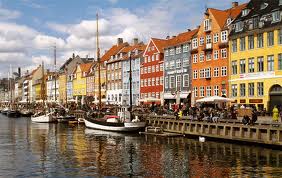
Unlike the U.S., the Danes are blissful, successful and highly taxed

18 Jul

There’s a happy little country in Europe that is so successful, foreigners pay to put money in its banks.

That’s called negative interest. Denmark, population 5.5 million, asks for it and gets it. Mounds and mounds of Euros from the troubled European nations are flowing into Denmark as a safe haven. According to Bloomberg Businessweek, the negative interest is low, with two-year debt yielding between minus .05 percent and minus .08 percent, but it shows the strength of that economy.

Unlike the U.S., Denmark has a positive trade balance, relatively low government debt and an unemployment rate of about 6 percent. (compared to about 9 in the U.S.) The Danes are said to be some of the most contented people in the world.

Oddly, or perhaps not, Denmark has the highest rate of taxes in the world.

Isn’t that ironic?

We in the United States are, for the most part, miserable and worried about our jobs, the economy and taxes. Our total taxes, according to the Organization for Economic Co-operation and Development, are 24 percent of GDP. In Denmark, people are completely satisfied with paying taxes equal to 48 percent of GDP.

“We have a luxury problem,” said Jacob Graven, chief economist at Denmark’s fourth largest bank.

Sometimes, solutions to seemingly unshakable problems can be found in the most unlikely, 180-degree alternatives. To often, however, the ether of the American culture has convinced us they are off-limits, extremely dangerous and will erode and ultimately destroy our way of life.

Why are we Americans, known for innovation, so averse to opening our minds? Who is responsible for closing them, and how did they manage to do such a great job of it?

In America, This is Nothing to Worry About.

2 Jun

By Lanny Morgnanesi

The produce store was between a customer rush and a delivery.

It was highly unusual, but the shelves were mostly bare. I walked in disappointed. Then, a slightly eerie feeling descended and there was a momentary panic on my part; a millisecond of fear; an adrenalin rush that ended before it was even noticed.

Quickly sober again, a cranial recess asked: Suppose something happened and the supply lines to food were cut. What would you do? Where would you go?

Then the delivery truck arrived.

Americans are used to seeing food on store shelves. We have a remarkable way of bringing things to market in steady, dependable, bountiful streams; on highways, by rail, air, sea and through pipelines. It just gets there; always; no matter where.

Not so in many countries.

Ipod components aside, are we immune from supply disruption or shortages? Will we always be? A few eccentrics don’t think so and stockpile. Good Mormons do, following biblical warnings about famine. I know I always feel better when the bottled water guy delivers an extra jug by accident.

Overall, however, I have great faith in supply chains because of the profit motive that drives them. Profit is like an all-powerful, invisible force that pushes things along and knocks down barriers with ease. It’s something we should appreciate but don’t. It’s something we should be conscious of but aren’t. It’s the fish’s water we don’t see or feel.

I’ve been in places where food supplies ebb and flow; been in spots where one has to adjust with less. In a jungle stopover in Asia, guests were expected to take care of morning hygiene with only a large pitcher of water and a basin. I did fine.

So I try to see the benefits we have in the states and enjoy them for the delight they bring.

During the Cold War, someone suggested we could defeat Communism simply by dropping thousands of Sears catalogs over Moscow. At home we all loved Sears catalogs but considered it a right rather than a privilege to freely purchase all those things, unlike the Russians back then who were lucky to get a cheap pair of ugly shoes that were either two sizes too big or too small.

I guess that playful panic in the produce store was just my way of remembering how good a fresh salad really is. I’m not sure who deserves credit for that salad, but it must be a cast of thousands. Prosperity, civilization and stocked shelves, after all, are joint efforts, with everyone playing a part. Therefore, everyone should reap the reward.

When we forget that, then we truly will have a problem.

Giving Up Gambling

30 Apr

Burt Lancaster, playing an aging numbers runner.

By Lanny Morgnanesi

Years ago, before legal lotteries, small-timers from organized crime would visit neighborhoods. If you wanted to play a number, you gave them money. If the number hit, they would pay off.

When I was a very small boy, I remember my uncle getting a big new car and giving our family his old car. I asked my father why this happened and he said, “Your uncle hit the number.”

If you want to revisit the fading days of this type of gambling, watch the 1980 movie, “Atlantic City,” with Burt Lancaster and Susan Sarandon. It shows you how it worked, and how it could no longer work.

The illegal numbers system went into decline when governments decided they wanted in on the action. They saw big money in gambling; a way to raise revenue while holding down taxes. Single lotteries were approved and later expanded into multiple games and drawings.

Since then, the world apparently has gone upside down.

Governments now want out of lotteries, seeing them as an unnecessary expense. An April 29th story by Matt Katz of the Philadelphia Inquirer explains the new trend.

Governments are looking to save money in employee salaries. The lottery system in New Jersey, where privatization is being considered, employs 150, with seven people making more than $100,000. Plus, there are benefits and those very expensive pensions that are breaking the states.

There would be a short-term gain when a company (or companies) is awarded the contract. Long-term gain would come from taxing the profits of the privateers.

The Inquirer also points out the companies running lotteries for states make significant political contributions to those who gave them the contracts – a factor, no doubt, in any decision.

Still, I’m flummoxed by the economics of it all. It doesn’t work for me. I just can’t believe there is more money in not running a lottery than in running a lottery.

Organized crime never tried to get out of gambling.

Let’s not forget the possibility that privateers could rig the system. That, I think, is more likely than not. Whatever is done, is there any guarantee people will like it better? Maybe those Burt Lancaster-type guys will respond to public dissatisfaction and creep back into the neighborhoods.

Then what will government do?

New cops, after all, mean new pensions.

Best to leave things as is.

Remember the Poor Immigrant

5 Mar

A zip-lock bag with a small rock inside for weight was tossed onto my lawn today. In my neighborhood, this is a standard method of advertising lawn services. What was not so standard was the pamphlet inside, which in part read: “Teofilo Sanchez Landscaping.”

I have friends who argue that immigrants, both legal and illegal, are a drain on taxes and the economy. While I really don’t know anything for sure, I always argue back that immigrants, legal and illegal, will provide the boost we need to restart our economy, and that they will become the next great wave of entrepreneurs.

It seems to me that it doesn’t take too long before a hired lawn guy earning minimum wage (or less) realizes that if he saves enough money for a mower and a truck, he can be the boss.

For all I know, Teofilo Sanchez is a Fortune 500 exec whose family came across on the Mayflower. But I will assume he is not. I will assume he is part of the new wave. I will assume that my theory (which required no insight or imagination) is coming true. I will assume that more and more marketing will target this new demographic, that the people in it will buy more houses and cars, that more will enter college, become wealthy, enter politics and lead.

This story has been repeated so many times it is a cliché. Why then is it so difficult to remember?

Manufacturing: Ain’t what it used to be

25 Jan

When we think of manufacturing, we think of jobs. Unfortunately, that notion is outdated. Thomas Friedman, in his New York Times column today, repeats a joke about modern textile mills. Here’s the joke:

The average mill has only two employees, a man and a dog. The man is there to feed the dog, and the dog is there to keep the man away from the machines.

But even without many jobs, America should still seek to lead in manufacturing. On a sort-of bright note, we probably have more manufacturing than most people realize. Here is an interesting tidbit:

A Chinese company called Wanxiang Group controls dozens of factories in the U.S. that serve the auto and mining industries in Indonesia, western China and – hard to believe – North Korea.

We’re not out of it yet.

Why America loses jobs

22 Jan

Jobs fair in China (NYT photo)

A noted columnist recently said that young Americans would like a 35-hour work week, as compared to young Indians, who would like a 35-hour work day.

The willingness of those in the developing world to labor hard and long is no longer commendable. In many cases, it represents an acceptance of a new form of servitude.

The New York Times today reports on why Apple can’t assemble its products in America. As an example, it mentions a case where last-minute design changes were made to iPhone, which needed to be on store shelves in two weeks. According to an executive interviewed by the Times, this is what happened at a Chinese plant.

“A foreman immediately roused 8,000 workers inside the company’s dormitories, according to the executive. Each employee was given a biscuit and a cup of tea, guided to a workstation and within half an hour started a 12-hour shift fitting glass screens into beveled frames. Within 96 hours, the plant was producing over 10,000 iPhones a day.”

The executive said: “The speed and flexibility is breathtaking.”

My question: Will those workers eventually become more like us, or will we become more like them?