Archive | Culture RSS feed for this section

Google wounds the New York Times

28 Jul

It has been said that Freedom of the Press is restricted to those who own one.

With presses being of small importance today, that dictum has lost its punch. Today, he who controls transmissions in the digital world decides who goes on stage to shout.

Case in point: The New York Times, which ironically owns a press or two, lost more than $143 million in the last quarter mainly because a digital powerhouse – Google – changed an algorithm.

Google algorithms decide what pops up when a search is done. About.com, owned by the New York Times, once had a clear channel through the Google transmission line. When it clogged, favoring others and not About, the website lost traffic and revenue and its parent, the great media giant of the past, was laid low.

Fortunes have been made and lost trying to game the all-powerful Google algorithms. The algorithms are raging rivers of commerce, with gold at the end for those who can safely and consistently navigate them.

While it is frightening to think how quickly Google can change the information landscape, it must be said that About was a low-quality content farm (yet another irony) that was trashing up Google searches. Google acted to protect itself and better serve its customers.

Free speech was at a premium when it took an expensive press to get out a message. Now this, a big change … but not a change at all.


Unlike the U.S., the Danes are blissful, successful and highly taxed

18 Jul

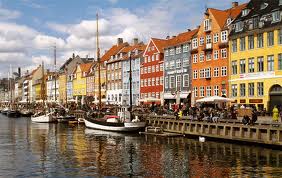
There’s a happy little country in Europe that is so successful, foreigners pay to put money in its banks.

That’s called negative interest. Denmark, population 5.5 million, asks for it and gets it. Mounds and mounds of Euros from the troubled European nations are flowing into Denmark as a safe haven. According to Bloomberg Businessweek, the negative interest is low, with two-year debt yielding between minus .05 percent and minus .08 percent, but it shows the strength of that economy.

Unlike the U.S., Denmark has a positive trade balance, relatively low government debt and an unemployment rate of about 6 percent. (compared to about 9 in the U.S.) The Danes are said to be some of the most contented people in the world.

Oddly, or perhaps not, Denmark has the highest rate of taxes in the world.

Isn’t that ironic?

We in the United States are, for the most part, miserable and worried about our jobs, the economy and taxes. Our total taxes, according to the Organization for Economic Co-operation and Development, are 24 percent of GDP. In Denmark, people are completely satisfied with paying taxes equal to 48 percent of GDP.

“We have a luxury problem,” said Jacob Graven, chief economist at Denmark’s fourth largest bank.

Sometimes, solutions to seemingly unshakable problems can be found in the most unlikely, 180-degree alternatives. To often, however, the ether of the American culture has convinced us they are off-limits, extremely dangerous and will erode and ultimately destroy our way of life.

Why are we Americans, known for innovation, so averse to opening our minds? Who is responsible for closing them, and how did they manage to do such a great job of it?

At the beach on a sunny day, what would the old tell the young?

17 Jul

If you look deep, faces reveal stories. One day on the beach, with faces all around, thoughts leaped from them.

In the posturing young males there was a cocky yet fragile confidence; a faith in one’s self, one’s strength and one’s energy, but also a poorly hidden fear of the unknown. There was a willingness to stay in place and time, and the troublesome idea that knowledge may be more important than charisma.

In the young females there was desire and hesitancy; a need for some unformed quality not found in the males; a necessity to move forward in place and time; a deep yet unacknowledged realization of superiority kept in the shadows by overly cautious optimism.

In the old there was either satisfaction and peace or pain and disgust. The first group had goals, some modest, that were met. The second harbored resentment; unhappy with fate and exhausted of second chances.

Seeing young and old together made me wonder what the old might tell the young.

Here is the advice I would give:


  • Realize you are much smarter than you think but that you know almost nothing.
  • Accept that good work requires lots of bad work.
  • Learn a second language; it will get you a second soul.
  • Play an instrument . . . well.
  • Read the great stories and myths of your culture. Let them guide you.
  • Place honor before money.
  • Know that truth is relative, fluid and deceptive.
  • Never deny a person his or her dignity.
  • Don’t wait.
  • Happiness is attainable but difficult to recognize.


As the words surface, the young, for a short time, will be both blind and deaf and wonderfully preoccupied. Then they will politely move on, overwhelmed by their own brand of discovery and their own style of learning, a more important kind, the kind even the old hold in high, if unspoken, regard; the juice of life that lodges forever in the mind.

He’s not wearing pants, and they still don’t look

2 Jul


Because movies rely so heavily on visuals, film producers and directors  are good at describing complex concepts with just a few words.

I read such a description in a book review by Susan Balee in the Philadelphia Inquirer. It comes from film producer Michael Deane, who was trying to explain the importance of car crashes in movies.

It’s a great line, a true cultural barometer, and worthy of a posting:


A thousand people drive past the statue of David.  Two hundred look. A thousand people drive past a car wreck. A thousand look.


Canada – not flashy but likeable, and with an example to follow.

23 Jun

By Lanny Morgnanesi

Gerry always tried to be funny. He’d introduce himself this way: “Hi, I’m Gerry, a Canadian, bland and inoffensive.”

Like his country, Gerry was neither.

It was during the Vietnam War that I first realized Canada was different, hardly bland and willing to offend. Without fear of U.S. retribution, it welcomed Americans dodging the war, coming off like some hippie outlaw country. Later, in another context, I remember people talking disparagingly about “Canadian socialism.” They made Canada sound evil when I think it was just trying to be nice to its people.

More recently, comedian Dave Chappell used a satirical sketch to show at least one difference between Canada and the U.S. In the sketch, he posed as a political candidate with a solution to expensive American health care: Fake Canadian ID.

Canada is the country where people have lots of guns but don’t use them on each other. Canadians seem to be more comfortable with life, more at peace with themselves and each other, and less stressed. Their cordial mantra is the simple: Eh?

Internationally, they have few enemies.

While traveling, Gerry and I once met two young women from Eastern Europe, which then was Communist. President Reagan recently had taken a strong stance against their patron, the Soviet Union, calling it the Evil Empire.

Nothing like that had occurred in Canada.

The two women were strikingly beautiful but cold and dead serious. We tried to start a conversation. It didn’t take long before I noticed they would speak to Gerry but not to me. I asked why and they said they could not understand me because I wasn’t speaking Oxford English. So Gerry, in his inoffensive way, began acted as a translator, taking my English and “translating” it into — English. He did the same for them.

Funny, eh? We had recreated a bit from the film “Bananas,” but the Eastern Europeans didn’t get it.

But back to Canada.

In Montreal this spring, thousands of students took to the streets to protest an 80 percent increase in college tuition.

According to a newspaper report, tuition for higher education in the province of Quebec was to go from $2,611 a year to $4,700. It would be instituted gradually, $254 a year over seven years.

I was sorry to hear this. My sympathies, however, were not with the Canadian students but with American students, who must pay so much more. My concern was not with the Canadian government but with the American government, which clearly doesn’t value education as much as its northern neighbor.

While I haven’t done the math, and don’t want to do the math, I’m guessing one less war a year would provide more than enough funding to make college affordable; or the end of a subsidy to one or two highly profitable industries; or – dare it be said – taxing a bit more, or just cutting a few loopholes or simply being fairer about the whole process.

The goal would be to put money where it pays national dividends, and educating the populace tends to do this.

The U.S., by its own design, finds itself in the precarious and costly position of having to police the world. Meanwhile, nations that benefit from this use their money to build vibrant economies, keeping their infrastructure modern and their industries competitive . And some allow college students to sit in a  classroom for less than it cost to go to the movies.

If this pattern continues, the natural outcome is they will get stronger and we will get weaker. In time, the great American military won’t have much of a country left to protect.

A strong defense is important. What I find of questionable value is a strong offense.

Somehow, by someone, balance will have to be restored. The richest and most powerful country on Earth should be able to educate itself. Only when we have fallen from that top position will it be easier to understand that fending for one self must be the norm.

Then fake Canadian ID will really be important. I hope they don’t put up a fence.

To show or not to show … that should be a choice

15 Jun

Comfortable

Also comfortable

By Lanny Morgnanesi.

In high school I had a recurring nightmare that I’d be in class with my pajamas on. It was a horrifying thought.

Today, students wear pajamas to class by choice.

In the office, a man, unlike some woman, would feel awkward in a sleeveless shirt with a low neckline.

I’m not sure about necklines, but an old girlfriend, quite progressive, refused to wear short dresses at the height of their popularity. She preferred to hide what others preferred to show.

Modesty clearly is a relative thing.  It’s about individual comfort and peace of mind.

Knowing this, I’m willing to accept that many (not all) Muslim women choose and are not forced to wear head scarves and even burkas. I believe they feel comfortable in their modesty.

Yet today, those in the west often see the scarves and burkas as repressive, and the women as victims. I think the women would have been victims if they had been force to wear pajamas to school.

This stuff shouldn’t be so foreign to us because the modesty and decorum exhibited in the Muslim world has great parallels in the world of conservative Christians. Both show reserve and good judgment and a concern about how things might appear, avoiding even the appearance of questionable conduct. Similarly, I believe a single Hasidic Jewish woman cannot be alone with a man after dark. Or should I say “doesn’t want to be”?

Some things just don’t seem right to some people, so they don’t do them — Muslims, Christians, Jews and my atheist girlfriend.

Why is it that people who are strong advocates of freedom often want to cheat those who choose restraint? Is that fair? Is that even logical?

I would love to hear your comments.

In America, This is Nothing to Worry About.

2 Jun

By Lanny Morgnanesi

The produce store was between a customer rush and a delivery.

It was highly unusual, but the shelves were mostly bare. I walked in disappointed. Then, a slightly eerie feeling descended and there was a momentary panic on my part; a millisecond of fear; an adrenalin rush that ended before it was even noticed.

Quickly sober again, a cranial recess asked: Suppose something happened and the supply lines to food were cut. What would you do? Where would you go?

Then the delivery truck arrived.

Americans are used to seeing food on store shelves. We have a remarkable way of bringing things to market in steady, dependable, bountiful streams; on highways, by rail, air, sea and through pipelines. It just gets there; always; no matter where.

Not so in many countries.

Ipod components aside, are we immune from supply disruption or shortages? Will we always be? A few eccentrics don’t think so and stockpile. Good Mormons do, following biblical warnings about famine. I know I always feel better when the bottled water guy delivers an extra jug by accident.

Overall, however, I have great faith in supply chains because of the profit motive that drives them. Profit is like an all-powerful, invisible force that pushes things along and knocks down barriers with ease. It’s something we should appreciate but don’t. It’s something we should be conscious of but aren’t. It’s the fish’s water we don’t see or feel.

I’ve been in places where food supplies ebb and flow; been in spots where one has to adjust with less. In a jungle stopover in Asia, guests were expected to take care of morning hygiene with only a large pitcher of water and a basin. I did fine.

So I try to see the benefits we have in the states and enjoy them for the delight they bring.

During the Cold War, someone suggested we could defeat Communism simply by dropping thousands of Sears catalogs over Moscow. At home we all loved Sears catalogs but considered it a right rather than a privilege to freely purchase all those things, unlike the Russians back then who were lucky to get a cheap pair of ugly shoes that were either two sizes too big or too small.

I guess that playful panic in the produce store was just my way of remembering how good a fresh salad really is. I’m not sure who deserves credit for that salad, but it must be a cast of thousands. Prosperity, civilization and stocked shelves, after all, are joint efforts, with everyone playing a part. Therefore, everyone should reap the reward.

When we forget that, then we truly will have a problem.

This is what Lenny Bruce was talking about.

31 May

Lenny Bruce, who knew both pain and comedy

This funny line comes from a Memorial Day conversation, where people where talking about their lives. The speaker is smart and intelligent but was not trying to be funny. He was speaking from the heart, but in doing so he mouthed a Woody Allen-quality quip.

Wasn’t it Lenny Bruce who said something like, “Comedy is pain plus time.”

Here is my friend’s line, which is full of both pain and time:

“While growing up, I was so bad that when I reached the legal drinking age, I quit.”

Sicily – Where A Single Onion was Lunch

26 May

Towns like these were left nearly empty by starving peasants who left for America.

By Lanny Morgnanesi

I’ve been paging through a 1992 book by Jerre Mongione and Ben Morreale called, “La Storia: Five Centuries of the Italian American Experience.” In it, I learned something about blacks in the American South – mainly that Sicilians in Southern Italy may have had it worse.

By the year 1930, more than 4.5 million Italians had immigrated to the United States. When that many people leave a small country, the clear indication is that life there must be unbearable.

Still, there always are mixed feelings about leaving home.

During this era of the Great Departure, when there weren’t many people left in Sicily, village children would sing this in the streets:

Give me a hundred lire

And I’m off to America

Goddamn America

And the man who thought it up.

While America hasn’t always been the best place for some, there was never any measurable movement out. A huge migration occurred when industrialization in the North attracted blacks from the South, but the victims of segregation, discrimination and lynchings didn’t flee the country in vast numbers. Back to Africa movements never caught on.

In their prologue, Mangione and Morreale quote Booker T. Washington, an influential African-American leader from 1890 to 1915, who said this after visiting Italy:

The Negro is not the man farthest down. The condition of the coloured farmer in the most backward parts of the Southern States in America, even where he has the least education and the least encouragement, is incomparably better than the condition and opportunities of the agricultural population in Sicily.

It would seem that America, by comparison, is such a land of bounty that there is something even for those at the bottom. In Italy, the trickle down may have stopped way short of the bottom.

“La Storia” said that peasants who farmed other people’s land constantly battled starvation; that there just wasn’t enough food for them. After working hard in the fields, lunch, if there was lunch, often was a piece of bread and an onion. The book says that the new Italian immigrants in America took so well to cooking because food was something new and exciting for them.

I wish readers would share their thoughts on this one. Upon reading it, it was all new to me.


Coffee — When Something You Love Treats You Badly

25 May

I’d like to share this piece I wrote for the Philadelphia Inquirer. It is about the great agony of not drinking coffee. Please let me know if you like it. It appeared May 25 on the op-ed page.

http://www.philly.com/philly/opinion/153850975.html