Archive | China RSS feed for this section

On the Duck that Traveled 10,000 miles

6 Oct

By Lanny Morgnanesi

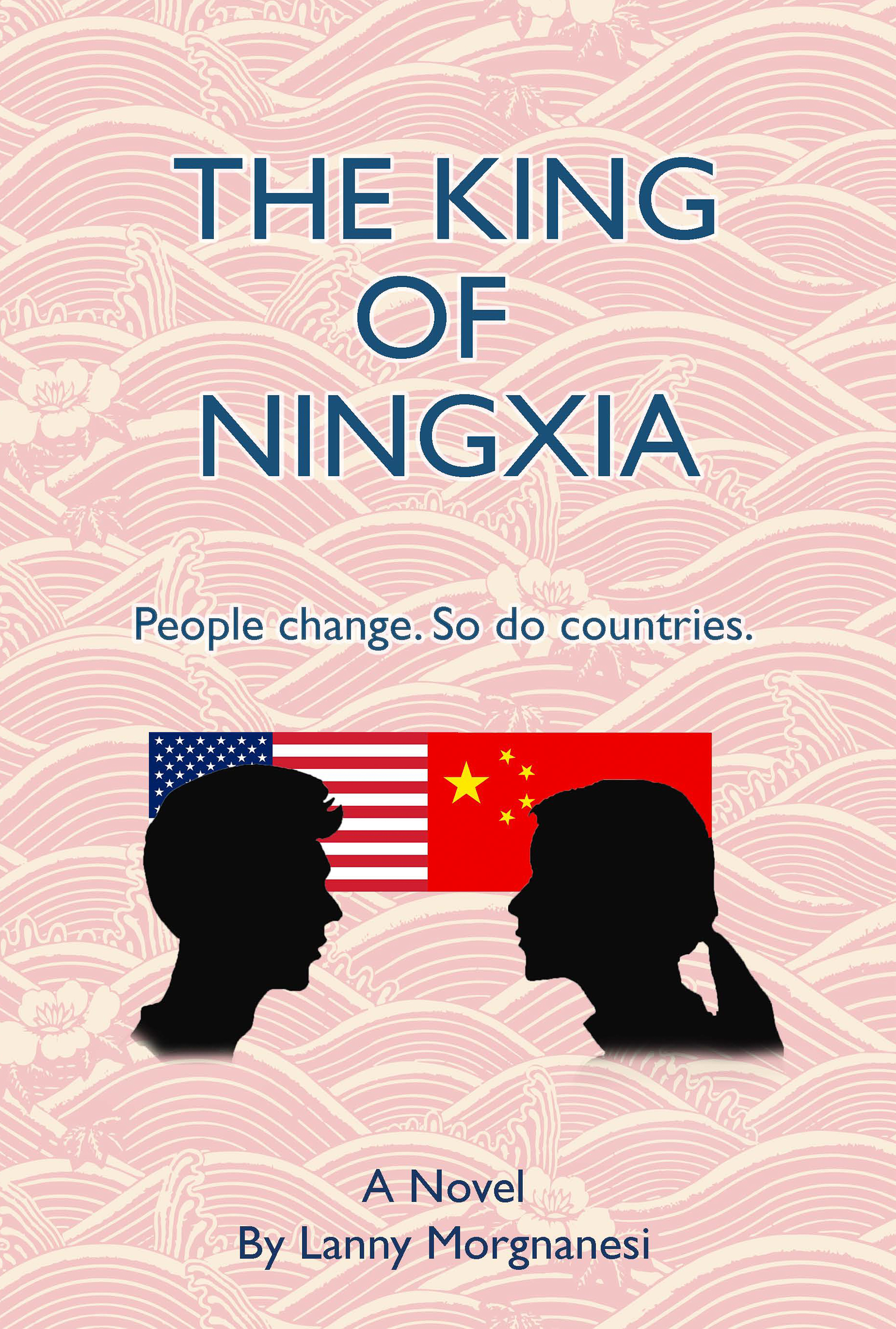
An old friend came home for our 55th high school reunion and had a criticism of my recent novel, The King of Ningxia.

The book uses a shifting timeline and is loosely based on my experiences in China during the mid-80s. The story is about the relationship between an American man and a Chinese woman, whose antics together help illustrate China’s great ascent in the world and its changing relationship with the U.S. But the book also includes a stupid joke. My friend was disappointed that only an abbreviated version of the joke appears, rather than the elaborate version I told years and years ago.

My friend felt the short version misrepresented the joke, was a disservice to the joke, was a disservice to his memory of the joke, and also a disservice to the novel.

I, of course, disagreed.
From my adult perspective, the joke is juvenile and not even funny. But my friend remembers how our gang laughed and laughed and laughed as I extended and stretched out the simple story of a guy trying to sneak a duck into a movie theater. To do so, he places the duck in his pants. Once in the theater, he opens his fly to give it some air. The lady next to him sees the duck’s head popping out of the pants zipper and says to her friend, “Look at that.” Her friend responds with a shrug, “When you’ve seen one you’ve seen them all.” To which the first woman says, “Yes, but this one is eating my popcorn.”

Now according to my old friend, I would tell this joke for 20 or 30 minutes. I’d do the voices of the duck owner, the ticket taker at the theater, the two old ladies, even the duck. I would push the joke farther than it was supposed to go, provide great detail and back stories, improvise and go on and on. My friend especially liked how I had the guy pleading with the ticket taker to let the duck in, saying the movie – a film starring Donald Duck – was his all-time favorite and his pet just had to see it.

I told this joke at parties back in the late ‘60s and reminded my friend that most people at those parties were using a substance that made them laugh at anything.

“It was marijuana telling the joke, and it was marijuana laughing at the joke” I said. “The joke, by itself, is not funny.”

He held his position and said the entire joke – which I certainly could not recollect – should have been included in The King of Ningxia. At this point, I had to explain why a short version is in the book, and what it was designed to do.

It occurs during a scene where the main character, the American male, tries to learn about Chinese culture by asking a Chinese person to tell a joke, to see if the humor translates. The person agrees and tells a story of a guy who sneaks his duck into a movie theater. (In real life, this is what happened when I asked for a joke). Rather than popcorn, this Asian duck eats the woman’s sunflower seeds, which is what Chinese people eat in movie theaters. The actual punchline is a bit different as well, but it is still the same joke. In response, the American tells his version of the joke, and they compare the two.

So, I say to my friend as we prepare to attend the reunion, “Do you see the purpose of the joke? It was not to get a laugh from the reader. It was to show that an aspect of culture can jump 10,000 miles across an ocean, from a capitalist country to a communist country, and be enjoyed by two entirely different people. It says something about the oneness of humanity, about the commonalities of our minds, about the strength of global reach, of geography’s inability to contain us and the uselessness of political barriers to stop the flow of information.”

“Yeah,” said my friend. “But when the guy in the joke practically gets on his hands and knees and cries, ‘It’s Donald Duck, his favorite actor. You’ve got to let him in.’ How could you not have included that?”

It was as if my friend was still smoking weed.

“Well,” I said. “Maybe in my next novel.”

I really should end this here, but in contrast to the duck joke, I want to relate a funny Chinese video – Chinese howl at this one – that Americans just don’t get. It’s a video of a street scene in China, and there is a horse in the street. A man walks by and pats the horse on the ass. The horse then violently kicks the man in the head.

Why is this funny?

It is funny because there is a famous Chinese saying that to get ahead, you must pat the horse’s ass, meaning you must suck up and flatter authority figures. People who don’t suck up are angry that those who do receive special privileges. Therefore, the video gives the non-suckers delight in showing that sucking up does not always work.

Are you laughing yet?

No? Did you hear the one about the duck in the movie theater?

THE KING OF NINGXIA IS AVAILABLE AT AMAZON.CO

Speaking, and only a few understanding … well, a few meaning 26 million

28 Sep

By Lanny Morgnanesi

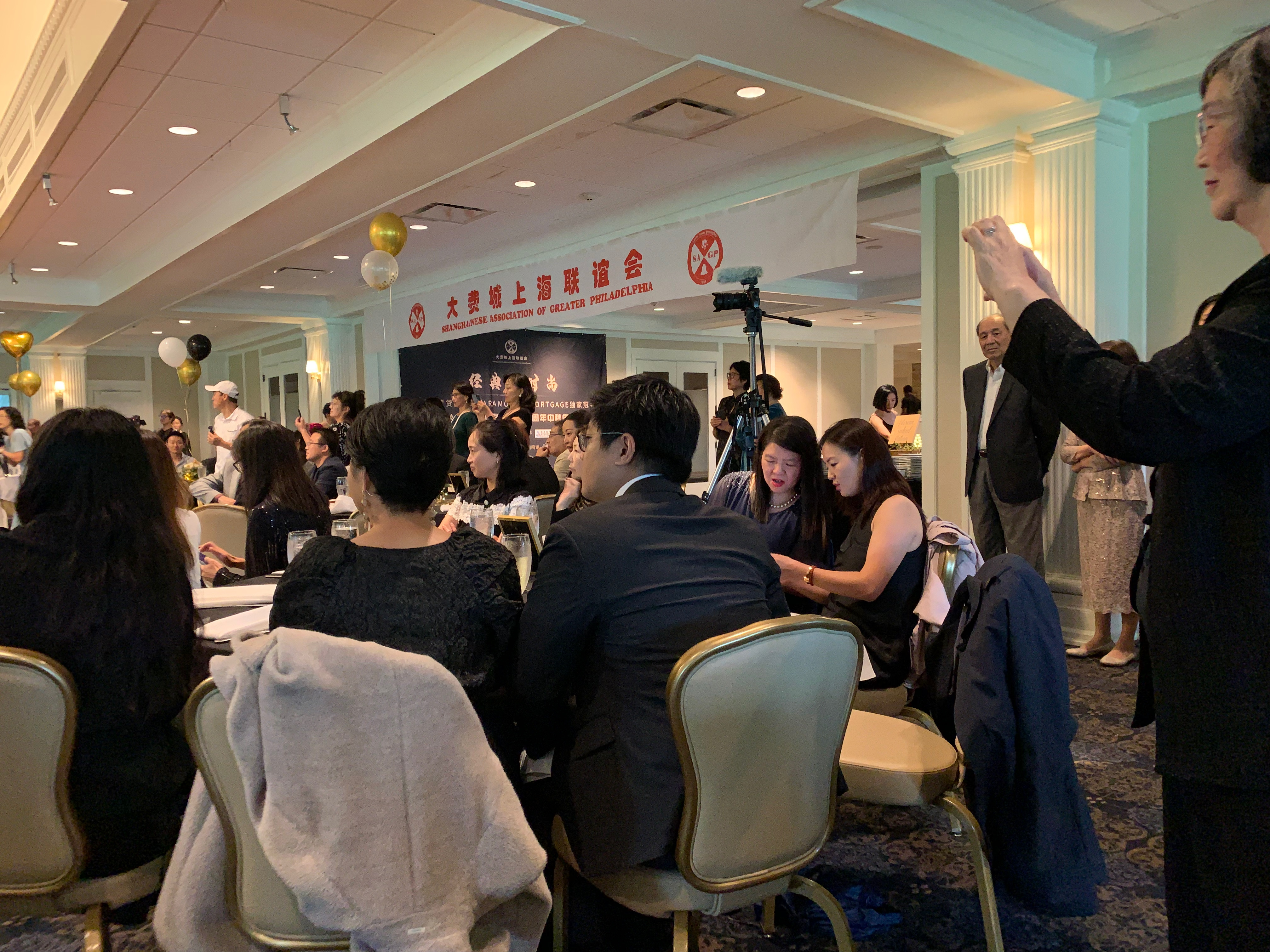
            On a rainy September afternoon at the Bluestone Country Club, in a ballroom surrounded by an empty golf course, the Shanghainese Association of Greater Philadelphia held its annual gala, and I was the only white person there.

            The agenda included music, singing, dancing, a fashion show, door prizes, and a buffet lunch. But overall, it was more like one big commercial. Since there was no English, my escort wife, born and raised in Shanghai, explained most of it to me, even though I figured out much of it myself.

            Once through the door, the first order of business was photography. Everyone, everywhere, was taking photos. On the path to the ballroom was a tripod mounted with a ringed light and a device that took and showed you five photos of yourself, then sent them to your phone. Long line for that.

            Next was a large, wall-mounted banner with the group’s name on it, in English and Chinese, and a hired photographer taking pictures for the group’s website. There was no formal line. Instead, you pushed your way forward in a competitive tussle.

            After that came the ballroom, with about 300 well-dressed people (told to wear black and white) mingling about and shooting with their phones.

            The proceeding began when a fit-looking man in a well-tailor suit addressed the crowd. Poised and confident, he had organized the event and helped secure a panoply of sponsors. At first, he welcomed the people. In short time, however, he pitched his real estate business and advised the group to connect with him on the Chinese app WeChat to learn about the newest real estate deals. He was an effective promoter of himself, and no doubt owned a significant piece of the area’s Chinese real estate market.

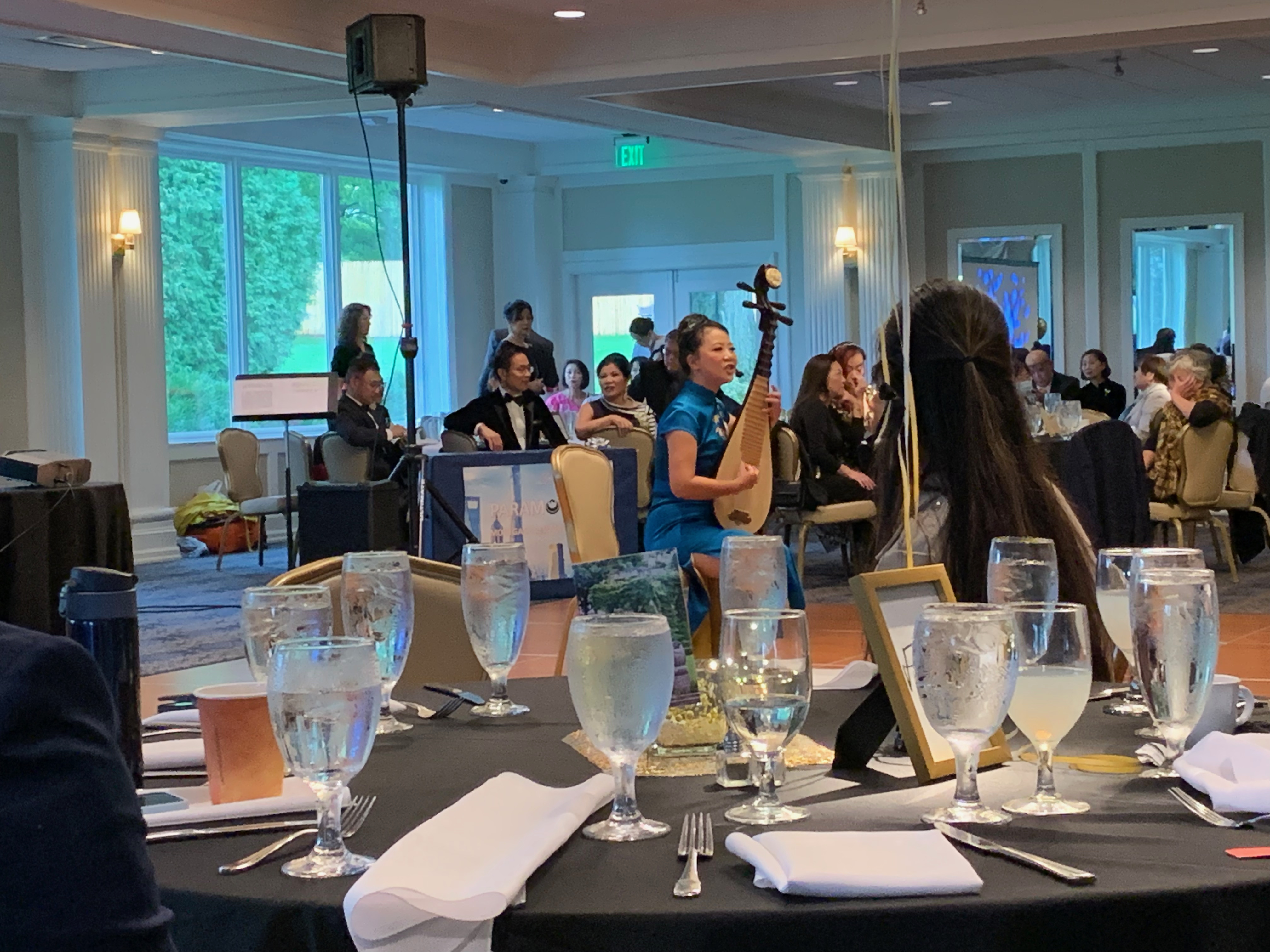
            He was followed by a musical performance, a woman in a traditional qi pao-style dress who sang and play an instrument called a pi pa, a sort of Chinese lute or guitar, pear-shaped with six strings. Aside from my wife, this was the only person at the party I knew, and I did not know her well. If fact, I hadn’t seen her for 20 years, and did not remember her name, if I ever knew it. My wife spoke to her first and addressed her as “lao ban,” a title of respect for a store owner. My wife was quickly advised by the lao ban that she no longer was a lao ban.

            There was a time, before streaming and serious Internet use, when my wife and I made regular visits to a bookstore and Chinese emporium owned by the former lao ban. It was on Race Street in Chinatown, a huge, two-story building filled with Chinese merchandise you could not get elsewhere. We went there often to rent Chinese language videos and buy a few books. Chinatown has developed a lot since then, with a more vibrant economy and new, more innovative entrepreneurs who displaced old-school, never-change Cantonese. Longtime establishments have been replaced with contemporary noodle houses, soup dumpling places, and dim sum joints. The lao ban, who had rented her huge building, probably was priced out of the market after Chinatown became hipper and the video and book market died. Where her business once stood, there is a two-tiered Asian food court.

            The lao ban, perhaps in her 60s, is now a musician and singer of Chinese opera. On this day the Bluestone Country Club had the perfect audience for her, but, unfortunately, an imperfect sound system. There was distressing feedback. The volume was too loud, and high notes came off like screeches. I felt bad for her as she played on. The feedback was fixed for the next act, but the system continued to deliver poor quality sound, which, I guess, the audience got used to. They cheered loudly for a young woman in a shiny, tight, blue-sequined jump suit who danced and sang a contemporary song called, “Give Me a Man at Midnight.” She was good, but I wanted to hold my ears. Others seemed more than content.

            Next, a contingent of trained amateurs took the floor and performed a waltz-like dance to the tune of Moon River. It was more like walking than dancing, but the women wore gorgeous gold dresses, and it was fun watching them. When it concluded, audience members were told where they, too, could get dance lessons.

            There was a fashion show, with women of various ages posing and strutting like runway models. This was followed by information on modeling classes. There was no entertainment related to banking, cosmetic surgery, or travel, but people pitched those services anyway.

            As the afternoon unfolded, I paid attention to language. I found it interesting that speakers addressing the crowd spoke Mandarin Chinese, the national language of China. But off stage, while chatting amongst themselves, they spoke Shanghai dialect. No one outside of Shanghai understands Shanghai dialect. It is spoken with pride by members of an exclusive group that considers its hometown the singular place in all of China for high style and hipness. To them, it is the epitome of elan, a better-than-New York equivalent of 26 million people. It has such appeal you must be born there to live there or get special permission to move there. The Shanghainese are a tribe, and they think highly of themselves. They have names for people who are not Shanghainese. And they have a name for their women, who are stereotyped as self-possessed, demanding, spoiled, and self-centered. It is both a polite and derisive term, a little like “Jewish American Princess.” The hard-to-handle women from China’s largest city are called “Shanghai little sisters.”

But back to the dialect, which I’m thinking helps to define Shanghai cool. While the dialect is substantially different from the national language, some alterations are slight. For example, the common Chinese greeting “ni hao” (literally: you good), was changed in Shanghai, for some reason, to “nong hao.” The common good-bye of “zai jian” (literally: see again) was changed to something that sounds like “zay way.” To decline an offer, the Chinese normally say “bu yao” (literally: don’t want). But the Shanghai residents slam those two syllables together, speed them up, and put a different sound at the front, saying “v-yow.”

Here is an example of how protective the Shanghai people are of their exclusive dialect. I was in the dessert line and the guy behind me struck up a conversation in English. He had come to the United States as a student in 1985 and trained as an engineer at Columbia.

“I guessed you’re confused by all this Shanghai dialect,” he said in a joking way.

            “Of course,” I said, “but I know a few words.”

            He looked at me as if that could not be true.

            Then I said the few words of Shanghai dialect I knew. Oddly, he repeated those words back to me in Mandarin. No, I said, I know the Shanghainese. And I repeated the words again, with him once again saying them in Mandarin, as if I were not allowed to speak that way or couldn’t possibly know what I was saying. Finally, I convinced him that I had gently penetrated the veneer of his beloved dialect. He smiled uncomfortably and shook his head. We both got dessert and parted.

So at the party, as the spoken word shifted effortlessly between a defining dialect and the linguistic standard, I thought about American English and concluded that there is nothing comparable to this in the U.S., no comfortable, communicative patois used in a secret way outside the button-down structure of society.  

Or is there? A question for another day.

            After the entertainment came lunch. When going to an affair such as this, one expects Chinese food. There was none. No chopsticks, either. The buffet was bread, salad, green beans, potatoes, pasta, pot roast, and salmon. The partygoers filled their plates high, without reluctance or aversion. I guess the country club chef didn’t offer a Chinese option, and that clearly was not a problem for this crowd.

            After about four hours, the party winded down. It was time to leave, and the rain was still heavy. We did not, however, get wet. Everyone received a well-built umbrella, courtesy of the Paramount Mortgage company, whose name appeared on the umbrellas in both Chinese and English.

            On the way out, the partygoers continued to define themselves as unique. You could hear lots of “zay ways,” but not a single “zai jian.” A group of young Shanghai little sisters, outfitted in fine dresses, pushed past me, seemingly arguing among themselves, or perhaps debating a point or two about the party, or maybe discussing where to go next. I didn’t understand a word of it, and I’m sure they took great comfort in that.

Discomfort in America and a Labor Movement Without Unions

16 Oct

By Lanny Morgnanesi

Something’s happening here. And to be frank, what it is ain’t exactly clear. There’s a man, and a woman, with an attitude over there, and a realization, and a new way of thinking, and opened eyes, and a tired will. He, and she, and an assortment of other strange, unfamiliar phenomena, have unknowingly cojoined to produce discomfort in America and the world. He, and she, and all the rest, have caused you to pay more for bacon and chicken wings and refrigerators and stoves. Because of her, and him, and all the rest, it is harder or impossible to get certain products, things you have always relied on, things that you always expected to be there. Because of her, and him, and all the rest, supply trucks to stores are late, half empty, or never arrive. Prepare to wait 26 weeks for kitchen cabinets.

         In the end, what he and she have done will result in something good for America.

         But what it is isn’t exactly clear. Not to me, anyway. Still, I’m trying to think it through, read about it, figure it out on my own. My conclusions may be accurate, semi-accurate or ridiculous. In these times, what does it matter?

         In these times, what broken and weakened unions failed to do – join workers in a wide confederation that confronts big management and rejects low wages, decimated benefits, poor working conditions and corrosive indignity – is being done quite effectively on an individual, uncoordinated, one-by-one basis. I’m speaking of  the men and women with attitudes, realizations, a new way of thinking, opened eyes, and tired wills.

         In short, disgusted people have decided not work. Without consulting each other, they have – separately but together – stopped making you breakfast at your local diner, they have stopped helping you find socket wrenches at Home Depot, and they no longer answer the phone at your doctor’s office. Without unions, without campaigns and encouragement, and without organization of any kind, much of America has gone on strike. The U.S. Labor Department reported in October that a record 4.3 million workers quit their jobs in August. I don’t know this for a fact, but I’m guess this is unprecedented in the history of the American labor movement.

Ships backed up in port, unable to unload

                   It’s really about time. New York Times columnist Paul Krugman says the typical American worker, after adjusting for inflation, hasn’t gotten a raise in 40 years.

          To illustrate the plight of the low-wage worker, a conceptual artist and self-taught engineer named Blake Fall-Conroy  built a machine as a way to duplicate the frustrations and hopelessness felt by workers. The machine is a box filled with pennies. It has a crank. When the user (worker) turns the crank, he receives payment in pennies for the time he or she has turned the crank. If payment is at the rate of $7.25 an hour, the federal minimum wage, the machine gives the worker one penny every 4.97 seconds. The payments stop when the cranking stops. Blake’s contraption begs the question: How long is the average person willing to turn that crank? Today’s labor shortage suggests the answer: Not long.

         In a New York Times story, we are told about Sandra Beadling, the manager of a Dollar General store in Maine. She’s claims to put in 70-hour workweeks (without overtime), doing the job of several employees, including stocking shelves. The story doesn’t mention her salary but does say she has a difficult time hiring people at the Dollar General rate of $12 an hour because Walmart is paying $16. In August, she got home from work one night at 11:30, left her house the next morning at 4 a.m. to do an inventory check, then quit. No more of this, she said.

         This is happening a lot.

         How can so many people just quit their jobs? How do they live?

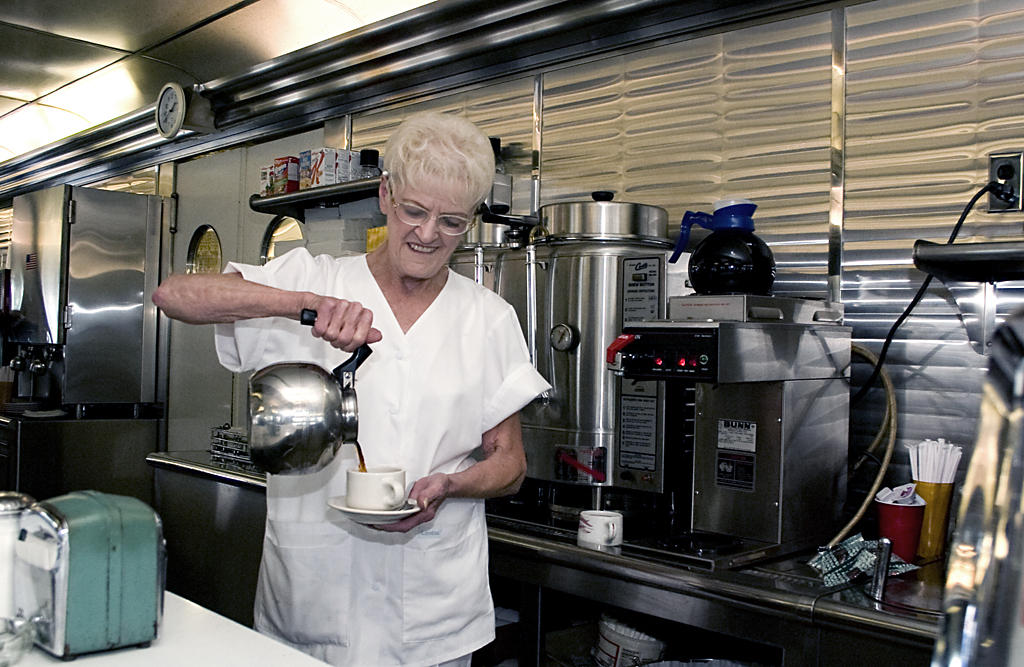
With people quitting jobs, it’s harder to get a cup of coffee

         Well, let’s hope they have a working spouse and some savings. But the person who quit no longer needs a car, can probably save money on lunches, coffee and clothes, no longer has to pay for daycare or now can provide free daycare for grandchildren. They also can earn extra cash as a free agent in the gig economy, working when they want for companies like Uber and Door Dash or even Amazon delivery.

         The quitter might actually come out even, especially is you add value to free time, family time and the absence of stress and aggravation.

         But as I said, it’s not exactly clear what’s going on. There is indeed a labor shortage related to the COVID-19 pandemic, with some people unwilling to work jobs that put them at risk. Also, some factories may have shut down due to COVID, making it difficult or impossible to get certain products. Then there are demand shifts that have caused havoc in the market and its supply chains. For example, in the beginning of the pandemic, there was this idea that automobile sales would suffer but people staying at home would buy more gaming systems, kitchen equipment, exercise equipment, hair clippers, and so on. So computer chip factories that were still operating shifted production away from chips used in cars and trucks and began focusing on chips for home electronics. When the auto market roared back, there weren’t enough chips for the new cars. Since then, the price of used cars has risen to unbelievable heights. And  because of all those orders for gaming systems, kitchen equipment, exercise equipment, hair clippers, and so on, container ships are clogging American ports and there are not enough dock workers to unload them. There is also a shortage of containers.

         Fueling some of our current woes is an energy crisis in China, Europe and elsewhere. We are ordering more from China, but China is running short of coal to fuel the factories that make the products we want. Major flooding has shut down major Chinese coal mines, and China somehow got into a spat with Australia, a main exporter of coal to China, and China no longer buys from them. So coal prices have soared and China is forced to conserve by shutting down factories. Naturally, it takes longer to get your Chinese-manufactured goods.

A coal shortage in China has caused factories to shut down

         Meanwhile, in Britain, non-British truck drivers (and there were a lot of them) were forced from their jobs when Britain exited the European Union. Fuel is going undelivered, as well as other goods. Food is rotting in fields.

         So the world’s in a mess.

         Again, while it is not quite clear what is happening, my main culprit in all this is mostly unseen, unless you look closely. It’s a demographic shift caused by income inequality. And I’ll explain this simply and quickly:

         All around the world, a higher percentage of wealth has accumulated in a smaller number of hands. The hands that go wanting see no reason to incur the added cost of children and family, and populations fall. Meanwhile, the large number of older people – part of a population boom after World War II – are retiring and leaving their jobs, or dying and leaving their jobs. With so few young people coming into the job market, and with the widespread anti-immigration movement keeping foreign workers out, there aren’t enough people around to fill the vacant jobs, especially low-paying jobs. Important things don’t get done anymore.

         The end.

         And so, wages must rise – significantly. Inequality must ebb. People must once again feel the degree of economic security that convinces them to bear children and work hard at their jobs, to strive for something better rather than withdraw from something worse. The process will be slow, but inexorable. When it happens, maybe everything will once again become clear. And balance, now out of whack, will be restored.

Some condemn immigrants; many benefit from them

28 Nov

dim-sum-garden2

As a twist to what is current, I’m writing positively about immigrants.


Whether we acknowledge it or not, newcomers have always played a role in improving American’s special brand of capitalism. A recent innovation I stumbled upon involved food, a truck and a series of parking lots around the Philadelphia suburbs.


The participating entrepreneurs are Chinese and the heart of the operation is

a Chinese app called We Chat. This single app, available in English and Chinese, is something like Facebook but has been built out so it is many apps in one. It is used by millions of Chinese people around the world to do things for which Americans use multiple apps. Now it is being used to find and organizing markets for products.


Business people from Philadelphia’s Chinatown section use it to sell food products to people in the suburbs who might not want to drive into Chinatown. There are a number of groups doing this.  I’m not sure how many, but I know one sells just mushrooms, one vegetables, and one food from Xian province.


The seller I did business with was selling frozen dim sum products. They buy from wholesalers and sell in bulk, mostly on the weekends.


As the weekend approaches, We Chat is used to tell buyers what products are available in the upcoming delivery. Most important, they are informed of the the times the food truck will arrive and depart from each parking lot on the delivery circuit.


The customer orders using a phone and is given an order number.


The closest stop to my house is about 20 minutes away, and the truck would be there Sunday from 10:20 a.m. to 10:50 a.m. It’s a small window because the truck has to move on to the next lot and new customers, like a bus on a schedule. I arrived around 10:15, and saw an unmarked truck at the far end of the lot, away from a large shopping center. That was it.


The back of the truck was open and loaded with boxes labeled with numbers. There was a man inside.


On the ground was a woman with a clipboard.


“I’m number 56,” I told her.


shanghai-house-xiao-long-bao

I had ordered two 5-pound bags of something called Shanghai Xioa Rong Boa. In English they are called soup dumplings. These dumpling have become a big hit in several newer restaurants in Chinatown.


Not long ago, Chinatown in Philadelphia was a tired, weary, unexciting place. The restaurants were dirty and the menus hadn’t changed in years. Most, I believe, were owned by long-established Cantonese. Now, after a whole different wave of Chinese immigration, there is a new breed of entrepreneurs in Chinatown. They have opened stylish eateries with fresh, fun, unusual offerings. Some are inexpensive and have attracted large numbers of urban hipsters.


As a result of this renaissance, soup dumplings are found all over Chinatown. They come in several varieties. To properly enjoy them, you have to master the technique of eating them.


The soup dumpling exterior skin is made from dough. Inside is the filling, usually meat and soup. If you eat them wrong, you risk scolding your tongue on the hot soup, or exploding the dumpling and having soup cascade onto the table and your clothes.


One way to eat them is to use a Chinse soup spoon. Put the dumpling on the spoon and take a small, gentle bite of the skin. Let some of the hot soup leak out onto the spoon, where it can cool. In addition to cooling, this releases the pressure and prevents an explosion. Sip the cooled soup then, after a moment, bite fully into the dumpling or put the whole thing in your mouth.


At Dim Sum Garden on Race Street you can get an order of eight pork soup dumplings for $6.25. These are fresh, not frozen. You can even watch them being made. At the truck, a bag of 100 frozen dumplings is $20.


“Only two bags?” the woman outside the truck asked.


“Yes, just two.”


The man inside put my order in a plastic bag. From the looks of things, all the other orders were in larger boxes.


“And, I heard you get a free drink,” I said.


The man in the truck put a can of Sacred Lotus Leaf Herbal Tea in my bag. As required, I paid in cash.


The tea was from Fujian province in China but the frozen dumplings came from a factory in the Maspeth section of Queens, right near Brooklyn. The commercial neighborhood was established in the 17th century by Dutch and English settlers. I guess immigrants continue to operate strongly there. In fact, Queens – the home of President-elect Donald Trump – may be the most diverse town in all of America, maybe the planet.

queens

“There are 1 million immigrants and a mix that is perhaps unprecedented in this borough’s history,” said Joseph Salvo,  a demographer with the city Planning Department.


He said the population is almost equally divided among Asian and Hispanic groups from countries such as China, Guyana, Ecuador, Colombia, the Dominican Republic, India and Korea.


Either way, someone there in Maspeth was working a job that helped bring soup dumplings to my table, and people closer to my home have come up with a great and inventive alternative to food shopping in the city.


The whole thing seems pretty good, and my thanks go out to the immigrants – or sons and daughters of immigrants – whose hard work and clever approach made it happen. They were attracted to the U.S. because of our system. They learned it, and grew it, and allowed many to benefit from it.


Bon appetit! Or maybe I should say, hen hao chi!


Lanny Morgnanesi


Something I recently learned

3 Mar

Chinese-students

The reason Chinese students have the highest test scores in the world is because they cheat.

If that is not entirely true, it is at least partially true.

In the U.S., Asian and Asian-American students appear to work harder than their Caucasian classmates. Anyone who has observed this can easily believe the reports of China’s international dominance in reading, science and math. Test results say students from Shanghai lead the world, with the U.S. as a whole coming in 29th.

Why is it then that Americans always win an unusually high number of Nobel Prizes while the Chinese win very few?

Well, maybe we’ve rigged that system – which is something the Chinese seem to have done with the system of international test scores.

Book-Afraid of the DragonA new book has put a spotlight on the weaknesses of the Chinese education system and exposed fraud and cheating. It was written by Yong Zhao and is entitled, “Who’s Afraid of the Big Bad Dragon? Why China Has the Best (and Worst) Education System in the World.” A full discussion of the book can be found in a Nov. 20 article by Diane Ravitch in the New York Review of Books. (subscription required)

Here are three items plucked from the review:

  • It is not uncommon for Chinese test takers to use wireless cheating devices.
  • Sometimes the students just buy the test answers on the open market.
  • When there was a rare crackdown on cheating in Hubei Province, a riot broke out. Two thousand people reportedly smashed cars and chanted, “We want fairness. There is no fairness if you do not let us cheat.”

This is not to deny that there is incredible test preparation in China. One famous test-prep school starts at 6:30 a.m., finishes at 10:30 p.m. and gives homework. But do these students actually learn anything? There is increasing legitimacy, in both America and China, in the argument that teaching to the test does not a genius make.

In the final analysis, creativity and innovation are sacrificed.

PISA-test-scoresZhao points out that the Chinese invented the compass but instead of using it to navigate the globe, they used it to find locations and burial sites with good fengshui. He said China – which had no Renaissance, no Enlightenment and no Industrial Revolution — was the first with gunpowder but never used it for modern weaponry.

Then there is this business of the Nobel Prize. A quick search of the Internet shows the Chinese have won six while the U.S. has won 353.

In his book, Zhao quotes a professor at Beijing University who says that since 1949 there has not been a single Nobel laureate among the 1 billion people educated in mainline China:

“No one, after 12 years of Chinese education, has any chance to receive a Nobel prize, even if he or she went to Harvard, Yale, Oxford or Cambridge for college. . . . This forcefully testifies [to] the power of education in destroying creativity on behalf of the [Chinese] society.”

It’s been said that Zhao wrote his book to convince the U.S. not to discard an education system that emphasizes fresh ideas and the spirit of individualism. It’s for certain he doesn’t want us to be suckered in by reports of China’s high test scores.

Standardized tests and teaching to those test is a growing America practice due to current government policy, but Zhao and Ravitch warn:

If the West is concerned about being overtaken by China, then the best solution is to avoid becoming China.


My own opinion is that the Chinese are a lot smarter than Zhao lets on. For one, I think Chinese mariners of old did a lot more global navigation than his statements suggest. And with respect to gunpowder, in some circles China might be considered highly moral and civilized for preferring firecrackers over canons.

I’ve been amazed by both the ancient and the modern Chinese mind. Its effectiveness should never be underestimated or said to lack creativity. If the American mind has dulled – and there really is no evidence of that – it is because it has become too comfortable. Fortunately, the Chinese economic miracle has given it some discomfort.

If it is napping, it will surely wake, and soon.

By Lanny Morgnanesi

Let me tell you a story about a man, a horse and a joke

5 Apr

The jokes of a people tell you much about the people.

A little hobby of mine is to learn of and listen to the jokes of foreign cultures. I’m proud to say that with patience, an open mind and an attention to the nuances of language, I’ve been able to laugh alongside many a hysterical foreigner.

In so many cases, it’s really about the language, which because it is not English can be used in ways that English cannot.

Chinese, for example, has so many sound-alike words that there is an entire genre of Chinese comedy called Cross Talk, where Abbott and Costello-like characters stand on stage and grossly misunderstand each other. These bits are much like “Who’s On First.”

This week, large numbers of Chinese people are cracking up not over misunderstood language but over a short video. It is of a man getting brutally kicked in the head by a horse. The humor is not in that brutality but in a message conveyed by the kick – a message that has nothing to do with animals.

Here’s the background.

In China, there is a popular idiom that translates literally to: “Pat the horse’s ass.”

When someone pats the horse’s ass, they are sucking up to the boss or flattering people to get ahead. We use the similar expression, “kissing ass” or “brown nosing.”

While many Chinese have benefited from patting the horse’s ass, there is a danger to the practice if it is too transparent. It can backfire. Most Chinese who watch their sycophantic colleague advance would prefer that they fail. No one likes as ass kisser.

In the video widely circulating among Chinese, the victim, prior to being kicked so hard and so directly, walks across the street and actually pats the horse’s ass.

The payoff for doing so is pretty damn clear.

And that’s why it is so funny to this culture that relies heavily on metaphor and symbolism. The humor is achieved without a single word.

All right now Mister and Misses America — DO YOU GET IT?

Lanny Morgnanesi

https://www.youtube.com/watch?v=n5pN5kR8vco

Communist is jealous of former Communist

3 Jul

Putin-Xi Jinping

Xi Jinping, the president of China, visited Moscow in March for talks with Vladimir Putin, the president of Russia. Xi is a Communist. Putin used to be one. Still, the non-Communist impressed the still-Communist with all the things his country is doing for its people.

Back home, Xi told the Chinese how impressed he was with Russia’s ability to care for its citizens. In the U.S. we call this welfare, food stamps, handouts and the dole. Those who don’t get it resent government for giving it. But Xi thought it was noble and Putin said any government that denies its people the basic components of life has no heart. Worse, he said, doing so creates stress, anxiety, dissatisfaction, crime and turns people into animals.

Xi seemed concerned that China has not done quite as well as Russia. He told his people that Russia provides five guarantees:

  1. Free housing.
  2. Free medical care (but not medicine).
  3. Free education (including one meal a day).
  4. Free public water.
  5. Government review and approval before any company can layoff off a worker.

Putin, a tough old bastard who was a lieutenant colonel in the KGB, sees this as civilized and helpful in building the economy and keeping people happy and productive.

Would you be happier and more productive with these things? Or would you hate yourself and your government?

I always thought we didn’t have these things because the rich people had taken all the money. But in post-Communist Russia the rich people also have taken all the money.

So how do they do it?

Maybe by using what they saved from pulling out of Afghanistan.

I’ll end with a joke – a true story.

A former United States secretary of defense during the Cold War visited new Russia and was amazed.

“Everyone is rich,” he said. “They drive big cars, smoke big cigars, have money bulging out of their pockets. On their arms are beautiful women. It is just like Beverly Hills, except there are fewer Communists.”

By Lanny Morgnanesi

Watching the human condition from an airport waiting room: the toll of fate and time.

29 Jun

iraqi-refugeesHumanity struggles.

A good place to observe this is the international gate at Newark Liberty Airport. It is not a struggle for life and death, just life, and the simple routine of getting to where one must be.

Almost no one here resembles the highborn. Save for a few Japanese, all are dressed casually. They seem vulnerable, dependent on unseen forces disinclined to treat them well; at the mercy of an uncaring system.

Pale complexions are few. Most of those must be off somewhere else; perhaps in a special room that requires a card to enter. Out here, little English is heard, although most speak it. As bilinguals, this actually puts them above the cloistered monolinguals.

While there is struggle, there is no real suffering. Indeed, some smile. But the smiles cannot mask anxiety, impatience, fear of the unknown, crying babies that need to be fed, heavy belongs that need to be carried awkwardly from one place to another like a ball and chain.

Many are traveling for pleasure, but this doesn’t resemble pleasure.

But let me clarify.

The transit experience at Newark Liberty Airport is really not all that bad. While I have reported accurately and expressed true feelings, I was greatly influenced by what I was reading.

Such as: a story about 3 million Afghan refugees; a story about 1 million Syria refugees; the review of a book by R.M. Douglas called, “Orderly and Humane: The Expulsion of the Germans after the Second World War.”

Book cover -- Orderly and HumaneWith respect to the latter, as you might suspect, the forced relocation of 13 million German civilians from Central and Southern Europe was neither orderly nor humane. According to Douglas and history, it was much like the relocation of the Jews during the Holocaust – only this time the atrocities were committed by Americans. The Germans were transported in locked rail cars, kept in concentration camps and rarely fed.  Most were women and children. About 500,000 died.

So as I read I also watched. I saw people moving about uncomfortably, sullen, waiting, waiting and waiting. I thought of all those who risk everything – mostly life — trying desperately to get somewhere that is not worth going to. All in all, the United Nations estimated that in 2012 the world contained about 10.5 million refugees.

Then, in my boredom, I recalled an elderly Chinese woman I once knew. After World War II, she moved to America with her husband-scientist. Late in life, they bought a suburban house that was as large as some small hotels. It had a finished basement so grand that the couple used it as a ballroom.

At a dinner party, this woman casually told me how she left Shanghai on foot – with masses of others – after the Japanese invaded in the 1930s. She was headed many hundreds of miles away, toward Central China, where there were no Japanese. Along the way, it was not uncommon for the migrants to be bombed.

This woman, on the most treacherous journey of her life, may have retained some hope. But amidst war, hunger and death, she most certainly was not thinking how nice it would be to one day live in a $2.5 million house and invite people over to dance.

How powerful the effects of fate and time!

The people at Newark Liberty Airport, at least for now, aren’t going to die, or starve or be forced to live in tented refugee camps (although a few may already have done that). Even so, some, maybe even me, could experience it in the future. It takes only an atrocious natural disaster, an attack on critical infrastructure or a few super microbes that destroy either food or people.

We will all go a running.

How powerful the effects of fate and time.

I somehow see this, or fear this, as I observe a relatively small mass wend its way through a limited but wholly sufficient transportation network. Suppose that network was not sufficient?

Chinese city-ShenjenIn the very near future, over more than a decade, the world will witness a planned event that will be either a migratory miracle or a disaster of incredible proportions. It probably will be both. The Chinese, perhaps recalling other great shifts, plan to relocate 250 million people from the countryside into cities, many newly built for this purpose. This number exceeds the combined populations of all large cities in America. It is the equivalent of moving almost 80 percent of every person in the U.S.

The Chinese are accustomed to solving big problems with big solutions. The purpose of this one is to spur economic growth. Living in rural poverty, as so many Chinese do, adds little to the economic engine. In cities, these same people are expected to be better producers and consumers.

It’s a very bold plan.

Will it break hearts, souls and spirits?

Will it strip people of their heritage, culture, routines and roots?

Might it possibly create contentment, an unthought-of elevation in living standards?

Perhaps even an increase in ballroom dancing?

What it will do for sure it put people where they never expected to be.

How powerful the effects of fate and time.

Should I be in China during this epochal migration, I will try to keep off the main roads and certainly stay out of airports. They are simply too depressing.

By Lanny Morgnanesi

A land once overcrowded now builds cities for no one

9 Mar


Struggling to sell real estate. -- NEW YORK TIMES PHOTO

Struggling to sell real estate. — NEW YORK TIMES PHOTO


A Chinese casino dealer from Vancouver called about an investment. He said vacation homes in China’s tropical Hainan Island, off the southeast coast, were selling for 600,000 yuan or about $92,000. A friend of his bought 16.

China once had no room for its people. Dingy one-room apartments were the norm. That was 25 years ago. Today, there is housing galore. There is so much housing that many cities are completely empty.

Shiny, modern, architecturally splendid ghost towns.

They’ve been built for no one.

According to a report on CBS’s 60 Minutes, these empty new cities are being constructed at a rate of 20 or more a year.

The ghost towns – the name used for them by the Chinese – are not modest. They are grand, with rows of skyscrapers. Many resemble Manhattan.

Why are they being built?

They are being built because people like my friend and his friend are willing to buy them whether they are empty or not. People want to buy them because they see housing as a sure investment, with prices – because of massive speculation – going up and up and up, as if there will be no end to it.

To a smaller extent, this happened in the U.S. Remember? Homeowners all thought they were rich, or would be soon. A bubble was created, and it burst, causing the recession of 2008. The thought of easy money (the easier it looks the harder it hooks) causes people in both the West and the East to lose all reason. But how in God’s name can someone look upon an empty city, knowing that many other empty cities exist, and think real estate is a good investment?

How can developers get financing for these cities? How can an economy that not long ago could not feed its people sustain such ridiculous, irresponsible and wasteful practices? It strains my mental capacity to come up with answer.

But I feel confident of this: Soon there will be great hell to pay.

As the high price of wheat caused an Arab Spring, a drop in housing prices could cause revolt and even revolution in China. I see it as that serious. Average people have invested entire fortunes that will most certainly be lost. Chaos will follow, but it won’t bring back the money.

The Chinese government has tried to cool the housing market and stop the wild speculation. Recently, it said it would apply a 20 percent tax on the sale of investment homes. The New York Times photo at the top of this post shows people struggling to sell their properties after they learned of the new tax.  The Times also reported that couples are getting divorced as a way to skirt the tax and have two people claim residence in two houses.

Some China experts say crafty people will find ways to avoid the tax or the government will end up ignoring it.

So, the frenzied buying of homes is not likely to stop soon. It’s like a contagious disease. Even I would like to have a $92,000 vacation home on lovely Hainan Island if it will be worth $200,000 in a year or so. But if I can control myself and wait a little longer, I might be able to get it for $10,000 – or maybe two for 10.

In a country of 1.3 billion people, I’ll probably have the Hainan beach all to myself. A ghost beach is so much better than a ghost town.

By Lanny Morgnanesi

http://youtu.be/KjOuDmy1ybE

A Buddhist would have no trouble with this

17 Jan

Chinese labor camps

It could be argued that all experiences are good ones.

Philosophically, we could say that if God is good and great then all our burdens are worthwhile and purposeful. We can even learn to like what we hated.

Last week in a bar I told a story of one of the worse nights of my life. I told the story with verve, delight and nostalgia. I got laughs. I was glad to tell it; glad it happened; glad to learn from it. For the first time I realized I was glad to have this piece of film on my reel.

It is too personal to tell here, so I won’t. Its importance is not in the sharing but in reminding me that the misery of each moment carries within it a miraculous value.

It was more than the bar story that forced this revelation. There was also a news story about China. The report said China might dismantle its system of labor camps.

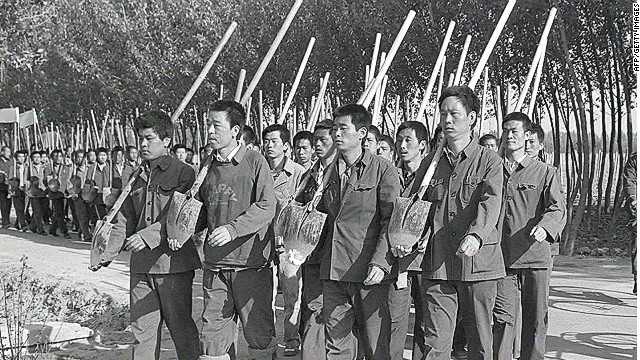
I have no idea what a modern Chinese labor camp is like, but I’m familiar with the tradition of locking up political prisoners and trying to “re-educate” them. I’ve known many people who were victimized by this system during the Cultural Revolution of the 1970s. Some were driven to suicide or to the brink of it.

During this period, all schools were shut and an entire generation of young people was sent to the countryside to labor on farms. Some were considered “red,” or part of the revolution. Others were labeled “black,” or counter-revolutionary. For them it was harsher. They were watched closely and always under suspicion.

While all worked together, the “blacks” were more like prisoners and the “reds” more like guards.

From a first-hand witness I heard a story of a young woman – a “black” – who was laboring in mud. To keep the dampness out of her cloth shoes she put in newspapers. When everyone returned to their rundown barracks, a “red” youth noticed the newspaper inside this woman’s shoe contained a picture of Mao Zedong.

For that show of disrespect she was beaten.

But like myself in the bar story, this was a time of youth. The times contained moments of ultimate value.  Lasting friendships (even between blacks and reds) were forged. These “sent-down” youth, in some respects were very free. They grew up and learned about themselves and others. There is joy in that.

Which is why many Chinese from that generation – those living both in China and in the United States – visit these former labor camps while on vacation. It’s a for-real trend, and they visit with fondness and to share old times with comrades. They take smiling photos of themselves standing near the squalor they thought would be a permanent part of their lives. (Modernization hasn’t changed everything.)

What they went through is far, far, far from my so-called worse night. Yet they have reacted as I did. Their moments carried something and will occupy a peaceful part of their memories.

I don’t claim to truly understand this, and the exceptions must be legion. Even so, there clearly is something to this idea that all experience is good. And so my new goal is not to wait 30 years for warm nostalgia but to live fully and happily in the present.

To accomplish that in even a small measure would be exquisite.

By Lanny Morgnanesi