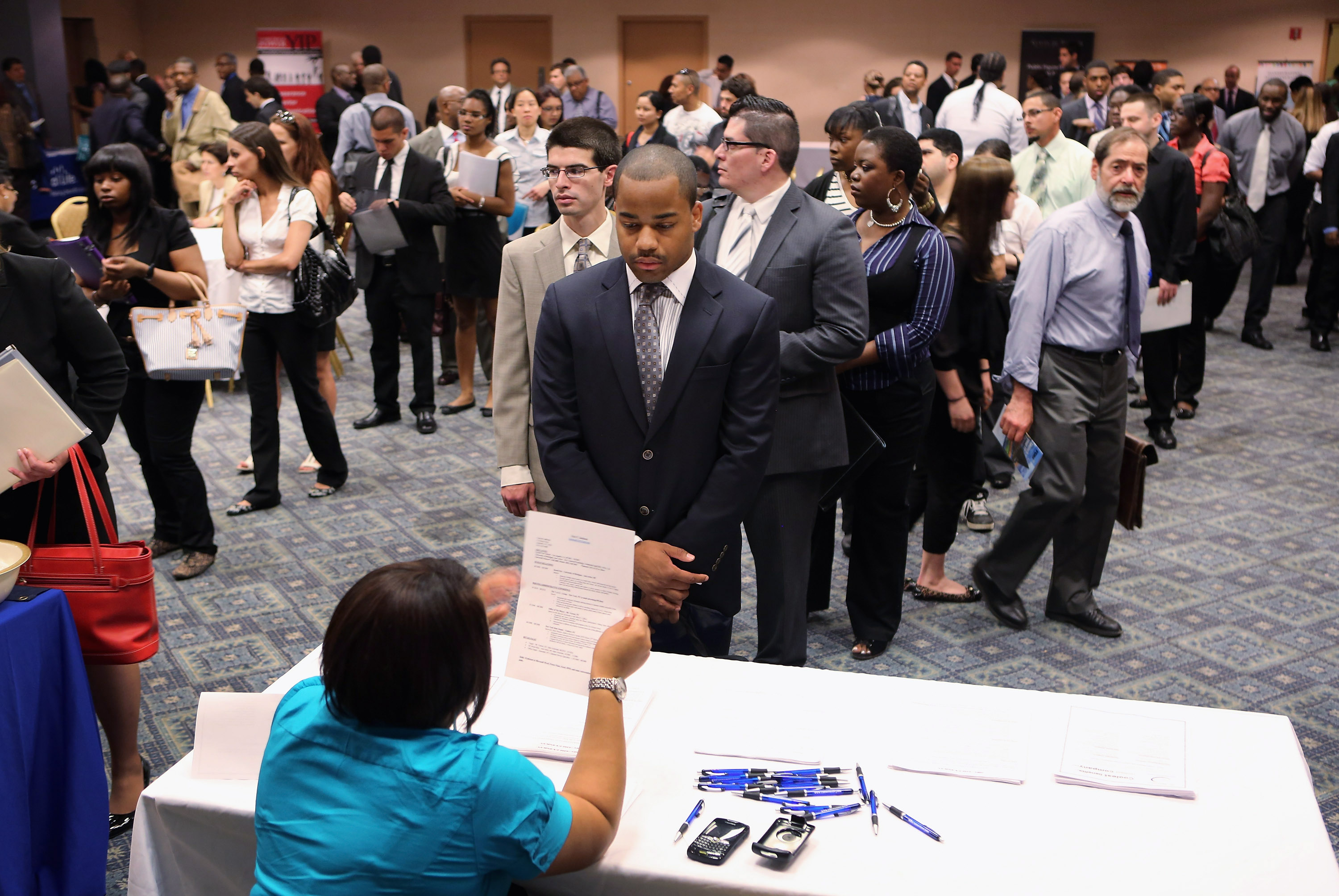
I hear more and more people complaining about shiftless hordes who don’t want to work. Maybe they know something I don’t, but when a supermarket near my house opened, 10,000 people applied for 400 jobs.
At a convenience market where I buy coffee, a cashier was complaining about her job, remarking how things are done differently at the other two places where she works.
There was a time when nearly everyone could work a single job, or perhaps two, and survive. Not so today. Wal-Mart has made billions for its founders but in Canton, Ohio, one store found it necessary to hold a food drive for its own employees.
The poor work, but still draw resentment.
John R. Kasich, the Republican governor of Ohio, told his cabinet, “I’m concerned about the fact there seems to be a war on the poor. That if you’re poor, somehow you’re shiftless and lazy.”
When the poor ask for more, the rich counter with charges of class warfare – hiding the fact that such a war actually is being waged in the opposite direction, and with great effectiveness.
I fully understand the propensity of the rich to take and hold all they can. Despite the efforts of Christianity and the other great religions, intense greed is endemic.
But why do so many average people believe that social programs primarily serve the indolent?
For sure, there are cheats. Lots. Nothing sends off a member of the middle class like watching someone use food stamps for groceries then buy cigarettes with cash. (This isn’t even cheating.) Such stories, sadly, prevent the recognition of real need.
In America, we are all tense and frustrated and filled with resentment and fear and sometime hate. For the angry Middle Class, the easiest target is the unemployed, who have come to represent a fault-filled force that siphons off taxes. Without such targets, many people would have a tough time getting through the day.
What can we do to stop this inner angst, this potentially explosive and destructive energy? We’d be so much better off without it.
Maybe the remedy is safe, secure, fair-wage jobs and the return of a culture of opportunity and equal advancement.
People find happiness in work, not welfare.
Corporations all over the U.S. are holding billions in cash. Might there be investment and jobs somewhere in those stashes? If we’ve all got to vent, why not send a little steam up instead of down? It’s time to stop wasting energy trying to disband a phantom nation of the lazy. It’s time to get to the real problem.
When we think of Venezuela, and we often don’t, we think of a socialist country that makes trouble for the U.S. What we should think of is a South American nation obsessed with beauty queens and curvaceous figures.
To attain the ideal look in Venezuela, surgery of various sorts is employed. Females who have it performed are known as “operated women.”
This is a bit of background for the success story of Eliezer Álvarez, who makes mannequins. (Can you see what’s coming?) His story was told yesterday in the New York Times.
Business was off for Mr. Alvarez. He analyzed the situation and realized his mannequins were not a fair representation of the model Venezuelan woman. So he augmented them, according to the Times, with “bulging bosom and cantilevered buttocks, a wasp waist and long legs.”
It worked. Business picked up. In fact, his “operated” mannequin has become the standard for all clothing stores in Venezuela.
We could look at this turn of events and conclude that such a nation, socialist or not, cannot possibly be a threat to us. Or, we can withhold judgment until the operated mannequins hit our own stores.
As a cultural influence, politics and religion cannot compare with the undertow of forceful, tenacious displays of sexuality. In the presence of such displays, the intellect of men evaporates. I sense women fall prey to these traps for reasons beyond love, affection, attention and advancement. But I don’t know what they are.
The utter ridiculousness of it all is told in a joke that I don’t think was meant to have much meaning, but in a way it gives a subtext to all of history. I’ll sum it up:
Three women apply for a single bank teller job. The manager tries them out for a day. At closing time, the cash draw of the first is $50 under, the draw of the second is $50 over, and the draw of the third balances perfectly. Who gets the job? The one with the big ….
In the online comments section to the Venezuelan story, and Asian woman who said she is proud of her small breasts wrote:
All I can imagine is someday, future archaeologists will be able to find out so much about our civilization from all the surgical implants and devices found in our empty coffins.
In the early days of football, a touchdown was worth zero points.
A touchdown, however, gave you the right to kick the ball between two poles that were connected by a string. If the ball sailed over the string, the kicking team scored one point.
In those days, most of the rules were negotiated before each game – included how many players would take the field. In early football, there were no quarterbacks, wide receivers, first downs or forward passes.
By the way, 18 people died playing old-time football in a single year, 1905.
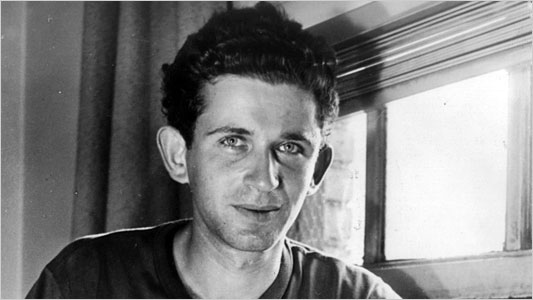
Growing up and trying to write, I admired Norman Mailer. Oh, he had his bad points, but I thought he was fantastic. His fame as a character/celebrity was a self-creation but as a writer he was genuine.
There is a new biography out on him. It is “Norman Mailer: A Double Life,” by J. Michael Lennon. I haven’t read it, but I did read a review of it in the New York Times by Graydon Carter, the editor of Vanity Fair.
Carter does a wonderful job of describing Mailer:
It could be said that Norman Mailer was a man and a writer halfway between fame and infamy and yet with little in the way of middle ground. He was, in varying combinations, a world-class drinker, feuder, provocateur, self-mythologizer and anti-feminist. He was a war protester, a mayoral candidate, a co-founder of The Village Voice, as well as a wife stabber, a serial husband (of six wives), and a father (of nine). He was a boxer, an actor, a filmmaker, a poet and a playwright. He was also a journalist and a novelist of enormous and singular narrative inventiveness and thrust, a two-time Pulitzer Prize winner, and one of the least boring and most tireless and tiresome public figures of the last half of the 20th century.
I heard Mailer speak at the University of Missouri during the ‘70s. Always the showman looking to shock, he opened with a dirty joke. It was a good joke. The most interesting thing about the joke was it knocked him down a peg or two on the masculinity chart. This is unusual for a he-man self-inflator.
Here is the joke, which I clearly remember after all these years.
“I ran into one of my ex-wives recently. She had gotten herself a young new lover and so I asked, ‘How does your boyfriend like that old, worn-out pussy of yours?’ She answered, ‘He likes it just fine . . . once he gets past the worn-out part.”
One thing about this great mind, who loved verbal combat: Sometime he tried too hard and flopped. He’d come off like an ass. This happened on the old “Dick Cavett Show” when he went up against both Cavett and his mortal enemy, writer Gore Vidal.
I had watched the original show and was so disappointed in him. A clip of the performance has been posted on Youtube and I’d like to share it with you. Your thoughts on Mailer and this video would be greatly appreciated. I would guess Mailer had many more enemies than fans. Which are you?
The man whom I will call the Martin Luther King of Israel has died at 93.
He was Rabbi Ovadia Yosef, a leader in politics and religion.
It is doubtful anyone else has compared him to the American civil rights leader, but that’s how I see it. Just as there is black and white in America, in Israel there is Sephardic and Ashkenazi. The Sephardim are the underdogs. Rabbi Yosef was their advocate and protector.
Rabbi Ovadia Yosef
Most Americans think of Israeli Jews as homogenous. This is because most American Jews are of European descent, which makes them Ashkenazi. Overlooked and mostly out of sight in the U.S. are the Sephardim, who are Jews from the Middle East, North Africa and Spain. This group has more in common with Arab culture than with European culture, hence the dichotomy and the basis for discrimination.
It is dangerous for a non-Jew, such as myself, to write about the social fabric of Judaism, especially when the writer has never been to Israel and never witnessed the relationship between Sephardim and Ashkenazim. So let it be known that I write with interest rather than authority.
It is of little consequence here, but a casual friend is a Sephardic American. He has never mentioned the word in my presence, nor has he ever discussed any difference between himself and any other Jew. His ancestors are from Morocco. His mother lives in France, is very refined, quite fashionable and appears wealthy. She reminds me of Jackie Kennedy. These things are all counter to the negative stereotype of the Sephardim, which I learned of only through television.
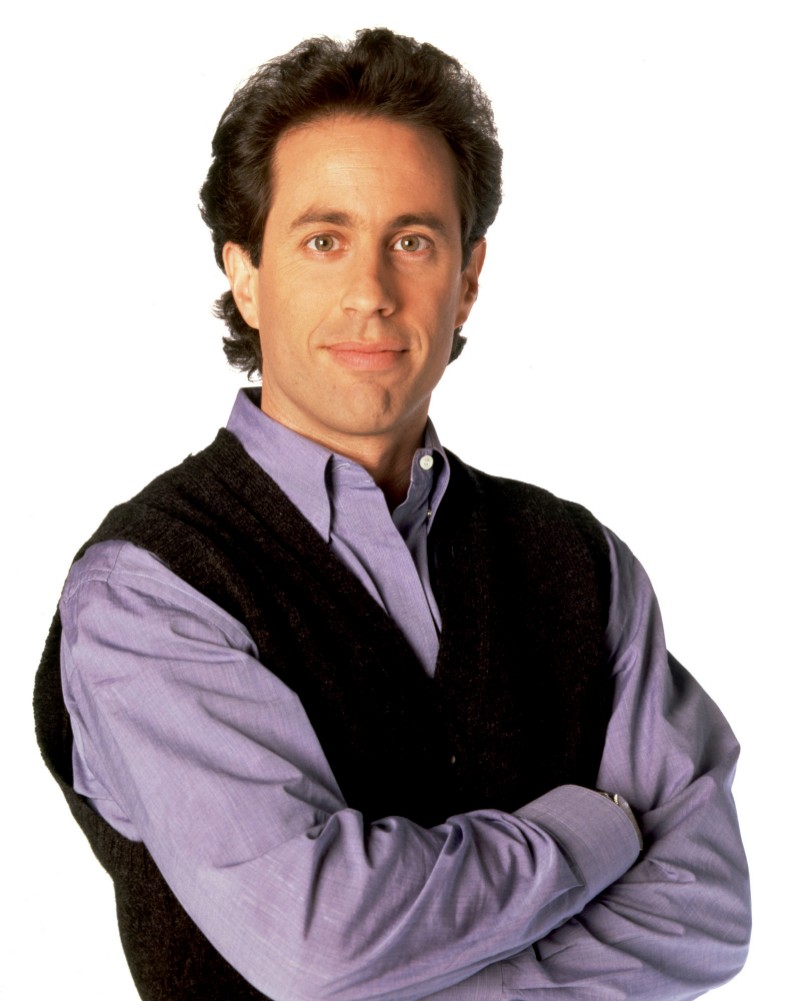
Jerry Seinfeld: Sephardic Jew
I wish I could remember the name of the film, or on which channel it appeared. I would link to it to see if you found it as shocking as I. It was shot in Israel and documented the perception of the Sephardim by the Ashkenazim. Some of the dialogue could have been overlaid on a film about white and black Americans.
For example, many Ashkenazi, in a nod to tolerance, said the Sephardim are hip and cool and fun; that they set trends and styles. Some said they have friends who are Sephardic. Still, in subsequent conversations, they said Sephardic Jews are mostly poor, crude, criminal and not so intelligent.
Clearly, social barriers have been set. This was confirmed for me when I read Rabbi Yosef obituary.
Other comments didn’t parallel the black-white struggle in America, like the disgust shown for the Sephardim who watch Arab movies.
Basically, the documentary illustrates how the one group considers the other inferior and beneath them. Overall, the impression was that the Sephardim were just too much like Arabs.
The irony here is that so were Moses, Abraham, Isaac, Jacob and David.
Indeed, recent genetic testing has shown that the Ashkenazim may be far off the Hebrew bloodline. It was originally thought that the Jewish communities in Europe originated with men and women from the Near East. Now it has been shown genetically that the ancestral roots of the Ashkenazim are in the union of non-Jewish European women and traveling Jewish traders.
Although the comparison between blacks and whites in America is somewhat accurate – an Israeli court, for example, had to force the integration of Sephardic and Ashkenazi school children — this intra-Jewish problem has additional layers of complexity. Unlike in America, differences in religious practices also keep the Jewish groups apart.
I referred to Rabbi Ovadia Yosef as the Martin Luther King of Israel, but, unlike King, he was for school segregation in the court case I mentioned. Religion, it seems, was taught at the school in question, and Rabbi Yosef wanted only pure and accepted Sephardic doctrine taught to the children of his followers, not a diluted, blended brand taught in a mixed school.
Religion aside, the life and work of Rabbi Ovadia – like those of Dr. King — indicate the pervasive need of Homo sapiens to form tight groups of very like people, to preach group superiority and to categorize others – even those who could easily be accepted into the group – as inferior and unworthy of advancement. It shows the incredible need to hold back rather than lift up.
What is the basis for this need?
Limited resources? Limited positions of power? Intrinsic insecurity? General nastiness? The necessity to have enemies as a motivating force for survival and civilization building?
Because of their differences, and because of our shortcomings as a species, it seems almost understandable that there is tension between blacks and whites, Jews and Arabs (even thought they are both Semitic people), liberals and conservatives. But why does each group draw circles within their circles to set even more people apart?
How can we solve global conflict when the people on the north side of Chicago distrust those on the south side?
The Jews possess a unique place in history as one of the first cultures – perhaps the first – to take stock of itself and say, “We are barbarians. This is unacceptable.”
For now and always, the People of The Book have documented their epic struggle for the perfect, enlightened society. Through darkness and light, catastrophe and near destruction, triumph, dire warnings, dire consequences and rebirth, they have never ceased to strive with God and themselves.
One would think that by now such a people could get along with themselves; that such a people might actually be the ones to bring peace to the entire Earth.
Who better?
While we wait for a new prophet, I would hope that all will soon dispense with finding disgust over another person simply because of his taste in movies.
Companies that monitor our cell phone, tablet and computer use are growing more and more sophisticated.
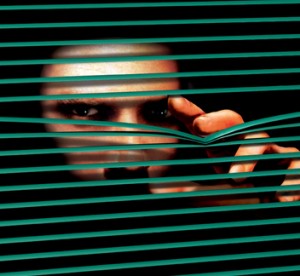
Many of us are aware that we are tracked –stalked, actually – by algorithms when we use our cell phone. Our phones are capable of telling advertisers – and I guess the government – when we get up, when we go to bed, the places we visit, what we buy, what we search for, even what we are thinking and certainly what we are saying. Now, according to an article in today’s New York Times, statistical modeling is being used to connect our cell phone use with our table use and the use of our work and home computers.
These devices may have absolutely no connection to each other, but heavy monitoring of digital networks, coupled with some pretty fancy math, links them and us to advertisers.
So while at work you may use your desktop to search for a Paris hotel. Later that night, on your cell phone, you could receive an ad for the InterContinental Paris Le Grand.
As I have said before in other posts, digital communications – the Internet, apps, etc. – represent wonderful technology but also serve as the biggest con since Ponzi. The con amounts to this: Give us everything we need to effectively and dramatically market you and we will tell you who won the 1976 World Series, the best way to make waffles and the number of Academy Awards won by Robert Di Niro.
This gross invasion of privacy is both offensive and frightening, at least for me.
Maybe not so much for the guy who needs a room in Paris.
Still, there are flaws in the process.
I recently went on-line in search of a digital SLR camera. I found what I wanted and bought it. Since then, my devices have been serving up ads for digital cameras. Made me feel for sorry for the retailers who paid good money to target likely customers. The algorithms are smart, but not smart enough to know that I am among the least likely of customers.
The problems of poverty and inequality have always bothered me. This is so even though I’ve not been poor nor have I ever lived among the poor.
Why then, I ask myself, do I have this strong sense that it is morally wrong to allow the sad side of civilization to exist?
Others are free of this burden, why not me?
The great religions speak against poverty and urge attention and compassion. Yet legislators who profess these faiths will happily cut $40 billion from the food stamp program.
While my empathy for the poor and the marginal working class is hard to shake, so, too, is my view that the rich and everyone else would benefit financially, spiritually and culturally from a more egalitarian society. They key to this society is the easy ability to get and hold a job that ensures freedom from want.
In such a society, billion-dollar food stamp programs are unnecessary.
You don’t need public housing or a bloated Medicaid system.
And because people would have more pride and self-respect, society would need fewer courts, cops, prisons and mental health facilities.
There would be great savings.
People would have money in their pockets and the business community would thrive.
There is little downside, except perhaps that the very rich would have slightly less money and corporations would not be able to amass huge cash surpluses.
By contrast to this semi-utopia, I find the present oligarchical society unpleasant and dangerous. And let’s face it, Thomas Jefferson aside, that’s what it is – an oligarchy.
The decline of the Great American Cities is but one example of the damage caused by too few people holding too much money, which is unfairly channeled to them through favorable tax policy and special interest legislation. Let them keep what they earn, what they deserve, what they spent a lifetime building, just check their greed when it denies others.
Prior to the great transfer of wealth upward, average people helped keep the cities vibrant by living and working in them. It doesn’t take an archeologist to figure out what went wrong. Go there and see the shells of empty factories right next to abandoned neighborhoods.
There are complex reasons for this, but most damaging has been the systematic dismantling of the middle class.
No nation can be strong without a fully functioning, accessible middle class.
With globalization and the extreme growth of markets in developing countries, this reality has been ignored. It is ignored because the American middle class is needed less and less as consumers of goods and services. Jobs can be eliminated and wages kept low because support can be found abroad.
A Sept. 17 report by the U.S. Census Bureau says American men who worked full-time in 2012 earned less in real dollars than men in 1973. Yet the GDP in the U.S. has tripled. Where did all that wealth go?
To the top.
Americans speak well of their one revolution but don’t expect another. Even so, revolution is more common today than ever, and the oligarchy should be cautious not to push too far. For the first time in a very long time, average people are noticing that class warfare is being waged against them. Those who work in the exploitive fast food industry are slowly standing up. They are not asking for $1 more, or $2 more; they basically want their salary doubled to $15 an hour.
That’s bold.
Those fighting for a more equal society have adopted a new name for what they seek: social justice.
That’s convincing and unthreatening. Who could be against that? As a result, their influence is growing.
More than people, however, it is raw statistics – overwhelming and indisputable — that are leading the charge. These figures are so dramatic that a director named Jacob Kornbluth, working with former Labor Secretary Robert Reich, has made a movie out of them.
It’s called “Inequality for All” and is getting wide notice in the media. It won at Sundance. The people seem ready for it.
In such times, even Forbes magazine feels comfortable pointing out that in 35 states welfare payments are higher than minimum wage.
Tim Cook, Apple CEO
that the $378 million compensation for Apple CEO Tim Cook is equal to the combined salaries of 6,258 Apple employees.
And for the quaint people who still read books, Sasha Abramsky has written, “The American Way of Poverty: How the Other Half Still Lives.” It suggests that inequality is designed for social control and that poverty is a key component of the American system that, ultimately, will destroy democracy.
Meanwhile, in higher education – once a critical component of upward mobility — there is a great deal of hand wringing over declining enrollment. The concern is that colleges and universities are doing something wrong, and that the traditional model no longer works. In truth, there is nothing wrong with the model. What’s wrong is that without a middle class there isn’t much need for colleges.
Many will close.
Unless … the middle class fights back.
Amazingly, the democratic system allows it to do that. Even though the system is rigged with sophisticated gerrymandering and unrealistic requirements for campaign funding, there is still a way to change government.
The normally passive middle class could rise up. They would do so after watching, reading, fuming, sharing horror stories and trying to support children who can’t find jobs.
If they can begin to organize and act with conviction, they won’t even have to work up a sweat. Real revolution is unnecessary. The attentive members of Congress don’t need a weatherman to know which way the wind blows. They sway easily. They took care of the middle class and built up the economy after World War II.
They can do it again.
The golden years in America – for the middle class and nearly everyone else – were from about 1945 to 1980. Let’s bring them back. All it takes is for several hundred thousand Twitter fanatics to take to the streets, maybe even with assistance from the very poor (the saddest of all). It will be a movement the media will surely glorify as “The American Spring.”
It need not be messy.
We can call it a revolution without it really being one.
We can get people working again and get the economy moving again. Optimism will flourish again. We can reach out and reach up. We can do it all together.
The wonderful thing is the uncompassionate can do this for purely selfish reasons.
As the king said, what you do to the least of my brothers …
The curse of fame cannot be understood by those who don’t have people chasing after them; who aren’t made to wonder in astonishment if they are perhaps more popular than Jesus; who aren’t under intense pressure to please the multitude by outperforming their past selves each and every time they re-mount the stage or appear again on screen.
I’ve heard enough reasonably sane celebrities discuss it to know it is a world apart. Dave Chappelle, the comedian who walked away from millions in order to avoid self-destruction, was one. He’s back now, after learning to navigate again in calmer waters.
But the most concise explanation of what fame is like might have been given by rocker David Bowie in Cracked Actor, a 1974 BBC documentary. Bowie was an addict at the time but had it together enough to convincing explain things.
He said fame was like being “in the car when someone’s accelerating very, very fast, and you’re not driving … and you’re not sure whether you like it or not …”
So when celebrities conduct themselves in ridiculous ways, especially young ones, the common folk should try to understand. It’s doubtful we could even begin to withstand what they go through. I once had a local public access cable TV show, worse than Wayne’s World and way down on the dial. Some guy who walked and talked funny recognized me in the supermarket. He wouldn’t leave me alone, acted as if I was somehow special, seemed to want to bathe in an aura that he thought I was giving off.
It happened just that once, if you don’t count the elderly woman who said, “I watch you, and, you know, I think you are getting better.”
I can’t possibly imagine what this would be like multiplied millions of times. And so I never envy those who are rich and famous but scared to death to go to the corner, unshaven, for a cup of coffee. That’s not life.
In a prior post about Detroit, I mentioned Hipster Brooklyn – how young, creative people brought it came back from crime and decay, how it could be a model for the Motor City, which is bankrupt and hardly even a city.
Shortly after that post, I met up with a cousin whom I don’t see much. He’s an accountant from New York. Although he now lives in Manhattan, he spent years in Brooklyn, moving in when it was cheap, crime-ridden and far from hip.
I asked him about the transformation. He vividly recalled the day he became aware that Brooklyn had changed.
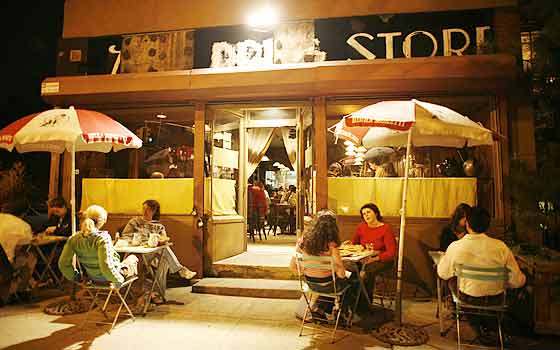
“Walking down the street around noon, I passed a restaurant,” he said. “A man from the restaurant was carrying a table outside. He set it up on the sidewalk, brought out two chairs, a tablecloth and a candle. I said, almost out loud, ‘Oh no, someone is going to steal that stuff – probably in the next few minutes!’ But they didn’t. That’s when I knew something remarkable had happened to Brooklyn.”
From ancient Athens to modern-day Antwerp, over the ages one word has come to define our cities: Commerce.
Traditionally, cities are the places where money flows. No longer, at least not in America.
Detroit has become the largest and most noteworthy of U.S. cities from which capital flees.
Oh Detroit, once so great and prosperous. How sad is your decline.
They say it’s foolish to call for a cop or an ambulance in bankrupt Motown. You’ll wait forever.
They say so much of the urban landscape in Detroit has been abandoned that people have taken to plowing it under and using it for agriculture.
But Detroit was once an economic magnate that helped foster one of the largest migrations in American history. Between 1910 and 1970, over 6 million African Americans left the South. They settled in many places and Detroit – with its thriving auto industry – was high on the list.
Its closeness to the Canadian wilderness and the Great Lakes spurred economic development there from the very start. It boomed with the 18th century fur trade. Much later, when Henry Ford set up shop in 1903, Detroit truly came into its own, growing in the 1950s to 1.8 million people and becoming the fourth largest city in America.
Today, it has about 700,000 people and is the 13th largest city. From 2000 to 2010 its population fell by 25 percent. In addition to the incredible reverse migration and the massive loss of jobs, about 47 percent of all tax parcels are delinquent, which is why the city has really ceased to be a city.
Instead, it has become a disabled hulk that is $19 billion in debt.
This is all so bleak, especially since other cities face the same fate.
In such times, I try to remember that life runs in cycles; that the dead do rise. I try to remember that the present is only the present and the future always brings change. I try to remember that those who bought Chrysler at $1 got rich.
If I were a person with money to invest in the long term, I would buy – steal, perhaps – Detroit real estate.
As you laugh, remember that the best financial advice ever given is the most difficult to follow: Buy low, sell high.
Prices in Detroit will never be lower.
It takes guts to buy low because most investors think only of the present. Without vision, there is no glory and little profit.
So to all those visionary investors – Warren Buffett, are you out there? – help bring back Detroit. Buy Detroit.
Buy Detroit now.
Do it before the Chinese. They’ll be over for sure, for they are the most patient of all investors.
Actually, the Hipster homesteaders probably will be first.
Look what they did for Brooklyn! They’ll test the waters, start slow; attract more of their ilk; bring the city back block by block; start a few small businesses. They won’t be looking for a return; just a lifestyle that they can create. It’s the new lifestyle that will bring in the investors.
We’ll all read about it in the New York Times or watch it develop on YouTube; they’ll be a Detroit sitcom; some of us, or our children, will eventually move there, paying rents that are no longer cheap but enjoying the comfort that even a city like Detroit can once again mean commerce.









 notebookm.com