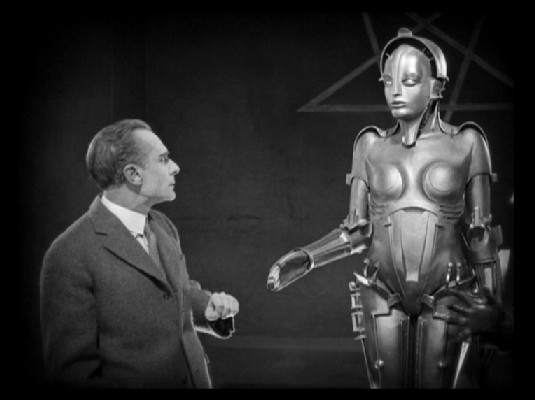
A Super disappointment for journalism — or a new beginning?

25 Nov

He was unhappy at his newspaper so he quit. Superman did. Clark Kent no longer works at the Daily Planet.

Instead, he may blog.

According to the comics, Superman now believes that news has become entertainment and reporters are nothing more than stenographers. So he moved on.

Connie Schultz, writing for Parade Magazine, warned Superman to be careful of the Social Media trap that awaits him. She called it the “new Kryptonite” and worried that the great and noble Man of Steel could end up tweeting X-ray pictures of sexy woman to gain followers.

Superman’s decision was a jolt to traditional journalism. In my mind, a second jolt came when it was revealed that seven members of Navy SEAL Team 6 leaked classified information. They didn’t leak to a newspaper. They leaked to a video game maker.

While newspapers are only a wisp of what they once were, people still get the information they need. They just get it in different ways. And it’s everywhere, in unlimited quantities and styles.

Traditional journalists won’t admit it, but journalism is flourishing. Because of technology and the accessible, enticing new methods of communication, more people may be practicing journalism that ever before. Talented, intelligent reporters who would never have gone to journalism school or applied to a newspaper have become experts and opinion leaders through blogs and social media. Some make good money; many don’t.

In spite of the poor success rate, media and media-related startups abound. What works is a mystery, but uncertainty hasn’t stopped people from bringing forth an endless variety of information concoctions.

In the September / October issue of the Columbia Journalism Review there is a package of stories labeled: “The future of media (this minute, at least).” Numerous topics are discussed. Prominently mentioned are the web sites and apps that aid reporters in their work. They represent small miracles.

I got dizzy reading about the likes of:

Cir.ca

News.me

Paper.li

Storyful

Storify

Upworthy

#waywireSync.in

Timeline JS

Many Eyes

visual.ly

Sync.in

Etherpad

Evernote

Vyclone

Is that enough for you?

It’s too much for me, but I’m certain there are people using all of these and more.

Rumor has it that in the next Superman comic Clark Kent will use Vyclone to cover a cyclone. He’ll get help from Lois via Evernote while hoping Jimmy can come up with something good and graphic using visual.ly.

As this team operates from some cheap little apartment, Perry White, the once great and powerful editor, will stomp around his vast but unfilled newsroom screaming and cursing – his strongest editorial qualities – and wondering how he can compete with all that.

–By Lanny Morgnanesi

Smart pills may be in your future

21 Nov

The young man hoping to attend medical school explained that Adderall doesn’t make you smarter; it just lets you focus.

“But it won’t be long before there are drugs that do make you smarter,” he said. “The ethical questions will be: do you take them or not?”

Other issues may quickly overshadow this one. For example, can and should employers require the use of this new artificial intelligence?

Will users be held in higher or lower regard? Do we respect them or mock them? Should an asterisk be placed after the names of Nobel Prize winners who juiced?

It would seem more beneficial to life and career if those on the medication announced it. Doctors, lawyers and other professionals could put it in their ads.

Society might slowly form two strata, those who do and those who don’t. Or will we all eventually use – just as we all eat?

In the end, will we be better off or worse?

Such things will be decided much later.

For now, there is Adderall.

Adderall and drugs like it originally were used for something called attention deficit hyperactivity disorder, A.D.H.D. Then they were used to calm down unruly children. Now they are used to make inadequate schools look better.

An Oct. 9 article in the New York Times by Alan Schwarz cites examples of family physicians giving Adderall to children who are struggling in elementary school.

Schwarz interviews Dr. Michael Anderson, a pediatrician in a poor area of Georgia who claims A.D.H.D is an imaginary syndrome used to mask poor academic performance in inadequate schools.

He gives out the drug so students do better.

“I don’t have a whole lot of choice,” he said. “We’ve decided as a society that it’s too expensive to modify the kid’s environment. So we have to modify the kid.”

It is difficult to say how many doctors do this, but their numbers must be growing. Parents of A.D.H.D. children say they can no longer get adequate supplies of Adderall because so many others now take it.

Well, Adderall won’t be in much demand when the real stuff hits the market. I hope they come up with a more descriptive name than Adderall, something like Instant Einstein or Bottle Smarts. And I hope I have stock in the company that gets the first patent. What I really look forward to is writing a very good novel while on this drug. There may not be a novel in me, but there surely is one in those pills.

Of course, it will be hard to sell a good novel when everyone is capable of writing one. Perhaps I need a different plan.

I’ll have to think this over . . . if you can call such an unassisted exercise thinking.

 — By Lanny Morgnanesi

They only stone you if you confess

14 Nov

One of the worst qualities of the human species is its dastardly view of competing tribes.

For some reason, there is comfort in thinking that those outside the circle are monstrous barbarians capable of and responsible for numerous and unspeakable atrocities.

Get in close with these devils, however, and you generally find they are just like you; decent, with families and a respect for routine, calmness and peace.

To see things clearly, it helps to remember there are monstrous barbarians among all groups, but they are misfits who do not represent the norm.

A foreigner reading history may learn about the epidemic of lynching in America, but if he visited my town he would find no one there was involved in such things, or even capable of them.

Would he be surprised?

Recently I read an article that a group in Egypt is clamoring for sharia law. In random thought I wondered how many who advocate this form of Islamic governance really want to cut off someone’s hand for stealing bread. Most Americans, I’m sure, will think everyone who wants sharia supports cutting off the hands of thieves, as well as death by stoning for women who have committed adultery.

Perhaps I am both ignorant and naïve, but I would guess they don’t.

My guess is sharia brings comfort, predictability and harmony to the lives of devout Muslims; just as the 10 Commandments and Biblical law do for reverent Christians. I do know that in secular countries, Muslims use sharia on their own to settle family and business matters – without hurting anyone.

From what I now understand, sharia – like our own laws – is open to interpretation. In other words, there are ways around stoning and dismemberment.

And even if there is to be stoning and dismemberment, they cannot be administered on a whim.  There are rules and conditions.

For example, a Muslim woman can only be stoned for adultery if she either confesses or there are four male witnesses who saw the act being committed.

Is either likely?

The hand of a thief cannot be cut off if public property was taken, or if he stole because he was hungry or under duress. The stolen items cannot belong to his or her family, must be over a minimum value, and cannot have been taken from a public place. Also there must be reliable witnesses.

In short, there are fudge factors here.

I believe in secular law. Still, I’d like to understand how Islamic culture works among civilized people. I don’t understand sharia but am open to learning more.

Aside from the rare man willing to kill or maim his wife on any given day – and we have plenty of them in the U.S. – I don’t think Muslims routinely seek blood for justice.

Does anyone agree?

–By Lanny Morgnanesi

Something I Learned Today

12 Nov

At a Veterans Day service, members from each branch of the military spoke. Each read from a military code then stood erect while the song of their particular service played.

The person from the Coast Guard said his branch is perhaps the least understood. He told the audience that the Coast Guard began as two separate, unrelated units and then later united.

One unit’s role was rescue. Members would row out to sinking ships and pick up sailors. The ships usually were caught in a storm, so the rowing was not all that easy. A great deal of bravery was involved.

The second unit used fast sailing vessels to catch smugglers and people trying to beat the government out of tariffs and duties.

When the Coast Guard formed, two very distinct and different missions were combined – life saving and law enforcement.

To this day, when you enlist in the Coast Guard, you immediately are empowered as a federal agent.

And that’s what I learned today.

–By Lanny Morgnanesi

Economic growth: Is it an Aqueduct or an iPhone?

27 Oct

In the neighborhood where I grew up, everyone had one bathroom and one garage. I’m pretty sure those who moved away now have at least two bathrooms and garages.

That’s growth.

As a nation, the U.S. is very much worried about growth. We’re worried because we don’t have enough of it. Still, knowing I could live with a single bathroom and garage makes me wonder if growth really is necessary.

According to the latest reports, the U.S. economy grew at a 2 percent annual pace from July to September. This is good news, the reports said, because from April to June growth had only been 1.3 percent.

While I’m unsure about the inner workings of growth, I think it safe to say that growth involves increased economic activity and – ideally – increased profits.

Back in my old neighborhood, a new bathroom might have been added to some of the homes. If the family used additional income to hire a contractor, this would register as economic growth. It might even if the family borrowed the money.

There would be no economic growth, I think, if the family had no additional income and spent its vacation money that year on wood, drywall, plumbing and fixtures and installed the bathroom themselves.

If this type of activity were the only “growth” in America, stockholders would see little or no year-over-year improvement.  Stock prices would fall.

Yet people overall might be happy, especially those with new bathrooms.

In its Oct. 22 edition, Bloomberg Businessweek cites some interesting new studies on economic growth. It mentions that economic historians have determined there was virtually no growth in Britain from the 13th to the 18th centuries. In other words, no growth was the status quo, even through the Renaissance and the age of exploration.

Growth apparently didn’t come to England until the Industrial Revolution in the 19th century, with the advent of steam engines and railroads.

In the U.S., growth had been around 1 percent until the 20th century, when it was boosted by the effects of (surprisingly) indoor running water, the internal combustion engine and electricity.

Economist Robert Gordon, in a paper for the National Bureau of Economic Research, said growth has been downhill since 1950.

If the trend continues, Gordon says, by 2100 annual growth will have fallen to 0.2 percent.

Judging by the standards of 300 years, he doesn’t see this as anything unusual.

While some cultures require growth, others do not.

I recently attended a conference on water. Several speakers told of good-intentioned projects designed to help villages where the tradition was for women to do daily “water walks.” That means traveling five to 10 miles a day on foot to fetch water that was carried back in containers balanced on their heads.

Wanting to help, outsiders installed wells and irrigations systems. Too often, the speakers said, the villagers would return to the water walks after parts failed or things broke down through lack of care and maintenance.

The outsider sought growth and improvement. The villagers seemed content with the way things were.

For myself, I’m partial to cultures that say, “Our population is growing. We need water. Let’s build an aqueduct and bring it in from the Alps.”

But I don’t see the necessity for an increasing number of bathrooms and garages, or for a new iPhone every six months. If employment is at proper levels, I don’t know why strong, efficient companies like IBM, Google and others are required to show consistent year after year growth.

Can you image a world where prices don’t change much; where you buy something and use it for decades; where basic needs are met and life is not a struggle to maintain and acquire things unessential to happiness?

I enjoy progress, and this seems like it to me.

Growth actually may be a trick, the result of debt. With $16 trillion of debt, Americans has experienced great growth. As we eliminate debt, life and growth are bound to change.

The future could return us to historical norms, and maybe we all will be able take a deep breath and begin to relax.

By Lanny Morgnanesi

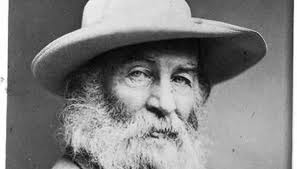
Walt Whitman – better now than ever

18 Oct

Here’s a little secret:

Over the years, the things we were forced to read in high school have gotten better.

It was punishing to read great literature at a young age. Personally, I was not only incapable of appreciating it; I didn’t want to appreciate it.

Aside from things like “Catcher in the Rye” and maybe those THE FUTURE IS GOING TO BE TOTALITARIAN books, there was no desire to spend time with genius writers. The time was for living; not so much for reading.

After the edge is worn off life experiences, literature has more of a place. Yes, you can jump out of an airplane if that’s your idea of excitement, but it’s not like going to a Friday night football game and expecting a fight; it’s not like kissing a girl that you cannot stop thinking about; it doesn’t compare to that first road trip with five guys in a rusty car and a total of $100 between you.

Certainly none of this can compete with Melville or Ezra Pound. Those two can’t even compete with the understated magic of hanging around a parking lot complaining that there is nothing to do – but hoping that soon there will be.

Those anticipatory adrenalin rushes fade for reasons both physical and metaphysical. When they are gone, great books becomes much sweeter.

Someone recently discarded an anthology of American Literature. I picked it up. The book is filled with writers rarely read outside of classrooms but there are in there because they are brilliant.

I reviewed the preface to Walt Whitman; learned how much time he spent on “Leaves of Grass,” basically rewriting it his entire life; thought he was just a human and that the person describing him was over stating his case.

Then I read Whitman, putting him in the context of his time (meaning no one ever wrote like this before), and quickly realized how deserving he is of the place he holds.

I remember from high school that Whitman was considered the ultimate optimist, the lover of everything.

“I am satisfied – I see, dance, laugh, sing.”

He would not allow bleakness and atrocity to wither his spirit.

Battles, the horrors of fratricidal war, the fever of doubtful news, the fitful events;

These come to me days and nights and go from me again,

But they are not the Me myself.


To Whitman, there is no death . . . as mortals understand it.

All goes onward and outward, nothing collapses,

And to die is different from what any one supposed, and luckier.


Would I seem ridiculous if I gushed: This kind of stuff goes on and on for page after page after page.

The enormity of it overwhelmed me. Whitman’s ability to sustain his pace and prophetic message mystified me.

My advice then: A retreat to the refuge of beauty and truth, even if they are under appreciated, is recommended when you can no longer find the Heart of Saturday Night.

And so I end, from the anthology, with Emily D:

I died for Beauty – but was scarce

Adjusted in the Tomb

When One who died for Truth, was lain

In an adjoining Room –


He questioned softly, “Why I failed”?

“For Beauty,” I replied–

“And I – for Truth – Themselves are One—

We Bretheren, are,” He said—


And so, as Kinsmen, met a Night—

We talked between the rooms—

Until the Moss had reached our lips—

And covered up—our names—

–By Lanny Morgnanesi 


Arlen Specter was his own man

14 Oct

Arlen Specter, who died today, was an intelligent, courageous creature.  What I liked most about him was he spoke his mind. He refused to be one of those pre-programed politicians.

If you are a United States senator, as was Spector, you are supposed to hate – among many things – Fidel Castro. The dictator came up in a conversation I once had with the senator. I was a journalist and he was running for re-election.

“I liked Castro,” he told me. “I had dinner with him in Cuba and we talked all night. He’s a very interesting man. I asked him if he killed Kennedy and he said, ‘I’m many things, but I’m not crazy.’ ”

In America, we tend to paint our enemies as monsters and psychopaths. No one dares entertain the idea – except Specter – that such people often gain power through personality and charisma.

Years ago, I attended a Republican rally at a swank hotel in Philadelphia. A major national candidate was to appear (It might have been Ronald Reagan). This was right before the primary election and the endorsed Republican candidates for high Pennsylvania offices were given seats on the stage. Specter was not endorsed and was without a place of honor. It fazed him not. He took a chair from the hotel ballroom, put it on stage and sat down with the endorsed candidates.

Later, he won the election.

You know a man like that votes his mind and thinks for himself.

There are too few left like Specter.

By Lanny Morgnanesi

Afghanistan: Will lessons be learned?

13 Oct

When the war in Afghanistan started 11 years ago, I got a haircut.

My barber was a former Russian intelligence officer who served his country in Afghanistan. I wanted him to assess America’s chances.

“We leveled the place,” he said. “We turned it into a parking lot. We destroyed it. We did everything we could, and we still lost. You will, too.”

Soviet helicopters in Afghanistan, after an attack on a camel caravan from Pakistan

There was a time when the United States, for the sake of its image, could not leave a conflict without winning. Politicians refused to be blamed for a lost war. In the Vietnam era, with that war’s purpose forgotten and everyone tired of the slaughter, there were government recommendations to “declare victory and leave.”

Which is pretty much what President Nixon did.

We seem to have progressed since then and no longer require victory in war or even face saving. After $500 billion and 2,000 lives, our role in Afghanistan is ending. There will be no “Mission Accomplished” banners. Some who fought there aren’t even sure what the mission was.

But we still retain this idea that well-armed, well-financed invaders can defeat a local population that doesn’t want to be occupied and has a history of expelling invaders by simply not giving up.

Some in Washington, for sure, would like another test in Iran.

The United States attained its freedom by fighting a guerrilla war against a powerful, well-trained, well-armed, advanced nation. Yet we fail to recognize the power of the underdog or even devise the proper tactics against him.

Better to take the advice in a New York Times review of the book, THE GREAT GAMBLE: The Soviet War in Afghanistanby Gregory Feifer:

“Never underestimate fanatics who know the terrain.”

Now, with a lot less money to spend on arbitrary wars, we may finally take that lesson to heart.

By Lanny Morgnanesi


The End of Jobs

6 Oct

Imagine there were no jobs.

         Virtually none. There would still be someone running General Motors, but not a soul would be building cars.Nearly everything in America would be done with robotics, programming or overseas labor. This includes the service sector, law, medicine, education and government. Algorithms, for example, would take the places of judges, lawyers and the town council.

Cops, of course, would be cyborgs.

You get the idea.

Now the question.

If no one worked, could everyone still get paid?

Part of our economic problem today is unemployment. People who don’t work have no money and don’t consume, which leads to higher unemployment, recession and general nastiness. In some cases, businesses increase productivity and profits from layoffs. But with fewer and fewer employees overall, demand ultimately is bound to fall for all products and services.

There’s a story from the 1950s about Walter Reuther, then head of the United Auto Workers. He was taking a tour of a modern, highly mechanized Ford plant that used robots to build cars. Ford execs were on the tour and one said to Reuther, “How are you going to collect union dues from those guys?”

Reuther answered, “How are you going to get them to buy cars?”

You can’t, but you can still sell cars if you pay the people the robots replaced. Pay them for doing nothing. Give them the ultimate is a short workweek.

There was a time when the workweek was long. Not 40 hours or five days. It was at least six days, maybe seven. People put in 70 hours or more. This was necessary to produce the things we needed. With the advent of industrialization, people were able to work less – and still pretty much get the same pay.

Remarkable!

When the U.S. was a bold nation in the 50s, living well through science and experiencing the atomic age and the space age, there was this idea that greater efficiency in the work place would allow people to work less and have more leisure time. They were using the paradigm that reduced work from 70 hours to 40 hours.

Now, in a more realistic age, we know that doesn’t happen.

When you don’t need workers, you don’t reduce their hours. You fire them.

It seems ridiculous that people believed businesses and corporations would actually pass profit from productivity back to workers and let them go home early.

So what happens when there are no workers?

Maybe the paradigm shifts again.

If no workers means no consumption, and no consumption means no profit, then people might actually have to be paid for doing no work. It would be a cost of doing business. It would keep business running.

What I’ve described here is mainly a mental exercise that is much more exercise than mental. Can an economist out there, someone who studies such things, tell me whether this would work?

One final note:

In 1780, John Adams wrote something complex that later was boiled down to: “I’m a soldier so my son can be a farmer and his son can be a poet.”

He was expressing the utopian progression of civilization from barbarism to domesticity to enlightenment.

The no-job economy will either take us back to the first stage or ahead to the last. I’m not sure who will decide which.

Maybe an algorithm.

All right, now let’s hear from those economists.

—  By Lanny Morgnanesi


The 47 percent is really the 1 percent.

22 Sep

Let’s be logical for a moment.

If I have something of value, to whom am I likely to give it ?  Someone who gives me nothing in return, or someone who provides me with a replacement form of value?

We know the answer.

It is a reflection of human nature. It is the art and science of the marketplace.

You got nothing; you get very little.

The federal government possesses something of value, namely the money in its treasury. Does it mostly go to the poor, who give nothing in return to lawmakers and don’t even vote? Or to the very rich, who bankroll elections and do vote?

True, there are some illusions worked into the system, like Obamacare, a healthcare system that seemingly benefits the poor – and in fact does. But not in the way that it benefits the all-powerful insurance industry.

What conservative describe as socialism in America is really a skilled, deft way of funneling tax money to the corporate world and the 1 percenters.  Of course, a great deal more money takes a direct route and never goes anywhere near the poor.

I’m not sure what conservatives call that.

Almost every highly successful business or businessperson spends heavily to finance elections. Conversely, if a successful business does not, it is likely to be crushed by competitors who do. Microsoft was a rare example of a corporate giant that stayed out of the political arena. When the Justice Department came after it on anti-trust charges, it changed its strategy.

The 1 percenters, be they people or corporations, need friends.

President Nixon was friends with Pepsi and brought it to Russia.

President Carter was friends with Coke and brought it to China.

The competitors of the two drinks stayed home and lost market share.

So when Mitt Romney speaks about the 47 percent who rely on government, he doesn’t let on that some of his ilk might be selling apples on the street if it weren’t for government support.

In summary then, if Congress votes to give every poor person in America an iPhone 5, it’s not because America is a socialist country. It’s not because politicians like poor people. It’s because the lobbyist for the cell phone industry, after providing great sums to politicians, had a very good day on Capitol Hill.