Archive | Poverty RSS feed for this section

Modeling a Country After a Shopping Destination

23 Oct

By Lanny Morgnanesi

Near my home, in a place called Lahaska, there’s a tranquil spot of beauty and commerce called Peddler’s Village. It was built by a somewhat eccentric man named Earl Jamison. The village is spread over 42 acres. It has old-fashioned shops, restaurants, bars, lodging, even a carnival merry-go-round. The peddlers at Peddler’s Village peddle everything from clothes to hats to paintings to fresh pastry, popcorn, maple syrup, and beef jerky.

Part of the attraction is the artful landscaping. Jamison liked gardening, and when he was alive you could mostly find him at Peddler’s Village on his knees, tending to plants. That kind of attention and that kind of tradition has been passed on to others. The place looks great.

The summer day of my recent visit was pleasant, and everyone was having a good time. Parents, kids, babies, older couples, dogs. In this part of suburban Philadelphia and at Peddler’s Village, the crowd is mostly – what’s a good word? – Anglo. With a fair number of Asians. The people who walked the brick promenades seemed comfortable in their lives, safe, and secure. As I did. This was an enviable America.

This simple Saturday was starkly different from the America depicted in the political ads of Democrat Kamala Harris and Republican Donald Tump, both of whom want to lead a country they have extreme doubts about. During the broadcast of the July Olympics in Paris, Harris and Trump ran harsh ads designed to shock and get you to the polls. There was an inescapable onslaught of these ads. I couldn’t tell which America was worse, the one the Republicans blame the Democrats for, or the one the Democrats blame the Republicans for. It wasn’t much of a choice. Made me think horrible things about a country that, to me, seems all right.
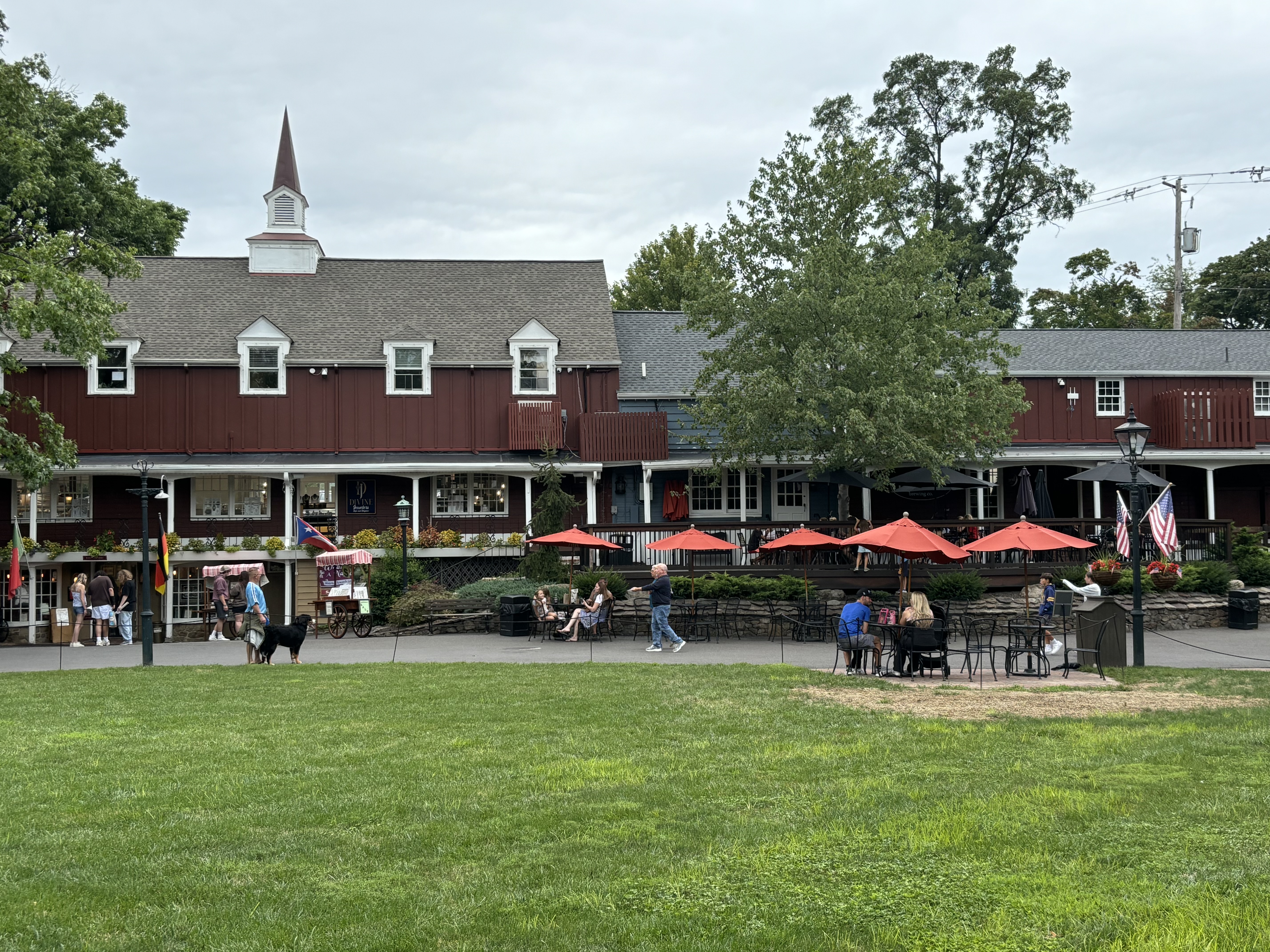
Shoppers relaxing

The trump and the Republicans presented a nation ravaged by inflation and overrun with invading foreigners who bring in drugs and commit a wide assortment of crimes, including murder and rape. These same foreigners suck the money and life out of our social service and health systems, so there is little left for us. Kamala Harris, the Democratic candidate for president, is said to be dangerous and weak, a radical who clearly will destroy whatever is left of the America that they say once was great but obviously no longer is. The Democrats, for their part, cast Trump as a crude, weird, racist dictator whose speech and actions resemble Hitler’s.

What these ads showed and preached was nothing at all like the idyllic Peddler’s Village, where not even a trace of discontent could be found. And so I thought of my own life and happiness. As my wife shopped, I sat on a bench and enumerated the America I knew and appreciated, and that I think others would recognize, regardless of the horrors in the political ads.

In my America:

  • No one is shooting at me or dropping bombs on or near my house.
  • My home is nice, comfortable, and in good working order.
  • I have clean water and plenty of food.
  • The stores are filled with everything I could possibly need or want.
  • They take away my trash and sewage.
  • They take away the snow.
  • We have good hospitals and good doctors, and you can get appointments.
  • We have good schools.
  • The police protect us.
  • We are free to go where we want, when we want.
  • Contrary to what some people may prefer, we can say whatever we want.
  • We have a strong tradition where the rule of law prevails, and the legal system works.
  • We are allowed to invest our money in companies that can make us money.
  • Generally, you don’t have to bribe a public official to get something done.

I’ll stop there. I hope you can see the difference between what the presidential candidates are saying and what I am living.

Elsewhere, beyond me and beyond Peddler’s Village, there are people living lesser, unenviable lives. In these last few decades, inequality in America has bounded ahead in a rampage. There is nothing unusual about inequality in America, but it has gotten worse. For many there is food insecurity, job insecurity, little or no medical attention, poor or no housing, poor schools, high crime, discrimination and lack of opportunity. None of this was on display at Peddler’s Village.

Philosophers and do-gooders will say that in a country as rich as the United States, poverty is unnecessary. Others will say poverty is the self-inflicted disease of the shiftless and not something for government to fix. But in almost every society and culture, the natural, human tendency is for a strong and aggressive minority to acquire nearly all the wealth and broker all the power. Sometimes, this inevitable pattern is halted or reversed by uprising and revolution, but only for a period, and then the inexorable progression of the dominant human forces continues, and the once-again complacent majority – usually with a very worse-off minority substrata –allows its modest wealth to trickle up.

Therefore, it is difficult for a nation such as ours to eliminate poverty and establish of nation of Peddler’s Villages.

In my mind, eliminating poverty is not about giving money to the poor. Rather, it is about allowing the poor to be productive. This requires removing the often-invisible restraints and barriers holding them back, as well as reorienting a defeatist mindset and the established alternative culture of the outsider.

Not an easy thing to do. Maybe impossible. But for the sake of discussion, let’s see how much money is out there for the poor, as if we just wanted to give it to them, which of course we do not.

Forbes magazine says there are about 400 billionaires in the US. It says they are worth a total of $54,000,000,000,000 – that’s $54 trillion. (The entire federal budget in 2024 was about $6.5 trillion). The top five billionaires are:

Elon Musk — $244 billion

Jeff Bezos — $197 billion

Mark Zuckerberg — $181billion

Larry Ellison — $175 billion

Warren Buffett — $150 billion

If, in some crazy world that is not ours, we took 25 percent of the wealth away from the 400 billionaires and handed it to the 37 million people living in poverty, each would receive $36,000. I guess a family of three would get more than $100,000. That’s enough to start a small business, send the kids to college, or maybe get a mortgage on a house.

This is just fun with numbers and of no meaningful purpose when it comes to problem solving. It is for perspective only. A more practical solution to income inequality is a return to tax policies of the ‘50s and ‘60s that allowed for a more even distribution of the wealth.

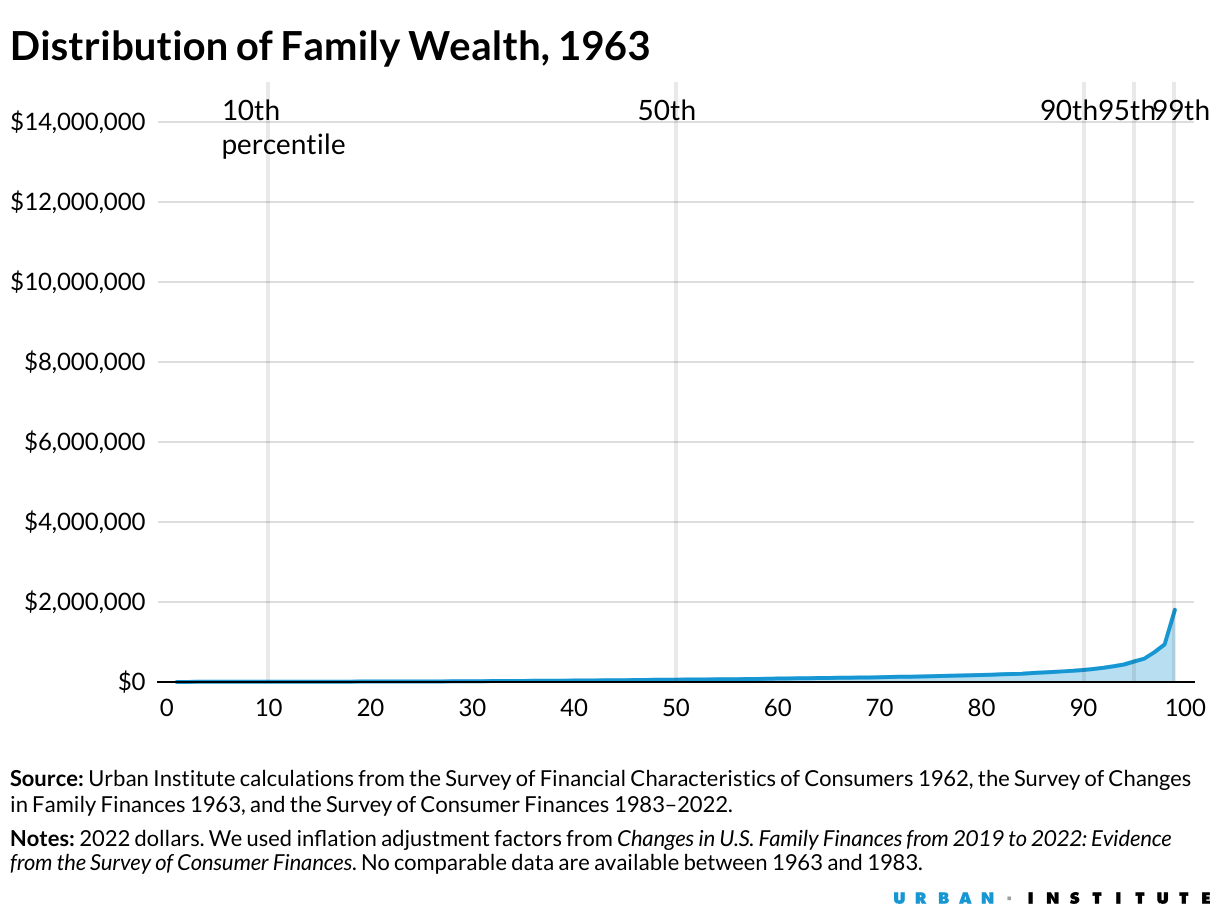
To illustrate the change, in 1963, the wealthiest families had 36 times the wealth of families in the middle class. By 2022, they had 71 times the wealth of those families. The top 10 percent now own about 70 percent of the nation’s wealth, with the bottom 50 percent owning 2.5 percent.

The charts below show how the money was spread out then, and how it is spread out now. The blue is the money. The poor are on the left. The rich are on the right. Most of us are in the middle.
If we can find the strength and courage to eliminate barriers to opportunity, and there is a redistribution of some wealth, without so much money sitting in the hands of so few, maybe there will be enough money to fix things up in our country. Maybe our crumbling cities can look like Dubai, or Shanghai, or Singapore. Maybe, if neighborhoods aren’t economic dead zones, they’ll be welcoming places and not fearful haunts to be avoided. With the proper changes, maybe escalators and streetlights will work. Maybe we will have fast trains, and wide, smooth roads, and bridges not in danger of collapsing, and JFK airport won’t be a 21st century embarrassment.  Maybe we can prop up Medicare and Social Security and have a good universal health care program. Maybe, state universities can be free. It’s not that we need free stuff, it’s that we’ve worked hard enough to get them, and that wide access to education and health care will result in a stronger, more productive country with greater participation by its population. With a vibrant, involved population, there will be great costs savings in law enforcement and prisons, mental health, public housing, all kinds of things. This is a great trade off.

New York City subway

I was disheartened when I heard of an American who returned home after living for a decade in Japan. “Nothing works here,” he said. “And the public bathrooms are disgusting.”  So let’s fix things up. Fix ‘em up good.

There is a theory that if you don’t repair a broken window in a building, the entire neighborhood will eventually collapse. If you do repair it, the entire neighborhood will keep itself up and thrive.

I want the latter for my neighborhood and my country. Why don’t others?

Visit the clean, the organized, the efficient, the beautiful Peddler’s Village and perhaps you will change your mind.

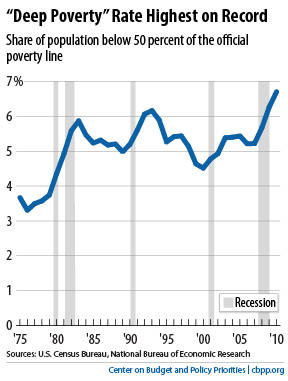
With so many in “deep poverty,” mere poverty is almost like the middle class

29 Sep

Philly poverty

If one of us, or many of us, falls behind, way behind, is it the responsibility of those ahead to pull up the less fortunate, the unfortunate and all those whom fortune has woefully forsaken?

Those living in and around Philadelphia should be giving this serious thought. In this city, the name of which means brotherly love, the economy, the culture, the dynamics, the thoughts and the ideals are too weak to sustain the population. What exists there represents gross failure.

A new report says that 12 percent of Philadelphia residents live in something called deep poverty. Sadly, the times have forced us to look beyond mere poverty, which in Philadelphia is 26 percent.

The city, which I live outside of, ranked highest in deep poverty when compared to the nation’s 10 biggest cities. Nearby Camden, across the river in New Jersey, is not among the biggest and wasn’t ranked. But it has a deep poverty rate of 20 percent and a poverty rate of 43 percent.

From my little cloister, that’s difficult to even imagine.

Deep poverty chartAll these figures come from the U.S. Census’ 2013 American Community Survey, which was recently released.

By definition, a family of three is in poverty if it lives on $20,000 a year. In deep poverty, three survive on $10,000 a year.

In terms of sheer numbers, there are 184,000 people in Philadelphia who are clinging to its lowest rung. Alfred Lubrano, a staff writer for the Inquirer, said that’s about the size of cities like Tallahassee, Florida or Salt Lake City, Utah.

It strikes me as being post-apocalyptic.

But I almost never go to the neighborhoods were the 184,000 live. Camden to me is like Mars.

Still, I can’t help feel as if people like me have somehow failed those in deep poverty, even though many have failed themselves.

In any group, on any place in the world, there are people who do well and people who do not. There are those who need no help and there are the helpless. Now and in the past, however, social units like Native-American tribes or New England colonies or even extended families would try to lift up those that some might describe as laggards. They would do so simply because the unit was a unit and felt responsible for its members. To some degree, we do this in America. We have networks of social services, we have churches and synagogues, and we have government.

Lubrano, the Inquirer reporter, interviewed a Philadelphia women in deep poverty. She is 42 years old, separated with three children ages 7 to 17. Born into an Irish-Italian family, she had dropped out of high school and worked as a cashier. According to Lubrano, she fell into depression and was unable to work. So the government provided her with disability payments of $8,880 a year.

This is a nice gesture, but not a solution to the problem.

So what is? With so many types of poverty, there probably would have to be an assortment of solutions, and even then many couldn’t be reached or helped or encouraged. But it’s for certain a studied, intelligent approach would reduce Philadelphia’s Tallahassee-size problem to perhaps a problem the size of Lost Springs, Wyoming, or Bozeman, Montana.

I lack the training, depth and insight of a social engineer, but one thing I’d like to see in every poor neighborhood is a “Factory of Last Resort.” Employment would be open to all those in poverty and deep poverty who are looking for an out. They would manufacture a mundane but useful item, like brooms or soap. These factories probably would operate at a loss, but there would be incentives to keep loses to a minimum and inch toward profitability. Included with the job would be access to health clinics, day care, a dining hall and dorms.

We would be building the equivalent of an urban kibbutz.

After a time, management positions would go to employees who exhibit leadership skills, the ones who have learned and blossomed from the experience. Awakenings often come with restored dignity.

Those of us who are doing well would be encouraged to buy the brooms and soap as a sign of support. It would be a way for all of us to make our cities whole again and to keep humanity human.

And then, should we want to, we can safely and happily visit the once great and now great-again places like Camden, which spawned RCA Records and Campbell Soup. And the City of Brotherly Love can free itself from the embarrassing irony of its name. It can return to its Quaker roots of service, justice, community, self-improvement and independence.

I love a good city. This would give us more of them.

By Lanny Morgnanesi

Hobos, happiness and the Big Rock Candy Mountain

24 Aug


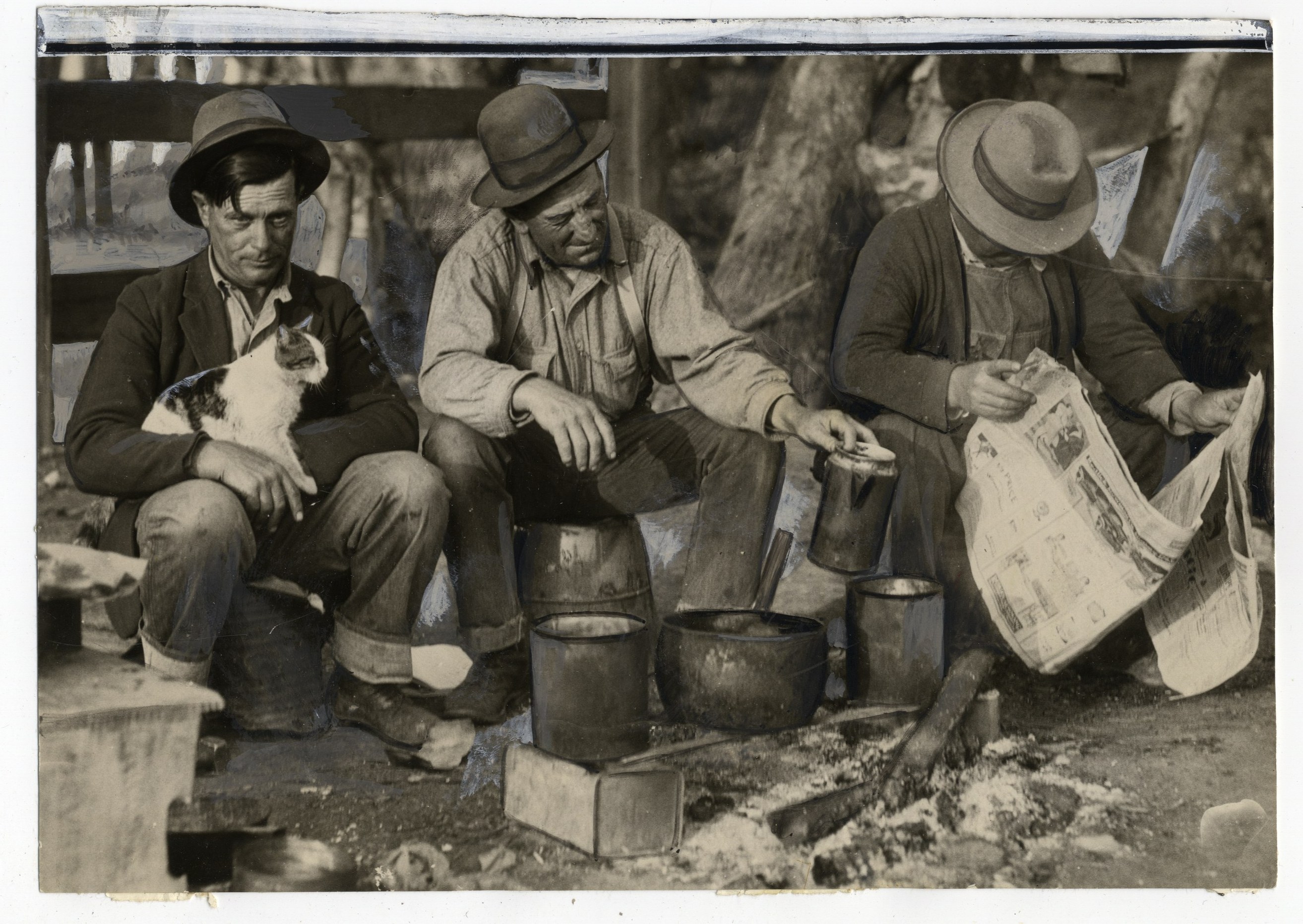
Hobos

I used to think “Big Rock Candy Mountain” was a children’s song. It’s not. It’s a song by and about hobos that someone made into a children’s song.


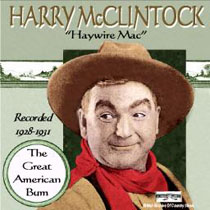
Harry McClintock, a hobo known as Haywire Mac, was the first to record it in 1928. It depicts a hobo’s paradise. You don’t see many hobos today but they were common and plentiful during the Depression.


The Coen brothers used the song in the movie, “Oh Brother Where Art Thou?” Recently, I watched the movie again on TV and gave a close listen to the lyrics of the song.


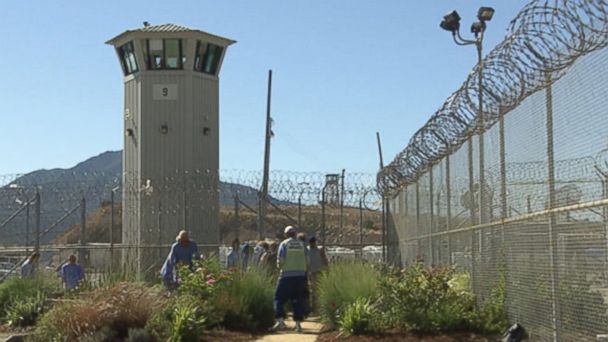
Harry-mcclintockIt describes a place where cops have wooden legs so hobos can out run them. The jails are made of tin so hobos can easily escape. On the Big Rock Candy Mountain, boxcars are always empty and lakes are filled with stew and whiskey. There are no short-handled shovels.


That’s the hobo’s idea of paradise.


After hearing the song, I though that if I were a hobo my paradise would have no cops and no jails. It would be a place where someone down on their luck could crawl out of their hole and make a good living; a place where even a hobo could be somebody.


What I failed to understand was that in my hobo paradise, a hobo would cease being a hobo. As I listened to the song again, it became clear that while hobos may want an easier life, they still want to be hobos.


Which raises the question: How true is this of other people and their lives?


Amidst our general hardship and discomfort, apart from our complaints and dissatisfaction with the small and the large, are we actually … happy?


As you think, consider this little story.


I once spent the Fourth of July at a country club. The fireworks were fantastic and the food was beyond good. There were hot dogs and hamburgers but also barbecued chicken and ribs, all you could eat. On a table the length of an interstate was an assortment of desserts.


In addition to bringing me, my host brought an African-American boy, about 12. He was from a Philadelphia neighborhood that was experiencing a rash of random shootings and killings. The little man was brought to the suburbs via a program designed to give poor children a break from the stresses of violence and poverty.

He was the only black person at the affair.


As I worked on my second helping of ribs, he sat with his head on the table, almost dozing off.


“Tell me,” I said. “Would you rather be here or home?”


He paused, apparently not wanting to seem ungrateful, then smiled and said, “Home.”


For him, happiness was the familiar, not the strange.


The familiar is comfortable and predictable. While I can’t document this, I have heard of a study showing that people, if given the chance to exchange all their problems and ills with the problems and ills of another person, would decline. If true, this is further evidence that no matter who we are, we like our lives.


Andy-Capp-Cartoon Pictures (1)It’s been said that England is defined by its class structure, and that people recognize and take pride in their station, be it high or low. They wear cloths and banners proclaiming their class – like the Jeff cap worn by the working-class cartoon character Andy Capp.


I don’t think we do that in America, but maybe I’m just blind to it. Either way, listening closely to “Big Rock Candy Mountain” has made me believe that America, for all its problems, is a land of contentment for both the haves and have-nots.


It’s so content that most don’t even vote.


While a peaceful populace has its advantages, it also has its dangers. Injustices are easily wrought upon the passive. Eventually, they create a destabilizing imbalance that will harm everyone – even their originators.


Income inequality is such an imbalance. In nations, stability and economic might are derived from a deep, viable, productive middle class, with a minimum of poverty and want. But when wealth is concentrated among the few, as has occurred in the U.S., the whole system is threatened because the many stop spending.


An alarm was sounded recently by Standard and Poor’s, the bond-rating company. It released a study showing that income inequality is responsible for a slowdown in the American economy. A headline on Fortune.com read:

More concentrated wealth means less spending than if money was spread to more people, according to a new report.


This realization, and others like it, is putting income inequality on the national agenda. Balance, to some degree, eventually will be restored. But it is because the elite acted, not the complacent.


I realize people get set in their ways; that they like routine and follow habits religiously. Still, there comes a point when routine is dispensed with in order to preserve dignity, honor and respect that were compromised by imbalance. At home, this happened in Ferguson, Missouri. Abroad, it happened in Gaza. The wise nation will avoid such flashpoints. More common is that they will act after the fact.


The better way, at least in the U.S., is self-action prior to the flashpoints.


We all need to get off the Big Rock Candy Mountain and take personal responsibility for our collective fate. Areas of concern are fairness, equal opportunity, equal treatment, social justice and civility. Legislation and tax policy must be designed for large segments of the population rather than small.


Key tools: Vocalization and voting.


Voting, real voting, is a powerful concept that has gone dormant in the U.S. We should try reviving it, just to keep the system fair and honest. Voting shows we are alive and paying attention.


There is nothing wrong with being happy and complacent. Complaisance, however, should never interfere with our ability to stop those who would chip away at our happiness.


Human rights, said Alexander Hamilton, are written “by the hand of the divinity itself.” They cannot, he said, “be erased or obscured by mortal power.”


By Lanny Morgnanesi


<iframe width=”420″ height=”315″ src=”//www.youtube.com/embed/JqowmHgxVJQ” frameborder=”0″ allowfullscreen>

When the poor stop going to McDonald’s, we’re all in trouble

20 Jun

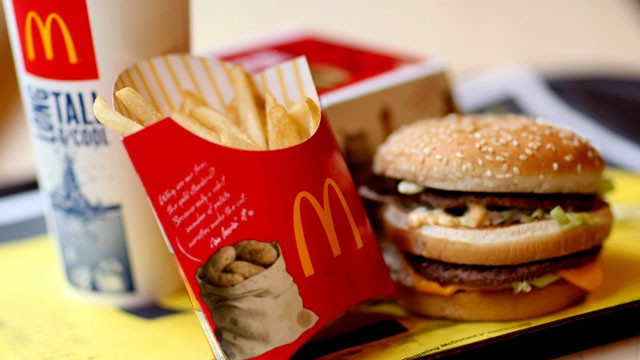
mcdonalds-meal

Businesses like Wal-Mart and McDonald’s haven’t been doing well.


People without a lot of money usually go to these places, but because they now have even less money, they’ve stopped going. When people who work at Wal-Mart and McDonald’s can no longer afford to shop and eat there, it’s a sure sign of a coming, broad-based financial decline.


It will affect us all, even the rich, who don’t amount to much if they can’t get the poor to give them money.


Reports show that the parade of U.S. customers into Wal-Mart fell 1.4 percent during the first quarter. That followed a decline of 1.8 percent in the prior year.

The discount retailer blamed the bad winter weather but also cited cuts in food stamps, higher payroll taxes and the increased cost of health care.


You know things are bad when Wal-Mart relies on the food stamp program to move product.


Walm-MartRecent U.S. sales at McDonald’s also have declined, by 1 percent. To lure back low-end customers, the burger behemoth increased its value menu, but that hurt profits even more.


What’s happening is the downward pressure on income is leading to downward pressure on sales.


Henry Ford used to pay his people well so they could buy cars. If Wal-Mart and McDonald’s have any sense, they and the other minimum-wage shops will copy this strategy. Not doing so will have consequences. It could turn the U.S. into another Japan – the bad one, not the good one.


Japan was once the globe’s supreme economic power. It made and sold great products while setting new standards for manufacturing. Flush with cash, Japanese investors bought up billions in prime New York real estate, and nearly everything else. During this period, in the mid-80s, I visited Hawaii, which seemed more like Japan. Japanese tourism and culture were so strong that hippie beach bums peddling sailing lessons had to learn Japanese.


Then came the bust, the swoon and massive disinflation. It began around 1990. People in the U.S. don’t understand disinflation. It’s when prices fall and fall and fall and still no one buys anything. The economy becomes comatose. Seems impossible, until you look at Japan, where disinflation has been a cruel fact of life for a couple decades.


According to Bloomberg Businessweek, one contributor to Japan’s disinflation is falling wages. The recent habit of businesses there, as in the United States, is to avoid hiring full-time workers and instead contract with temporary workers who earn less and have no job security. These temps now make up about 40 percent of the Japanese work force. They are paid about 38 percent less than full-time workers.


The financial and social divide between the two kinds of workers has grown and is causing multiple calamities. For example, no one wants to marry a temp. This depresses birthrates and is making Japan a nation of elderly people. Banks won’t give temps mortgages, which doesn’t encourage building. These and other negative trends cascade and the country stagnates.


In the current era, U.S. corporations have reaped huge profits from selling to the developing world. But those markets, at least to some degree, are cooling and maturing. The bread-and-butter American markets may have to be revived in order to maintain profits. That could require a higher minimum wage and more opportunity for the middle class. The government and the business community finally are waking up to this.


The Great Cure for so much – including crime and falling education standards — is to put money back in the hands of traditional spenders. For a time, greed will blind us to this reality. Then the cash register stops ringing and we see.


Wal-Mart and McDonald’s — and all the other places where you can work full-time and not earn a living — now see. Each is probably afraid to take the first big step. Sooner or later someone has to, otherwise that first big step will be involuntary and it will send us over a cliff.


Think about the return of the 25-cent McDonald’s hamburger. Think about taking the family out for one on a very special night, maybe once every couple of months. That disinflation, and it will make 15 percent inflation seem like good times.


Now, we wait.


By Lanny Morgnanesi

Goldman Sachs: Altruism for a profit

27 May

goldman-sachs,jpg

Investment powerhouse Goldman Sachs has made money with schemes that were ingenious, inventive, complex, arcane, morally vacant and, some might say, criminal. Now it hopes to make money by exploiting the dysfunctions of government.


Goldman has long mastered the art of generating cash without actually producing a product. Its techniques include:


  • Using influence to rig a trading system in its favor.
  • Finding a market where it can buy low and then finding a second market where it can sell high.
  • Identifying gross inefficiencies that are costing someone or something money and offering to fix them.


Goldman’s new plan is along the lines of the third. The firm is financing crime reduction measures in Massachusetts in exchange for a percent of what is saved by not having to incarcerate thugs.


Ingenious, inventive, complex.


New profit center for investors

New profit center for investors

This type of investment carries an extra dividend: It makes Goldman Sachs – a villain in the eyes of the Occupy movement – look like a Good Guy. Indeed, the investment vehicle designed to reduce crime is called a social impact bond, or in Wall Street parlance, an SIB.


Some view these investments as a marriage between capitalism and charity, but capitalism is the strong, dominant partner.


Bloomberg Businessweek reported on Goldman and the SIBs in early May. Writer Esme E. Deprez cites a prediction by the Rockefeller Foundation that the market for SIBs is growing and by 2015 will reach $500 million.


That’s a lot of social impact, enough to give government the idea that it no longer is responsible for maintaining order and structure in society. Or has it already decided that?


According to the Businessweek article, Goldman is investing $9 million and betting that crime will go down – or more accurately that young men will spend fewer days in jail.


The bonds help fund a program called the Massachusetts Juvenile Justice Pay for Success Initiative. In that program, a non-profit agency called Roca works with young adult males on probation. The agency provides outreach, therapy and training. After two years, participants are supposed to leave, take a steady job and lead a crime-free life.


If a graduate stays out of jail for a year, Massachusetts saves $12,400. If the state is able to reduce crime enough to close a 300-person prison, it saves $47,500 per inmate.


This is how the SIBs and Goldman get paid off.


In this particular case, Goldman has partnered with other investors who financed an additional $12 million in bonds, making the total $21 million.


The bonds earn 5 percent no matter what, but pay nothing else until the men in the program manage to spend 22 percent fewer days in jail. There’s a sliding scale for payment, with a maximum of $27 million being paid to bond holders if jail time is reduced by 70 percent.


It’s a risk, like a junk bond, but $27 million for a $21 million investment is pretty good money (28 percent profit) and worthy of the risk.


Roca had been working with 375 men. With the SIB money, it can handle 550.


A skeptic might look at all this and ask:


  • Why doesn’t Massachusetts put up the $21 million itself and forego the $6 million payout to investors?


  • Why doesn’t society as a whole recognize that employed people from stable families commit fewer crimes?


  • Why does the nation exclude million of people from an otherwise viable system of commerce, education and opportunity and allow the existence of acres and acres of urban decay that breed crime and insanity?


There are clear answers to these questions. I won’t go into them because our preference is to ignore them, deny them and maintain a monstrous blind spot in spite of religious teachings, well-intended laws and glorious, inclusive rhetoric.


But as a culture, we have reached an all-time low when we allow things to get so bad

that Goldman Sachs can make money off our failures. The promise of money, more so than altruism or mere brotherhood, does seem to get things done. Perhaps we can turn the VA hospitals over to Goldman. With all those returning vets, there’s got to be a profit in there somewhere.


By Lanny Morgnanesi


I never ate there, but I always expected a line

30 Mar

7_13_500x362

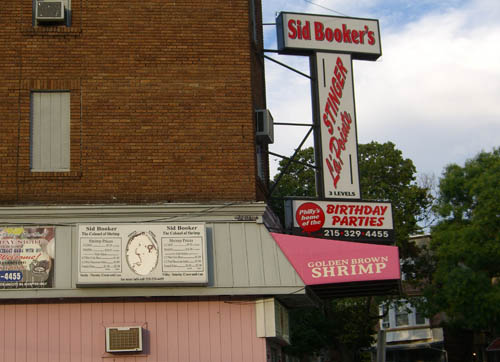
I once dated a woman who knew Philadelphia much better than I. On the few occasions when we passed Broad and Belfield Avenue, she’d say, “There’s always a line at the Shrimp Corner.”

And there always was.

My friend spoke these words as if they were a cliché, something that had been repeated a thousand times by a thousand people. But I had never heard the expression and I didn’t know the Shrimp Corner.

For me, it had escaped the notoriety of, say, Pat’s King of Steaks on Passyunk Avenue in South Philadelphia. I knew there was always a line at Pat’s. I’d waited in it at 3 a.m. Pat’s was in an Italian neighborhood and I felt comfortable there. People went there after Phillies games. The very different Shrimp Corner is in North Philadelphia, a poor, high-crime area. I’m sure it is considered home to many, but to those in the suburbs, sadly, it was simply a place to avoid.

On Yelp someone advises that before going to the Shrimp Corner one should “practice standing around and looking tough so no one messes with you.”

philly-360-creative-ambassador-brandon-pankey-spot-check-sid-booker-s-shrimp.582.345.cFormally known as Sid Booker’s Shrimp Corner, the takeout eatery opened in 1966. As the name suggests, it juts out on a block that forms an acute angle. To order, you walk up to a window made of bulletproof glass. The food is not cheap. A dozen batter-fried shrimp with fries costs about $20. The rest of the building, painted pink, houses Sid Booker’s Stinger Lounge.

Because of the Shrimp Corner, I thought about my old girlfriend this month. As circumstance would have it, I drove by Broad and Belfield three times in the last four weeks. Each time, there was no line at the Shrimp Corner.

What changed?

When I first saw the Shrimp Corner more than a couple decades ago, North Philadelphia may have been at its lowest. It was in great deterioration. I know so little of these neighborhoods, but I do recall how the homes and small business were sinfully neglected. Some were actually falling down. On Broad Street, the main thoroughfare, there wasn’t a fresh coat of paint to be seen. I doubt a nickel had been invested in the place.

7_15_800x600Then, about the time when real estate prices took off and business loans were easier to get, new shopping centers went up. Franchises like CVS settled in, as did more fast food restaurants. The regional transportation authority, SEPTA, even brought in new buses.

Meanwhile, a so-so college in the heart of North Philadelphia was expanding. An incredible number of well-designed, multi-story buildings appeared on Broad Street — for miles. Temple University, once a commuter college for the working class, had become a residential college that was attracting a new generation of students seeking an urban experience.

Houses were fixed up and rented to students. New housing was constructed.

If a Temple student was stupid enough to start selling drugs, he might get busted up in his nice apartment and have his stash and cash stolen. There would be episodes like when three neighborhood girls went around smashing bricks in the faces of female students. But overall, things really seemed to improve.

Today you can drive portions of Broad Street and it looks commercially alive. Some developer even wants to build a $700 million French-themed hotel-casino complex – The Provence – on Broad just south of Vine. He said it will be “one of the most dynamic entertainment destinations on the East Coast”

So why isn’t there a line at the Shrimp Corner?

I don’t know, but I do have a suggestion.

Recently there have been a series of Flash Mobs at old, nearly forgotten, Eleanor Rigby/Father McKenzie type cathedrals. Calling themselves “Mass” Mobs, Catholics are trying to revive these still elegant structures by using social media to fill pews.

If its true that the Shrimp Corner is not the draw it once was, wouldn’t it be fun to organize a Flash Mob – call it a “Flash Fry” — and send the line at the window down the block and all the way to Temple? Sid sure would go for the idea. Maybe he could donate some of the profits to fix up North Philly’s Uptown Theater, which has been trying and trying and trying to come back but can’t.

I have no deep emotional connection to any of this, so it’s not for me to organize an event. Still, I’d love to see North Philadelphia attract more investment and make Broad Street once again a great and grand boulevard.

If not this, then I’d at least  like– for old times sake – to be able to drive by and be correct when I say to a fellow passenger, “There’s always a line at the Shrimp Corner.”

By Lanny Morgnanesi

In snowy Conshohocken, contemplating a shift of fate

17 Feb

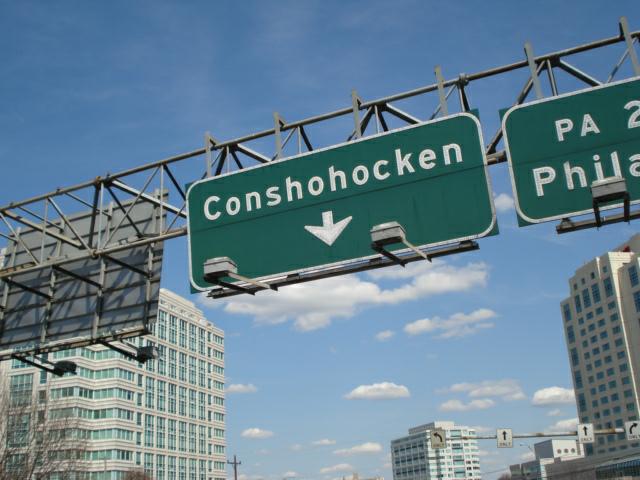
Conshohocken

I invite everyone to read a commentary I wrote for today’s Philadelphia Inquirer. The editors there are skilled, and I believed they improved the essay by removing the final paragraph, which read:


Oddly, I felt it necessary to have a plan. After some thought I decided it would be this: For the night I would hide out in the CVS restroom. For breakfast I would have Valentine’s Day chocolates, an entire box. I’d attend 6 a.m. mass and be at the library the minute it opened. And all the while, shower-less and dejected, my heart would long for spring.


I leave behind this detached piece of verbiage as a prod that might get you to find out what the hell I was writing about. The photo is only a small hint.


Lanny Morgnanesi

Think people don’t want to work? Post a job and see

24 Nov

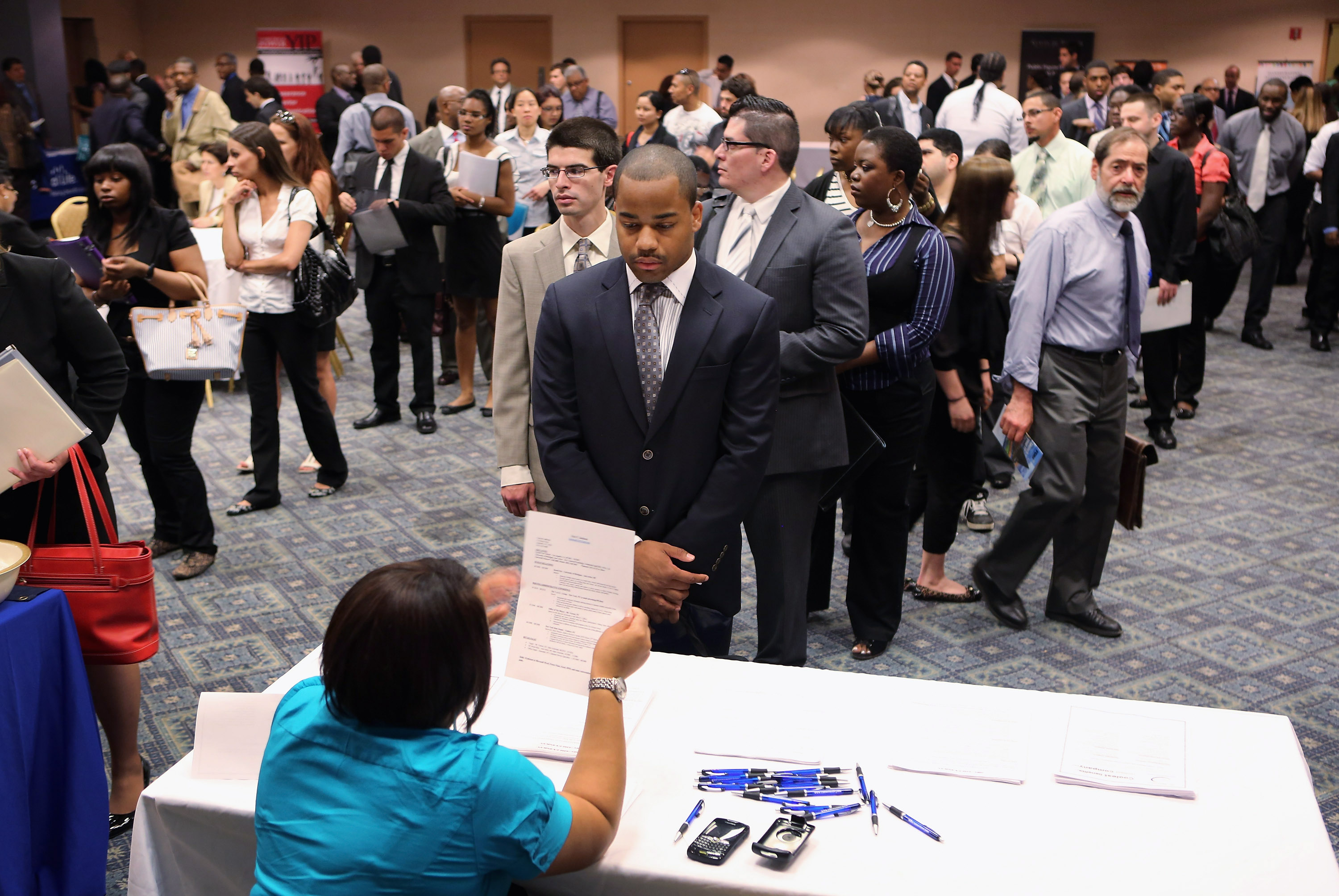
Job Fair Held In Midtown Manhattan

I hear more and more people complaining about shiftless hordes who don’t want to work. Maybe they know something I don’t, but when a supermarket near my house opened, 10,000 people applied for 400 jobs.

At a convenience market where I buy coffee, a cashier was complaining about her job, remarking how things are done differently at the other two places where she works.

There was a time when nearly everyone could work a single job, or perhaps two, and survive. Not so today. Wal-Mart has made billions for its founders but in Canton, Ohio, one store found it necessary to hold a food drive for its own employees.

The poor work, but still draw resentment.

John R. Kasich, the Republican governor of Ohio, told his cabinet, “I’m concerned about the fact there seems to be a war on the poor. That if you’re poor, somehow you’re shiftless and lazy.”

When the poor ask for more, the rich counter with charges of class warfare – hiding the fact that such a war actually is being waged in the opposite direction, and with great effectiveness.

I fully understand the propensity of the rich to take and hold all they can. Despite the efforts of Christianity and the other great religions, intense greed is endemic.

But why do so many average people believe that social programs primarily serve the indolent?

For sure, there are cheats. Lots. Nothing sends off a member of the middle class like watching someone use food stamps for groceries then buy cigarettes with cash. (This isn’t even cheating.) Such stories, sadly, prevent the recognition of real need.

In America, we are all tense and frustrated and filled with resentment and fear and sometime hate. For the angry Middle Class, the easiest target is the unemployed, who have come to represent a fault-filled force that siphons off taxes. Without such targets, many people would have a tough time getting through the day.

What can we do to stop this inner angst, this potentially explosive and destructive energy? We’d be so much better off without it.

Maybe the remedy is safe, secure, fair-wage jobs and the return of a culture of opportunity and equal advancement.

People find happiness in work, not welfare.

Corporations all over the U.S. are holding billions in cash. Might there be investment and jobs somewhere in those stashes? If we’ve all got to vent, why not send a little steam up instead of down? It’s time to stop wasting energy trying to disband a phantom nation of the lazy. It’s time to get to the real problem.

Lanny Morgnanesi


How hungry do you have to be?

8 Feb

gleaners

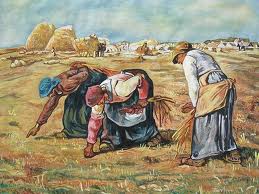
“The Gleaners,” by Jean-Francois Millet

I heard a little – not much – about a gleaner movement where volunteers seek permission from farmers to glean fruit and vegetables from fields, then use what they harvest to feed the hungry.

When I learned about the movement, my grandfather came to mind.

He was an immigrant, and his own gleaner. If he passed a fruit tree where apples were left on the ground, he would walk up to the door of the house and ask if he could have them. The gleaned food was in addition to what he grew in his own garden.

His son, my father, with disgust for modern life, once told me his father “fed his family on less than you spend today for paper towels.”

My grandfather was a proud, ingenious man who felt no shame in gleaning what would otherwise be wasted. If I were hungry – and I doubt he ever was – I’m not sure which I would find less tasteful: gleaning for myself or having others glean for me.