Archive | Culture RSS feed for this section

Where Will You Be Six Months from Now?

19 May


The late comedian Henny Youngman used to tell lots of jokes about doctors. A favorite is:

My doctor told me I had six months to live. I said, “Doctor, I can’t pay you.” He gave me another six months.”

Henny Youngman — he knew!

Comedians are very exacting when choosing their words, especially in short jokes. They much prefer funny words over unfunny words and will struggle to determine if, say, 66, is funnier than 85. So I find it interesting that Henny chose “six” for the number of months his doctor gave him.

I don’t think he did it because six is funny. I think he did it because when doctors tell you death is near, they almost always put it six months away.

Not to be funny, but have you every heard of a friend or relative who was given four months to live, or seven months to live, or 10 months? I never have.

All this comes to mind because someone I know was given six months to live. Sure enough, exactly six months later he was dead.

Did the doctor really know? Or was he just lucky?

In life, we all have to make quick judgments and guesses. In the field of finance there is a joke (funny only to people in finance) that goes:

Q. Why do economists use decimal points?

A. Because they have a sense of humor.

The point being that nobody really knows anything for sure, but all of us sure can fake it. Those who get it right probably get more credit than they deserve, like maybe Steve Jobs or some military strategists.

Lucky guess?

But we’ve all got to worship earthly gods and I imagine it is more appropriate to worship those who have guessed right than to worship those who have guessed wrong. So hats off to the doc who said “six months” to my friend.

I’ll leave you with this piece of advice:

If your doctor says you have just 10 minutes to live, do everything you can to assure him that his wife and you are just good friends.

Thanks, Henny.

What a dip!

23 Apr

When the names of authors began to appear larger on books than the titles, I felt something somewhere had gone wrong. I had that same feeling recently when I saw a supermarket product with a label that was a marketing tool for another product.

The product on the shelf – a bottle of Heinz ketchup — was easy to identify without its own label. It was on an end shelf at an Asian supermarket. The label was a mini billboard for new “Dip and Squeeze” packets of ketchup. With the traditional packets, the only option was to open and squeeze out the ketchup. The new packets allow a second option. They have a peel-off opening that makes for easy dipping … for French fries, I guess.

It just seemed odd. When I went to my regular supermarket there was only regular ketchup with regular labels. Were Asians being targeted, and why?

Could this represent a new approach to selling? Will all common products – corn flakes, perhaps – now be used as tools to sell newly launched items?

Maybe a marketer out there or Heinz can tell me.

In the very odd circumstance that you should want to see the Dip and Squeeze in use, here is a Heinz video. I don’t recommend it.

An obit is written for the death of Facts

22 Apr

On Thursday, in reaction to the claim by a congressman that 80 federal legislators were card-carrying Communists, Rex Huppke of the Chicago Tribune wrote an obit on the death of Facts.

If reporters had asked the right follow-up questions, Facts might not have died. Here are the questions I would have asked of Florida Republican Rep. Allen West:

1. If it is true that congressmen and women are card-carrying Communists, where do they actually carry the cards?

2. Do those who carry the cards also attend the meetings?

3. How do the Democrats and Republicans feel about multi-party membership?

4. Are any of the cards expired?

5. Do the 80 get free Cuban cigars?

Any more questions?

I knew Hemingway’s friend!

31 Mar

Where Irv met Ernest

In the post below I casually mention Ernest Hemingway, almost as if I had known him. I didn’t, of course. But I did know someone he drank with.

The man’s name was Irv Lippe, and he was nothing at all like Hemingway. Irv was short, slight and polite. He was a diplomat – literally — posted to Cuba when Hemingway was living and writing there.

When Irv retired, he took a part-time job stateside with the newspaper where I worked. We spoke a lot and he told me of his days in Cuba. Irv loved martinis and it was not unusual for him to drink three at lunch.

On one of his first ventures into an island bar for lunch, he noticed Hemingway. He asked the fellow next to him if that indeed was the famous writing. The chap said, “It is. But don’t dare talk to him. He’ll bite your head off.”

Irv followed the advice. He did, however, observe the man and thought it odd that such a tough guy would order a daiquiri.

“At the time, a daiquiri was considered a lady’s drink,” Irv said. “I’m surprised he wasn’t laughed out of that bar.”

(Hemingway would go on to make the daiquiri famous, for both sexes.)

One day, while Irv downed a martini at the same place, Hemingway came in and sat next to him. Irv said nothing. This happened several times. Two mute drinkers. The day finally came when Hemingway gruffly turned toward Irv and said, “Do you have the time?”

Irv gave him the time but said nothing else.

The next day Papa again sat next to Irv and said something like, “Nice day for fishing.” Irv said that indeed it was.

Before long, the two were having full and fast conversations.

“We actually, I guess, became friends,” Irv told me.

I loved Irv and speaking with him was always a pleasure, but I didn’t believe this story. I figured anyone who spent more than two minutes in Cuba during those years would claim Hemingway as a friend.

As Irv and I grew closer, he invited me to his home for lunch. He took me into his office and on the wall was a 2 foot-by-3 foot photo of a smiling, bear-like man with his arms tight around Irv, almost lifting the little guy off the ground.

It was signed: “To my good friend Irv — Ernest”


Writing is easy; truth is hard (you have to get naked)

30 Mar

Truth is one of the rarest commodities on Earth.

The reason may be that it’s actually an abstract concept, a moralistic illusion. Or maybe truth is just relative, with multiple versions floating about.

Hemingway was always barking about how hard it was to write a true sentence. Harry Crews, a writer of note who died this week, once said:

“If you’re gonna write, for God in heaven’s sake, try to get naked. Try to write the truth. Try to get underneath all the sham, all the excuses, all the lies that you’ve been told.”

That’s in his obit.

No ... that's not true, either.

In honor of Harry, I challenge everyone visiting this blog to go to the comment section below and write something true.


I’ll start:

“Digital communications has devolved into a lucrative confidence game where users knowingly or unknowingly reveal the most private pieces of information so that others can more easily sell them goods and services.”

Now you go ……..

More popular than the Beatles: A 19th Century Swede

28 Mar


These guys were nothing, compared to ...

There were superstar performers long before mass media and one of them was named Jenny Lind.

Jenny was known as the “Swedish Nightingale.” She came to the U.S. on a whirlwind tour in 1850 after retiring from European opera at age 29. Her American promoter was P.T. Barnum, who created such a stir that 30,000 people went to New York harbor to greet Jenny’s ship.

... the Swedish Nightingale

Because of the great demand for tickets, Barnum would auction them off. They would go for as high as $20 – an incredible price in 1850. By comparison, a ticket to see the Beatles in 1964 on the main floor at the Atlantic City Convention Center cost $3.90.

At some Lind concerts, a few very rich music lovers (or perhaps speculators) would offer to buy up every seat in the house. Barnum wouldn’t sell, claiming all should get a chance.

On her American tour, Jenny personally earned $350,000. She gave it all to charity. The Beatles never did that. Neither did Barnum.

Because of the illogical and unreasonable American response to Jenny, the term “Lind mania” was coined, and a songwriter named W.H.C. West composed a satirical piece entitled, “The Jenny Lind Mania.” Today there would be Internet memes and YouTube parodies about Jenny.

I learned about Jenny last Sunday when some of the songs she did on her American tour were performed by three-time Tony nominee Judy Kuhn, who appeared in Pennsylvania at a pops concert with the Bucks County Symphony.

Maestro Gary S. Fagin told stories about Jenny and the sensation she caused.

History tells us that P.T. Barnum was a master showman and probably could sell $20 tickets to watch of piece of stale cake. Still, it is hard to believe he could do what he did without the tools of TV or radio or even photographs in newspapers. It must be that people, with or without technology, on occasion enter into fits of collective madness. We clearly have a weakness for it. It must satisfy something in our nature.

There was no harm, I don’t think, when people went to see Jenny Lind. There was harm, however, when nearly everyone in American, rich and poor, wise and stupid, went out and bought homes they could not afford. That weakened a nation. An entire species was weakened when in the last century much of Europe, the rich and the poor, the wise and the stupid, embraced fascism, war and the lethal scapegoating of Jews.

Clearly, things can get horridly bad.

Hearing about Jenny Lind at the concert, I wondered what humans are capable of. I thought about the relativity of good sense, the fragile veneer of morality and the protean quality of religion. I should have just enjoyed the music. Instead I thought about the monster within me.

Not a good evening.

Yeah, Yeah, Yeah.

Machines are smart, but can they think about thinking?

20 Mar

Computers can play chess, Jeopardy and now they can do crossword puzzles. In a competition last weekend with 600 of the country’s top puzzlers, a machine named Dr. Fill came in 141.

The term “artificial intelligence” is usually associated with computers that do such things. I have my doubts. I suspect smart humans are simply slipping their own knowledge into code which then exits a box that does not think. When IBM’s Big Blue was losing at chess, a small army of programmers quickly updated the code.

That’s almost like cheating at cards.

I believe a box is capable of thinking, but before it can someone will have to unlock a secret … uncover a currently unknown approach that will allow a human process to be trans-synthesized by something nonhuman. When this happens, machine intelligence really won’t be artificial. The will have to change the term.

In AI there is debate over whether a machine designed to think should do so like a person or like a machine. The former, once popular, is losing out to the latter. It’s because the former didn’t work very well.

I say it has got to be both. Consider this:

A human – me, for example – is asked a question. The question is: “How many rhymes are in the song Moonlight in Vermont?” The human, me, chooses not to answer immediately but to think: Why such a silly, out-of-context question?

Would the machine do that? Doubtful.

After mulling it over, I would agree with myself that the person asking the question did not do so to delight in telling me that my answer of eight is wrong and instead the correct answer is 10. There would be no satisfaction in that. No, the questioner wants me to say eight and then find joy in telling me the answer is either really high – say 500 – or really low – say one. Maybe it is zero.

In other words, I would use my intelligence to determine that “How many rhymes are in the song Moonlight in Vermont?” is a trick question. Does a computer know what a trick question is?

Only if it can think like a human.

Of course, it doesn’t have to think at all if it has access to every song ever written. All it has to do then is get the song and count. That is not AI.

So what is AI?

And how many rhymes really ARE in Moonlight in Vermont?

A musical legacy: Black, proud, loud and wet

18 Mar

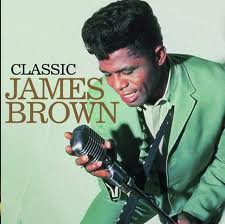
Hard work is to be admired, as is James Brown, the Hardest Working Man in Show Business.

There’s a new biography out on Brown, who was also known as the Godfather of Soul. The book is by RJ Smith and called, “The One: The Life and Music of James Brown.”

Dan DeLuca, in a review that appears today in the Philadelphia Inquirer, repeats an anecdote from the book illustrating the intensity of Brown’s performances. The story had the entertainer playing in Tbilisi, Georgia, in the former Soviet Union, where a swimming pool separated the audience from the stage. As the show peaked with the number, “Sex Machine,” Brown – at age 73 – leaped into the water. He sank, and band members jumped in after him.

Wet, the entire ensemble finished the show.

According to DeLuca, Brown would sweat so much on stage that band members couldn’t avoid sliding on the drippings. After shows, Brown was rehydrated with an intravenous hook up.

Brown was a perfectionist and very tough on his musicians. He’d fine them for playing the wrong notes, DeLuca reports. He wanted to be the best. After Elvis died, Brown was given a private viewing of The King and was heard to have said, “Elvis, you rat. You’re not number one anymore.”

The book apparently paints James Brown as self-centered (his hair was done three times a day) and non-empathetic. But he rose from poverty, took nothing and – from what I understand – gave a lot of money away to help children, lectured to school kids on the importance of education (he had little) and was a social activist credited with preventing riots after the assassination of Martin Luther King. (He agreed to a rare television concert the quelled anger and took people off the streets.)

He was patriotic, but bitter. Once asked to give advice to a rising Tiger Woods, Brown said, “Get him to understand how vicious this world is. Everything in this world disappears and vacates.”

Add to his many credits: Philosopher.

Where $350 gets you $19,000 — and it ain’t Wall Street

16 Mar

Image

He was short, wore a hoodie and was happy. A student at Penn, he had come in second at a World Series of Poker Tournament in Atlantic City this past week. His investment was about $350. After beating all but one of the 268 contestants, his prize was a little more than $12,000.

He was fun to watch because he smiled all the time.

The winner, a young man from Ohio, never smiled. He seemed sour and unhappy. For his efforts he received a little more than $19,000 and a huge gold ring.

Unlike most professional sports, poker is free to watch. The competition is keen and intense. Spectators can learn, and they can walk into the next room, sit at a table and apply what they’ve learned. You can’t do that at a hockey match.

The final table I watched represented a fairly low level of play. Play level rises when you pay more to get into the game. The winner of the main event, the top level, took home a ring and $191,194. I believe it cost about $1,500 to get into that game.

Some observations:

  • Watching poker in person is much better than watching it on TV, where there is selective editing, you can’t see all that is happening, and you don’t get a full grasp of the dynamics. Unlike TV, you can’t see the hole cards, so you don’t know what a person had when he folds after several raises. But that adds to the mystique.
  • I said when “he” folds. The sport is mostly male. Young and male. Mostly white, young and male, although the Asian presence is notable. At the table where I watched, however, a black guy was the chip leader most of the time.
  • Endurance is critical. There are breaks, but the tournament lasts three days. While you play, you can drink booze or coffee or orange juice or Red Bull. Whatever works. But if you don’t stay sharp, you lose. The chip leader I spoke of got tired, made bad plays in the last couple of hours and was knocked out (although he still won prize money). The Penn kid was alert and rallied back from a short stack.

The poker culture is interesting to follow; the language, the different ways to wear hoodies (almost a uniform), the ways to play with your chips, the various attitudes and poses. At Caesar’s, where the competition was held, a few players hired women to massage their backs while they played.

I’m convinced many life lessons can be learned in a poker match. I’m half tempted to start practicing and invest $350 the next time the WSOP comes around. It seems like a small price to pay for the experience.

Are there any tournament players who can share some of their thoughts here?

India hasn’t forgotten the English – A case of true bilingualism

10 Mar

No words in this trailer, but the movie — Guzaarish — is an example of mixed language. Watch it on Netflix.


I like language, its power, its beauty and its imperfections.

Learning about a language can tell you a lot about the people who speak it. Chinese, for example, is structured in a way that allows the speaker to say something without really saying it. It is a subtle and metaphorical tongue. This is due in part to the fact that many, many words share the same pronunciation, like the English “dear” and “deer” but on a much wider scale.

The given name of deceased Chinese leader Deng Xiao Ping, for example, sounds just like the words “little bottle.” When the Chinese people tried to convince the Communist government to install Deng as their leader, they marched through the streets holding up little bottles. This allowed them to make a point while denying they were engaged in political activity.

That’s cool.

In India, they do something even cooler, something I find fascinating but don’t understand. I hope someone can explain it to me.

I haven’t been to India and know nothing of Hindi, the official language, but I do watch Indian movies. In those movies people will be speaking a blue streak of Hindi – to a friend, to a lover, to a business acquaintance or government official – then without warning or pause switch to English. Then just as quickly, they will switch back to Hindi, then do it again and again.

Ten words of Hindi, five of English, 100 of Hindi, three of English … on and on.

I’ve tried to figure out if certain things are said in English for effect or emphasis, but it doesn’t appear that way. It appears random – totally random, without reason. But it can’t be. Or can it?

Who out there can explain?