Archive | Culture RSS feed for this section

Normal Mailer: Now there was a writer

25 Oct

Mailer-young

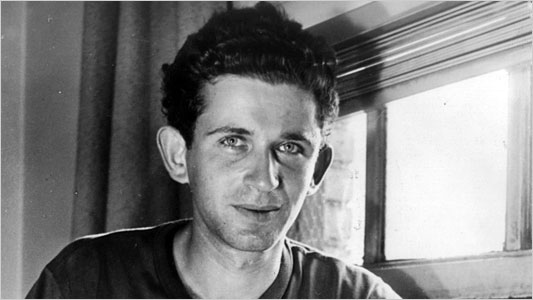
Growing up and trying to write, I admired Norman Mailer. Oh, he had his bad points, but I thought he was fantastic. His fame as a character/celebrity was a self-creation but as a writer he was genuine.


There is a new biography out on him. It is “Norman Mailer: A Double Life,” by J. Michael Lennon. I haven’t read it, but I did read a review of it in the New York Times by Graydon Carter, the editor of Vanity Fair.


Carter does a wonderful job of describing Mailer:


It could be said that Norman Mailer was a man and a writer halfway between fame and infamy and yet with little in the way of middle ground. He was, in varying combinations, a world-class drinker, feuder, provocateur, self-mythologizer and anti-feminist. He was a war protester, a mayoral candidate, a co-founder of The Village Voice, as well as a wife stabber, a serial husband (of six wives), and a father (of nine). He was a boxer, an actor, a filmmaker, a poet and a playwright. He was also a journalist and a novelist of enormous and singular narrative inventiveness and thrust, a two-time Pulitzer Prize winner, and one of the least boring and most tireless and tiresome public figures of the last half of the 20th century.


Mailer-bookI heard Mailer speak at the University of Missouri during the ‘70s. Always the showman looking to shock, he opened with a dirty joke.  It was a good joke. The most interesting thing about the joke was it knocked him down a peg or two on the masculinity chart. This is unusual for a he-man self-inflator.


Here is the joke, which I clearly remember after all these years.


“I ran into one of my ex-wives recently. She had gotten herself a young new lover and so I asked, ‘How does your boyfriend like that old, worn-out pussy of yours?’  She answered, ‘He likes it just fine . . . once he gets past the worn-out part.”


One thing about this great mind, who loved verbal combat: Sometime he tried too hard and flopped. He’d come off like an ass. This happened on the old “Dick Cavett Show” when he went up against both Cavett and his mortal enemy, writer Gore Vidal.


I had watched the original show and was so disappointed in him. A clip of the performance has been posted on Youtube and I’d like to share it with you. Your thoughts on Mailer and this video would be greatly appreciated. I would guess Mailer had many more enemies than fans. Which are you?

By Lanny Morgnanesi


On the Coming Middle Class Revolution

29 Sep

inequality

The problems of poverty and inequality have always bothered me. This is so even though I’ve not been poor nor have I ever lived among the poor.

Why then, I ask myself, do I have this strong sense that it is morally wrong to allow the sad side of civilization to exist?

Others are free of this burden, why not me?

The great religions speak against poverty and urge attention and compassion. Yet legislators who profess these faiths will happily cut  $40 billion from the food stamp program.

While my empathy for the poor and the marginal working class is hard to shake, so, too, is my view that the rich and everyone else would benefit financially, spiritually and culturally from a more egalitarian society. They key to this society is the easy ability to get and hold a job that ensures freedom from want.

In such a society, billion-dollar food stamp programs are unnecessary.

You don’t need public housing or a bloated Medicaid system.

And because people would have more pride and self-respect, society would need fewer courts, cops, prisons and mental health facilities.

There would be great savings.

People would have money in their pockets and the business community would thrive.

There is little downside, except perhaps that the very rich would have slightly less money and corporations would not be able to amass huge cash surpluses.

By contrast to this semi-utopia, I find the present oligarchical society unpleasant and dangerous. And let’s face it, Thomas Jefferson aside, that’s what it is – an oligarchy.

The decline of the Great American Cities is but one example of the damage caused by too few people holding too much money, which is unfairly channeled to them through favorable tax policy and special interest legislation. Let them keep what they earn, what they deserve, what they spent a lifetime building, just check their greed when it denies others.

Prior to the great transfer of wealth upward, average people helped keep the cities vibrant by living and working in them. It doesn’t take an archeologist to figure out what went wrong. Go there and see the shells of empty factories right next to abandoned neighborhoods.

There are complex reasons for this, but most damaging has been the systematic dismantling of the middle class.

No nation can be strong without a fully functioning, accessible middle class.

With globalization and the extreme growth of markets in developing countries, this reality has been ignored. It is ignored because the American middle class is needed less and less as consumers of goods and services. Jobs  can be eliminated and wages kept low because support can be found abroad.

A Sept. 17 report by the U.S. Census Bureau says American men who worked full-time in 2012 earned less in real dollars than men in 1973. Yet the GDP in the U.S. has tripled. Where did all that wealth go?

To the top.

fast food strikeAmericans speak well of their one revolution but don’t expect another. Even so, revolution is more common today than ever, and the oligarchy should be cautious not to push too far. For the first time in a very long time, average people are noticing that class warfare is being waged against them. Those who work in the exploitive fast food industry are slowly standing up. They are not asking for $1 more, or $2 more; they basically want their salary doubled to $15 an hour.

That’s bold.

Those fighting for a more equal society have adopted a new name for what they seek: social justice.

That’s convincing and unthreatening. Who could be against that? As a result, their influence is growing.

More than people, however, it is raw statistics – overwhelming and indisputable — that are leading the charge. These figures are so dramatic that a director named Jacob Kornbluth, working with former Labor Secretary Robert Reich, has made a movie out of them.

It’s called “Inequality for All” and is getting wide notice in the media. It won at Sundance. The people seem ready for it.

In such times, even Forbes magazine feels comfortable pointing out that in 35 states welfare payments are higher than minimum wage.

Tim Cook, Apple CEO

Tim Cook, Apple CEO

that the $378 million compensation for Apple CEO Tim Cook is equal to the combined salaries of 6,258 Apple employees.

And for the quaint people who still read books, Sasha Abramsky has written, “The American Way of Poverty: How the Other Half Still Lives.” It suggests that inequality is designed for social control and that poverty is a key component of the American system that, ultimately, will destroy democracy.

Meanwhile, in higher education – once a critical component of upward mobility — there is a great deal of hand wringing over declining enrollment. The concern is that colleges and universities are doing something wrong, and that the traditional model no longer works. In truth, there is nothing wrong with the model. What’s wrong is that without a middle class there isn’t much need for colleges.

Many will close.

Unless … the middle class fights back.

Amazingly, the democratic system allows it to do that. Even though the system is rigged with sophisticated gerrymandering and unrealistic requirements for campaign funding, there is still a way to change government.

The normally passive middle class could rise up. They would do so after watching, reading, fuming, sharing horror stories and trying to support children who can’t find jobs.

If they can begin to organize and act with conviction, they won’t even have to work up a sweat. Real revolution is unnecessary. The attentive members of Congress don’t need a weatherman to know which way the wind blows. They sway easily. They took care of the middle class and built up the economy after World War II.

They can do it again.

The golden years in America – for the middle class and nearly everyone else – were from about 1945 to 1980. Let’s bring them back. All it takes is for several hundred thousand Twitter fanatics to take to the streets, maybe even with assistance from the very poor (the saddest of all). It will be a movement the media will surely glorify as “The American Spring.”

It need not be messy.

We can call it a revolution without it really being one.

We can get people working again and get the economy moving again. Optimism will flourish again. We can reach out and reach up. We can do it all together.

The wonderful thing is the uncompassionate can do this for purely selfish reasons.

As the king said, what you do to the least of my brothers …

By Lanny Morgnanesi

The rich and famous are not to be envied

14 Sep

Bowie

The curse of fame cannot be understood by those who don’t have people chasing after them; who aren’t made to wonder in astonishment if they are perhaps more popular than Jesus; who aren’t under intense pressure to please the multitude by outperforming their past selves each and every time they re-mount the stage or appear again on screen.

I’ve heard enough reasonably sane celebrities discuss it to know it is a world apart. Dave Chappelle, the comedian who walked away from millions in order to avoid self-destruction, was one. He’s back now, after learning to navigate again in calmer waters.

But the most concise explanation of what fame is like might have been given by rocker David Bowie in Cracked Actor, a 1974 BBC documentary. Bowie was an addict at the time but had it together enough to convincing explain things.

He said fame was like being “in the car when someone’s accelerating very, very fast, and you’re not driving … and you’re not sure whether you like it or not …”

So when celebrities conduct themselves in ridiculous ways, especially young ones, the common folk should try to understand. It’s doubtful we could even begin to withstand what they go through. I once had a local public access cable TV show, worse than Wayne’s World and way down on the dial. Some guy who walked and talked funny recognized me in the supermarket. He wouldn’t leave me alone, acted as if I was somehow special, seemed to want to bathe in an aura that he thought I was giving off.

It happened just that once, if you don’t count the elderly woman who said, “I watch you, and, you know, I think you are getting better.”

I can’t possibly imagine what this would be like multiplied millions of times. And so I never envy those who are rich and famous but scared to death to go to the corner, unshaven, for a cup of coffee. That’s not life.

And now the question: Is it their fault or ours?

By Lanny Morgnanesi

The factories left, so did the Dodgers; but Brooklyn was been saved by al fresco

10 Sep

Hipster Brooklyn

In a prior post about Detroit, I mentioned Hipster Brooklyn – how young, creative people brought it came back from crime and decay, how it could be a model for the Motor City, which is bankrupt and hardly even a city.

Shortly after that post, I met up with a cousin whom I don’t see much. He’s an accountant from New York. Although he now lives in Manhattan, he spent years in Brooklyn, moving in when it was cheap, crime-ridden and far from hip.

Brooklyn mapI asked him about the transformation. He vividly recalled the day he became aware that Brooklyn had changed.

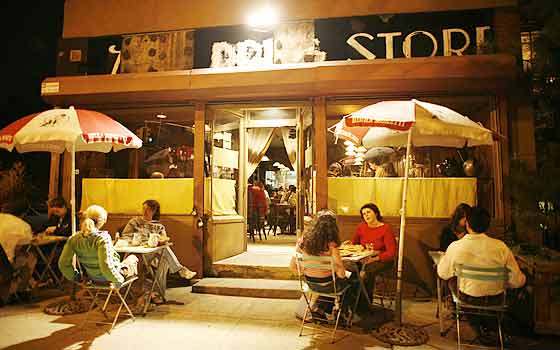
“Walking down the street around noon, I passed a restaurant,” he said. “A man from the restaurant was carrying a table outside. He set it up on the sidewalk, brought out two chairs, a tablecloth and a candle. I said, almost out loud, ‘Oh no, someone is going to steal that stuff – probably in the next few minutes!’ But they didn’t. That’s when I knew something remarkable had happened to Brooklyn.”

By Lanny Morgnanesi


Buy Detroit – now!

25 Aug

Detroit1

From ancient Athens to modern-day Antwerp, over the ages one word has come to define our cities: Commerce.

Traditionally, cities are the places where money flows. No longer, at least not in America.

Detroit has become the largest and most noteworthy of U.S. cities from which capital flees.

Oh Detroit, once so great and prosperous. How sad is your decline.

They say it’s foolish to call for a cop or an ambulance in bankrupt Motown. You’ll wait forever.

They say so much of the urban landscape in Detroit has been abandoned that people have taken to plowing it under and using it for agriculture.

Detroit2But Detroit was once an economic magnate that helped foster one of the largest migrations in American history. Between 1910 and 1970, over 6 million African Americans left the South. They settled in many places and Detroit – with its thriving auto industry – was high on the list.

Its closeness to the Canadian wilderness and the Great Lakes spurred economic development there from the very start. It boomed with the 18th century fur trade. Much later, when Henry Ford set up shop in 1903, Detroit truly came into its own, growing in the 1950s to 1.8 million people and becoming the fourth largest city in America.

Today, it has about 700,000 people and is the 13th largest city. From 2000 to 2010 its population fell by 25 percent. In addition to the incredible reverse migration and the massive loss of jobs, about 47 percent of all tax parcels are delinquent, which is why the city has really ceased to be a city.

Instead, it has become a disabled hulk that is $19 billion in debt.

This is all so bleak, especially since other cities face the same fate.

Detroit3In such times, I try to remember that life runs in cycles; that the dead do rise. I try to remember that the present is only the present and the future always brings change. I try to remember that those who bought Chrysler at $1 got rich.

If I were a person with money to invest in the long term, I would buy – steal, perhaps – Detroit real estate.

As you laugh, remember that the best financial advice ever given is the most difficult to follow: Buy low, sell high.

Prices in Detroit will never be lower.

It takes guts to buy low because most investors think only of the present. Without vision, there is no glory and little profit.

So to all those visionary investors – Warren Buffett, are you out there? – help bring back Detroit. Buy Detroit.

Buy Detroit now.

Do it before the Chinese. They’ll be over for sure, for they are the most patient of all investors.

Actually, the Hipster homesteaders probably will be first.

Look what they did for Brooklyn! They’ll test the waters, start slow; attract more of their ilk; bring the city back block by block; start a few small businesses. They won’t be looking for a return; just a lifestyle that they can create. It’s the new lifestyle that will bring in the investors.

We’ll all read about it in the New York Times or watch it develop on YouTube; they’ll be a Detroit sitcom; some of us, or our children, will eventually move there, paying rents that are no longer cheap but enjoying the comfort that even a city like Detroit can once again mean commerce.

By Lanny Morgnanesi

Even the absurd and irrational have meaning

11 Aug

Firesign-Theatre-Dont-Crush-That-Dwarf-Hand-Me-The-Pliers-Cover

I drove by a Laundromat where I once washed my clothes and recalled an incident of vandalism in which I participated. It was more whimsical than wanton and did not affect the washing and drying of clothes. In a way, it benefitted the store’s patrons.

At the time I was living with two roommates in a yellow ranch house on a hill. We held two major parties a year. In the summer there was a pig roast with fresh corn and clams, and in the winter an inclusively themed Solstice Party.

The house was on a major road, with a town at both ends. We frequented a shopping center in one of the towns. It had a supermarket, a good pizza place and the Laundromat. Inside the laundry was a 3-foot square sign that we considered offensive. It read:


Absolutely no pizza pies to be eaten in this Laundromat.


In an attempt to express the seriousness of the message, the type was in red and “absolutely” was italicized. Some signs say “please.” This one did not.

Laundry signThe night before one of the solstice parties there was drinking at the little yellow house. I wasn’t much of a drinker but my compatriots made up for my shortcoming. While imbibing, we were trying to come up with a way to make the house more interesting. This was a time when one of our favorite things was listening to a comedy album entitled, “Don’t Crush that Dwarf, Hand Me the Pliers.” There was nothing on the record about either dwarves or pliers, and the nonsense and non sequitur of the title appealed to us. We saw it perhaps as a reflection of the times.

A eureka moment occurred around 2 a.m. One roommate grabbed a claw hammer and directed us into his vehicle. We drove to the Laundromat.  With claw hammer in hand, the idea man jumped onto the washers and violently tore down the anti-pizza edict. We drove back to the yellow house and nailed it to the front door.

This was our non sequitur.

In addition to setting the mood for our party, the sign removal was viewed as an act of liberation. People now could freely eat pizza during their mindless waits.

Pizza-Wallpaper-pizza-6333801-1024-768The party went well. In those days the little yellow house drew big crowds. Reaction and comments to the sign were favorable and convinced us we had done the right thing.

After the party we left the sign on the door. It said so much about us.

When the landlord came for a visit, he expressed his dissatisfaction with the sign. He also expressed great confusion. We tried explaining its purpose and meaning but it was like Picasso trying to explain his work to Michelangelo. The landlord was as offended by the sign on his door as we were by the sign in the Laundromat. He ordered it taken down.

Where that sign is today I cannot say. But I hope it is somewhere.

Looking upon wanton vandalism with older eyes, I cannot fathom why someone would destroy something of worth for no apparent reason. Still, I try to remember the laundry sign and the bafflement of the landlord and compare his bafflement to my own. As a result, the past and the present have become a lesson in life, crime, politics, culture and international relations.

The lesson is this: No matter how irrational something appears, deep in the heart of someone or some group, there is always a reason for it.

Lanny Morgnanesi


Watching the human condition from an airport waiting room: the toll of fate and time.

29 Jun

iraqi-refugeesHumanity struggles.

A good place to observe this is the international gate at Newark Liberty Airport. It is not a struggle for life and death, just life, and the simple routine of getting to where one must be.

Almost no one here resembles the highborn. Save for a few Japanese, all are dressed casually. They seem vulnerable, dependent on unseen forces disinclined to treat them well; at the mercy of an uncaring system.

Pale complexions are few. Most of those must be off somewhere else; perhaps in a special room that requires a card to enter. Out here, little English is heard, although most speak it. As bilinguals, this actually puts them above the cloistered monolinguals.

While there is struggle, there is no real suffering. Indeed, some smile. But the smiles cannot mask anxiety, impatience, fear of the unknown, crying babies that need to be fed, heavy belongs that need to be carried awkwardly from one place to another like a ball and chain.

Many are traveling for pleasure, but this doesn’t resemble pleasure.

But let me clarify.

The transit experience at Newark Liberty Airport is really not all that bad. While I have reported accurately and expressed true feelings, I was greatly influenced by what I was reading.

Such as: a story about 3 million Afghan refugees; a story about 1 million Syria refugees; the review of a book by R.M. Douglas called, “Orderly and Humane: The Expulsion of the Germans after the Second World War.”

Book cover -- Orderly and HumaneWith respect to the latter, as you might suspect, the forced relocation of 13 million German civilians from Central and Southern Europe was neither orderly nor humane. According to Douglas and history, it was much like the relocation of the Jews during the Holocaust – only this time the atrocities were committed by Americans. The Germans were transported in locked rail cars, kept in concentration camps and rarely fed.  Most were women and children. About 500,000 died.

So as I read I also watched. I saw people moving about uncomfortably, sullen, waiting, waiting and waiting. I thought of all those who risk everything – mostly life — trying desperately to get somewhere that is not worth going to. All in all, the United Nations estimated that in 2012 the world contained about 10.5 million refugees.

Then, in my boredom, I recalled an elderly Chinese woman I once knew. After World War II, she moved to America with her husband-scientist. Late in life, they bought a suburban house that was as large as some small hotels. It had a finished basement so grand that the couple used it as a ballroom.

At a dinner party, this woman casually told me how she left Shanghai on foot – with masses of others – after the Japanese invaded in the 1930s. She was headed many hundreds of miles away, toward Central China, where there were no Japanese. Along the way, it was not uncommon for the migrants to be bombed.

This woman, on the most treacherous journey of her life, may have retained some hope. But amidst war, hunger and death, she most certainly was not thinking how nice it would be to one day live in a $2.5 million house and invite people over to dance.

How powerful the effects of fate and time!

The people at Newark Liberty Airport, at least for now, aren’t going to die, or starve or be forced to live in tented refugee camps (although a few may already have done that). Even so, some, maybe even me, could experience it in the future. It takes only an atrocious natural disaster, an attack on critical infrastructure or a few super microbes that destroy either food or people.

We will all go a running.

How powerful the effects of fate and time.

I somehow see this, or fear this, as I observe a relatively small mass wend its way through a limited but wholly sufficient transportation network. Suppose that network was not sufficient?

Chinese city-ShenjenIn the very near future, over more than a decade, the world will witness a planned event that will be either a migratory miracle or a disaster of incredible proportions. It probably will be both. The Chinese, perhaps recalling other great shifts, plan to relocate 250 million people from the countryside into cities, many newly built for this purpose. This number exceeds the combined populations of all large cities in America. It is the equivalent of moving almost 80 percent of every person in the U.S.

The Chinese are accustomed to solving big problems with big solutions. The purpose of this one is to spur economic growth. Living in rural poverty, as so many Chinese do, adds little to the economic engine. In cities, these same people are expected to be better producers and consumers.

It’s a very bold plan.

Will it break hearts, souls and spirits?

Will it strip people of their heritage, culture, routines and roots?

Might it possibly create contentment, an unthought-of elevation in living standards?

Perhaps even an increase in ballroom dancing?

What it will do for sure it put people where they never expected to be.

How powerful the effects of fate and time.

Should I be in China during this epochal migration, I will try to keep off the main roads and certainly stay out of airports. They are simply too depressing.

By Lanny Morgnanesi

A hideous Google pleads, “Don’t look at me!”

15 Jun

Google car

The world is filled with great ironies. Here is one of them.

Google, a company unrivaled at invading privacy, does not want to be watched while it works.

Here is the background.

This great innovator of search, which knows so much about what we do on the Internet, knows every word we write in our Gmails, provides the world with pictures of our homes and streets and shares everything it knows about us with the government and any marketer willing to pay, soon will visit the campus setting where I work.

In its desire to record everything there is to record, Google crews will photograph the thoroughfares within the campus and also enter buildings to map interior hallways.

The first they do with backpack-mounted multi-directional cameras; the second with GPS enabled smart phones.

Prior to the visit, an email was sent by my employer to all employees alerting them to the presence of Google crews and asking us to honor a request not to disturb them. That’s reasonable, but it went on to ask us not to photograph them, which is less reasonable, nor even to watch them, which is absurd.

Don’t watch, we were instructed.

Google may have a host of non-ironic reasons for this request, but they were not shared and I can’t think of even one.

It brought to mind those horror movies where monsters plead, “Look away! I’m hideous!”

With each passing day I realize that the Internet, with all its wonder and potential, with its ability to better lives, improve society and educate the masses, has degenerated into the world’s greatest con game. It provides us with the things we desire in exchange for our souls and the inner workings of our brains. Google does this so that it and many, many others can make money.

After receiving the email, I was at first tempted to protest the directive and watch.

But now I’ve decided to take the opposite approach. When this hideous thing enters campus, I’m going to – as requested — look away.

By Lanny Morgnanesi


Is the mother of invention dead?

11 Jun

pots2

It has been said that in very ancient times a person with bad teeth would die. Disease didn’t kill them. Starvation did. Apparently, there was no soft food. All this changed with the invention of pottery, allowing for the cooking of soups and stews.

While I tend to think tooth-less early man would tenderize his meat with a rock before starving, or just eat berries, I nevertheless brought up the pot as a life-saving invention while speaking to a millennial.

Millennials are members of a generation that greatly mourns the passing of the American age and the lost opportunities that went with it.

“I wish it were as easy now as it was back when they had the first pot,” he said. “Nothing was invented so almost anyone with a good idea could change the face of history.  You didn’t need a Ph.D. in nuclear science. You didn’t have to know a lot. All you needed was a good idea and you’d be famous.  How hard could it have been to invent something like the pot?”

I argued that coming up with the idea for a pot when there were no such things as pots required more than an idea, that strong vision and imagination was needed.

“Well, I’m not saying I could have invented the pot, but you do see my point, don’t you? I mean, what did it take to invent the wheel? Anyone could have done it. Or even fire. These people didn’t go to school. The field was wide open. Nowadays, it requires too much. Too much has already been invited; too much is known.”

I felt bad because he and perhaps many others were victimized by the times; their creativity stifled by a bad economy and the aggressive, eager multitudes in developing countries. Still, he made me wonder just how hard or easy it might have been to invent the pot.

The usual case is that most people are blind to innovation. They just can’t see possibilities outside of normal routine. There are, however, a few who do. After first being treated like loons and maniacs, they eventually win over the tribe and move society forward.

But I guessing it is likely that pottery and even the wheel may have been discovered by accident, in multiple places, at multiple times. These were things waiting to happen. In that respect, I can sympathize with the millennial.

I tried thinking of something relatively simple that has changed people’s lives in that past 100 years or so. Sliced bread? Air in tires? The ballpoint pen? There must be something. Nothing really hit me, although I’m certain it is there. If someone reading can think of it, please comment and let me know.

In the meantime, I think my millennial friend is just going to have to become a nuclear scientist, or something of that sort – and if he’s to change the world he still will need an incredibly creative, open, unfettered mind.

By Lanny Morgnanesi


Old Books Come Back to Life: Remember “Naked Lunch”?

1 Jun
Writer William Burroughs

Writer William Burroughs


The New York Review of Books sat on the table face up, showing the lead item about James Baldwin. This was odd, since Baldwin died a quarter century ago. No new books from him.

“As a writer of polemical essays on the Negro question, James Baldwin has no equals,” the review said.

The Negro question?

Oh. This was not new. This was old. It was a copy of the first edition of the New York Review of Books, reproduced on the 50th anniversary of the publication.  The Review was launched in 1963 as salve to a citywide newspaper strike. The most prominent authors of the day contributed. They did so on short notice and for no pay.

What a time that was!

Ideas and making a statement were more important than making money.

As a collective voice from the past now being read in the present, the Review of Books gives more than a few hints of intellectual unrest. The best minds of the day seemed to be laying the groundwork for a coming cultural break with convention and the status quo.

It’s right there, interwoven amidst the literature.

Those doing the writing were the avant-garde, and people listened to them. Looking over their names, it is difficult to recall writers today with reputations as large. Among the contributors were Norman Mailer, William Styron, Robert Penn Warren, Susan Sontag, Gore Vidal, Paul Goodman, Robert Lowell and Jules Feiffer.

If any group reflected the spirit of the times – or perhaps the coming spirit — this one did.

As did the books they reviewed.

Included was “Naked Lunch” by William Burroughs, the grandfather junkie to the Beat writers. “Naked Lunch” is perhaps one of the most unclassifiable novels in the English language. The story – often bizarre and fantastic — takes place inside the head of a man taking a drug cure from a quack. At one point in his career Burroughs would write his prose on paper, cut it up then randomly reassemble the pieces

“Naked Lunch” was reviewed by Mary McCarthy, whose books include “The Group” and “Birds of America.”

At the close of the review, she deals with the “pained question that keeps coming up like a refrain” – Why is this book being taken seriously?

Her answer is that for the first time in recent years, a really talented writer meant what he said.

This was the coming era.

Norman Mailer

Norman Mailer

Some of the celebrity reviewers, those with the larger personalities, were overly tough on their colleagues. Normal Mailer, always pugnacious, said “That Summer in Paris” by Morley Callaghan was “dim” and mostly without merit. One passage, however, saved the book, Mailer said, because it exposed the true character of novelist Ernest Hemingway, who two years earlier committed suicide.

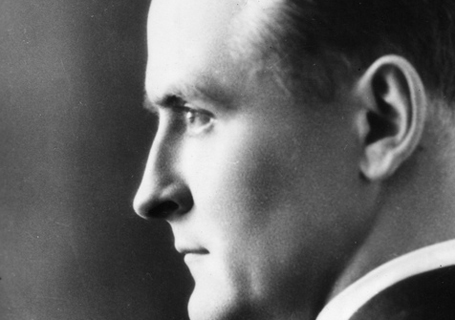
The tale has Callaghan, who boxed in college, getting into the ring with the much larger Hemingway. F. Scott Fitzgerald was the timekeeper. In a round that went long, Callaghan flattened Hemingway. Fitzgerald blamed his poor time keeping.

“Oh, my God,” he said. “I let the round go four minutes.”

Hemingway, perhaps from the canvas, answered, “All right, Scott. If you want to see me getting the shit knocked out of me, just say so. Only don’t say you made a mistake.”

To me, this shows meanness and poor sportsmanship.

Was Hemingway a coward?

Was Hemingway a coward?

To Mailer, who also boxed, it led him to concluded, “There are two kinds of brave men. Those who are brave by the grace of nature, and those who are brave by an act of will. It is the merit of Callaghan’s long anecdote that the second condition is suggested to be Hemingway’s own.”

In essence, Mailer was calling Papa a closet coward, and he cited his suicide as evidence of this cowardice.

Then there was Gore Vidal. He described John Hersey’s book, “Here to Stay,” as  “dull, dull, dull.” Hersey was trying to invent something called “New Journalism,” which later would boost the careers of people like Tom Wolf and Hunter S. Thompson, but Vidal criticized him for cramming too many facts into his sentences.

John Updike is one of America’s best writers but Sir Jonathan Miller, a Cambridge graduate who did books, plays, movies and TV, said Updike’s “The Centaur” was “a poor novel irritatingly marred by good features.”

F. Scott Fitzgerald, poor at keeping time

F. Scott Fitzgerald, poor at keeping time

These reviews pretty much stuck to literature, but an unusual number referenced the Cold War and voiced the fear of imminent doom. It was hard to miss the Soviets. One reviewer discussed four books on the economy of our then-mortal enemy. Another reviewed Alexander Solzhenitsyn’s short gulag novel, “One Day in the Life of Ivan Denisovich.”

Robert Jay Lifton, in a review of a compilation called “Children of the A-Bomb,” said, “The thing we dread really happened in Hiroshima and Nagasaki. But the world resists full comprehension of this event, symbolizing massive death and annihilation.”

He and others suggested that faith in the future was fading, and that without change mankind’s time was limited.

Reviewer Lewis Coser said education and information no longer were the answer.

He called the well-informed person “a cheerful robot.”

“The increase of information may indeed have led, contrary to the belief of the Enlightenment, to a decrease in rationality,” he said.

A remarkably forward-looking book carried the harmless title, “The Exploration of Outer Space.” It written by A.C.B. Lovell and reviewed by James R. Newman. Both lauded the development of radio astronomy as a way to finally understand the composition of the universe.  They believed recent findings made it almost certain that other solar systems contained life and that future contact was possible.

Nuclear war: On everyone's mind in 1963

Nuclear war: On everyone’s mind in 1963

But there was darkness overlaying this optimism. The review expressed a grave fear that humans, if they don’t destroy themselves first, one day would destroy life on other plants, either deliberately or through contamination.

The review ends this way:

“”I myself do not find the prevailing space-race chauvinism and the threat to other planets as horrifying as the threat of global extermination. Nor do I derive consolation from the thought that if our managers turn the earth info a lifeless stone other forms of life will continue elsewhere in the universe. But I am impressed with Lovell’s deep sense of responsibility about life everywhere, and I wish there were many more scientists like him.”

And that’s the way it was in 1963.

Coming would be Dylan, hippies, communes, the counter-culture; Burn Baby Burn, Don’t Trust Anyone Over 30; a refusal to be bought and sold; hope I die before I get old.

 By Lanny Morgnanesi