Archive | Culture RSS feed for this section

When a Hero’s Brilliance Dims

10 Nov

By Lanny Morgnanesi

I’m not necessarily a Yankees fan, but I respect and admire the team’s tradition of excellence. I’m more than willing to pay homage to Ruth, Gehrig, DiMaggio, Mantle, Maris, and all the others. They are legends of hard work, talent, and accomplishment.

 Aaron Judge, a six-time All Star and the 2017 Rookie of the Year, is a contemporary reflection of past greatness, an equal to the best of Yankee history with his 2024 regular season stats of 58 home runs, 144 RBIs, 180 hits, and a .322 batting average. His brilliance, however, dimmed in the World Series against the Los Angeles Dodgers. Judge’s inability to hit caused me discomfort and concern, as if his setback was my own.
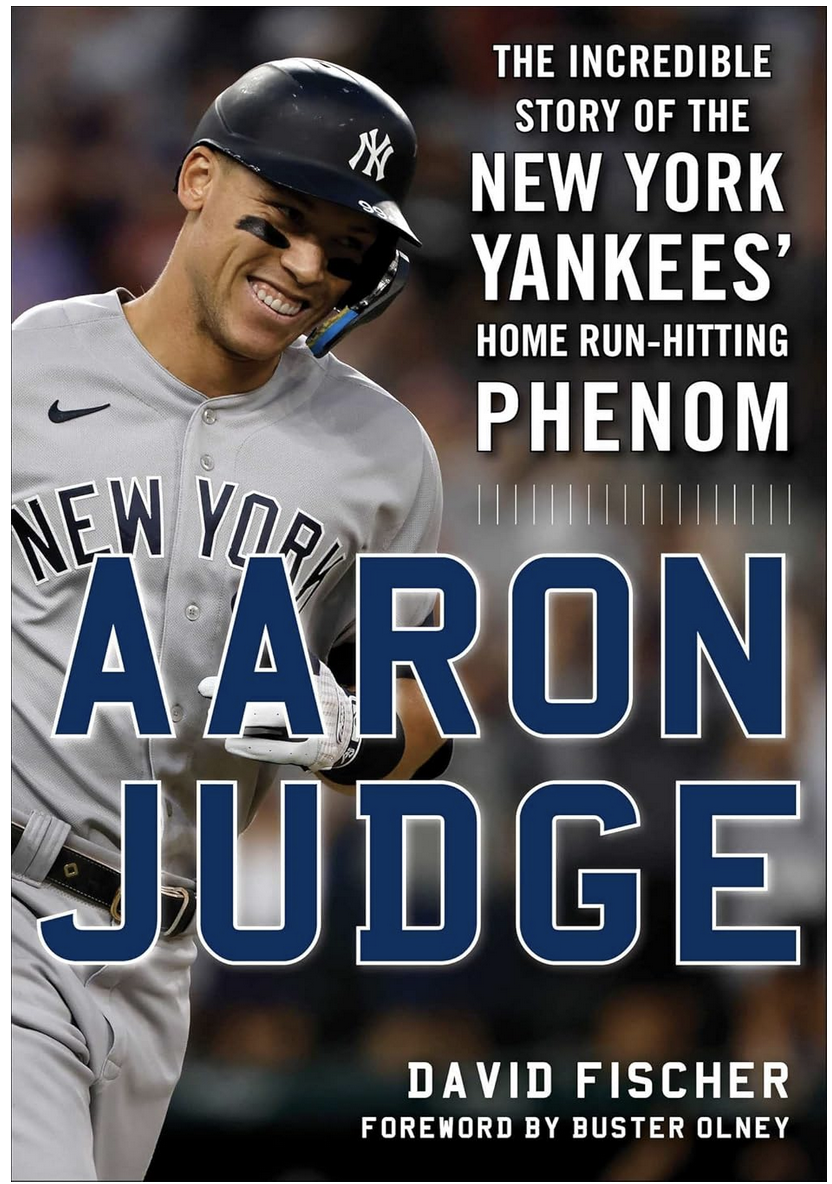
It also made me remember the fate of a guy named Sonny Z, the best ball player ever to play in our neighborhood.

 We were 12 when Sonny Z entered out lives.  He was not from our neighborhood but had a girlfriend there, the older sister of someone in our gang. Although he was 19, Sonny Z often came out to our diamond and played with us.

 Sonny Z was everything that baseball was. He talked like a ball player, walked like a ball player, looked like one, spat like one. There was little about him that wasn’t baseball. Baseball was his preoccupation and his obsession. They say he played in semi-pro, or in an industrial league, or maybe just Legion ball. I can’t really remember. But the thing about Sonny Z was he played on a level much above ours, and he always played hard — even against 12-year-olds. We loved that about him.

Out on our sandlot, he’d amaze us with his catches. When he came to bat, we watched him intently. We wanted to see his swing, to learn from it, to feel its power and to hear the thunderous crack of his bat. Inevitably, he would send our centerfielder running after a ball that landed way over his head and rolled and rolled and rolled, nearly into the next county.
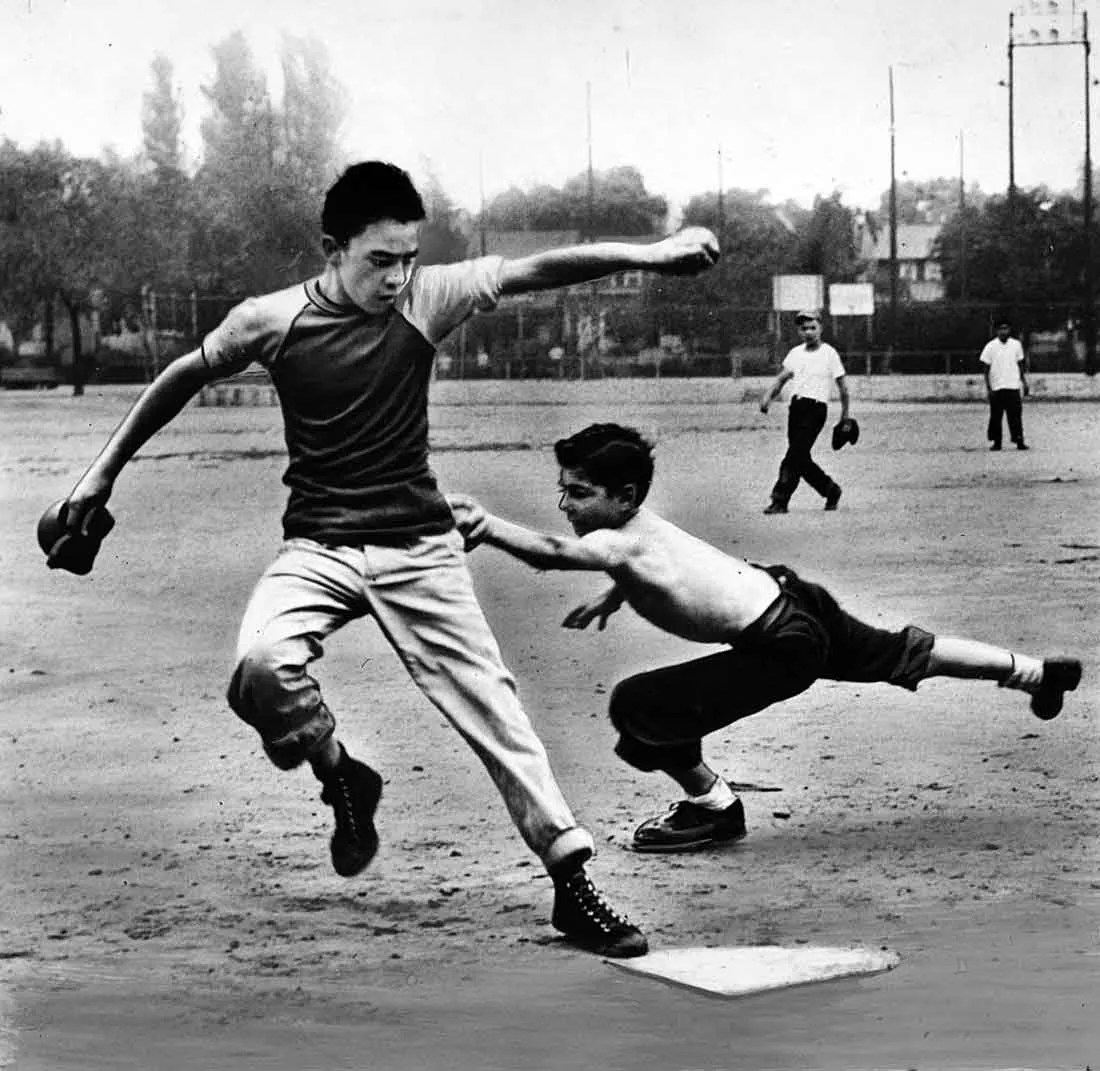
Sonny Z sometime sat with us and told us of his baseball exploits. We were a rapt audience. Once, the subject of his name came up. The “Z” stood for a long Polish name we could not pronounce. And “Sonny,” it turned out, was not his real name. His real name was Marion. We thought “Marion” was a girl’s name and wondered how the very masculine Sonny Z ever got such a name.

“It’s spelled with an ‘O.’ That’s a man’s name,” he said.  “The girl’s name is spelled with an ‘A’.”

One hot summer day, Sonny Z visited his girlfriend and joined us later on the ballfield. The bases were loaded with two outs and Sonny Z was up. He was, of course, going to hit a grand slam home run and clear the bases. We all knew this. He even told us so. The pitch came and – bang – there went the ball, high and far to centerfield. Playing center that afternoon was . . . me,  one of the least-skilled athletes in our group. But when Sonny Z came to bat I knew enough to play deep. As the ball soared above me, I ran as fast as I could. I can’t recall if I was looking up or down, or even if I had my eyes open. I just remember running. Finally, in near exhaustion, I stuck my glove in the air, tripped over my own two feet and fell to the ground. When I got up, the ball was in my glove.

A little shrimp, a talent-less pipsqueak, had robbed the great Sonny Z of a grand slam home run.

Across the infield, the outfield, and among the players on the sidelines, there was a pronounced sigh of disappointment. And I felt guilty, as if I had done something wrong, as if I had harmed someone I loved. As I ran in to bat and Sonny Z ran out to take the field, he patted me on the head and said coldly, “Nice catch, kid.”

 A month later there was big news. The biggest news of the summer, or perhaps of ever: Sonny Z was going to try out with the Philadelphia Phillies.

 For us, this was like winning the lottery, or having your parents buy a candy store, or your new teacher being a former underwear model for the Sears cateloge. Better than all that. Soon we would have a friend and pal who is a for-real professional ball player.  Someone who played on our modest little sandlot will be taking the field on game day at Connie Mack Stadium. We’ll know his name, we’ll know him, we’ll know his girlfriend. We’ll know the things he says and does, like flipping an imaginary switch on the heel of his glove and saying, “OK. The vacuum cleaner has been activated.”

When the day of the tryout came, we were too nervous to play. Instead, we sat around trying to anticipate how the tryout would go. Would Sonny Z send one out of the park? Would he make a flying grab? Would he get on base and quickly steal second? I think we even prayed, which we had never done as a group.

Then we waited.
It may have been the next day, or a couple days later. Sonny Z returned to our neighborhood. We ran toward him and leaped about. He looked solemn, but we ignored that and considered it modesty. “How did you do?” we asked. “How many hits did you get? Did they take you? Will you play this season or next, or go to the minors first? What was it like? What was it like?”

Sonny Z’s girlfriend was standing in the doorway of her house. Just standing, like it was a normal day. Sonny Z looked back at her, then to us. “I guess I did OK,” he said with vacant eyes. “Hit a couple. Made a good catch. There were lots of good players there.”

As a group, my friends and I deflated. Our soaring spirit crashed onto an already cracked pavement. Although it was hard to believe, we slowly, fog-like, accepted this new reality. The truth way,  Sonny Z had been told by the Phillies that he was ordinary, which in the world of ambition is the worst they can say about you.

Sonny Z’s girlfriend called, and he walked away.

“Will they give you another chance?” we asked, and he did not answer.

I can’t recall if we ever saw him again, or ever heard of him again. But he did break up with my friend’s sister, which took him out of our neighborhood and our lives. We were not hero-less, but for a long time it felt that way.  I’m sure the Yankee fans know the feeling.

People need to know their ship captain can sail through the storm; that their general will get them through the war; that the person they back for president will win; that when it’s the ninth inning, with two outs and the tying run on second and the go-ahead run – the hero — at the plate, he will do the job he was destined to do.

 The hero makes life bearable for the ordinary. When Aaron Judge can no longer hit, those who are ordinary – the great masses of us — experience personal failure. That’s why we depend on our heroes to succeed, and to succeed with honor and valor, with dignity and a kind of magic.  We only triumph through them. If they cease being heroes, then we are doomed in our ordinary-ness.

The most frightening thing for me about the Yankee-Dodgers series was the look on Aaron Judge’s face as he waited for a pitch. He’s a giant of a man with a granite jaw. Still, there was something about his face during those plate appearances that questioned his very being. It was deep doubt. A series like his would destroy an ordinary person. It would send most to the dust heap. As a professional, the great Judge surely will get past this. He’s not Sonny Z. As a dimmed hero leaving behind darkness, he can only shine brighter when the new season begins. And then everyone outside of LA can once again feel special, and the ordinariness of life will fade away, like the sun going down over the rightfield fence.

Who needs the sun when you have a hero.

Modeling a Country After a Shopping Destination

23 Oct

By Lanny Morgnanesi

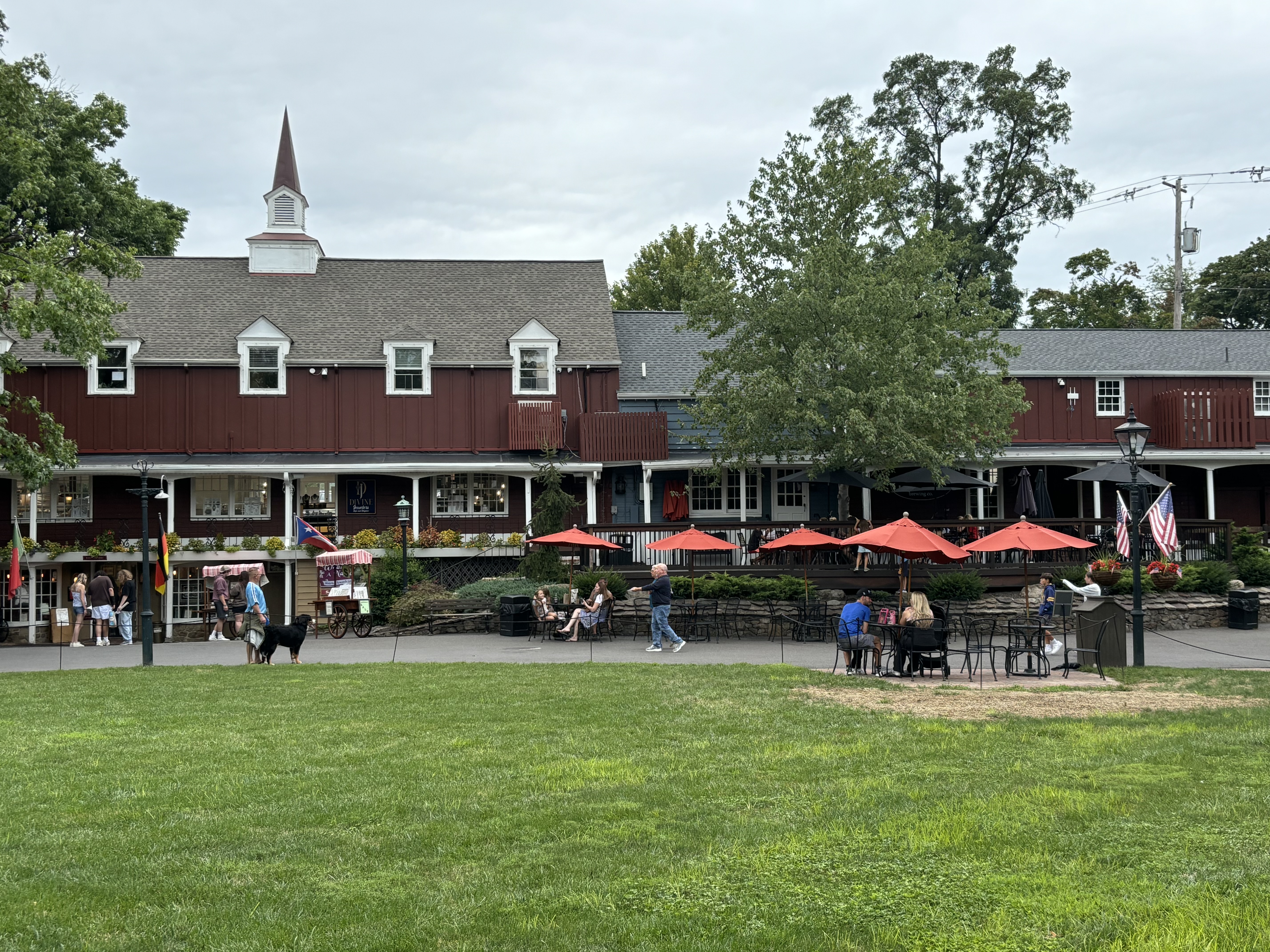
Near my home, in a place called Lahaska, there’s a tranquil spot of beauty and commerce called Peddler’s Village. It was built by a somewhat eccentric man named Earl Jamison. The village is spread over 42 acres. It has old-fashioned shops, restaurants, bars, lodging, even a carnival merry-go-round. The peddlers at Peddler’s Village peddle everything from clothes to hats to paintings to fresh pastry, popcorn, maple syrup, and beef jerky.

Part of the attraction is the artful landscaping. Jamison liked gardening, and when he was alive you could mostly find him at Peddler’s Village on his knees, tending to plants. That kind of attention and that kind of tradition has been passed on to others. The place looks great.

The summer day of my recent visit was pleasant, and everyone was having a good time. Parents, kids, babies, older couples, dogs. In this part of suburban Philadelphia and at Peddler’s Village, the crowd is mostly – what’s a good word? – Anglo. With a fair number of Asians. The people who walked the brick promenades seemed comfortable in their lives, safe, and secure. As I did. This was an enviable America.

This simple Saturday was starkly different from the America depicted in the political ads of Democrat Kamala Harris and Republican Donald Tump, both of whom want to lead a country they have extreme doubts about. During the broadcast of the July Olympics in Paris, Harris and Trump ran harsh ads designed to shock and get you to the polls. There was an inescapable onslaught of these ads. I couldn’t tell which America was worse, the one the Republicans blame the Democrats for, or the one the Democrats blame the Republicans for. It wasn’t much of a choice. Made me think horrible things about a country that, to me, seems all right.

Shoppers relaxing

The trump and the Republicans presented a nation ravaged by inflation and overrun with invading foreigners who bring in drugs and commit a wide assortment of crimes, including murder and rape. These same foreigners suck the money and life out of our social service and health systems, so there is little left for us. Kamala Harris, the Democratic candidate for president, is said to be dangerous and weak, a radical who clearly will destroy whatever is left of the America that they say once was great but obviously no longer is. The Democrats, for their part, cast Trump as a crude, weird, racist dictator whose speech and actions resemble Hitler’s.

What these ads showed and preached was nothing at all like the idyllic Peddler’s Village, where not even a trace of discontent could be found. And so I thought of my own life and happiness. As my wife shopped, I sat on a bench and enumerated the America I knew and appreciated, and that I think others would recognize, regardless of the horrors in the political ads.

In my America:

  • No one is shooting at me or dropping bombs on or near my house.
  • My home is nice, comfortable, and in good working order.
  • I have clean water and plenty of food.
  • The stores are filled with everything I could possibly need or want.
  • They take away my trash and sewage.
  • They take away the snow.
  • We have good hospitals and good doctors, and you can get appointments.
  • We have good schools.
  • The police protect us.
  • We are free to go where we want, when we want.
  • Contrary to what some people may prefer, we can say whatever we want.
  • We have a strong tradition where the rule of law prevails, and the legal system works.
  • We are allowed to invest our money in companies that can make us money.
  • Generally, you don’t have to bribe a public official to get something done.

I’ll stop there. I hope you can see the difference between what the presidential candidates are saying and what I am living.

Elsewhere, beyond me and beyond Peddler’s Village, there are people living lesser, unenviable lives. In these last few decades, inequality in America has bounded ahead in a rampage. There is nothing unusual about inequality in America, but it has gotten worse. For many there is food insecurity, job insecurity, little or no medical attention, poor or no housing, poor schools, high crime, discrimination and lack of opportunity. None of this was on display at Peddler’s Village.

Philosophers and do-gooders will say that in a country as rich as the United States, poverty is unnecessary. Others will say poverty is the self-inflicted disease of the shiftless and not something for government to fix. But in almost every society and culture, the natural, human tendency is for a strong and aggressive minority to acquire nearly all the wealth and broker all the power. Sometimes, this inevitable pattern is halted or reversed by uprising and revolution, but only for a period, and then the inexorable progression of the dominant human forces continues, and the once-again complacent majority – usually with a very worse-off minority substrata –allows its modest wealth to trickle up.

Therefore, it is difficult for a nation such as ours to eliminate poverty and establish of nation of Peddler’s Villages.

In my mind, eliminating poverty is not about giving money to the poor. Rather, it is about allowing the poor to be productive. This requires removing the often-invisible restraints and barriers holding them back, as well as reorienting a defeatist mindset and the established alternative culture of the outsider.

Not an easy thing to do. Maybe impossible. But for the sake of discussion, let’s see how much money is out there for the poor, as if we just wanted to give it to them, which of course we do not.

Forbes magazine says there are about 400 billionaires in the US. It says they are worth a total of $54,000,000,000,000 – that’s $54 trillion. (The entire federal budget in 2024 was about $6.5 trillion). The top five billionaires are:

Elon Musk — $244 billion

Jeff Bezos — $197 billion

Mark Zuckerberg — $181billion

Larry Ellison — $175 billion

Warren Buffett — $150 billion

If, in some crazy world that is not ours, we took 25 percent of the wealth away from the 400 billionaires and handed it to the 37 million people living in poverty, each would receive $36,000. I guess a family of three would get more than $100,000. That’s enough to start a small business, send the kids to college, or maybe get a mortgage on a house.

This is just fun with numbers and of no meaningful purpose when it comes to problem solving. It is for perspective only. A more practical solution to income inequality is a return to tax policies of the ‘50s and ‘60s that allowed for a more even distribution of the wealth.

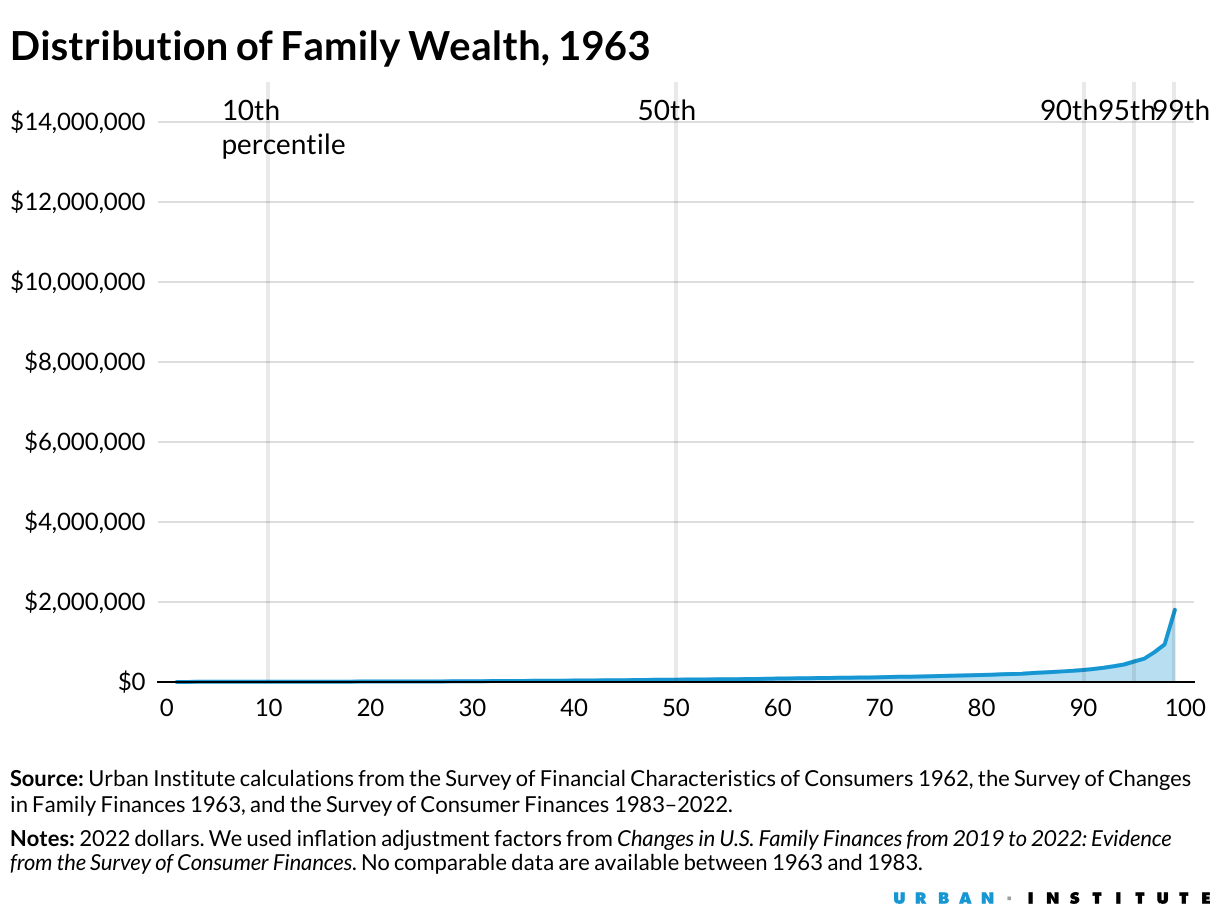
To illustrate the change, in 1963, the wealthiest families had 36 times the wealth of families in the middle class. By 2022, they had 71 times the wealth of those families. The top 10 percent now own about 70 percent of the nation’s wealth, with the bottom 50 percent owning 2.5 percent.

The charts below show how the money was spread out then, and how it is spread out now. The blue is the money. The poor are on the left. The rich are on the right. Most of us are in the middle.

If we can find the strength and courage to eliminate barriers to opportunity, and there is a redistribution of some wealth, without so much money sitting in the hands of so few, maybe there will be enough money to fix things up in our country. Maybe our crumbling cities can look like Dubai, or Shanghai, or Singapore. Maybe, if neighborhoods aren’t economic dead zones, they’ll be welcoming places and not fearful haunts to be avoided. With the proper changes, maybe escalators and streetlights will work. Maybe we will have fast trains, and wide, smooth roads, and bridges not in danger of collapsing, and JFK airport won’t be a 21st century embarrassment.  Maybe we can prop up Medicare and Social Security and have a good universal health care program. Maybe, state universities can be free. It’s not that we need free stuff, it’s that we’ve worked hard enough to get them, and that wide access to education and health care will result in a stronger, more productive country with greater participation by its population. With a vibrant, involved population, there will be great costs savings in law enforcement and prisons, mental health, public housing, all kinds of things. This is a great trade off.

New York City subway

I was disheartened when I heard of an American who returned home after living for a decade in Japan. “Nothing works here,” he said. “And the public bathrooms are disgusting.”  So let’s fix things up. Fix ‘em up good.

There is a theory that if you don’t repair a broken window in a building, the entire neighborhood will eventually collapse. If you do repair it, the entire neighborhood will keep itself up and thrive.

I want the latter for my neighborhood and my country. Why don’t others?

Visit the clean, the organized, the efficient, the beautiful Peddler’s Village and perhaps you will change your mind.

A New Look at Charlie Parker’s Son, A Decade After His Death

26 Apr

By Lanny Morgnanesi

A writer may write, and may be appreciated, but for him or her there is nothing like, say, applause. So writers take satisfaction in notes sent by readers. I received such a note this week, a reaction to a simple piece I wrote 10 years ago, one that may not have been entirely accurate.

It was a sad piece, about the death of a man named Baird Parker, who at the time of his death worked quietly in a Lansdale, Pennsylvania, grocery store. In his life, Baird Parker had known fame, but it was not his fame. It was his father’s, a man named Charlie Parker, a saxophonist and one of the greatest jazz innovators of all time. The headline on my story was: “Is the son of a god a god? The problem with famous sons.”

What I wrote was based primarily on Baird’s obit and included a statement from Baird’s mother that his life, for the most part, was destroyed by the fame of his father.

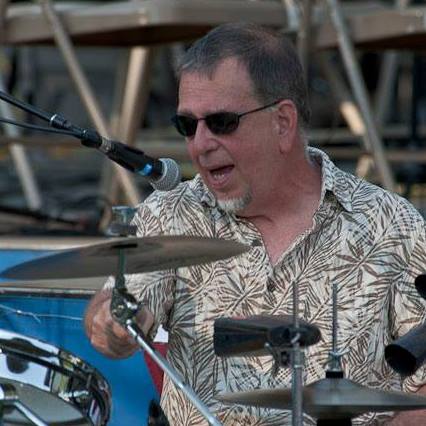
That was 2014. Ten years later, on the anniversary of Baird’s death, I received an online message from his old roommate, a drummer. For a time, the two lived together with their girlfriends on Clinton Avenue in Doylestown, about five minutes from my home. The roommate told me that Baird’s life was not one of sadness, that there was success, joy, happiness; that it was a good life, one to be celebrated. It was a simple message but moved me greatly. Most important – and this was not in any obit – Baird was a musician and a composer. On the 10th anniversary of Baird’s death, I now share with you drummer Paul Bozzi’s touching account of his old friend.

Paul Bozzi

Lanny, I read your post about Charles Baird Parker. I was disappointed and I thought I would take this opportunity to fill in a few details on the 10th anniversary of his passing. His life was not a failure by any means. Here is what I know.

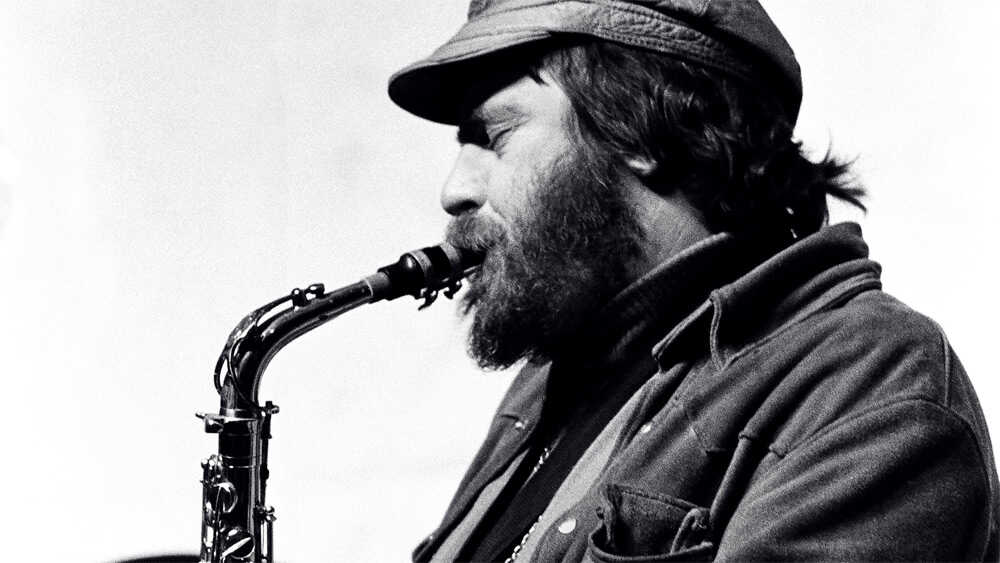
Charlie “Bird” Parker died in 1955 when Baird was only 3 years old. Shortly after that, Bird’s widow, Chan moved the family to Paris. Chan remarried another great saxophonist, Phil Woods. Baird studied guitar and created a unique style, slightly dark and moody with a relaxed groove. His guitar influences ranged from Jimi Hendrix to Django Reinhardt.  

In the early 70s, Baird moved back to Pennsylvania. I met Baird in 1973. My girlfriend had known Baird as a child when they both attended Ramblerny, a summer camp for the performing arts in New Hope, Pa., that has become a thing of legend. Other “campers” included the Brecker Brothers, Holly Cole and the recently passed Richie Cole, who after Phil Woods died had become the one remaining bearer of the bepop saxophone. Sadly, with his passing, there seems to be no successor to truly carry on that torch.

Phil Woods

We were living in Connecticut at the time and the best friend of my girlfriend was in a relationship with Baird, so we came down to visit for a weekend. The drummer in the band Baird was working with fell ill on Saturday and they asked me to sub for him. A few days later I returned to CT and picked up what I needed and moved to Doylestown, Pa. to join the band.

We moved in with Baird and his girlfriend in a two-floor apartment on North Clinton St. in Doylestown, where we stayed for a few years. During that time, we worked with a few bands, most notably, Ronnie Rinard and The Shadows.  Ronnie was a well-known Elvis impersonator, and I think he really did channel Elvis. Ronnie had a great voice and amazing stage presence, and in true form he was absolutely eccentric. From 1972 through 1977 we played some crazy joints as well as big clubs around Pennsylvania and New Jersey. Neither Baird nor I were big fans of Elvis, but we were young and happy, the money was good and the gigs were plentiful. Several nights a week, we would hop into his bright red Oldsmobile 442 convertible, he would quip “we’re off like a herd of turtles” and we would be on our merry way to another gig. Never a dull moment! If we ended up in a country joint where the clientele was rough and maybe a little racist about having a black man on stage, Baird would speak French into the mic, until his warm sense of humor would defuse the situation. He was so funny, and often had the band in stitches with jokes and witticisms about music and life in general. Often, at 3 am we would end up at Doylestown’s now-defunct Ed’s Diner (known by the regulars as “Dead’s Diner”) where we would enjoy the company of other late-night denizens and slam down a breakfast (or two sometimes)  before slipping around the corner to North Clinton St.

During that time, we also formed a group to play and record Baird’s original compositions. Unfortunately, all those recordings have disappeared. A great personal loss to me as the music was unique and now lost to the universe forever. In 1978, I took a gig touring with a band after which I returned to CT to start a family and lost touch with Baird.  Then around 2010 I went to Bucks County to ride the Delaware Canal bike trail. While there I looked him up and found him in Lansdale, Pa. where he had opened a music store, I believe it was called Birdland Music. He was doing quite well, owned a home and was living happily with a beautiful young woman and enjoying his life. Also playing with local musicians, many of whom had no idea of his lineage. I visited every summer for the next couple of years. Eventually, he closed the store and wanted to try something different. So he took a job as a baker at a grocery store. He enjoyed cooking and he wanted to learn about baking. We visited a few times after that until that day in 2014 when I received the devastating call from his girlfriend with the news of his passing. I was crushed. We had plans of the two of them coming to CT for an extended visit in the summer that year.

Charlie Parker

Baird was a joyful, humble, hardworking, extremely intelligent, talented and kind man. He was the son of a great innovator, and he had the same creative pulse running in his blood. He had been born into jazz royalty, and he accepted that and was proud of it. We talked about it a few times and you could hear the pride he had about his dad and his stepfather Phil Woods as well. Many famous jazz players knew him from his childhood, and he kept up with some of them. We once attended a Chick Corea concert where we were invited backstage and he was greeted warmly by Chick. He often spoke of his childhood relationship with Dave Lambert of the jazz vocal trio, Lambert, Hendricks and Ross. Dave was killed in an automobile accident in 1966.  Jon Hendricks’ telling of the story says that Lambert was a compulsive do-gooder and that he had stopped to assist another motorist in changing a flat tire. I can imagine Baird doing the same thing, he was just that kind of man.

Play on Baird, miss you brother!!

Paul Bozzi

Speaking, and only a few understanding … well, a few meaning 26 million

28 Sep

By Lanny Morgnanesi

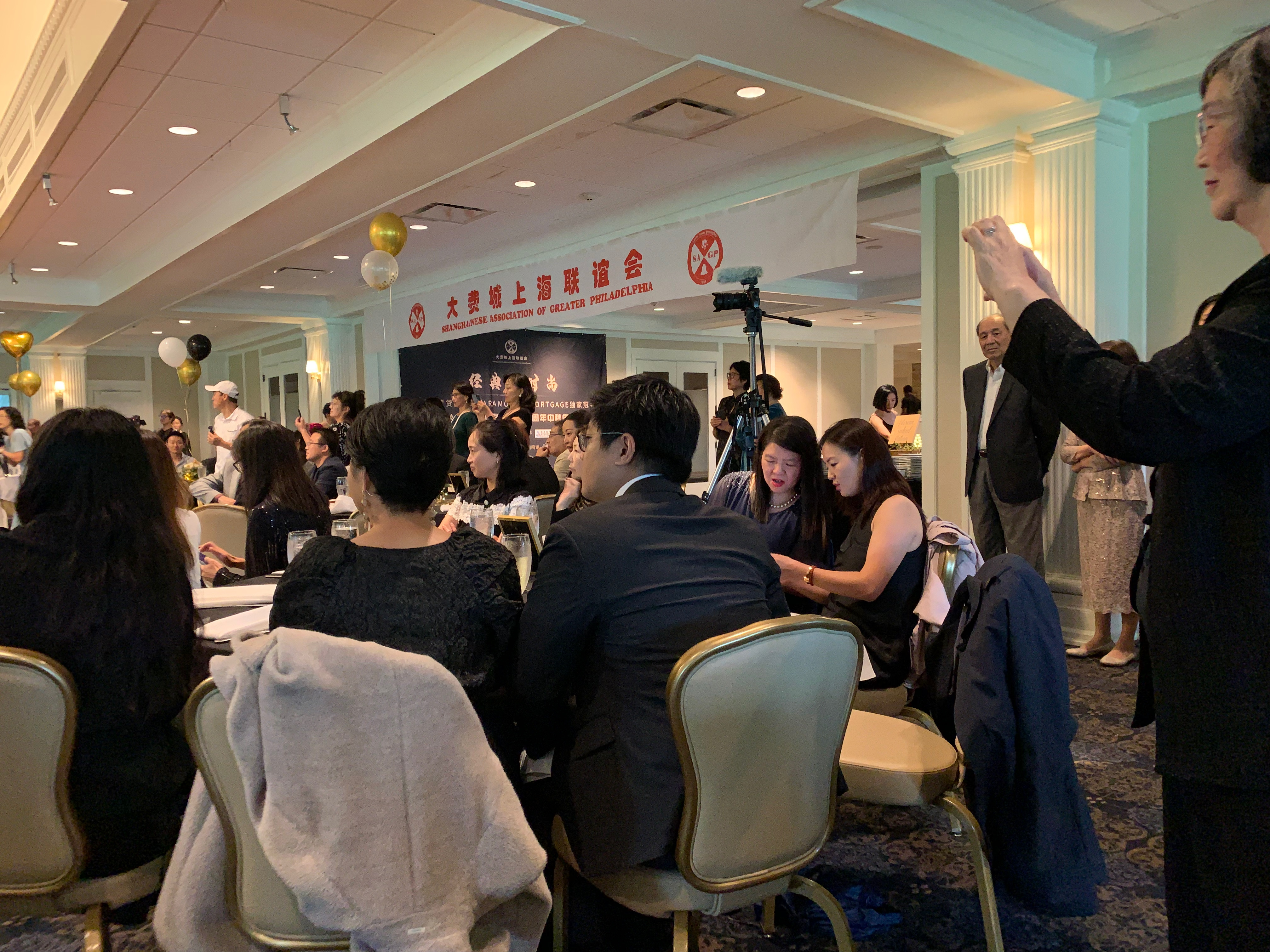
            On a rainy September afternoon at the Bluestone Country Club, in a ballroom surrounded by an empty golf course, the Shanghainese Association of Greater Philadelphia held its annual gala, and I was the only white person there.

            The agenda included music, singing, dancing, a fashion show, door prizes, and a buffet lunch. But overall, it was more like one big commercial. Since there was no English, my escort wife, born and raised in Shanghai, explained most of it to me, even though I figured out much of it myself.

            Once through the door, the first order of business was photography. Everyone, everywhere, was taking photos. On the path to the ballroom was a tripod mounted with a ringed light and a device that took and showed you five photos of yourself, then sent them to your phone. Long line for that.

            Next was a large, wall-mounted banner with the group’s name on it, in English and Chinese, and a hired photographer taking pictures for the group’s website. There was no formal line. Instead, you pushed your way forward in a competitive tussle.

            After that came the ballroom, with about 300 well-dressed people (told to wear black and white) mingling about and shooting with their phones.

            The proceeding began when a fit-looking man in a well-tailor suit addressed the crowd. Poised and confident, he had organized the event and helped secure a panoply of sponsors. At first, he welcomed the people. In short time, however, he pitched his real estate business and advised the group to connect with him on the Chinese app WeChat to learn about the newest real estate deals. He was an effective promoter of himself, and no doubt owned a significant piece of the area’s Chinese real estate market.

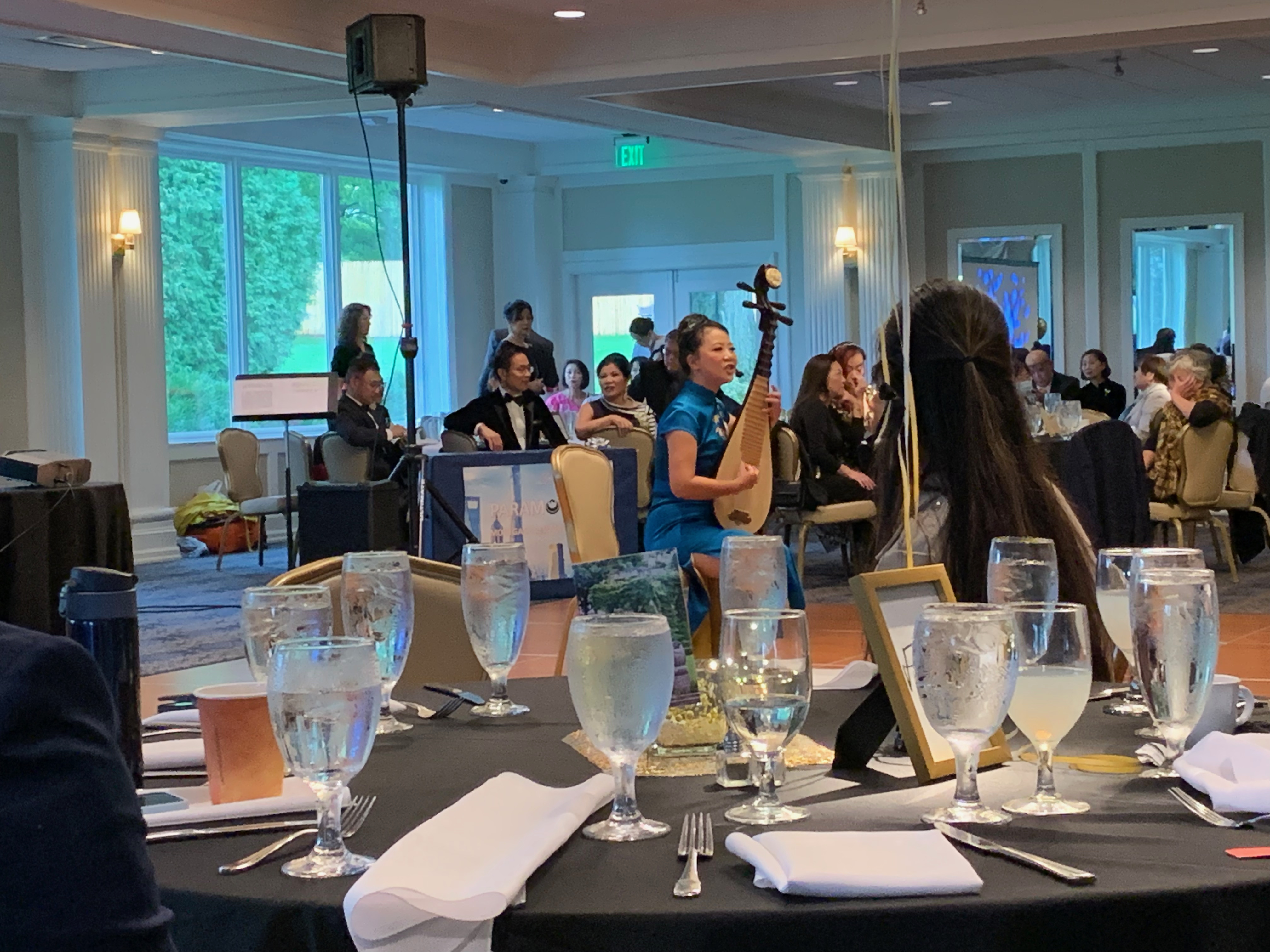
            He was followed by a musical performance, a woman in a traditional qi pao-style dress who sang and play an instrument called a pi pa, a sort of Chinese lute or guitar, pear-shaped with six strings. Aside from my wife, this was the only person at the party I knew, and I did not know her well. If fact, I hadn’t seen her for 20 years, and did not remember her name, if I ever knew it. My wife spoke to her first and addressed her as “lao ban,” a title of respect for a store owner. My wife was quickly advised by the lao ban that she no longer was a lao ban.

            There was a time, before streaming and serious Internet use, when my wife and I made regular visits to a bookstore and Chinese emporium owned by the former lao ban. It was on Race Street in Chinatown, a huge, two-story building filled with Chinese merchandise you could not get elsewhere. We went there often to rent Chinese language videos and buy a few books. Chinatown has developed a lot since then, with a more vibrant economy and new, more innovative entrepreneurs who displaced old-school, never-change Cantonese. Longtime establishments have been replaced with contemporary noodle houses, soup dumpling places, and dim sum joints. The lao ban, who had rented her huge building, probably was priced out of the market after Chinatown became hipper and the video and book market died. Where her business once stood, there is a two-tiered Asian food court.

            The lao ban, perhaps in her 60s, is now a musician and singer of Chinese opera. On this day the Bluestone Country Club had the perfect audience for her, but, unfortunately, an imperfect sound system. There was distressing feedback. The volume was too loud, and high notes came off like screeches. I felt bad for her as she played on. The feedback was fixed for the next act, but the system continued to deliver poor quality sound, which, I guess, the audience got used to. They cheered loudly for a young woman in a shiny, tight, blue-sequined jump suit who danced and sang a contemporary song called, “Give Me a Man at Midnight.” She was good, but I wanted to hold my ears. Others seemed more than content.

            Next, a contingent of trained amateurs took the floor and performed a waltz-like dance to the tune of Moon River. It was more like walking than dancing, but the women wore gorgeous gold dresses, and it was fun watching them. When it concluded, audience members were told where they, too, could get dance lessons.

            There was a fashion show, with women of various ages posing and strutting like runway models. This was followed by information on modeling classes. There was no entertainment related to banking, cosmetic surgery, or travel, but people pitched those services anyway.

            As the afternoon unfolded, I paid attention to language. I found it interesting that speakers addressing the crowd spoke Mandarin Chinese, the national language of China. But off stage, while chatting amongst themselves, they spoke Shanghai dialect. No one outside of Shanghai understands Shanghai dialect. It is spoken with pride by members of an exclusive group that considers its hometown the singular place in all of China for high style and hipness. To them, it is the epitome of elan, a better-than-New York equivalent of 26 million people. It has such appeal you must be born there to live there or get special permission to move there. The Shanghainese are a tribe, and they think highly of themselves. They have names for people who are not Shanghainese. And they have a name for their women, who are stereotyped as self-possessed, demanding, spoiled, and self-centered. It is both a polite and derisive term, a little like “Jewish American Princess.” The hard-to-handle women from China’s largest city are called “Shanghai little sisters.”

But back to the dialect, which I’m thinking helps to define Shanghai cool. While the dialect is substantially different from the national language, some alterations are slight. For example, the common Chinese greeting “ni hao” (literally: you good), was changed in Shanghai, for some reason, to “nong hao.” The common good-bye of “zai jian” (literally: see again) was changed to something that sounds like “zay way.” To decline an offer, the Chinese normally say “bu yao” (literally: don’t want). But the Shanghai residents slam those two syllables together, speed them up, and put a different sound at the front, saying “v-yow.”

Here is an example of how protective the Shanghai people are of their exclusive dialect. I was in the dessert line and the guy behind me struck up a conversation in English. He had come to the United States as a student in 1985 and trained as an engineer at Columbia.

“I guessed you’re confused by all this Shanghai dialect,” he said in a joking way.

            “Of course,” I said, “but I know a few words.”

            He looked at me as if that could not be true.

            Then I said the few words of Shanghai dialect I knew. Oddly, he repeated those words back to me in Mandarin. No, I said, I know the Shanghainese. And I repeated the words again, with him once again saying them in Mandarin, as if I were not allowed to speak that way or couldn’t possibly know what I was saying. Finally, I convinced him that I had gently penetrated the veneer of his beloved dialect. He smiled uncomfortably and shook his head. We both got dessert and parted.

So at the party, as the spoken word shifted effortlessly between a defining dialect and the linguistic standard, I thought about American English and concluded that there is nothing comparable to this in the U.S., no comfortable, communicative patois used in a secret way outside the button-down structure of society.  

Or is there? A question for another day.

            After the entertainment came lunch. When going to an affair such as this, one expects Chinese food. There was none. No chopsticks, either. The buffet was bread, salad, green beans, potatoes, pasta, pot roast, and salmon. The partygoers filled their plates high, without reluctance or aversion. I guess the country club chef didn’t offer a Chinese option, and that clearly was not a problem for this crowd.

            After about four hours, the party winded down. It was time to leave, and the rain was still heavy. We did not, however, get wet. Everyone received a well-built umbrella, courtesy of the Paramount Mortgage company, whose name appeared on the umbrellas in both Chinese and English.

            On the way out, the partygoers continued to define themselves as unique. You could hear lots of “zay ways,” but not a single “zai jian.” A group of young Shanghai little sisters, outfitted in fine dresses, pushed past me, seemingly arguing among themselves, or perhaps debating a point or two about the party, or maybe discussing where to go next. I didn’t understand a word of it, and I’m sure they took great comfort in that.

After the virus, there will be decorating

20 Apr

Milan_Cathedral        

By Lanny Morgnanesi

Easter came and there were no large family gatherings or in-church services. There was only Italian tenor Andrea Bocelli, who sang for free while the world  listened.

Bocelli said his was not a performance. He called it a prayer and the event was advertised as Music for Hope.  It took place in the Duomo di Milano, one of Italy’s most breathtaking cathedral. Bocelli was accompanied by a musician playing the world’s largest pipe organ. Otherwise, save for the unseen camera crew, he was alone.

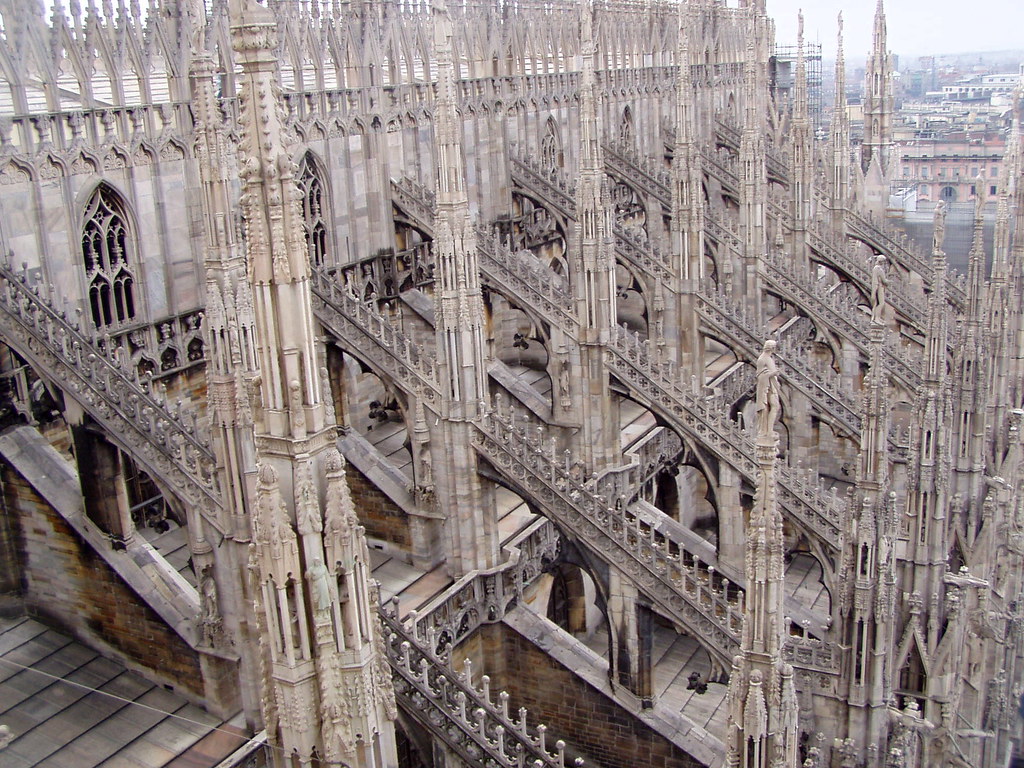
Inside the cathedral, the tenor sang a few piece of sacred music. People watching live on Youtube saw a pantheon of statues, stained glass, etchings, carvings, relief work, marble, enormous pillars, icons and more. As Bocelli sang, there were cutaways to the empty streets of great cities like Milan, Paris, New York and London. After 25 minutes or so, the blind singer stop singing and walked unaccompanied down a corridor, through an enormous door and onto the Duomo steps. There was no one outside in the locked-down city, the epicenter of the Coronavirus in Italy. The small country of 60 million has reported 159,000 cases and 20,400 deaths.

bocelli new

Andrea Bocelli

Bocelli stood on the steps and returned to his singing. In English, he sang the 18th century Christian hymn, Amazing Grace. There was no music at first. After a time, the production people layered in a full orchestra. When the song ended, there was silence, and the cameras shutdown. The prayer was over.

The concert lasted 30 minutes and, so far, has been watched by at least 37 million people.

Andrea Bocelli’s music, as intended, gave us hope. Even more inspiring might have been the miracle and magnificence of the Duomo di Milano, the largest cathedral in Italy. Construction on it began in 1386, just a few decades after the Black Death killed 100 million people worldwide. Many believe the depths, damage and darkness of the plague is what spawned the creativity, commerce and optimism of the European Renaissance.

Duomo interior

Interior of the Duomo di Milano

The amazing thing about the Duomo is its utter completeness as a work of art. The virtuoso violinist Itzak Perlman has said that in the world of symphonic music there is no such thing as a casual note. With the Duomo, there is no such thing as a casual surface. Every piece of wood or stone has been slaved over and loved into a masterpiece. In Renaissance Italy, the greatest and most famed artists would fight for commissions to illustrate or decorate a surface. And great time would be spent on them. Lorenzo Ghiberti spent 27 years on the doors of the Baptistery in Florence. When Michelangelo saw those doors he called them “the Gates of Paradise.” The doors to Milan’s Duomo may not be as famous, but they are covered in jaw-dropping art work. Mark Twain, in Innocents Abroad, said this about the Duomo doors:

“The central one of its five great doors is bordered with a bas-relief of birds and fruits and beasts and insects, which have been so ingeniously carved out of the marble that they seem like living creatures —  and the figures are so numerous and the design so complex, that one might study it a week without exhausting its interest …”

            You look at a place like the Duomo di Milano and quickly comprehend that no such monument would be built today or could be built today. It’s a representation of a now unachievable achievement. The Duomo was a continuous work in progress for nearly 600 years. That’s how long it took to complete. The expense was enormous and funds were not always available. In 1805, Napoleon Bonaparte, about to become King of Italy, ordered the facade to be finished and said he’d pay for it. He never did.

Duomo doors

Door engravings, the Duomo di Milano

The art and culture of the Renaissance arose as great fortunes in banking and commerce were being made. Wealthy, influential families like the Medici and the Borgia possessed incomparable riches and used their fortunes on the arts. It was expected and something of a requirement. What was created was to be shared with regular people and offered up to God in thanks. Great new wealth also has been amassed in our era through the likes of Facebook, Google, Apple, PayPal and others. But it is used differently. There is good being done, but it’s a different kind of good.

Screenshot_2020-04-19 From Warren Buffett to Bill Gates How auto dealerships are attracting a whole new class of investor

Buffett, Gates, Soros

True, the rich create foundations to better mankind (and get a nice tax deduction for it). George Soros, Bill Gates and Warren Buffett are among a handful of billionaires who have contributed much of their wealth toward improving the human condition. The other side of this benevolence, however, are efforts to change the world in more entrepreneurial ways. The excessive profits of enormously successful companies, for example, might be channeled into no-profit or low-profit ventures, like building space ships or driver-less cars. Intentions are good and hopes for mankind are high, but the goal is ultimately money. Rarely do we see artistic creations or architecture wonders (the Brooklyn Bridge is an older example of this) that people feel part of and gravitate toward.

Apple is said to have spent about $5 billion on its campus for 12,000 workers in Cupertino, California, yet by any stretch it is not considered a great wonder of the world. (For that money is should be.) Today’s really impressive modern architecture is found mostly in the Middle East and Asia. The world’s tallest building is in Dubai. Eye-poppers are all over Singapore, Malaysia and Shanghai. Still, all this is so very different from building a church that takes 600 years to finish and is so magnificent that, even when surrounded by the sad solitude of a catastrophic pandemic, looking upon it makes us feel good.

Hearing Bocelli and seeing the Duomo I think of the Renaissance and whether a new one might be on its way. When our pandemic turns to dust, will we find a vigorous need to look upon life as new and to create things never before created, perhaps experience joy in ways that have been forgotten? Will we insist on engraving the mundane with the spectacular and seek enjoyment from even the routine?

graffiti-1

Graffiti art

Trying to fathom a modern day equivalent to the high art of the Duomo surfaces, I stumbled on a harsh and incongruous comparison  — inner-city surfaces covered in graffiti. These markings, considered art by the best of their creators, deface yet celebrate. They spring from repression but in a perverse way speak to optimism. Can anything about tomorrow be learned from the spray paint on walls, bridges and subway cars?

After the population decline of the Black Plague, wages for laborers went up (high demand, low supply) and the price of land went down (low demand, high supply). Inequality eased off. Opportunity abounded. The Renaissance (literally The Rebirth), and later The Enlightenment, burst forth, light from dark. So what happens to us and our culture when the all-clear sounds?

Duomo arches

The Duomo

This could be our big chance for change, unity and joint hope. Let Bocelli keep singing. Let the light shine each evening on the Duomo Di Milano. And let everyone else search out and lay claim to a surface in preparation for its decoration. The unadorned will no longer be accepted.


On Writing and the Pandemic

30 Mar

NY-empty-streets

By Lanny Morgnanesi

I’m not sure I’m ready to write.

The Coronavirus pandemic has inspired innumerable blogs, podcasts, articles and commentaries. Photos and videos of ghostly, empty streets circulate widely and never end. Footage of people singing to each other as a salve to the quarantine are reaching large numbers in live, nightly broadcasts. And I’m empty of thought.

In such times, for writers, the bare minimum is a journal. You can start it with vigor, try to shed light on the mundane, neglect it a little then let it trail off, but – unless you are out there and in it, which means you’ve got something – you are writing whatever everyone else is writing. My journal began thusly on March 23:

It’s impossible to put today in perspective, since yesterday was bad and tomorrow most certainly will be worse. At this point, at this time, numbers cannot adequately describe what we ultimately will face and how we will get there. Instead, let a few statistics be a point of demarcation along a road of unknown length. Let them serve not as a measure but only as a backdrop for the very present.

At that time, COVID-19 had infected 292,142 people and killed 1,600. Today, a mere seven days later, there are 729,100 infected people and 34,689 deaths. Experts say as many as 200,000 could die in the U.S.

Aside from my venturing out once for groceries – noting the absence of flour and yeast and realizing that in a panic you can’t outthink people – there really was little to write about at a time when there is a great deal about which to write.

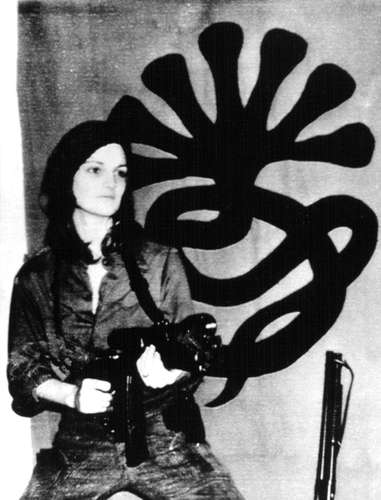
While not writing, I read a little about writing. It was a retro piece in the New York Review of Books from 2016. The author was Joan Didion, whose utter and complete immersion in the art of writing has always fascinated me, and the piece was simply called California Notes. She begins saying that in 1976 Rolling Stone magazine asked her to cover the San Francisco trial of Patty Hearst, the heiress kidnapped by political radicals who became one of them and took part (while armed) in a bank robbery. Didion is a Californian who relocated to New York, but the Patty Hearst assignment would bring her back to California. She would seek inspiration for the piece by reacquainting herself with the state and trying to revive her own emotions about it.

didioncouch

Writer Joan Didion

For me, as I sat not writing, the best part of California Notes was Joan’s confession that she attended the trial but never wrote the piece. There was no explanation, except: “I thought the trial had some meaning for me—because I was from California. This didn’t turn out to be true.”  Her California reflections, however, led her years later to write a compilation called Where I Was From and even later  California Notes.

There’s a famous Nora Ephron quote that reminds me of Joan and has been repeated in this time of crisis: “Everything is copy.” I always thought it peculiar that such a quote would become so famous, since few outside of writing know what “copy” is. The reason must be because writers are the ones always repeating the quote. Anyway, “copy” in this sense means “material” for writing, and now – with the world shut down by a virus — everything is indeed copy. You go outside for a walk and it’s copy. You venture out and drive through town and it’s copy. You cook a meal or seek activities for your kids and it’s copy.

Joan Didion and John Gregory Dunne, Trancas, California, March 1972

Didion with husband, the late writer Gregory Dunne

Even without a pandemic, everything for Joan Didion seemed to be copy. (Her husband died and she got a book out of it). It might be that everything around Joan Didion, all the clouds she allowed to cover her success and notoriety, seemed like a personal pandemic, so she recorded it. In California Notes, she mentions an airline trip from New York to San Francisco in the 50s and reports that on the flight she had, “a Martini-on-the-Rocks and Stuffed Celery au Roquefort over the Rockies.” This means that while in her 20s she was taking notes on everything she did.

It’s true that in my youth I took notes. Joan got much more out of hers than I ever did. Like with her, the urge still remains with me. Recently, while in semi-retirement, I agreed to take a $25-an-hour job as a census taker, figuring I would get something out of it, a story about the real America, even though I’d only be visiting the homes of people in my mostly white, mostly affluent suburban county. As the virus spread, the government wisely decided not to send people house to house. I never went to even one.

In California Notes, there is mention by Joan of an early newspaper job at the Sacramento Union. Newspapers require reporters to learn local “style” – the proper way to refer to things in print. Joan touches on this and says,  “I learned that Eldorado County and Eldorado City are so spelled but that regular usage of El Dorado is two words; to UPPER CASE Camellia Week, the Central Valley, Sacramento Irrigation District, Liberator bombers and Superfortresses, the Follies Bergere [sic], the Central Valley Project, and such nicknames as Death Row, Krauts, or Jerries for Germans, Doughboys, Leathernecks, Devildogs.”

Patricia-Hearst-front-emblem-Symbionese-Liberation-Army

Heiress Patricia Hearst, after her kidnapping

Everything is copy. Sadly, I didn’t make any kind of record of the local style at my first newspaper, and can only remember this: “Do not use a period after the ‘S’ in ‘Harry S Truman High School.’ A period suggests an abbreviation and in this case ‘S’ is not an abbreviation because President Truman did not have an actual middle name.” In the same way I know I cannot compete with the person who thought to buy yeast before I did, I know I cannot compete with writers who know what food and drink they had on a plane in 1955, or can recite that actual constraints put on them decades ago by local “style.” Maybe Joan Didion came up dry at the utterly fantastic trial of Patty Hearst, but she found inspiration at every other turn in her life.

I’m sitting here now looking for inspiration. I suspect I’ll find it eventually. I’m fairly certain, however, I won’t be writing about my neighbors singing, if indeed they ever do. I prefer instead to write about things we fail to see. And right now, I can’t see anything.


The Old Myths Have Faded; New Ones Are Needed

11 Apr


Homer

Homer, the blind poet


Zeus, most powerful of the Olympic gods, is the protector of guests. Remember this when you sit down at diner with enemies.


An ancient Greek tradition requires you to be hospitable to all who visit under your roof, be they friends or enemies. This honored and revered tradition is known as Xenia. If a guest is not treated properly, Zeus could intervene on their behalf.

abduction-of-helen

The abduction of Helen

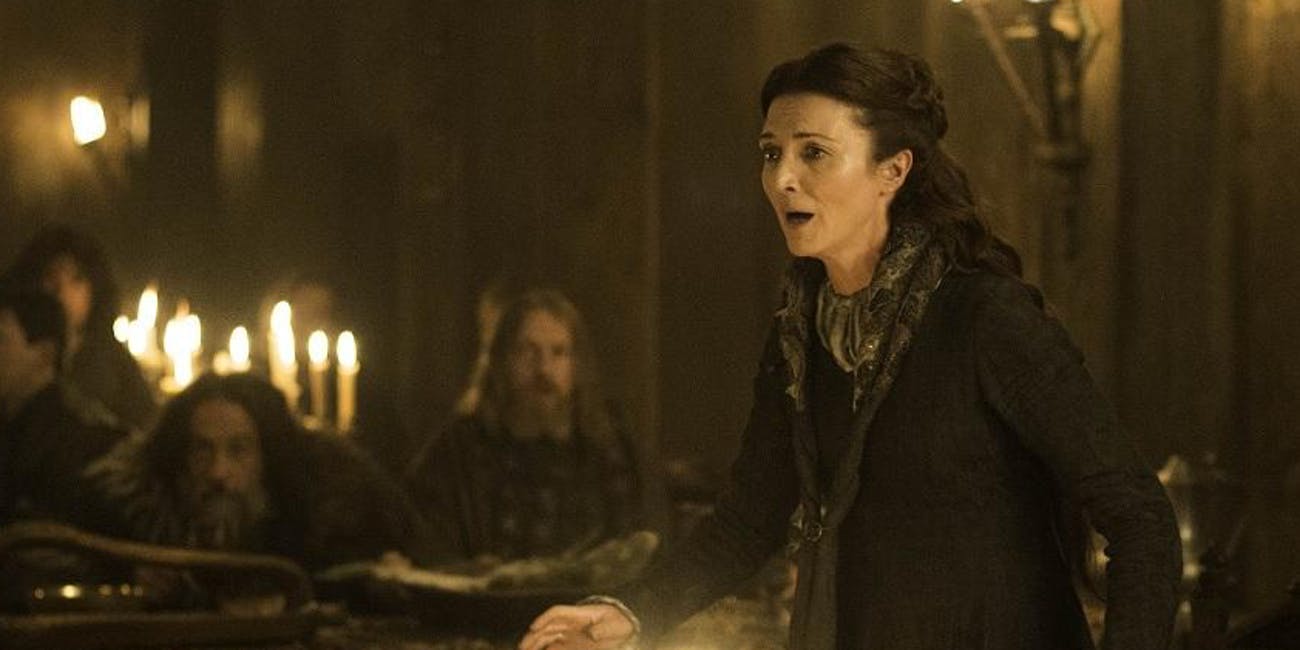
Paris of Troy ignored Xenia and ignited a war when he ran off with Helen, the wife of his Greek host.  In recent times, a ghastly violation of Xenia was depicted in the famous Red Wedding episode of Game of Thrones, where all guests were slaughtered.

Red-wedding

Shock at the Red Wedding

Xenia and other intricate facets of ancient Greek culture come down to us through myths. The myths are extensive and far reaching. They involve great heroics, tales of morality, flawed character, the foibles of gods and humans, desire, lust, misjudgment and so much more.  The myths also help explain the world and how it got here.

Pillars-of-hercules

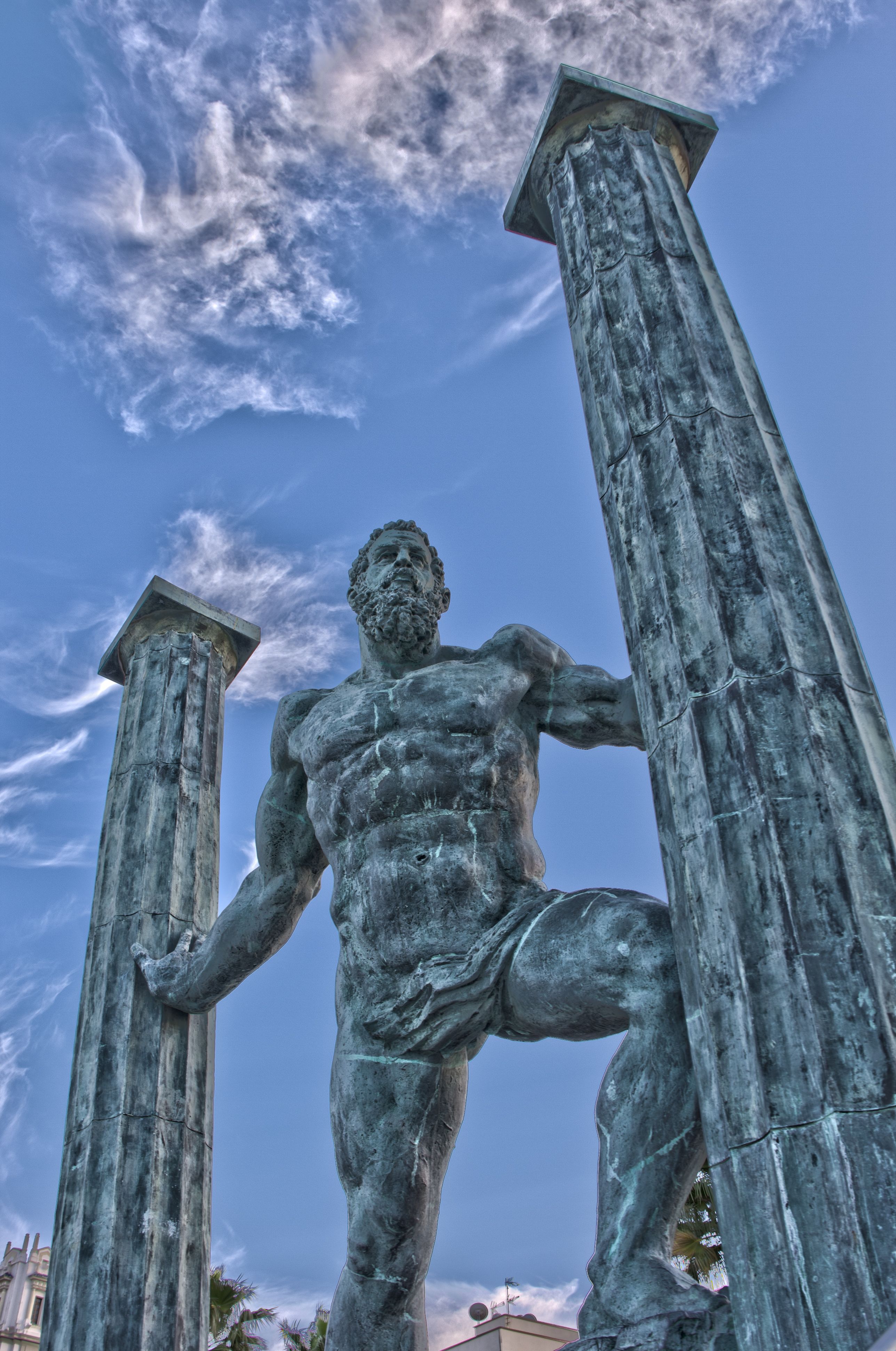
A statue honoring Heracles and his pillars

For example, it was Heracles (aka Hercules) who connected the Mediterranean Sea with the Atlantic Ocean. While traveling to the end of the known world, he reached an impasse. Rather than climb a mountain,  he broke though one and created a narrow strait to the ocean, leaving what we know today as the Pillars of Hercules. From ancient Greek stories we learn how peacocks got their colorful tails, why once-white ravens are now black, and how two people, told by the gods to build a small ark, repopulated the world after a great flood by tossing over their shoulders stones that turned into men and women.

Fight-between-lapiths-andcentaurs

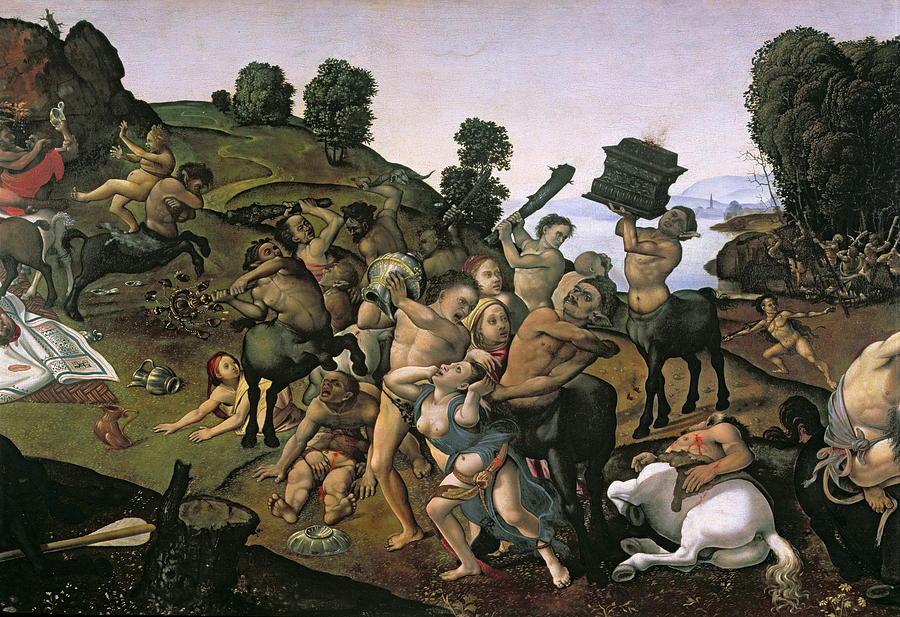
Drunken centaurs creating havoc

The importance of these myths to Greek culture, and later to Roman and European culture, is shown by the art they inspired. A piece of  pottery from the 6th century B.C. shows Bellerophon destroying the fire-breathing Chimera. A first century Roman sculpture is of baby Heracles strangling a viper sent by Hera to kill him. A 16th century painting by Piero Di Cosimo vividly captures the drunken centaurs creating violence at a wedding feast.


That artists desire to retell these stories speaks of their value, even if we don’t understand that value today. While every culture has its stories and myths, the Greek myths are undeniably special. Their depth and originality is unmatched. They took root in multiple cultures and have  persisted over centuries. When we watch Wonder Woman and Gal Gadot, we are being entertained not so much by Hollywood but by the ancient Greeks.

Wonder-woman

The warrior Amazons were a Greek creation

As I now reread some of these tales, I sense a current vacuum in contemporary western culture. With no disrespect to Gal Gadot, or Jason and the Argonauts, or Brad Pitt as Achilles, I don’t believe the legacies of Greek mythology are doing for America what the original myths did for Greece. I don’t think they educate, inspire and set a correct path for us. And I don’t think anything has effectively replaced them.


Meanwhile, we are being pulled apart by forces like politics, race and class.


In truth, the detailed and fabulous Greek legends never fully unified the Greeks. The Greek city states were almost constantly at war with each other. Yet there is something strong, powerful and wise about using engaging stories to teach people what they are and what they should be. That someone or some group was willing to do this speaks to the inner essence of a humanness that, without help, is prone to chaos. The goal of the storyteller, of course, is to civilize.

Moses

Moses leading his people

The Hebrew prophets had this intention when they wrote and compiled scripture for an uncultured, barbaric tribe. To a great extent, those prophets succeeded and the western world, thriving today in commerce and replete with interaction and exchange, is a reflection of their efforts. Even so, the impact of scripture is waning and its messages, like the Greek tales, are being lost or forgotten. What’s needed now are new insights, new stories, new guideposts. It is time for a 21st century Homer, a modern Moses, a fresh light cutting through an old fog – a Greek revival, of sorts, if you will.


Our biggest problem is we have forgotten what we are and what we can be. Teaching this anew,  we can first understand ourselves, then respect and value ourselves. Once we develop true self-respect and visualize a purpose, we can, as individuals, extend respect and dignity to others. Building a culture around respect and dignity will not only strengthen us, it will unify us. And it may do so in ways the Greeks never imagined.


So let the stories be told. Let the heroes flourish. Let us see virtue and valor prevail. Let us know all the things that lead to failure, disrepute and disfavor so a place is reserved for harmony and peace and a new meaning is brought to life.


By Lanny Morgnanesi


The Shoe Salesman as Relic

27 Sep

846-02792528


He is thin, well postured and wears a fine suit and silk tie. His shoes, of course, are high quality. They are shined.


He is the Shoe Salesman, a man from another era. Proud, maybe arrogant, certainly fussy about footwear, he treats you, his customer, with respect and wants you to walk away in style and comfort.


You are seated when the Shoe Salesman approaches. He is polite and professional. You notice he moves well. There is some discussion about what you need and want. He makes suggestions and you tend to agree with him.


Now he must measure your feet.

shoe measuring device

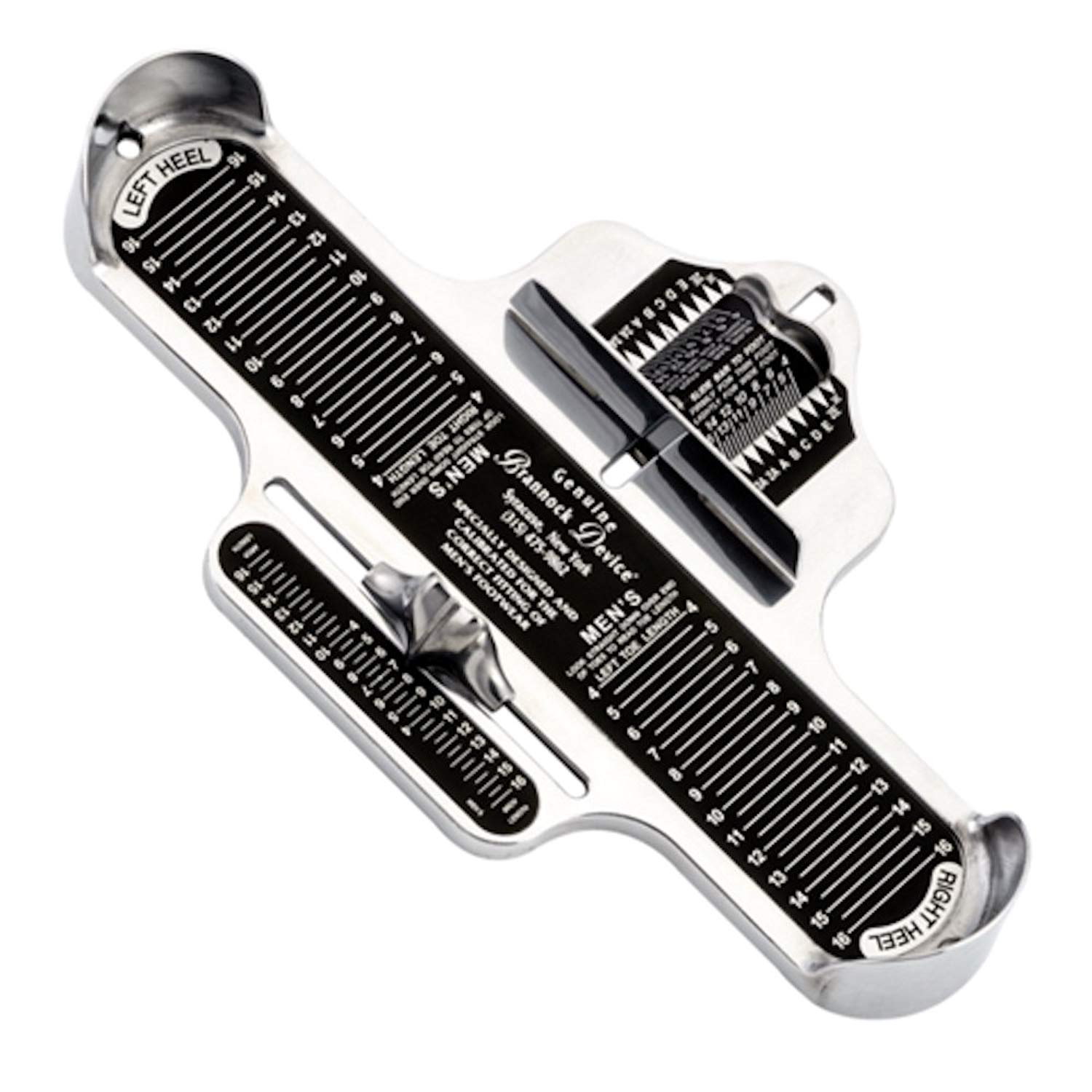
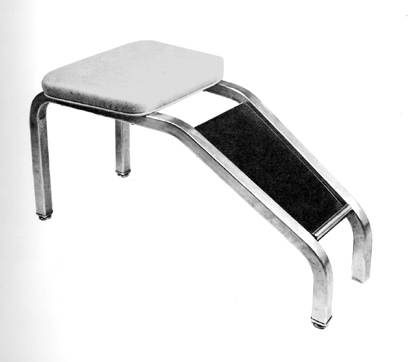
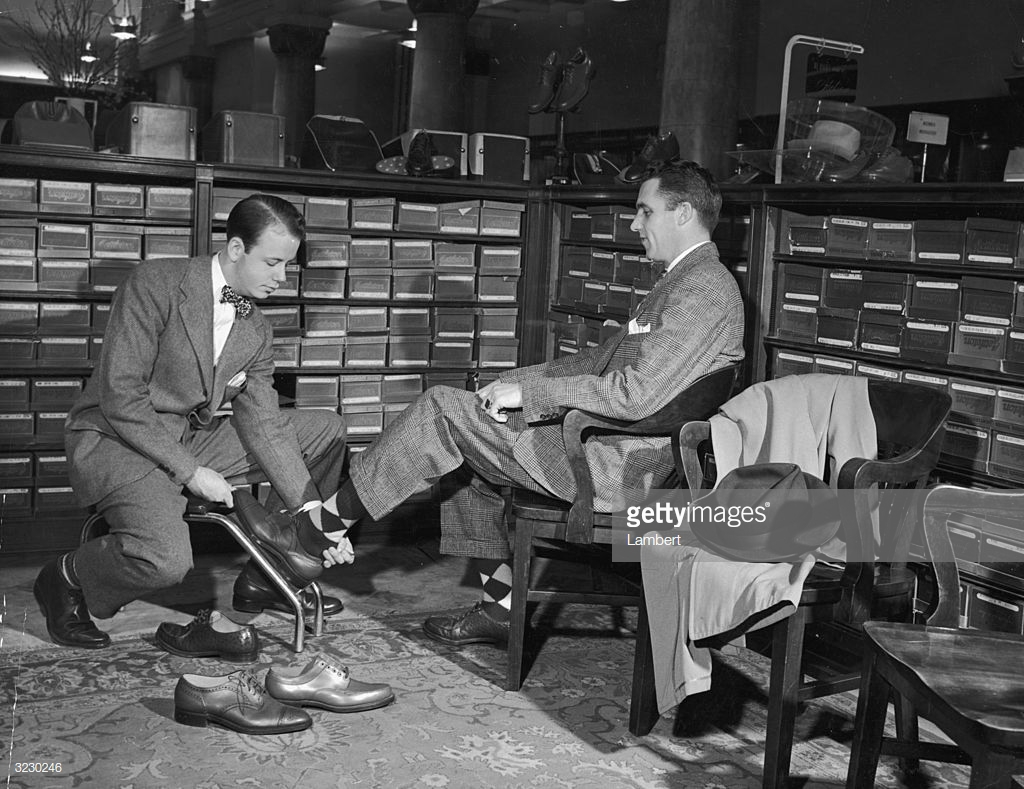
The Shoe Salesman pulls up a specially designed bench that allows him to sit and you to put a foot up so he can place a shoe on it. But that comes a little later, after the measurement, which is done using a device that looks as if it belongs in his hands. He can move it about easily, flipping it to measure either your right or left foot.


On his request, you stand for the measurement. He moves the calibrators, touches your big toe, presses the foot flat and – regardless of what size you see on the device – tells you what size you should wear.

Eatons Shoe Salesman Chair 1970 1

Using the information from your earlier discussion with the Shoe Salesman, he goes into the back to get your shoes. A moment later he returns with three or four boxes. There are different styles and even different sizes, just in case his measurement is off.


The Shoe Salesman puts down all but one box. He holds it in his left hand, gracefully removes the lid and secures it underneath the box. There is a “fliff, fliff” sound as the Shoe Salesman deftly pushes aside the two pieces of tissue covering the shoes. You notice how good the shoes look.


He sits on his bench and takes one shoe from the open box. Then, in a move that would humble a magician, the Shoe Salesman produces a silvery shoehorn from somewhere. You are not certain from where. He manipulates the shoehorn and the shoe glides silently onto your foot with minimal friction.


The Shoe Salesman ties the laces like you never could. He repeats all this for the second shoe and asks you to stand. With your foot inside the shoe, he uses his thumb and forefinger to squeeze the tip of the shoe. This is to judge the distance, if any, from the top of your big toe to the leather in front. The Shoe Salesman decides if it’s enough.


He asks you to walk, which you do. He watches you closely. He asks questions.


You try on another pair or two and, upon the recommendation of the Shoe Salesman, make a decision. He expresses delight at your choice and while boxing up the shoes asks if you need socks. You say no, and then a point of importance is mentioned: Do you need shoe trees?

CedarShoeTree

Cedar shoe trees: $25

The shoe trees, he explains, are vital to the care and life of shoes. They allow the shoes to hold their shape and help to disperse odor. They come in plastic, but those are not recommended. You should only buy cedar, the Shoe Salesman advises, even if they are expensive.


With a degree of embarrassment, you decline the shoe trees. There is a look of disappointment on the face of the Shoe Salesman. This detracts from the near joy of the shoe purchasing experience. Something in you wants to make the Shoe Salesman happy, and you seemed to have failed at that.


But the Shoe Salesman rallies and the transaction finishes in upbeat fashion. There is a request that you visit again soon.

shoes-2000-dollars

A pair of $2,000 shoes


The Shoe Salesman may still exist at fine men stores where shoes sell for the price of a good suit. There was a time, however, when they were found in main street establishments and in family department stores like Sears.


It takes dignity, a reasonable salary and longevity to produce the kind of service described here. It is unfortunate these things were severed from shoe sales decades ago. So today, we are accustomed to what would have been an unacceptable horror in 1960: We must try on our own shoes and judge for ourselves whether or not they fit. In the entire shoe department, it may be impossible to find anything even resembling a rudimentary shoehorn.


Like in restaurants where we must serve and clean up after ourselves, we are pretty much on our own in the shoe department.


This is the American economy, a place sucked dry of everything deemed unessential. Remarkably, without someone trying to sell you shoes, the shoes manage to get sold. This is the miracle of our time. In a society where labor is horribly undervalued and skills like those of the Shoe Salesman will never be properly rewarded, the American public has been trained to supply free labor that previously was paid for.


How did this happen? Damned if I know. Perhaps it’s the results of global markets and the ability of foreign people with lower living standards to produce things once produced by those in countries with higher standards of living.


But I think it’s also related to the predatory nature of our society championed by corporations that want to keep an increasingly larger portion of their revenue. They succeed at this in the absence of any morality requiring a more even distribution of wealth, and with no market forces pushing up wages.


When Henry Ford needed to ramp up production on his new assembly line in order to meet the swelling demand for his cars, he famously boosted wages to $5 a day, an unheard of rate. Slyly, that rate was enough so all his employees could afford cars.


Today there are legions of undervalued workers, many at multi-billion dollar companies such as Walmart and Amazon, who cannot afford an automobile. As long as cars and other American products are purchased by consumers in the global market, this presumably doesn’t matter. It does, however, create instability, conflict and adds stress to government.

A Snug Fit

A shoe salesman attends to a customer in 1955


I say this not because I am a Bleeding Heart Liberal. I say this not because I want to penalize private enterprise. Rather, I say this because I am a person who once enjoyed purchasing a pair of men’s shoes and would like very much to someday enjoy that experience again.


By Lanny Morgnanesi


A Modest Place of Distinction Continues to Survive

26 Sep

2018-09-26 14.13.55

Near Broad and Wolf


Circumstances brought me to South Philadelphia this week.


For those unfamiliar with this legendary locale, it is a crowded little sub-town of look-alike row homes. South Philly probably is best known as the birthplace of the Philly Cheesesteak and as the home of 50s teen idols like Fabian, Frankie Avalon and Bobby Rydell.


Traditionally, it is considered an Italian neighborhood, and although it has had its ups and down, with people moving in and people moving out, it remains intact. Its vibrancy is illustrated by the thriving Italian market that has been in existence since the early 1900s. In the movies, Rocky runs through it as part of his training.


The area is broken up into many neighborhoods. I was at Wolf and Broad streets, a humble section without landmarks. One day at around 1:30, I decided to find a restaurant for lunch. I knew the big name South Philly restaurants were elsewhere, but whatever place I chose had to meet at least baseline standards in order to exist here.

The_South_9th_Street_Italian_Market_Festival

The Italian Market


I came upon a small corner joint named Johnnie’s at 12th and Wolf. My plan was to takeout, a good idea since the place was empty save for a waitress sitting at a table. Didn’t matter. Johnnie’s was clean and decorated with wine bottles, plastic flowers and garland. There were several religious icons, including a statue of the Sacred Heart, which is Jesus exposing his bulging heart through an open robe.


I ordered some pasta and sandwiches, including a Cheesesteak with sauce and onions.


“Sauce?” the waitress said with a puzzled face.


“Yes, sauce and onions.”


“You mean red gravy?” she asked.


“Yes, red gravy,” I said, remembering where I was.


After she put in my order we chatted. Having walked down Wolf Street, I noticed a good number of the 3-story homes had been gentrified, with beautiful wooden doors and fancy nameplates displaying address numbers. I hadn’t been in one of these homes for decades, but I recollect at least two common interior features. First, all couches and chairs were protected with clear plastic slipcovers. Second, one interior wall – the whole thing — was faced with mirrors to give the narrow homes a feeling of depth. The mirrors may still be there. I’m guessing the plastic slip covers are gone.

1959_Fabian_Forte

Singer Fabian Forte, from South Philly

“How’s the neighborhood doing?” I asked the waitress.


“Well,” she said, “I’m not from here. I’m from the other side of Broad Street (three blocks away). But I’d say it’s doing OK. Things have picked up. For a while, I was thinking about moving. Not now. It’s pretty good.”


South Philly has been targeted by an army of millennials looking for a small town feel in the big city. They have made South Philly one of the hottest Philadelphia neighborhoods for rentals.


“What do these homes sell for?” I asked. “A good one, not a great one.”


She thought about it. “Maybe the low 300s. That’s what they go for on my street. Maybe the high or mid-200s.”


“It’s nice when a neighborhood comes back,” I said, thinking about the Chambersburg section of Trenton, which has not come back.


Trenton, New Jersey, was where my father was born. Our family lived there for a few years. I think we moved out when I was seven. We didn’t live in Chambersburg, but as children we’d hear talk about this very ethnic Italian neighborhood. Occasionally we’d eat at a restaurant there, but mostly we bought bread and pastries from its bakeries.


As an adult, while living in suburban Philadelphia, I joined my father’s Trenton-based lodge, The Roman Society. In its day it was a remarkably successful organization, and I’ve written about it here. Without repeating too much, I’ll just say the lodge owned a beautiful restaurant and banquet facility called the Roman Hall. It outlived its usefulness after the unmistakable truth became known: Chambersburg was no longer and never again would be Italian. Also, walking the streets was getting dangerous.


No surprise. The restaurant went under.


An entrepreneur wanted to turn the place into an Hispanic-style nightclub. He asked that the lodge to hold the mortgage, which it did, and our signs were taken down. For me, this was like Rome falling all over again.


But back to the better-fated South Philly.


Not far from Johnnies, a young man I know (non-Italian) lives happily with his new wife in a South Philly row home. The couple, both of whom work in Center City, got married at an old but stately South Philly high school that had been converted in a bar/banquet hall. It’s a large, slightly Greek-style building on a small, cramped side street. Hardly any parking. I’m told the wedding attendees stayed at a riverfront hotel and Ubered over.


South Philadelphia is an indication that things can change for the better. The defining question is how much better and for how much longer. Either way, I hope Johnnies’ dinner trade is better than its lunch trade. It’s not Dante and Luigi’s or Ralph’s or Marra’s, but it’s a nice place for quick, simple food. If you, like I, are near 12th and Wolf due to circumstances, I can recommend it. Be sure to remember it’s “red gravy,” not sauce.


By Lanny Morgnanesi

Amid haute cuisine and class struggle

12 Feb

oysters-rockefeller-52891-1

Last night I had Oysters Rockefeller. It was accompanied by green beans, a baked tomato and finger potatoes. Preceding that was chicken noodle soup and a salad of baby spinach, walnuts, goat cheese and dried cranberries. Dessert followed. This was dinner at the retirement home – not mine, my father’s.


The food was slightly better than usual because it was Birthday Night, the once-a-month event that celebrates all those born in that month. But even on regular nights, the meals are of high quality. Overall, the place is well-maintained, very clean and well-functioning. The staff is attentive and friendly.


Sitting in the dining hall, however, I realized my father was unlike nearly all the other people. He was of a different class. Even in old age, maybe especially in old age, this kind of thing comes through.


“Hey,” a man who had the look of a retired corporate executive shouted across several tables at my father when he was a newcomer. “You’ve got a hat on. Take off your hat!”


My father is bald and wears a hat to keep his head warm. He explained this to the man yelling at him and declined the directive to remove it. I don’t think the two have spoken since.


Dad has his friends at the home. All the Italians, plus the open, gregarious people who don’t think too much of themselves. Still, I’m certain few share his background.


european-immigrants-disembarking-everett

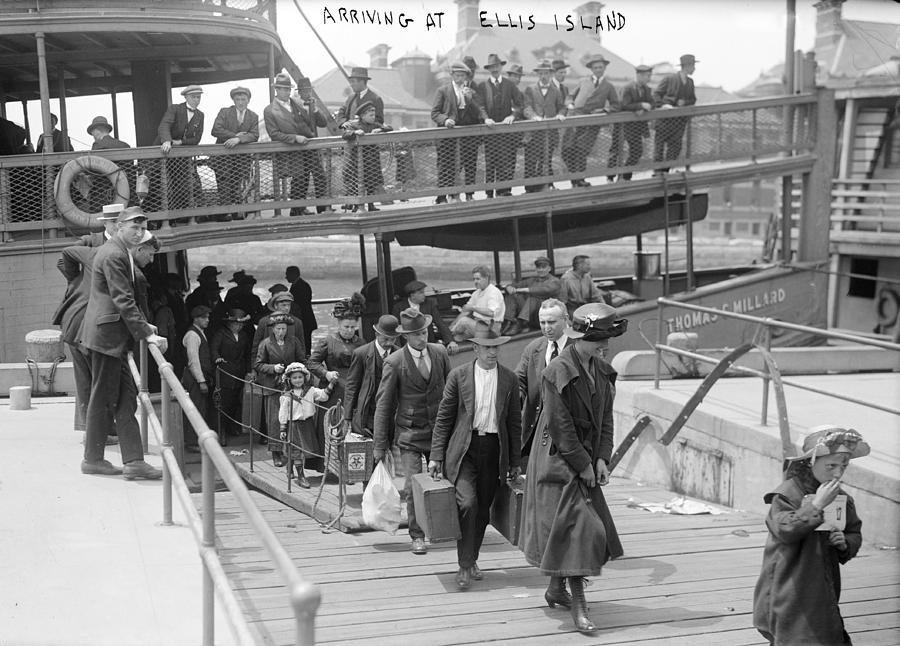
My father was born to immigrant parents. He worked in factories, served in World War II and afterward took a job with the United States Postal Service. He never made much money but late in life was approved for a 100 percent veterans disability pension (loss of hearing in one ear during the war). This was a boost to his income at a time when his expenses were low. Actually, he never did spend much money, but with this second pension he was able to save even more. He invested mostly in CDs and government bonds when inflation and interest rates were in double digits, and made good money when he sold a house originally purchased for $15,000.


So, unlike a lot of working men, this working man was able to afford a berth in a rather nice retirement home. By doing that, he has to put up with the kind of people who may have had servants and commanded a realm.


“I wouldn’t sit there,” a thin, small, patrician-looking woman told me on Birthday Night. I was trying to sit down with my father at “her” table. “Mildred will be coming soon and that’s where she sits.”


We sat anyway. The hostess had  placed us there, advising that Mildred would be seated at another table, and so the suggestion was ignored.


But it did not stop there.


When I asked my father what he was going to order, I spoke somewhat loudly into his hearing-aid assisted “good” ear.


“Please lower your voice, ,” the woman told me.


“I need to speak loud enough for him to hear,” I said.


“He can hear you,” she said dismissively. “And Mildred will be coming soon.”


When she spoke again of Mildred coming, I was tempted to call her an old bat. Before I could, the hostess came over and said, “If you are uncomfortable here, I can seat you at a different table.”


I took her up on that.

Walker

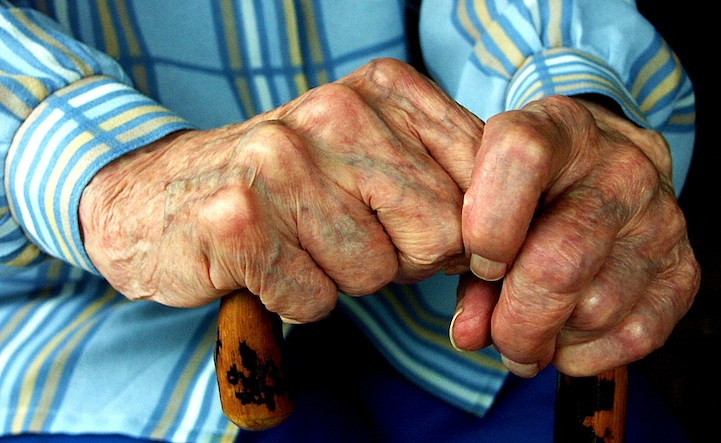
Officially, there are no assigned seats at this particular home.  But so many residents insist on sitting at the same place all the time, and with the same people, that things can get nasty. It could just be that old people are nasty, yet I sense past lives of entitlement influencing the forcefulness of these individuals. Most are dressed fairly well as they push their walkers about. Many women get their hair done regularly and accessorize with jewelry. My father, meanwhile, doesn’t care much about his appearance.


Overall, the class distinction here comes down to look and attitude, since there isn’t a lot of spending and few extra possessions. There’s a haughtiness in at least a strong minority of the residents. In some cases, it’s mean arrogance.


One night I brought my father back to the home after dinner at my house.


“It’s not quite seven,” I said. “You can get in on tonight’s poker game.”


He didn’t answer right away, then said, “I’m never going to play poker here again.” His face was full of hurt.


“Oh no,” I said. “What happened?”


“Four of us were playing in the game room. Nickle and dime. Everything was fine. Then I won four hands in a row and this guy, a very bitter man who always seems to be in a bad mood, says in a loud voice, ‘I’m not going to play with a cheater.’ He was referring to me.”

Minolta DSC

“What?” I had this ridiculous image of arthritic hands trying to deal a second, with cards flying everywhere.

“I thought maybe I didn’t hear him right or that he was kidding. But he repeated it. ‘I’m not playing with cheaters.’ I said something back and then I got up and left. That’s it. I’ll never play again.”


It was difficult for me to believe anyone in a retirement home could act this way over a game, but I guess I’m naïve. Anger and unhappiness, and perhaps paranoia, don’t disappear with age. Maybe they get worse.


My father’s accuser, whom he pointed out to me on a latter visit, had the appearance of a grumpy man in charge of something important who treats everyone around him poorly. It’s possible he was delusional, and that this was not about class, or feeling superior, or not trusting someone unlike you. Still, while eating dinner in the dining hall and looking over the patrons (they all look so similar), I had an idea.


Why not adopt the college model for retirement homes and diversify the population by offering scholarships?

diverse students

Colleges and universities see a homogeneous student population as a detriment to learning and understanding life. By working hard to diversify those who are admitted, higher ed administrators believe they improve the student experience.


The retirement home experience sure could use improvement. So why not take some affirmative action and offer elderly scholarships and admit people who otherwise would not even think of applying? It could become a whole new thing. Corporate sponsors could be found. In trying to recruit the residents, personnel from the home could attend retirement parties at factories and other places of blue collar employment. They could even go after people with special talents.

Shuffleboard

For example, a scholarship could be offered to a champion shuffled board player who could be entered in a new retirement home league and bring pride and glory to his particular home. Maybe there’s a bingo player out there who has developed a strategy that goes beyond chance. He or she would be an attractive find. Or, if there are any left, old vaudevillians could be recruited. They could entertain fellow residents in exchange for their scholarships.


In the beginning, the scholarship elderly would be looked upon as beneath those who pay full price. But I suspect – and hope – that with time they would be accepted and maybe even be able to sit at the table of their choice. Like at colleges, they would change the atmosphere, attitude and culture of retirement homes, bringing more tolerance and empathy.


And less grumpiness.

Less grumpy old person

I think this is worth a try. Now who will fund that first scholarship?


By Lanny Morgnanesi