Tag Archives: Lanny Morgnanesi

The Divine Comedy: Hard to Understand After 700 years

8 Jun

By Lanny Morgnanesi

In 1990, I wanted to name my new-born son after a writer, or at least an Italian. In the end, we named him after an Italian writer. Dante Alighieri. Just Dante. Not Alighieri. And because of this, I vowed to read Dante’s most famous work, the acclaimed Divine Comedy, written between 1308 and 1321 and divided into three parts, Inferno, Purgatorio, and Paradiso. When I was gifted by my young son with a nice leather-bound copy, I let it sit on the shelf to marinate. Or maybe I was just intimidated. When I decided to open it, it wasn’t there. Lost forever.

         Thirty years later, I am reading a free, digital version, an 1867 translation by poet William Wadsworth Longfellow. It is considered one of the best. By coincidence, at this very same time, PBS is airing a series on Dante and The Divine Comedy. The series is easy. The book is hard.

 You can’t just read the book You must look things up … constantly. There are scores of other books and websites to help with this – understanding the references, the personalities from history, the Greek and Roman legends, the pagan gods, geography, and so much more — and still it remains hard.

         The work is considered one of the finest in all of literature, even 700 years after it was published. I find this remarkable because I’m certain Dante wasn’t writing for us. For him, in my estimation, it was a strictly contemporary work aimed at a small audience, the people of his native city, Florence. I drew this conclusion because with the billion who have died and gone to hell, Dante, during his visit there, run into about three dozen people just from his little part of the world. There are others, like Ulysses, Mohammed, and lots of classical Greeks and Romans. But for Dante, hell was very much like old home week.

His encounters include those with Florentines whom history remembers, as well as some whom history never knew. A few were involved in provincial scandals (like the two adulterous lovers inspired by the romance of Lancelot and Guinevere, who were murdered by the woman’s brother) or committed poor behavior (like the glutton Ciacco). These characters no doubt were a source of 14th century tongue wagging. But now? For Dante to include them means he was not intending to entertain readers in the far future. He doesn’t even provide much context or background or explanations, assuming his readers know the full story. Often, there is just a casual hint, or the drop of a single name. For example, when Dante enters Purgatory, he is greeted by a person he obviously expects his readers to know. He never names the person, only the woman that person loves, Marcia, and the city he comes from, Utica. Apparently, his target audience knew, or were expected to know, that the person from Utica who loved Marcia is the famous Roman orator and statesman Cato.

         Confession: I did not know. I had to look it up.

         Obscure as he may seem to us, Dante wanted to reach the widest possible audience of his day, and that included the nobility and the common people. This required a revolutionary approach, and Dante was more than willing to take it. Instead of writing in scholarly Latin, he wrote in the vernacular or vulgate, basically street talk, the dialect of Tuscany. And because of this, and the influence of his work, a form of Tuscan eventually became Italian and the language of a unified nation. Aside from its poetry, this is one reason why The Divine Comedy is considered a literary landmark.

         If you read it closely, and don’t take its spirituality too seriously, you might find it quite temporal, an act of earthly vengeance by the author, who makes a habit of using the Inferno to inflict pain and punishment on his enemies.  Context is needed here.  Readers need to know that the poet had been a victim of Florence’s ceaseless civil war between the factions known as the Guelphs and the Ghibellines. He was a Guelph (although they later split as well), and when his group lost power, he was exiled from Florence and sentenced to death should he return. One of his enemies was named Farinata, a Ghibelline military leader and aristocrat. In hell, Dante conveniently entombs Farinata, for all eternity, in a coffin of fire.

         A writer can get great pleasure doing that.

At times, however, he could be merciful.  He spares a fellow name Buonconte by putting him in purgatory, allowing him to cleanse himself of sin and reach paradise. Buonconte was no friend of Dante. He was a military strategist who literally fought against Dante at the Battle of Campaldino in 1289. According to Dante’s telling, Buonconte accepted Christ at the time of his death, which I guess makes all the difference. So no punishment there.

         Aside from punishing his enemies, Dante places a few people he liked in hell, including his teacher, a known sodomite, but he expresses sympathy and sadness for him.

         Following the then-teachings of the Catholic church, Dante condemns to hell everyone in the world who was born before Christ, and therefore did not worship Christ. He places the virtuous Greek and Roman figures there, in the tame, unthreatening, limbo portion. These include Socrates, Plato, Aristotle, Homer, Horace, Cicero, Seneca, Ovid, and, of course, the poet Virgil, his underworld guide. There are always exceptions, and one of them is Cato, the Roman politician and stoic known for his virtue and defense of the old Roman republic. Cato is in purgatory, but he probably will not get to cleanse himself and go to heaven. Rather, Dante gives him a job of sorts. Cato is a greeter who welcomes and instructs the new souls.

         Although Dante, as the writer, condemns to hell those who followed the Greek and Roman gods, he shows immense respect for these deities, as if he, too, were a follower.  He seems to worship them and acknowledge them as if they were real. In fact, he punishes those who blasphemed against Zeus, the supreme god, known to the Romans as Jupiter or Jove. In one unusual passage, Dante appears to call Jesus Christ by the name Jove.

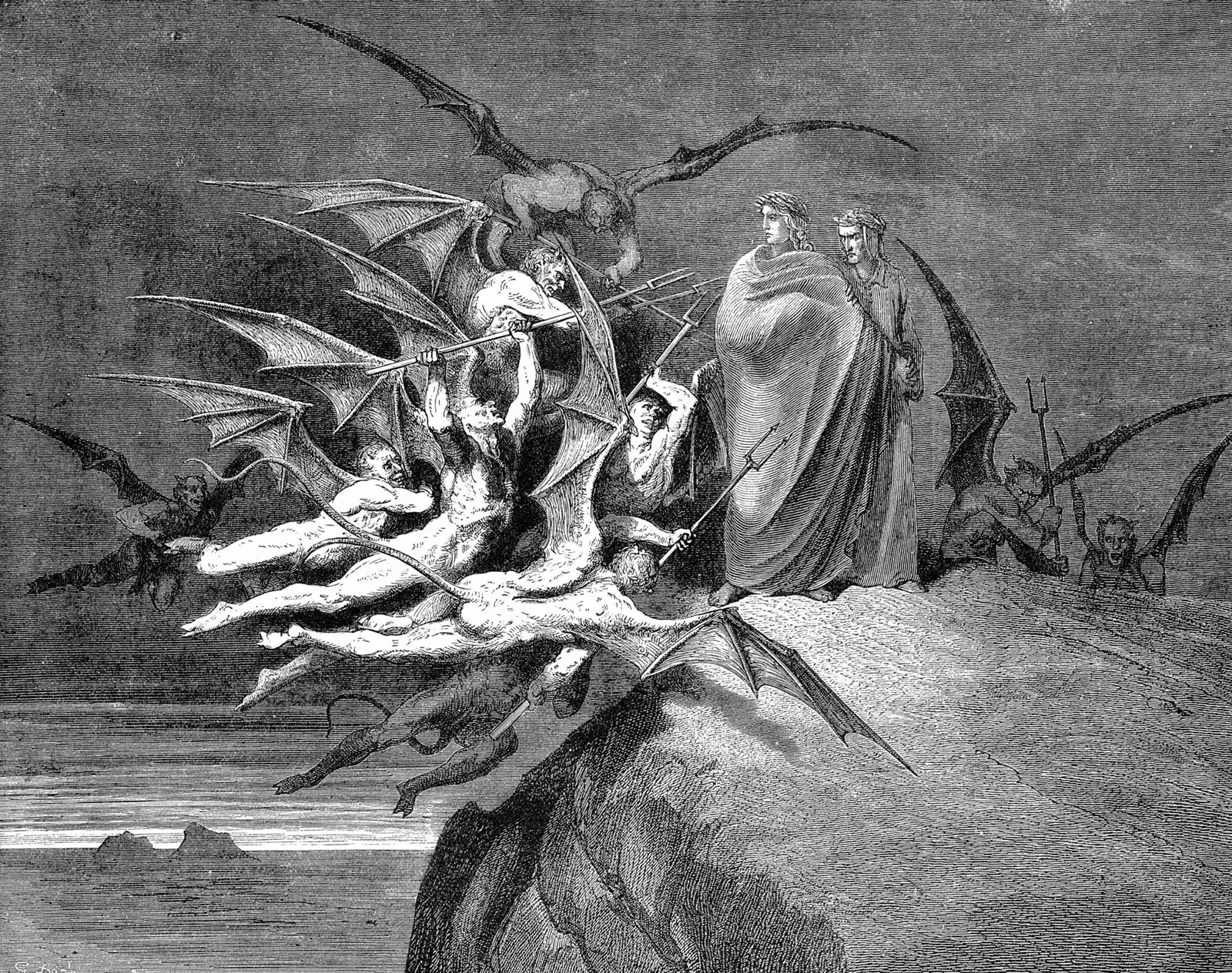
         Let’s get back to the punishments, which range in severity depending on the sin. If you were gluttonous, you are tormented with ceaseless rain. If you were lustful, there is ceaseless wind. For the really bad, you could be continually pecked by bird-like creatures, or forever bitten by dogs, or submerged in boiling blood, or be torn apart, or forced to stand head-first in stone bowls and endure flames upon the feet. While we think of hell as hot, the worst level is a frozen wasteland. In addition to all this, Dante, as poet, sometimes punishes with a type of irony known as “contrapasso,” (to suffer the opposite). False prophets who claim to see the future, for example, have their heads turned backwards on their bodies, so it is impossible for them to see what lies ahead. That kind of thing.

         Indeed, above all, The Divine Comedy is a poem, a work of art. And, at least in the Italian, it rhymes. It rhymes in such a complex fashion that, to keep their sanity, most translators of Dante don’t attempt to rhyme. Longfellow didn’t. The technique Dante used is called Terza Rima, or third rhyme. In the original Italian, each stanza is three lines. The first line rhymes with the third, then the first and third lines of the second stanza rhyme with the second line of the preceding stanza – and continues this way throughout. It’s ABA, BCB, CDC, DED, and so on.

 This means the poet never gets a fresh start. As he moves on, he must craft new information based on words he already has used. It’s difficult to imagine writing a graceful or even coherent passage using this technique, yet Dante did it.

         While I find The Divine Comedy utterly remarkable, I find it astonishing that Dante’s 14th century readers (and those who heard the poem recited by bards and troubadours) understood and appreciated the frequent references to Greek and Roman mythology. Dante uses them matter-of-factly and with confidence, as if he were communicated in the most simply, easy-to-grasp fashion. I sense he, while writing, was certain these allusions, descriptions and analogies would be as easily understood as the Tuscan version of “hello.” What is perplexing, almost depressing, is that these magnificent references, these beautiful literary devices, these moral tales of virtue, honor, tragedy, and comedy, are, for all practical purposes, impenetrable to us. Without the guide of a scholar, The Divine Comedy, in all its wonder, means little to us.

With the advent of modernism and the passing of the classical period, the elite and the common have lost the cultural bearings on which our civilization was built. And so we walk with half-empty souls, rejecting what had once been given to us, leaving behind the magic of our own humanity.

         I envy the cobbler, or the butcher, of the Florentine farrier who maybe didn’t have an education but was washed daily, through frequent and copious tellings, in the stories of genius.

         The concubine of old Tithonus now

         Gleamed white upon the eastern balcony

         This is from the purgatory section of The Divine Comedy. Very beautiful, but pretty much a casual throw-away line of introduction. What does it mean? It simply means: The dawn arrived. But today’s reader has no way of knowing that.

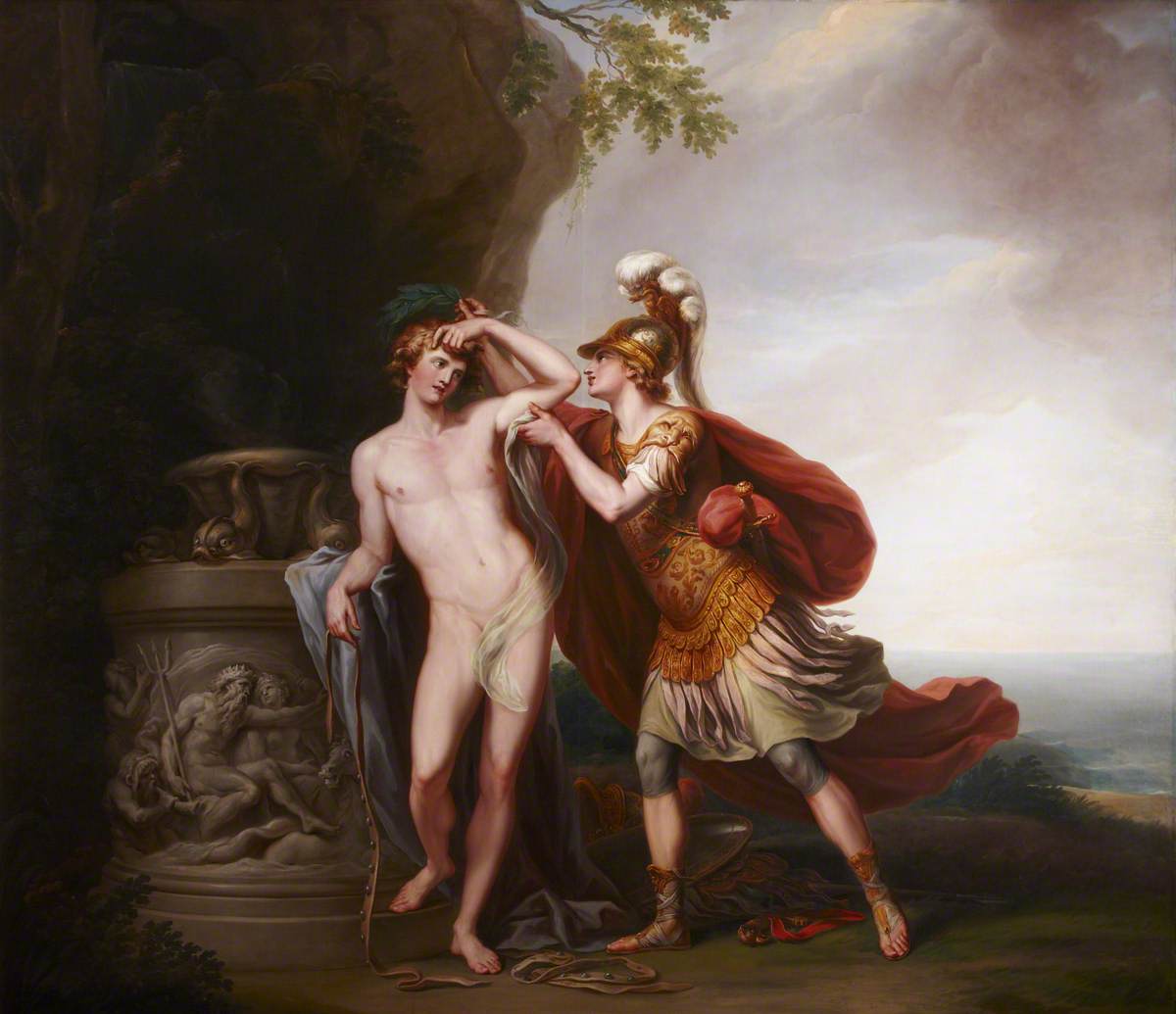
         Tithonus is the key to understanding this well-crafted little stanza. In Greek mythology, Tithonus was a Trojan prince. The goddess Eos (the Roman Aurora) fell in love with him, took him for herself, and asked the god Zeus to make him immortal. In asking, she neglected to specify that she wanted him to remain young. And Zeus, with a dose of trickery not uncommon when gods grant favors, allowed him to live forever but required that he age. To the distress of his mistress, he became decrepit.

Eos and Tithonus

Eos, the disappointed lover, is the goddess of dawn. She dresses in a saffron-colored mantle and arrives in the sky each morning on a chariot, casting out the darkness and making way for Helios, the sun god, to bring on a new day. Know that and read again:

         The concubine of old Tithonus now

         Gleamed white upon the eastern balcony

         Consider another simple passage that for us is complex. Most today are aware of the constellation Gemini. Most are aware that Gemini refers to twins. But most would not grasp the meaning of this:

Whereon he said to me: “If Castor and Pollux

  Were in the company of yonder mirror,

  That up and down conducteth with its light …

         It’s a reference to the heavens. Castor and Pollux are the twin brothers for which the constellation Gemini was named, so Dante here seems to be talking about the constellation. But the story of Castor and Pollux is deeper and illustrative of an unusual scientific phenomenon called heteropaternal superfecundation. You see, the twins are only half-brothers. They have the same mother but different fathers. Their mother was the mortal Leda. Castor’s father was the mortal king of Sparta. Pollux father was the god Zeus, who raped Leda. The story tells us that the ancients obviously knew two eggs, in rare cases, can be fertilized around the same time by two different males. And they also knew they could use the skies to education and inform.

Castor and Pollux

         I say and explain all these many things having read not even half of The Divine Comedy. Now, it is time to return to the pleasant drudgery of those pages.

         Before leaving, I’ll add one thought. It concerns the frigid ninth circle of hell, where a giant-sized Satan resides, frozen up to his waist in ice, waving his bat-like wings to maintain the cold. He has three heads and is chewing on Brutus, Cassius (the assassins of Julius Caesar) and Judas Iscariot. My question: With the much-later arrival of Adolph Hitler, which of the three would Satan spit out?

         Even hell can change after 700 years.

Lanny Morgnanesi is a journalist and author of the novel, The King of Ningxia.

Speaking, and only a few understanding … well, a few meaning 26 million

28 Sep

By Lanny Morgnanesi

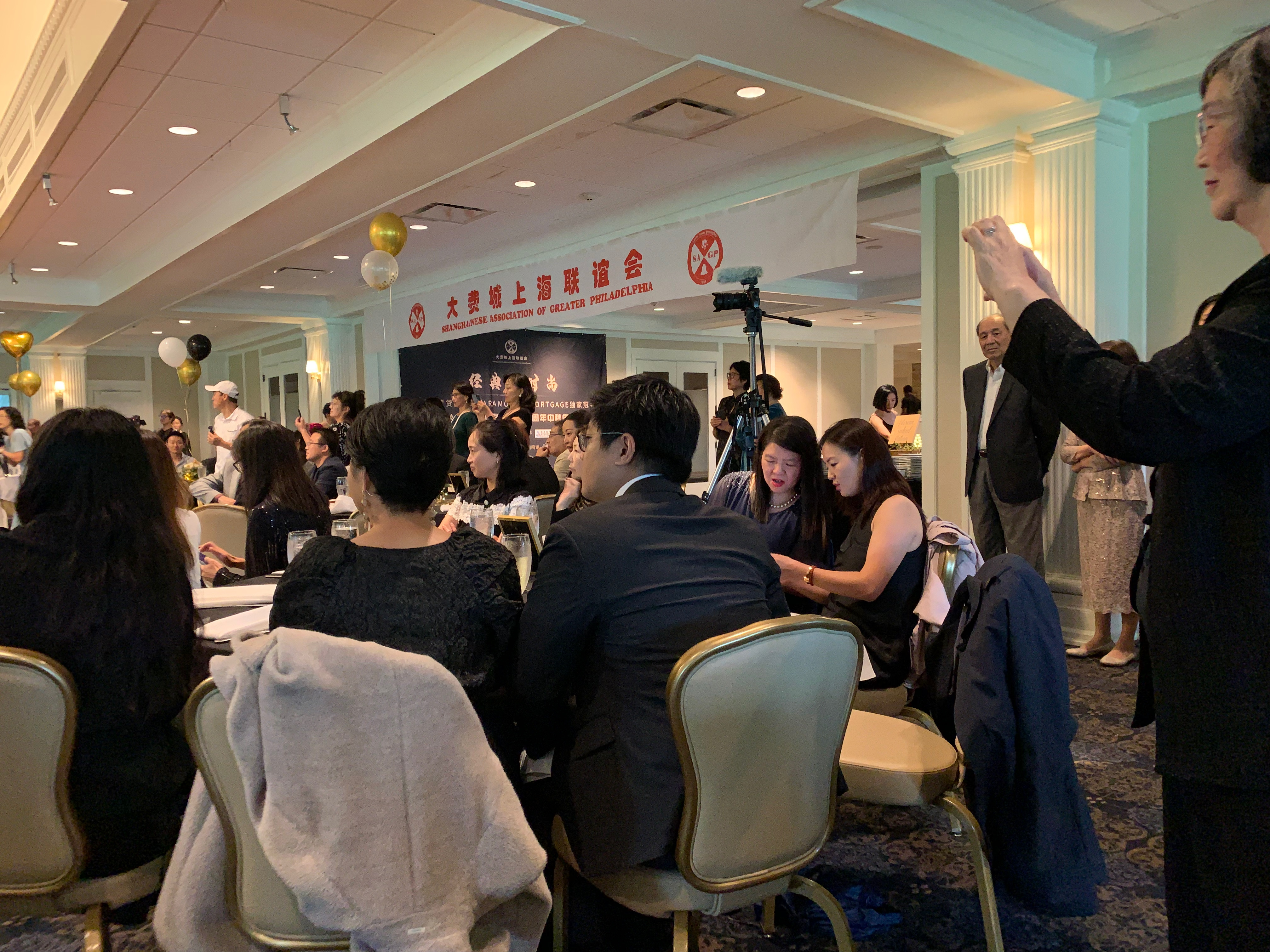
            On a rainy September afternoon at the Bluestone Country Club, in a ballroom surrounded by an empty golf course, the Shanghainese Association of Greater Philadelphia held its annual gala, and I was the only white person there.

            The agenda included music, singing, dancing, a fashion show, door prizes, and a buffet lunch. But overall, it was more like one big commercial. Since there was no English, my escort wife, born and raised in Shanghai, explained most of it to me, even though I figured out much of it myself.

            Once through the door, the first order of business was photography. Everyone, everywhere, was taking photos. On the path to the ballroom was a tripod mounted with a ringed light and a device that took and showed you five photos of yourself, then sent them to your phone. Long line for that.

            Next was a large, wall-mounted banner with the group’s name on it, in English and Chinese, and a hired photographer taking pictures for the group’s website. There was no formal line. Instead, you pushed your way forward in a competitive tussle.

            After that came the ballroom, with about 300 well-dressed people (told to wear black and white) mingling about and shooting with their phones.

            The proceeding began when a fit-looking man in a well-tailor suit addressed the crowd. Poised and confident, he had organized the event and helped secure a panoply of sponsors. At first, he welcomed the people. In short time, however, he pitched his real estate business and advised the group to connect with him on the Chinese app WeChat to learn about the newest real estate deals. He was an effective promoter of himself, and no doubt owned a significant piece of the area’s Chinese real estate market.

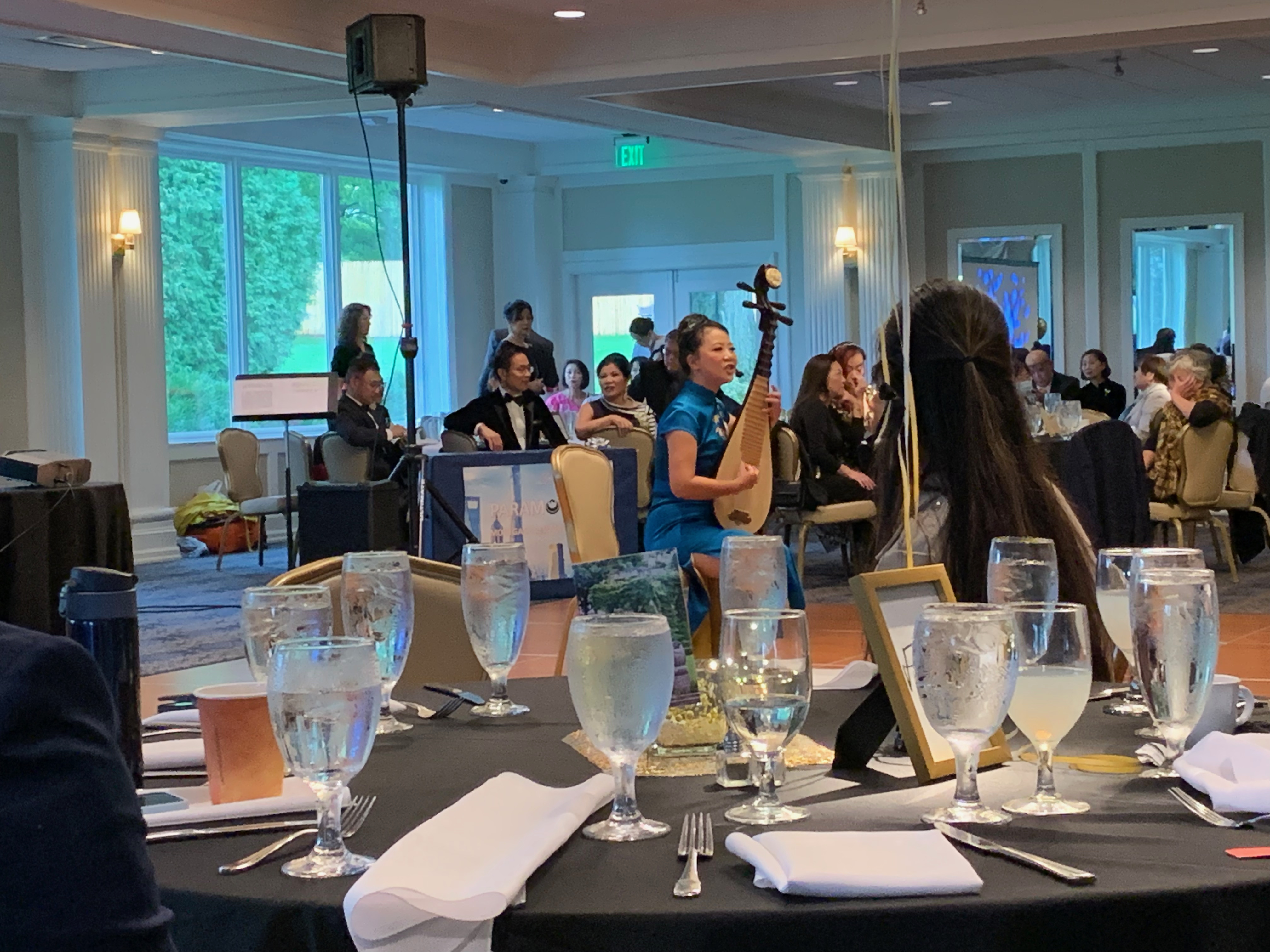
            He was followed by a musical performance, a woman in a traditional qi pao-style dress who sang and play an instrument called a pi pa, a sort of Chinese lute or guitar, pear-shaped with six strings. Aside from my wife, this was the only person at the party I knew, and I did not know her well. If fact, I hadn’t seen her for 20 years, and did not remember her name, if I ever knew it. My wife spoke to her first and addressed her as “lao ban,” a title of respect for a store owner. My wife was quickly advised by the lao ban that she no longer was a lao ban.

            There was a time, before streaming and serious Internet use, when my wife and I made regular visits to a bookstore and Chinese emporium owned by the former lao ban. It was on Race Street in Chinatown, a huge, two-story building filled with Chinese merchandise you could not get elsewhere. We went there often to rent Chinese language videos and buy a few books. Chinatown has developed a lot since then, with a more vibrant economy and new, more innovative entrepreneurs who displaced old-school, never-change Cantonese. Longtime establishments have been replaced with contemporary noodle houses, soup dumpling places, and dim sum joints. The lao ban, who had rented her huge building, probably was priced out of the market after Chinatown became hipper and the video and book market died. Where her business once stood, there is a two-tiered Asian food court.

            The lao ban, perhaps in her 60s, is now a musician and singer of Chinese opera. On this day the Bluestone Country Club had the perfect audience for her, but, unfortunately, an imperfect sound system. There was distressing feedback. The volume was too loud, and high notes came off like screeches. I felt bad for her as she played on. The feedback was fixed for the next act, but the system continued to deliver poor quality sound, which, I guess, the audience got used to. They cheered loudly for a young woman in a shiny, tight, blue-sequined jump suit who danced and sang a contemporary song called, “Give Me a Man at Midnight.” She was good, but I wanted to hold my ears. Others seemed more than content.

            Next, a contingent of trained amateurs took the floor and performed a waltz-like dance to the tune of Moon River. It was more like walking than dancing, but the women wore gorgeous gold dresses, and it was fun watching them. When it concluded, audience members were told where they, too, could get dance lessons.

            There was a fashion show, with women of various ages posing and strutting like runway models. This was followed by information on modeling classes. There was no entertainment related to banking, cosmetic surgery, or travel, but people pitched those services anyway.

            As the afternoon unfolded, I paid attention to language. I found it interesting that speakers addressing the crowd spoke Mandarin Chinese, the national language of China. But off stage, while chatting amongst themselves, they spoke Shanghai dialect. No one outside of Shanghai understands Shanghai dialect. It is spoken with pride by members of an exclusive group that considers its hometown the singular place in all of China for high style and hipness. To them, it is the epitome of elan, a better-than-New York equivalent of 26 million people. It has such appeal you must be born there to live there or get special permission to move there. The Shanghainese are a tribe, and they think highly of themselves. They have names for people who are not Shanghainese. And they have a name for their women, who are stereotyped as self-possessed, demanding, spoiled, and self-centered. It is both a polite and derisive term, a little like “Jewish American Princess.” The hard-to-handle women from China’s largest city are called “Shanghai little sisters.”

But back to the dialect, which I’m thinking helps to define Shanghai cool. While the dialect is substantially different from the national language, some alterations are slight. For example, the common Chinese greeting “ni hao” (literally: you good), was changed in Shanghai, for some reason, to “nong hao.” The common good-bye of “zai jian” (literally: see again) was changed to something that sounds like “zay way.” To decline an offer, the Chinese normally say “bu yao” (literally: don’t want). But the Shanghai residents slam those two syllables together, speed them up, and put a different sound at the front, saying “v-yow.”

Here is an example of how protective the Shanghai people are of their exclusive dialect. I was in the dessert line and the guy behind me struck up a conversation in English. He had come to the United States as a student in 1985 and trained as an engineer at Columbia.

“I guessed you’re confused by all this Shanghai dialect,” he said in a joking way.

            “Of course,” I said, “but I know a few words.”

            He looked at me as if that could not be true.

            Then I said the few words of Shanghai dialect I knew. Oddly, he repeated those words back to me in Mandarin. No, I said, I know the Shanghainese. And I repeated the words again, with him once again saying them in Mandarin, as if I were not allowed to speak that way or couldn’t possibly know what I was saying. Finally, I convinced him that I had gently penetrated the veneer of his beloved dialect. He smiled uncomfortably and shook his head. We both got dessert and parted.

So at the party, as the spoken word shifted effortlessly between a defining dialect and the linguistic standard, I thought about American English and concluded that there is nothing comparable to this in the U.S., no comfortable, communicative patois used in a secret way outside the button-down structure of society.  

Or is there? A question for another day.

            After the entertainment came lunch. When going to an affair such as this, one expects Chinese food. There was none. No chopsticks, either. The buffet was bread, salad, green beans, potatoes, pasta, pot roast, and salmon. The partygoers filled their plates high, without reluctance or aversion. I guess the country club chef didn’t offer a Chinese option, and that clearly was not a problem for this crowd.

            After about four hours, the party winded down. It was time to leave, and the rain was still heavy. We did not, however, get wet. Everyone received a well-built umbrella, courtesy of the Paramount Mortgage company, whose name appeared on the umbrellas in both Chinese and English.

            On the way out, the partygoers continued to define themselves as unique. You could hear lots of “zay ways,” but not a single “zai jian.” A group of young Shanghai little sisters, outfitted in fine dresses, pushed past me, seemingly arguing among themselves, or perhaps debating a point or two about the party, or maybe discussing where to go next. I didn’t understand a word of it, and I’m sure they took great comfort in that.

Catholic School in the 60s: Much more than education

25 Aug
In the 50s and 60s, almost all Catholic school in and around east coast cities looked like this.

By Lanny Morgnanesi

NOTE: I wrote this piece in 2010 for the Philadelphia Inquirer. It was probably the most controversial thing I ever wrote, eliciting an onslaught of reaction — both positive and negative — and causing the publisher of the Inquirer to condemn it in a letter-to-the-editor of his own paper. With nostalgia in my heart of late, repost it here.

I read recently that Saint John Bosco Elementary School is closing due to low enrollment. Although the school teaches grades kindergarten through 8th, it has only 152 students. This startled me because when I attended, 1957-1965, there often were 100 kids in a class – a single, zoo-like class.

Where did everyone go?

Bosco opened in 1953 in Hatboro near the height of the baby boom. It was housed in a non-descript, cheaply constructed building. I received a miserable education, although I came out with good penmanship and an ability to diagram sentences. There was much to hate at Bosco. My top source of unhappiness was eating from brown bags at our desks because we had no lunchroom.

Odd, since the more logical choice might be those face slaps, hair pulls and rulers across knuckles … all administered by nuns. But to the victims, this perpetual combat was perversely welcomed and actually made class interesting. My most compelling contribution occurred one day when the nun ran down the aisle and yanked me out of my seat by the shirt. It must have been a cheap shirt because it ripped. The nun’s hand flew off and hit me in the nose, which began to gush.

She backed off and I stood before her, a little guy with a mangled, blood-covered, regulation white dress shirt. There was a pause, a long one, and she said, “Get out and fix yourself.”

In the empty hallway I considered going home. Instead, I went into the bathroom and washed the shirt in the sink. The blood actually came out. I put the wet shirt back on and reentered the classroom. Not another word was said on the subject. For a limited time I felt a sense of immunity, which made me proud and happy.

I imagine I had a reputation as a trouble maker, although it seemed all the boys did. In my final day there I was blamed for something I did not do. The nun, knowing I was graduating, sent me off as if I were a criminal, saying, “One day I’m going to see your name in the newspaper. You just watch.”

After college I became a reporter and for years fulfilled her prophesy. Well into that career I learned the school’s namesake – which we always associated with a chocolate drink – was the patron saint of journalists. Of all we were told, we were never told this.

We were told, however, of the greatness of John F. Kennedy, a Catholic and therefore our earthly savior. During the presidential campaign of 1960, a boy much bolder than I came to class wearing a large Nixon button. The nun ordered him to remove it and he refused. She took it from him and with her black nun shoe stomped it once, twice … maybe five or six times … then threw it in the trash. The next day he wore 10 of the pins, and was beaten.

I remember thinking this act represented true heroism, the first I had ever seen from someone my age. It saddened me because I knew that in my life I would never, ever, have that much courage.

Three years later when Kennedy was shot, I was being punished. Temporarily banished from the classroom, I was sent outside to clap blackboard erasers … to remove the chalk by smacking them together. When I returned everyone was on their knees.

I was flabbergasted and looked at the nun for an answer.

There was no explanation. Forcefully, she ordered, “Get down and pray.”

As Kennedy lay dying somewhere in Dallas, I was asking God to save him and I didn’t even know it.

There was so much I didn’t know at Bosco. I can’t remember learning much of anything. Once, during Geography, a small and mysterious country near India was being ignored and I stood up (you had to) and asked, “What’s Neepal?”

There was that familiar deadly pause, then the response: “Sit down or I’ll give you a knee, pal.”

As a wise guy, I actually respected this.

Soon there will be nothing left to respect. They’ll probably knock the place down. It must seem so big with only 152 students. Each one must have been valuable, treated like an angel. What a contrast to the Malthusian mess of me and my 99 compatriots, all in a single room, boys in front, girls in back, holding ancient textbooks and hiding damaged self-esteem, with baloney sandwiches wilting in the cloakroom and a single, unsympathetic, septuagenarian sister using something called a catechism to teach us that – above all –heaven is within our grasp and God loves us.

How could the pope have allowed this?

Goodbye, Saint John Bosco. I’m sorry for telling tales out of school.

On Writing and the Pandemic

30 Mar

NY-empty-streets

By Lanny Morgnanesi

I’m not sure I’m ready to write.

The Coronavirus pandemic has inspired innumerable blogs, podcasts, articles and commentaries. Photos and videos of ghostly, empty streets circulate widely and never end. Footage of people singing to each other as a salve to the quarantine are reaching large numbers in live, nightly broadcasts. And I’m empty of thought.

In such times, for writers, the bare minimum is a journal. You can start it with vigor, try to shed light on the mundane, neglect it a little then let it trail off, but – unless you are out there and in it, which means you’ve got something – you are writing whatever everyone else is writing. My journal began thusly on March 23:

It’s impossible to put today in perspective, since yesterday was bad and tomorrow most certainly will be worse. At this point, at this time, numbers cannot adequately describe what we ultimately will face and how we will get there. Instead, let a few statistics be a point of demarcation along a road of unknown length. Let them serve not as a measure but only as a backdrop for the very present.

At that time, COVID-19 had infected 292,142 people and killed 1,600. Today, a mere seven days later, there are 729,100 infected people and 34,689 deaths. Experts say as many as 200,000 could die in the U.S.

Aside from my venturing out once for groceries – noting the absence of flour and yeast and realizing that in a panic you can’t outthink people – there really was little to write about at a time when there is a great deal about which to write.

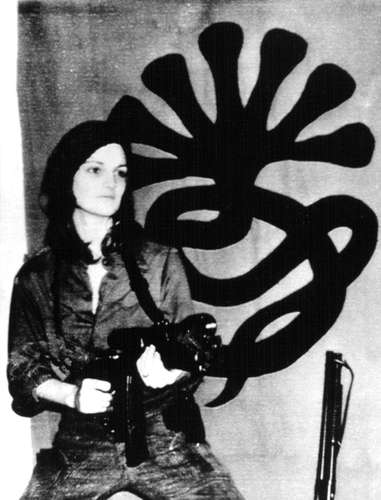
While not writing, I read a little about writing. It was a retro piece in the New York Review of Books from 2016. The author was Joan Didion, whose utter and complete immersion in the art of writing has always fascinated me, and the piece was simply called California Notes. She begins saying that in 1976 Rolling Stone magazine asked her to cover the San Francisco trial of Patty Hearst, the heiress kidnapped by political radicals who became one of them and took part (while armed) in a bank robbery. Didion is a Californian who relocated to New York, but the Patty Hearst assignment would bring her back to California. She would seek inspiration for the piece by reacquainting herself with the state and trying to revive her own emotions about it.

didioncouch

Writer Joan Didion

For me, as I sat not writing, the best part of California Notes was Joan’s confession that she attended the trial but never wrote the piece. There was no explanation, except: “I thought the trial had some meaning for me—because I was from California. This didn’t turn out to be true.”  Her California reflections, however, led her years later to write a compilation called Where I Was From and even later  California Notes.

There’s a famous Nora Ephron quote that reminds me of Joan and has been repeated in this time of crisis: “Everything is copy.” I always thought it peculiar that such a quote would become so famous, since few outside of writing know what “copy” is. The reason must be because writers are the ones always repeating the quote. Anyway, “copy” in this sense means “material” for writing, and now – with the world shut down by a virus — everything is indeed copy. You go outside for a walk and it’s copy. You venture out and drive through town and it’s copy. You cook a meal or seek activities for your kids and it’s copy.

Joan Didion and John Gregory Dunne, Trancas, California, March 1972

Didion with husband, the late writer Gregory Dunne

Even without a pandemic, everything for Joan Didion seemed to be copy. (Her husband died and she got a book out of it). It might be that everything around Joan Didion, all the clouds she allowed to cover her success and notoriety, seemed like a personal pandemic, so she recorded it. In California Notes, she mentions an airline trip from New York to San Francisco in the 50s and reports that on the flight she had, “a Martini-on-the-Rocks and Stuffed Celery au Roquefort over the Rockies.” This means that while in her 20s she was taking notes on everything she did.

It’s true that in my youth I took notes. Joan got much more out of hers than I ever did. Like with her, the urge still remains with me. Recently, while in semi-retirement, I agreed to take a $25-an-hour job as a census taker, figuring I would get something out of it, a story about the real America, even though I’d only be visiting the homes of people in my mostly white, mostly affluent suburban county. As the virus spread, the government wisely decided not to send people house to house. I never went to even one.

In California Notes, there is mention by Joan of an early newspaper job at the Sacramento Union. Newspapers require reporters to learn local “style” – the proper way to refer to things in print. Joan touches on this and says,  “I learned that Eldorado County and Eldorado City are so spelled but that regular usage of El Dorado is two words; to UPPER CASE Camellia Week, the Central Valley, Sacramento Irrigation District, Liberator bombers and Superfortresses, the Follies Bergere [sic], the Central Valley Project, and such nicknames as Death Row, Krauts, or Jerries for Germans, Doughboys, Leathernecks, Devildogs.”

Patricia-Hearst-front-emblem-Symbionese-Liberation-Army

Heiress Patricia Hearst, after her kidnapping

Everything is copy. Sadly, I didn’t make any kind of record of the local style at my first newspaper, and can only remember this: “Do not use a period after the ‘S’ in ‘Harry S Truman High School.’ A period suggests an abbreviation and in this case ‘S’ is not an abbreviation because President Truman did not have an actual middle name.” In the same way I know I cannot compete with the person who thought to buy yeast before I did, I know I cannot compete with writers who know what food and drink they had on a plane in 1955, or can recite that actual constraints put on them decades ago by local “style.” Maybe Joan Didion came up dry at the utterly fantastic trial of Patty Hearst, but she found inspiration at every other turn in her life.

I’m sitting here now looking for inspiration. I suspect I’ll find it eventually. I’m fairly certain, however, I won’t be writing about my neighbors singing, if indeed they ever do. I prefer instead to write about things we fail to see. And right now, I can’t see anything.


On Frankenstein and its free-thinking author, the marvelous Mary Shelly

9 Sep

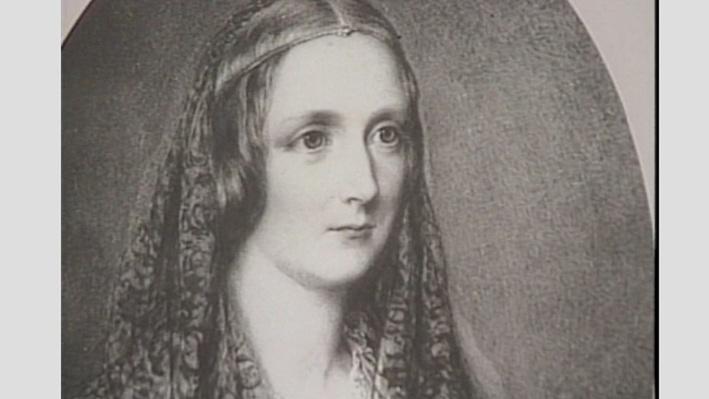
Mary-Shelley

By Lanny Morgnanesi


I started reading the highly-praised novel, Frankenstein, or, The Modern Prometheus, by Mary Shelley, and immediately thought, “Wow, I’d sure like to have known Mary Shelley.”


Just from reading her prose, I concluded she must have been an incredibly interesting person. That was my first reaction. My second reaction was surprise. Her story, I quickly learned, is so different from the one in the Frankenstein movies. It’s deeper, more philosophical and more scientific – and not at all like a product of the 19th century.  I guess literary people knew that, but I didn’t.


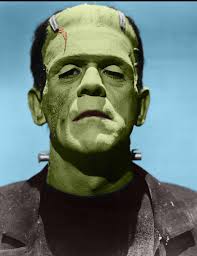
In the 1931 classic film featuring Boris Karloff, the hideous monster can only grunt and lumber. He is a huge child. In the book, the monster also is hideous, but after coming alive as a blank slate, he manages over time to fully educate himself. He is actually erudite. He reads and speak convincingly, with great logic and force.

Frankenstein

“Am I to be thought the only criminal, when all humankind sinned against me?” the shunned outcast asks. 


In the movie, the monster is without motive or even understanding. In the book, he seeks revenge against his creator for bringing him into a hostile, hateful world that abhors him. He reaches a breaking point when Victor Frankenstein, the scientist, refuses to create a bride for him that would provide love and companionship. The monster in the book kills the people closest to Frankenstein so that the scientist will know true suffering.


The movie has villagers killing him. In the book, he commits suicide. This takes place in the Arctic, where the monster (unaffected by the cold) has deliberately led Frankenstein, who seeks to destroy him. After the tormented scientist dies from exhaustion, sorrow and despair, the monster experiences remorse. He tells Robert Walton, an Arctic explorer who tried to save the scientist, that he will now build a funeral  pyre on the ice and leap upon it.


But back to Mary, whose personality seeps through almost every line of the novel. Speaking as Walton the explorer, she explains why old friends are the best:


“ . . . the companions of our childhood always possess a certain power over our minds, which hardly any later friend can obtain. They know our infantine dispositions, which, however they may be afterwards modified, are never eradicated; and they can judge of our actions with more certain conclusions as to the integrity of our motives.”


What a conversationalists she must have been – had to have been, since from an early age she hung out with master poets Percy Shelley (whom she ran off with and married) and Lord Byron. On a trip with those two and her half-sister, the group accepted a challenge to each write a ghost story. Frankenstein was Mary’s contribution. The year was 1817. She was 18. Her book, revised several times, is often called the first true science fiction novel.


When we think of women from that era, we tend to imagine them as passive and subservient. I can’t envision Mary being anything like that. To begin with, she was born to non-conformist parents who took issue with the norms of established society, including religion, government and morality. They didn’t believe in marriage. Mary’s father was a writer and radical  philosopher. Her mother, in 1792, wrote, Vindication of the Rights of Woman, said to be the first major feminist work in English.


What’s shocking to me, sitting comfortably in the 21st century, is that Mary and her parents were not, like the monster, social outcasts. They were part of society and made a living with their unconventional thoughts and ideas. This means those very thoughts and ideas, to a degree, were being at least tolerated and possibly accepted. So I must ask myself, could this also mean that the stereotype of the passive, submissive, ornamental 18th and 19th century woman is a partially a myth? I couldn’t help but wonder.


I’m of the belief that the people of today can’t be much different than the people of yesterday. For sure, the burden of child rearing and the need to produce many off springs because of high infant and child mortality undoubtedly kept women tied to home and hearth. Still, that is not to say they couldn’t have had a strong influence over the lives and fates of their families and even their communities. Minds like Mary’s were not easily dismissed, and she could not have been the only female of her era with such a mind.


Reading Frankenstein did not make me want to rewrite feminist history, or even look deeper into it. It did, however, make me realize that each century shares something with all others, and that genius can prevail even in the harshest environment.


The Quiet Presence of Celebrity

17 May

PPM-blur

By Lanny Morgnanesi

A man who sold millions of records in his lifetime and entertained hundreds of thousands sat on his guitar case on the sidewalk in front of the funeral parlor. He was about three hours from his New York home and may have been waiting for an Uber to the train station. Everyone else either went home or got in their cars for the procession to the cemetery. They walked by him and around him. He seemed old, frail and alone.

The funeral was for my friend, who was also his friend. The deceased was accomplished but not famous. This was not a celebrity funeral. It took place in a quiet suburban town. About 150 people attended.

My friend had been many things in life, most notably a newspaper man. As a journalist he met famous people. He eventually struck up a friendship with a trio of folk singers who were wildly famous in the 60s and even after. The group was so well-known it popularized Bob Dylan songs in a way Dylan never could. As I entered the narrow hallway of the funeral parlor, I saw the musician, one of the two surviving members of the trio, trying to make his way through the crowd. Even at 80 he was recognizable to me. He was being unceremoniously jostled, as was I, but with a guitar in hand and extra age on his body he was finding it difficult to maneuver. I waited for people to treat him in some special way, to acknowledge him and greet him, but at that moment no one did. He eventually made his way to a room off from the viewing area where there was coffee and snacks.

After an hour or so, the service began. All seats were taken. People were standing. A few more chairs were brought in and the singer managed to get one near me. He sat down precariously. The hand holding his guitar was shaking.

The famous folk trio he belonged to broke up in 1970 and thereafter would frequently reunite, perform and even record. Years ago, my friend wrote a lyric about the Irish-English conflict and sent it to him. The performer wrote music for it, and his trio recorded the song – Fair Ireland – in 1990. After three eulogies, the singer took the microphone, talked about our friend, and sang Fair Ireland. His shaking hand had settled.

The song opens with the verse:

They build bombs and aim their pistols in the shadow of the cross
And they swear an oath of vengeance to the martyrs they have lost
But they pray for peace on Sundays with a rosary in each hand
It’s long memories and short tempers that have cursed poor Ireland

It ends with:

So we’re left with retribution it’s the cycle of the damned
And the hope becomes more distant as the flames of hate are fanned
Who will listen to the children for they’re taught to take their stand
They say love and true forgiveness can still heal fair Ireland
Only love and real forgiveness can still heal fair Ireland

There was gentle applause. The singer retook his seat, and the service ended.

I imagine that after a life of intense fame and a loss of privacy, achieving semi-anonymity in old age is welcome. Nonetheless, I felt deep sorrow for the entertainer, possibly a carryover from the sorrow I felt for my friend, but still altogether different. I fully understand that generations pass, that what once was popular fades, and that value and esteem can evaporate. But there is this hope that dignity remains intact. Seeing the musician alone, sitting on his guitar case, waiting for something, I wanted to offer him a ride as a way to preserve his dignity. That would have meant leaving my place in the funeral procession, so I didn’t do it.


From my car window I could see he was weary, worn and sad. In his early years, he had traveled the world. He married and then divorced. He had two children. There was a problem with alcohol and drugs. In the 70s he was arrested on a sex charge but pardoned by the president of the United State. I wouldn’t have felt so bad if he had just come down from New York with a friend, anyone, younger or just as old. It didn’t matter. Just someone there for support.

He most certainly has people in New York. I only wish I could have seen one. To me, that would have made his past life more meaningful, more joyful. As the long funeral procession pulled away, I was at least happy that my departed friend, highly successful, had his success elevated by intense love and caring. In the end, he was not alone, and had never been alone. This, one learns, is the enviable life.


The Shoe Salesman as Relic

27 Sep

846-02792528


He is thin, well postured and wears a fine suit and silk tie. His shoes, of course, are high quality. They are shined.


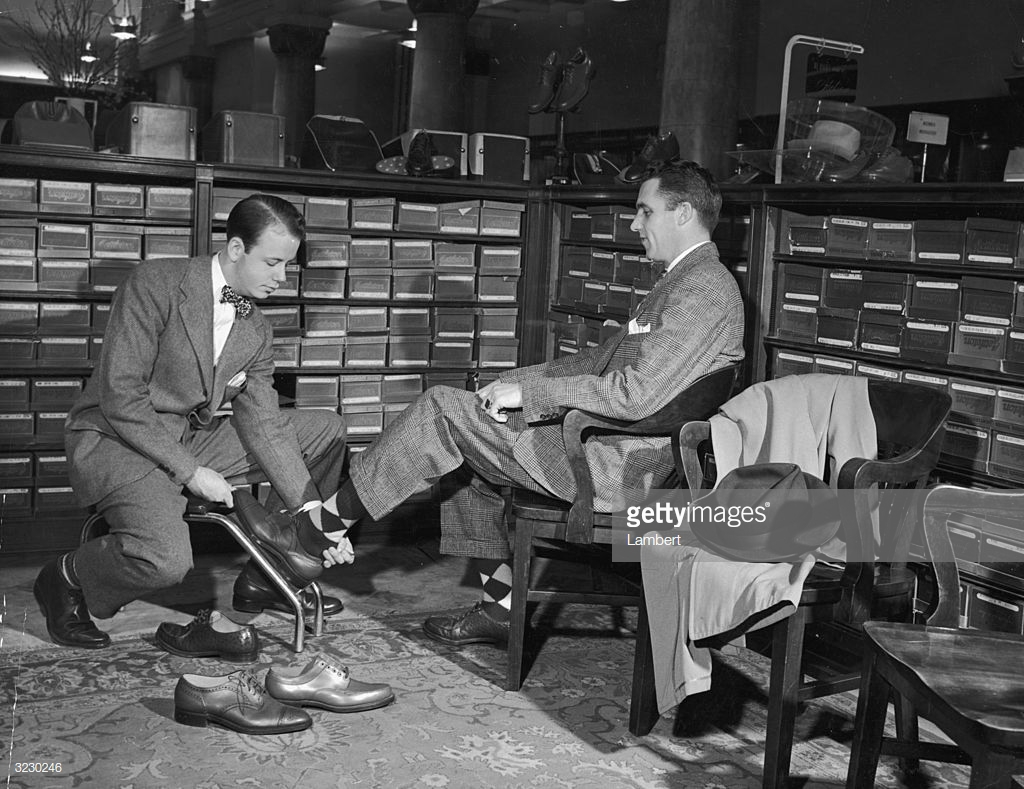
He is the Shoe Salesman, a man from another era. Proud, maybe arrogant, certainly fussy about footwear, he treats you, his customer, with respect and wants you to walk away in style and comfort.


You are seated when the Shoe Salesman approaches. He is polite and professional. You notice he moves well. There is some discussion about what you need and want. He makes suggestions and you tend to agree with him.


Now he must measure your feet.

shoe measuring device

The Shoe Salesman pulls up a specially designed bench that allows him to sit and you to put a foot up so he can place a shoe on it. But that comes a little later, after the measurement, which is done using a device that looks as if it belongs in his hands. He can move it about easily, flipping it to measure either your right or left foot.


On his request, you stand for the measurement. He moves the calibrators, touches your big toe, presses the foot flat and – regardless of what size you see on the device – tells you what size you should wear.

Eatons Shoe Salesman Chair 1970 1

Using the information from your earlier discussion with the Shoe Salesman, he goes into the back to get your shoes. A moment later he returns with three or four boxes. There are different styles and even different sizes, just in case his measurement is off.


The Shoe Salesman puts down all but one box. He holds it in his left hand, gracefully removes the lid and secures it underneath the box. There is a “fliff, fliff” sound as the Shoe Salesman deftly pushes aside the two pieces of tissue covering the shoes. You notice how good the shoes look.


He sits on his bench and takes one shoe from the open box. Then, in a move that would humble a magician, the Shoe Salesman produces a silvery shoehorn from somewhere. You are not certain from where. He manipulates the shoehorn and the shoe glides silently onto your foot with minimal friction.


The Shoe Salesman ties the laces like you never could. He repeats all this for the second shoe and asks you to stand. With your foot inside the shoe, he uses his thumb and forefinger to squeeze the tip of the shoe. This is to judge the distance, if any, from the top of your big toe to the leather in front. The Shoe Salesman decides if it’s enough.


He asks you to walk, which you do. He watches you closely. He asks questions.


You try on another pair or two and, upon the recommendation of the Shoe Salesman, make a decision. He expresses delight at your choice and while boxing up the shoes asks if you need socks. You say no, and then a point of importance is mentioned: Do you need shoe trees?

CedarShoeTree

Cedar shoe trees: $25

The shoe trees, he explains, are vital to the care and life of shoes. They allow the shoes to hold their shape and help to disperse odor. They come in plastic, but those are not recommended. You should only buy cedar, the Shoe Salesman advises, even if they are expensive.


With a degree of embarrassment, you decline the shoe trees. There is a look of disappointment on the face of the Shoe Salesman. This detracts from the near joy of the shoe purchasing experience. Something in you wants to make the Shoe Salesman happy, and you seemed to have failed at that.


But the Shoe Salesman rallies and the transaction finishes in upbeat fashion. There is a request that you visit again soon.

shoes-2000-dollars

A pair of $2,000 shoes


The Shoe Salesman may still exist at fine men stores where shoes sell for the price of a good suit. There was a time, however, when they were found in main street establishments and in family department stores like Sears.


It takes dignity, a reasonable salary and longevity to produce the kind of service described here. It is unfortunate these things were severed from shoe sales decades ago. So today, we are accustomed to what would have been an unacceptable horror in 1960: We must try on our own shoes and judge for ourselves whether or not they fit. In the entire shoe department, it may be impossible to find anything even resembling a rudimentary shoehorn.


Like in restaurants where we must serve and clean up after ourselves, we are pretty much on our own in the shoe department.


This is the American economy, a place sucked dry of everything deemed unessential. Remarkably, without someone trying to sell you shoes, the shoes manage to get sold. This is the miracle of our time. In a society where labor is horribly undervalued and skills like those of the Shoe Salesman will never be properly rewarded, the American public has been trained to supply free labor that previously was paid for.


How did this happen? Damned if I know. Perhaps it’s the results of global markets and the ability of foreign people with lower living standards to produce things once produced by those in countries with higher standards of living.


But I think it’s also related to the predatory nature of our society championed by corporations that want to keep an increasingly larger portion of their revenue. They succeed at this in the absence of any morality requiring a more even distribution of wealth, and with no market forces pushing up wages.


When Henry Ford needed to ramp up production on his new assembly line in order to meet the swelling demand for his cars, he famously boosted wages to $5 a day, an unheard of rate. Slyly, that rate was enough so all his employees could afford cars.


Today there are legions of undervalued workers, many at multi-billion dollar companies such as Walmart and Amazon, who cannot afford an automobile. As long as cars and other American products are purchased by consumers in the global market, this presumably doesn’t matter. It does, however, create instability, conflict and adds stress to government.

A Snug Fit

A shoe salesman attends to a customer in 1955


I say this not because I am a Bleeding Heart Liberal. I say this not because I want to penalize private enterprise. Rather, I say this because I am a person who once enjoyed purchasing a pair of men’s shoes and would like very much to someday enjoy that experience again.


By Lanny Morgnanesi


A Modest Place of Distinction Continues to Survive

26 Sep

2018-09-26 14.13.55

Near Broad and Wolf


Circumstances brought me to South Philadelphia this week.


For those unfamiliar with this legendary locale, it is a crowded little sub-town of look-alike row homes. South Philly probably is best known as the birthplace of the Philly Cheesesteak and as the home of 50s teen idols like Fabian, Frankie Avalon and Bobby Rydell.


Traditionally, it is considered an Italian neighborhood, and although it has had its ups and down, with people moving in and people moving out, it remains intact. Its vibrancy is illustrated by the thriving Italian market that has been in existence since the early 1900s. In the movies, Rocky runs through it as part of his training.


The area is broken up into many neighborhoods. I was at Wolf and Broad streets, a humble section without landmarks. One day at around 1:30, I decided to find a restaurant for lunch. I knew the big name South Philly restaurants were elsewhere, but whatever place I chose had to meet at least baseline standards in order to exist here.

The_South_9th_Street_Italian_Market_Festival

The Italian Market


I came upon a small corner joint named Johnnie’s at 12th and Wolf. My plan was to takeout, a good idea since the place was empty save for a waitress sitting at a table. Didn’t matter. Johnnie’s was clean and decorated with wine bottles, plastic flowers and garland. There were several religious icons, including a statue of the Sacred Heart, which is Jesus exposing his bulging heart through an open robe.


I ordered some pasta and sandwiches, including a Cheesesteak with sauce and onions.


“Sauce?” the waitress said with a puzzled face.


“Yes, sauce and onions.”


“You mean red gravy?” she asked.


“Yes, red gravy,” I said, remembering where I was.


After she put in my order we chatted. Having walked down Wolf Street, I noticed a good number of the 3-story homes had been gentrified, with beautiful wooden doors and fancy nameplates displaying address numbers. I hadn’t been in one of these homes for decades, but I recollect at least two common interior features. First, all couches and chairs were protected with clear plastic slipcovers. Second, one interior wall – the whole thing — was faced with mirrors to give the narrow homes a feeling of depth. The mirrors may still be there. I’m guessing the plastic slip covers are gone.

1959_Fabian_Forte

Singer Fabian Forte, from South Philly

“How’s the neighborhood doing?” I asked the waitress.


“Well,” she said, “I’m not from here. I’m from the other side of Broad Street (three blocks away). But I’d say it’s doing OK. Things have picked up. For a while, I was thinking about moving. Not now. It’s pretty good.”


South Philly has been targeted by an army of millennials looking for a small town feel in the big city. They have made South Philly one of the hottest Philadelphia neighborhoods for rentals.


“What do these homes sell for?” I asked. “A good one, not a great one.”


She thought about it. “Maybe the low 300s. That’s what they go for on my street. Maybe the high or mid-200s.”


“It’s nice when a neighborhood comes back,” I said, thinking about the Chambersburg section of Trenton, which has not come back.


Trenton, New Jersey, was where my father was born. Our family lived there for a few years. I think we moved out when I was seven. We didn’t live in Chambersburg, but as children we’d hear talk about this very ethnic Italian neighborhood. Occasionally we’d eat at a restaurant there, but mostly we bought bread and pastries from its bakeries.


As an adult, while living in suburban Philadelphia, I joined my father’s Trenton-based lodge, The Roman Society. In its day it was a remarkably successful organization, and I’ve written about it here. Without repeating too much, I’ll just say the lodge owned a beautiful restaurant and banquet facility called the Roman Hall. It outlived its usefulness after the unmistakable truth became known: Chambersburg was no longer and never again would be Italian. Also, walking the streets was getting dangerous.


No surprise. The restaurant went under.


An entrepreneur wanted to turn the place into an Hispanic-style nightclub. He asked that the lodge to hold the mortgage, which it did, and our signs were taken down. For me, this was like Rome falling all over again.


But back to the better-fated South Philly.


Not far from Johnnies, a young man I know (non-Italian) lives happily with his new wife in a South Philly row home. The couple, both of whom work in Center City, got married at an old but stately South Philly high school that had been converted in a bar/banquet hall. It’s a large, slightly Greek-style building on a small, cramped side street. Hardly any parking. I’m told the wedding attendees stayed at a riverfront hotel and Ubered over.


South Philadelphia is an indication that things can change for the better. The defining question is how much better and for how much longer. Either way, I hope Johnnies’ dinner trade is better than its lunch trade. It’s not Dante and Luigi’s or Ralph’s or Marra’s, but it’s a nice place for quick, simple food. If you, like I, are near 12th and Wolf due to circumstances, I can recommend it. Be sure to remember it’s “red gravy,” not sauce.


By Lanny Morgnanesi

Acting like you’re famous and wishing you were: The Million Dollar Quartet

3 Sep

million-dollar-quartet2

Actor/musicians (from left) Brandyn Day as Jerry Lee Lewis, John Michael Presney as Carl Perkins, Ari McKay Wilford as Elvis Presley and Sky Seals as Johnny Cash

If you’ve been to a minor league baseball game, you know it’s tame fun with a hint of sadness. What’s sad is that many of the wildly ambitious and talented players will never hear the roar of a real crowd or get the glory that accompanies fame.

For me, the experience is similar to seeing a Broadway show at a regional theater. The one difference is that on good nights the actors at a regional theater do hear the roar, a sound satisfying beyond money. Still, after the curtain falls, you’re in a bar wearing street clothes and looking normal and someone asks what you do for a living and you’re afraid they’ll laugh if you say you are currently performing on stage as Elvis Presley.

At the Bucks County Playhouse this weekend in New Hope, Pennsylvania, I saw not only Elvis but actors portraying Johnny Cash, Jerry Lee Lewis and Carl Perkins. This 50s-era group of rock and roll royalty once came together by chance at a small recording studio called Sun Records. For a few brief hours on Dec. 4, 1956, they formed what came to be known as the Million Dollar Quartet.

Million-Dollar-Quartet-hits-high-note-at-Bucks-County-Playhouse

That was the show I saw, “Million Dollar Quartet.” It was based on the recordings the four made under the guidance of legendary producer Sam Phillips. When I walked into the theater my first impression was that the set, a recreation of Sun Records, looked really good. Knowing little about what I was to see and hear, I was even more impressed when a Playhouse employee announced that all music would be live and performed by the actors on stage. Nothing had been prerecorded.

As I waited for the show to start, I assumed the audience would be kind but not overly enthusiastic, mainly because it was a very old audience. More than a few people had walkers and canes and I wasn’t feeling too good myself. When the music started playing – there are 22 numbers in the show – I was relieved that the reaction was, if not effusive, at least respectable.  The performances, however, were so good that younger people might have been up and hollering. Even so, I was confident the people who created the show were experts at pacing and that we weren’t supposed to really let go until the end. This turned out to be true.

A few points in general about the show, which continues thru September 29: Johnny Cash didn’t look much like Johnny Cash and Jerry Lee Lewis came off too much like Harpo Marx, but as a regional show is was worth the ticket price. As one of those so-called jukebox musicals, songs dominated over plot. A minimal story line involved Sam Phillips’ struggle over whether to sell out to RCA; Johnny Cash’s worry about telling Sam he was leaving Sun for Columbia Records; and Carl Perkins’ anger at Elvis for recording his song, “Blue Suede Shoes.”

milliondollarquartet_originalphotoresizedjpg

From left, the real Jerry Lee Lewis, Carl Perkins, Elvis Presley and Johnny Cash

In the end, everyone came together in mutual respect, understanding and friendship. This fresh harmony allowed the actors to finish in concert style with three strong numbers. Right before the concert, there was a touching bit that probably doesn’t sound touching if written about. Sam Phillips, the record producer, asks the four boys to pose for what he says will be an historic photo. They pose, Sam shoots, and the actual photo the real Sam Phillips took on Dec. 4, 1956 comes down from the ceiling. Everyone claps. Some tear up.

The concert consisted of  “Hound Dog” by Elvis, “Ghost Riders In the Sky” by Cash and “See You Later Alligator” by Perkins. These numbers were clearly full-tilt/high energy and the crowd, some with walker assists, finally got on its feet and went nuts. After “Alligator,” the boys proudly marched off stage and Sam Phillips urged us to demand an encore, which we already were doing.

The boys came back. They ripped it up and shook the house with Jerry Lee Lewis doing “Whole Lotta Shakin.” Sam Phillips, who so far had only dialogue and narration, coolly pulled out a harmonic and gave an incredible mouth organ solo.

It all ends, and we cheer loudly. This was the best part because you could see the actor/musicians break character, glance at each other in unexpected ways and silently say with expressions of delight and satisfaction, “Seems like we did pretty good tonight.”

The loving reception gave them hope that even if they are in the minors now, one day soon they could be called up.

By Lanny Morgnanesi

A kind of Jewish internet flourished in 900 AD

13 Mar

Ancient Babylon

Babylonia

For this reason or that, I’ve adopted the belief that many human habits date back hundreds of thousands of years, to homo erectus, the Neanderthals, and Gods knows how many other hominid creatures.


I won’t go much into this now, but one much-more modern bit of evidence – for me at least – is the preserved Italian city of Pompeii, which remains exactly as it was in 79 AD. The eruption of Mount Vesuvius and the fallen ash froze it in time. When I toured it several years ago, my lasting impression was: These people lived just like we do today!


Now something new to me – but historically old – has added to the idea that we haven’t changed much, even if our technology has. This small piece of information comes from a book called, “A History of the Jewish People,” written in 1934 by Max Margolis and Alexander Marx. It was paid for by the estate of one Rosetta M. Ulman, who during her life wanted such a publication written.

book-history-of-the-jewish-people

In chapters covering the years from 175 AD to 1038, there is a great deal of discussion about two highly respected schools of learning that guided Jewish communities dispersed throughout the known world. The schools, Sura and  Pumbeditha, were in Babylonia (modern Iraq). The two heads of these school was held in the highest regard by Jewish residents of Babylonia, Palestine, Egypt and many other locations. Every word from the leaders on religion, scripture, philosophy and life were sought out and followed.

Map-sura-pumbadita

Even the Arabs paid attention and gave their respect.


As I read, I wondered how word got from the schools to the communities. No doubt by heralds, messengers, traders and travelers. Obviously, it must have been a slow stream of news.


When Margolis and Marx get into a section on a schism between the two schools, however, it seems as if the news had a much faster way of getting out. The leaders of Sura and Pumbeditha were arguing over nearly everything. One highly sensitive issue was what kind of calendar or calculation should be used to set the Jewish holidays. They differed on this, and the result was that one year Passover was celebrated on two different days.

Ancient Israel

Ancient Israel

Margolis and Marx report that the “confusion” was so great “it was even noticed by non-Jews.”


My thoughts were: How did the details of this controversy and the two divergent holidays spread so quickly from Babylonia, through Palestine, to Egypt and North Africa, maybe to even to Spain, Greece, Turkey and Persia?


Was there a Jewish internet?


Information then and now was powerful and important and clever humans, with or without technology, knew how to spread it. What may be lost, however, is exactly how they did it, at what cost and to what extent. Margolis and Marx don’t get into that, but I’d sure like to know.

Sura-Iraq

The ancient school at Sura

Either way, the results were a lot like the results now.


We’ve always been the same and probably always will be. If we ever clone a Neanderthal, he may fit in much better than we’d expect.

Neanderthal

Depiction of a Neanderthal

But I would have known that. The bakeries, butcher shops, whorehouses, living room art, sidewalks and curbs and everything else in Pompeii seem to suggest the truth. And now, as more evidence, we have the ancient Jewish internet.


By Lanny Morgnanesi