Tag Archives: jokes

On the Duck that Traveled 10,000 miles

6 Oct

By Lanny Morgnanesi

An old friend came home for our 55th high school reunion and had a criticism of my recent novel, The King of Ningxia.

The book uses a shifting timeline and is loosely based on my experiences in China during the mid-80s. The story is about the relationship between an American man and a Chinese woman, whose antics together help illustrate China’s great ascent in the world and its changing relationship with the U.S. But the book also includes a stupid joke. My friend was disappointed that only an abbreviated version of the joke appears, rather than the elaborate version I told years and years ago.

My friend felt the short version misrepresented the joke, was a disservice to the joke, was a disservice to his memory of the joke, and also a disservice to the novel.

I, of course, disagreed.

From my adult perspective, the joke is juvenile and not even funny. But my friend remembers how our gang laughed and laughed and laughed as I extended and stretched out the simple story of a guy trying to sneak a duck into a movie theater. To do so, he places the duck in his pants. Once in the theater, he opens his fly to give it some air. The lady next to him sees the duck’s head popping out of the pants zipper and says to her friend, “Look at that.” Her friend responds with a shrug, “When you’ve seen one you’ve seen them all.” To which the first woman says, “Yes, but this one is eating my popcorn.”

Now according to my old friend, I would tell this joke for 20 or 30 minutes. I’d do the voices of the duck owner, the ticket taker at the theater, the two old ladies, even the duck. I would push the joke farther than it was supposed to go, provide great detail and back stories, improvise and go on and on. My friend especially liked how I had the guy pleading with the ticket taker to let the duck in, saying the movie – a film starring Donald Duck – was his all-time favorite and his pet just had to see it.

I told this joke at parties back in the late ‘60s and reminded my friend that most people at those parties were using a substance that made them laugh at anything.

“It was marijuana telling the joke, and it was marijuana laughing at the joke” I said. “The joke, by itself, is not funny.”

He held his position and said the entire joke – which I certainly could not recollect – should have been included in The King of Ningxia. At this point, I had to explain why a short version is in the book, and what it was designed to do.

It occurs during a scene where the main character, the American male, tries to learn about Chinese culture by asking a Chinese person to tell a joke, to see if the humor translates. The person agrees and tells a story of a guy who sneaks his duck into a movie theater. (In real life, this is what happened when I asked for a joke). Rather than popcorn, this Asian duck eats the woman’s sunflower seeds, which is what Chinese people eat in movie theaters. The actual punchline is a bit different as well, but it is still the same joke. In response, the American tells his version of the joke, and they compare the two.

So, I say to my friend as we prepare to attend the reunion, “Do you see the purpose of the joke? It was not to get a laugh from the reader. It was to show that an aspect of culture can jump 10,000 miles across an ocean, from a capitalist country to a communist country, and be enjoyed by two entirely different people. It says something about the oneness of humanity, about the commonalities of our minds, about the strength of global reach, of geography’s inability to contain us and the uselessness of political barriers to stop the flow of information.”

“Yeah,” said my friend. “But when the guy in the joke practically gets on his hands and knees and cries, ‘It’s Donald Duck, his favorite actor. You’ve got to let him in.’ How could you not have included that?”

It was as if my friend was still smoking weed.

“Well,” I said. “Maybe in my next novel.”

I really should end this here, but in contrast to the duck joke, I want to relate a funny Chinese video – Chinese howl at this one – that Americans just don’t get. It’s a video of a street scene in China, and there is a horse in the street. A man walks by and pats the horse on the ass. The horse then violently kicks the man in the head.

Why is this funny?

It is funny because there is a famous Chinese saying that to get ahead, you must pat the horse’s ass, meaning you must suck up and flatter authority figures. People who don’t suck up are angry that those who do receive special privileges. Therefore, the video gives the non-suckers delight in showing that sucking up does not always work.

Are you laughing yet?

No? Did you hear the one about the duck in the movie theater?

THE KING OF NINGXIA IS AVAILABLE AT AMAZON.CO

Oh, Oh, Oh … Christ was a Jew!

25 Jan

Christ

A certain American president is dominating 90 percent of what we see, hear, and discuss, so I’ve decided to write about a somewhat anonymous but highly unusual person I’ll call Melvin.


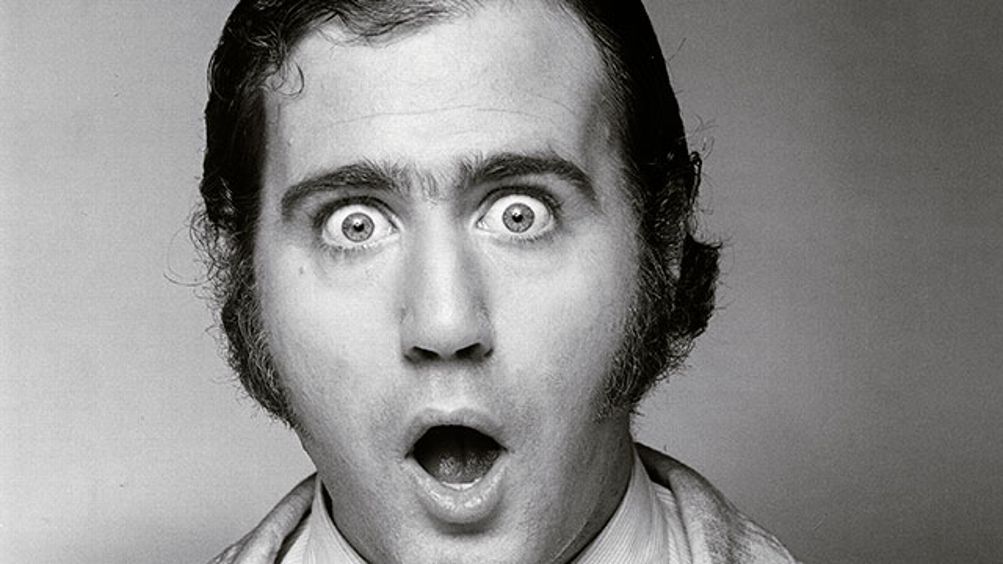
Melvin was intelligent. He did his undergraduate work at MIT and was studying veterinary medicine when I roomed with him and another vet student at a large university. Melvin is difficult to describe. I like to think he was Andy Kaufman before Andy Kaufman was Andy Kaufman. His life was a performance, not on stage, just walking around. The difficulty with Melvin, like Andy, was understanding the purpose and meaning of his performances.

Andy_Kaufman

For example, I could hear Melvin in his room when he had women over. During climax, he would always shout, “Christ was a Jew!”


After a time, I asked why he said this. He probably was employing his distinctly odd sense of human when he answered, in complete deadpan, “What else would you possibly say?”


I always suspected he was mimicking a character from a William Burroughs novel or some equally obscure place.


As a vet student, Melvin studied much more than I did. One evening, I was in the living room of our campus townhouse entertaining two women friends. He had a test the next day and was upstairs with his books. He obviously needed a break, and he took one in performance mode.


Melvin came running down the steps, frantic, dressed in cutoff jeans, no shirt, no shocks, no shoes. It looked like he was sweating. He carried a beat up old guitar.


“I’m on in 10 minutes,” he said to the three of us in a panic, “and I can’t play a thing.”


Then he ran to a window, opened it and jumped out.


Andy Kaufman couldn’t have done better.

brokenglasses

But the best of his bits occurred when I and our third roommate walked him to a house where he was to meet a blind date. We wanted to see what she looked like and stood nearby as he knocked on her front door. When she opened it, we could see she had an exquisite body. It was rare and perfect in every way. She was not, however, attractive. My recollection is she had a slight resemblance to Richard Nixon.


Melvin looked at her and excused himself for a moment. He walked to the street and, with a rather demonstrative gesture, threw his glasses under the wheel of a passing car. Melvin then looked at me and the other roommate and said, in a tone of old movie contempt, “So long, suckers.”


He went back to the house, went inside, and wasn’t seen again for three days.


I’m certain that by the end of the three days the young woman who looked like Nixon knew almost certainly that Christ, indeed, was a Jew.


Now isn’t that better than Donald Trump?

Donald Trump

By Lanny Morgnanesi


Let me tell you a story about a man, a horse and a joke

5 Apr

The jokes of a people tell you much about the people.

A little hobby of mine is to learn of and listen to the jokes of foreign cultures. I’m proud to say that with patience, an open mind and an attention to the nuances of language, I’ve been able to laugh alongside many a hysterical foreigner.

In so many cases, it’s really about the language, which because it is not English can be used in ways that English cannot.

Chinese, for example, has so many sound-alike words that there is an entire genre of Chinese comedy called Cross Talk, where Abbott and Costello-like characters stand on stage and grossly misunderstand each other. These bits are much like “Who’s On First.”

This week, large numbers of Chinese people are cracking up not over misunderstood language but over a short video. It is of a man getting brutally kicked in the head by a horse. The humor is not in that brutality but in a message conveyed by the kick – a message that has nothing to do with animals.

Here’s the background.

In China, there is a popular idiom that translates literally to: “Pat the horse’s ass.”

When someone pats the horse’s ass, they are sucking up to the boss or flattering people to get ahead. We use the similar expression, “kissing ass” or “brown nosing.”

While many Chinese have benefited from patting the horse’s ass, there is a danger to the practice if it is too transparent. It can backfire. Most Chinese who watch their sycophantic colleague advance would prefer that they fail. No one likes as ass kisser.

In the video widely circulating among Chinese, the victim, prior to being kicked so hard and so directly, walks across the street and actually pats the horse’s ass.

The payoff for doing so is pretty damn clear.

And that’s why it is so funny to this culture that relies heavily on metaphor and symbolism. The humor is achieved without a single word.

All right now Mister and Misses America — DO YOU GET IT?

Lanny Morgnanesi

https://www.youtube.com/watch?v=n5pN5kR8vco

Where Will You Be Six Months from Now?

19 May


The late comedian Henny Youngman used to tell lots of jokes about doctors. A favorite is:

My doctor told me I had six months to live. I said, “Doctor, I can’t pay you.” He gave me another six months.”

Henny Youngman — he knew!

Comedians are very exacting when choosing their words, especially in short jokes. They much prefer funny words over unfunny words and will struggle to determine if, say, 66, is funnier than 85. So I find it interesting that Henny chose “six” for the number of months his doctor gave him.

I don’t think he did it because six is funny. I think he did it because when doctors tell you death is near, they almost always put it six months away.

Not to be funny, but have you every heard of a friend or relative who was given four months to live, or seven months to live, or 10 months? I never have.

All this comes to mind because someone I know was given six months to live. Sure enough, exactly six months later he was dead.

Did the doctor really know? Or was he just lucky?

In life, we all have to make quick judgments and guesses. In the field of finance there is a joke (funny only to people in finance) that goes:

Q. Why do economists use decimal points?

A. Because they have a sense of humor.

The point being that nobody really knows anything for sure, but all of us sure can fake it. Those who get it right probably get more credit than they deserve, like maybe Steve Jobs or some military strategists.

Lucky guess?

But we’ve all got to worship earthly gods and I imagine it is more appropriate to worship those who have guessed right than to worship those who have guessed wrong. So hats off to the doc who said “six months” to my friend.

I’ll leave you with this piece of advice:

If your doctor says you have just 10 minutes to live, do everything you can to assure him that his wife and you are just good friends.

Thanks, Henny.

Sticks, stones and free speech

10 Feb

Hateful or merely unfunny?

I’ve noticed that more and more celebrities, politicians, broadcasters and sports figures are saying things that offend people. Reporting gaffs, if they are indeed that, has become its own news genre.

What people say rarely offends me. I’m an advocate of free speech. And I like to hear what people really think. Don’t others feel this way? It is difficult for me to believe that, say, a Jew, would prefer an anti-Semitic congressman keep quiet and never be found out, rather than speak honestly and reveal himself.

Do those who complain about people like Roland Martin think Roland Martin would be a different person if he didn’t say what he said?

I once found myself among a large group of traveling North Koreans. They didn’t say a word, didn’t crack a facial expression, didn’t show they were human. Fear encapsulated them. I’d much rather be around a bigot than an automaton. I’m hoping the current tendency to castigate offensive utterances doesn’t turn Americans into North Koreans.

Can’t we just ignore celebrity offenders? That’s severe punishment, since these are people who can’t seem to live without attention.

There once was a politician in my town who probably was a good fellow at heart. He liked to make jokes and never worried about offending people. He thought himself a scream. He held a high county office and once had to deal with a small riot in a Hispanic neighborhood.

He was unable to play it straight.

During a public meting he said this: “We could have avoided the problem if someone had just put up a taco stand.”

He was roundly criticized.

At the next meeting, he took the podium to apologize, even though he was not the kind of man to do so.

“I was completely wrong,” he told his audience. “It’s the Mexicans who like tacos. The people who rioted were Puerto Ricans.”

And he belly laughed.

Was this man a racist or simply a failed comedian?

To me he was someone who refused to hide himself. If I chose to, I could have run from him, knowing more about him than I knew about most people.

He lost the next election, retired and died. Roland Martin, on the other hand, probably has followers on social media than ever before.