
By Lanny Morgnanesi
In 2004, more than a decade before Donald Trump first became president, Philip Roth published a novel entitled, “The Plot Against America.” There was an effort to make it into a TV show, but it failed — initially. After Trump was elected in 2016, it was green lighted into a six-part series.
The novel has nothing to do with Trump and takes place during World War II. It’s an alternative history. But reading it now, it carries an eerie sense of familiarity and dread. It actually gave me chills. Frankly, with Trump in his second presidency, I’m surprised it hasn’t been reissued.
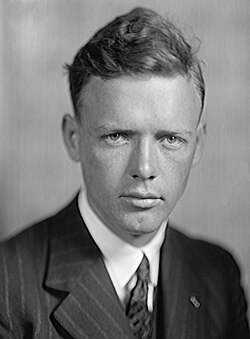
In the novel, President Franklin Delano Roosevelt loses his 1940 re-election bid to Charles Lindbergh, the America hero who in 1927 flew solo from New York to Paris in his small plane, The Spirit of St. Louis. In the novel and in real life, Lindbergh was an American Firster who wanted to keep the U.S. out of war. In the book, if not in real life, Lindbergh is sympathetic to the rise of Adolf Hitler and exhibits anti-Semitic tendencies.

Once in office, he signs an official truce with Hitler to keep America out of the war. Then he begins a series of programs to marginalize American Jews, mainly moving them out of urban enclaves (the book is set in Newark, N.J.) and scattering them about the Christian Midwest, hoping they assimilate and discard their Jewishness. Out of fear, some leave for Canada. The main voice of opposition – almost the singular point of dissent — is columnist and radio commentator Walter Winchell, a Jew. Frightened Jews rally around him and listen to his Sunday night broadcasts with both fear and hope.
Then, Winchell is fired from his job, runs for president, and is assassinated. Jews protest. This sets off a violent wave of anti-Jewish pogroms. Murder and mayhem come to the streets of Jewish neighborhoods while Lindbergh’s government remains silent. Antisemitism builds and spreads, bursting like a volcano. Then Lindbergh, while flying alone back from a speech (he does this frequently) disappears. He and his plane cannot be found.

Hitler (who, we learn later and secretively, may have kidnapped him; we’re not sure) claims Lindbergh was killed by a Jewish conspiracy, and the anti-Jewish rioting further intensifies. Much intrigue and strange happenings follow. The vice president takes over and arrests the top Jewish leaders in America, including real life figures Henry Morgenthau Jr., Herbert Lehman, and Bernard Baruch. Also arrested is New York Mayor Fiorella La Guardia, seemingly the only non-Jew to condemn America’s turn toward fascism. Ultimately, a level-headed Mrs. Lindbergh, acting like a widow who knows something we don’t know, calms down the nation and announced that the Jews did not kill her husband. With her help, FDR is reelected, stops the pogroms, enters the war against Germany and Japan, and (we guess) saves America.

What makes this story contemporary is the immense popularity of a conservative president who takes the country in an entirely new direction. Everything he does, including the relocation of Jews, is framed in a positive, pro-American narrative and is readily accepted by nearly all Americans, including – at least at first – many Jews. Lindbergh has enlisted the help of the nation’s top rabbi to convince his people that all is well and right. The rabbi is given a top position in the government, is treated and feted like a celebrity, and attends state dinners and other functions, including one where the guest of honor is Hitler’s foreign secretary, the real life Joachim von Ribbentrop.
So many people, big and small, compromise themselves because they see a winner and want to be on his team, and they assume when the government goes after people, it does so for a good reason, and will never come after them.

As intra-family squabbles take place today, in the book Jewish families fight among themselves about whether or not the government is good intended, whether America is stronger by staying out of the war, whether they should move to Canada or take part in the relocation program, and more. We see how people are not worried at first, then as the Lindbergh policies take hold and escalate, the worrying begins. But people still aren’t sure. It takes violence, murder, and assassination before they realize what’s taking place is wrong.
If you can, look in on the book, “The Plot Against America” or stream the TV series on HBO or Hulu. (Here is the trailer) Perhaps you won’t see it as I see it … or maybe you will see it as an even darker specter of what is to come.



 notebookm.com