Tag Archives: Germany

Is There New Relevance to a 2004 Novel About a History That Never Was?

19 Nov

By Lanny Morgnanesi

In 2004, more than a decade before Donald Trump first became president, Philip Roth published a novel entitled, “The Plot Against America.” There was an effort to make it into a TV show, but it failed — initially. After Trump was elected in 2016, it was green lighted into a six-part series.

The novel has nothing to do with Trump and takes place during World War II. It’s an alternative history. But reading it now, it carries an eerie sense of familiarity and dread. It actually gave me chills. Frankly, with Trump in his second presidency, I’m surprised it hasn’t been reissued.
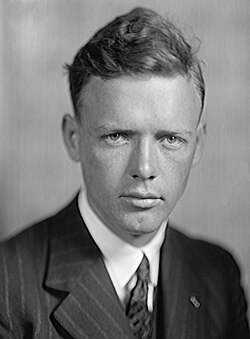
Charles Lindbergh

 In the novel, President Franklin Delano Roosevelt loses his 1940 re-election bid to Charles Lindbergh, the America hero who in 1927 flew solo from New York to Paris in his small plane, The Spirit of St. Louis. In the novel and in real life, Lindbergh was an American Firster who wanted to keep the U.S. out of war. In the book, if not in real life, Lindbergh is sympathetic to the rise of Adolf Hitler and exhibits anti-Semitic tendencies.

Columnist Walter Winchell

Once in office, he signs an official truce with Hitler to keep America out of the war. Then he begins a series of programs to marginalize American Jews, mainly moving them out of urban enclaves (the book is set in Newark, N.J.) and scattering them about the Christian Midwest, hoping they assimilate and discard their Jewishness. Out of fear, some leave for Canada. The main voice of opposition – almost the singular point of dissent — is columnist and radio commentator Walter Winchell, a Jew. Frightened Jews rally around him and listen to his Sunday night broadcasts with both fear and hope.

 Then, Winchell is fired from his job, runs for president, and is assassinated. Jews protest. This sets off a violent wave of anti-Jewish pogroms. Murder and mayhem come to the streets of Jewish neighborhoods while Lindbergh’s government remains silent. Antisemitism builds and spreads, bursting like a volcano. Then Lindbergh, while flying alone back from a speech (he does this frequently) disappears. He and his plane cannot be found.

Author Philip Roth

Hitler (who, we learn later and secretively, may have kidnapped him; we’re not sure) claims Lindbergh was killed by a Jewish conspiracy, and the anti-Jewish rioting further intensifies. Much intrigue and strange happenings follow. The vice president takes over and arrests the top Jewish leaders in America, including real life figures Henry Morgenthau Jr., Herbert Lehman, and Bernard Baruch. Also arrested is New York Mayor Fiorella La Guardia, seemingly the only non-Jew to condemn America’s turn toward fascism.  Ultimately, a level-headed Mrs. Lindbergh, acting like a widow who knows something we don’t know, calms down the nation and announced that the Jews did not kill her husband. With her help, FDR is reelected, stops the pogroms, enters the war against Germany and Japan, and (we guess) saves America.

Joachim von Ribbentrop

What makes this story contemporary is the immense popularity of a conservative president who takes the country in an entirely new direction. Everything he does, including the relocation of Jews, is framed in a positive, pro-American narrative and is readily accepted by nearly all Americans, including – at least at first – many Jews. Lindbergh has enlisted the help of the nation’s top rabbi to convince his people that all is well and right. The rabbi is given a top position in the government, is treated and feted like a celebrity, and attends state dinners and other functions, including one where the guest of honor is Hitler’s foreign secretary, the real life Joachim von Ribbentrop.

So many people, big and small, compromise themselves because they see a winner and want to be on his team, and they assume when the government goes after people, it does so for a good reason, and will never come after them.

Newark, N.J. in the 1940s

As intra-family squabbles take place today, in the book Jewish families fight among themselves about whether or not the government is good intended, whether America is stronger by staying out of the war, whether they should move to Canada or take part in the relocation program, and more. We see how people are not worried at first, then as the Lindbergh policies take hold and escalate, the worrying begins. But people still aren’t sure. It takes violence, murder, and assassination before they realize what’s taking place is wrong.

If you can, look in on the book, “The Plot Against America” or stream the TV series on HBO or Hulu. (Here is the trailer)  Perhaps you won’t see it as I see it … or maybe you will see it as an even darker specter of what is to come.

Big war, small peace – did Stephen Hawking really know the truth?

29 Aug

Cambridge3

I was waiting, so I picked up a book. Inside, just a few pages in, was a simple sentence with the power to uplift, encourage, and promote optimism.


It seemed to confirm the idea that there was light amid the dark; that somewhere below the horrid nature of mankind there was good trying to surface.

Sadly, that sentence – written as a statement of fact – is probably wrong. Oddly, its author is one of the world’s most intelligent men.


Hawking book jacket-bioThe book was “My Brief History,” the 2013 autobiography of physicist Stephen Hawking, the man in the wheelchair with the synthetic voice whose life is now a major motion picture called, “The Theory of Everything.”


The movie is more a love story than a science story. Still, its title comes from Hawking’s pursuit of a unified way of explaining all forces in the universe.

In the book, Hawking talks about his birth in Cambridge, England, home of one of the world’s greatest universities. His reason for being born in Cambridge is what uplifted me. His casual little sentence was a gentle piece of history I had never heard of; one of those marvelous pieces of information that suggests we maintain a small degree of civility even as we try to utterly destroy each other. It was like reading for the first time about the unofficial Christmas truce during World War I, when soldiers from both sides climbed out of the trenches, sang songs together, exchanged presents and even played soccer.


In Hawking’s case, the scene is World War II. The scientist said his family moved to Cambridge because the English and the Germans had agreed it was not to be bombed. Also under protection was Oxford, and in Germany the universities at Heidelberg and Goettingen.


I had never heard anything of the sort, but recognized that such an agreement could easily have been buried in the rubble of all the other destruction. Visualizing the leaders of these two warring countries shaking hands on this was heart-warming. I actually pictured them doing it.


But I guess even Hawking can get things wrong.


The fact-checking site Snopes.com said the agreement mentioned by Hawking had been an Internet myth. It’s likely to spread further now with Hawking’s book. Additional searches could not confirm the agreement.


Of course, Cambridge was without strategic value and bombs were precious, so it was much safer to be in Cambridge than in London. Hawking’s father probably moved the family there just to lessen the odds of being killed.


With many others doing the same, the myth of protection probably evolved and spread. I’m sure it made living in Cambridge a lot more comfortable.


Cambridge bombedMyth or not, in 2010 a BBC website ran a story on the 70th anniversary of the bombing of Vicarage Terrace in Cambridge. It has a woman named Barbara Wright remembering the incident. She was six. There’s a photo.


“Suddenly there was a huge noise,” she said. “The actual walls on either side came in and practically touched us.”


The story said nine people were killed in the attack, and that they were the first British civilian casualties of the war.


The fact that the myth exists even when there is proof that Cambridge was bombed shows the power of myth and the need to believe in good things.


If anyone can shed additional light on the myth, the truth, or Stephen Hawking, please comment. Perhaps the full story still remains to be told. Please don’t, however, write if you have info that the Christmas truce was a myth. Let’s at least leave that one in place. After all, they made a movie out of it.


The trailer is below, along with that for the new Hawking movie.


By Lanny Morgnanesi


<iframe width=”560″ height=”315″ src=”//www.youtube.com/embed/Salz7uGp72c” frameborder=”0″ allowfullscreen>


embed trailer

Watching the human condition from an airport waiting room: the toll of fate and time.

29 Jun

iraqi-refugeesHumanity struggles.

A good place to observe this is the international gate at Newark Liberty Airport. It is not a struggle for life and death, just life, and the simple routine of getting to where one must be.

Almost no one here resembles the highborn. Save for a few Japanese, all are dressed casually. They seem vulnerable, dependent on unseen forces disinclined to treat them well; at the mercy of an uncaring system.

Pale complexions are few. Most of those must be off somewhere else; perhaps in a special room that requires a card to enter. Out here, little English is heard, although most speak it. As bilinguals, this actually puts them above the cloistered monolinguals.

While there is struggle, there is no real suffering. Indeed, some smile. But the smiles cannot mask anxiety, impatience, fear of the unknown, crying babies that need to be fed, heavy belongs that need to be carried awkwardly from one place to another like a ball and chain.

Many are traveling for pleasure, but this doesn’t resemble pleasure.

But let me clarify.

The transit experience at Newark Liberty Airport is really not all that bad. While I have reported accurately and expressed true feelings, I was greatly influenced by what I was reading.

Such as: a story about 3 million Afghan refugees; a story about 1 million Syria refugees; the review of a book by R.M. Douglas called, “Orderly and Humane: The Expulsion of the Germans after the Second World War.”

Book cover -- Orderly and HumaneWith respect to the latter, as you might suspect, the forced relocation of 13 million German civilians from Central and Southern Europe was neither orderly nor humane. According to Douglas and history, it was much like the relocation of the Jews during the Holocaust – only this time the atrocities were committed by Americans. The Germans were transported in locked rail cars, kept in concentration camps and rarely fed.  Most were women and children. About 500,000 died.

So as I read I also watched. I saw people moving about uncomfortably, sullen, waiting, waiting and waiting. I thought of all those who risk everything – mostly life — trying desperately to get somewhere that is not worth going to. All in all, the United Nations estimated that in 2012 the world contained about 10.5 million refugees.

Then, in my boredom, I recalled an elderly Chinese woman I once knew. After World War II, she moved to America with her husband-scientist. Late in life, they bought a suburban house that was as large as some small hotels. It had a finished basement so grand that the couple used it as a ballroom.

At a dinner party, this woman casually told me how she left Shanghai on foot – with masses of others – after the Japanese invaded in the 1930s. She was headed many hundreds of miles away, toward Central China, where there were no Japanese. Along the way, it was not uncommon for the migrants to be bombed.

This woman, on the most treacherous journey of her life, may have retained some hope. But amidst war, hunger and death, she most certainly was not thinking how nice it would be to one day live in a $2.5 million house and invite people over to dance.

How powerful the effects of fate and time!

The people at Newark Liberty Airport, at least for now, aren’t going to die, or starve or be forced to live in tented refugee camps (although a few may already have done that). Even so, some, maybe even me, could experience it in the future. It takes only an atrocious natural disaster, an attack on critical infrastructure or a few super microbes that destroy either food or people.

We will all go a running.

How powerful the effects of fate and time.

I somehow see this, or fear this, as I observe a relatively small mass wend its way through a limited but wholly sufficient transportation network. Suppose that network was not sufficient?

Chinese city-ShenjenIn the very near future, over more than a decade, the world will witness a planned event that will be either a migratory miracle or a disaster of incredible proportions. It probably will be both. The Chinese, perhaps recalling other great shifts, plan to relocate 250 million people from the countryside into cities, many newly built for this purpose. This number exceeds the combined populations of all large cities in America. It is the equivalent of moving almost 80 percent of every person in the U.S.

The Chinese are accustomed to solving big problems with big solutions. The purpose of this one is to spur economic growth. Living in rural poverty, as so many Chinese do, adds little to the economic engine. In cities, these same people are expected to be better producers and consumers.

It’s a very bold plan.

Will it break hearts, souls and spirits?

Will it strip people of their heritage, culture, routines and roots?

Might it possibly create contentment, an unthought-of elevation in living standards?

Perhaps even an increase in ballroom dancing?

What it will do for sure it put people where they never expected to be.

How powerful the effects of fate and time.

Should I be in China during this epochal migration, I will try to keep off the main roads and certainly stay out of airports. They are simply too depressing.

By Lanny Morgnanesi