Tag Archives: Bible

On God and The Universe

18 Jan

By Lanny Morgnanesi

My mind of late is wandering into dangerous places, forcing theories and ideas into my consciousness that lack convention, precedent, and true understanding. I can only off load them by sharing. And so, I write … about God and the universe.

Let’s begin with something simple: monotheism, the belief that God is singular.

I appear somewhat alone in my view that Christianity, especially Catholicism, is not monotheistic. This contention is more about the choice of words than about actual beliefs. If Christians decided they were pantheistic, it wouldn’t change much.

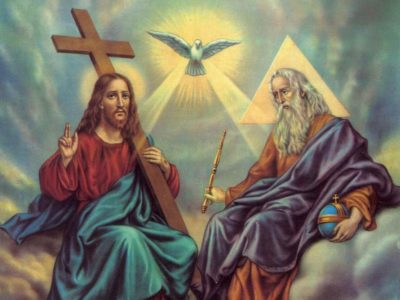
Supporting my argument is, or are, The Trinity – the Father, Son, and Holy Spirit. That’s three, not one. The claim, of course, is they are one. But I see three, and never understood the logic of this division that is not supposed to be a division. Next there is the glorification of Mary, the mother of Jesus. In visions, she has appeared to people and passed along messages from God. Indeed, people pray to her and ask that she intercedes with God. If you can tell God what to do, and God does it, well, you’re pretty much a God yourself, even if a minor one, like the Greek Muses, or Iris or Eros. Next are the 10,000 or so saints believed to have performed miracles, who are prayed to daily and who watch over and guard particular villages, peoples, and professions.
Admittedly, that’s a lot of Gods, and it seems we like lots of Gods, even while insisting there is only one. The Jews haven’t fallen into this trap, especially not the tempting one where God takes on flesh. They only go so far as a burning bush. In early Islam, there was an attempt to deify the pre-Islamic goddesses known as The Three Sisters (Al-Lat, Al-‘Uzza, and Manat). In the so-called Satanic Verses of the Koran, they were said to be daughters of Allah. But these verses were later attributed to the devil and retracted, the sisters were sent packing, and Islamic monotheism was restored.

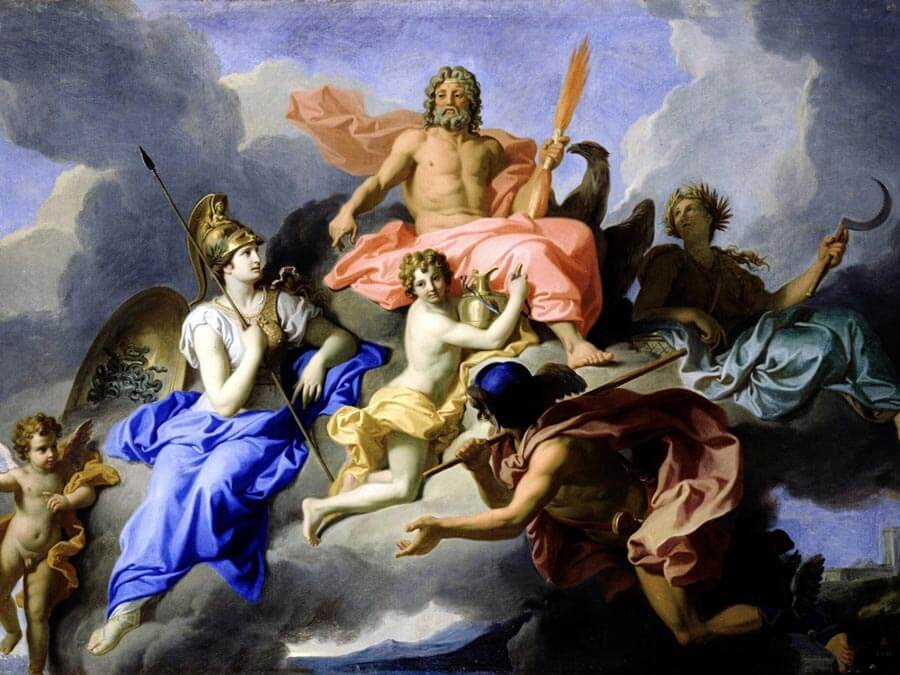
So it seems the multi-God legacy of ancient pagans, the Greeks, the Romans, and others remain firmly with us, even if we refused to admit it. While I can see the attractiveness of having a host of available entities for helping one navigate life, I accept a single creator, one powerful, governing force. I don’t want to use the terms he, him, or her, in reference to God, because I’m certain it is an entity without sex, nothing like an anthropoid, not someone we will eventually meet and gaze upon, and absolutely well beyond our elemental comprehension. We all would like to know God better, and Christians do through the human-form of Jesus Christ. In fact, they seem much more comfortable, much more absorbed with The Son than The Father, and that’s understandable. We know and understand humans but not an all-encompassing, unseen cosmic power.
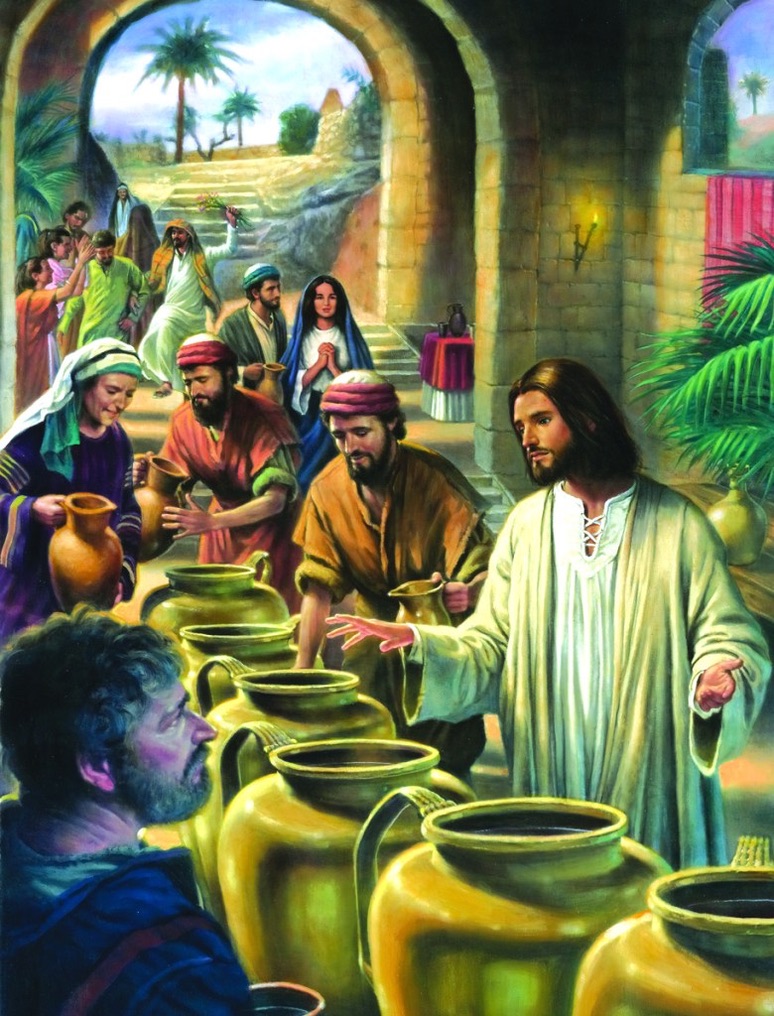
I’m different, as I have suggested. I prefer the all-encompassing cosmic power. In my view, Jesus, as his story is told through scripture, limited his God-like self while on Earth. His main mission was to forgive the sins of man, save him, and grant him eternal life. Considering the vastness of the universe, with 2 trillion galaxies, and the mind-bending, unanswered question of why we are part of it, you might think Jesus would have talked a little about this, telling us what are job is, if we are alone among the stars, whether or not he will visit other planets, and what we will do in heaven, aside from worship, which, for all eternity, could get monotonous.  If he chose not to explain such things, why wasn’t he at least asked?

As a God, Jesus could have done so much more to help us understand our purpose, our place, and our incredible surroundings.
As limited as his role on Earth may have been, the teachings of Jesus were enough to build a global religion. And whether it is monotheistic or pantheistic, it really doesn’t matter. For me, the problem with religion does not involve the number of gods, but rather the fact that the tenets and precepts are tightly packaged and handed to us by other men. Those men, for the most part, have done a good job, but I am cursed with the need to use my own brain to establish my own tenants and precept.  I’m willing to borrow, but often I can’t.

In this regard, I may share something with Galileo, the great astronomer often called the father of modern science.. He said, “I do not feel obliged to believe that the same God who has endowed us with senses, reason, and intellect has intended us to forgo their use.”

And I haven’t.

If I may impose on the reader and indulge myself, I’d like to share the results of my thinking, my so-called religion, which, I fully admit, is not dogma but sheer speculation. It’s the best I can come up with.

I don’t claim truth because my first proposition is that God is 99 percent unknowable. That is where I start. I start, basically, saying we can’t know, we don’t know, we probably were not meant to know, and we don’t have the capacity to understand. The truth, if it were revealed, would make no sense to us, like a complex mathematical equation would make no sense to a chimp. This is what I maintain.

I acknowledge the gifted prophets, who are so tied into the universe that they grasp the one percent know ability of God, and attempt to teach us. I respect scripture and its overarching message, and I believe in one God.

My second major precept is that God is perfect and acts perfectly. My God doesn’t need extra work and doesn’t do extra work. My God gets it right the first time. This is much more controversial than you might imagine. In my thinking, the perfect, unknowable God created the universe – whatever the universe is – in the exact way God wanted it, and that it does exactly what God wants it to do. So … God does not need to watch over us and intervene into our lives, nor does God need to course correct the universe. It’s like a perfect machine, doing what it is designed to do, and doing it perfectly. If you lose your car keys, or get sick, praying to God won’t help. The machine can’t hear you and won’t change for you or anyone. It’s mostly likely unattended

We can learn, grow, and become better human because of the preaching and parables of Jesus, a person in touch with God, but to think of him as God and distinct from The Father is, for me, too difficult. Jesus as God represents a kind of course correction, which I maintain is unnecessary.

I cannot envision a magnificent God creating a man, deliberately marking him with original sin, making him weak and prone to sin, then sitting back – if God can even sit – and watching to see if this creation can overcome its imperfections, as if, within God’s great universe, this was some kind of pastime or preoccupation, as if God did not know the outcome. I don’t think God would send a savior to help the poor souls he himself deliberately set on the wrong path.

God, to me, has better and bigger things to do than test or challenge the human specks inhabiting a small rock in an endless mega-verse. It is true the Greek gods enjoyed the antics and foibles of mortals, and used them as playthings, sheer entertainment. It is doubtful the real God does this. At least this is what I believe.

But let’s speak of the machine, God’s universe. How does it work?

I see two components at work: time and probability.

Time and probability, as established by God, keep the machine, without interference by its creator, on its mission, whatever that might be.

Let’s begin with probability.
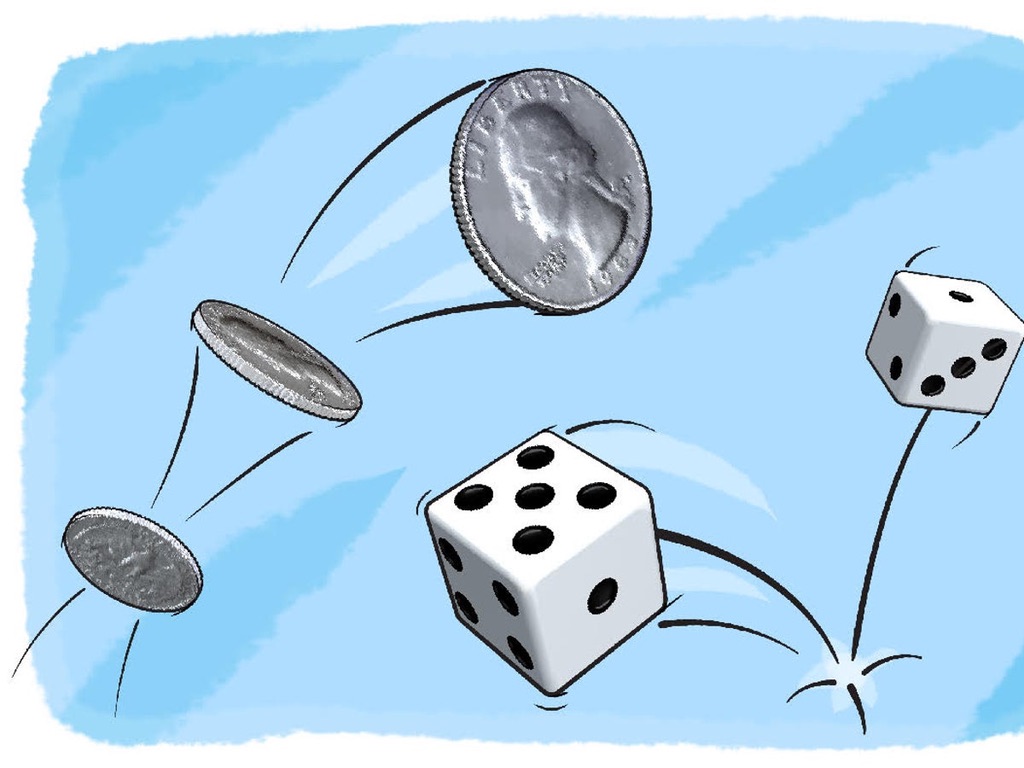
We are all familiar with probability. Consider the coin flip. If you flip a coin five times, there is a real possibility it could come up heads – or tails – all five times. But if you flip it 10,000 times, the law of probability will ensure that heads comes up about 5,000 times, as will tails, meaning the probability over many occurrences and over time is 50-50. That’s the law. Established, I propose, by God.

It’s the same with the building of the universe, its functions, and even us, the God specks.

God establishes what the end goal is, sets his probability for that goal, builds in an infinite amount of time, and lets the machine run. Maybe he wanted the dinosaurs to remain on Earth forever, and maybe he didn’t. Well, the machines put them here and probability, in the form of a massive asteroid that hit Mexico 66 million years ago, took them away. That may have been a low probability event (we don’t know), but if the existence of dinosaurs on Earth is a God goal, then over infinite time higher probability events will bring them back.

We are here now because of events whose probability we cannot be sure of, meaning we cannot be sure we are here to stay.

Probability also affects individual behavior. Probability, I propose, is mainly built into our DNA. Our DNA allows for the great majority of us to rise each morning, eat, get some kind of work done, and sleep at night – all while producing a heirs. Most of us will not commit murder. Most of us will not paint the Mona Lisa, or compose a Fifth Symphony, or figure out the speed of light. But some will. The probability exists for that. By my theory, our little world, for some reason, requires all these things, and so we have them. It needs people who are not afraid of heights so we call build towers and expansive bridge. And it needs people who ARE afraid of heights and risks so that we all won’t kill ourselves doing dangerous things. It also appears that, for some reason, at least here and there, we need both a Hitler and a Mother Teresa, and so God creates them, in the proper numbers, through the probability and miracle of DNA.

We are granted a degree of free will that allows us to decide whether or not to call in sick today or to finally clean up the back closet. But the engineer who designed the pyramids did not do so freely. Something within him forced it. God’s hand.
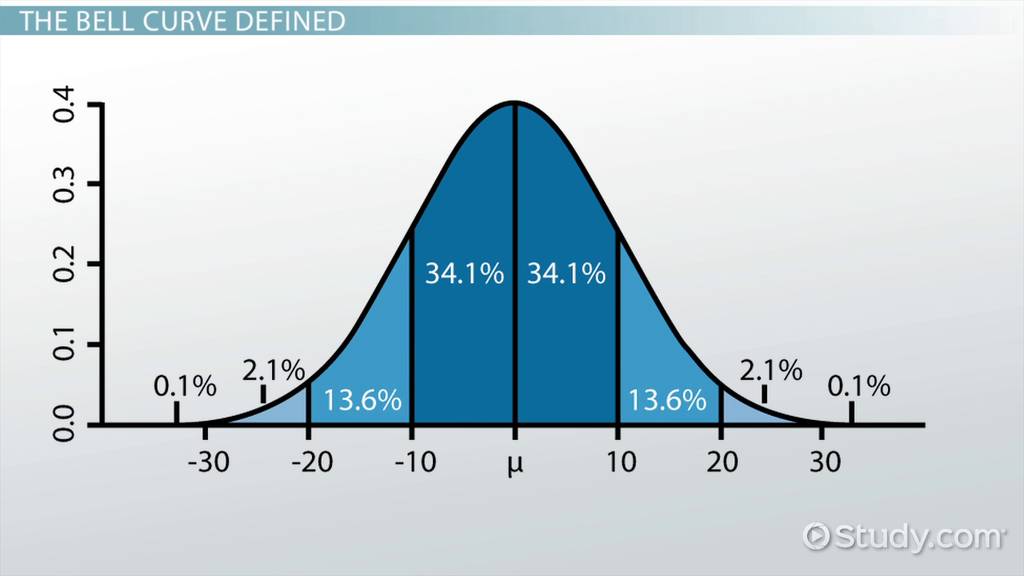
But I don’t envision a God with hands. I envision God as a bell curve. Gods is mathematical, and the universe and all humans operate like a bell curve, with lots of possibilities for common things and only a few possibilities for extreme things. A one end, where there is little room under the curve, is the horrible and disastrous. On the other end, where there is little room under the curve, is the wonderful and the exalted. As the curve rises and falls, the horrible and disastrous and the wonderful and exalted remain but decrease in occurrences. At about the middle to the curve, about 65 percent of the curve, where it is high and with room under it for most of us, are, roughly speaking, Mr. and Mrs. Normal.

And that’s how it all works. God is a bell curve, and his tools are probability and time.

I sort of faulted Jesus for not doing enough on Earth, and now – with respect – I will fault God for doing too much. God really over did it. When we look closely, we see that God incorporates tremendous complexity and beauty into everything – the big, the small, the in-between. God astounds us with our galaxy as well as the appearance of a blade of grass under a microscope. God obviously is not on a budget, has no time constraints, must be able to work quickly, cares about every aspect of the creation, never shirks or simplifies, never favors the tremendous over the nearly invisible, and provides the same rapt attention to everything. There is nothing simple about any of the aspects of the creation.

Bringing the ancient Greeks back for a moment, their logic convinced them that there was a starting point, a primal, singular component to all things. And so they invented the atom. It sounded good, and the best scientists of the modern world embraced it. Now, of course, we know there are a  multitude of sub-atom particles.

The elemental component escapes us.
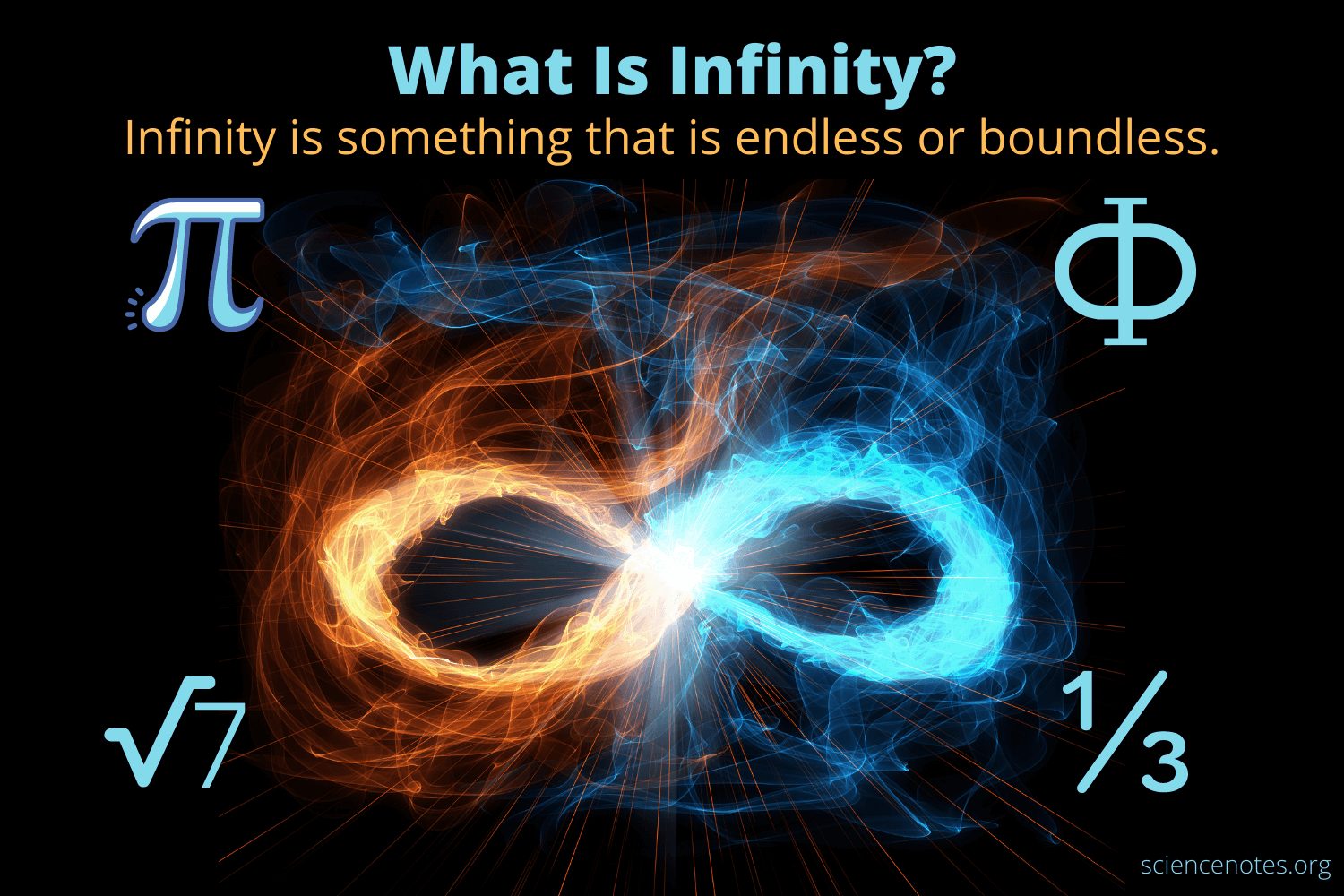
 I could never out reason a Plato or Aristotle, but I must say my reason tells me something quite different about the primal piece of existence. I don’t believe it exists. Our intellect cannot grasp my idea, but I will share it nonetheless: There is no smallest and there is no largest. Find the largest and keep searching and you will eventually find something larger. Find what you think is the smallest, keep searching and you will find smaller. There will be no end to it. Small will begat smaller, and smaller will begat even smaller – and it will do so infinitely. There will be no end to it. The same for large. There is level after level after level.

The God of creation went in one direction and never stopped. Then he went in the other direction and never stopped.  

Once you accept this idea, it follows logically that our God has a God, and that the second God has a God, and that God has a God … and so on, toward infinity, which we are incapable of understanding but seems to be the core of everything.

It reminds me of football, when there is a penalty close to the goal, you move the ball half the distance to the goal. If there is a second penalty, you again move the ball half the distance to the goal. Theoretically, under this rule, the ball would always get closer to the goal but never, ever reaches it.

Well, I’ve exhausted myself.

***

The great 17th-century philosopher, Baruch Spinoza, would disagree with all I have said about a plan, a machine, and an unknown purpose. He boldly proclaimed,“Nature has no intentions, no mercy, no plan – and calling this God is humanity’s refusal to accept insignificance.”

I accept my insignificance but still say there’s a plan. I just have no idea what it is.

Muhammad as Solomon: A better story

25 May

solomon1

Time gives and takes. It adds and subtracts. It creates things that didn’t exist and extinguishes things that did. So as a general rule I distrust history.

Take for example the story of King Solomon and the baby. Why would a respected wise man mediate a custody case by offering to executive the child? Who would recognize this as rational? And why would any woman – mother or not –agree to it?

The story doesn’t ring true. I sense something was lost in translation and time.

A better story of wisdom comes from the Muslim world. It could be an additive story, but it nevertheless makes more sense.

This is it:

The shrine at the Kaaba in Mecca existed in pre-Islamic days and even then was considered sacred. It is said to have been built by Abraham. Inside then and now is a rock that fell from heaven. Possibly a meteorite, it is considered a divine gift. A flash flood not uncommon in the Arabian desert destroyed the Kaaba in the seventh century. Leaders of Mecca’s tribes and clans work together and rebuilt it.

All went well until it came time to place the stone back in the temple. Each leader argued for the honor. When the discussion broke down and violence was threatened, someone said, “Let us then agree that the next person to come over that hill will be given the task of deciding.”

Along came young Muhammad, future prophet. Being an orphan who had been raised in poverty by Bedouins, he was of low standing among the tribes. But he was also considered neutral.

Muhammad was told the problem.

He thought about it, then secured a tarp of some sort or a large blanket. He put the stone in the middle and told each clan leader to grasp hold of an edge. Together, they carried the stone into the shrine.

True or not, this is a great story of wisdom and mediation. Perhaps more important from the standpoint of story telling, the stone foreshadows the Quran, which Muhammad used to bring divisive, violent, warring Arab tribes together.

Quran or no Quran, Bible or no Bible, prophet or no prophet, the absence of conflict doesn’t last long. Today, the Judeo-Christian world tends to think it is at war with the Muslim world. It doesn’t realize the larger war is actually within the Muslim world. As Abraham, Moses and Jesus failed to bring peace, so has Muhammad.

Human nature embraces the words of prophets then simultaneously rejects them. It has always been.

Author Leslie Hazelton

Author Leslie Hazelton

My interest in learning more about Muhammad and Islam was recently heightened by a well-written work entitled, “The First Muslim: the story of Muhammad.” Author Lesley Hazelton, a journalist and former psychologist, takes a unique and interesting approach to her narrative. Scholars might object, but the most fascinating thing about her book is the way she fills in the historic blanks with rational speculation based on a keen understanding of the human mind.

Another appealing feature is the way she has put together all the fascinating stories from Islamic history and culture, ones widely known in the Muslim world but mostly unknown to western Christians and Jews.

For the first time I learned that many Islamic rites pre-date Muhammad, including regular pilgrimages to Mecca.  I also learned that Arabs considered all scripture sacred and were respectful of all prophets. Furthermore, in a day when little was written down, Jews were honored as “the people of the book.”  Christians also had great influence, as the Byzantine Empire moved into the area.

Faith and beliefs all seemed to have melded together. That’s enviable.

Practices in Arabia had come close to the monotheism of Abraham. The idea of one powerful, all-knowing god was accepted. But in Arabia this god had secondary, sister deities that also were worshipped. Muhammad, in perhaps his most controversial move, wanted the sisters dethroned.

His truth, as revealed to him by the angel Gabriel, proclaimed that God was neither begotten nor a begetter; that there were no sister gods. In a way, this is purer than Christianity, with its trinity.

For me, the most remarkable aspect of Islam is the Quran, or Koran (Spelled accurately only in Arabic script). Let’s remember that Muhammad could neither read nor write. His revelations came at a time when memory, not books, held the history and literature of one’s culture. In fact, the literal meaning of the word “Quran” is “the recitations.”

Indeed, it was not written down in the prophet’s lifetime.

To allow memory to commit large amounts of information, it usually had to be in verse; poetic and alliterative, like a beautiful song. This is the Quran, passed onto the world by a former camel boy.

In the process of revelation, where does the human take over from the divine? How much wisdom, intellect and creativity is required of the human? How much did Muhammad have? Was it Gabriel’s truth but Muhammad’s poetry? Or did the angel do it all?

If Muhammad had a role, then he was more than a natural poet; he was a self-taught scholar with deep, strong knowledge of the Bible. It is said the Quran was meant to be a continuation or extension of the Bible; that a good portion is biblical tales or re-workings of the tales. Gabriel, of course, would know them. But how did Muhammad?

Like the carpenter’s son, he somehow overcame circumstances and acquired a wide and useful education. Maybe it was easier than we think. Without a system of schools and universities, maybe elders were required to pass along great stores of knowledge to the young. Throughout much of his life, Muhammad was an agent and mediator on long caravans up and down the Arabian peninsula. That’s a lot of time for doing nothing more than talking and absorbing. Learning.

Another interesting things about Muhammad and the Quranic revelations is they did not come all at once but over a period of more than two decades. When he needed something new, he fasted and mediated and went back up the mountain.

Sometimes he had to wait years. Other times inspiration came quickly.

It is said by some and disputed by others than on one occasion the verses he brought back were wrong and had to be recanted. It is alleged that he had been spoken to not by Gabriel but by the devil. These are the so-called Satanic Verses, which for a brief time are said to have re-legitimized the three sister gods.

After I finish with “The First Muslim,” I’m going to read a translation of the Quran. I’m certain to be surprised, and that what I read will be a departure from what I think I know or have heard.

Although purists believe Muhammad’s messages should not be read or spoken in any language other than Arabic, that seems to be changing. I received my English copy from two guys handing them out at the mall, a gift from whyislam.org.

My book was published in Istanbul and translated by Abdullah Yusuf Ali.

The name Abdullah, according to Hazelton’s book, means “servant of God.”

If we can get by the hate, the misunderstanding and the ignorance, there is much worthy to be learned about this culture.

Please listen to Ms. Hazelton speak on the Quran.

By Lanny Morgnanesi

The lucrative tunnels of Gaza

18 Feb

gaza-tunnels


For those without it, money always seems to end up in the wrong hands.

A fool and his money are soon parted because there never will be a shortage of disreputable types willing to fleece the weak and unknowing. Writer Dorothy Parker said if you want to know what God thinks of money, just look at the people he gave it to. And the Bible itself, in Matthew 19-24, plainly and poetically states that heaven is not for the rich.

But while money has caused great misery in the world, it also has the remarkable, almost magical power of solving problems. It can literally break down barriers.

In the Middle East, in Gaza, there is a wall. On one side are people who need things they can’t get. One the other side are those things.

Due to the force and power of money, the wall and all its associated political obstructions have been circumvented.

They’ve been circumvented by tunnels, which in Gaza can make millions for their owners.

These outlaw entrepreneurs find the means to acquire the wood, concrete and excavation equipment needed to create 700-meter corridors of commerce. Some might even dig a tunnel by hand, even though it could be destroyed by Israeli bombs.

These tunnels are in the town of Rafah, which is split down the middle. Egypt controls one side; Israel the other. According to Bloomberg Businessweek, Gaza has 1.6 million people, with 40 percent living below the United Nations poverty line. Unemployment is at 31 percent.

Yet the tunnels can cause the economy to boom. Businessweek says that the tunnel system employs almost 15,000 and carries 75 percent of the good sold in the area.

One successful tunnel owner, Emad Shaaer, has family members on both side of the barrier, which greatly facilitates his business. Payment for his services vary. “Sometimes you got $200,000, and sometimes you got nothing,” he said.

Tunnel construction can cost about $200,000, but you only need $50,000 to get started. You don’t have to pay the labors and tunnel experts until the flow of goods starts.

Things became really good for the smugglers in 2007 when Hamas took control of Gaza from the Palestinian Authority. To punish Hamas and Gaza residents for taking a more radical stance, Israel closed the borders even tighter. If anything can make a smuggler rich it’s a tight border. But as success and profits grew, they attracted attention.

When Hamas realized how much money the tunnel owners were making, it began to tax the operations, raising an estimated $188 million annually. (Hamas denies this.) The local Gaza government also regulates the good that can be transported, outlawing all the things that make the most money. (Further outlawing what is already outlawed.)

Even so, it is doubtful the tunnels will go away. Taxes and regulations can be skirted. Or, maybe there is enough for both the tunnel owners and Hamas.

The only thing that can truly destroy the tunnel system is peace, a highly unlikely prospect. Still, it is possible that the day may come when there will be enough profit in peace that the power and force of money will have succeeded in making us civil.

In such a case, I would argue that the time has finally arrived to allow the rich into heaven.

By Lanny Morgnanesi


Secrets of the Universe Revealed – Or Not?

29 Aug

A pause in the conversation led the old man to look up at the cloud formation and think about his future, which is death.

“I wonder if you learn everything,” he said. “How it all came to be; its meaning and purpose. It can’t be like that Big Bang crap. How could it all have gotten down into an infinitesimal speck, and how did it explode, instead of being sucked into itself like a black hole? And if there was nothing outside of it, how did it have a place to go?”

Death would be sweet if it meant getting all the answers. Without a body you couldn’t do much, but if you knew everything you’d feel pretty good about yourself. It would be like learning how the magician did the trick, only a trillion times better.

My intention was not to depress the old man, but I told him my theory of the moment.

“I doubt we get to know,” I said. “Our opinion of ourselves is exaggerated. Considering all that exists, I’d say we lack importance. I’m sensing we are the equivalent of a low-level employee who gets no time or attention from the boss.”

Top management, to whom the secrets might be disclosed, probably occupies another planet or dimension, is not prone to war and genocide and generally makes things easier for the CEO rather than more difficult.

While the Bible tells how Jesus came to save us, there also are passages like this one in Isaiah:

All the nations before him are as nothing; and they are counted to him less than nothing, and vanity.

In a wonderfully written New York Times column (The Man in the Moon) Lydia Netzer says:

When humanity was in its infancy, we thought the universe revolved around us. Then, with Copernicus, we aged into heliocentrism, became aware we were one of a family of planets inside the walls of our house, the solar system. Nearby stars gather like a town, rotating through the galaxy, our country. Clusters are like continents. We realized in stages that we were very insignificant. And then, almost like grown-ups, we pulled our boots on and began to try to leave a significant mark anyway.

Sitting in a car seat next to the old man, I couldn’t accept that in a few years he would know it all. It’s too grand a gift. In the military, personnel are told things on a “need to know” basis. As humans, do we really need to know?

Once we have performed on Earth, it’s likely we will be whisked away like a bad vaudeville act. There’s plenty more in the wings.

But all is not lost.

“In a way, we are immortal,” I said. “Since matter is neither created nor destroyed, every atom that is you remains as part of the creation. After you die, your atoms eventually scatter. They say we could easily have been part of someone like Socrates or Newton. Can you image that? On the other end, you may help create the next Newton. But you won’t be conscious of it.”

“If what you say is true, I’ll make the next Newton but never know an ounce of what he will know,” he said.

“Look, this is only what I’m thinking today,” I said. “Tomorrow, when the clouds are different and I read a different Bible passage and cut and paste from a different New York Times column, I’ll have another opinion for you.”

“So maybe I will get to know everything.”

“Maybe you will.”

And then he went off to play cards with some ladies who had outlived their husbands and only worry about getting from one place to another without it causing too much pain.

— Lanny Morgnanesi

The 16th Century’s version of the Colbert Report

27 Jan

“A prince never lacks legitimate reasons to break his promise.”
Niccolo Machiavelli


I’ve made a lot of assumptions in my life, like thinking a rich man can get into heaven. Then I do something as simple as reading the Bible and learn he can’t.

Another assumption of mine was that Niccolo Machiavelli, author of “The Prince,” was a heartless cutthroat who would do anything to get ahead. “The ends justify the means” is how high school teachers summarize the book’s message. I recently read it (way too late) and don’t think that’s in there. To me, Machiavelli is a man whose spirit is wounded and disappointed by humanity’s inability to be human.

He recommends extreme harshness as a way to attain and keep power, but this comes across as a combination of satire and sarcasm. Machiavelli was the Colbert Report of his day, but no one seems to have gotten the joke.

At the end of “The Prince” the writing turns true and the author sadly pleads, begs even, for a savior who can unite and free Italy from foreign rule. Tears practically drip off the page.

I would love to hear from one other person who sees this great man as I. Without some small affirmation I’ll have to assume I am wrong.

What keeps a dictator in power?

13 Jan

“Mercy and truth preserve the prince.”

— Biblical proverb

Providers of order, not freedom

The Bible promises good things, mainly that the wicked will fall and the righteous will stand. It says the first shall be last and the last shall be first – but it doesn’t say when.

Prophecy, it seems, requires patience.


Please read on, then let me know the fallacy of my musings.

The Arab world and the Arab Spring are clear examples of a great shift in a once-passive acceptance of dictatorial princes. A change of will turned passivism into activism, which the princes could not withstand. Few things are more powerful than these kinds of mass movements.


Even so, less-demonstrative methods also can effect change.

A wide-spread lack of confidence in a leader, one it is exhibited, can be enough to challenge a regime. Roman emperors would go to great lengths and expense to keep public opinion on their side. They supplied free bread to all citizens, as well as entertainment (the famous “bread and circuses”) and built public works to garner love, respect and reputation.

Without strong citizen support, emperors, dictators and princes risk having an ambitious second-in-command engineer a coup or even assassination.

Of course, there is no guarantee the new regime will do better in the Mercy and truth department, but there usually is an attempt at some improvement.

The strength and permanence of a dictator often lies in his or her ability to maintain order. In so many countries, order is more desirable than freedom. I was once asked by a citizen of a totalitarian country, “Does you wife have the freedom to walk safely and unthreatened down a city street, alone, at 3 a.m.? Mine does.”

Excellent point.

It is said that during the panic of the Depression, America was willing to accept, and even longed for, the use of dictatorial powers by the chief executive. They wanted a return to order. Fortunately, FDR refused. Americans like order but appreciate freedom much more.

Perhaps one day the Bible proverb with become prophecy and no prince will rule without Mercy and Truth. Until then, Arab Spring or not, the world will most likely have many more dictators than it needs.

Your thoughts, please.