Tag Archives: Atlantic City

Giving Up Gambling

30 Apr

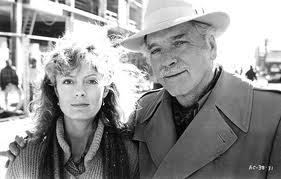
Burt Lancaster, playing an aging numbers runner.

By Lanny Morgnanesi

Years ago, before legal lotteries, small-timers from organized crime would visit neighborhoods. If you wanted to play a number, you gave them money. If the number hit, they would pay off.

When I was a very small boy, I remember my uncle getting a big new car and giving our family his old car. I asked my father why this happened and he said, “Your uncle hit the number.”

If you want to revisit the fading days of this type of gambling, watch the 1980 movie, “Atlantic City,” with Burt Lancaster and Susan Sarandon. It shows you how it worked, and how it could no longer work.

The illegal numbers system went into decline when governments decided they wanted in on the action. They saw big money in gambling; a way to raise revenue while holding down taxes. Single lotteries were approved and later expanded into multiple games and drawings.

Since then, the world apparently has gone upside down.

Governments now want out of lotteries, seeing them as an unnecessary expense. An April 29th story by Matt Katz of the Philadelphia Inquirer explains the new trend.

Governments are looking to save money in employee salaries. The lottery system in New Jersey, where privatization is being considered, employs 150, with seven people making more than $100,000. Plus, there are benefits and those very expensive pensions that are breaking the states.

There would be a short-term gain when a company (or companies) is awarded the contract. Long-term gain would come from taxing the profits of the privateers.

The Inquirer also points out the companies running lotteries for states make significant political contributions to those who gave them the contracts – a factor, no doubt, in any decision.

Still, I’m flummoxed by the economics of it all. It doesn’t work for me. I just can’t believe there is more money in not running a lottery than in running a lottery.

Organized crime never tried to get out of gambling.

Let’s not forget the possibility that privateers could rig the system. That, I think, is more likely than not. Whatever is done, is there any guarantee people will like it better? Maybe those Burt Lancaster-type guys will respond to public dissatisfaction and creep back into the neighborhoods.

Then what will government do?

New cops, after all, mean new pensions.

Best to leave things as is.

Where $350 gets you $19,000 — and it ain’t Wall Street

16 Mar

Image

He was short, wore a hoodie and was happy. A student at Penn, he had come in second at a World Series of Poker Tournament in Atlantic City this past week. His investment was about $350. After beating all but one of the 268 contestants, his prize was a little more than $12,000.

He was fun to watch because he smiled all the time.

The winner, a young man from Ohio, never smiled. He seemed sour and unhappy. For his efforts he received a little more than $19,000 and a huge gold ring.

Unlike most professional sports, poker is free to watch. The competition is keen and intense. Spectators can learn, and they can walk into the next room, sit at a table and apply what they’ve learned. You can’t do that at a hockey match.

The final table I watched represented a fairly low level of play. Play level rises when you pay more to get into the game. The winner of the main event, the top level, took home a ring and $191,194. I believe it cost about $1,500 to get into that game.

Some observations:

  • Watching poker in person is much better than watching it on TV, where there is selective editing, you can’t see all that is happening, and you don’t get a full grasp of the dynamics. Unlike TV, you can’t see the hole cards, so you don’t know what a person had when he folds after several raises. But that adds to the mystique.
  • I said when “he” folds. The sport is mostly male. Young and male. Mostly white, young and male, although the Asian presence is notable. At the table where I watched, however, a black guy was the chip leader most of the time.
  • Endurance is critical. There are breaks, but the tournament lasts three days. While you play, you can drink booze or coffee or orange juice or Red Bull. Whatever works. But if you don’t stay sharp, you lose. The chip leader I spoke of got tired, made bad plays in the last couple of hours and was knocked out (although he still won prize money). The Penn kid was alert and rallied back from a short stack.

The poker culture is interesting to follow; the language, the different ways to wear hoodies (almost a uniform), the ways to play with your chips, the various attitudes and poses. At Caesar’s, where the competition was held, a few players hired women to massage their backs while they played.

I’m convinced many life lessons can be learned in a poker match. I’m half tempted to start practicing and invest $350 the next time the WSOP comes around. It seems like a small price to pay for the experience.

Are there any tournament players who can share some of their thoughts here?