Who is apt to throw a bomb?

16 Sep


“Real anarchists don’t throw bombs,” the political science professor said while lecturing a class at a Lancaster County (Pa.) college. “There’s a large group of them living on farms not far from here. They’ve never thrown a bomb. Do you know who they are?”

The class didn’t.

“They’re the Amish.”

The professor went on to explain about organized groups who prefer to live without government.

It was an interesting exercise, separating violence and radicalism from a term that normally suggests only terror.

I thought about this lecture, given during a time of great unrest in the U.S., after reading a piece by Carlin Romano in the Chronicle of Higher Education. (I’d link to it but you have to subscribe.) Romano, a former journalist at the Philadelphia Inquirer, teaches philosophy at Ursinus College. He called his piece, “Getting to the Root of ‘Radical’ ”

In part, he takes a look at some of the clever definitions historic figures have given to political labels.

Here’s FDR:

“A Radical is a man with both feet planted — in the air. A Conservative is a man with two perfectly good legs who, however, has never learned to walk forward. A Reactionary is a somnambulist walking backwards. A Liberal is a man who uses his legs and his hands at the behest  — at the command  — of his head.”

And Woodrow Wilson:

“By ‘radical,’ I understand one who goes too far; by ‘conservative,’ one who does not go far enough; by ‘reactionary,’ one who won’t go at all.”

Poet Robert Frost, according to Romano, said:

“I never dared be radical when young for fear it would make me conservative when old.”

Pretty good.

OK. So how should we categorize the thousand who have taken to the streets of Middle Eastern cities in anti-Western protests?

How about young, unemployed, angry, outraged, frustrated? I’m not sure there is any real politics involved. The non-political radical may be the most dangerous of all. Unlike the Amish, they will throw bombs.

– Lanny Morgnanesi


God and Man on a Visit To Russia

8 Sep

I like to think of Jesus as a man so I can marvel at his God-like brilliance and ability to see and express truth.

If you think of him as God, then his acts and works would not necessarily be worthy of attention. Pavarotti, after all, received no praise for humming a pop tune, nor Einstein for giving correct change to the paperboy.

A god can easily transform water to wine; it is much more difficult for a man.

For me, one of Jesus’ greatest moments was when he was approached by spies trying to trick him into sedition. They coyly ask if it was acceptable to pay tribute to Caesar. Jesus, quick on his feet, asked them to produce a coin, which carried Caesar’s image.

Then came the unforgettable, genius response: “Render to Caesar the things that are Caesar’s, and to God the things that are God’s.”

In my last post I mentioned a rabbi named Joseph Krauskopf and his visit to Tolstoy in 1894. Today I’d like to discuss Krauskopf and his response when Tolstoy asked him about Jesus.

The intelligence and poetry of the answer brought to mind the “render” response.

In Russia at that time, Jews knew little of Jesus and those familiar with him cared not much for him. But Krauskopf struck Tolstoy as a different breed. The American rabbi from Philadelphia was an early member of the reformed movement and, among other things, advocated moving the Jewish Sabbath to Sunday as a way to bring Christians and Jews together.  He believed that all religions – including his own — contained good and bad, and that the good should be practiced and the bad eradicated.

Some Jews, I’m sure, refused to consider Krauskopf a Jew.

“What is your belief respecting Jesus?” Tolstoy asked.

Krauskopf told the writer, “I regard the Rabbi of Nazareth as one of the greatest of Israel’s teachers and leaders and reformers, not as a divine being who lived and taught humanly but as a human being who lived and taught divinely.

Can we safely say that he who lives divinely is divine?

Sometimes we allow words and their interpretation to muddle or even destroy something that in its raw form and on its own is simply and clearly exceptional.

I would love to hear from others, Christians and Jews, on Krauskopf’s statement about Jesus.

Tolstoy, who wrote of aristocracy, had much in common with the Occupy movement

5 Sep

My work recently brought me to the writings of a reformed rabbi named Dr. Joseph Krauskopf. He lived around the turn of the 20th century. While not well-known today, he was friends with presidents and world leaders during his day.

In today’s light it is easy to categorize him as a visionary and possibly a radical. What may be truer is that free thinking and free speech flourished more then than now, and that others at the time were expressing similar ideas – equality and dignity for all, women’s rights, the end of poverty, a government hand in the inspection of food and housing, world peace.

In 1894 Krauskopf traveled to Russia and met with Count Leo Tolstoy, known now as a great novelist; known then as an incredibly influential, larger-than-life, cultish leader of humanists. Krauskopf, in utter awe of the man, recorded every facet of the meeting. The account is fascinating and revealing. In one exchange, the Russian asks the rabbi if he had read “What to Do,” a work of non-fiction by Tolstoy calling for the liberation of the oppressed.

Krauskopf had not, but said he did read “War and Peace” and “Anna Karenina.”

Tolstoy, according to Krauskopf, described those books as trash and said he would prefer if the world instead read his “serious writings.”

But what I really want to report here is Tolstoy’s timeless description of the United States and its faults.

“You call yourselves a republic; you are worse than an autocracy. I say worse because you are ruled by gold, and gold is more conscienceless, and therefore more tyrannical, than any human tyrant. Your intentions are good; your execution is lamentable. Were yours the free and representative government you pretend to have, you would not allow it to be controlled by the money powers and their hirelings, the bosses and machines, as you do.”

I wish someone would read this from the podium at the Democratic National Convention, or from any podium for that matter.

What are your thoughts?

— Lanny Morgnanesi

Secrets of the Universe Revealed – Or Not?

29 Aug

A pause in the conversation led the old man to look up at the cloud formation and think about his future, which is death.

“I wonder if you learn everything,” he said. “How it all came to be; its meaning and purpose. It can’t be like that Big Bang crap. How could it all have gotten down into an infinitesimal speck, and how did it explode, instead of being sucked into itself like a black hole? And if there was nothing outside of it, how did it have a place to go?”

Death would be sweet if it meant getting all the answers. Without a body you couldn’t do much, but if you knew everything you’d feel pretty good about yourself. It would be like learning how the magician did the trick, only a trillion times better.

My intention was not to depress the old man, but I told him my theory of the moment.

“I doubt we get to know,” I said. “Our opinion of ourselves is exaggerated. Considering all that exists, I’d say we lack importance. I’m sensing we are the equivalent of a low-level employee who gets no time or attention from the boss.”

Top management, to whom the secrets might be disclosed, probably occupies another planet or dimension, is not prone to war and genocide and generally makes things easier for the CEO rather than more difficult.

While the Bible tells how Jesus came to save us, there also are passages like this one in Isaiah:

All the nations before him are as nothing; and they are counted to him less than nothing, and vanity.

In a wonderfully written New York Times column (The Man in the Moon) Lydia Netzer says:

When humanity was in its infancy, we thought the universe revolved around us. Then, with Copernicus, we aged into heliocentrism, became aware we were one of a family of planets inside the walls of our house, the solar system. Nearby stars gather like a town, rotating through the galaxy, our country. Clusters are like continents. We realized in stages that we were very insignificant. And then, almost like grown-ups, we pulled our boots on and began to try to leave a significant mark anyway.

Sitting in a car seat next to the old man, I couldn’t accept that in a few years he would know it all. It’s too grand a gift. In the military, personnel are told things on a “need to know” basis. As humans, do we really need to know?

Once we have performed on Earth, it’s likely we will be whisked away like a bad vaudeville act. There’s plenty more in the wings.

But all is not lost.

“In a way, we are immortal,” I said. “Since matter is neither created nor destroyed, every atom that is you remains as part of the creation. After you die, your atoms eventually scatter. They say we could easily have been part of someone like Socrates or Newton. Can you image that? On the other end, you may help create the next Newton. But you won’t be conscious of it.”

“If what you say is true, I’ll make the next Newton but never know an ounce of what he will know,” he said.

“Look, this is only what I’m thinking today,” I said. “Tomorrow, when the clouds are different and I read a different Bible passage and cut and paste from a different New York Times column, I’ll have another opinion for you.”

“So maybe I will get to know everything.”

“Maybe you will.”

And then he went off to play cards with some ladies who had outlived their husbands and only worry about getting from one place to another without it causing too much pain.

— Lanny Morgnanesi

As its old enemy grows weak and it grows strong, China hasn’t forgotten World War II

23 Aug

Almost 11 years have passed and the war in Afghanistan is still a war. It has helped drain the treasury of a nation that doesn’t want to pay taxes.

An even bigger threat to that treasury and to global peace is occurring thousands of miles away in the Pacific. Its roots are deep, dating at least to 1937, when Japan invaded China.

The Chinese of today look at Americans and wonder how we can be friends with the Germans and the Japanese. We’ve forgotten World War II. They haven’t. Their country was occupied. Ours was not.

The hate never dissipated.

Around 1985, Chinese consumers were getting their first chances to buy televisions. Many were imported from Japan. Many didn’t work right. True or not, the perception was that Japan was dumping its faulty products on China. As the TVs failed, anger rose, then raged. Demonstrations were held to criticize the government for allowing this to happen and for being a party to this loss of face.

The protests continue.

E-mail has been circulating all over China calling for the boycott of Japanese products. One complaint in the e-mail is that the bosses of Japanese companies in China treat their Chinese employees like dogs. Beneath that remains the revulsion of doing business with a nation that murdered millions of Chinese and committed vicious, wide-scale atrocities that included massive gang rapes and burying people alive.

Americans don’t realize it, but almost 90 percent of Japan’s fighting forces in World War II were in China, not the islands we fought over.

While powerful back then, the Japanese of today are struggling to recover from a lengthy economic malaise.  As they do, they watch China grow wealthy and strong. Out of frustration, a bunch of them jumped in boats last weekend and landed on an Island that China claims. They planted Japanese flags.

This lit a fuse back in China, and several thousand took to the streets in protest.

All very interesting, and right now harmless. If, however, these skirmishes escalates and Vietnam, the Philippines, Indonesia and Taiwan also feel threatened, the U.S. could be lured in.

Anticipating the future, our presence in the Pacific already has grown. If the events of last week continue, it is likely to grow further.

Will there be a dialogue or will it just happen? In such a case, Americans will have to ask themselves: Is this our role, and are we willing to pay for it?


I think debate is needed now, while it is only pleasure craft and civilians taking over disputed islands, while decisions on budgets and taxes are still pending, and while national lunacy is still treatable.

This one could make Afghanistan look like a street fight.

Lanny Morgnanesi

Genetic Memory: Is there a way to know what my great-great-great grandfather was thinking?

22 Aug

I’m hungry. Always hungry. And I eat fast.

I sometimes think my ancestors must have been starving peasants and that I inherited their hunger. Now it seems there is growing evidence such a thing could be true.

It’s called genetic memory. The theory is that a person can actually receive the memory of past generations in his or her genetic code.

Doreen Carvajals wrote on the subject recently in the science section of the New York Times. She was raised Catholic but learned that centuries ago her family was Jewish, living in Spain and forced to convert during the Inquisition. She seeks to find the facts to all this in her own DNA.

A journalist and author, Carvajals discusses some of the research on the theory and even mentions a video game – Assassin’s Creed  — that employs the concept.

Her piece mentions Dr. Darold A. Treffert, a psychiatrist with a list of 300 people who, after head injury or dementia, became musicians, artists and mathematicians. His belief is they taped into genetic memory to learn these skills. He calls it “factory-installed software.”

The animal world shows great evidence of this. How, for example, does a tiger raised by humans develop all the traits of a tiger? Animal behavior always stick with the animal, whether or not there is learning and instruction. We used to simply call that “instinct.” But what is “instinct?”

Maybe it’s genetic memory.

Maybe we’ve all got it, in a mostly unconscious form. It’s there for our survival and keeps us alive by telling us to avoid this danger and embrace that solution. Genetic memory seems like a wise thing to include when building life forms. Why make each generation of a species learn something over and over again?

Once is enough.

For too many people, it is easy to imagine that in a former life they were queens of Egypt or heads of European dynasties.  Genetic memory, if it exists, probably is much more subtle, almost imperceptible. It must work like background noise.

Like the noise in my stomach?

Probably not.

My sister is a disturbingly slow eater who is not really drawn to food, yet she has the same ancestors as I. When placed under mild scrutiny, the theory of my hunger and rapid eating habits is just an excuse for unenviable behavior. More plausible is that some kind of chemistry drives it.

Still, I would like to know if anyone reading has had an experience with genetic memory. The more restrained the better. Bold tales are hard to believe. More worthwhile is a recollection of some unexplained conduct that surfaced from nowhere but proved worthy if not prescient.

I look forward to hearing from such a person.

Now if you’ll excuse me I’m going for a sandwich.

The day Elvis died — my story

18 Aug


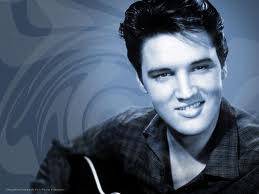
Elvis Presley died 35 years ago on Aug. 16, 1977. It’s a day I’ll never forget.

I’d like to tell the story of that day. It involved a nearly naked lady who said she knew Elvis and pleaded with me to help her.

I rose early that morning, my first as a reporter for a suburban Philadelphia newspaper. As I shaved, I listened to the radio.  A contemporary rock station was playing an old Elvis song, which was odd, since he was pretty much a forgotten relic by then. Then there was another Presley tune, and another.

Within moments I learned from the DJ that the King had died. I thought that sad, since he had been so great and influenced so many, but I moved on. Bigger things awaited me. I was a journalist now.

No sooner had I settle into my desk than the phone rang. Pretty cool, I thought. Someone knows I’m here.

“Are you a reporter?” a woman on the line asked.

Not a good first call. From that one sentence I could tell she was drunk and high.

“Yes, I’m a reporter,” I said. “How can I help you?”

She threw a bunch of nonsense at me then said, “Please make them stop. I don’t want any of their money. I don’t want anything. Please make them stop and leave me alone.”

She sounded truly upset.

“Don’t want any of whose money?” I asked.

“Elvis’. I don’t want anything. Can you tell them that?

I was on the verge of hanging up.

“Tell who?” I asked.

“I don’t know. His lawyers. They keep threatening me,” she said.

This was all quite ridiculous but I kept talking because I had nothing else to do that morning and maybe there was a local angle to Elvis’ death. That would play well in the next day’s paper.

“Why would they threaten you?”

“They think I’m coming after their money because I had Elvis’ child. But I’m not. I don’t want the money.”

That busted the wacko meter.

“Look,” I said. “I have to go.”

She raised the level of her lethargic monotone.

“No, don’t go. You’re the only one who can help. Come visit me and I’ll tell you the whole story.”

There was more pleading, and I took her address. I told my boss what I was doing and where I was going. He laughed and looked at me with a combination of pity and loathing.

The woman’s working-class neighborhood was only a few minutes away. It had small houses but everything was neat and well-kept. Then I came upon a lawn that hadn’t been mowed for months. There were two cars up on blocks and several of the home’s shutters were hanging off the windows.

Unsurprisingly, this was the home of my caller.

I knocked on the door.

The woman who opened it looked like a zombie, with vacant eyes and blotchy skin and messy long hair. Her body, however, was magnificent. I knew that because I could see it.  All of it. She was wearing a nightgown as sheer as cellophane.

“Come in,” she said.

The immediate question to myself was: Do I stay or go?

My racing mind told me there was trouble ahead but also that this probably would never happen again for as long as I lived.

I would stay.

She pulled me in, sat me down, encircled me with vine-like arms and began kissing me with her putrid mouth.

After some difficulty, I pulled her off.

“I came here for a story,” I said, knowing there most definitely was not one. “Let’s hear your story.”

“Would you like a drink?” she said.

It was 10 a.m.

“No. Just tell me your story. Tell me about Elvis.”

And she proceeded to tell about where and how they met; the liking he took to her; how he came onto her strongly and how she yielded simply because he was Elvis.

“Do you have photos of you and him together?”

“Not really,” she said, walking over to a cabinet. “Just these, from about that time.”

They were photos of her, younger and very beautiful. She looked just like Priscilla.

“What happened since then?” I asked.

“This,” she said, turning the back of her neck to me and pulling up her hair to reveal a large surgical X. “I had an accident and an operation.”

I should have pursued this but didn’t.

“So you say you had a son with Elvis. Do you have his picture?

She did, a number of them.

In each and every one he looked just like a teen Elvis. Remarkable. It was starting to seem as if there might be some truth to all this.

As we continued to speak about the threatening calls, an uncomfortable noise came from the bedroom.

We were not alone.

Then he emerged. Zombie Number 2.

Beer can in hand, having probably digested a few Quaaludes (very popular at the time), a boy who could have been 18 or 15 shuffled out slowly like Frankenstein’s monster. His face was swollen, marked and bruised.

He never lifted his feet; he just slid them along. He looked straight ahead and not off to the side at us. But when he reached the spot where we were, he paused and ratcheted his head toward me.

“Are you the reporter?” he asked.

“Yes,” I answered.

“Well . . . I just want you to know  . . . that I’m not f—- her.”

Then he screamed and nearly cried, “But her old man thought I was and he beat the shit out of my face with a flashlight.”

Silence took over the room.

Then the boy said to me quietly, “You know . . . there’s something going on here.”

“Yes, I know,” I said.

Then, with utter contempt and a snarl he said, “You don’t know.”

Silence again.

It was broken by a knock on the door. I had been on an edgy alert the whole time but this sent me into an adrenaline-laced panic. My assumption was the woman’s husband had returned, armed this time with more than a flashlight.

I packed up my notepad and chose the window out of which I would jump.

The knocking continued. It was ignored by both boy and woman, as if it wasn’t there.

Finally, the door opened and a weak female voice was heard.

“Jimmy? Jimmy? Are you there?”

Jimmy’s mother stepped into the house. She was as frightened as I.

“Jimmy, it’s time to go. We are going now. Let’s go.”

He stayed put but she grabbed his arm and tugged and tugged and got him out the door.

I was right behind.

Back in the newsroom, I set my stuff down and planned to tell the story to my editor. Before I could, the phone rang.

“Is this Lanny, the reporter?”

“Yes,” surprised that my name was known.

“You don’t know me,” the male voice said. “I’ll admit this is kind of a strange call, but you may be the only person who can help me.”

Two in one day!

“How?” I asked.

“Listen, I’m not crazy or weird. I’m an actor in New York who is just trying to make a living. Things were going OK then all of a sudden there is this talk up here about me being Elvis’ son. Do you know anything about that?”

The weird had become bizarre.

“I might. But not much.”

Pause . . .

“Do you know my mother?” he asked.

“I think I just left her house.”

“What did she look like?”

I figured I would lie, but for some reason quickly changed my mind and asked, “Do you really want to know?”

“Yes,” he said.

So I told him, and not gently.

“Well, she was very high and she was very drunk.”

“That’s my mother,” he said.

We spoke a little longer and I took his number. I said I would call if I learned anything new.

At that point I stopped reporting and dropped the whole story. I was curious, but this wasn’t journalism. I had real work to do. I went over and told the tale to my editor, who gathered a crowd and made me tell it again. I must have told it five or six times that day, and many times after.

Of course, I never wrote a word of it for the paper, and the mystery of what really happened was never solved. I did call the police and told them what I had witnessed. They told me they knew about her. That’s how it was in those days. People knew, but not much was done.

About a week later I was leaving the newsroom to go out on a story. Normally I would leave by the rear entrance, but this day I went out the front, near the reception area. As I did, a visitor called my name.

“Lanny. Is that you?”

She was wearing clothes this time and was completely sober.

I was assaulted again by those vine-like arms and she tried to kiss me. I pulled away.

“You are gay. Aren’t you?” she said.

When I returned from my story I asked the person at the reception desk, “What was that woman doing here?”

“She placed a classified ad.”

“Can I see it?”

“Sure.”

It read:

“To the lawyers, representatives and family of Elvis Presley. I make no claims whatsoever to the estate of the deceased performer.”

***

EPILOGUE

Everything written here is true and exactly as it occurred. Had I intended this to be a fabrication I would have devised a better ending. The only untruth is the lie that this was my first day on the job. Actually, I had been a reporter for two years and possessed a master’s in journalism. I should have known better than to waste time on that crank call.

But had I acted wiser and more professionally, I would not have had this story to tell.

On the 35 anniversary of his death, may he rest in peace, Elvis Aaron Presley, and may all his children, however many there are, find happiness and success.

— Lanny Morgnanesi

The Republican Brand — efficiency

4 Aug

Everyone today is supposed to have a Brand.

            It used to be that a Brand was a product name, like Kraft or Kellogg’s. Now a Brand is a perceived promise, like Volvo means safety or John Deere means long-lasting durability.

Branding has gone beyond the corporate world. Colleges are supposed to have Brands. So are people, especially young job seekers, who are told by recruiters to establish personal brands.

Political parties talk behind the scenes about their Brand. The informal Brand of the Republican Party is that it is the party for the rich. This Brand works not only on the rich, but also on those who dream of being rich.

Very effective.

In reality, both parties have worked hard over the past four decades to dismantle the middle class. So for me, the real Brand of the Republican Party is not so much about the rich but about efficiency.

I learned this as a reporter covering the presidential nominating conventions in 1980. The Democratic confab in New York was utter chaos. Idealistic, but a bureaucratic nightmare of sloppiness. The Republican meeting in Detroit, however, was organized, smooth and run better than Disney World.

The differences were striking and, I think, reflective of each party’s national character.

This came back to mind last week when I read two news items. One involved the Philadelphia Housing Authority, the other Amtrak. The article on the housing authority was about cutbacks in staff vehicles and how at one time 200 authority employees were given free cars to use as they pleased. The piece on Amtrak, the quasi-governmental agency that runs the nation’s passenger railroad, said that over the past 10 years food and beverage concessions on trains lost $800 million.

Republicans, I’m sure, have been involved to some degree in both the housing authority and Amtrak. But both agencies really represent Democratic operations. Had Republicans been totally in charge, I doubt those news stories would have been necessary.

For starters, we all know Republicans don’t need free cars. Mitt Romney, for example, has so many vehicles he plans to install an elevator in the garage at one of his homes. Big savings there. With Amtrak, the Republicans would have given the food business to a private firm that contributed heavily to the party, and the government would have saved $800 million.

These are just two small examples of how the GOP could save the country money. There must be thousands more. If the Republicans could solidify power and close these gaps without giving away the proceeds in sweetheart deals to special interests (far too likely), we might be able to balance the budget without further damage to the middle class.

The party could then adopt the branding tagline that AT&T has been using at the Olympics: Rethink Possible.

Imagine America with a Queen

29 Jul

I don’t think too many Britons say nasty things about their Queen.

They don’t object to her politics because she really doesn’t have any. They may get mad at all the money – their money – she spends on palaces and servants, but they get over that.

What she represents is them, the collective whole, and they seem to appreciate it, rally round it, and draw strength from it.

A keen memory of mine is from a dinner toast at a British embassy. It consisted of two words that meant 10,000. It was simple and so reverent:

“The Queen.”

The leader and figurehead of the United States, by contrast, is called names and blamed for all kinds of bad things. His motives are questioned, as if he refuses out of spite to use clear and easy solution to big and complicated problems. It is frequently suggested that he is out to destroy America — on purpose.

Not so with a queen.

I was never much for monarchy. In fact, a favorite movie line of mine comes from Monty Python after, I think, a noble personage advises a lowly peasant, “I’m your king,” and gets the answer, “Well I didn’t vote for you.”

But seeing Queen Elizabeth at the Olympics, sitting there as an honored representation of all Great Britain, inspired envy.

From afar, and perhaps in fact, the British seem to have a cultural homogeneity that the U.S. does not. While Britain is markedly divided by class and is mixed racially (from immigration), there is something holding all together.

You only have to listen to the way the Brits sing their anthem “Jerusalem” to know this. They did so at the Olympics and it moved even me, a non-Brit. The final, powerful verse is:


I will not cease from Mental Fight,

Nor shall my Sword sleep in my hand,

Till we have built Jerusalem,

In England’s green and pleasant Land


Americans love being Americans, but we are a country of individualists. We can be distrustful of each other. Our tendency is to work on our own to improve our lives, not to work collectively for a new Jerusalem. In Britain and much of Europe, there is a collective desire to see that all have health care, that all can afford higher education, that all can get around on trains, subways and buses.

We don’t have that in the states. We do have the Interstate Highway system, but only because the military needed evacuation routes in case of nuclear war.

The American continent does have a distant legacy of working as a tribe. But the ways of the Native American people never had an impact on the rugged, go-it-alone settlers.

Hardworking, innovative Americans have performed technological and economic miracles working alone. It was this kind of culture that allowed us to break from the English, better them and pretty much rule the world.

Still, I feel as if we lack something as a people. When I see the Queen of England, who I didn’t vote for, I have this wish that we could get behind our leaders in a forceful way that lifts our spirits and moves us ahead quicker. Of course, such a system would require that leaders be pure of heart and dedicated to the American cause and not their own.

This would be the hardest thing to accomplish, even if we gave them all palaces.

Google wounds the New York Times

28 Jul

It has been said that Freedom of the Press is restricted to those who own one.

With presses being of small importance today, that dictum has lost its punch. Today, he who controls transmissions in the digital world decides who goes on stage to shout.

Case in point: The New York Times, which ironically owns a press or two, lost more than $143 million in the last quarter mainly because a digital powerhouse – Google – changed an algorithm.

Google algorithms decide what pops up when a search is done. About.com, owned by the New York Times, once had a clear channel through the Google transmission line. When it clogged, favoring others and not About, the website lost traffic and revenue and its parent, the great media giant of the past, was laid low.

Fortunes have been made and lost trying to game the all-powerful Google algorithms. The algorithms are raging rivers of commerce, with gold at the end for those who can safely and consistently navigate them.

While it is frightening to think how quickly Google can change the information landscape, it must be said that About was a low-quality content farm (yet another irony) that was trashing up Google searches. Google acted to protect itself and better serve its customers.

Free speech was at a premium when it took an expensive press to get out a message. Now this, a big change … but not a change at all.