Outside Philadelphia, I’m driving 65 mph in pouring rain on a four-lane highway. My thoughts turn to North Florida, where I lived for several years. Here are some of those thoughts:
It’s understandable that light snow paralyzes traffic in The South. What’s hard to understand is why rain slows it down considerably.
In The South, iced tea is always refilled.
Fried chicken is good – everywhere.
If a restaurant does not have a huge chimney billowing waves of gray-black smoke, it is not and cannot be a barbeque restaurant.
Natives of Florida try to frighten newcomers with exaggerated stories of gators, snakes, and man-eating fire ants.
When a newcomer complains about the heat, native Floridians say, “Wait a month or two. Your blood will thin and you’ll be fine.”
Some plants do not grow in the sandy, acidic soil, but those that do really grow.
You fertilize a plant in its first year and cut it back every year after.
Ocean water can get uncomfortably warm.
Social activity slows during July, August, and even September. It bounces back around mid-October.
In the summer, you take a jacket to the movie theater and put it on inside.
If you go on vacation and turn off the air conditioner, the leather jacket and leather shoes in your closet turn green.
Strict Baptist do not drink coffee because it is a stimulant.
In North Florida, people go to church twice a week, on Wednesdays and Sundays. This prevents backsliding.
College football is more popular than pro football, and everyone has “a team.”
Generally, a man will not marry a woman with a different team.
The easiest cars to sell in The South are the color of the most popular football teams.
I thought the colors of The Florida State Seminoles were maroon and yellow. I was mistaken. The colors are garnet and gold. Until moving to Florida, I didn’t know garnet was a color.
Florida State fans have great respect for the tribe of Seminole Indians and never caricature them.
The Seminole Indians avoided capture and enslavement by fleeing into the Florida swamp. They were never conquered and never signed a treaty.
One of the biggest sports stories of the year in The South is on signing day, when the top high school football players commit to a college team. I had not known there was such a thing.
The South tends to be more gentile and discreet than The North, but at a college football game it is not uncommon to see a poster of the home team mascot sodomizing the mascot of the visiting team.
There is NASCAR. Enough said.
The former “colored only” bathrooms still exist, although they are now for everyone. Some younger generation blacks avoid them.
Although it is not common, talk not heard up North since the 1950s is used, like, “Hey, why are you walking in this neighborhood? You don’t live here.”
One sort of gets used to cockroaches, hush puppies, and always letting women enter and exit the elevator first.
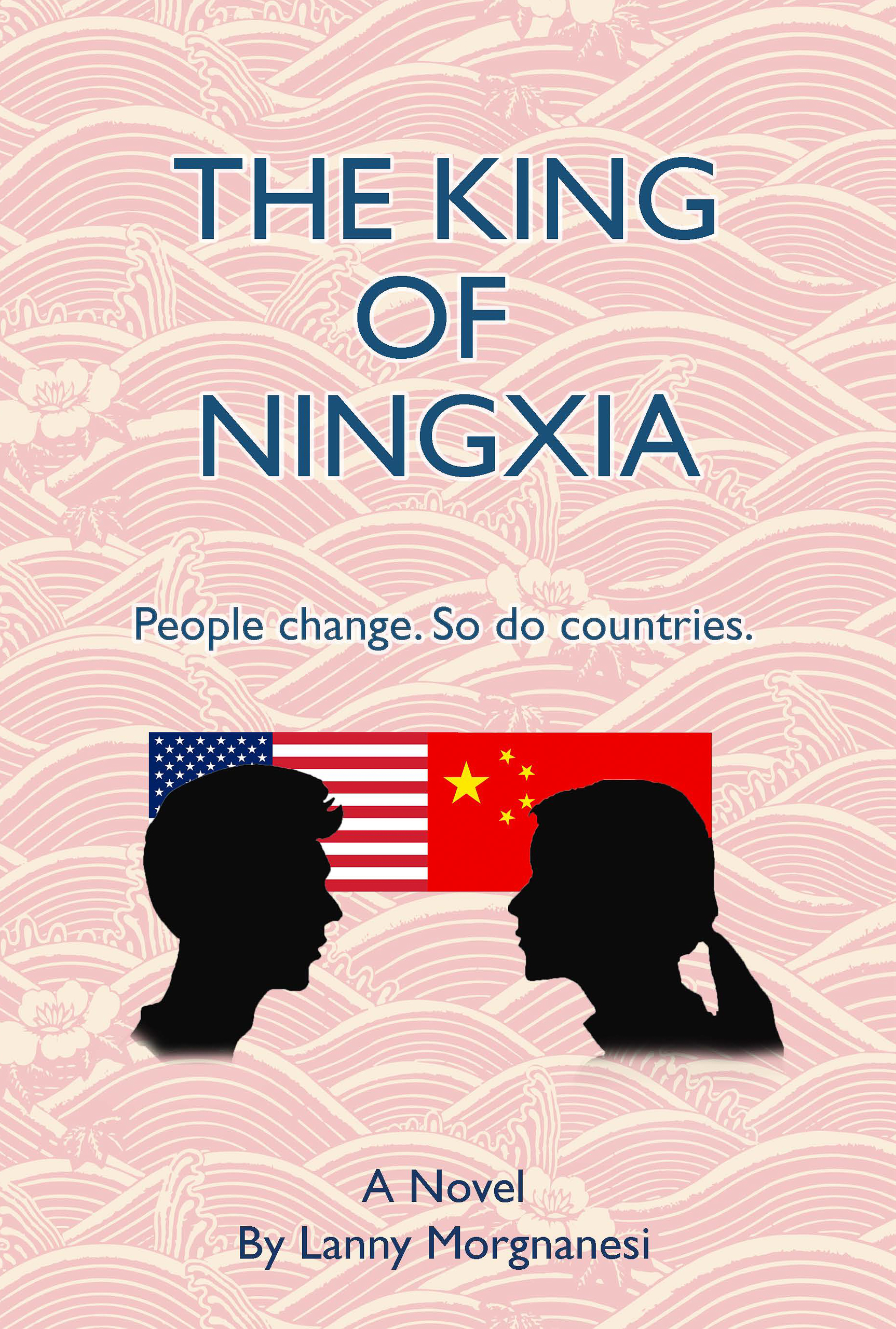
Since writing my novel, “The King of Ningxia” (available on Amazon), I’ve been using TikTok to offer unconventional writing tips, the kind generally ignored by the literary world. Find them on TikTok by searching for my site, NotebookM. Here’s my latest advice video
A writer may write, and may be appreciated, but for him or her there is nothing like, say, applause. So writers take satisfaction in notes sent by readers. I received such a note this week, a reaction to a simple piece I wrote 10 years ago, one that may not have been entirely accurate.
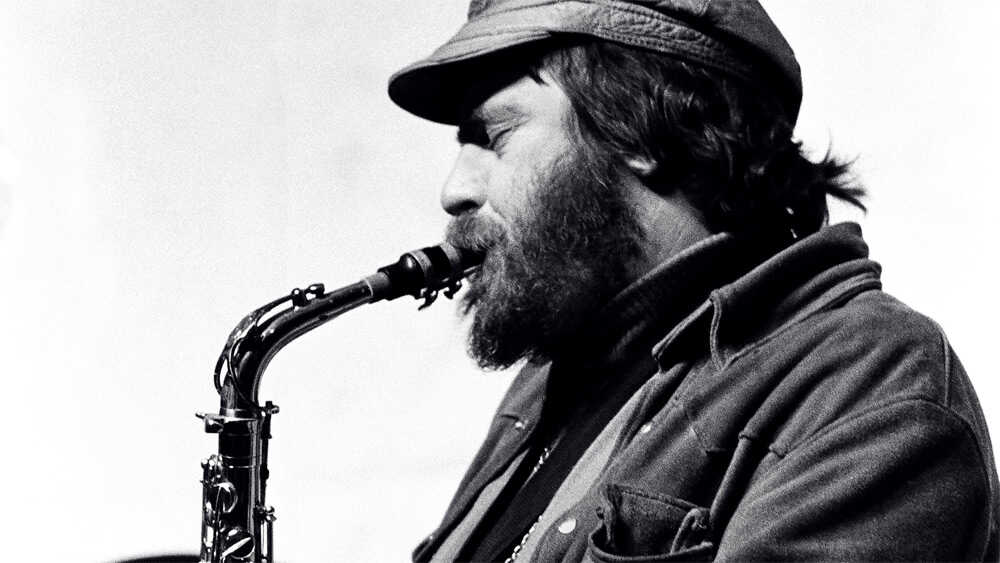
It was a sad piece, about the death of a man named Baird Parker, who at the time of his death worked quietly in a Lansdale, Pennsylvania, grocery store. In his life, Baird Parker had known fame, but it was not his fame. It was his father’s, a man named Charlie Parker, a saxophonist and one of the greatest jazz innovators of all time. The headline on my story was: “Is the son of a god a god? The problem with famous sons.”
What I wrote was based primarily on Baird’s obit and included a statement from Baird’s mother that his life, for the most part, was destroyed by the fame of his father.
That was 2014. Ten years later, on the anniversary of Baird’s death, I received an online message from his old roommate, a drummer. For a time, the two lived together with their girlfriends on Clinton Avenue in Doylestown, about five minutes from my home. The roommate told me that Baird’s life was not one of sadness, that there was success, joy, happiness; that it was a good life, one to be celebrated. It was a simple message but moved me greatly. Most important – and this was not in any obit – Baird was a musician and a composer. On the 10th anniversary of Baird’s death, I now share with you drummer Paul Bozzi’s touching account of his old friend.
Paul Bozzi
Lanny, I read your post about Charles Baird Parker. I was disappointed and I thought I would take this opportunity to fill in a few details on the 10th anniversary of his passing. His life was not a failure by any means. Here is what I know.
Charlie “Bird” Parker died in 1955 when Baird was only 3 years old. Shortly after that, Bird’s widow, Chan moved the family to Paris. Chan remarried another great saxophonist, Phil Woods. Baird studied guitar and created a unique style, slightly dark and moody with a relaxed groove. His guitar influences ranged from Jimi Hendrix to Django Reinhardt.
In the early 70s, Baird moved back to Pennsylvania. I met Baird in 1973. My girlfriend had known Baird as a child when they both attended Ramblerny, a summer camp for the performing arts in New Hope, Pa., that has become a thing of legend. Other “campers” included the Brecker Brothers, Holly Cole and the recently passed Richie Cole, who after Phil Woods died had become the one remaining bearer of the bepop saxophone. Sadly, with his passing, there seems to be no successor to truly carry on that torch.
Phil Woods
We were living in Connecticut at the time and the best friend of my girlfriend was in a relationship with Baird, so we came down to visit for a weekend. The drummer in the band Baird was working with fell ill on Saturday and they asked me to sub for him. A few days later I returned to CT and picked up what I needed and moved to Doylestown, Pa. to join the band.
We moved in with Baird and his girlfriend in a two-floor apartment on North Clinton St. in Doylestown, where we stayed for a few years. During that time, we worked with a few bands, most notably, Ronnie Rinard and The Shadows. Ronnie was a well-known Elvis impersonator, and I think he really did channel Elvis. Ronnie had a great voice and amazing stage presence, and in true form he was absolutely eccentric. From 1972 through 1977 we played some crazy joints as well as big clubs around Pennsylvania and New Jersey. Neither Baird nor I were big fans of Elvis, but we were young and happy, the money was good and the gigs were plentiful. Several nights a week, we would hop into his bright red Oldsmobile 442 convertible, he would quip “we’re off like a herd of turtles” and we would be on our merry way to another gig. Never a dull moment! If we ended up in a country joint where the clientele was rough and maybe a little racist about having a black man on stage, Baird would speak French into the mic, until his warm sense of humor would defuse the situation. He was so funny, and often had the band in stitches with jokes and witticisms about music and life in general. Often, at 3 am we would end up at Doylestown’s now-defunct Ed’s Diner (known by the regulars as “Dead’s Diner”) where we would enjoy the company of other late-night denizens and slam down a breakfast (or two sometimes) before slipping around the corner to North Clinton St.
During that time, we also formed a group to play and record Baird’s original compositions. Unfortunately, all those recordings have disappeared. A great personal loss to me as the music was unique and now lost to the universe forever. In 1978, I took a gig touring with a band after which I returned to CT to start a family and lost touch with Baird. Then around 2010 I went to Bucks County to ride the Delaware Canal bike trail. While there I looked him up and found him in Lansdale, Pa. where he had opened a music store, I believe it was called Birdland Music. He was doing quite well, owned a home and was living happily with a beautiful young woman and enjoying his life. Also playing with local musicians, many of whom had no idea of his lineage. I visited every summer for the next couple of years. Eventually, he closed the store and wanted to try something different. So he took a job as a baker at a grocery store. He enjoyed cooking and he wanted to learn about baking. We visited a few times after that until that day in 2014 when I received the devastating call from his girlfriend with the news of his passing. I was crushed. We had plans of the two of them coming to CT for an extended visit in the summer that year.
Charlie Parker
Baird was a joyful, humble, hardworking, extremely intelligent, talented and kind man. He was the son of a great innovator, and he had the same creative pulse running in his blood. He had been born into jazz royalty, and he accepted that and was proud of it. We talked about it a few times and you could hear the pride he had about his dad and his stepfather Phil Woods as well. Many famous jazz players knew him from his childhood, and he kept up with some of them. We once attended a Chick Corea concert where we were invited backstage and he was greeted warmly by Chick. He often spoke of his childhood relationship with Dave Lambert of the jazz vocal trio, Lambert, Hendricks and Ross. Dave was killed in an automobile accident in 1966. Jon Hendricks’ telling of the story says that Lambert was a compulsive do-gooder and that he had stopped to assist another motorist in changing a flat tire. I can imagine Baird doing the same thing, he was just that kind of man.
In the mid-80s, I lived and worked in China. When I returned home in 1985, I set out to write a book partially based on my experiences. Decades passed, and it remained unwritten. But finally, this year, I finished my novel. It is different from what I first intended. Entitled, The King of Ningxia, it shifts in time between then and now. Primarily, the story is about the transformation of two people. On a deeper level, it is about the transformation of two countries. If you are interested in international intrigue, a journey from near poverty to great wealth, or a warm romance that turns cold and controlled, you might find this book interesting. The King of Ningxia is free to Kindle subscribers, and available on Amazon.com in paperback and a digital version. Use this link or a sneak-preview of the first chapter. Thanks.
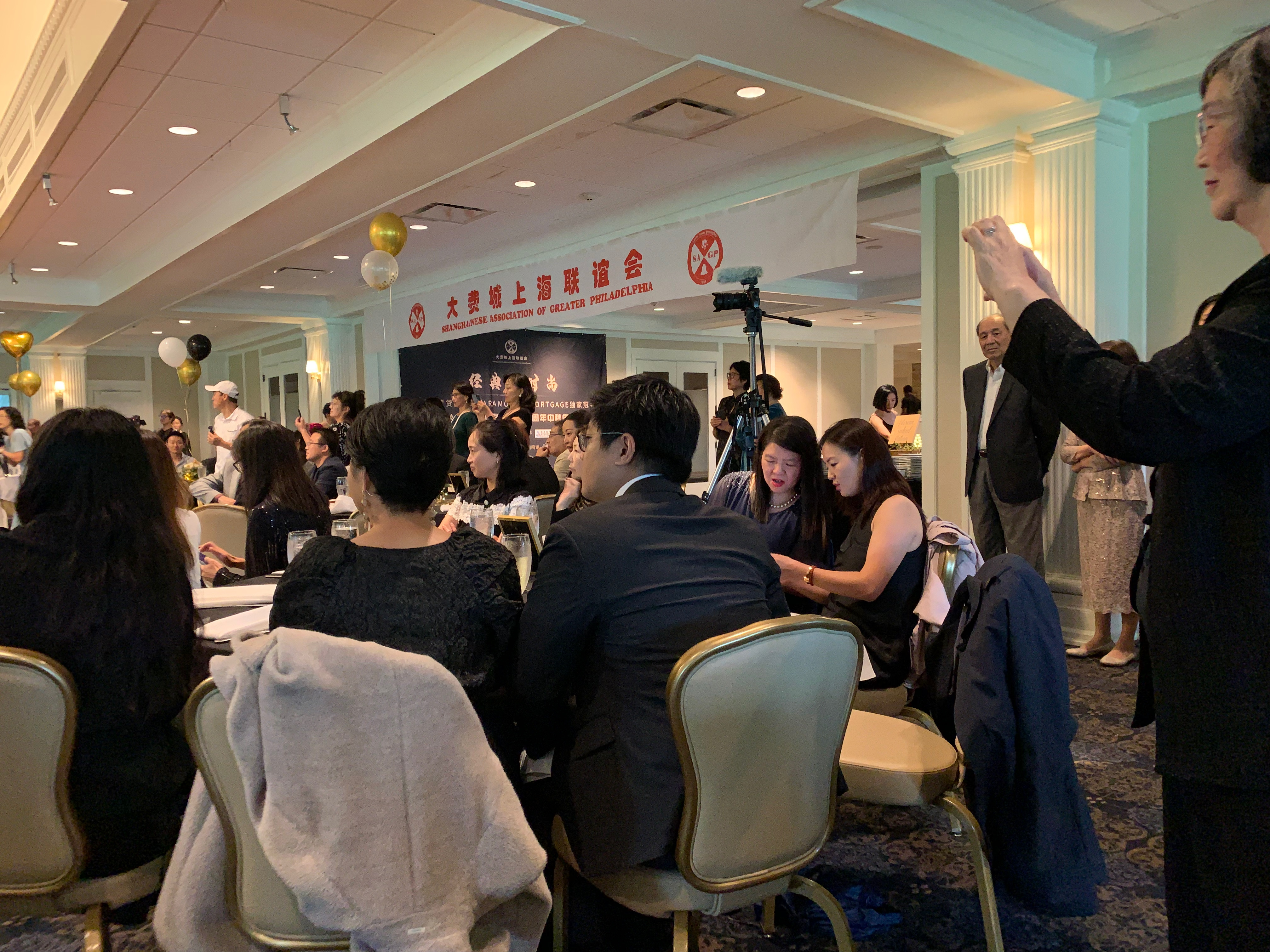
On a rainy September afternoon at the Bluestone Country Club, in a ballroom surrounded by an empty golf course, the Shanghainese Association of Greater Philadelphia held its annual gala, and I was the only white person there.
The agenda included music, singing, dancing, a fashion show, door prizes, and a buffet lunch. But overall, it was more like one big commercial. Since there was no English, my escort wife, born and raised in Shanghai, explained most of it to me, even though I figured out much of it myself.
Once through the door, the first order of business was photography. Everyone, everywhere, was taking photos. On the path to the ballroom was a tripod mounted with a ringed light and a device that took and showed you five photos of yourself, then sent them to your phone. Long line for that.
Next was a large, wall-mounted banner with the group’s name on it, in English and Chinese, and a hired photographer taking pictures for the group’s website. There was no formal line. Instead, you pushed your way forward in a competitive tussle.
After that came the ballroom, with about 300 well-dressed people (told to wear black and white) mingling about and shooting with their phones.
The proceeding began when a fit-looking man in a well-tailor suit addressed the crowd. Poised and confident, he had organized the event and helped secure a panoply of sponsors. At first, he welcomed the people. In short time, however, he pitched his real estate business and advised the group to connect with him on the Chinese app WeChat to learn about the newest real estate deals. He was an effective promoter of himself, and no doubt owned a significant piece of the area’s Chinese real estate market.
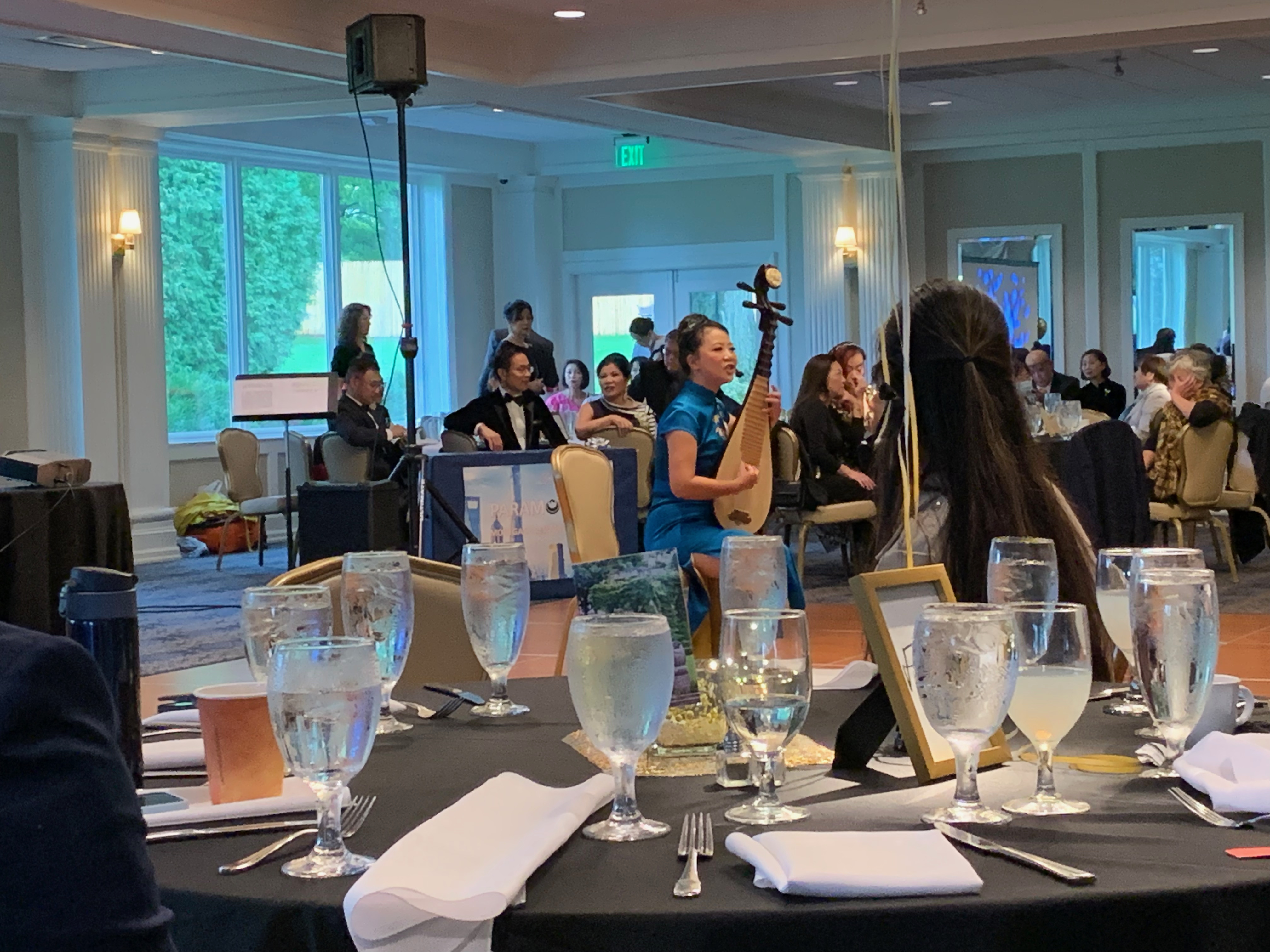
He was followed by a musical performance, a woman in a traditional qi pao-style dress who sang and play an instrument called a pi pa, a sort of Chinese lute or guitar, pear-shaped with six strings. Aside from my wife, this was the only person at the party I knew, and I did not know her well. If fact, I hadn’t seen her for 20 years, and did not remember her name, if I ever knew it. My wife spoke to her first and addressed her as “lao ban,” a title of respect for a store owner. My wife was quickly advised by the lao ban that she no longer was a lao ban.
There was a time, before streaming and serious Internet use, when my wife and I made regular visits to a bookstore and Chinese emporium owned by the former lao ban. It was on Race Street in Chinatown, a huge, two-story building filled with Chinese merchandise you could not get elsewhere. We went there often to rent Chinese language videos and buy a few books. Chinatown has developed a lot since then, with a more vibrant economy and new, more innovative entrepreneurs who displaced old-school, never-change Cantonese. Longtime establishments have been replaced with contemporary noodle houses, soup dumpling places, and dim sum joints. The lao ban, who had rented her huge building, probably was priced out of the market after Chinatown became hipper and the video and book market died. Where her business once stood, there is a two-tiered Asian food court.
The lao ban, perhaps in her 60s, is now a musician and singer of Chinese opera. On this day the Bluestone Country Club had the perfect audience for her, but, unfortunately, an imperfect sound system. There was distressing feedback. The volume was too loud, and high notes came off like screeches. I felt bad for her as she played on. The feedback was fixed for the next act, but the system continued to deliver poor quality sound, which, I guess, the audience got used to. They cheered loudly for a young woman in a shiny, tight, blue-sequined jump suit who danced and sang a contemporary song called, “Give Me a Man at Midnight.” She was good, but I wanted to hold my ears. Others seemed more than content.
Next, a contingent of trained amateurs took the floor and performed a waltz-like dance to the tune of Moon River. It was more like walking than dancing, but the women wore gorgeous gold dresses, and it was fun watching them. When it concluded, audience members were told where they, too, could get dance lessons.
There was a fashion show, with women of various ages posing and strutting like runway models. This was followed by information on modeling classes. There was no entertainment related to banking, cosmetic surgery, or travel, but people pitched those services anyway.
As the afternoon unfolded, I paid attention to language. I found it interesting that speakers addressing the crowd spoke Mandarin Chinese, the national language of China. But off stage, while chatting amongst themselves, they spoke Shanghai dialect. No one outside of Shanghai understands Shanghai dialect. It is spoken with pride by members of an exclusive group that considers its hometown the singular place in all of China for high style and hipness. To them, it is the epitome of elan, a better-than-New York equivalent of 26 million people. It has such appeal you must be born there to live there or get special permission to move there. The Shanghainese are a tribe, and they think highly of themselves. They have names for people who are not Shanghainese. And they have a name for their women, who are stereotyped as self-possessed, demanding, spoiled, and self-centered. It is both a polite and derisive term, a little like “Jewish American Princess.” The hard-to-handle women from China’s largest city are called “Shanghai little sisters.”
But back to the dialect, which I’m thinking helps to define Shanghai cool. While the dialect is substantially different from the national language, some alterations are slight. For example, the common Chinese greeting “ni hao” (literally: you good), was changed in Shanghai, for some reason, to “nong hao.” The common good-bye of “zai jian” (literally: see again) was changed to something that sounds like “zay way.” To decline an offer, the Chinese normally say “bu yao” (literally: don’t want). But the Shanghai residents slam those two syllables together, speed them up, and put a different sound at the front, saying “v-yow.”
Here is an example of how protective the Shanghai people are of their exclusive dialect. I was in the dessert line and the guy behind me struck up a conversation in English. He had come to the United States as a student in 1985 and trained as an engineer at Columbia.
“I guessed you’re confused by all this Shanghai dialect,” he said in a joking way.
“Of course,” I said, “but I know a few words.”
He looked at me as if that could not be true.
Then I said the few words of Shanghai dialect I knew. Oddly, he repeated those words back to me in Mandarin. No, I said, I know the Shanghainese. And I repeated the words again, with him once again saying them in Mandarin, as if I were not allowed to speak that way or couldn’t possibly know what I was saying. Finally, I convinced him that I had gently penetrated the veneer of his beloved dialect. He smiled uncomfortably and shook his head. We both got dessert and parted.
So at the party, as the spoken word shifted effortlessly between a defining dialect and the linguistic standard, I thought about American English and concluded that there is nothing comparable to this in the U.S., no comfortable, communicative patois used in a secret way outside the button-down structure of society.
Or is there? A question for another day.
After the entertainment came lunch. When going to an affair such as this, one expects Chinese food. There was none. No chopsticks, either. The buffet was bread, salad, green beans, potatoes, pasta, pot roast, and salmon. The partygoers filled their plates high, without reluctance or aversion. I guess the country club chef didn’t offer a Chinese option, and that clearly was not a problem for this crowd.
After about four hours, the party winded down. It was time to leave, and the rain was still heavy. We did not, however, get wet. Everyone received a well-built umbrella, courtesy of the Paramount Mortgage company, whose name appeared on the umbrellas in both Chinese and English.
On the way out, the partygoers continued to define themselves as unique. You could hear lots of “zay ways,” but not a single “zai jian.” A group of young Shanghai little sisters, outfitted in fine dresses, pushed past me, seemingly arguing among themselves, or perhaps debating a point or two about the party, or maybe discussing where to go next. I didn’t understand a word of it, and I’m sure they took great comfort in that.
In the 50s and 60s, almost all Catholic school in and around east coast cities looked like this.
By Lanny Morgnanesi
NOTE: I wrote this piece in 2010 for the Philadelphia Inquirer. It was probably the most controversial thing I ever wrote, eliciting an onslaught of reaction — both positive and negative — and causing the publisher of the Inquirer to condemn it in a letter-to-the-editor of his own paper. With nostalgia in my heart of late, repost it here.
I read recently that Saint John Bosco Elementary School is closing due to low enrollment. Although the school teaches grades kindergarten through 8th, it has only 152 students. This startled me because when I attended, 1957-1965, there often were 100 kids in a class – a single, zoo-like class.
Where did everyone go?
Bosco opened in 1953 in Hatboro near the height of the baby boom. It was housed in a non-descript, cheaply constructed building. I received a miserable education, although I came out with good penmanship and an ability to diagram sentences. There was much to hate at Bosco. My top source of unhappiness was eating from brown bags at our desks because we had no lunchroom.
Odd, since the more logical choice might be those face slaps, hair pulls and rulers across knuckles … all administered by nuns. But to the victims, this perpetual combat was perversely welcomed and actually made class interesting. My most compelling contribution occurred one day when the nun ran down the aisle and yanked me out of my seat by the shirt. It must have been a cheap shirt because it ripped. The nun’s hand flew off and hit me in the nose, which began to gush.
She backed off and I stood before her, a little guy with a mangled, blood-covered, regulation white dress shirt. There was a pause, a long one, and she said, “Get out and fix yourself.”
In the empty hallway I considered going home. Instead, I went into the bathroom and washed the shirt in the sink. The blood actually came out. I put the wet shirt back on and reentered the classroom. Not another word was said on the subject. For a limited time I felt a sense of immunity, which made me proud and happy.
I imagine I had a reputation as a trouble maker, although it seemed all the boys did. In my final day there I was blamed for something I did not do. The nun, knowing I was graduating, sent me off as if I were a criminal, saying, “One day I’m going to see your name in the newspaper. You just watch.”
After college I became a reporter and for years fulfilled her prophesy. Well into that career I learned the school’s namesake – which we always associated with a chocolate drink – was the patron saint of journalists. Of all we were told, we were never told this.
We were told, however, of the greatness of John F. Kennedy, a Catholic and therefore our earthly savior. During the presidential campaign of 1960, a boy much bolder than I came to class wearing a large Nixon button. The nun ordered him to remove it and he refused. She took it from him and with her black nun shoe stomped it once, twice … maybe five or six times … then threw it in the trash. The next day he wore 10 of the pins, and was beaten.
I remember thinking this act represented true heroism, the first I had ever seen from someone my age. It saddened me because I knew that in my life I would never, ever, have that much courage.
Three years later when Kennedy was shot, I was being punished. Temporarily banished from the classroom, I was sent outside to clap blackboard erasers … to remove the chalk by smacking them together. When I returned everyone was on their knees.
I was flabbergasted and looked at the nun for an answer.
There was no explanation. Forcefully, she ordered, “Get down and pray.”
As Kennedy lay dying somewhere in Dallas, I was asking God to save him and I didn’t even know it.
There was so much I didn’t know at Bosco. I can’t remember learning much of anything. Once, during Geography, a small and mysterious country near India was being ignored and I stood up (you had to) and asked, “What’s Neepal?”
There was that familiar deadly pause, then the response: “Sit down or I’ll give you a knee, pal.”
As a wise guy, I actually respected this.
Soon there will be nothing left to respect. They’ll probably knock the place down. It must seem so big with only 152 students. Each one must have been valuable, treated like an angel. What a contrast to the Malthusian mess of me and my 99 compatriots, all in a single room, boys in front, girls in back, holding ancient textbooks and hiding damaged self-esteem, with baloney sandwiches wilting in the cloakroom and a single, unsympathetic, septuagenarian sister using something called a catechism to teach us that – above all –heaven is within our grasp and God loves us.
How could the pope have allowed this?
Goodbye, Saint John Bosco. I’m sorry for telling tales out of school.
Easter came and there were no large family gatherings or in-church services. There was only Italian tenor Andrea Bocelli, who sang for free while the world listened.
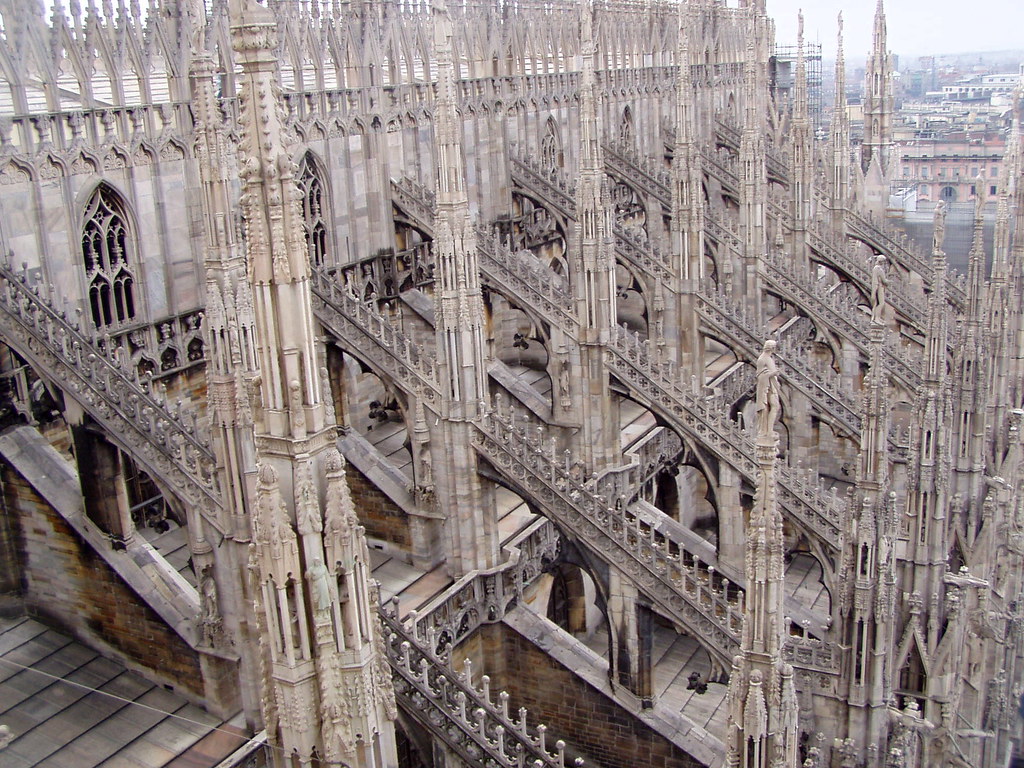
Bocelli said his was not a performance. He called it a prayer and the event was advertised as Music for Hope. It took place in the Duomo di Milano, one of Italy’s most breathtaking cathedral. Bocelli was accompanied by a musician playing the world’s largest pipe organ. Otherwise, save for the unseen camera crew, he was alone.
Inside the cathedral, the tenor sang a few piece of sacred music. People watching live on Youtube saw a pantheon of statues, stained glass, etchings, carvings, relief work, marble, enormous pillars, icons and more. As Bocelli sang, there were cutaways to the empty streets of great cities like Milan, Paris, New York and London. After 25 minutes or so, the blind singer stop singing and walked unaccompanied down a corridor, through an enormous door and onto the Duomo steps. There was no one outside in the locked-down city, the epicenter of the Coronavirus in Italy. The small country of 60 million has reported 159,000 cases and 20,400 deaths.
Andrea Bocelli
Bocelli stood on the steps and returned to his singing. In English, he sang the 18th century Christian hymn, Amazing Grace. There was no music at first. After a time, the production people layered in a full orchestra. When the song ended, there was silence, and the cameras shutdown. The prayer was over.
The concert lasted 30 minutes and, so far, has been watched by at least 37 million people.
Andrea Bocelli’s music, as intended, gave us hope. Even more inspiring might have been the miracle and magnificence of the Duomo di Milano, the largest cathedral in Italy. Construction on it began in 1386, just a few decades after the Black Death killed 100 million people worldwide. Many believe the depths, damage and darkness of the plague is what spawned the creativity, commerce and optimism of the European Renaissance.
Interior of the Duomo di Milano
The amazing thing about the Duomo is its utter completeness as a work of art. The virtuoso violinist Itzak Perlman has said that in the world of symphonic music there is no such thing as a casual note. With the Duomo, there is no such thing as a casual surface. Every piece of wood or stone has been slaved over and loved into a masterpiece. In Renaissance Italy, the greatest and most famed artists would fight for commissions to illustrate or decorate a surface. And great time would be spent on them. Lorenzo Ghiberti spent 27 years on the doors of the Baptistery in Florence. When Michelangelo saw those doors he called them “the Gates of Paradise.” The doors to Milan’s Duomo may not be as famous, but they are covered in jaw-dropping art work. Mark Twain, in Innocents Abroad, said this about the Duomo doors:
“The central one of its five great doors is bordered with a bas-relief of birds and fruits and beasts and insects, which have been so ingeniously carved out of the marble that they seem like living creatures — and the figures are so numerous and the design so complex, that one might study it a week without exhausting its interest …”
You look at a place like the Duomo di Milano and quickly comprehend that no such monument would be built today or could be built today. It’s a representation of a now unachievable achievement. The Duomo was a continuous work in progress for nearly 600 years. That’s how long it took to complete. The expense was enormous and funds were not always available. In 1805, Napoleon Bonaparte, about to become King of Italy, ordered the facade to be finished and said he’d pay for it. He never did.
Door engravings, the Duomo di Milano
The art and culture of the Renaissance arose as great fortunes in banking and commerce were being made. Wealthy, influential families like the Medici and the Borgia possessed incomparable riches and used their fortunes on the arts. It was expected and something of a requirement. What was created was to be shared with regular people and offered up to God in thanks. Great new wealth also has been amassed in our era through the likes of Facebook, Google, Apple, PayPal and others. But it is used differently. There is good being done, but it’s a different kind of good.
Buffett, Gates, Soros
True, the rich create foundations to better mankind (and get a nice tax deduction for it). George Soros, Bill Gates and Warren Buffett are among a handful of billionaires who have contributed much of their wealth toward improving the human condition. The other side of this benevolence, however, are efforts to change the world in more entrepreneurial ways. The excessive profits of enormously successful companies, for example, might be channeled into no-profit or low-profit ventures, like building space ships or driver-less cars. Intentions are good and hopes for mankind are high, but the goal is ultimately money. Rarely do we see artistic creations or architecture wonders (the Brooklyn Bridge is an older example of this) that people feel part of and gravitate toward.
Apple is said to have spent about $5 billion on its campus for 12,000 workers in Cupertino, California, yet by any stretch it is not considered a great wonder of the world. (For that money is should be.) Today’s really impressive modern architecture is found mostly in the Middle East and Asia. The world’s tallest building is in Dubai. Eye-poppers are all over Singapore, Malaysia and Shanghai. Still, all this is so very different from building a church that takes 600 years to finish and is so magnificent that, even when surrounded by the sad solitude of a catastrophic pandemic, looking upon it makes us feel good.
Hearing Bocelli and seeing the Duomo I think of the Renaissance and whether a new one might be on its way. When our pandemic turns to dust, will we find a vigorous need to look upon life as new and to create things never before created, perhaps experience joy in ways that have been forgotten? Will we insist on engraving the mundane with the spectacular and seek enjoyment from even the routine?
Graffiti art
Trying to fathom a modern day equivalent to the high art of the Duomo surfaces, I stumbled on a harsh and incongruous comparison — inner-city surfaces covered in graffiti. These markings, considered art by the best of their creators, deface yet celebrate. They spring from repression but in a perverse way speak to optimism. Can anything about tomorrow be learned from the spray paint on walls, bridges and subway cars?
After the population decline of the Black Plague, wages for laborers went up (high demand, low supply) and the price of land went down (low demand, high supply). Inequality eased off. Opportunity abounded. The Renaissance (literally The Rebirth), and later The Enlightenment, burst forth, light from dark. So what happens to us and our culture when the all-clear sounds?
The Duomo
This could be our big chance for change, unity and joint hope. Let Bocelli keep singing. Let the light shine each evening on the Duomo Di Milano. And let everyone else search out and lay claim to a surface in preparation for its decoration. The unadorned will no longer be accepted.
On Facebook, I saw posts listing 10 people “I’ve met,” with one being a lie. I decided to play and put up these 10.
Johnny Four Fingers
Frank “Two Meatballs” Ferretti
Bing Bang Ciao
Joey Lollipops
Pauli “Rembrandt” Scungeel
Spinach Face Tommy
Tony Loud Cry
Pasquale “Dog Shoes” Maroni
Vincent Steam Breath Bug Eyes
Nathan the Nickel
Then I realized the more curious readers might want to know how these men got their names. So here at NotebookM I’ve decided to provide that information.
Johnny Four Fingers – As a child, his big hands prevented him from reaching inside a soda machine to steal Cokes. So he used his father’s power saw to remedy that.
Frank “Two Meatballs” Ferretti – Always thin, his grandmother said she’d give him a quarter if he gained weight. To look heavier, he stuffed a meatball into each cheek.
Bing Bang Ciao – Upon leaving a drinking establishment, he would always bang his left fist on the bar, then bang his right, then say good night.
Joey Lollipops – He robbed a corner store but took only candy.
Pauli “Rembrandt” Scungeel – The best forger in Brooklyn.
Spinach Face Tommy – Chronic acne.
Tony Loud Cry – A rival gang caught him and threatened to cut off his testicles and shove them up his rectum. His lament was heard three blocks away.
Pasquale “Dog Shoes” Moroni – The heat went out at a cheap motel where he was staying with a hooker. He took her fake fur and fashioned it into slippers.
Vincent Steam Breath Bug Eyes – He survived a garroting, but it was not pretty.
Nathan the Nickel – He lived on Fifth Street, as opposed to Nathan the Dime, who lived on 10th.
The Coronavirus pandemic has inspired innumerable blogs, podcasts, articles and commentaries. Photos and videos of ghostly, empty streets circulate widely and never end. Footage of people singing to each other as a salve to the quarantine are reaching large numbers in live, nightly broadcasts. And I’m empty of thought.
In such times, for writers, the bare minimum is a journal. You can start it with vigor, try to shed light on the mundane, neglect it a little then let it trail off, but – unless you are out there and in it, which means you’ve got something – you are writing whatever everyone else is writing. My journal began thusly on March 23:
It’s impossible to put today in perspective, since yesterday was bad and tomorrow most certainly will be worse. At this point, at this time, numbers cannot adequately describe what we ultimately will face and how we will get there. Instead, let a few statistics be a point of demarcation along a road of unknown length. Let them serve not as a measure but only as a backdrop for the very present.
At that time, COVID-19 had infected 292,142 people and killed 1,600. Today, a mere seven days later, there are 729,100 infected people and 34,689 deaths. Experts say as many as 200,000 could die in the U.S.
Aside from my venturing out once for groceries – noting the absence of flour and yeast and realizing that in a panic you can’t outthink people – there really was little to write about at a time when there is a great deal about which to write.
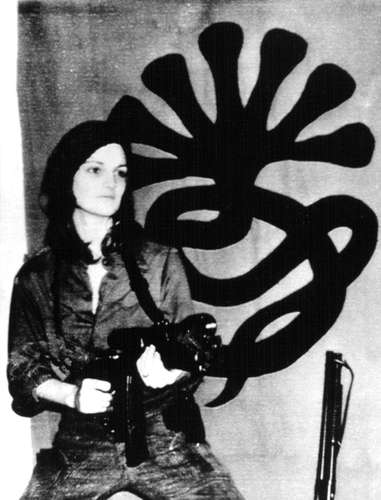
While not writing, I read a little about writing. It was a retro piece in the New York Review of Books from 2016. The author was Joan Didion, whose utter and complete immersion in the art of writing has always fascinated me, and the piece was simply called California Notes. She begins saying that in 1976 Rolling Stone magazine asked her to cover the San Francisco trial of Patty Hearst, the heiress kidnapped by political radicals who became one of them and took part (while armed) in a bank robbery. Didion is a Californian who relocated to New York, but the Patty Hearst assignment would bring her back to California. She would seek inspiration for the piece by reacquainting herself with the state and trying to revive her own emotions about it.
Writer Joan Didion
For me, as I sat not writing, the best part of California Notes was Joan’s confession that she attended the trial but never wrote the piece. There was no explanation, except: “I thought the trial had some meaning for me—because I was from California. This didn’t turn out to be true.” Her California reflections, however, led her years later to write a compilation called Where I Was From and even later California Notes.
There’s a famous Nora Ephron quote that reminds me of Joan and has been repeated in this time of crisis: “Everything is copy.” I always thought it peculiar that such a quote would become so famous, since few outside of writing know what “copy” is. The reason must be because writers are the ones always repeating the quote. Anyway, “copy” in this sense means “material” for writing, and now – with the world shut down by a virus — everything is indeed copy. You go outside for a walk and it’s copy. You venture out and drive through town and it’s copy. You cook a meal or seek activities for your kids and it’s copy.
Didion with husband, the late writer Gregory Dunne
Even without a pandemic, everything for Joan Didion seemed to be copy. (Her husband died and she got a book out of it). It might be that everything around Joan Didion, all the clouds she allowed to cover her success and notoriety, seemed like a personal pandemic, so she recorded it. In California Notes, she mentions an airline trip from New York to San Francisco in the 50s and reports that on the flight she had, “a Martini-on-the-Rocks and Stuffed Celery au Roquefort over the Rockies.” This means that while in her 20s she was taking notes on everything she did.
It’s true that in my youth I took notes. Joan got much more out of hers than I ever did. Like with her, the urge still remains with me. Recently, while in semi-retirement, I agreed to take a $25-an-hour job as a census taker, figuring I would get something out of it, a story about the real America, even though I’d only be visiting the homes of people in my mostly white, mostly affluent suburban county. As the virus spread, the government wisely decided not to send people house to house. I never went to even one.
In California Notes, there is mention by Joan of an early newspaper job at the Sacramento Union. Newspapers require reporters to learn local “style” – the proper way to refer to things in print. Joan touches on this and says, “I learned that Eldorado County and Eldorado City are so spelled but that regular usage of El Dorado is two words; to UPPER CASE Camellia Week, the Central Valley, Sacramento Irrigation District, Liberator bombers and Superfortresses, the Follies Bergere [sic], the Central Valley Project, and such nicknames as Death Row, Krauts, or Jerries for Germans, Doughboys, Leathernecks, Devildogs.”
Heiress Patricia Hearst, after her kidnapping
Everything is copy. Sadly, I didn’t make any kind of record of the local style at my first newspaper, and can only remember this: “Do not use a period after the ‘S’ in ‘Harry S Truman High School.’ A period suggests an abbreviation and in this case ‘S’ is not an abbreviation because President Truman did not have an actual middle name.” In the same way I know I cannot compete with the person who thought to buy yeast before I did, I know I cannot compete with writers who know what food and drink they had on a plane in 1955, or can recite that actual constraints put on them decades ago by local “style.” Maybe Joan Didion came up dry at the utterly fantastic trial of Patty Hearst, but she found inspiration at every other turn in her life.
I’m sitting here now looking for inspiration. I suspect I’ll find it eventually. I’m fairly certain, however, I won’t be writing about my neighbors singing, if indeed they ever do. I prefer instead to write about things we fail to see. And right now, I can’t see anything.
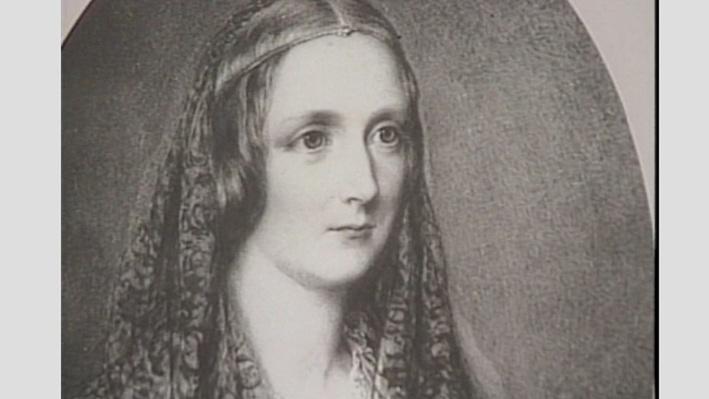
I started reading the highly-praised novel, Frankenstein, or, The Modern Prometheus, by Mary Shelley, and immediately thought, “Wow, I’d sure like to have known Mary Shelley.”
Just from reading her prose, I concluded she must have been an incredibly interesting person. That was my first reaction. My second reaction was surprise. Her story, I quickly learned, is so different from the one in the Frankenstein movies. It’s deeper, more philosophical and more scientific – and not at all like a product of the 19th century. I guess literary people knew that, but I didn’t.
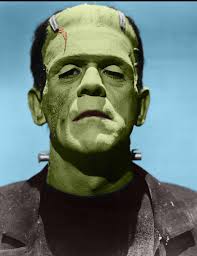
In the 1931 classic film featuring Boris Karloff, the hideous monster can only grunt and lumber. He is a huge child. In the book, the monster also is hideous, but after coming alive as a blank slate, he manages over time to fully educate himself. He is actually erudite. He reads and speak convincingly, with great logic and force.
“Am I to be thought the only criminal, when all humankind sinned against me?” the shunned outcast asks.
In the movie, the monster is without motive or even understanding. In the book, he seeks revenge against his creator for bringing him into a hostile, hateful world that abhors him. He reaches a breaking point when Victor Frankenstein, the scientist, refuses to create a bride for him that would provide love and companionship. The monster in the book kills the people closest to Frankenstein so that the scientist will know true suffering.
The movie has villagers killing him. In the book, he commits suicide. This takes place in the Arctic, where the monster (unaffected by the cold) has deliberately led Frankenstein, who seeks to destroy him. After the tormented scientist dies from exhaustion, sorrow and despair, the monster experiences remorse. He tells Robert Walton, an Arctic explorer who tried to save the scientist, that he will now build a funeral pyre on the ice and leap upon it.
But back to Mary, whose personality seeps through almost every line of the novel. Speaking as Walton the explorer, she explains why old friends are the best:
“ . . . the companions of our childhood always possess a certain power over our minds, which hardly any later friend can obtain. They know our infantine dispositions, which, however they may be afterwards modified, are never eradicated; and they can judge of our actions with more certain conclusions as to the integrity of our motives.”
What a conversationalists she must have been – had to have been, since from an early age she hung out with master poets Percy Shelley (whom she ran off with and married) and Lord Byron. On a trip with those two and her half-sister, the group accepted a challenge to each write a ghost story. Frankenstein was Mary’s contribution. The year was 1817. She was 18. Her book, revised several times, is often called the first true science fiction novel.
When we think of women from that era, we tend to imagine them as passive and subservient. I can’t envision Mary being anything like that. To begin with, she was born to non-conformist parents who took issue with the norms of established society, including religion, government and morality. They didn’t believe in marriage. Mary’s father was a writer and radical philosopher. Her mother, in 1792, wrote, Vindication of the Rights of Woman, said to be the first major feminist work in English.
What’s shocking to me, sitting comfortably in the 21st century, is that Mary and her parents were not, like the monster, social outcasts. They were part of society and made a living with their unconventional thoughts and ideas. This means those very thoughts and ideas, to a degree, were being at least tolerated and possibly accepted. So I must ask myself, could this also mean that the stereotype of the passive, submissive, ornamental 18th and 19th century woman is a partially a myth? I couldn’t help but wonder.
I’m of the belief that the people of today can’t be much different than the people of yesterday. For sure, the burden of child rearing and the need to produce many off springs because of high infant and child mortality undoubtedly kept women tied to home and hearth. Still, that is not to say they couldn’t have had a strong influence over the lives and fates of their families and even their communities. Minds like Mary’s were not easily dismissed, and she could not have been the only female of her era with such a mind.
Reading Frankenstein did not make me want to rewrite feminist history, or even look deeper into it. It did, however, make me realize that each century shares something with all others, and that genius can prevail even in the harshest environment.















 notebookm.com