Archive | Religion RSS feed for this section

Is There New Relevance to a 2004 Novel About a History That Never Was?

19 Nov

By Lanny Morgnanesi

In 2004, more than a decade before Donald Trump first became president, Philip Roth published a novel entitled, “The Plot Against America.” There was an effort to make it into a TV show, but it failed — initially. After Trump was elected in 2016, it was green lighted into a six-part series.

The novel has nothing to do with Trump and takes place during World War II. It’s an alternative history. But reading it now, it carries an eerie sense of familiarity and dread. It actually gave me chills. Frankly, with Trump in his second presidency, I’m surprised it hasn’t been reissued.

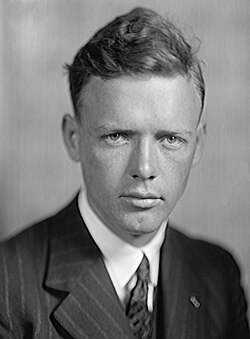
Charles Lindbergh

 In the novel, President Franklin Delano Roosevelt loses his 1940 re-election bid to Charles Lindbergh, the America hero who in 1927 flew solo from New York to Paris in his small plane, The Spirit of St. Louis. In the novel and in real life, Lindbergh was an American Firster who wanted to keep the U.S. out of war. In the book, if not in real life, Lindbergh is sympathetic to the rise of Adolf Hitler and exhibits anti-Semitic tendencies.

Columnist Walter Winchell

Once in office, he signs an official truce with Hitler to keep America out of the war. Then he begins a series of programs to marginalize American Jews, mainly moving them out of urban enclaves (the book is set in Newark, N.J.) and scattering them about the Christian Midwest, hoping they assimilate and discard their Jewishness. Out of fear, some leave for Canada. The main voice of opposition – almost the singular point of dissent — is columnist and radio commentator Walter Winchell, a Jew. Frightened Jews rally around him and listen to his Sunday night broadcasts with both fear and hope.

 Then, Winchell is fired from his job, runs for president, and is assassinated. Jews protest. This sets off a violent wave of anti-Jewish pogroms. Murder and mayhem come to the streets of Jewish neighborhoods while Lindbergh’s government remains silent. Antisemitism builds and spreads, bursting like a volcano. Then Lindbergh, while flying alone back from a speech (he does this frequently) disappears. He and his plane cannot be found.

Author Philip Roth

Hitler (who, we learn later and secretively, may have kidnapped him; we’re not sure) claims Lindbergh was killed by a Jewish conspiracy, and the anti-Jewish rioting further intensifies. Much intrigue and strange happenings follow. The vice president takes over and arrests the top Jewish leaders in America, including real life figures Henry Morgenthau Jr., Herbert Lehman, and Bernard Baruch. Also arrested is New York Mayor Fiorella La Guardia, seemingly the only non-Jew to condemn America’s turn toward fascism.  Ultimately, a level-headed Mrs. Lindbergh, acting like a widow who knows something we don’t know, calms down the nation and announced that the Jews did not kill her husband. With her help, FDR is reelected, stops the pogroms, enters the war against Germany and Japan, and (we guess) saves America.

Joachim von Ribbentrop

What makes this story contemporary is the immense popularity of a conservative president who takes the country in an entirely new direction. Everything he does, including the relocation of Jews, is framed in a positive, pro-American narrative and is readily accepted by nearly all Americans, including – at least at first – many Jews. Lindbergh has enlisted the help of the nation’s top rabbi to convince his people that all is well and right. The rabbi is given a top position in the government, is treated and feted like a celebrity, and attends state dinners and other functions, including one where the guest of honor is Hitler’s foreign secretary, the real life Joachim von Ribbentrop.

So many people, big and small, compromise themselves because they see a winner and want to be on his team, and they assume when the government goes after people, it does so for a good reason, and will never come after them.

Newark, N.J. in the 1940s

As intra-family squabbles take place today, in the book Jewish families fight among themselves about whether or not the government is good intended, whether America is stronger by staying out of the war, whether they should move to Canada or take part in the relocation program, and more. We see how people are not worried at first, then as the Lindbergh policies take hold and escalate, the worrying begins. But people still aren’t sure. It takes violence, murder, and assassination before they realize what’s taking place is wrong.

If you can, look in on the book, “The Plot Against America” or stream the TV series on HBO or Hulu. (Here is the trailer)  Perhaps you won’t see it as I see it … or maybe you will see it as an even darker specter of what is to come.

On the Resilience of Consciousness, or, An Ode to a Departed Friend

5 Aug

By Lanny Morgnanesi

            You are eating outside at a restaurant in a New Jersey tourist town. The people who walk by are varied, colorful, animated. Each one, everyone, has consciousness. They are creatures of thought and understanding, aware of their surroundings, aware of their fears and limitations, aware of their joys and sorrows. And they walk, and talk, and work, exhibiting complex patterns and wide ranges of motion and activity. Below the surface, within and around them, are intricate, beautiful, biological, chemical mechanisms that create their consciousness, permit their existence, dictate their actions, and allow them life. Some of these mechanisms we understand. Some we do not. Some we think we understand but aren’t sure. The mechanisms in certain individuals make them highly intelligent in mathematics, or music, or art, or philosophy, or war, or in figuring out how to configure the plumbing in a 50-story building. The mechanisms make people weak or strong, sometimes capable of near-superhuman feats. The mechanisms can create anxiety and depression and make people prisoners of their own minds. They create heroes and villains. Mostly, the mechanisms allow our species to conduct themselves normally and efficiently, below greatness and above infamy.

If you could look at the structures of these mechanisms, see into them, observe them on a microscopic or even smaller level, watch them work, watch them create and destroy, the chemicals, the neurons, the proteins, the DNA, the transmitters, the receptors, it would be like observing the face of God.

            Now, pull back. Way back. Into the vast heavens of galaxies and the infinite.

            You no longer see the creatures in the small tourist town. Although complex, from this perspective they are inconsequential and meaningless, as if they didn’t exist, yet they do, but for what purpose? Let’s forget them for now.  So unimportant. Look at the stars. So many stars. Two hundred billion trillion of them in 2 trillion galaxies. If you could see everything up there, you’d see less than 5 percent of our actual universe. The rest is hidden and undetectable. That’s just our universe. Some scientists, obviously the silly ones, believe the universe we know is just one of an infinite number of invisible universes. The scientists say in those infinite universes, everything has happened. You became rich in one. Married a movie star in another. Became a king in a third. Were a pauper, a beggar, a thief, a Mafia don, the first person on the moon. If this were true, the God who created the multiverse could not be comprehended by the shallow, limited human mind. All prophets, all scripture would be meaningless. That God’s purpose and nature would be far removed from the anything taught us by the wise and peaceful Nazarene who lived in a small town, on one planet, in a singular universe.

            If we discount the hidden, the pattern of things high in the sky are no less and no greater that the patterns inside our bodies. They are only larger. All of it made from the same building blocks. All of it in compliance with the same governing rules.

            Now zoom back in close to the people walking the streets of the tourist town. Look down at the weed growing through a crack in the concrete. Zoom in even closer and see the worlds within the world of the weed. Now closer, and closer, and closer. It will never stop. You can never get close enough. Level after level after level.

  Up and down. In the heavens or under foot. Infinite complexities on infinite levels. So which one is the distinguishing level? The rung of importance? The level that matters most? Is it our level? We tend to think so.

            Our prejudiced is triggered by our ability to think, to communicate, to build and destroy civilizations, to philosophize, to love and hate – and our inability to properly detect intelligence in other species and organic matter. Ants build civilizations and get work done. They receive little credit for it. We are awed when we see non-primates using tools, then go on our way and forget about it. Germaphobes and others acknowledge the vast preponderance of bacteria in the world but never dream we might exist solely for it. We know – at least some of us do – that plants talk to each other. A tomato plant being eaten by a bug will signal the danger to other tomato plants, who then go into defensive mode. Yet we don’t consider them conscious beings.

            Our consciousness, because it is ours, ranks supreme. We know that all life share much, DNA for example. Eternal consciousness? Sorry. That’s our monopoly.

If God has singularly granted homo sapiens heaven-bound consciousness, then God did so as an exception to the rules, laws, forces, element, and constants that every other aspect of the universe must conform to. And God did so to creatures that are a mere speck of almost nothing and hardly any use at all to the universe. Why? I haven’t heard any convincing answers.

             Our concept of consciousness is that it is constructed and operated by the organic components of the body, and that when those components decay and die with the body, something remains to reassemble and transport consciousness to a spiritual world, preserving our thoughts, our memories, our relationships, our recognition of friends and relatives. We believe this without identifying the earthly components that perform the reassembling and the transporting. We explain it by saying the components are not earthly.

Nothing like this—spiritual intervention — has ever been found, for sure, in the universe. And for this reason, I cannot believe that the consciousness once existing inside a human is retained somewhere else after death. For me, the state of post-death resembles the state of pre-life, meaning consciousness, as we know it, cannot exist without the body. It dies with the body.

            Recently an old friend, my college roommate, succumbed to stage four cancer. The final days were difficult. All he wanted was to pass. When the end was within hours, I asked him to be honest. I ask if he expected to go somewhere. I was thinking that by approaching death he might be closer to truth, and that he would be willing to share that truth with me.

            There was nothing surprising about his answer, be it newly revealed truth or just long-held ideas. He said he is a Christian, that he believes in the afterlife, that he expects to go to the place most call heaven. I told him, for his sake and mine, I wished it true. He said, if possible, he’ll get back to me later with confirmation.

            Nothing yet.

            My friend said he was a Christian, and I guess that’s true. Maybe not entirely true, not exactly true. His Polish-born parents, who came to America during Hitler’s rise, raised the family as Orthodox Catholic. Several years ago, at his father’s funeral, an aunt told him he was Jewish. The Catholicism was a safe cover. I’m not sure why, and I didn’t tell him, but I was hoping he’d convert back. Instead, he continued to attend a place called Son Light Bible Church.

            The pastor at Son Light, for certain, would have discouraged a return to Judaism. At the funeral service for my friend, he said the only way to heaven was through Jesus Christ, which Christ himself says in the Bible. Without accepting Christ, the pastor said, not even good works can save you.

But I suspect even if my friend had converted and lost his right to heaven, the pastor would still acknowledge the release and reconfiguration of his consciousness. It just wouldn’t go to the good place.

  I wish I could believe in the resilience of consciousness and the eternity of memory. I wish I did not have to sit here in a tourist town in New Jersey, with a view of the sky, a view of the prancing anthropoids, and a view of the lowly weeds, thinking of what might or might not remain of my friend, realizing that everything just seems the same to me. Like one family. Like a complete set of Legos. If one thing goes to heaven, it should all go to heaven. But it all can’t go to heaven.

Can it?

“Would you like a refill on that coffee?” the waiter asked.

“Yes, thank you,” I said, curious if my decision will in any way affect the universe, wondering if anyone’s memory of this day will reach heaven, worried that, all scripture aside, I am doomed to never find out.

A kind of Jewish internet flourished in 900 AD

13 Mar

Ancient Babylon

Babylonia

For this reason or that, I’ve adopted the belief that many human habits date back hundreds of thousands of years, to homo erectus, the Neanderthals, and Gods knows how many other hominid creatures.


I won’t go much into this now, but one much-more modern bit of evidence – for me at least – is the preserved Italian city of Pompeii, which remains exactly as it was in 79 AD. The eruption of Mount Vesuvius and the fallen ash froze it in time. When I toured it several years ago, my lasting impression was: These people lived just like we do today!


Now something new to me – but historically old – has added to the idea that we haven’t changed much, even if our technology has. This small piece of information comes from a book called, “A History of the Jewish People,” written in 1934 by Max Margolis and Alexander Marx. It was paid for by the estate of one Rosetta M. Ulman, who during her life wanted such a publication written.

book-history-of-the-jewish-people

In chapters covering the years from 175 AD to 1038, there is a great deal of discussion about two highly respected schools of learning that guided Jewish communities dispersed throughout the known world. The schools, Sura and  Pumbeditha, were in Babylonia (modern Iraq). The two heads of these school was held in the highest regard by Jewish residents of Babylonia, Palestine, Egypt and many other locations. Every word from the leaders on religion, scripture, philosophy and life were sought out and followed.

Map-sura-pumbadita

Even the Arabs paid attention and gave their respect.


As I read, I wondered how word got from the schools to the communities. No doubt by heralds, messengers, traders and travelers. Obviously, it must have been a slow stream of news.


When Margolis and Marx get into a section on a schism between the two schools, however, it seems as if the news had a much faster way of getting out. The leaders of Sura and Pumbeditha were arguing over nearly everything. One highly sensitive issue was what kind of calendar or calculation should be used to set the Jewish holidays. They differed on this, and the result was that one year Passover was celebrated on two different days.

Ancient Israel

Ancient Israel

Margolis and Marx report that the “confusion” was so great “it was even noticed by non-Jews.”


My thoughts were: How did the details of this controversy and the two divergent holidays spread so quickly from Babylonia, through Palestine, to Egypt and North Africa, maybe to even to Spain, Greece, Turkey and Persia?


Was there a Jewish internet?


Information then and now was powerful and important and clever humans, with or without technology, knew how to spread it. What may be lost, however, is exactly how they did it, at what cost and to what extent. Margolis and Marx don’t get into that, but I’d sure like to know.

Sura-Iraq

The ancient school at Sura

Either way, the results were a lot like the results now.


We’ve always been the same and probably always will be. If we ever clone a Neanderthal, he may fit in much better than we’d expect.

Neanderthal

Depiction of a Neanderthal

But I would have known that. The bakeries, butcher shops, whorehouses, living room art, sidewalks and curbs and everything else in Pompeii seem to suggest the truth. And now, as more evidence, we have the ancient Jewish internet.


By Lanny Morgnanesi

A Sephardic Jew: Why discriminate against this person?

19 Oct

emmanuelle chriqui

The man whom I will call the Martin Luther King of Israel has died at 93.

He was Rabbi Ovadia Yosef, a leader in politics and religion.

It is doubtful anyone else has compared him to the American civil rights leader, but that’s how I see it. Just as there is black and white in America, in Israel there is Sephardic and Ashkenazi. The Sephardim are the underdogs. Rabbi Yosef was their advocate and protector.

Rabbi Ovadia Yosef

Rabbi Ovadia Yosef

Most Americans think of Israeli Jews as homogenous. This is because most American Jews are of European descent, which makes them Ashkenazi. Overlooked and mostly out of sight in the U.S. are the Sephardim, who are Jews from the Middle East, North Africa and Spain. This group has more in common with Arab culture than with European culture, hence the dichotomy and the basis for discrimination.

It is dangerous for a non-Jew, such as myself, to write about the social fabric of Judaism, especially when the writer has never been to Israel and never witnessed the relationship between Sephardim and Ashkenazim.  So let it be known that I write with interest rather than authority.

It is of little consequence here, but a casual friend is a Sephardic American. He has never mentioned the word in my presence, nor has he ever discussed any difference between himself and any other Jew. His ancestors are from Morocco. His mother lives in France, is very refined, quite fashionable and appears wealthy. She reminds me of Jackie Kennedy. These things are all counter to the negative stereotype of the Sephardim, which I learned of only through television.

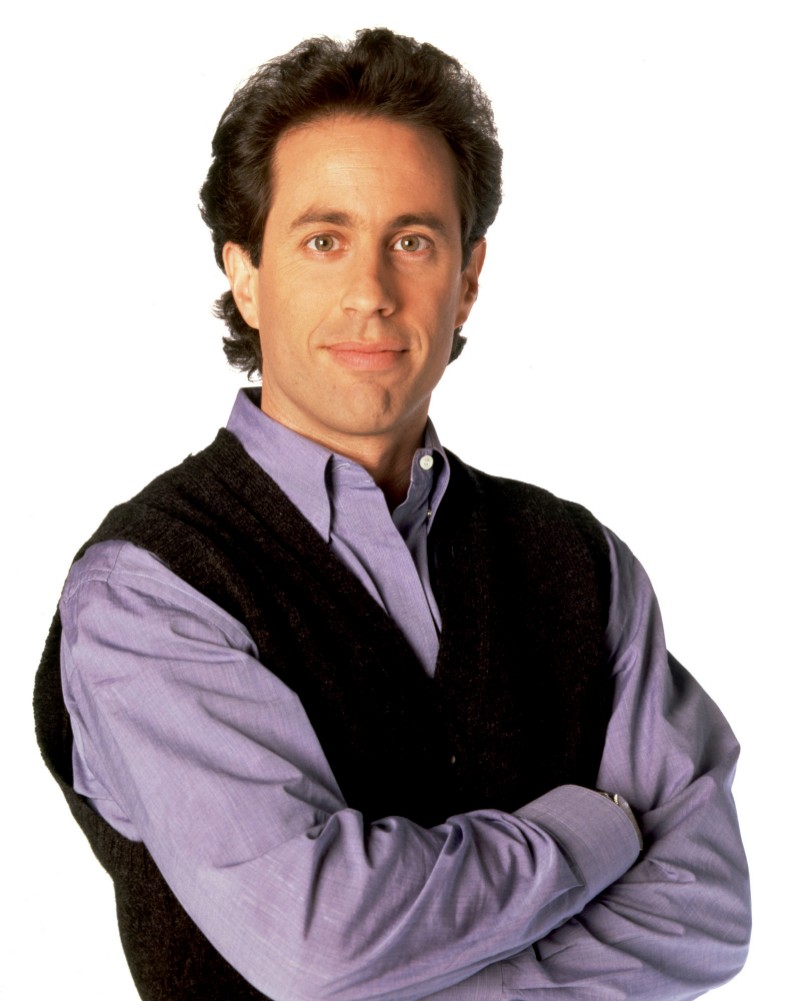
Jerry Seinfeld: Sephardic Jew

Jerry Seinfeld: Sephardic Jew

I wish I could remember the name of the film, or on which channel it appeared. I would link to it to see if you found it as shocking as I. It was shot in Israel and documented the perception of the Sephardim by the Ashkenazim. Some of the dialogue could have been overlaid on a film about white and black Americans.

For example, many Ashkenazi, in a nod to tolerance, said the Sephardim are hip and cool and fun; that they set trends and styles. Some said they have friends who are Sephardic. Still, in subsequent conversations, they said Sephardic Jews are mostly poor, crude, criminal and not so intelligent.

Clearly, social barriers have been set. This was confirmed for me when I read Rabbi Yosef obituary.

Other comments didn’t parallel the black-white struggle in America, like the disgust shown for the Sephardim who watch Arab movies.

Basically, the documentary illustrates how the one group considers the other inferior and beneath them. Overall, the impression was that the Sephardim were just too much like Arabs.

The irony here is that so were Moses, Abraham, Isaac, Jacob and David.

Indeed, recent genetic testing has shown that the Ashkenazim may be far off the Hebrew bloodline. It was originally thought that the Jewish communities in Europe originated with men and women from the Near East.  Now it has been shown genetically that the ancestral roots of the Ashkenazim are in the union of non-Jewish European women and traveling Jewish traders.

Although the comparison between blacks and whites in America is somewhat accurate – an Israeli court, for example, had to force the integration of Sephardic and Ashkenazi school children — this intra-Jewish problem has additional layers of complexity. Unlike in America, differences in religious practices also keep the Jewish groups apart.

I referred to Rabbi Ovadia Yosef as the Martin Luther King of Israel, but, unlike King, he was for school segregation in the court case I mentioned. Religion, it seems, was taught at the school in question, and Rabbi Yosef wanted only pure and accepted Sephardic doctrine taught to the children of his followers, not a diluted, blended brand taught in a mixed school.

Religion aside, the life and work of Rabbi Ovadia – like those of Dr. King — indicate the pervasive need of Homo sapiens to form tight groups of very like people, to preach group superiority and to categorize others – even those who could easily be accepted into the group – as inferior and unworthy of advancement. It shows the incredible need to hold back rather than lift up.

What is the basis for this need?

Limited resources? Limited positions of power? Intrinsic insecurity? General nastiness? The necessity to have enemies as a motivating force for survival and civilization building?

Because of their differences, and because of our shortcomings as a species, it seems almost understandable that there is tension between blacks and whites, Jews and Arabs (even thought they are both Semitic people), liberals and conservatives. But why does each group draw circles within their circles to set even more people apart?

How can we solve global conflict when the people on the north side of Chicago distrust those on the south side?

The Jews possess a unique place in history as one of the first cultures – perhaps the first – to take stock of itself and say, “We are barbarians. This is unacceptable.”

For now and always, the People of The Book have documented their epic struggle for the perfect, enlightened society. Through darkness and light, catastrophe and near destruction, triumph, dire warnings, dire consequences and rebirth, they have never ceased to strive with God and themselves.

One would think that by now such a people could get along with themselves; that such a people might actually be the ones to bring peace to the entire Earth.

Who better?

While we wait for a new prophet, I would hope that all will soon dispense with finding disgust over another person simply because of his taste in movies.

Rest in peace, Rabbi Ovadia Yosef.

By Lanny Morgnanesi


Muhammad as Solomon: A better story

25 May

solomon1

Time gives and takes. It adds and subtracts. It creates things that didn’t exist and extinguishes things that did. So as a general rule I distrust history.

Take for example the story of King Solomon and the baby. Why would a respected wise man mediate a custody case by offering to executive the child? Who would recognize this as rational? And why would any woman – mother or not –agree to it?

The story doesn’t ring true. I sense something was lost in translation and time.

A better story of wisdom comes from the Muslim world. It could be an additive story, but it nevertheless makes more sense.

This is it:

The shrine at the Kaaba in Mecca existed in pre-Islamic days and even then was considered sacred. It is said to have been built by Abraham. Inside then and now is a rock that fell from heaven. Possibly a meteorite, it is considered a divine gift. A flash flood not uncommon in the Arabian desert destroyed the Kaaba in the seventh century. Leaders of Mecca’s tribes and clans work together and rebuilt it.

All went well until it came time to place the stone back in the temple. Each leader argued for the honor. When the discussion broke down and violence was threatened, someone said, “Let us then agree that the next person to come over that hill will be given the task of deciding.”

Along came young Muhammad, future prophet. Being an orphan who had been raised in poverty by Bedouins, he was of low standing among the tribes. But he was also considered neutral.

Muhammad was told the problem.

He thought about it, then secured a tarp of some sort or a large blanket. He put the stone in the middle and told each clan leader to grasp hold of an edge. Together, they carried the stone into the shrine.

True or not, this is a great story of wisdom and mediation. Perhaps more important from the standpoint of story telling, the stone foreshadows the Quran, which Muhammad used to bring divisive, violent, warring Arab tribes together.

Quran or no Quran, Bible or no Bible, prophet or no prophet, the absence of conflict doesn’t last long. Today, the Judeo-Christian world tends to think it is at war with the Muslim world. It doesn’t realize the larger war is actually within the Muslim world. As Abraham, Moses and Jesus failed to bring peace, so has Muhammad.

Human nature embraces the words of prophets then simultaneously rejects them. It has always been.

Author Leslie Hazelton

Author Leslie Hazelton

My interest in learning more about Muhammad and Islam was recently heightened by a well-written work entitled, “The First Muslim: the story of Muhammad.” Author Lesley Hazelton, a journalist and former psychologist, takes a unique and interesting approach to her narrative. Scholars might object, but the most fascinating thing about her book is the way she fills in the historic blanks with rational speculation based on a keen understanding of the human mind.

Another appealing feature is the way she has put together all the fascinating stories from Islamic history and culture, ones widely known in the Muslim world but mostly unknown to western Christians and Jews.

For the first time I learned that many Islamic rites pre-date Muhammad, including regular pilgrimages to Mecca.  I also learned that Arabs considered all scripture sacred and were respectful of all prophets. Furthermore, in a day when little was written down, Jews were honored as “the people of the book.”  Christians also had great influence, as the Byzantine Empire moved into the area.

Faith and beliefs all seemed to have melded together. That’s enviable.

Practices in Arabia had come close to the monotheism of Abraham. The idea of one powerful, all-knowing god was accepted. But in Arabia this god had secondary, sister deities that also were worshipped. Muhammad, in perhaps his most controversial move, wanted the sisters dethroned.

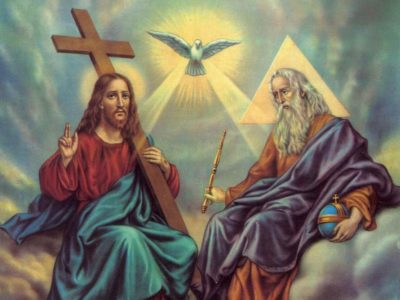
His truth, as revealed to him by the angel Gabriel, proclaimed that God was neither begotten nor a begetter; that there were no sister gods. In a way, this is purer than Christianity, with its trinity.

For me, the most remarkable aspect of Islam is the Quran, or Koran (Spelled accurately only in Arabic script). Let’s remember that Muhammad could neither read nor write. His revelations came at a time when memory, not books, held the history and literature of one’s culture. In fact, the literal meaning of the word “Quran” is “the recitations.”

Indeed, it was not written down in the prophet’s lifetime.

To allow memory to commit large amounts of information, it usually had to be in verse; poetic and alliterative, like a beautiful song. This is the Quran, passed onto the world by a former camel boy.

In the process of revelation, where does the human take over from the divine? How much wisdom, intellect and creativity is required of the human? How much did Muhammad have? Was it Gabriel’s truth but Muhammad’s poetry? Or did the angel do it all?

If Muhammad had a role, then he was more than a natural poet; he was a self-taught scholar with deep, strong knowledge of the Bible. It is said the Quran was meant to be a continuation or extension of the Bible; that a good portion is biblical tales or re-workings of the tales. Gabriel, of course, would know them. But how did Muhammad?

Like the carpenter’s son, he somehow overcame circumstances and acquired a wide and useful education. Maybe it was easier than we think. Without a system of schools and universities, maybe elders were required to pass along great stores of knowledge to the young. Throughout much of his life, Muhammad was an agent and mediator on long caravans up and down the Arabian peninsula. That’s a lot of time for doing nothing more than talking and absorbing. Learning.

Another interesting things about Muhammad and the Quranic revelations is they did not come all at once but over a period of more than two decades. When he needed something new, he fasted and mediated and went back up the mountain.

Sometimes he had to wait years. Other times inspiration came quickly.

It is said by some and disputed by others than on one occasion the verses he brought back were wrong and had to be recanted. It is alleged that he had been spoken to not by Gabriel but by the devil. These are the so-called Satanic Verses, which for a brief time are said to have re-legitimized the three sister gods.

After I finish with “The First Muslim,” I’m going to read a translation of the Quran. I’m certain to be surprised, and that what I read will be a departure from what I think I know or have heard.

Although purists believe Muhammad’s messages should not be read or spoken in any language other than Arabic, that seems to be changing. I received my English copy from two guys handing them out at the mall, a gift from whyislam.org.

My book was published in Istanbul and translated by Abdullah Yusuf Ali.

The name Abdullah, according to Hazelton’s book, means “servant of God.”

If we can get by the hate, the misunderstanding and the ignorance, there is much worthy to be learned about this culture.

Please listen to Ms. Hazelton speak on the Quran.

By Lanny Morgnanesi

A Buddhist would have no trouble with this

17 Jan

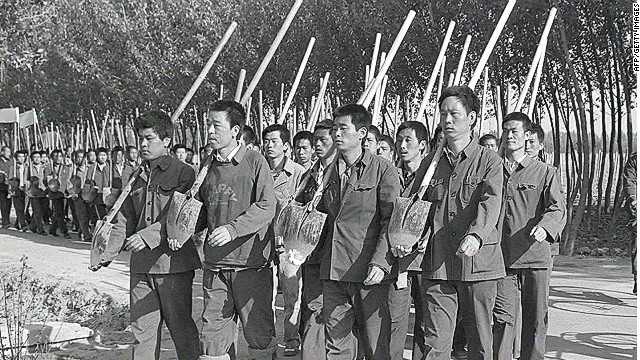
Chinese labor camps

It could be argued that all experiences are good ones.

Philosophically, we could say that if God is good and great then all our burdens are worthwhile and purposeful. We can even learn to like what we hated.

Last week in a bar I told a story of one of the worse nights of my life. I told the story with verve, delight and nostalgia. I got laughs. I was glad to tell it; glad it happened; glad to learn from it. For the first time I realized I was glad to have this piece of film on my reel.

It is too personal to tell here, so I won’t. Its importance is not in the sharing but in reminding me that the misery of each moment carries within it a miraculous value.

It was more than the bar story that forced this revelation. There was also a news story about China. The report said China might dismantle its system of labor camps.

I have no idea what a modern Chinese labor camp is like, but I’m familiar with the tradition of locking up political prisoners and trying to “re-educate” them. I’ve known many people who were victimized by this system during the Cultural Revolution of the 1970s. Some were driven to suicide or to the brink of it.

During this period, all schools were shut and an entire generation of young people was sent to the countryside to labor on farms. Some were considered “red,” or part of the revolution. Others were labeled “black,” or counter-revolutionary. For them it was harsher. They were watched closely and always under suspicion.

While all worked together, the “blacks” were more like prisoners and the “reds” more like guards.

From a first-hand witness I heard a story of a young woman – a “black” – who was laboring in mud. To keep the dampness out of her cloth shoes she put in newspapers. When everyone returned to their rundown barracks, a “red” youth noticed the newspaper inside this woman’s shoe contained a picture of Mao Zedong.

For that show of disrespect she was beaten.

But like myself in the bar story, this was a time of youth. The times contained moments of ultimate value.  Lasting friendships (even between blacks and reds) were forged. These “sent-down” youth, in some respects were very free. They grew up and learned about themselves and others. There is joy in that.

Which is why many Chinese from that generation – those living both in China and in the United States – visit these former labor camps while on vacation. It’s a for-real trend, and they visit with fondness and to share old times with comrades. They take smiling photos of themselves standing near the squalor they thought would be a permanent part of their lives. (Modernization hasn’t changed everything.)

What they went through is far, far, far from my so-called worse night. Yet they have reacted as I did. Their moments carried something and will occupy a peaceful part of their memories.

I don’t claim to truly understand this, and the exceptions must be legion. Even so, there clearly is something to this idea that all experience is good. And so my new goal is not to wait 30 years for warm nostalgia but to live fully and happily in the present.

To accomplish that in even a small measure would be exquisite.

By Lanny Morgnanesi


They only stone you if you confess

14 Nov

One of the worst qualities of the human species is its dastardly view of competing tribes.

For some reason, there is comfort in thinking that those outside the circle are monstrous barbarians capable of and responsible for numerous and unspeakable atrocities.

Get in close with these devils, however, and you generally find they are just like you; decent, with families and a respect for routine, calmness and peace.

To see things clearly, it helps to remember there are monstrous barbarians among all groups, but they are misfits who do not represent the norm.

A foreigner reading history may learn about the epidemic of lynching in America, but if he visited my town he would find no one there was involved in such things, or even capable of them.

Would he be surprised?

Recently I read an article that a group in Egypt is clamoring for sharia law. In random thought I wondered how many who advocate this form of Islamic governance really want to cut off someone’s hand for stealing bread. Most Americans, I’m sure, will think everyone who wants sharia supports cutting off the hands of thieves, as well as death by stoning for women who have committed adultery.

Perhaps I am both ignorant and naïve, but I would guess they don’t.

My guess is sharia brings comfort, predictability and harmony to the lives of devout Muslims; just as the 10 Commandments and Biblical law do for reverent Christians. I do know that in secular countries, Muslims use sharia on their own to settle family and business matters – without hurting anyone.

From what I now understand, sharia – like our own laws – is open to interpretation. In other words, there are ways around stoning and dismemberment.

And even if there is to be stoning and dismemberment, they cannot be administered on a whim.  There are rules and conditions.

For example, a Muslim woman can only be stoned for adultery if she either confesses or there are four male witnesses who saw the act being committed.

Is either likely?

The hand of a thief cannot be cut off if public property was taken, or if he stole because he was hungry or under duress. The stolen items cannot belong to his or her family, must be over a minimum value, and cannot have been taken from a public place. Also there must be reliable witnesses.

In short, there are fudge factors here.

I believe in secular law. Still, I’d like to understand how Islamic culture works among civilized people. I don’t understand sharia but am open to learning more.

Aside from the rare man willing to kill or maim his wife on any given day – and we have plenty of them in the U.S. – I don’t think Muslims routinely seek blood for justice.

Does anyone agree?

–By Lanny Morgnanesi

God and Man on a Visit To Russia

8 Sep

I like to think of Jesus as a man so I can marvel at his God-like brilliance and ability to see and express truth.

If you think of him as God, then his acts and works would not necessarily be worthy of attention. Pavarotti, after all, received no praise for humming a pop tune, nor Einstein for giving correct change to the paperboy.

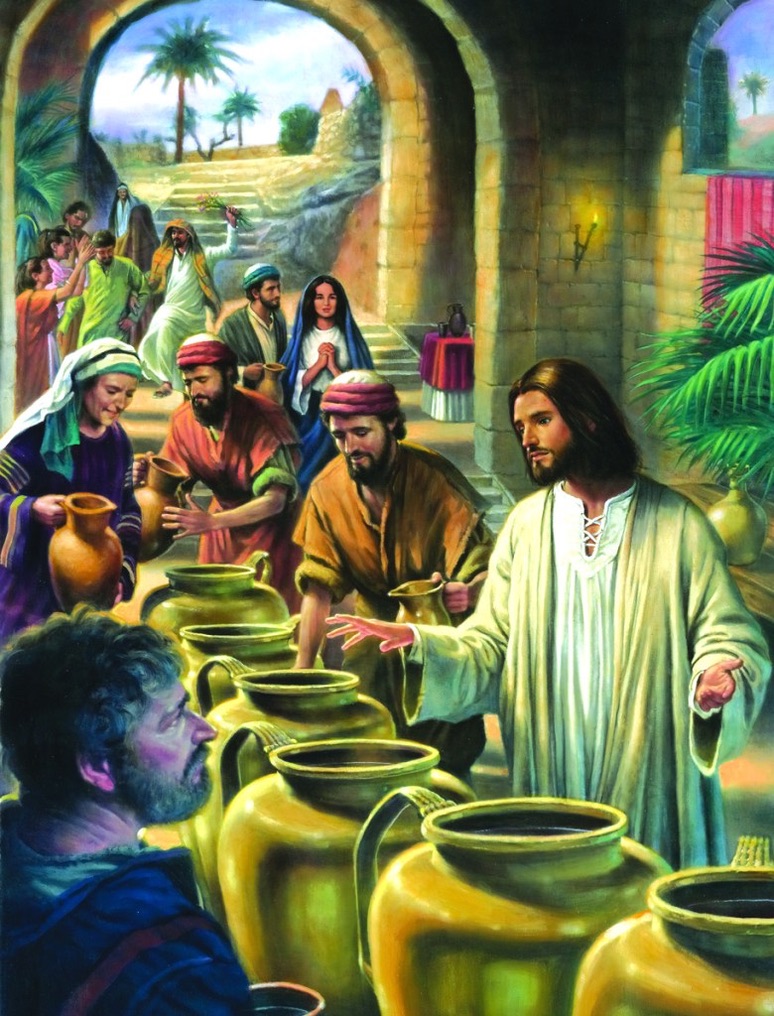
A god can easily transform water to wine; it is much more difficult for a man.

For me, one of Jesus’ greatest moments was when he was approached by spies trying to trick him into sedition. They coyly ask if it was acceptable to pay tribute to Caesar. Jesus, quick on his feet, asked them to produce a coin, which carried Caesar’s image.

Then came the unforgettable, genius response: “Render to Caesar the things that are Caesar’s, and to God the things that are God’s.”

In my last post I mentioned a rabbi named Joseph Krauskopf and his visit to Tolstoy in 1894. Today I’d like to discuss Krauskopf and his response when Tolstoy asked him about Jesus.

The intelligence and poetry of the answer brought to mind the “render” response.

In Russia at that time, Jews knew little of Jesus and those familiar with him cared not much for him. But Krauskopf struck Tolstoy as a different breed. The American rabbi from Philadelphia was an early member of the reformed movement and, among other things, advocated moving the Jewish Sabbath to Sunday as a way to bring Christians and Jews together.  He believed that all religions – including his own — contained good and bad, and that the good should be practiced and the bad eradicated.

Some Jews, I’m sure, refused to consider Krauskopf a Jew.

“What is your belief respecting Jesus?” Tolstoy asked.

Krauskopf told the writer, “I regard the Rabbi of Nazareth as one of the greatest of Israel’s teachers and leaders and reformers, not as a divine being who lived and taught humanly but as a human being who lived and taught divinely.

Can we safely say that he who lives divinely is divine?

Sometimes we allow words and their interpretation to muddle or even destroy something that in its raw form and on its own is simply and clearly exceptional.

I would love to hear from others, Christians and Jews, on Krauskopf’s statement about Jesus.

Secrets of the Universe Revealed – Or Not?

29 Aug

A pause in the conversation led the old man to look up at the cloud formation and think about his future, which is death.

“I wonder if you learn everything,” he said. “How it all came to be; its meaning and purpose. It can’t be like that Big Bang crap. How could it all have gotten down into an infinitesimal speck, and how did it explode, instead of being sucked into itself like a black hole? And if there was nothing outside of it, how did it have a place to go?”

Death would be sweet if it meant getting all the answers. Without a body you couldn’t do much, but if you knew everything you’d feel pretty good about yourself. It would be like learning how the magician did the trick, only a trillion times better.

My intention was not to depress the old man, but I told him my theory of the moment.

“I doubt we get to know,” I said. “Our opinion of ourselves is exaggerated. Considering all that exists, I’d say we lack importance. I’m sensing we are the equivalent of a low-level employee who gets no time or attention from the boss.”

Top management, to whom the secrets might be disclosed, probably occupies another planet or dimension, is not prone to war and genocide and generally makes things easier for the CEO rather than more difficult.

While the Bible tells how Jesus came to save us, there also are passages like this one in Isaiah:

All the nations before him are as nothing; and they are counted to him less than nothing, and vanity.

In a wonderfully written New York Times column (The Man in the Moon) Lydia Netzer says:

When humanity was in its infancy, we thought the universe revolved around us. Then, with Copernicus, we aged into heliocentrism, became aware we were one of a family of planets inside the walls of our house, the solar system. Nearby stars gather like a town, rotating through the galaxy, our country. Clusters are like continents. We realized in stages that we were very insignificant. And then, almost like grown-ups, we pulled our boots on and began to try to leave a significant mark anyway.

Sitting in a car seat next to the old man, I couldn’t accept that in a few years he would know it all. It’s too grand a gift. In the military, personnel are told things on a “need to know” basis. As humans, do we really need to know?

Once we have performed on Earth, it’s likely we will be whisked away like a bad vaudeville act. There’s plenty more in the wings.

But all is not lost.

“In a way, we are immortal,” I said. “Since matter is neither created nor destroyed, every atom that is you remains as part of the creation. After you die, your atoms eventually scatter. They say we could easily have been part of someone like Socrates or Newton. Can you image that? On the other end, you may help create the next Newton. But you won’t be conscious of it.”

“If what you say is true, I’ll make the next Newton but never know an ounce of what he will know,” he said.

“Look, this is only what I’m thinking today,” I said. “Tomorrow, when the clouds are different and I read a different Bible passage and cut and paste from a different New York Times column, I’ll have another opinion for you.”

“So maybe I will get to know everything.”

“Maybe you will.”

And then he went off to play cards with some ladies who had outlived their husbands and only worry about getting from one place to another without it causing too much pain.

— Lanny Morgnanesi

Jews and Muslims together; vet neglect; the easy life in Greece

14 Jul

A small assortment of items:

I discovered a rare, interesting and encouraging case of Jews and Muslims uniting. Both are working together against a regional court ruling in Germany that outlaws circumcision, equating it with bodily harm, a criminal act.

While the court ruled in a regional case with only regional authority, hospitals across Germany are reacting by banning the procedure.

Jews and Muslims, who circumcise their male children, see this as an attack on religion and have found common ground.

From the New York Times:

            “The often very aggressive prejudice against religion as backward, irrational and opposed to science is increasingly defining popular opinion,” said Michael Bongardt, a professor of ethics from Berlin’s Free University who added that the ruling reflected a profound lack of understanding in modern Germany for religious belief.


###


Prolonged wars drain the treasury because killing is expensive. Equally expensive, with no end date, is the post-war cost of curing – and the difficulty of actually doing an effective job.

In June Bloomberg Businessweek  reported that:

  • 1.3 million disability cases were filed with the Veterans Administration in 2011, a 48 percent increase from 2008.
  • 905,000 cases are awaiting action.
  • 14,320  VA employees must handle the load.

There really is nothing new in this. Since the Revolutionary War, it has become routine for the government to abandon soldiers once they no longer are needed.

###

Eating ice cream with a Greek national, I learned a little more about why that nation and its economy cannot climb out of its fiscal swamp. The Greeks just aren’t working very hard, especially in the summer.

Perhaps we all knew this, or at least thought it. But my friend made it clearer, telling me how the Greeks take a fairly long siesta after a hearty and leisurely lunch (the day’s main meal). They nap from 2:30 p.m. until 6 p.m., when they return to work.

A light dinner generally is eaten around 10.

In the summer heat, however, only the merchants who service tourists go back to work after the nap.

Once I recovered from the realization that Greece is basically a part-time nation, I looked at my friend – a U.S. resident undergoing a great deal of stress from multiple layoffs in her family – and asked, “How in God’s name can you leave a place like that?”

###

http://youtu.be/WIbYqxqtP38

Many clever lines in Woody Allen’s new movie, To Rome with Love.

Here is a rough paraphrase of one. It’s Woody’s character, a father speaking against his daughter’s new boyfriend, a left-wing Italian lawyer who he thinks is a communist.

“I understand being a leftist. I was a leftist when I was young. But I was never a Communist. Never. I couldn’t share a bathroom.”