Archive | Music RSS feed for this section

A Memory of Vinyl Records

2 Nov

By Lanny Morgnanesi

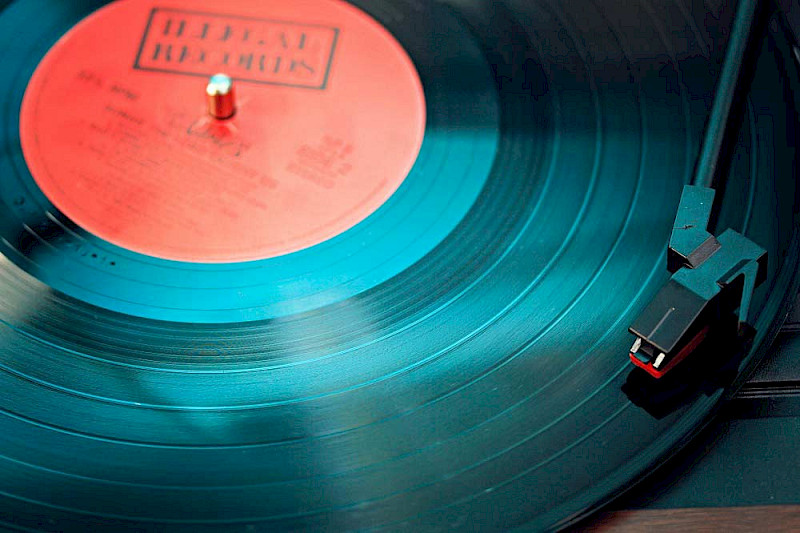
Today’s young hipsters just love their vinyl records. In my day, we had music on cassettes, but we also loved vinyl. At a party, we’d stack them up on the turntable and just let them go. Meanwhile, everyone at the party would just let themselves go.

There was one particular party where an inebriated fellow, let’s call him Dave, snuck off to a dark room with a young woman he was not especially attracted to or even fond of.  And the vinyl played.

When the party ended in the early morning, the woman – nicknamed  “The Pillow” — was gone, but he remained in a stupor on the floor, barely able to raise his head.

“Have fun?” I asked Dave. His answer, in the form it took, was unexpected and seemed to introduce a new type of metric not usually associated with the activity in which he had been engaged.

“Three sides of a record,” he said with a slur. “The Pillow blew me for three sides of a record.”

Taken aback, I had to ask him to repeat that, as if I didn’t understand, and in fact, I didn’t.

“She blew me for three sides of a record,” he said.

Yes, that’s what I thought he said.

Partly owing to liquor and partly owing to a lack of enthusiasm, Dave did not reach his moment. During the encounter, he simply sat there on the carpet in the dark room while the vinyl played and The Pillow attended to him. But he obviously paid attention to the music. That’s what I found both intriguing and offsetting. His audio preoccupation during his time was, to my mind, not an effective way to optimize the experience. With a woman seeking to give you extreme pleasure, does one count? That might be the last thing I’d do.

 And it must be noted that the records David spoke of were not skimpy 45s. These were LPs – that’s short for long playing. LPs were and are 12-inches wide. Each side hold roughly 22 minutes of music. So, for Dave and The Pillow, their marathon session lasted in excess of an hour. If you were watching TV, that’s a full episode of Bonanza.

When LPs were the dominant form of music, record owners knew their recordings intimately. This was the ‘70s, and we called these precious pieces of vinyl “albums.” Each was a treasure to its owner, who knew every song and the order in which they appeared, knew when the A side or B side was playing, had studied the album cover art for hidden messages and symbols, had read the album notes and knew who was playing on each track. Considering all this, perhaps it was unnecessary for Dave to count each song or even pay much attention to the music. Instead, he could have just checked in occasionally, recognizing a song from one album, then focusing back on the performance in front of him, savoring it, enjoying it, then checking back on the music later, hearing another song and realizing the initial record had finished and a second one had started, and so on.

This seems much more realistic than counting individual tracks. But now, so many years later, I wished I had asked him how he did it, how he knew three sides of a record had played.

Then there’s the question of how it ended. I never asked this either. Did she tire and quit, or did he tell her to stop? Maybe the party just ended and so did they. A more vexing question is: Why in God’s name do I even think about this?

That may be the most disturbing aspect here. I’m oddly triggered when I see vinyl. I don’t reminisce about the mystical music. I dwell solely on the sides, three sides to be exact. For a certain activity, that’s a lot of sides. And it’s an everlasting memory for me. I can’t imagine what it is for Dave.

Ah, he’s probably forgotten.

And fortunately for me, all my music today is digital. I wouldn’t have it any other way.

A New Look at Charlie Parker’s Son, A Decade After His Death

26 Apr

By Lanny Morgnanesi

A writer may write, and may be appreciated, but for him or her there is nothing like, say, applause. So writers take satisfaction in notes sent by readers. I received such a note this week, a reaction to a simple piece I wrote 10 years ago, one that may not have been entirely accurate.

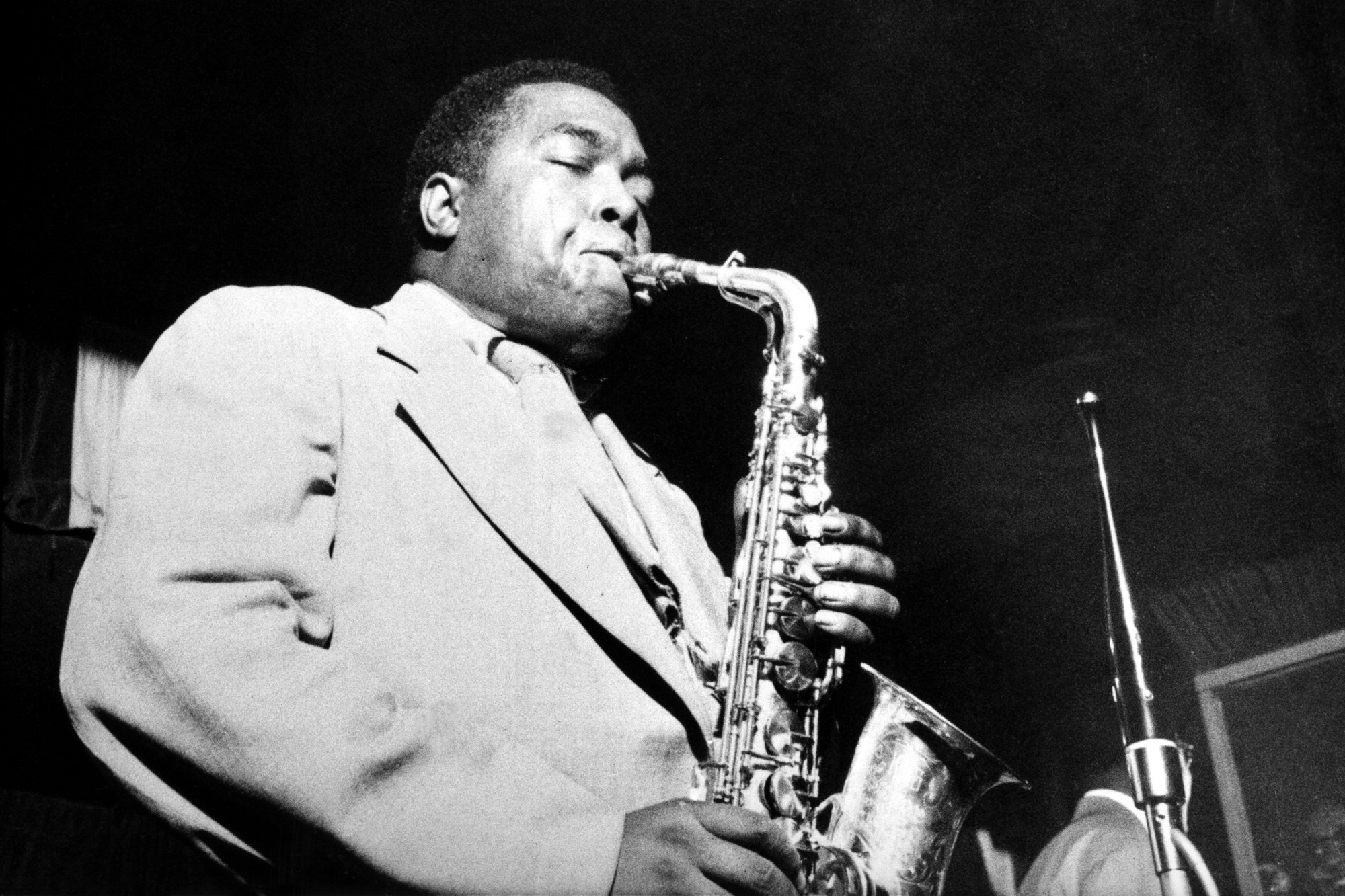
It was a sad piece, about the death of a man named Baird Parker, who at the time of his death worked quietly in a Lansdale, Pennsylvania, grocery store. In his life, Baird Parker had known fame, but it was not his fame. It was his father’s, a man named Charlie Parker, a saxophonist and one of the greatest jazz innovators of all time. The headline on my story was: “Is the son of a god a god? The problem with famous sons.”

What I wrote was based primarily on Baird’s obit and included a statement from Baird’s mother that his life, for the most part, was destroyed by the fame of his father.

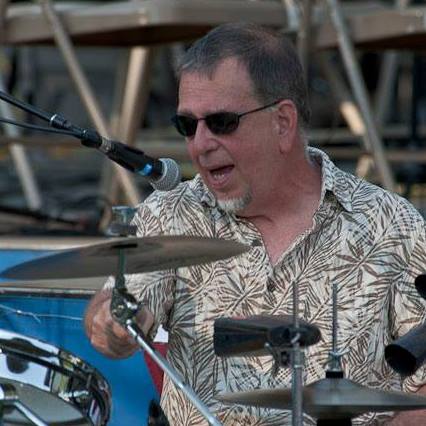
That was 2014. Ten years later, on the anniversary of Baird’s death, I received an online message from his old roommate, a drummer. For a time, the two lived together with their girlfriends on Clinton Avenue in Doylestown, about five minutes from my home. The roommate told me that Baird’s life was not one of sadness, that there was success, joy, happiness; that it was a good life, one to be celebrated. It was a simple message but moved me greatly. Most important – and this was not in any obit – Baird was a musician and a composer. On the 10th anniversary of Baird’s death, I now share with you drummer Paul Bozzi’s touching account of his old friend.

Paul Bozzi

Lanny, I read your post about Charles Baird Parker. I was disappointed and I thought I would take this opportunity to fill in a few details on the 10th anniversary of his passing. His life was not a failure by any means. Here is what I know.

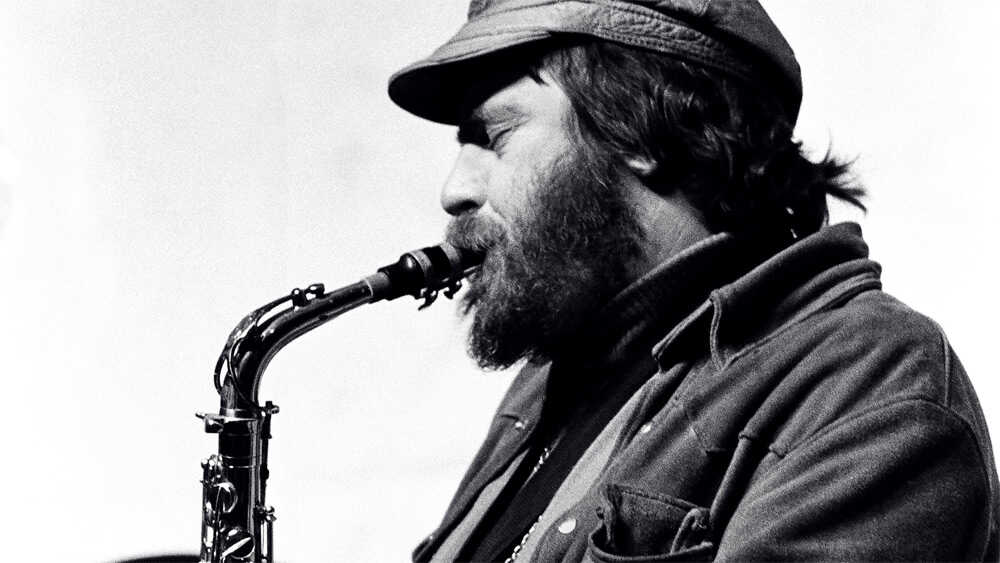
Charlie “Bird” Parker died in 1955 when Baird was only 3 years old. Shortly after that, Bird’s widow, Chan moved the family to Paris. Chan remarried another great saxophonist, Phil Woods. Baird studied guitar and created a unique style, slightly dark and moody with a relaxed groove. His guitar influences ranged from Jimi Hendrix to Django Reinhardt.  

In the early 70s, Baird moved back to Pennsylvania. I met Baird in 1973. My girlfriend had known Baird as a child when they both attended Ramblerny, a summer camp for the performing arts in New Hope, Pa., that has become a thing of legend. Other “campers” included the Brecker Brothers, Holly Cole and the recently passed Richie Cole, who after Phil Woods died had become the one remaining bearer of the bepop saxophone. Sadly, with his passing, there seems to be no successor to truly carry on that torch.

Phil Woods

We were living in Connecticut at the time and the best friend of my girlfriend was in a relationship with Baird, so we came down to visit for a weekend. The drummer in the band Baird was working with fell ill on Saturday and they asked me to sub for him. A few days later I returned to CT and picked up what I needed and moved to Doylestown, Pa. to join the band.

We moved in with Baird and his girlfriend in a two-floor apartment on North Clinton St. in Doylestown, where we stayed for a few years. During that time, we worked with a few bands, most notably, Ronnie Rinard and The Shadows.  Ronnie was a well-known Elvis impersonator, and I think he really did channel Elvis. Ronnie had a great voice and amazing stage presence, and in true form he was absolutely eccentric. From 1972 through 1977 we played some crazy joints as well as big clubs around Pennsylvania and New Jersey. Neither Baird nor I were big fans of Elvis, but we were young and happy, the money was good and the gigs were plentiful. Several nights a week, we would hop into his bright red Oldsmobile 442 convertible, he would quip “we’re off like a herd of turtles” and we would be on our merry way to another gig. Never a dull moment! If we ended up in a country joint where the clientele was rough and maybe a little racist about having a black man on stage, Baird would speak French into the mic, until his warm sense of humor would defuse the situation. He was so funny, and often had the band in stitches with jokes and witticisms about music and life in general. Often, at 3 am we would end up at Doylestown’s now-defunct Ed’s Diner (known by the regulars as “Dead’s Diner”) where we would enjoy the company of other late-night denizens and slam down a breakfast (or two sometimes)  before slipping around the corner to North Clinton St.

During that time, we also formed a group to play and record Baird’s original compositions. Unfortunately, all those recordings have disappeared. A great personal loss to me as the music was unique and now lost to the universe forever. In 1978, I took a gig touring with a band after which I returned to CT to start a family and lost touch with Baird.  Then around 2010 I went to Bucks County to ride the Delaware Canal bike trail. While there I looked him up and found him in Lansdale, Pa. where he had opened a music store, I believe it was called Birdland Music. He was doing quite well, owned a home and was living happily with a beautiful young woman and enjoying his life. Also playing with local musicians, many of whom had no idea of his lineage. I visited every summer for the next couple of years. Eventually, he closed the store and wanted to try something different. So he took a job as a baker at a grocery store. He enjoyed cooking and he wanted to learn about baking. We visited a few times after that until that day in 2014 when I received the devastating call from his girlfriend with the news of his passing. I was crushed. We had plans of the two of them coming to CT for an extended visit in the summer that year.

Charlie Parker

Baird was a joyful, humble, hardworking, extremely intelligent, talented and kind man. He was the son of a great innovator, and he had the same creative pulse running in his blood. He had been born into jazz royalty, and he accepted that and was proud of it. We talked about it a few times and you could hear the pride he had about his dad and his stepfather Phil Woods as well. Many famous jazz players knew him from his childhood, and he kept up with some of them. We once attended a Chick Corea concert where we were invited backstage and he was greeted warmly by Chick. He often spoke of his childhood relationship with Dave Lambert of the jazz vocal trio, Lambert, Hendricks and Ross. Dave was killed in an automobile accident in 1966.  Jon Hendricks’ telling of the story says that Lambert was a compulsive do-gooder and that he had stopped to assist another motorist in changing a flat tire. I can imagine Baird doing the same thing, he was just that kind of man.

Play on Baird, miss you brother!!

Paul Bozzi

Acting like you’re famous and wishing you were: The Million Dollar Quartet

3 Sep

million-dollar-quartet2

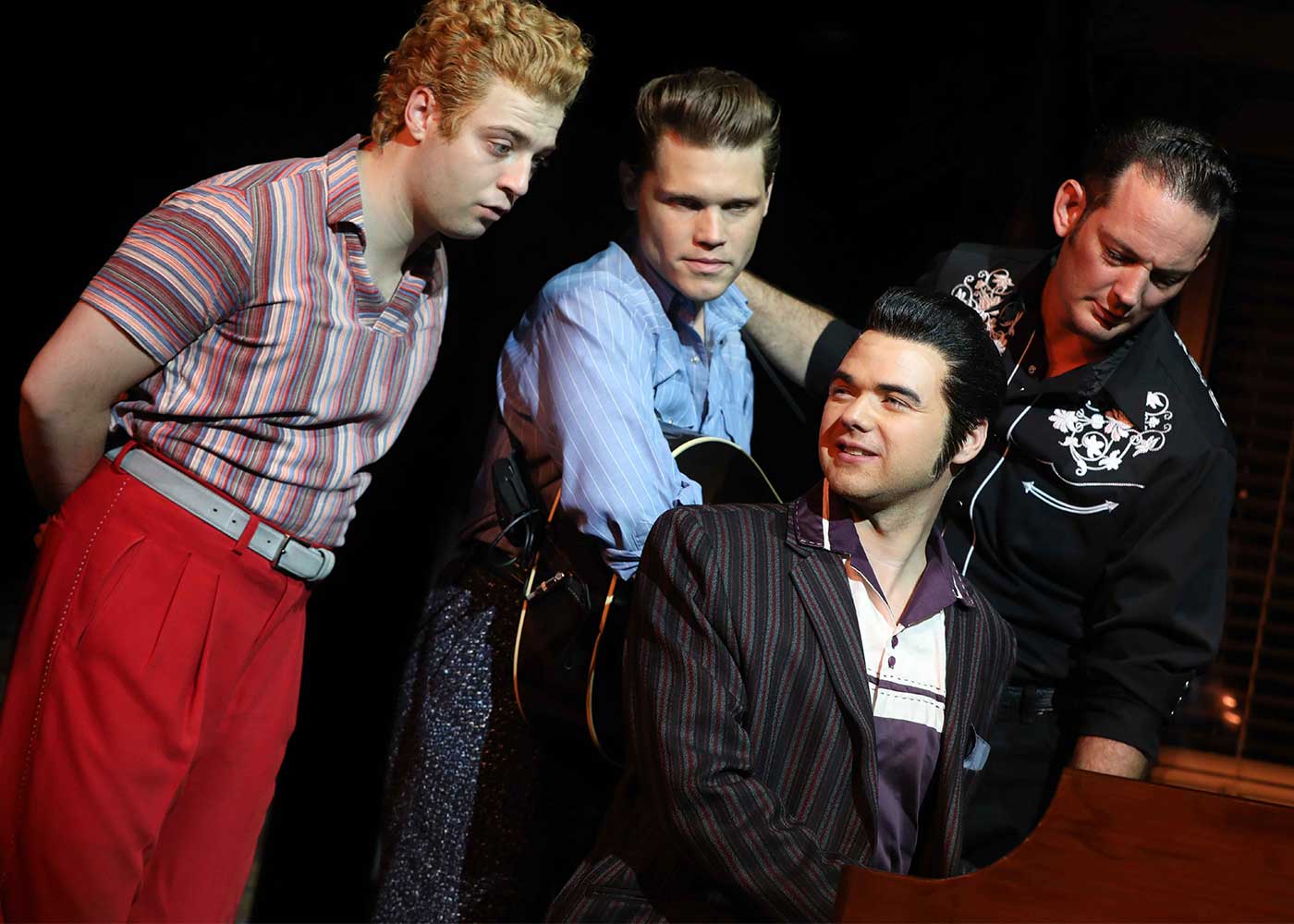
Actor/musicians (from left) Brandyn Day as Jerry Lee Lewis, John Michael Presney as Carl Perkins, Ari McKay Wilford as Elvis Presley and Sky Seals as Johnny Cash

If you’ve been to a minor league baseball game, you know it’s tame fun with a hint of sadness. What’s sad is that many of the wildly ambitious and talented players will never hear the roar of a real crowd or get the glory that accompanies fame.

For me, the experience is similar to seeing a Broadway show at a regional theater. The one difference is that on good nights the actors at a regional theater do hear the roar, a sound satisfying beyond money. Still, after the curtain falls, you’re in a bar wearing street clothes and looking normal and someone asks what you do for a living and you’re afraid they’ll laugh if you say you are currently performing on stage as Elvis Presley.

At the Bucks County Playhouse this weekend in New Hope, Pennsylvania, I saw not only Elvis but actors portraying Johnny Cash, Jerry Lee Lewis and Carl Perkins. This 50s-era group of rock and roll royalty once came together by chance at a small recording studio called Sun Records. For a few brief hours on Dec. 4, 1956, they formed what came to be known as the Million Dollar Quartet.

Million-Dollar-Quartet-hits-high-note-at-Bucks-County-Playhouse

That was the show I saw, “Million Dollar Quartet.” It was based on the recordings the four made under the guidance of legendary producer Sam Phillips. When I walked into the theater my first impression was that the set, a recreation of Sun Records, looked really good. Knowing little about what I was to see and hear, I was even more impressed when a Playhouse employee announced that all music would be live and performed by the actors on stage. Nothing had been prerecorded.

As I waited for the show to start, I assumed the audience would be kind but not overly enthusiastic, mainly because it was a very old audience. More than a few people had walkers and canes and I wasn’t feeling too good myself. When the music started playing – there are 22 numbers in the show – I was relieved that the reaction was, if not effusive, at least respectable.  The performances, however, were so good that younger people might have been up and hollering. Even so, I was confident the people who created the show were experts at pacing and that we weren’t supposed to really let go until the end. This turned out to be true.

A few points in general about the show, which continues thru September 29: Johnny Cash didn’t look much like Johnny Cash and Jerry Lee Lewis came off too much like Harpo Marx, but as a regional show is was worth the ticket price. As one of those so-called jukebox musicals, songs dominated over plot. A minimal story line involved Sam Phillips’ struggle over whether to sell out to RCA; Johnny Cash’s worry about telling Sam he was leaving Sun for Columbia Records; and Carl Perkins’ anger at Elvis for recording his song, “Blue Suede Shoes.”

milliondollarquartet_originalphotoresizedjpg

From left, the real Jerry Lee Lewis, Carl Perkins, Elvis Presley and Johnny Cash

In the end, everyone came together in mutual respect, understanding and friendship. This fresh harmony allowed the actors to finish in concert style with three strong numbers. Right before the concert, there was a touching bit that probably doesn’t sound touching if written about. Sam Phillips, the record producer, asks the four boys to pose for what he says will be an historic photo. They pose, Sam shoots, and the actual photo the real Sam Phillips took on Dec. 4, 1956 comes down from the ceiling. Everyone claps. Some tear up.

The concert consisted of  “Hound Dog” by Elvis, “Ghost Riders In the Sky” by Cash and “See You Later Alligator” by Perkins. These numbers were clearly full-tilt/high energy and the crowd, some with walker assists, finally got on its feet and went nuts. After “Alligator,” the boys proudly marched off stage and Sam Phillips urged us to demand an encore, which we already were doing.

The boys came back. They ripped it up and shook the house with Jerry Lee Lewis doing “Whole Lotta Shakin.” Sam Phillips, who so far had only dialogue and narration, coolly pulled out a harmonic and gave an incredible mouth organ solo.

It all ends, and we cheer loudly. This was the best part because you could see the actor/musicians break character, glance at each other in unexpected ways and silently say with expressions of delight and satisfaction, “Seems like we did pretty good tonight.”

The loving reception gave them hope that even if they are in the minors now, one day soon they could be called up.

By Lanny Morgnanesi

Does anyone remember John and Peter’s bar and the great Johnny’s Dance Band?

24 Mar

Is the son of a god a god? The problem of famous sons

13 Apr


charlie  parker


In Bob Dylan’s remarkable autobiography, “Chronicles Vol. 1,” there is a retelling of the evening he went to see a performance by Frank Sinatra Jr.


It was an unusual turn in the book. After reading about the young man from Minnesota finally winning the day amongst all the competing voices of Greenwich Village, we have him stopping in – very deliberately – on someone so apart from folk culture that the attraction cannot immediately be understood.


Dylan very much liked the performance. He liked the voice and style of the man who could never, ever, stand outside his father’s shadow. In the book, Dylan expresses true sadness for the predicament of the junior Sinatra, perhaps knowing that someday his own children would face this struggle for meaning, purpose and acceptance.


bobdylan1I’m not sure why, but we expect greatness from the off springs of the great, or at least some semblance of distinction. And like Dylan, we take the disappointment to heart.


There was a great man of jazz that many young people may not know. His name was Charlie Parker, but everyone called him “Bird.” He played the saxophone and was an incredible innovator and force in the world of music. “Birdland,” a jazz club in New York, was named in his honor.


Frank-Sinatra-jrJust recently Charlie Parker’s son died and I read his obit. I hadn’t known this man even existed, but apparently he lived a couple towns over from mine, in Lansdale, Pa. Learning of his simple, pedestrian life, one of relative failure, troubled me.


The great man’s son – Charles Baird Parker — had for a time worked in the bakery of his local supermarket. But for many years prior to his death he was unemployed. He lived off the royalties of his father’s music.

“The jazz world expected Baird to fill Bird’s shoes,” his late mother, dancer Chan Woods, wrote of her son. “Those expectations almost destroyed him.”


I’m sure his father, who died in 1955 at age 34, wasn’t around much to guide him. Bird, for all his success with music, had nearly destroyed himself with drugs and alcohol. Sometimes he would play on the street for drug money. It is even said that he once pawned his instrument.


Yet Bird is a music god, and the common belief is that the son of a god also deserves worship. Because it is impossible to worship a supermarket baker, we end up feeling sorry for the baker and for the god.


The obituary did not list the time and date of the funeral. Had it done so, I might have gone. I can’t say why. It would have been strange … about as strange as Bob Dylan going to a performance by Frank Sinatra Jr.


Lanny Morgnanesi


<iframe width=”420″ height=”315″ src=”//www.youtube.com/embed/eAQg-55tZxg” frameborder=”0″ allowfullscreen>

A musical legacy: Black, proud, loud and wet

18 Mar

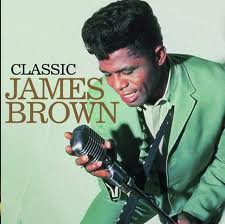
Hard work is to be admired, as is James Brown, the Hardest Working Man in Show Business.

There’s a new biography out on Brown, who was also known as the Godfather of Soul. The book is by RJ Smith and called, “The One: The Life and Music of James Brown.”

Dan DeLuca, in a review that appears today in the Philadelphia Inquirer, repeats an anecdote from the book illustrating the intensity of Brown’s performances. The story had the entertainer playing in Tbilisi, Georgia, in the former Soviet Union, where a swimming pool separated the audience from the stage. As the show peaked with the number, “Sex Machine,” Brown – at age 73 – leaped into the water. He sank, and band members jumped in after him.

Wet, the entire ensemble finished the show.

According to DeLuca, Brown would sweat so much on stage that band members couldn’t avoid sliding on the drippings. After shows, Brown was rehydrated with an intravenous hook up.

Brown was a perfectionist and very tough on his musicians. He’d fine them for playing the wrong notes, DeLuca reports. He wanted to be the best. After Elvis died, Brown was given a private viewing of The King and was heard to have said, “Elvis, you rat. You’re not number one anymore.”

The book apparently paints James Brown as self-centered (his hair was done three times a day) and non-empathetic. But he rose from poverty, took nothing and – from what I understand – gave a lot of money away to help children, lectured to school kids on the importance of education (he had little) and was a social activist credited with preventing riots after the assassination of Martin Luther King. (He agreed to a rare television concert the quelled anger and took people off the streets.)

He was patriotic, but bitter. Once asked to give advice to a rising Tiger Woods, Brown said, “Get him to understand how vicious this world is. Everything in this world disappears and vacates.”

Add to his many credits: Philosopher.

Hey, Hey I’m a Monkee!

1 Mar

Image

The Associated Press obit on Davy Jones, lead singer of the Monkees, used the adjective “pre-fab” to describe his band. When it was assembled by television executives trying to rip off the Beatles – their charm, their wit and their movie “A Hard Day’s Night” – the search was for actors, not musicians. Oddly, they came together pretty well as a band, with remarkably good songs. It wasn’t until today that I realized some of the top people in the business were providing them with material and musical assistance.

The AP obit mentions such helpful luminaries as Carole King and Gerry Goffin, Neil Diamond, Billy Preston, Ry Cooder and Neil Young.

How can one not succeed with that kind of support?