Archive | literature RSS feed for this section

Old Books Come Back to Life: Remember “Naked Lunch”?

1 Jun
Writer William Burroughs

Writer William Burroughs


The New York Review of Books sat on the table face up, showing the lead item about James Baldwin. This was odd, since Baldwin died a quarter century ago. No new books from him.

“As a writer of polemical essays on the Negro question, James Baldwin has no equals,” the review said.

The Negro question?

Oh. This was not new. This was old. It was a copy of the first edition of the New York Review of Books, reproduced on the 50th anniversary of the publication.  The Review was launched in 1963 as salve to a citywide newspaper strike. The most prominent authors of the day contributed. They did so on short notice and for no pay.

What a time that was!

Ideas and making a statement were more important than making money.

As a collective voice from the past now being read in the present, the Review of Books gives more than a few hints of intellectual unrest. The best minds of the day seemed to be laying the groundwork for a coming cultural break with convention and the status quo.

It’s right there, interwoven amidst the literature.

Those doing the writing were the avant-garde, and people listened to them. Looking over their names, it is difficult to recall writers today with reputations as large. Among the contributors were Norman Mailer, William Styron, Robert Penn Warren, Susan Sontag, Gore Vidal, Paul Goodman, Robert Lowell and Jules Feiffer.

If any group reflected the spirit of the times – or perhaps the coming spirit — this one did.

As did the books they reviewed.

Included was “Naked Lunch” by William Burroughs, the grandfather junkie to the Beat writers. “Naked Lunch” is perhaps one of the most unclassifiable novels in the English language. The story – often bizarre and fantastic — takes place inside the head of a man taking a drug cure from a quack. At one point in his career Burroughs would write his prose on paper, cut it up then randomly reassemble the pieces

“Naked Lunch” was reviewed by Mary McCarthy, whose books include “The Group” and “Birds of America.”

At the close of the review, she deals with the “pained question that keeps coming up like a refrain” – Why is this book being taken seriously?

Her answer is that for the first time in recent years, a really talented writer meant what he said.

This was the coming era.

Norman Mailer

Norman Mailer

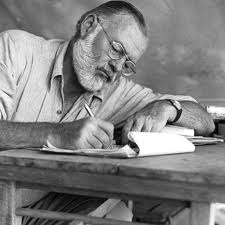
Some of the celebrity reviewers, those with the larger personalities, were overly tough on their colleagues. Normal Mailer, always pugnacious, said “That Summer in Paris” by Morley Callaghan was “dim” and mostly without merit. One passage, however, saved the book, Mailer said, because it exposed the true character of novelist Ernest Hemingway, who two years earlier committed suicide.

The tale has Callaghan, who boxed in college, getting into the ring with the much larger Hemingway. F. Scott Fitzgerald was the timekeeper. In a round that went long, Callaghan flattened Hemingway. Fitzgerald blamed his poor time keeping.

“Oh, my God,” he said. “I let the round go four minutes.”

Hemingway, perhaps from the canvas, answered, “All right, Scott. If you want to see me getting the shit knocked out of me, just say so. Only don’t say you made a mistake.”

To me, this shows meanness and poor sportsmanship.

Was Hemingway a coward?

Was Hemingway a coward?

To Mailer, who also boxed, it led him to concluded, “There are two kinds of brave men. Those who are brave by the grace of nature, and those who are brave by an act of will. It is the merit of Callaghan’s long anecdote that the second condition is suggested to be Hemingway’s own.”

In essence, Mailer was calling Papa a closet coward, and he cited his suicide as evidence of this cowardice.

Then there was Gore Vidal. He described John Hersey’s book, “Here to Stay,” as  “dull, dull, dull.” Hersey was trying to invent something called “New Journalism,” which later would boost the careers of people like Tom Wolf and Hunter S. Thompson, but Vidal criticized him for cramming too many facts into his sentences.

John Updike is one of America’s best writers but Sir Jonathan Miller, a Cambridge graduate who did books, plays, movies and TV, said Updike’s “The Centaur” was “a poor novel irritatingly marred by good features.”
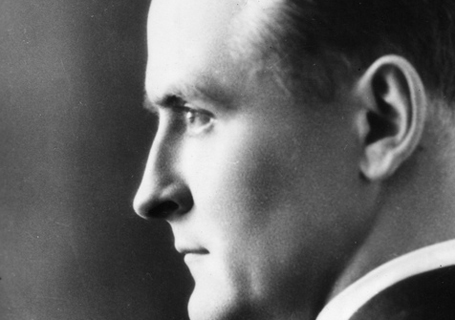
F. Scott Fitzgerald, poor at keeping time

F. Scott Fitzgerald, poor at keeping time

These reviews pretty much stuck to literature, but an unusual number referenced the Cold War and voiced the fear of imminent doom. It was hard to miss the Soviets. One reviewer discussed four books on the economy of our then-mortal enemy. Another reviewed Alexander Solzhenitsyn’s short gulag novel, “One Day in the Life of Ivan Denisovich.”

Robert Jay Lifton, in a review of a compilation called “Children of the A-Bomb,” said, “The thing we dread really happened in Hiroshima and Nagasaki. But the world resists full comprehension of this event, symbolizing massive death and annihilation.”

He and others suggested that faith in the future was fading, and that without change mankind’s time was limited.

Reviewer Lewis Coser said education and information no longer were the answer.

He called the well-informed person “a cheerful robot.”

“The increase of information may indeed have led, contrary to the belief of the Enlightenment, to a decrease in rationality,” he said.

A remarkably forward-looking book carried the harmless title, “The Exploration of Outer Space.” It written by A.C.B. Lovell and reviewed by James R. Newman. Both lauded the development of radio astronomy as a way to finally understand the composition of the universe.  They believed recent findings made it almost certain that other solar systems contained life and that future contact was possible.

Nuclear war: On everyone's mind in 1963

Nuclear war: On everyone’s mind in 1963

But there was darkness overlaying this optimism. The review expressed a grave fear that humans, if they don’t destroy themselves first, one day would destroy life on other plants, either deliberately or through contamination.

The review ends this way:

“”I myself do not find the prevailing space-race chauvinism and the threat to other planets as horrifying as the threat of global extermination. Nor do I derive consolation from the thought that if our managers turn the earth info a lifeless stone other forms of life will continue elsewhere in the universe. But I am impressed with Lovell’s deep sense of responsibility about life everywhere, and I wish there were many more scientists like him.”

And that’s the way it was in 1963.

Coming would be Dylan, hippies, communes, the counter-culture; Burn Baby Burn, Don’t Trust Anyone Over 30; a refusal to be bought and sold; hope I die before I get old.

 By Lanny Morgnanesi


In some lives, comfort and peace are luxuries

6 Apr


Margaret Smith -- from the New York Times

Margaret Smith — from the New York Times

A story today in the New York Times by Dan Barry tells how an 89-year-old Delaware woman was kidnapped, placed in the trunk of her car for two days, them dumped in an overgrown cemetery of weeds and sand. No food, no water. The dramatic part is how she crawled out of that cemetery on bloodied hands and knees.

“I’d stop for a few minutes, then start crawling again,” said Margaret E. Smith.

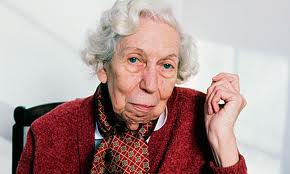
Author Eudora Welty

Author Eudora Welty

The woman, who has a heart problem, survived to calmly tell her story.

In many ways, the incident reminds me of a short piece of fiction by Eudora Welty called, “The Worn Path.” Written in 1941 and first published in the Atlantic, this classic piece is about the all-day journey of an elderly woman who walks through a forest, up and down hills, across a creek on a log, through barbed wire and through thorns.

As she walked, she’d talk to herself.

“I in the thorny bush,” she said. “Thorns, you doing your appointed work. Never want to let folks pass—no, sir. Old eyes thought you was a pretty little green bush.”

Only in the end do you learn it was a regular walk to town for her grandson’s medicine, and she had no money to pay for it.

Quite a moving tale and, I’ll bet, based on a true person, a person like Margaret E. Smith, who comes from a town called Slaughter Neck, something right out of a Eudora Welty story.I only recent read “A Worn Path.” I picked up an anthology and there it was. I would suggest you read it. It’s a lesson in determination and hard living, and how for many people routine is nothing more than the everyday torture of life.

By Lanny Morgnanesi

The lives we lead are not our own: Why privacy is valued

14 Mar


Privacy

Aton Chekhov, in one of his most famous stories, pauses from character development to discuss privacy.

The passage comes in “The Lady with the Pet Dog,” about a young woman and an older man having an adulterous affair that they have kept secret.

“The personal life of every individual,” he wrote, “is based on secrecy, and perhaps it is partly for that reason that civilized man is so nervously anxious that personal privacy should be respected.”

That was written in 1899, long before the act of “liking” something would send data on your habits and behavior to thousands of marketers. The Internet has become a place where we share its wonders and benefits in exchange for our privacy. We do so either without complaint, or else unknowingly.

Chekhov didn’t have to worry about such things. Nevertheless, he studied the nature of the private life and believed “every man led his real, most interesting life under cover of secrecy as under cover of night,” and that everything in the open was false.

A person who, for career or avocation, looks closely at something will share this notion. For as they investigate one thing they invariably see other things not meant to be seen.  Investigate the assassination of President Kennedy and find that there is a cult in Texas wearing underwear made of aluminum foil. I made that up. Real examples would be stranger.

Last night I read the Chekhov passage on privacy. This morning in the newspaper I noticed stories about:

  • A “cannibal cop” convicted of conspiracy to abduct, roast and eat women.
  • An ex-principal charged with possessing child porn.
  • A bookkeeper who stole nearly $650,000 from her employer over several years.

This was just one section in one newspaper in one day.

I agree with the Russian writer that we don’t project much truth in our daily comportment, but it is a little frightening to think that people we consider normal  harbor great inner darkness. Perhaps it’s the complexity of our DNA and the innumerable variations of its structure that produce humans destined to act or think in so many different ways that there is no normal and that everything imaginable – and unimaginable – gets covered.

We are going to be learning a lot more about this, what with cameras everywhere now and odd folks freely indulging themselves on the never private Internet.

All of us are bound to long for the days when those phony exteriors Chekhov spoke of hid the harsh truth of our species.

By Lanny Morgnanesi

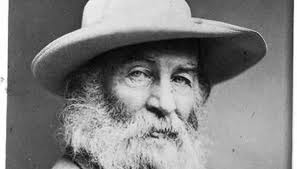
Walt Whitman – better now than ever

18 Oct

Here’s a little secret:

Over the years, the things we were forced to read in high school have gotten better.

It was punishing to read great literature at a young age. Personally, I was not only incapable of appreciating it; I didn’t want to appreciate it.

Aside from things like “Catcher in the Rye” and maybe those THE FUTURE IS GOING TO BE TOTALITARIAN books, there was no desire to spend time with genius writers. The time was for living; not so much for reading.

After the edge is worn off life experiences, literature has more of a place. Yes, you can jump out of an airplane if that’s your idea of excitement, but it’s not like going to a Friday night football game and expecting a fight; it’s not like kissing a girl that you cannot stop thinking about; it doesn’t compare to that first road trip with five guys in a rusty car and a total of $100 between you.

Certainly none of this can compete with Melville or Ezra Pound. Those two can’t even compete with the understated magic of hanging around a parking lot complaining that there is nothing to do – but hoping that soon there will be.

Those anticipatory adrenalin rushes fade for reasons both physical and metaphysical. When they are gone, great books becomes much sweeter.

Someone recently discarded an anthology of American Literature. I picked it up. The book is filled with writers rarely read outside of classrooms but there are in there because they are brilliant.

I reviewed the preface to Walt Whitman; learned how much time he spent on “Leaves of Grass,” basically rewriting it his entire life; thought he was just a human and that the person describing him was over stating his case.

Then I read Whitman, putting him in the context of his time (meaning no one ever wrote like this before), and quickly realized how deserving he is of the place he holds.

I remember from high school that Whitman was considered the ultimate optimist, the lover of everything.

“I am satisfied – I see, dance, laugh, sing.”

He would not allow bleakness and atrocity to wither his spirit.

Battles, the horrors of fratricidal war, the fever of doubtful news, the fitful events;

These come to me days and nights and go from me again,

But they are not the Me myself.


To Whitman, there is no death . . . as mortals understand it.

All goes onward and outward, nothing collapses,

And to die is different from what any one supposed, and luckier.


Would I seem ridiculous if I gushed: This kind of stuff goes on and on for page after page after page.

The enormity of it overwhelmed me. Whitman’s ability to sustain his pace and prophetic message mystified me.

My advice then: A retreat to the refuge of beauty and truth, even if they are under appreciated, is recommended when you can no longer find the Heart of Saturday Night.

And so I end, from the anthology, with Emily D:

I died for Beauty – but was scarce

Adjusted in the Tomb

When One who died for Truth, was lain

In an adjoining Room –


He questioned softly, “Why I failed”?

“For Beauty,” I replied–

“And I – for Truth – Themselves are One—

We Bretheren, are,” He said—


And so, as Kinsmen, met a Night—

We talked between the rooms—

Until the Moss had reached our lips—

And covered up—our names—

–By Lanny Morgnanesi 


Tolstoy, who wrote of aristocracy, had much in common with the Occupy movement

5 Sep

My work recently brought me to the writings of a reformed rabbi named Dr. Joseph Krauskopf. He lived around the turn of the 20th century. While not well-known today, he was friends with presidents and world leaders during his day.

In today’s light it is easy to categorize him as a visionary and possibly a radical. What may be truer is that free thinking and free speech flourished more then than now, and that others at the time were expressing similar ideas – equality and dignity for all, women’s rights, the end of poverty, a government hand in the inspection of food and housing, world peace.

In 1894 Krauskopf traveled to Russia and met with Count Leo Tolstoy, known now as a great novelist; known then as an incredibly influential, larger-than-life, cultish leader of humanists. Krauskopf, in utter awe of the man, recorded every facet of the meeting. The account is fascinating and revealing. In one exchange, the Russian asks the rabbi if he had read “What to Do,” a work of non-fiction by Tolstoy calling for the liberation of the oppressed.

Krauskopf had not, but said he did read “War and Peace” and “Anna Karenina.”

Tolstoy, according to Krauskopf, described those books as trash and said he would prefer if the world instead read his “serious writings.”

But what I really want to report here is Tolstoy’s timeless description of the United States and its faults.

“You call yourselves a republic; you are worse than an autocracy. I say worse because you are ruled by gold, and gold is more conscienceless, and therefore more tyrannical, than any human tyrant. Your intentions are good; your execution is lamentable. Were yours the free and representative government you pretend to have, you would not allow it to be controlled by the money powers and their hirelings, the bosses and machines, as you do.”

I wish someone would read this from the podium at the Democratic National Convention, or from any podium for that matter.

What are your thoughts?

— Lanny Morgnanesi

Does a genius steal, borrow or reinvent?

30 Jun

Whimsy or truth:

Good artists borrow; great artists steal. – attributed to Pablo Picasso.

Art is either plagiarism or revolution – attributed to Paul Gauguin.

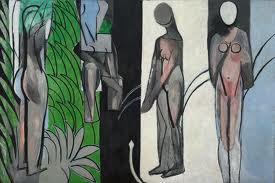
I just left the Philadelphia Art Museum and a show entitled “Visions of Arcadia.” It features work by Gauguin, Cezanne, Matisse and others. In that show I saw plagiarism, thievery, revolution … and genius.

“Visions of Arcadia” is designed around a theme rather than a style or period. The theme is the classical idyllic life associated with ancient Greece and the region known as Arcadia.

Even though the ancient Greeks seemed to be constantly at war, there is this myth of Arcadia as a land of simplicity, peace, virtue and the sensual pleasures of nature, wine and women.

The Roman poet Virgil, who wrote in the first century B.C., romanticized Arcadia in his work “Eclogues.” European artists became fascinated with his concept of Arcadia and sought to paint it, with some scenes taken directly from Virgil’s words.

These are the paintings in “Visions of Arcadia.”

Most are of either bathers or people in the woods having lots of fun.

Many of the paintings are from the late 19th and early 20th centuries. In the museum’s commentary, it is suggested that the artists found inspiration in a 17th century work by Nicolas Poussin, which hung in the Louvre. Admiring artists would visit the Louvre to study and copy the Poussin, then  base their own work on it.

Their derivatives inspired other artists, resulting in a whole lot of bathers being put on a whole lot of canvas. Some were sinfully like those that came before.

But is that stealing?

How many great literary works have taken titles from other great works? For Whom the Bell Tolls, The Grapes of Wrath, Song of Solomon, Inherit the Wind, Stranger in a Strange Land. In Faulkner’s Absalom, Absalom! an entire biblical story is retold.

In all artist efforts, there seems to be this unstoppable tendency for the great to hover around the great, to want to become kin, to show understanding of the legacy, to build on it and improve it.

Which is not really stealing.

It is more like worshiping a god in hope of becoming one.

“Visions of Arcadia” does, however, make one wonder why so many artists insisted on painting and repainting bathers. Touring the show, the viewer learns that many of these artists worked together, socialized together, philosophized together. Although egos often were huge, you can sense that the artists acted like a cultural community, with a single purpose; or that they even were a single entity with a single mission.

That mission started as plagiarism but ended as revolution.

That becomes obvious as you move past the Renaissance style paintings, through Impressionism and Pointillism and on to one of the last – a cubist rendition of bathers.

When you learn that the artists we idolize today were mostly outcasts whose work was considered unacceptable trash (sometimes called “fauve” or savage), you realize they could hardly be considered copyists.

If you are nearby, go see “Visions of Arcadia” at the Philadelphia Art Museum. Perhaps your reaction will be far from mine. I’m betting it will be.

Shakespeare’s time – when the great were modest and didn’t “high five.”

29 Jun

Humility is a lost art.

Polite modesty about one’s self has been replaced by end zone dances and their equivalent.

But once upon a time, humility was deriguer.

Here is an incredible passage to prove it. Below we have the greatest writer in the history of the English language artfully apologizing to the nobleman to whom he has dedicated the poem Venus and Adonis.

Exercising my own modesty, I will reveal that while I read this passage I did not read the poem. My loss.

Written to the Right Honourable Henry Wriothesly

Earl of Southampton and Baron of Tichefield.

Right Honourable,

            I know not how I shall offend in dedicating my unpolished lines to your lordship, nor how the world will censure me for choosing so strong a prop to support so weak a burden: only if your honour seem but pleased, I account myself highly praised, and vow to take advantage of all idle hours, till I have honoured you with some graver labour ….

Your honour’s in all duty,

William Shakespeare  

The Greatest Science Fiction Story of All Time: A Reflection

29 Apr

Below is an essay I wrote for Analog, the science fiction magazine. It was rejected, so I thought I’d publish it here. Comments are appreciated.

Decades after its phenomenal success, a reaction to a first reading of Asimov’s “Nightfall”

Author Isaac Asimov

By Lanny Morgnanesi

For more than a year there was a task entry in my Outlook program that said simply, “Read ‘Nightfall.’ ”

Although I am a fan of its author, I had never read this celebrated short story.

Some say it is the best science fiction story ever written. It certainly is Isaac Asimov’s most famous story. Hence, the note in Outlook, which I created after reading a passing reference to the story and its hallowed reputation.

I knew I could find the story quickly online whenever I wanted, and so never quite got around to it … like living in New York and not visiting the Statue of Liberty. I must have been waiting for a special moment, not wishing to consume the piece lightly.

That moment came in the form of a premonition, or something like one. I was attending a business meeting in a college library. During a break I went over to the stacks. Directly in front of me, at eye level, was, “Nightfall and Other Stories.”

I took it home.

The story was written in 1941 while Asimov was attending Columbia University and working in his father’s candy store. It was published in Astounding Science Fiction, whose editor was a man named John W. Campbell.

The anthology I brought home came out in 1969. It contains an introduction by Asimov that is almost as interesting as the title story.

Reflecting on something he produced almost three decades earlier, when he was 21, the author expressed amazement at the story’s popularity and endurance. At the time he wrote “Nightfall,” Asimov had published a dozen stories. Another dozen had been rejected. He would go on to become an incredibly prolific author but never considered himself a trained writer.

Still, in his anthology introduction, he seemed flummoxed that as a seasoned professional he could not duplicate the success of the novice who wrote “Nightfall.”

He says in the intro:

“Now let’s get something straight.  I didn’t write that story any differently from the way I had written my earlier stories – or, for that matter, from the way I wrote my later stories. As far as writing is concerned, I am a complete and utter primitive. I have no formal training at all and to this very day I don’t know How To Write.

“I just write any old way it comes into my mind to write and just as fast as it comes into my mind.

“And that’s the way I wrote ‘Nightfall.’”

The tone almost seems resentful of his first great accomplishment.

Asimov had expected to be paid $120 for “Nightfall.” When the check came for $150 he thought it was a mistake. He called the editor, Campbell, who said there was no mistake. Such a good story deserved more.

Campbell had a personal interest in the work. In fact, he gave the idea to Asimov. It was based on his disagreement with a quote by Emerson … a quote that appears at the beginning of “Nightfall.”

This is the quote:


“If the stars should appear one night in a thousand years, how would men believe and adore, and preserve for many generations the remembrance of the city of God?”

Rather than create wonder and delight, Campbell believed the sudden appearance of stars (and darkness) after 1,000 years of daylight would drive everyone mad. That is what Asimov wrote about … a planet with multiple suns that is perpetually bright, except for one true night every 2,000 years or so.

The reader learns the planet has no recorded history of these infrequent nights because during each one, the world goes mad and civilization is destroyed.

Over the eons, life has been repeatedly rebuilt from nothing. There is, however, some scattered, vague knowledge of this that is prophesized by an eccentric cult.

Unequivocally, an extraordinary premise for a story.

Yet after so much anticipation, after so many accolades, I was sadly let down by “Nightfall.” I’d like to think it was the filter of time that took the edge off, but I know it was more than that.

How to explain my disappointment with a great, wonderful, brilliant man worshiped by people much smarter and more literate than me?

“Nightfall” maps out a wonderful and inventive idea, but the writer, in my reading, fails to finesse it; doesn’t creatively exploit its potential. I call this kind of writing “idea” writing. The work of Ayn Rand is the same. Concepts are strong; characters and story telling tend to be weak.

My favorite work of Asimov is the Foundation trilogy. Like “Nightfall,” it contains an exceptional scenario and complex, innovative, paradigm-breaking concepts. So rare; so different; so insightful. It is from the mind of someone very special. But it reads the same as “Nightfall.”

There also is the filter of time working against the Foundation series.

Asimov’s work from the 40s and 50s reads as if it were written in the 40s and 50s. It’s not that way with all science fiction of the era. Some writers tried very hard to steep themselves in an entirely new milieu. In an effort to do that, Asimov will give his characters names like Sheerin 501 but then have people smoking on spaceships and treating women passengers like stewardesses.

In “Nightfall” an important and influential character is a newspaper columnist. Newspaper technology, of course, is based on a 15th Century European invention. One wishes, perhaps unfairly, that he would have seen the digital world, or something else, coming.

Still, the young man from the candy store had his touches.

As the panicked mad men and women of “Nightfall” begin setting the world on fire as a way to re-create the light from their disappearing suns, Asimov ends his story this way:

On the horizon outside the window, in the direction of Saro City, a crimson glow began growing, strengthening in brightness, that was not the glow of the sun.

“The long night had come again.”

That, from the best science fiction story ever written, gave me chills.

In the anthology, Asimov advises readers to closely look at the other stories to determine why – or if – “Nightfall” is better than the others. He can’t seem to tell. It is almost as if he is jealous of the early success and hopes the verdict elevates another candidate.

The strong reaction to “Nightfall,” apparently different from Asimov’s, suggests that the artist is really not in control of the art.  Without permission, the work goes where it wants to go or where it needs to be, depending on the mind that absorbs it.

Now there’s a subject for a science fiction story … if only Isaac were around to write it.

Lanny Morgnanesi is a writer living in Doylestown, Pa. He can be reached at lannym7@gmail.com


I knew Hemingway’s friend!

31 Mar

Where Irv met Ernest

In the post below I casually mention Ernest Hemingway, almost as if I had known him. I didn’t, of course. But I did know someone he drank with.

The man’s name was Irv Lippe, and he was nothing at all like Hemingway. Irv was short, slight and polite. He was a diplomat – literally — posted to Cuba when Hemingway was living and writing there.

When Irv retired, he took a part-time job stateside with the newspaper where I worked. We spoke a lot and he told me of his days in Cuba. Irv loved martinis and it was not unusual for him to drink three at lunch.

On one of his first ventures into an island bar for lunch, he noticed Hemingway. He asked the fellow next to him if that indeed was the famous writing. The chap said, “It is. But don’t dare talk to him. He’ll bite your head off.”

Irv followed the advice. He did, however, observe the man and thought it odd that such a tough guy would order a daiquiri.

“At the time, a daiquiri was considered a lady’s drink,” Irv said. “I’m surprised he wasn’t laughed out of that bar.”

(Hemingway would go on to make the daiquiri famous, for both sexes.)

One day, while Irv downed a martini at the same place, Hemingway came in and sat next to him. Irv said nothing. This happened several times. Two mute drinkers. The day finally came when Hemingway gruffly turned toward Irv and said, “Do you have the time?”

Irv gave him the time but said nothing else.

The next day Papa again sat next to Irv and said something like, “Nice day for fishing.” Irv said that indeed it was.

Before long, the two were having full and fast conversations.

“We actually, I guess, became friends,” Irv told me.

I loved Irv and speaking with him was always a pleasure, but I didn’t believe this story. I figured anyone who spent more than two minutes in Cuba during those years would claim Hemingway as a friend.

As Irv and I grew closer, he invited me to his home for lunch. He took me into his office and on the wall was a 2 foot-by-3 foot photo of a smiling, bear-like man with his arms tight around Irv, almost lifting the little guy off the ground.

It was signed: “To my good friend Irv — Ernest”


Writing is easy; truth is hard (you have to get naked)

30 Mar

Truth is one of the rarest commodities on Earth.

The reason may be that it’s actually an abstract concept, a moralistic illusion. Or maybe truth is just relative, with multiple versions floating about.

Hemingway was always barking about how hard it was to write a true sentence. Harry Crews, a writer of note who died this week, once said:

“If you’re gonna write, for God in heaven’s sake, try to get naked. Try to write the truth. Try to get underneath all the sham, all the excuses, all the lies that you’ve been told.”

That’s in his obit.

No ... that's not true, either.

In honor of Harry, I challenge everyone visiting this blog to go to the comment section below and write something true.


I’ll start:

“Digital communications has devolved into a lucrative confidence game where users knowingly or unknowingly reveal the most private pieces of information so that others can more easily sell them goods and services.”

Now you go ……..