In 2004, more than a decade before Donald Trump first became president, Philip Roth published a novel entitled, “The Plot Against America.” There was an effort to make it into a TV show, but it failed — initially. After Trump was elected in 2016, it was green lighted into a six-part series.
The novel has nothing to do with Trump and takes place during World War II. It’s an alternative history. But reading it now, it carries an eerie sense of familiarity and dread. It actually gave me chills. Frankly, with Trump in his second presidency, I’m surprised it hasn’t been reissued.
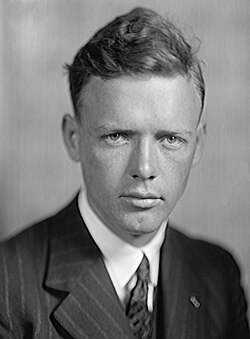
Charles Lindbergh
In the novel, President Franklin Delano Roosevelt loses his 1940 re-election bid to Charles Lindbergh, the America hero who in 1927 flew solo from New York to Paris in his small plane, The Spirit of St. Louis. In the novel and in real life, Lindbergh was an American Firster who wanted to keep the U.S. out of war. In the book, if not in real life, Lindbergh is sympathetic to the rise of Adolf Hitler and exhibits anti-Semitic tendencies.
Columnist Walter Winchell
Once in office, he signs an official truce with Hitler to keep America out of the war. Then he begins a series of programs to marginalize American Jews, mainly moving them out of urban enclaves (the book is set in Newark, N.J.) and scattering them about the Christian Midwest, hoping they assimilate and discard their Jewishness. Out of fear, some leave for Canada. The main voice of opposition – almost the singular point of dissent — is columnist and radio commentator Walter Winchell, a Jew. Frightened Jews rally around him and listen to his Sunday night broadcasts with both fear and hope.
Then, Winchell is fired from his job, runs for president, and is assassinated. Jews protest. This sets off a violent wave of anti-Jewish pogroms. Murder and mayhem come to the streets of Jewish neighborhoods while Lindbergh’s government remains silent. Antisemitism builds and spreads, bursting like a volcano. Then Lindbergh, while flying alone back from a speech (he does this frequently) disappears. He and his plane cannot be found.
Author Philip Roth
Hitler (who, we learn later and secretively, may have kidnapped him; we’re not sure) claims Lindbergh was killed by a Jewish conspiracy, and the anti-Jewish rioting further intensifies. Much intrigue and strange happenings follow. The vice president takes over and arrests the top Jewish leaders in America, including real life figures Henry Morgenthau Jr., Herbert Lehman, and Bernard Baruch. Also arrested is New York Mayor Fiorella La Guardia, seemingly the only non-Jew to condemn America’s turn toward fascism. Ultimately, a level-headed Mrs. Lindbergh, acting like a widow who knows something we don’t know, calms down the nation and announced that the Jews did not kill her husband. With her help, FDR is reelected, stops the pogroms, enters the war against Germany and Japan, and (we guess) saves America.
Joachim von Ribbentrop
What makes this story contemporary is the immense popularity of a conservative president who takes the country in an entirely new direction. Everything he does, including the relocation of Jews, is framed in a positive, pro-American narrative and is readily accepted by nearly all Americans, including – at least at first – many Jews. Lindbergh has enlisted the help of the nation’s top rabbi to convince his people that all is well and right. The rabbi is given a top position in the government, is treated and feted like a celebrity, and attends state dinners and other functions, including one where the guest of honor is Hitler’s foreign secretary, the real life Joachim von Ribbentrop.
So many people, big and small, compromise themselves because they see a winner and want to be on his team, and they assume when the government goes after people, it does so for a good reason, and will never come after them.
Newark, N.J. in the 1940s
As intra-family squabbles take place today, in the book Jewish families fight among themselves about whether or not the government is good intended, whether America is stronger by staying out of the war, whether they should move to Canada or take part in the relocation program, and more. We see how people are not worried at first, then as the Lindbergh policies take hold and escalate, the worrying begins. But people still aren’t sure. It takes violence, murder, and assassination before they realize what’s taking place is wrong.
If you can, look in on the book, “The Plot Against America” or stream the TV series on HBO or Hulu. (Here is the trailer) Perhaps you won’t see it as I see it … or maybe you will see it as an even darker specter of what is to come.
Artificial Intelligence recently gave me an opinion of my writing. It was more than flattering. The assessment, by the learning machine ChatGPT, made me seem almost brilliant. While I know I am not brilliant, I initially was quite proud of what it said about the unusual piece I had written. Then I became frightened. Then skeptical. Ultimately, I was confused.
My encounter with AI involved a short story that will soon appear in an anthology of mine. The story focuses on something ridiculous – a sweater that was vomited upon at a college party — but later, in contrast, asks deep philosophical questions and even doubts the nature and structure of contemporary fiction.
The story is called Sweater in a Jar. I believe it is entertaining, but I have no false hope that people will grasp what I was trying to accomplish. Last week a friend agreed to read it. Unsure of what he was reading, he ran it through ChaptGPT to get a better understanding of what it was. Then he sent me this non-human literary review. I was stunned that the machine was able to comprehend, accurately and precisely, my intentions for the piece
Here are its comments:
The sweater’s fate serves as a metaphor for the elusive and fragmented nature of truth and memory, mirroring the way human experience is shaped by perception rather than objective reality. The story juxtaposes absurdity with profound existential questions, pondering whether art and life can ever reveal an “ultimate truth” or if their power lies in crafting meaningful illusions. Through the narrator’s musings on genetics and storytelling, the piece suggests that while science may define human potential, art provides the emotional and metaphorical lens through which we interpret and transcend that reality. It’s a meditation on how small, seemingly trivial events can carry profound, lasting impacts on identity and meaning.”
I’m a genius, right?
So, what’s with ChatGPT? How did it know? I decided to look deeper.
Taking very little time, I wrote a 500-word story with absolutely no literary merit. Then I ran it through ChatGPT to see if this time it would deem me an idiot, like it should. I apologize for burdening you with this, but here is that story:
A Weekend Visit
It was a bright and sunny day when Jerome Jeffries went to the train station to pick up his old college friend, Sidney. Jerome arrived at 3 p.m., just as the train was getting in from St Louis. Just in case the train was early, Jerome had hoped to get there at 2:30, but his older sister, Gilda, kept pestering him with questions about Sidney, and so he was later than he wanted to be. But it worked out.
Sidney took the train, a trip of two days, because St. Louis was snowed in an no planes were flying. He enjoyed the ride. “It was pretty cool,” he told Jerome. “No WIFI, but you could look out the window and see the American countryside. I didn’t know there were so many cows in Ohio.”
What Sidney didn’t tell his friend was that, while on the train, he received a compromising picture on his phone from Jerome’s sister.
From the train station they went right to a McDonald’s for a snack. Jerome had a Big Mac. Sidney had a Quarter Pounder with cheese. They both got large drinks and large fries.
“Do you think these fries are a little salty?” Sidney asked.
“They are,” Jerome said. “Cover up the salt with more ketchup.”
When they got to Jerome’s house, Sidney was introduced to everyone, mother, father, and sister Gilda, who wore a tight-fitting yoga outfit and, for some reason, did a series of bend-over stretches.
Sidney was shown his room and told to put his clothes in a dresser. He used three drawers, one for his underwear, one for his street clothes, and one for miscellaneous items like his brush and toothpaste. He wore his sneakers but put a pair of dress shoes by the bed, just in case they went somewhere fancy.
After a short time, the door to the room opened and Gilda entered. She was wearing a bikini and asked if Sidney wanted to go swimming. He paused and said no. “Your brother and I have lots of plan,” he said.
In the family room, Jerome and Sidney met up, and discussed their plans until Jerome’s mother served a dinner of meatloaf, mash potatoes, and peas. There was pie for dessert, but no coffee. Jerome’s family didn’t drink coffee.
After dinner, Jerome said, “Let’s go to a movie.” And they went to a movie. It was about time travel and alternative universes.
“Is this science fiction?” Sidney asked.
“Yes, it’s science fiction,” Jerome said.
“I like science fiction,” Sidney said.
“Everyone does,” Jerome said.
After the movie, the two friends walked the town streets.
“Tomorrow we will go to a ball game downtown, and I want to take you to a giant flea market where you can buy many things for under $5. Later, we’ve got to go to my favorite bar. There is so much to do.”
“I realize that,” Sidney said. “But sometime this weekend, do you think I can go swimming with your sister?”
Jerome paused. “Maybe. But only once. And for a short time. We’re going to be very busy.”
Ho hum, right? Here is what ChatGPT said about, A Weekend Visit.
This short story presents an intriguing narrative, though it is somewhat odd and leaves room for interpretation. Here’s an evaluation of its elements:
Strengths:
Character Relationships: The dynamic between Jerome and Sidney is clear: they are old friends reconnecting. There’s an underlying sense of warmth in their reunion, especially with the mention of old college days and their shared history. Jerome’s protective nature towards Sidney also comes across—he seems to want to ensure their time together is meaningful, while Sidney seems more laid-back and open to new experiences.
Humor and Absurdity: The story is sprinkled with moments of absurdity that add charm, especially the quirkiness of Jerome’s family members. Gilda’s unexpected behavior, like stretching in a yoga outfit and later wearing a bikini, feels odd but adds an element of intrigue to the family dynamic. Sidney’s casual comment about cows in Ohio and the throwaway line about the fries being too salty are small but effective moments of humor.
Pacing and Structure: The story’s pacing is easy to follow. It moves smoothly from one event to the next, from the train station to McDonald’s to Jerome’s house. It has a natural flow, which helps keep the reader engaged. The decision to present the day-to-day experiences in a somewhat banal but detailed way (e.g., their meal choices or the description of Sidney’s packing) keeps the story grounded in reality.
Areas for Improvement:
Underdeveloped Themes: The story doesn’t delve deeply into any particular theme. While there are moments of tension—like Sidney’s secretive interaction with Gilda—these are left unexplored. The plot feels like it hints at something more (perhaps involving Gilda’s behavior), but it never fully materializes. The story seems to build toward something deeper or more meaningful, but it doesn’t follow through.
Character Depth: Jerome and Sidney’s personalities are sketched briefly, but they don’t evolve much throughout the story. The most significant development is Jerome’s brief internal conflict about Gilda’s behavior and his protective attitude toward Sidney. Sidney, on the other hand, remains mostly passive—he enjoys the trip, mentions some trivial observations, and asks about swimming with Gilda, but there’s little else to make him stand out as a fully realized character. This could have been an opportunity to explore their relationship more or to introduce a deeper tension between them, but the focus remains surface-level.
Ambiguous Relationships and Subtext: The interaction between Gilda and Sidney raises questions that go unexplored. Sidney’s comment about wanting to swim with Gilda could be read as a subtle hint at something more, but it’s left hanging in the air. Gilda’s strange behavior (stretching in a yoga outfit, wearing a bikini) feels unmotivated and makes the reader question whether there is some unspoken tension between her and Sidney, or between her and Jerome. Without exploring this further, the reader is left with an unresolved and somewhat uncomfortable sense that there’s more going on than is revealed.
Tone Inconsistency: The story seems to straddle different tones—there’s an almost slice-of-life casualness in the first half, but as Gilda’s actions become more peculiar, the story takes on a slightly surreal or uncomfortable edge. The narrative never fully commits to this shift, making the tone feel inconsistent. It’s unclear whether the story intends to be comedic, quirky, or darkly mysterious, which can leave readers unsure of how to engage with it.
Overall Impression:
The story succeeds in creating a comfortable, ordinary scenario that becomes increasingly strange and unsettling. There’s potential in the relationship between the characters, particularly the dynamic with Gilda and her interactions with Sidney, but the story leaves too much unexplored. If the narrative delved deeper into these relationships and played with the tension hinted at by Gilda’s odd behavior and Sidney’s secret photo, it could have been much more engaging. As it stands, it feels like a brief snapshot of a weekend that might have been more interesting with a little more depth and development.
In short: The story has charm and humor but could benefit from a stronger narrative focus and deeper character exploration.
***
ChatGPT found humor where there was none, found the pedestrian interesting, mentions charm that was absent, speaks of imagined subtext, and said its banality keeps it grounded in reality. Yes, there is a bit of well-deserved criticism, but it is too kind, a little obsequious. It reminded me of the guys in the office who sucked up to the boss.
The review should have simply said this is juvenile, lousy, and idiotic. Yet it didn’t. ChatGPT addressed A Weekend Visit as a serious piece of writing, and wrote a serious review that would garner a good grade for any student calling the review his own. And I think that is what this is all about – providing a service for students uninterested in doing their own work.
My test confirmed there probably was no genius in Sweater in a Jar, and no genius in ChatGPT. It’s a tool, maybe impressive and useful, but only a tool. I can go to sleep tonight know it will not take over the world.
Still, I’m slightly fixated on this idea that maybe – just maybe — the banality in my deliberately bad story has – as ChatGPT suggests – meaning and merit. My banality was deliberate and written to be banal. Nevertheless, could there be something deep in my mind – the genius mind seen by ChatGPT – that unconsciously pushes me to use banality effectively, maybe as subtext, whatever that is? Can my stilted dialogue about a science fiction movie be considered, by intellectual and machines minds, as something equivalent to Andy Warhol’s globally famous soup can, which I never liked?
American poet T.S. Eliot is shown seated in his London Office on Jan. 19, 1956. (AP Photo)
Maybe there is a muse on my shoulder that won’t let me write badly, even when I try. ChatGPT, however, did get me thinking about the existence of critically acclaimed banalities. For example, T.S. Eliot, considered one of the world’s greatest poets, launched into a near-epic piece and used such common phrases as:
In the room the women come and go
Talking of Michelangelo.
… and …
I grow old … I grow old …
I shall wear the bottoms of my trousers rolled.
… and my favorite …
I have measured out my life with coffee spoons.
Admittedly, these are much better than, “Do you think I can go swimming with your sister?” but I’m beginning to realize I might have something that I didn’t know I had.
I’m going to be patient about Artificial Intelligence and see how it all plays out. If ChatGPT starts buying and recommending books based on its own reviews, I should be in pretty good shape as a writer. That’s a future to look forward to.
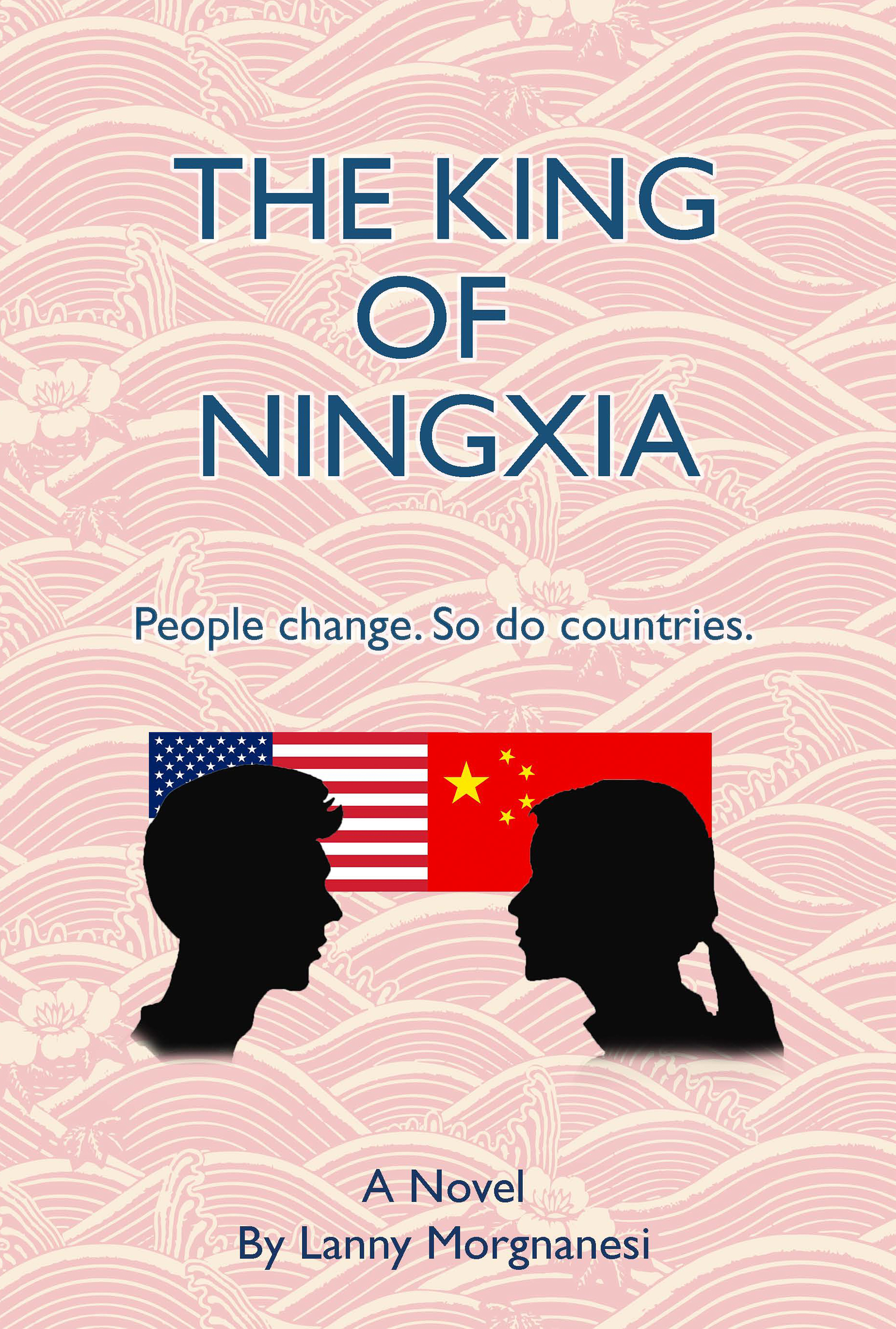
An old friend came home for our 55th high school reunion and had a criticism of my recent novel, The King of Ningxia.
The book uses a shifting timeline and is loosely based on my experiences in China during the mid-80s. The story is about the relationship between an American man and a Chinese woman, whose antics together help illustrate China’s great ascent in the world and its changing relationship with the U.S. But the book also includes a stupid joke. My friend was disappointed that only an abbreviated version of the joke appears, rather than the elaborate version I told years and years ago.
My friend felt the short version misrepresented the joke, was a disservice to the joke, was a disservice to his memory of the joke, and also a disservice to the novel.
I, of course, disagreed.
From my adult perspective, the joke is juvenile and not even funny. But my friend remembers how our gang laughed and laughed and laughed as I extended and stretched out the simple story of a guy trying to sneak a duck into a movie theater. To do so, he places the duck in his pants. Once in the theater, he opens his fly to give it some air. The lady next to him sees the duck’s head popping out of the pants zipper and says to her friend, “Look at that.” Her friend responds with a shrug, “When you’ve seen one you’ve seen them all.” To which the first woman says, “Yes, but this one is eating my popcorn.”
Now according to my old friend, I would tell this joke for 20 or 30 minutes. I’d do the voices of the duck owner, the ticket taker at the theater, the two old ladies, even the duck. I would push the joke farther than it was supposed to go, provide great detail and back stories, improvise and go on and on. My friend especially liked how I had the guy pleading with the ticket taker to let the duck in, saying the movie – a film starring Donald Duck – was his all-time favorite and his pet just had to see it.
I told this joke at parties back in the late ‘60s and reminded my friend that most people at those parties were using a substance that made them laugh at anything.
“It was marijuana telling the joke, and it was marijuana laughing at the joke” I said. “The joke, by itself, is not funny.”
He held his position and said the entire joke – which I certainly could not recollect – should have been included in The King of Ningxia. At this point, I had to explain why a short version is in the book, and what it was designed to do.
It occurs during a scene where the main character, the American male, tries to learn about Chinese culture by asking a Chinese person to tell a joke, to see if the humor translates. The person agrees and tells a story of a guy who sneaks his duck into a movie theater. (In real life, this is what happened when I asked for a joke). Rather than popcorn, this Asian duck eats the woman’s sunflower seeds, which is what Chinese people eat in movie theaters. The actual punchline is a bit different as well, but it is still the same joke. In response, the American tells his version of the joke, and they compare the two.
So, I say to my friend as we prepare to attend the reunion, “Do you see the purpose of the joke? It was not to get a laugh from the reader. It was to show that an aspect of culture can jump 10,000 miles across an ocean, from a capitalist country to a communist country, and be enjoyed by two entirely different people. It says something about the oneness of humanity, about the commonalities of our minds, about the strength of global reach, of geography’s inability to contain us and the uselessness of political barriers to stop the flow of information.”
“Yeah,” said my friend. “But when the guy in the joke practically gets on his hands and knees and cries, ‘It’s Donald Duck, his favorite actor. You’ve got to let him in.’ How could you not have included that?”
It was as if my friend was still smoking weed.
“Well,” I said. “Maybe in my next novel.”
I really should end this here, but in contrast to the duck joke, I want to relate a funny Chinese video – Chinese howl at this one – that Americans just don’t get. It’s a video of a street scene in China, and there is a horse in the street. A man walks by and pats the horse on the ass. The horse then violently kicks the man in the head.
Why is this funny?
It is funny because there is a famous Chinese saying that to get ahead, you must pat the horse’s ass, meaning you must suck up and flatter authority figures. People who don’t suck up are angry that those who do receive special privileges. Therefore, the video gives the non-suckers delight in showing that sucking up does not always work.
Are you laughing yet?
No? Did you hear the one about the duck in the movie theater?
In 1990, I wanted to name my new-born son after a writer, or at least an Italian. In the end, we named him after an Italian writer. Dante Alighieri. Just Dante. Not Alighieri. And because of this, I vowed to read Dante’s most famous work, the acclaimed Divine Comedy, written between 1308 and 1321 and divided into three parts, Inferno, Purgatorio, and Paradiso. When I was gifted by my young son with a nice leather-bound copy, I let it sit on the shelf to marinate. Or maybe I was just intimidated. When I decided to open it, it wasn’t there. Lost forever.
Thirty years later, I am reading a free, digital version, an 1867 translation by poet William Wadsworth Longfellow. It is considered one of the best. By coincidence, at this very same time, PBS is airing a series on Dante and The Divine Comedy. The series is easy. The book is hard.
You can’t just read the book You must look things up … constantly. There are scores of other books and websites to help with this – understanding the references, the personalities from history, the Greek and Roman legends, the pagan gods, geography, and so much more — and still it remains hard.
The work is considered one of the finest in all of literature, even 700 years after it was published. I find this remarkable because I’m certain Dante wasn’t writing for us. For him, in my estimation, it was a strictly contemporary work aimed at a small audience, the people of his native city, Florence. I drew this conclusion because with the billion who have died and gone to hell, Dante, during his visit there, run into about three dozen people just from his little part of the world. There are others, like Ulysses, Mohammed, and lots of classical Greeks and Romans. But for Dante, hell was very much like old home week.
His encounters include those with Florentines whom history remembers, as well as some whom history never knew. A few were involved in provincial scandals (like the two adulterous lovers inspired by the romance of Lancelot and Guinevere, who were murdered by the woman’s brother) or committed poor behavior (like the glutton Ciacco). These characters no doubt were a source of 14th century tongue wagging. But now? For Dante to include them means he was not intending to entertain readers in the far future. He doesn’t even provide much context or background or explanations, assuming his readers know the full story. Often, there is just a casual hint, or the drop of a single name. For example, when Dante enters Purgatory, he is greeted by a person he obviously expects his readers to know. He never names the person, only the woman that person loves, Marcia, and the city he comes from, Utica. Apparently, his target audience knew, or were expected to know, that the person from Utica who loved Marcia is the famous Roman orator and statesman Cato.
Confession: I did not know. I had to look it up.
Obscure as he may seem to us, Dante wanted to reach the widest possible audience of his day, and that included the nobility and the common people. This required a revolutionary approach, and Dante was more than willing to take it. Instead of writing in scholarly Latin, he wrote in the vernacular or vulgate, basically street talk, the dialect of Tuscany. And because of this, and the influence of his work, a form of Tuscan eventually became Italian and the language of a unified nation. Aside from its poetry, this is one reason why The Divine Comedy is considered a literary landmark.
If you read it closely, and don’t take its spirituality too seriously, you might find it quite temporal, an act of earthly vengeance by the author, who makes a habit of using the Inferno to inflict pain and punishment on his enemies. Context is needed here. Readers need to know that the poet had been a victim of Florence’s ceaseless civil war between the factions known as the Guelphs and the Ghibellines. He was a Guelph (although they later split as well), and when his group lost power, he was exiled from Florence and sentenced to death should he return. One of his enemies was named Farinata, a Ghibelline military leader and aristocrat. In hell, Dante conveniently entombs Farinata, for all eternity, in a coffin of fire.
A writer can get great pleasure doing that.
At times, however, he could be merciful. He spares a fellow name Buonconte by putting him in purgatory, allowing him to cleanse himself of sin and reach paradise. Buonconte was no friend of Dante. He was a military strategist who literally fought against Dante at the Battle of Campaldino in 1289. According to Dante’s telling, Buonconte accepted Christ at the time of his death, which I guess makes all the difference. So no punishment there.
Aside from punishing his enemies, Dante places a few people he liked in hell, including his teacher, a known sodomite, but he expresses sympathy and sadness for him.
Following the then-teachings of the Catholic church, Dante condemns to hell everyone in the world who was born before Christ, and therefore did not worship Christ. He places the virtuous Greek and Roman figures there, in the tame, unthreatening, limbo portion. These include Socrates, Plato, Aristotle, Homer, Horace, Cicero, Seneca, Ovid, and, of course, the poet Virgil, his underworld guide. There are always exceptions, and one of them is Cato, the Roman politician and stoic known for his virtue and defense of the old Roman republic. Cato is in purgatory, but he probably will not get to cleanse himself and go to heaven. Rather, Dante gives him a job of sorts. Cato is a greeter who welcomes and instructs the new souls.
Although Dante, as the writer, condemns to hell those who followed the Greek and Roman gods, he shows immense respect for these deities, as if he, too, were a follower. He seems to worship them and acknowledge them as if they were real. In fact, he punishes those who blasphemed against Zeus, the supreme god, known to the Romans as Jupiter or Jove. In one unusual passage, Dante appears to call Jesus Christ by the name Jove.
Let’s get back to the punishments, which range in severity depending on the sin. If you were gluttonous, you are tormented with ceaseless rain. If you were lustful, there is ceaseless wind. For the really bad, you could be continually pecked by bird-like creatures, or forever bitten by dogs, or submerged in boiling blood, or be torn apart, or forced to stand head-first in stone bowls and endure flames upon the feet. While we think of hell as hot, the worst level is a frozen wasteland. In addition to all this, Dante, as poet, sometimes punishes with a type of irony known as “contrapasso,” (to suffer the opposite). False prophets who claim to see the future, for example, have their heads turned backwards on their bodies, so it is impossible for them to see what lies ahead. That kind of thing.
Indeed, above all, The Divine Comedy is a poem, a work of art. And, at least in the Italian, it rhymes. It rhymes in such a complex fashion that, to keep their sanity, most translators of Dante don’t attempt to rhyme. Longfellow didn’t. The technique Dante used is called Terza Rima, or third rhyme. In the original Italian, each stanza is three lines. The first line rhymes with the third, then the first and third lines of the second stanza rhyme with the second line of the preceding stanza – and continues this way throughout. It’s ABA, BCB, CDC, DED, and so on.
This means the poet never gets a fresh start. As he moves on, he must craft new information based on words he already has used. It’s difficult to imagine writing a graceful or even coherent passage using this technique, yet Dante did it.
While I find The Divine Comedy utterly remarkable, I find it astonishing that Dante’s 14th century readers (and those who heard the poem recited by bards and troubadours) understood and appreciated the frequent references to Greek and Roman mythology. Dante uses them matter-of-factly and with confidence, as if he were communicated in the most simply, easy-to-grasp fashion. I sense he, while writing, was certain these allusions, descriptions and analogies would be as easily understood as the Tuscan version of “hello.” What is perplexing, almost depressing, is that these magnificent references, these beautiful literary devices, these moral tales of virtue, honor, tragedy, and comedy, are, for all practical purposes, impenetrable to us. Without the guide of a scholar, The Divine Comedy, in all its wonder, means little to us.
With the advent of modernism and the passing of the classical period, the elite and the common have lost the cultural bearings on which our civilization was built. And so we walk with half-empty souls, rejecting what had once been given to us, leaving behind the magic of our own humanity.
I envy the cobbler, or the butcher, of the Florentine farrier who maybe didn’t have an education but was washed daily, through frequent and copious tellings, in the stories of genius.
The concubine of old Tithonus now
Gleamed white upon the eastern balcony
This is from the purgatory section of The Divine Comedy. Very beautiful, but pretty much a casual throw-away line of introduction. What does it mean? It simply means: The dawn arrived. But today’s reader has no way of knowing that.
Tithonus is the key to understanding this well-crafted little stanza. In Greek mythology, Tithonus was a Trojan prince. The goddess Eos (the Roman Aurora) fell in love with him, took him for herself, and asked the god Zeus to make him immortal. In asking, she neglected to specify that she wanted him to remain young. And Zeus, with a dose of trickery not uncommon when gods grant favors, allowed him to live forever but required that he age. To the distress of his mistress, he became decrepit.
Eos and Tithonus
Eos, the disappointed lover, is the goddess of dawn. She dresses in a saffron-colored mantle and arrives in the sky each morning on a chariot, casting out the darkness and making way for Helios, the sun god, to bring on a new day. Know that and read again:
The concubine of old Tithonus now
Gleamed white upon the eastern balcony
Consider another simple passage that for us is complex. Most today are aware of the constellation Gemini. Most are aware that Gemini refers to twins. But most would not grasp the meaning of this:
Whereon he said to me: “If Castor and Pollux
Were in the company of yonder mirror,
That up and down conducteth with its light …
It’s a reference to the heavens. Castor and Pollux are the twin brothers for which the constellation Gemini was named, so Dante here seems to be talking about the constellation. But the story of Castor and Pollux is deeper and illustrative of an unusual scientific phenomenon called heteropaternal superfecundation. You see, the twins are only half-brothers. They have the same mother but different fathers. Their mother was the mortal Leda. Castor’s father was the mortal king of Sparta. Pollux father was the god Zeus, who raped Leda. The story tells us that the ancients obviously knew two eggs, in rare cases, can be fertilized around the same time by two different males. And they also knew they could use the skies to education and inform.
Castor and Pollux
I say and explain all these many things having read not even half of The Divine Comedy. Now, it is time to return to the pleasant drudgery of those pages.
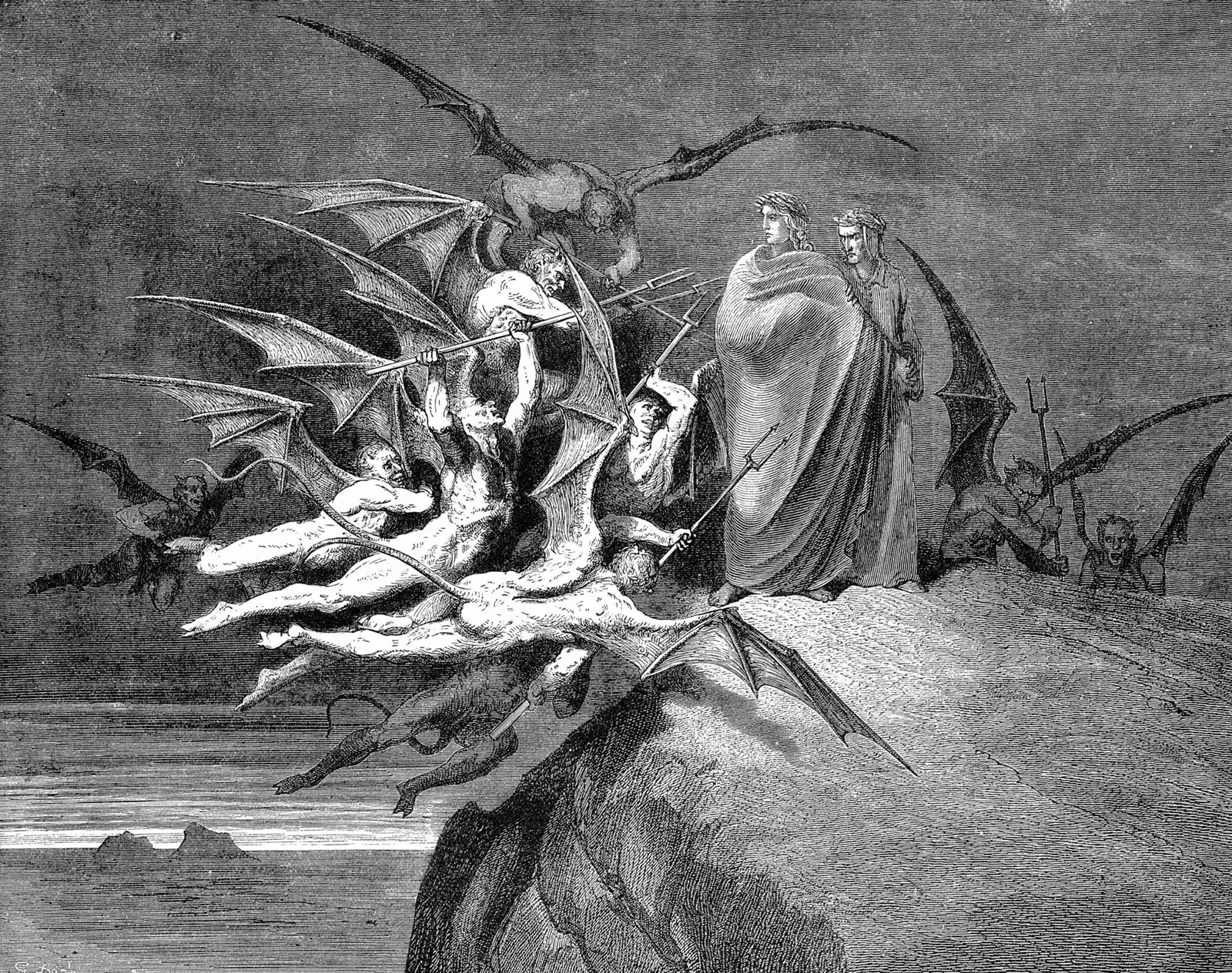
Before leaving, I’ll add one thought. It concerns the frigid ninth circle of hell, where a giant-sized Satan resides, frozen up to his waist in ice, waving his bat-like wings to maintain the cold. He has three heads and is chewing on Brutus, Cassius (the assassins of Julius Caesar) and Judas Iscariot. My question: With the much-later arrival of Adolph Hitler, which of the three would Satan spit out?
Even hell can change after 700 years.
Lanny Morgnanesi is a journalist and author of the novel, The King of Ningxia.
Of late, I’m not much of a blogger. Instead of writing non-fiction here, I’ve been writing fiction and trying – and failing – to sell it. Short stories are sent to small literary magazines with small readerships and small reputations. The magazines routinely reject them. I don’t know if it’s them or me. It’s probably both.
As a life-long journalist, fiction is liberating because you make things up. Journalists interview people and hope they will say something interesting, funny or poignant. Often, they don’t. A reporter might have to work a source for quite some time to get a quote of even moderate worth. With fiction, if you want or need a specific thing, you decide what it is and write it. And you pray it is as clever as you intended it to be.
What I like most about writing fiction is the departure from reality. You sit there without moving and travel somewhere. You become people unlike yourself, or maybe too much like yourself. You contrive plots and scenes. On good days a magical force takes over and writes the story for you. I once began a piece about a television set and ended up with a tale of a rich woman compromised by guilt and pursued by man who wants her secrets. (Somehow the TV stayed in.) It’s almost like Mohamed getting the Koran from God, or when Bob Dylan is asked about his songs from the 60s and says, “I don’t know who wrote that.”
When I finish, I like almost everything I’ve written. Naturally, I get this wild idea that others – editors of literary magazine – also will like it. Alas, they don’t. Or, if I’m being kind to myself, they like something else better. When an editor won’t accept you, you look for positive feedback from friends. Generally, these are people who are busy and don’t have the time or inclination to read your work and comment on it. When they do read it, you pray for a surprising and spontaneous, “Hey, that’s pretty good.” With me, that never comes. Most act overly cautious. Some will praise the work in even, sober tones, and that is satisfying, but it’s disappointing. After a few days, you get the idea they were just being kind. And through all this, you still like and treasure what you wrote. You persist in thinking its high merit is being overlooked.
A slight irritation comes when a casual, good-natured reader misses something well-calculated and ultra-literary. In a story about two people who, over the course of years, spend only short but critical moments together, the woman has a job selling time shares. Get it? No, you don’t. Is that your fault or mine? In another story, a nun gets free heating oil for poor people. It’s subtle and not outwardly explained, but to do so she uses Mafia tactics picked up from her father. Too subtle? I wish I knew.
Online writer communities exist, and writers will critique each other. Unfortunately, I feel a good number of these writer/critics are young and unexperienced and don’t dig in like I wish they would or could. Speaking of young, while my stories vary in content, I worry my mature age injects them with oldness and nostalgia. Young editors cannot make a connection or see value (although they don’t have a problem with Faulkner). In a story about a tragic character who mocks his own victimhood, I mentioned his wife forcing him to see Wayne Newton in Vegas instead of Sinatra. Not exactly up to date, eh?
While I love making things up completely – one story is about a troubled America and its use of four-star concentration camps during the second coming of Christ – I tend to write about what I know, like how Atlantic City has changed since the opening of its first casino, as told through the eyes of a cocktail waitress who began work in 1978 and never left. I’ve also written about China in 1985 (I lived there then), and a friendship between a landscaper and a bestselling author who lived in my town during the 50s and 60s. Pretty dog-eared. Still, there is a story about an intelligent robot struggling to understand irony, one on little leaguers writing a comedy sketch before practice, and a 16-year-old junkie who finds (steals) the money for his MBA. I haven’t completely abandoned freshness.
Regardless, none of it (with two small exceptions, including the robot) gets published.
I’m at the point now where I may start putting some of the shorter pieces on this blog, to give them the light of day and to see what happens. Let me think about it.
The Coronavirus pandemic has inspired innumerable blogs, podcasts, articles and commentaries. Photos and videos of ghostly, empty streets circulate widely and never end. Footage of people singing to each other as a salve to the quarantine are reaching large numbers in live, nightly broadcasts. And I’m empty of thought.
In such times, for writers, the bare minimum is a journal. You can start it with vigor, try to shed light on the mundane, neglect it a little then let it trail off, but – unless you are out there and in it, which means you’ve got something – you are writing whatever everyone else is writing. My journal began thusly on March 23:
It’s impossible to put today in perspective, since yesterday was bad and tomorrow most certainly will be worse. At this point, at this time, numbers cannot adequately describe what we ultimately will face and how we will get there. Instead, let a few statistics be a point of demarcation along a road of unknown length. Let them serve not as a measure but only as a backdrop for the very present.
At that time, COVID-19 had infected 292,142 people and killed 1,600. Today, a mere seven days later, there are 729,100 infected people and 34,689 deaths. Experts say as many as 200,000 could die in the U.S.
Aside from my venturing out once for groceries – noting the absence of flour and yeast and realizing that in a panic you can’t outthink people – there really was little to write about at a time when there is a great deal about which to write.
While not writing, I read a little about writing. It was a retro piece in the New York Review of Books from 2016. The author was Joan Didion, whose utter and complete immersion in the art of writing has always fascinated me, and the piece was simply called California Notes. She begins saying that in 1976 Rolling Stone magazine asked her to cover the San Francisco trial of Patty Hearst, the heiress kidnapped by political radicals who became one of them and took part (while armed) in a bank robbery. Didion is a Californian who relocated to New York, but the Patty Hearst assignment would bring her back to California. She would seek inspiration for the piece by reacquainting herself with the state and trying to revive her own emotions about it.
Writer Joan Didion
For me, as I sat not writing, the best part of California Notes was Joan’s confession that she attended the trial but never wrote the piece. There was no explanation, except: “I thought the trial had some meaning for me—because I was from California. This didn’t turn out to be true.” Her California reflections, however, led her years later to write a compilation called Where I Was From and even later California Notes.
There’s a famous Nora Ephron quote that reminds me of Joan and has been repeated in this time of crisis: “Everything is copy.” I always thought it peculiar that such a quote would become so famous, since few outside of writing know what “copy” is. The reason must be because writers are the ones always repeating the quote. Anyway, “copy” in this sense means “material” for writing, and now – with the world shut down by a virus — everything is indeed copy. You go outside for a walk and it’s copy. You venture out and drive through town and it’s copy. You cook a meal or seek activities for your kids and it’s copy.
Didion with husband, the late writer Gregory Dunne
Even without a pandemic, everything for Joan Didion seemed to be copy. (Her husband died and she got a book out of it). It might be that everything around Joan Didion, all the clouds she allowed to cover her success and notoriety, seemed like a personal pandemic, so she recorded it. In California Notes, she mentions an airline trip from New York to San Francisco in the 50s and reports that on the flight she had, “a Martini-on-the-Rocks and Stuffed Celery au Roquefort over the Rockies.” This means that while in her 20s she was taking notes on everything she did.
It’s true that in my youth I took notes. Joan got much more out of hers than I ever did. Like with her, the urge still remains with me. Recently, while in semi-retirement, I agreed to take a $25-an-hour job as a census taker, figuring I would get something out of it, a story about the real America, even though I’d only be visiting the homes of people in my mostly white, mostly affluent suburban county. As the virus spread, the government wisely decided not to send people house to house. I never went to even one.
In California Notes, there is mention by Joan of an early newspaper job at the Sacramento Union. Newspapers require reporters to learn local “style” – the proper way to refer to things in print. Joan touches on this and says, “I learned that Eldorado County and Eldorado City are so spelled but that regular usage of El Dorado is two words; to UPPER CASE Camellia Week, the Central Valley, Sacramento Irrigation District, Liberator bombers and Superfortresses, the Follies Bergere [sic], the Central Valley Project, and such nicknames as Death Row, Krauts, or Jerries for Germans, Doughboys, Leathernecks, Devildogs.”
Heiress Patricia Hearst, after her kidnapping
Everything is copy. Sadly, I didn’t make any kind of record of the local style at my first newspaper, and can only remember this: “Do not use a period after the ‘S’ in ‘Harry S Truman High School.’ A period suggests an abbreviation and in this case ‘S’ is not an abbreviation because President Truman did not have an actual middle name.” In the same way I know I cannot compete with the person who thought to buy yeast before I did, I know I cannot compete with writers who know what food and drink they had on a plane in 1955, or can recite that actual constraints put on them decades ago by local “style.” Maybe Joan Didion came up dry at the utterly fantastic trial of Patty Hearst, but she found inspiration at every other turn in her life.
I’m sitting here now looking for inspiration. I suspect I’ll find it eventually. I’m fairly certain, however, I won’t be writing about my neighbors singing, if indeed they ever do. I prefer instead to write about things we fail to see. And right now, I can’t see anything.
Zeus, most powerful of the Olympic gods, is the protector of guests. Remember this when you sit down at diner with enemies.
An ancient Greek tradition requires you to be hospitable to all who visit under your roof, be they friends or enemies. This honored and revered tradition is known as Xenia. If a guest is not treated properly, Zeus could intervene on their behalf.
The abduction of Helen
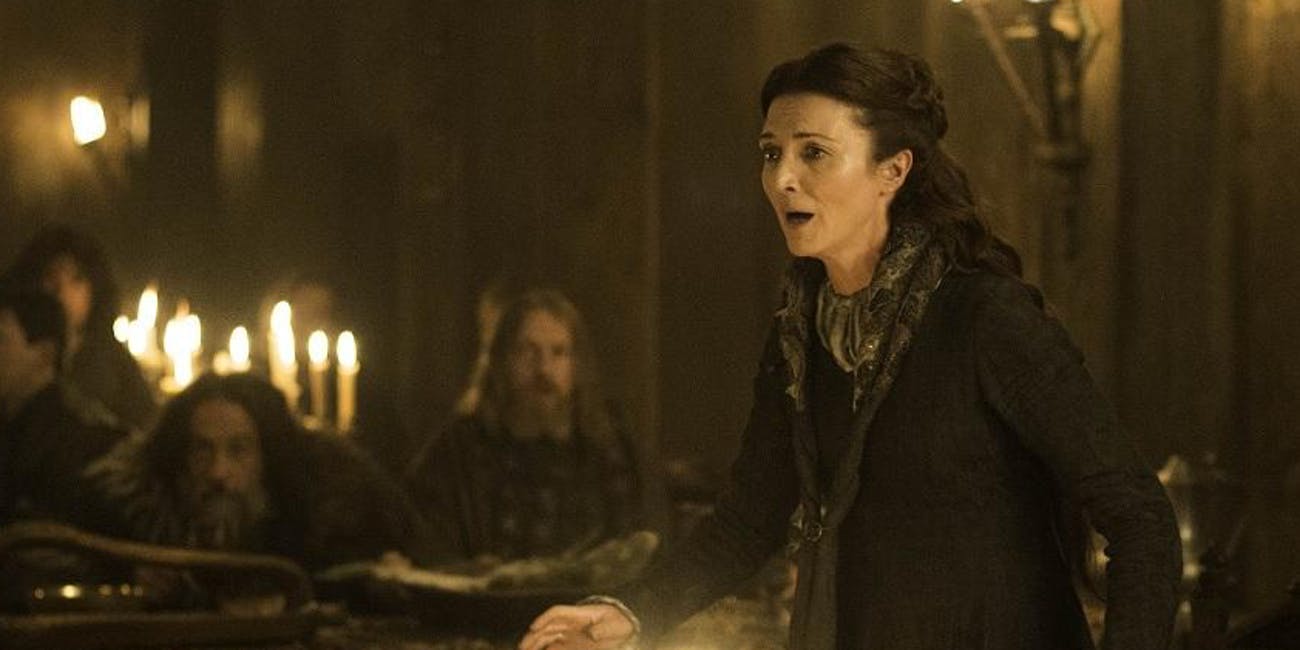
Paris of Troy ignored Xenia and ignited a war when he ran off with Helen, the wife of his Greek host. In recent times, a ghastly violation of Xenia was depicted in the famous Red Wedding episode of Game of Thrones, where all guests were slaughtered.
Shock at the Red Wedding
Xenia and other intricate facets of ancient Greek culture come down to us through myths. The myths are extensive and far reaching. They involve great heroics, tales of morality, flawed character, the foibles of gods and humans, desire, lust, misjudgment and so much more. The myths also help explain the world and how it got here.
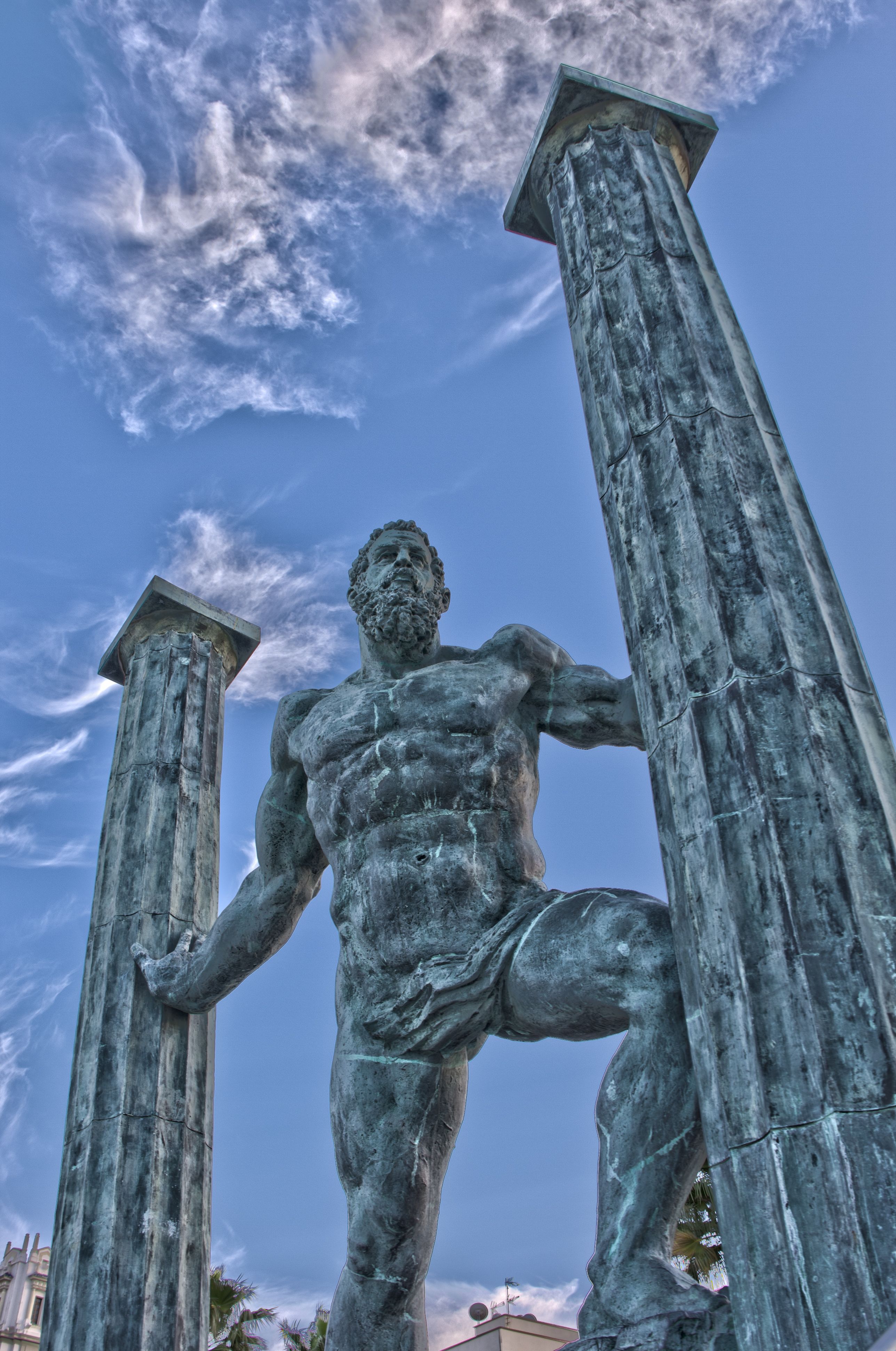
A statue honoring Heracles and his pillars
For example, it was Heracles (aka Hercules) who connected the Mediterranean Sea with the Atlantic Ocean. While traveling to the end of the known world, he reached an impasse. Rather than climb a mountain, he broke though one and created a narrow strait to the ocean, leaving what we know today as the Pillars of Hercules. From ancient Greek stories we learn how peacocks got their colorful tails, why once-white ravens are now black, and how two people, told by the gods to build a small ark, repopulated the world after a great flood by tossing over their shoulders stones that turned into men and women.
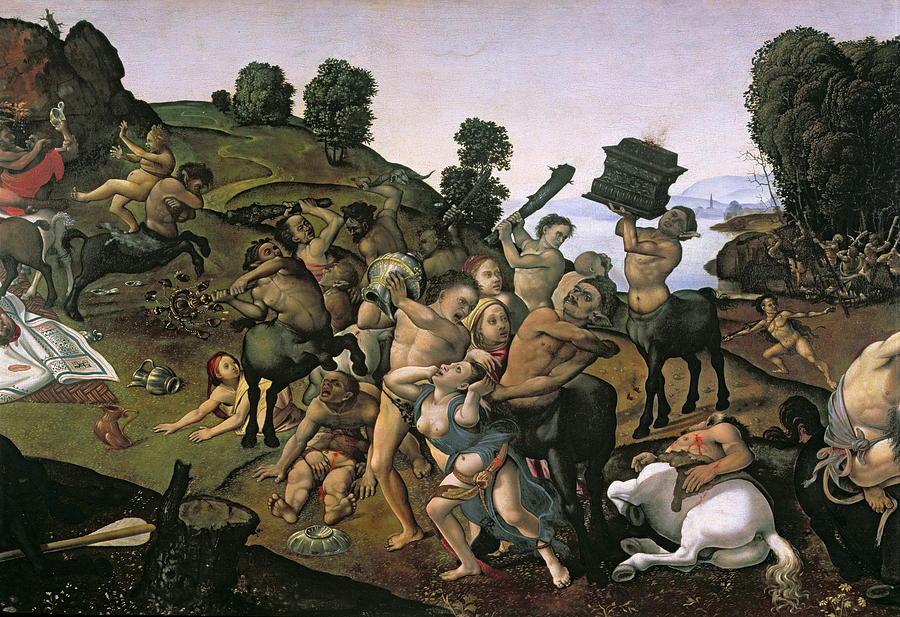
Drunken centaurs creating havoc
The importance of these myths to Greek culture, and later to Roman and European culture, is shown by the art they inspired. A piece of pottery from the 6th century B.C. shows Bellerophon destroying the fire-breathing Chimera. A first century Roman sculpture is of baby Heracles strangling a viper sent by Hera to kill him. A 16th century painting by Piero Di Cosimo vividly captures the drunken centaurs creating violence at a wedding feast.
That artists desire to retell these stories speaks of their value, even if we don’t understand that value today. While every culture has its stories and myths, the Greek myths are undeniably special. Their depth and originality is unmatched. They took root in multiple cultures and have persisted over centuries. When we watch Wonder Woman and Gal Gadot, we are being entertained not so much by Hollywood but by the ancient Greeks.
The warrior Amazons were a Greek creation
As I now reread some of these tales, I sense a current vacuum in contemporary western culture. With no disrespect to Gal Gadot, or Jason and the Argonauts, or Brad Pitt as Achilles, I don’t believe the legacies of Greek mythology are doing for America what the original myths did for Greece. I don’t think they educate, inspire and set a correct path for us. And I don’t think anything has effectively replaced them.
Meanwhile, we are being pulled apart by forces like politics, race and class.
In truth, the detailed and fabulous Greek legends never fully unified the Greeks. The Greek city states were almost constantly at war with each other. Yet there is something strong, powerful and wise about using engaging stories to teach people what they are and what they should be. That someone or some group was willing to do this speaks to the inner essence of a humanness that, without help, is prone to chaos. The goal of the storyteller, of course, is to civilize.
Moses leading his people
The Hebrew prophets had this intention when they wrote and compiled scripture for an uncultured, barbaric tribe. To a great extent, those prophets succeeded and the western world, thriving today in commerce and replete with interaction and exchange, is a reflection of their efforts. Even so, the impact of scripture is waning and its messages, like the Greek tales, are being lost or forgotten. What’s needed now are new insights, new stories, new guideposts. It is time for a 21st century Homer, a modern Moses, a fresh light cutting through an old fog – a Greek revival, of sorts, if you will.
Our biggest problem is we have forgotten what we are and what we can be. Teaching this anew, we can first understand ourselves, then respect and value ourselves. Once we develop true self-respect and visualize a purpose, we can, as individuals, extend respect and dignity to others. Building a culture around respect and dignity will not only strengthen us, it will unify us. And it may do so in ways the Greeks never imagined.
So let the stories be told. Let the heroes flourish. Let us see virtue and valor prevail. Let us know all the things that lead to failure, disrepute and disfavor so a place is reserved for harmony and peace and a new meaning is brought to life.
Everyone knows we’re being tracked. You leave a trail with credit cards, cell phones, cookies and social media. Cameras take pictures at traffic lights.Auto dealers hide GPS devices on the cars they sell. Even U.S. passports have a chip embedded in them.
But in the Old West, in the days of the horse and buggy – mainly because of the horse and buggy – it also was easy to track people. People back then left tracks, the old-fashion kind.
I point this out after reading Cormac McCarthy’s 1985 novel, “Blood Meridian or the Evening Redness in the West.” In it, a band of characters travels endlessly across vast expanses of plains, desserts and mountains. They always seem to find each other. Their enemies always seem to find them, and they their enemies.
There are some major skills involved here, as Cormac suggests. But the basics are hard to miss. In today’s times, we forget about giveaways like smoke from a cook fire, dung and urine from animals and humans, the simple imprint of foot, hoof and wheel. Either way, it’s pretty much a sure thing that after crossing the dessert everyone is going to end up at the well or creek. A great place to wait for your prey.
While it is frightening to think that today’s phones reveal where we are and where we went, it’s also a scary thought that you could ride or walk for days and nights, in the heat and cold, possibly without water and food or even clothes, across the harshest terrain, and the person trailing you will find you and kill you in the most brutal fashion.
This lesson, among others, I learned from Cormac McCarthy and the book they call his masterpiece.
If you don’t know McCarthy from his many novels – almost all of them filled with horrific violence – then you might know him from the films made from his books. Perhaps the most famous is “No Country for Old Men,” which in 2007 won the Academy Award for Best Picture.
Some see McCarthy as the equal or near equal of Faulkner. While I was amazed by “No Country for Old Men,” I’m embarrassed to say I had overlooked McCarthy, then and even after. I only came to know him after briefly watching a so-so TV movie with an unfamiliar name – one I don’t even remember — and hearing several pieces of brilliant dialogue.
I admire a good sentence and these were unlike anything I’ve heard on TV – with the possible exception of “True Detective.” They came from deep within some dark, mysterious, knowing soul.
I checked and found they came from Cormac McCarthy. And so I went on to read “Blood Meridian.”
If you read it, or even just look at it, you’ll notice some things right off. First, there are no quotation marks (even when there are quotes). Cute, but only idiosyncratic. Next, there are all these words you won’t understand because they are archaic and rarely appear anywhere. Doubly troubling are the passages in un-translated Spanish – the common tongue of Cormac’s characters, who are American, Mexican and Native American.
But the most obvious and disturbing thing about McCarthy is the violence. Nearly every page is covered in blood. I recall thinking that while the writing was terrific, the plot line had to come from a thoroughly sick and disturbed mind.
Then I began to listen closer to the tone, attitude and motif phraseology of his characters. I came to realize this was not made up. This was all true. It was history, and the writer must have relied heavily on journals and first-hand accounts.
While McCarthy is not in the habit of discussing his work, I searched for confirmation of my theory and found it on good old Wikipedia:
The majority of the narrative follows a teenager referred to only as “the kid,” with the bulk of the text devoted to his experiences with the Glanton gang, a historical group of scalp hunters who massacred Native Americans and others in the United States–Mexico borderlands from 1849 to 1850 for bounty, pleasure, and eventually out of sheer compulsion . . . .
. . . McCarthy conducted considerable research to write the book. Critics have repeatedly demonstrated that even brief and seemingly inconsequential passages of Blood Meridian rely on historical evidence. The Glanton gang segments are based on Samuel Chamberlain‘s account of the group in his memoir My Confession: The Recollections of a Rogue, which he wrote during the latter part of his life. Chamberlain rode with John Joel Glanton and his company between 1849 and 1850.
Unlike many people, I try not to look for meaning in creative work. Beauty alone is enough for me, and “Blood Meridian” is beautiful. The best art is an open presentation of depth that allows the consumer to add the meaning. It really doesn’t come with it.
Still, my favorite parts of the book are the philosophical pronouncements of the character known as “the judge.” I sense he sounds a lot like Cormac McCarthy at a cocktail party. The judge accepts violence. In total, what the book does for me is calm my frustration at man’s inhumanity, convincing me – if only for a short time – that violence is NOT inhuman, but rather perfectly and intrinsically human.
I’ll end with a passage and invite comment.
“It makes no difference what men think of war, said the judge. War endures. As well ask men what they think of stone. War was always here. Before man was, war waited for him. The ultimate trade awaiting its ultimate practioner. That is the way it was and will be. That way and not some other way.”
Great phrases, including those by Churchill, are often edited by the masses.
Once a writer gets deep into the art, craft and process of writing, there is a temptation to be more taken with sound and rhythm than with content.
I once read that Edgar Allan Poe very much liked the cadence of the words “cellar door” and hoped to fashion a poem around them. He failed, but compromised and used the similar-sounding “nevermore” to create “The Raven.”
When you read the Raven, you’ve got to think that Poe cared much more about the tap dance underneath his verse than what it actually said:
“Once upon a midnight dreary, while I pondered, weak and weary,
Over many a quaint and curious volume of forgotten lore—
While I nodded, nearly napping, suddenly there came a tapping,
As of some one gently rapping, rapping at my chamber door.
“’Tis some visiter,” I muttered, “tapping at my chamber door—
Only this and nothing more.”
But what’s important to the ear of the writer is not always important to the mind of the reader. The cliché (and name of a 60s rock band) “blood, sweat and tears” seems to have been authored by a mass of people who intentionally or unintentionally chose to edit a speech by Winston Churchill.
Churchill, Britain’s wartime prime minister, was trying to rally his people in 1940 when he said, “I have nothing to offer but blood, toil, tears and sweat.”
It was a certainty that the content and meaning of this speech was crucial to Churchill, but so was its sound, hence the alliterative “toil, tears” and the five-beat rhythm of da, da, da, da, da – a little like iambic pentameter. Still, for all Churchill’s literary and artistic intentions, the people ultimately had their way. Churchill’s words have pretty much been lost and their words have stayed.
In college people would quote a line from the 12th century Persian poet Omar Khayyam. With romance in mind they would say, “A jug of wine, a loaf of bread, and thou.”
I had never read Khayyam and I’m not sure they ever did. But recently I learned they did to him what they did to Churchill.
Having stumbled upon a copy of Khayyam’s poems, which in English is call “The Rubaiyat,” I looked for that line and found:
“A Book of Verses underneath the Bough, A Jug of Wine, a Loaf of Bread–and Thou.”
Again, a rhythm of four things was turned to three.
When Tonight Show host Johnny Carson would do a series of four jokes – and bomb – he’d turn toward his producer and say, “I told you four never works.”
And so the difference in opinion between those who create art and those who consume it remains.
We should be aware of this when we read great works like the Iliad or listen to traditional folk songs. Those things started out one way, and along the way people made what they considered improvements. The Iliad, for much of its life, was not written but recited. If a clever reciter made a good edit, it stuck and was passed on. Same thing with many songs whose original authors have been lost to history.
Which leaves us the question: Should literary greats like Homer and Churchill and Khayyam be altered by lesser literary lights? I don’t know, but it’s clear that a whole lot of people think they can do better. I think in some cases, they probably have.
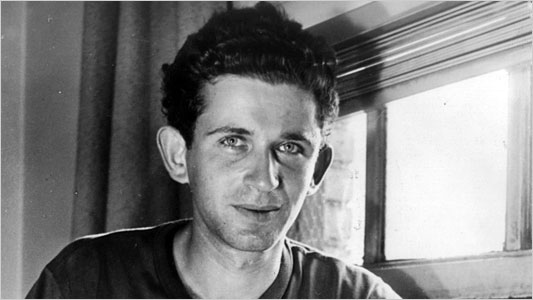
Growing up and trying to write, I admired Norman Mailer. Oh, he had his bad points, but I thought he was fantastic. His fame as a character/celebrity was a self-creation but as a writer he was genuine.
There is a new biography out on him. It is “Norman Mailer: A Double Life,” by J. Michael Lennon. I haven’t read it, but I did read a review of it in the New York Times by Graydon Carter, the editor of Vanity Fair.
Carter does a wonderful job of describing Mailer:
It could be said that Norman Mailer was a man and a writer halfway between fame and infamy and yet with little in the way of middle ground. He was, in varying combinations, a world-class drinker, feuder, provocateur, self-mythologizer and anti-feminist. He was a war protester, a mayoral candidate, a co-founder of The Village Voice, as well as a wife stabber, a serial husband (of six wives), and a father (of nine). He was a boxer, an actor, a filmmaker, a poet and a playwright. He was also a journalist and a novelist of enormous and singular narrative inventiveness and thrust, a two-time Pulitzer Prize winner, and one of the least boring and most tireless and tiresome public figures of the last half of the 20th century.
I heard Mailer speak at the University of Missouri during the ‘70s. Always the showman looking to shock, he opened with a dirty joke. It was a good joke. The most interesting thing about the joke was it knocked him down a peg or two on the masculinity chart. This is unusual for a he-man self-inflator.
Here is the joke, which I clearly remember after all these years.
“I ran into one of my ex-wives recently. She had gotten herself a young new lover and so I asked, ‘How does your boyfriend like that old, worn-out pussy of yours?’ She answered, ‘He likes it just fine . . . once he gets past the worn-out part.”
One thing about this great mind, who loved verbal combat: Sometime he tried too hard and flopped. He’d come off like an ass. This happened on the old “Dick Cavett Show” when he went up against both Cavett and his mortal enemy, writer Gore Vidal.
I had watched the original show and was so disappointed in him. A clip of the performance has been posted on Youtube and I’d like to share it with you. Your thoughts on Mailer and this video would be greatly appreciated. I would guess Mailer had many more enemies than fans. Which are you?


















 notebookm.com