Archive | History RSS feed for this section

Is There New Relevance to a 2004 Novel About a History That Never Was?

19 Nov

By Lanny Morgnanesi

In 2004, more than a decade before Donald Trump first became president, Philip Roth published a novel entitled, “The Plot Against America.” There was an effort to make it into a TV show, but it failed — initially. After Trump was elected in 2016, it was green lighted into a six-part series.

The novel has nothing to do with Trump and takes place during World War II. It’s an alternative history. But reading it now, it carries an eerie sense of familiarity and dread. It actually gave me chills. Frankly, with Trump in his second presidency, I’m surprised it hasn’t been reissued.

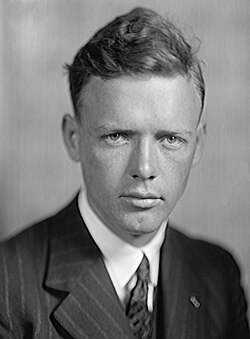
Charles Lindbergh

 In the novel, President Franklin Delano Roosevelt loses his 1940 re-election bid to Charles Lindbergh, the America hero who in 1927 flew solo from New York to Paris in his small plane, The Spirit of St. Louis. In the novel and in real life, Lindbergh was an American Firster who wanted to keep the U.S. out of war. In the book, if not in real life, Lindbergh is sympathetic to the rise of Adolf Hitler and exhibits anti-Semitic tendencies.

Columnist Walter Winchell

Once in office, he signs an official truce with Hitler to keep America out of the war. Then he begins a series of programs to marginalize American Jews, mainly moving them out of urban enclaves (the book is set in Newark, N.J.) and scattering them about the Christian Midwest, hoping they assimilate and discard their Jewishness. Out of fear, some leave for Canada. The main voice of opposition – almost the singular point of dissent — is columnist and radio commentator Walter Winchell, a Jew. Frightened Jews rally around him and listen to his Sunday night broadcasts with both fear and hope.

 Then, Winchell is fired from his job, runs for president, and is assassinated. Jews protest. This sets off a violent wave of anti-Jewish pogroms. Murder and mayhem come to the streets of Jewish neighborhoods while Lindbergh’s government remains silent. Antisemitism builds and spreads, bursting like a volcano. Then Lindbergh, while flying alone back from a speech (he does this frequently) disappears. He and his plane cannot be found.

Author Philip Roth

Hitler (who, we learn later and secretively, may have kidnapped him; we’re not sure) claims Lindbergh was killed by a Jewish conspiracy, and the anti-Jewish rioting further intensifies. Much intrigue and strange happenings follow. The vice president takes over and arrests the top Jewish leaders in America, including real life figures Henry Morgenthau Jr., Herbert Lehman, and Bernard Baruch. Also arrested is New York Mayor Fiorella La Guardia, seemingly the only non-Jew to condemn America’s turn toward fascism.  Ultimately, a level-headed Mrs. Lindbergh, acting like a widow who knows something we don’t know, calms down the nation and announced that the Jews did not kill her husband. With her help, FDR is reelected, stops the pogroms, enters the war against Germany and Japan, and (we guess) saves America.

Joachim von Ribbentrop

What makes this story contemporary is the immense popularity of a conservative president who takes the country in an entirely new direction. Everything he does, including the relocation of Jews, is framed in a positive, pro-American narrative and is readily accepted by nearly all Americans, including – at least at first – many Jews. Lindbergh has enlisted the help of the nation’s top rabbi to convince his people that all is well and right. The rabbi is given a top position in the government, is treated and feted like a celebrity, and attends state dinners and other functions, including one where the guest of honor is Hitler’s foreign secretary, the real life Joachim von Ribbentrop.

So many people, big and small, compromise themselves because they see a winner and want to be on his team, and they assume when the government goes after people, it does so for a good reason, and will never come after them.

Newark, N.J. in the 1940s

As intra-family squabbles take place today, in the book Jewish families fight among themselves about whether or not the government is good intended, whether America is stronger by staying out of the war, whether they should move to Canada or take part in the relocation program, and more. We see how people are not worried at first, then as the Lindbergh policies take hold and escalate, the worrying begins. But people still aren’t sure. It takes violence, murder, and assassination before they realize what’s taking place is wrong.

If you can, look in on the book, “The Plot Against America” or stream the TV series on HBO or Hulu. (Here is the trailer)  Perhaps you won’t see it as I see it … or maybe you will see it as an even darker specter of what is to come.

24 Years Ago, After Emerging From the Ruins of the World Trade Center, She Wrote This

10 Sep

By Lanny Morgnanesi

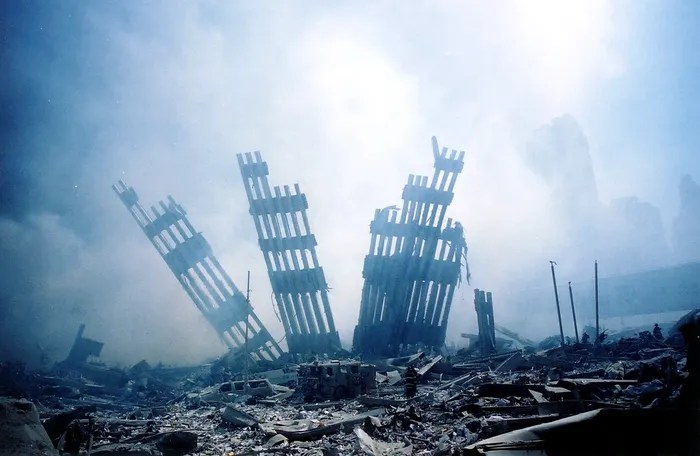
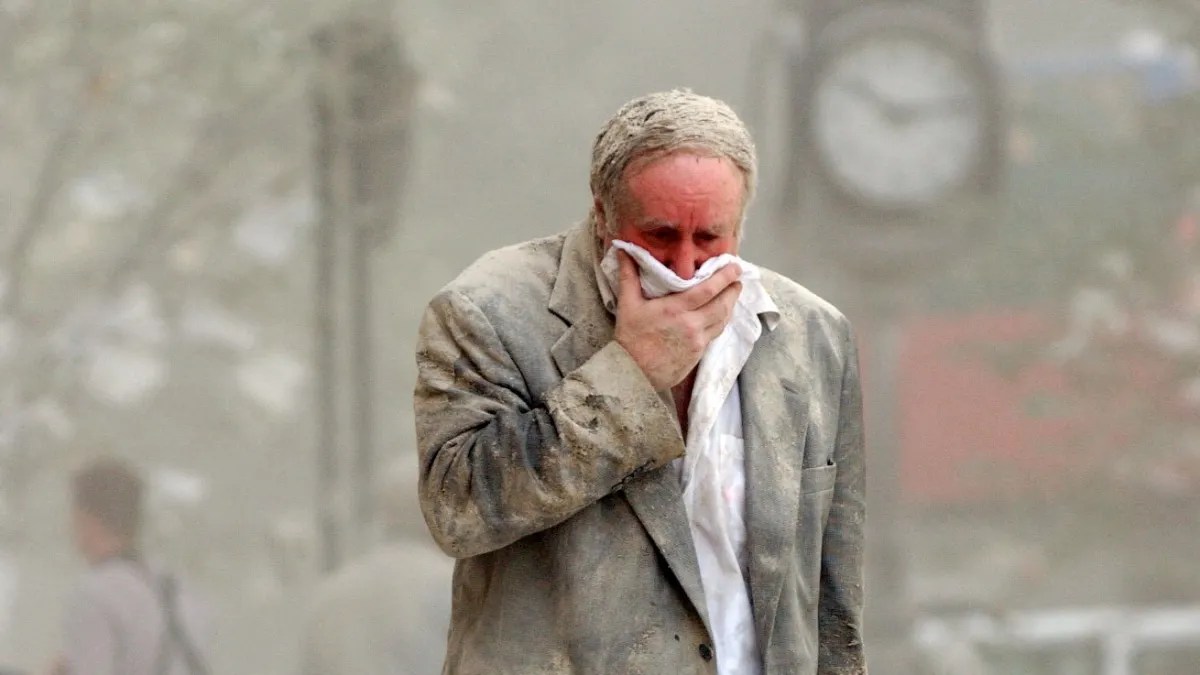
In 2001, I was the editor of a newspaper. In that same year, a woman name Christine, whom I did not know and never met, was working on the 87th floor of the north tower at the World Trade Center in Manhattan. Two weeks after the September 11th attack that killed 3,000 people, she wrote a lengthy email to friends and family. It detailed her experience of horror and her remarkable survival. She copied me on that email. I read it, of course, then printed it out and stuck it in a desk draw. Last week, as the 24th anniversary of the 9/11 attack approached, I discovered it under a bunch of papers. Now, I share it with you. It’s always good to remember.
Hello everyone,

Please forgive the impersonal nature of this group email blast, especially since each of you took the time to contact me directly with messages of concern, love and support since Tuesday, September 11th.

I can hardly believe that it was almost 2 weeks ago that the World Trade Centers collapsed. In some ways the attack feels like it happened months ago, yet I don’t really know where the last two weeks have gone. All I do know is that I am feeling stronger with each day that passes.

Many people have been asking me what it was like when the plane hit the building and what it was like in the stairwell on the way down. Here is the entire detailed story.

At 8:45 am on Tuesday, September 11th, I sat at my computer checking my email. I worked on the 87th floor of the North Tower, the first one hit, the second tower to collapse. There was a very loud crack and crash, like an explosion, or a bomb. With the tower shaking and swaying, I yelled to Yvette, my coworker, to get under her desk. The roof had caved in on one half of the office and smoke and fire was coming from the same area. The office filled with smoke very quickly. I looked out the window to the north, which overlooks Manhattan and saw a snowstorm of debris diagonally whipping passed the window.

“What happened?” asked Yvette, my coworker.

“I don’t know. Maybe a bomb,” I speculated, remembering the 1993 bombing in the World Trade Center.

Although the plane’s impact was very powerful and loud, at the time, I would not have guessed it was a full-size passenger airline hitting the building. The explosion we felt simply didn’t seem that destructive.

Fred, another colleague of mine, yelled frantically to make sure that we were not hurt. Then, Fred told us that there was water running down the windows on east side of the building, which we would later learn was jet fuel.

Within seconds after the crash, we heard dozens of fire engine and police sirens, which mildly calmed both of Yvette and me. “At least they know something’s happened up here,” Yvette said.

I picked up the phone and dialed 911, but was put on hold due to the flood of callers. I waited on the line for about a minute and then hung up. I tried to call Craig at home to tell him that something had happened, that I was OK and to send him my love. This time, the phone was dead, and I couldn’t get through.

Our eyes started to burn and we were coughing. I asked Fred to get each of us a bottle of water stocked in the fridge. We placed wet napkins over our mouths to prevent smoke inhalation. The smoke was getting thicker as the fire started to creep further towards us.

“We’ve got to get out of here! Let’s get to the stairwell!” yelled Fred. All four of us fled the office’s side door. Fortunately, the office had an alternate exit as the collapsed ceiling and fire blocked the main entrance. In the hallway, a brave man was fighting the fire with an extinguisher. I assume he was the floor’s volunteer fire warden. He was an employee of May Davis, a brokerage firm that occupied the other office space on the 87th floor.

Apparently, Joseph, the fourth Thor employee at work, was right behind us, but I don’t recall seeing him.

Once in the stairwell, we hurried down the stairs quickly. Both Yvette and I were wearing clunky sandals, which slowed us down somewhat. Then, at the 78th floor we hit a dead end — a locked door. We banged on the door and yelled at the top of our lungs, “Open the door! Open the door!” People behind us were queuing up shouting at us, “Open the door!”

“We can’t! It’s locked!” we yelled back.

A large burly man grabbed a waist-high steel fire extinguisher and started ramming it repeatedly against the door. With all his might, he slammed the steel canister into the door in an attempt to break it down. Foam from the extinguisher sprayed all the people behind him. The door was so robust that he couldn’t even make a dent in it. Then, he tried to smash in the wall next to the door so that we could crawl through a hole in the wall, but after a few attempts, it was clear that the concrete wall wasn’t going to give either.

Just as I started to panic over being trapped, a building maintenance worker with a walkie-talkie shouted, “We’ve got to go back up to get down!” Everyone followed behind him, walking up the stairs to the 83rd floor and exiting the stairwell into an office. Half of the corridor was blocked by a caved-in wall and electrical fire. Another brave man was trying to extinguish the flames. As we scurried over the soaked carpet, bypassing the flames, we felt the heat of the fire and the spray from the extinguisher. I remember wishing I hadn’t worn a polyester shirt that day.

Once in the second stairwell, the descent toward the lobby was fairly calm, but very slow. Many times, the line stood completely still. The further we got down, the worse the traffic became as dozens of people evacuated into the stairwell.

For over an hour, we slowly moved downstairs. Around the 40th floor, the smoke cleared significantly. People were composed, nervously joking with each other to pass the time and stay upbeat. It was very hot and sweaty. A couple of men told us of their experience during the tower’s bombing last decade. Another woman from the 89th floor told us that the roof of her floor had also caved in, but all of her colleagues had escaped without harm.

I asked a couple of people in the stairwell whether they knew what happened. A man told me that he heard on the radio that a plane hit the tower. After brief speculation, we all agreed that it must have been an accident with a small two-seater plane or a traffic helicopter or something incidental. My colleague Fred suggested a terrorist attack. I dismissed the comment and suggested that he was a conspiracy theorist.

We were asked to stand to the side and make way for injured people. “Clear left! Clear left!” shouted the people who escorted a couple of injured folks passed us in the stairwell. Although it was a little frightening to see these people bleeding, the injuries appeared to be minor.

An-abandoned wheelchair was left in the stairwell. Down one floor ahead, I could see a woman who was being carried down the stairs by four other men. A man supported each of her four limbs and carried her very slowly; stopping for rests along the way. She told them to go ahead and leave her behind. They refused. I later found out that this woman got out of the building safely.

We also encountered a couple of very overweight people who had trouble making it down the stairs. One obese man was being carried down the stairs by two strong men. I later learned that these men were from May Davis, the trading firm from our firm’s floor.

I overheard the May Davis guys encouraging the heavy man to keep moving. He was resting on the stairs. “Aren’t we safe here? Can’t we just stay here?” he puffed.

Around the 45th floor, the smoke started to clear. The stairwells were hot and clammy, but everyone had removed the handkerchiefs from their faces. We started to feel safer. People entering the stairwell were nonchalantly conducting business and seemed annoyed by the interruption to their tight schedules. A man in a suit talking on his cell phone entered the stairwell saying, “Yeah, it’s nothing–I’m just heading down the stairs now… so, let’s schedule Thursday at 10. I’ll block you in. Where’s convenient for you?”

Many people have been surprised by the fact that everyone inside the building was so calm. We didn’t really have a reason to be panicked. We knew the fire was upstairs, we were on our way out to safety and the firefighters were on their way. Also, I think that seeing how relaxed the people on lower floors were, helped to lift our anxiety.

A lot of people in the stairwell were trying to use their cell phones. I kept trying to call Craig as Yvette tried to reach her sister and parents. We knew that our families would be worried about us and we wanted to let them know that we were OK.

At the 30th floor, we were instructed to make way for the firemen who were passing us up the stairs. About 20 firemen, fully dressed in 90-pound fire suits, and carrying tanks on their backs pulled themselves up the stairs with the handrail. They were exhausted and drenched in sweat. We met eyes with many of them; thanking each one individually as they ascended. People in the stairwell broke into applause and cheered the men up the stairs.

At the 20-something floor a tall, thin Hispanic man with a mustache, stood at the stairwell entrance, touching each person’s shoulder, “Take care. Be safe, now. God bless. Watch your step,” he said to each person passing him. We thanked him and smiled. “Come on, why don’t you come with us and get out of here?” asked a man behind me. “The Lord put some of us on this earth to watch over others. This is my duty, I guess,” he replied with a warm smile. I later saw this selfless man’s photo on a missing poster in Grand Central station.

As we neared the ground floor, the stair were pooled with water as the sprinkler systems had been operating on the lower floors. The stairs were quite slippery and a couple of people lost their footing and fell down the stairs on their rear end.

Finally, Yvette and I hoorayed over the sight of daylight at ground level. The stairwell exited at the main plaza where the copper globe fountain had been. I gasped with shock as I caught a glimpse of the unrecognizable area. It looked like a war zone covered in two feet of gray debris and dust. “What the hell happened down here?” I asked under my breath.

“Hey Christine!” yelled my colleague Fred from over my left shoulder, “Looks like we made it,” he said. But before I could reply, a huge thunder and cracking erupted from behind us. Then, a strong wind swept toward us. People started to scream and run. Within seconds, the roof collapsed, and debris fell all around us. Then blackness. “Get down!” I yelled at Yvette pulling her hand to the ground. We curled together in a fetal position clinging to each other. I covered my head. Store windows smashed, roof chunks dropped and debris crashed around us. It felt like a tornado. “This is it,” I thought to myself, “This is where it ends for me. Is this all I get? 27 years? No fair.”

The first tower was collapsing, although we didn’t know what was happening at the time. I prayed. I never pray. I pleaded with God to either take me quickly or let me survive unharmed. I didn’t want any in-betweens. I feared being pinned down by a falling beam or getting badly injured and unable to move.

It seemed like an eternity before the crashing stopped. When it did, there was dead silence followed by coughing and cries for help. I couldn’t see anything. The smoke was so thick it was difficult to breathe. I spat the dry grit from my mouth. It was pitch black. We sat in the cold water in the blackness and I could feel the cold water on my rear end.

“Are you OK?” I asked Yvette.

“I think so. Are you?” she said.

“Yes.” I replied. I wondered how long we would wait before being rescued. Then I wondered if we would be rescued. Did anyone know to look for us?

“Help me. Hello? Help me. Is there anybody there?” cried a woman in front of us.

“Yes! We’re here, we’re right next to you,” I told her.

“Reach out to me! Where are you? Can you reach out to me?” she yelled.

We fumbled around with our hands extended until our arms touched. She crawled closer to us tripping over the debris that surrounded us. Many people were shouting to each other. “Hello? …. Help! Hello?” In the darkness, the people responded to each other’s cries, while panic, confusion and chaos grew with each second that passed. Everyone waited for the voice of authority, the voice of direction, someone who was coming to save us.

A man next to us lit his cigarette lighter so that he could see. At least three people shouted simultaneously, “No! No! Put that out! There could be gas in here!”

“Yvette, we’ve got to get out of here,” I said, “let’s crawl.”

Determined not to lose each other in the dark, we formed a human chain

on the ground with each person clutching the ankle of the person ahead. We crawled over the glass and debris toward a faint light that turned out to be the 1/9 subway entrance. We stood up but were unsure of how much clearance we had to stand. A few people stood in the doorway looking for help. The smoke and dust was so thick that I couldn’t see the faces of the people standing right in front of me–only featureless figures.

When we realized that there was no exit through the subway, we turned to move in the opposite direction. We started walking very slowing, tripping over broken debris. “My feet! Ouch! I can’t walk, I have no shoes!” cried Yvette.

I heard a man in front of us and asked if he could carry my friend who had lost her shoes. He whipped off his laptop and tossed it to the ground. I felt the thud as it hit the ground and reached down to pick up his bag. He lifted Yvette to give her a piggyback. “Girl, what have you been eatin’?” he joked with her.

A cluster of six or seven of us moved around in the dark. I don’t think any of us knew where we were going. A few seconds later we heard a man’s voice in the darkness.

“Follow my voice! There is an exit over here! Follow my voice!” We moved toward the man’s voice; toward a hazy faint light. At the bottom on a small stair well, two firefighters argued with each other over whether the exit was safe and clear or not. “I just took a dozen people out this way five minutes ago!” one fireman insisted as he gathered us together. “Come on! Let’s move!” he shouted.

Once we were outside, I barely recognized Vesey Street. The street was littered with smashed up cars with dangling bumpers.

The man carrying Yvette put her down and gave her a hug. I handed him his laptop bag, which he accepted with a pleasant surprise. We thanked the man and both hugged him. I kissed his soot-covered cheek. All of our faces were caked with gray soot. I don’t think we’d ever recognize each other again, although I would like to thank that man.

Everything was coated in a foot of debris consisting of papers, file folders and dust. I kicked off my shoes so that I could run. The debris under my feet felt soft.

I looked around for someone to help us or tell us what to do. Where do we go? Is there a central check-in station? What now? I began sensing how chaotic the situation was. No one was in-charge. Even the policemen were frantic.

They shouted at people to keep moving. We ran North. We didn’t really know where we were going, but we knew that we needed to flee the area. We ran and ran and ran.

A few paramedics stopped us to ask if we were injured. They handed us water and told us to wash off our faces, but to avoid getting the soot in our eyes. The streets were filled with spectators watching in horror and fascination. Yvette and I kept running hand in hand and didn’t look back.

Reporters frantically snapped our photos without response and asked for comments. We kept moving.

Then, people started to scream when the second tower started to crumble. I looked back for a split second, but couldn’t watch. We just kept running.

One woman burst out crying in terror as we passed her in the street. Perhaps she saw how badly we looked and she knew someone in the building.

I took Yvette to her sister’s work on Houston and 8th Avenue and made my way home. I hitchhiked a series of three rides home. That may be the one and only time I hitchhiked in New York.

When I rang the doorbell and Craig opened the door, he collapsed to the ground with sobs of relief. He held me, grabbing my flesh to make sure I was real. He had been going crazy for hours, knowing that I was in the building, but not having heard from me since I left the house that morning. He was so happy, but told me to call my parents immediately. They, too, had been calling, wondering if he had heard from me. After a number of attempts, I finally reached my mother in Calgary, whose reaction of relief matched that of Craig’s.

Although people had told me what happened, I wasn’t really able to comprehend the facts on that day. I was still in shock with adrenaline racing through my system. In fact, I didn’t really start to process the terrorist attacks until the next day.  

It has now been 12 days since the disaster. Each day I feel better than the day before and I’m getting stronger with each night’s rest. Craig and I have been attending memorials and candlelight vigils, taking walks in the park and trying to establish routine and normalcy to our lives.

September 11, 2001 was the worst day of my life and it was the best day of my life. It’s a miracle that I escaped.

Thank you very much for your thoughts and prayers over the last two weeks. I have booked a trip home to Calgary for the week of Canadian Thanksgiving and can’t wait to see my family and friends. Hugs will be issued to everyone!

Take care and stay close to your loved ones. Love to you,

Christine

The Divine Comedy: Hard to Understand After 700 years

8 Jun

By Lanny Morgnanesi

In 1990, I wanted to name my new-born son after a writer, or at least an Italian. In the end, we named him after an Italian writer. Dante Alighieri. Just Dante. Not Alighieri. And because of this, I vowed to read Dante’s most famous work, the acclaimed Divine Comedy, written between 1308 and 1321 and divided into three parts, Inferno, Purgatorio, and Paradiso. When I was gifted by my young son with a nice leather-bound copy, I let it sit on the shelf to marinate. Or maybe I was just intimidated. When I decided to open it, it wasn’t there. Lost forever.

         Thirty years later, I am reading a free, digital version, an 1867 translation by poet William Wadsworth Longfellow. It is considered one of the best. By coincidence, at this very same time, PBS is airing a series on Dante and The Divine Comedy. The series is easy. The book is hard.

 You can’t just read the book You must look things up … constantly. There are scores of other books and websites to help with this – understanding the references, the personalities from history, the Greek and Roman legends, the pagan gods, geography, and so much more — and still it remains hard.

         The work is considered one of the finest in all of literature, even 700 years after it was published. I find this remarkable because I’m certain Dante wasn’t writing for us. For him, in my estimation, it was a strictly contemporary work aimed at a small audience, the people of his native city, Florence. I drew this conclusion because with the billion who have died and gone to hell, Dante, during his visit there, run into about three dozen people just from his little part of the world. There are others, like Ulysses, Mohammed, and lots of classical Greeks and Romans. But for Dante, hell was very much like old home week.

His encounters include those with Florentines whom history remembers, as well as some whom history never knew. A few were involved in provincial scandals (like the two adulterous lovers inspired by the romance of Lancelot and Guinevere, who were murdered by the woman’s brother) or committed poor behavior (like the glutton Ciacco). These characters no doubt were a source of 14th century tongue wagging. But now? For Dante to include them means he was not intending to entertain readers in the far future. He doesn’t even provide much context or background or explanations, assuming his readers know the full story. Often, there is just a casual hint, or the drop of a single name. For example, when Dante enters Purgatory, he is greeted by a person he obviously expects his readers to know. He never names the person, only the woman that person loves, Marcia, and the city he comes from, Utica. Apparently, his target audience knew, or were expected to know, that the person from Utica who loved Marcia is the famous Roman orator and statesman Cato.

         Confession: I did not know. I had to look it up.

         Obscure as he may seem to us, Dante wanted to reach the widest possible audience of his day, and that included the nobility and the common people. This required a revolutionary approach, and Dante was more than willing to take it. Instead of writing in scholarly Latin, he wrote in the vernacular or vulgate, basically street talk, the dialect of Tuscany. And because of this, and the influence of his work, a form of Tuscan eventually became Italian and the language of a unified nation. Aside from its poetry, this is one reason why The Divine Comedy is considered a literary landmark.

         If you read it closely, and don’t take its spirituality too seriously, you might find it quite temporal, an act of earthly vengeance by the author, who makes a habit of using the Inferno to inflict pain and punishment on his enemies.  Context is needed here.  Readers need to know that the poet had been a victim of Florence’s ceaseless civil war between the factions known as the Guelphs and the Ghibellines. He was a Guelph (although they later split as well), and when his group lost power, he was exiled from Florence and sentenced to death should he return. One of his enemies was named Farinata, a Ghibelline military leader and aristocrat. In hell, Dante conveniently entombs Farinata, for all eternity, in a coffin of fire.

         A writer can get great pleasure doing that.

At times, however, he could be merciful.  He spares a fellow name Buonconte by putting him in purgatory, allowing him to cleanse himself of sin and reach paradise. Buonconte was no friend of Dante. He was a military strategist who literally fought against Dante at the Battle of Campaldino in 1289. According to Dante’s telling, Buonconte accepted Christ at the time of his death, which I guess makes all the difference. So no punishment there.

         Aside from punishing his enemies, Dante places a few people he liked in hell, including his teacher, a known sodomite, but he expresses sympathy and sadness for him.

         Following the then-teachings of the Catholic church, Dante condemns to hell everyone in the world who was born before Christ, and therefore did not worship Christ. He places the virtuous Greek and Roman figures there, in the tame, unthreatening, limbo portion. These include Socrates, Plato, Aristotle, Homer, Horace, Cicero, Seneca, Ovid, and, of course, the poet Virgil, his underworld guide. There are always exceptions, and one of them is Cato, the Roman politician and stoic known for his virtue and defense of the old Roman republic. Cato is in purgatory, but he probably will not get to cleanse himself and go to heaven. Rather, Dante gives him a job of sorts. Cato is a greeter who welcomes and instructs the new souls.

         Although Dante, as the writer, condemns to hell those who followed the Greek and Roman gods, he shows immense respect for these deities, as if he, too, were a follower.  He seems to worship them and acknowledge them as if they were real. In fact, he punishes those who blasphemed against Zeus, the supreme god, known to the Romans as Jupiter or Jove. In one unusual passage, Dante appears to call Jesus Christ by the name Jove.

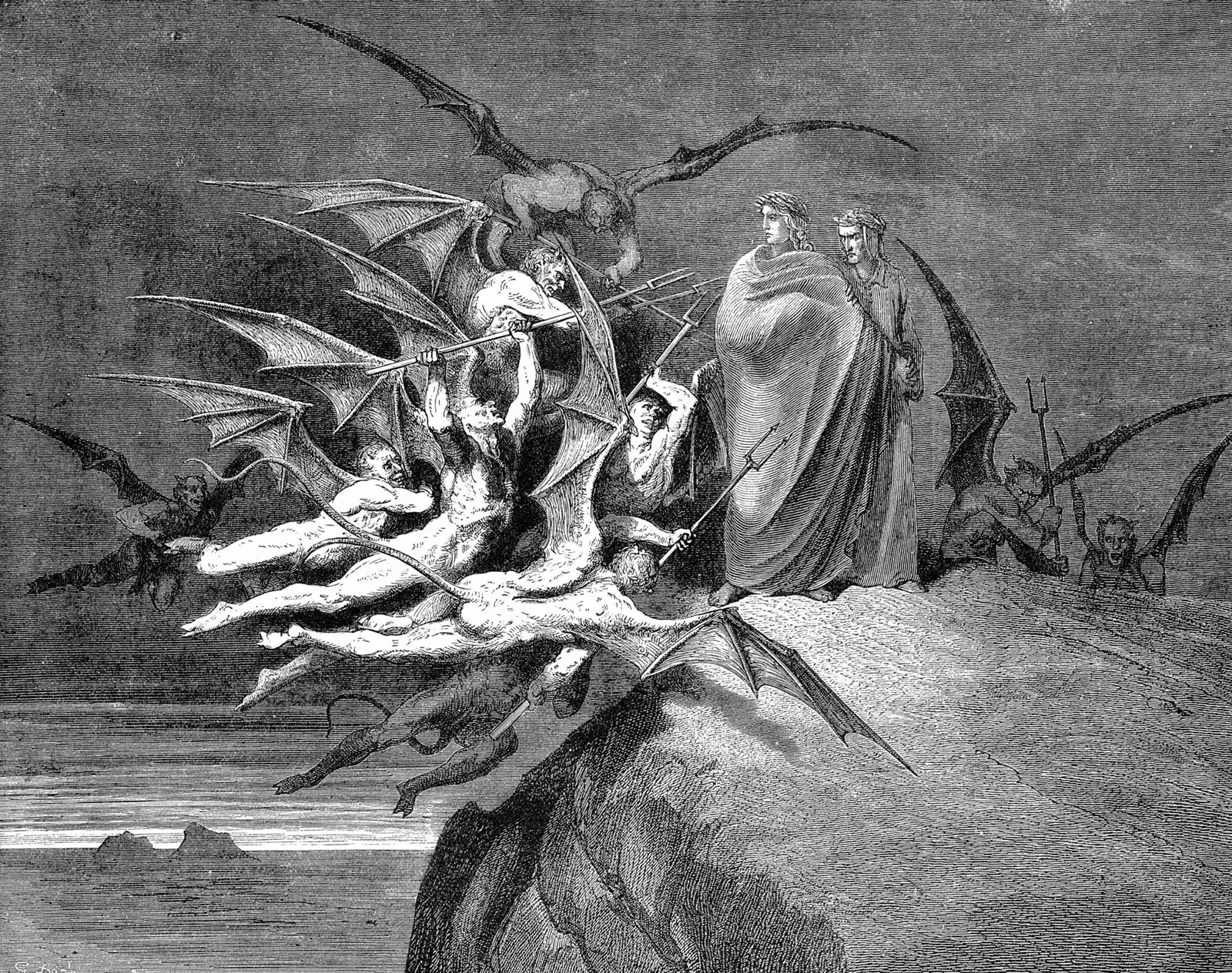
         Let’s get back to the punishments, which range in severity depending on the sin. If you were gluttonous, you are tormented with ceaseless rain. If you were lustful, there is ceaseless wind. For the really bad, you could be continually pecked by bird-like creatures, or forever bitten by dogs, or submerged in boiling blood, or be torn apart, or forced to stand head-first in stone bowls and endure flames upon the feet. While we think of hell as hot, the worst level is a frozen wasteland. In addition to all this, Dante, as poet, sometimes punishes with a type of irony known as “contrapasso,” (to suffer the opposite). False prophets who claim to see the future, for example, have their heads turned backwards on their bodies, so it is impossible for them to see what lies ahead. That kind of thing.

         Indeed, above all, The Divine Comedy is a poem, a work of art. And, at least in the Italian, it rhymes. It rhymes in such a complex fashion that, to keep their sanity, most translators of Dante don’t attempt to rhyme. Longfellow didn’t. The technique Dante used is called Terza Rima, or third rhyme. In the original Italian, each stanza is three lines. The first line rhymes with the third, then the first and third lines of the second stanza rhyme with the second line of the preceding stanza – and continues this way throughout. It’s ABA, BCB, CDC, DED, and so on.

 This means the poet never gets a fresh start. As he moves on, he must craft new information based on words he already has used. It’s difficult to imagine writing a graceful or even coherent passage using this technique, yet Dante did it.

         While I find The Divine Comedy utterly remarkable, I find it astonishing that Dante’s 14th century readers (and those who heard the poem recited by bards and troubadours) understood and appreciated the frequent references to Greek and Roman mythology. Dante uses them matter-of-factly and with confidence, as if he were communicated in the most simply, easy-to-grasp fashion. I sense he, while writing, was certain these allusions, descriptions and analogies would be as easily understood as the Tuscan version of “hello.” What is perplexing, almost depressing, is that these magnificent references, these beautiful literary devices, these moral tales of virtue, honor, tragedy, and comedy, are, for all practical purposes, impenetrable to us. Without the guide of a scholar, The Divine Comedy, in all its wonder, means little to us.

With the advent of modernism and the passing of the classical period, the elite and the common have lost the cultural bearings on which our civilization was built. And so we walk with half-empty souls, rejecting what had once been given to us, leaving behind the magic of our own humanity.

         I envy the cobbler, or the butcher, of the Florentine farrier who maybe didn’t have an education but was washed daily, through frequent and copious tellings, in the stories of genius.

         The concubine of old Tithonus now

         Gleamed white upon the eastern balcony

         This is from the purgatory section of The Divine Comedy. Very beautiful, but pretty much a casual throw-away line of introduction. What does it mean? It simply means: The dawn arrived. But today’s reader has no way of knowing that.

         Tithonus is the key to understanding this well-crafted little stanza. In Greek mythology, Tithonus was a Trojan prince. The goddess Eos (the Roman Aurora) fell in love with him, took him for herself, and asked the god Zeus to make him immortal. In asking, she neglected to specify that she wanted him to remain young. And Zeus, with a dose of trickery not uncommon when gods grant favors, allowed him to live forever but required that he age. To the distress of his mistress, he became decrepit.

Eos and Tithonus

Eos, the disappointed lover, is the goddess of dawn. She dresses in a saffron-colored mantle and arrives in the sky each morning on a chariot, casting out the darkness and making way for Helios, the sun god, to bring on a new day. Know that and read again:

         The concubine of old Tithonus now

         Gleamed white upon the eastern balcony

         Consider another simple passage that for us is complex. Most today are aware of the constellation Gemini. Most are aware that Gemini refers to twins. But most would not grasp the meaning of this:

Whereon he said to me: “If Castor and Pollux

  Were in the company of yonder mirror,

  That up and down conducteth with its light …

         It’s a reference to the heavens. Castor and Pollux are the twin brothers for which the constellation Gemini was named, so Dante here seems to be talking about the constellation. But the story of Castor and Pollux is deeper and illustrative of an unusual scientific phenomenon called heteropaternal superfecundation. You see, the twins are only half-brothers. They have the same mother but different fathers. Their mother was the mortal Leda. Castor’s father was the mortal king of Sparta. Pollux father was the god Zeus, who raped Leda. The story tells us that the ancients obviously knew two eggs, in rare cases, can be fertilized around the same time by two different males. And they also knew they could use the skies to education and inform.

Castor and Pollux

         I say and explain all these many things having read not even half of The Divine Comedy. Now, it is time to return to the pleasant drudgery of those pages.

         Before leaving, I’ll add one thought. It concerns the frigid ninth circle of hell, where a giant-sized Satan resides, frozen up to his waist in ice, waving his bat-like wings to maintain the cold. He has three heads and is chewing on Brutus, Cassius (the assassins of Julius Caesar) and Judas Iscariot. My question: With the much-later arrival of Adolph Hitler, which of the three would Satan spit out?

         Even hell can change after 700 years.

Lanny Morgnanesi is a journalist and author of the novel, The King of Ningxia.

After the virus, there will be decorating

20 Apr

Milan_Cathedral        

By Lanny Morgnanesi

Easter came and there were no large family gatherings or in-church services. There was only Italian tenor Andrea Bocelli, who sang for free while the world  listened.

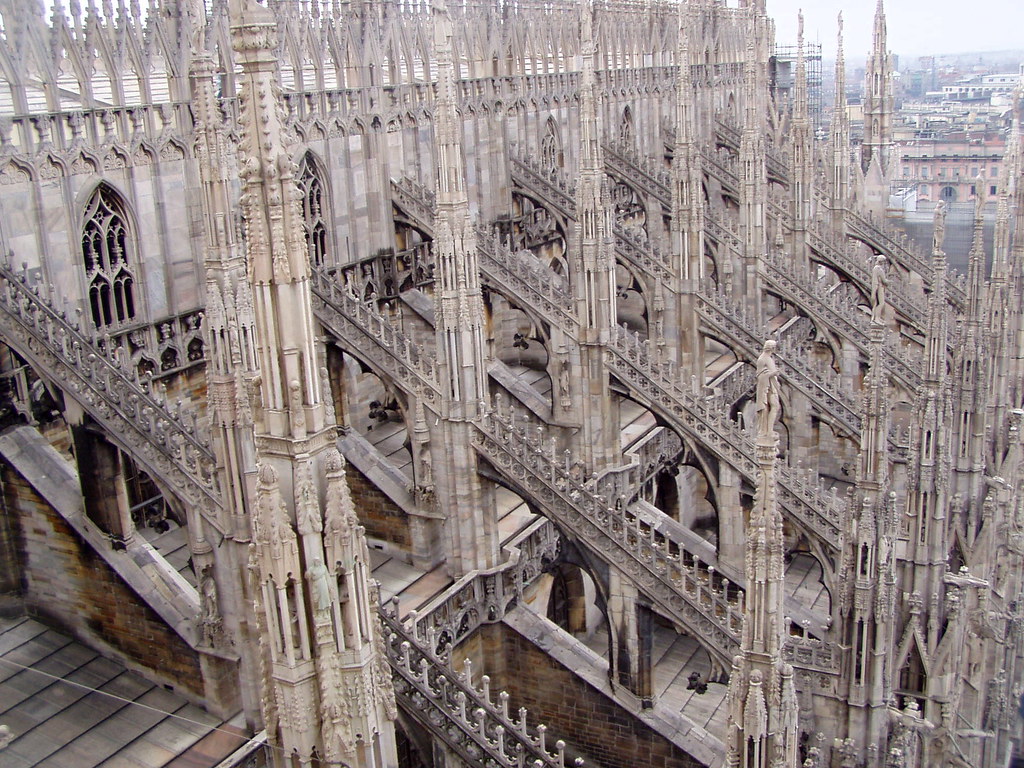
Bocelli said his was not a performance. He called it a prayer and the event was advertised as Music for Hope.  It took place in the Duomo di Milano, one of Italy’s most breathtaking cathedral. Bocelli was accompanied by a musician playing the world’s largest pipe organ. Otherwise, save for the unseen camera crew, he was alone.

Inside the cathedral, the tenor sang a few piece of sacred music. People watching live on Youtube saw a pantheon of statues, stained glass, etchings, carvings, relief work, marble, enormous pillars, icons and more. As Bocelli sang, there were cutaways to the empty streets of great cities like Milan, Paris, New York and London. After 25 minutes or so, the blind singer stop singing and walked unaccompanied down a corridor, through an enormous door and onto the Duomo steps. There was no one outside in the locked-down city, the epicenter of the Coronavirus in Italy. The small country of 60 million has reported 159,000 cases and 20,400 deaths.

bocelli new

Andrea Bocelli

Bocelli stood on the steps and returned to his singing. In English, he sang the 18th century Christian hymn, Amazing Grace. There was no music at first. After a time, the production people layered in a full orchestra. When the song ended, there was silence, and the cameras shutdown. The prayer was over.

The concert lasted 30 minutes and, so far, has been watched by at least 37 million people.

Andrea Bocelli’s music, as intended, gave us hope. Even more inspiring might have been the miracle and magnificence of the Duomo di Milano, the largest cathedral in Italy. Construction on it began in 1386, just a few decades after the Black Death killed 100 million people worldwide. Many believe the depths, damage and darkness of the plague is what spawned the creativity, commerce and optimism of the European Renaissance.

Duomo interior

Interior of the Duomo di Milano

The amazing thing about the Duomo is its utter completeness as a work of art. The virtuoso violinist Itzak Perlman has said that in the world of symphonic music there is no such thing as a casual note. With the Duomo, there is no such thing as a casual surface. Every piece of wood or stone has been slaved over and loved into a masterpiece. In Renaissance Italy, the greatest and most famed artists would fight for commissions to illustrate or decorate a surface. And great time would be spent on them. Lorenzo Ghiberti spent 27 years on the doors of the Baptistery in Florence. When Michelangelo saw those doors he called them “the Gates of Paradise.” The doors to Milan’s Duomo may not be as famous, but they are covered in jaw-dropping art work. Mark Twain, in Innocents Abroad, said this about the Duomo doors:

“The central one of its five great doors is bordered with a bas-relief of birds and fruits and beasts and insects, which have been so ingeniously carved out of the marble that they seem like living creatures —  and the figures are so numerous and the design so complex, that one might study it a week without exhausting its interest …”

            You look at a place like the Duomo di Milano and quickly comprehend that no such monument would be built today or could be built today. It’s a representation of a now unachievable achievement. The Duomo was a continuous work in progress for nearly 600 years. That’s how long it took to complete. The expense was enormous and funds were not always available. In 1805, Napoleon Bonaparte, about to become King of Italy, ordered the facade to be finished and said he’d pay for it. He never did.

Duomo doors

Door engravings, the Duomo di Milano

The art and culture of the Renaissance arose as great fortunes in banking and commerce were being made. Wealthy, influential families like the Medici and the Borgia possessed incomparable riches and used their fortunes on the arts. It was expected and something of a requirement. What was created was to be shared with regular people and offered up to God in thanks. Great new wealth also has been amassed in our era through the likes of Facebook, Google, Apple, PayPal and others. But it is used differently. There is good being done, but it’s a different kind of good.

Screenshot_2020-04-19 From Warren Buffett to Bill Gates How auto dealerships are attracting a whole new class of investor

Buffett, Gates, Soros

True, the rich create foundations to better mankind (and get a nice tax deduction for it). George Soros, Bill Gates and Warren Buffett are among a handful of billionaires who have contributed much of their wealth toward improving the human condition. The other side of this benevolence, however, are efforts to change the world in more entrepreneurial ways. The excessive profits of enormously successful companies, for example, might be channeled into no-profit or low-profit ventures, like building space ships or driver-less cars. Intentions are good and hopes for mankind are high, but the goal is ultimately money. Rarely do we see artistic creations or architecture wonders (the Brooklyn Bridge is an older example of this) that people feel part of and gravitate toward.

Apple is said to have spent about $5 billion on its campus for 12,000 workers in Cupertino, California, yet by any stretch it is not considered a great wonder of the world. (For that money is should be.) Today’s really impressive modern architecture is found mostly in the Middle East and Asia. The world’s tallest building is in Dubai. Eye-poppers are all over Singapore, Malaysia and Shanghai. Still, all this is so very different from building a church that takes 600 years to finish and is so magnificent that, even when surrounded by the sad solitude of a catastrophic pandemic, looking upon it makes us feel good.

Hearing Bocelli and seeing the Duomo I think of the Renaissance and whether a new one might be on its way. When our pandemic turns to dust, will we find a vigorous need to look upon life as new and to create things never before created, perhaps experience joy in ways that have been forgotten? Will we insist on engraving the mundane with the spectacular and seek enjoyment from even the routine?

graffiti-1

Graffiti art

Trying to fathom a modern day equivalent to the high art of the Duomo surfaces, I stumbled on a harsh and incongruous comparison  — inner-city surfaces covered in graffiti. These markings, considered art by the best of their creators, deface yet celebrate. They spring from repression but in a perverse way speak to optimism. Can anything about tomorrow be learned from the spray paint on walls, bridges and subway cars?

After the population decline of the Black Plague, wages for laborers went up (high demand, low supply) and the price of land went down (low demand, high supply). Inequality eased off. Opportunity abounded. The Renaissance (literally The Rebirth), and later The Enlightenment, burst forth, light from dark. So what happens to us and our culture when the all-clear sounds?

Duomo arches

The Duomo

This could be our big chance for change, unity and joint hope. Let Bocelli keep singing. Let the light shine each evening on the Duomo Di Milano. And let everyone else search out and lay claim to a surface in preparation for its decoration. The unadorned will no longer be accepted.


On Writing and the Pandemic

30 Mar

NY-empty-streets

By Lanny Morgnanesi

I’m not sure I’m ready to write.

The Coronavirus pandemic has inspired innumerable blogs, podcasts, articles and commentaries. Photos and videos of ghostly, empty streets circulate widely and never end. Footage of people singing to each other as a salve to the quarantine are reaching large numbers in live, nightly broadcasts. And I’m empty of thought.

In such times, for writers, the bare minimum is a journal. You can start it with vigor, try to shed light on the mundane, neglect it a little then let it trail off, but – unless you are out there and in it, which means you’ve got something – you are writing whatever everyone else is writing. My journal began thusly on March 23:

It’s impossible to put today in perspective, since yesterday was bad and tomorrow most certainly will be worse. At this point, at this time, numbers cannot adequately describe what we ultimately will face and how we will get there. Instead, let a few statistics be a point of demarcation along a road of unknown length. Let them serve not as a measure but only as a backdrop for the very present.

At that time, COVID-19 had infected 292,142 people and killed 1,600. Today, a mere seven days later, there are 729,100 infected people and 34,689 deaths. Experts say as many as 200,000 could die in the U.S.

Aside from my venturing out once for groceries – noting the absence of flour and yeast and realizing that in a panic you can’t outthink people – there really was little to write about at a time when there is a great deal about which to write.

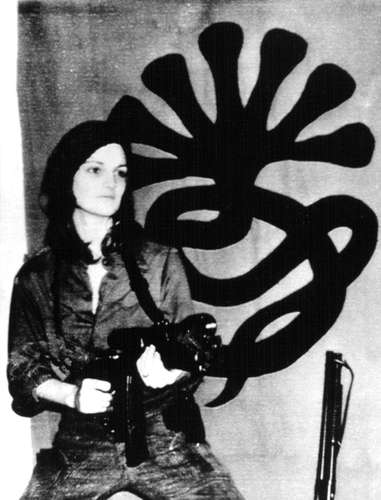
While not writing, I read a little about writing. It was a retro piece in the New York Review of Books from 2016. The author was Joan Didion, whose utter and complete immersion in the art of writing has always fascinated me, and the piece was simply called California Notes. She begins saying that in 1976 Rolling Stone magazine asked her to cover the San Francisco trial of Patty Hearst, the heiress kidnapped by political radicals who became one of them and took part (while armed) in a bank robbery. Didion is a Californian who relocated to New York, but the Patty Hearst assignment would bring her back to California. She would seek inspiration for the piece by reacquainting herself with the state and trying to revive her own emotions about it.

didioncouch

Writer Joan Didion

For me, as I sat not writing, the best part of California Notes was Joan’s confession that she attended the trial but never wrote the piece. There was no explanation, except: “I thought the trial had some meaning for me—because I was from California. This didn’t turn out to be true.”  Her California reflections, however, led her years later to write a compilation called Where I Was From and even later  California Notes.

There’s a famous Nora Ephron quote that reminds me of Joan and has been repeated in this time of crisis: “Everything is copy.” I always thought it peculiar that such a quote would become so famous, since few outside of writing know what “copy” is. The reason must be because writers are the ones always repeating the quote. Anyway, “copy” in this sense means “material” for writing, and now – with the world shut down by a virus — everything is indeed copy. You go outside for a walk and it’s copy. You venture out and drive through town and it’s copy. You cook a meal or seek activities for your kids and it’s copy.

Joan Didion and John Gregory Dunne, Trancas, California, March 1972

Didion with husband, the late writer Gregory Dunne

Even without a pandemic, everything for Joan Didion seemed to be copy. (Her husband died and she got a book out of it). It might be that everything around Joan Didion, all the clouds she allowed to cover her success and notoriety, seemed like a personal pandemic, so she recorded it. In California Notes, she mentions an airline trip from New York to San Francisco in the 50s and reports that on the flight she had, “a Martini-on-the-Rocks and Stuffed Celery au Roquefort over the Rockies.” This means that while in her 20s she was taking notes on everything she did.

It’s true that in my youth I took notes. Joan got much more out of hers than I ever did. Like with her, the urge still remains with me. Recently, while in semi-retirement, I agreed to take a $25-an-hour job as a census taker, figuring I would get something out of it, a story about the real America, even though I’d only be visiting the homes of people in my mostly white, mostly affluent suburban county. As the virus spread, the government wisely decided not to send people house to house. I never went to even one.

In California Notes, there is mention by Joan of an early newspaper job at the Sacramento Union. Newspapers require reporters to learn local “style” – the proper way to refer to things in print. Joan touches on this and says,  “I learned that Eldorado County and Eldorado City are so spelled but that regular usage of El Dorado is two words; to UPPER CASE Camellia Week, the Central Valley, Sacramento Irrigation District, Liberator bombers and Superfortresses, the Follies Bergere [sic], the Central Valley Project, and such nicknames as Death Row, Krauts, or Jerries for Germans, Doughboys, Leathernecks, Devildogs.”

Patricia-Hearst-front-emblem-Symbionese-Liberation-Army

Heiress Patricia Hearst, after her kidnapping

Everything is copy. Sadly, I didn’t make any kind of record of the local style at my first newspaper, and can only remember this: “Do not use a period after the ‘S’ in ‘Harry S Truman High School.’ A period suggests an abbreviation and in this case ‘S’ is not an abbreviation because President Truman did not have an actual middle name.” In the same way I know I cannot compete with the person who thought to buy yeast before I did, I know I cannot compete with writers who know what food and drink they had on a plane in 1955, or can recite that actual constraints put on them decades ago by local “style.” Maybe Joan Didion came up dry at the utterly fantastic trial of Patty Hearst, but she found inspiration at every other turn in her life.

I’m sitting here now looking for inspiration. I suspect I’ll find it eventually. I’m fairly certain, however, I won’t be writing about my neighbors singing, if indeed they ever do. I prefer instead to write about things we fail to see. And right now, I can’t see anything.


The Shoe Salesman as Relic

27 Sep

846-02792528


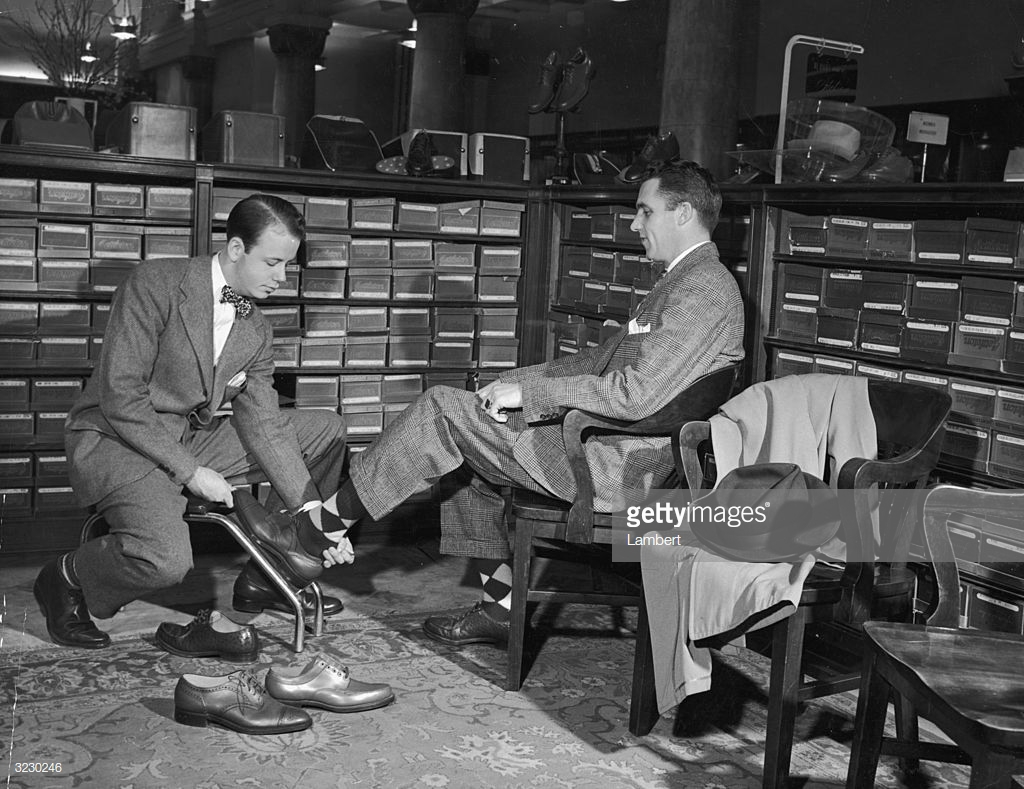
He is thin, well postured and wears a fine suit and silk tie. His shoes, of course, are high quality. They are shined.


He is the Shoe Salesman, a man from another era. Proud, maybe arrogant, certainly fussy about footwear, he treats you, his customer, with respect and wants you to walk away in style and comfort.


You are seated when the Shoe Salesman approaches. He is polite and professional. You notice he moves well. There is some discussion about what you need and want. He makes suggestions and you tend to agree with him.


Now he must measure your feet.

shoe measuring device

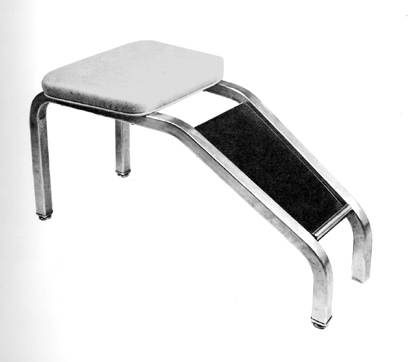
The Shoe Salesman pulls up a specially designed bench that allows him to sit and you to put a foot up so he can place a shoe on it. But that comes a little later, after the measurement, which is done using a device that looks as if it belongs in his hands. He can move it about easily, flipping it to measure either your right or left foot.


On his request, you stand for the measurement. He moves the calibrators, touches your big toe, presses the foot flat and – regardless of what size you see on the device – tells you what size you should wear.

Eatons Shoe Salesman Chair 1970 1

Using the information from your earlier discussion with the Shoe Salesman, he goes into the back to get your shoes. A moment later he returns with three or four boxes. There are different styles and even different sizes, just in case his measurement is off.


The Shoe Salesman puts down all but one box. He holds it in his left hand, gracefully removes the lid and secures it underneath the box. There is a “fliff, fliff” sound as the Shoe Salesman deftly pushes aside the two pieces of tissue covering the shoes. You notice how good the shoes look.


He sits on his bench and takes one shoe from the open box. Then, in a move that would humble a magician, the Shoe Salesman produces a silvery shoehorn from somewhere. You are not certain from where. He manipulates the shoehorn and the shoe glides silently onto your foot with minimal friction.


The Shoe Salesman ties the laces like you never could. He repeats all this for the second shoe and asks you to stand. With your foot inside the shoe, he uses his thumb and forefinger to squeeze the tip of the shoe. This is to judge the distance, if any, from the top of your big toe to the leather in front. The Shoe Salesman decides if it’s enough.


He asks you to walk, which you do. He watches you closely. He asks questions.


You try on another pair or two and, upon the recommendation of the Shoe Salesman, make a decision. He expresses delight at your choice and while boxing up the shoes asks if you need socks. You say no, and then a point of importance is mentioned: Do you need shoe trees?

CedarShoeTree

Cedar shoe trees: $25

The shoe trees, he explains, are vital to the care and life of shoes. They allow the shoes to hold their shape and help to disperse odor. They come in plastic, but those are not recommended. You should only buy cedar, the Shoe Salesman advises, even if they are expensive.


With a degree of embarrassment, you decline the shoe trees. There is a look of disappointment on the face of the Shoe Salesman. This detracts from the near joy of the shoe purchasing experience. Something in you wants to make the Shoe Salesman happy, and you seemed to have failed at that.


But the Shoe Salesman rallies and the transaction finishes in upbeat fashion. There is a request that you visit again soon.

shoes-2000-dollars

A pair of $2,000 shoes


The Shoe Salesman may still exist at fine men stores where shoes sell for the price of a good suit. There was a time, however, when they were found in main street establishments and in family department stores like Sears.


It takes dignity, a reasonable salary and longevity to produce the kind of service described here. It is unfortunate these things were severed from shoe sales decades ago. So today, we are accustomed to what would have been an unacceptable horror in 1960: We must try on our own shoes and judge for ourselves whether or not they fit. In the entire shoe department, it may be impossible to find anything even resembling a rudimentary shoehorn.


Like in restaurants where we must serve and clean up after ourselves, we are pretty much on our own in the shoe department.


This is the American economy, a place sucked dry of everything deemed unessential. Remarkably, without someone trying to sell you shoes, the shoes manage to get sold. This is the miracle of our time. In a society where labor is horribly undervalued and skills like those of the Shoe Salesman will never be properly rewarded, the American public has been trained to supply free labor that previously was paid for.


How did this happen? Damned if I know. Perhaps it’s the results of global markets and the ability of foreign people with lower living standards to produce things once produced by those in countries with higher standards of living.


But I think it’s also related to the predatory nature of our society championed by corporations that want to keep an increasingly larger portion of their revenue. They succeed at this in the absence of any morality requiring a more even distribution of wealth, and with no market forces pushing up wages.


When Henry Ford needed to ramp up production on his new assembly line in order to meet the swelling demand for his cars, he famously boosted wages to $5 a day, an unheard of rate. Slyly, that rate was enough so all his employees could afford cars.


Today there are legions of undervalued workers, many at multi-billion dollar companies such as Walmart and Amazon, who cannot afford an automobile. As long as cars and other American products are purchased by consumers in the global market, this presumably doesn’t matter. It does, however, create instability, conflict and adds stress to government.

A Snug Fit

A shoe salesman attends to a customer in 1955


I say this not because I am a Bleeding Heart Liberal. I say this not because I want to penalize private enterprise. Rather, I say this because I am a person who once enjoyed purchasing a pair of men’s shoes and would like very much to someday enjoy that experience again.


By Lanny Morgnanesi


A Modest Place of Distinction Continues to Survive

26 Sep

2018-09-26 14.13.55

Near Broad and Wolf


Circumstances brought me to South Philadelphia this week.


For those unfamiliar with this legendary locale, it is a crowded little sub-town of look-alike row homes. South Philly probably is best known as the birthplace of the Philly Cheesesteak and as the home of 50s teen idols like Fabian, Frankie Avalon and Bobby Rydell.


Traditionally, it is considered an Italian neighborhood, and although it has had its ups and down, with people moving in and people moving out, it remains intact. Its vibrancy is illustrated by the thriving Italian market that has been in existence since the early 1900s. In the movies, Rocky runs through it as part of his training.


The area is broken up into many neighborhoods. I was at Wolf and Broad streets, a humble section without landmarks. One day at around 1:30, I decided to find a restaurant for lunch. I knew the big name South Philly restaurants were elsewhere, but whatever place I chose had to meet at least baseline standards in order to exist here.

The_South_9th_Street_Italian_Market_Festival

The Italian Market


I came upon a small corner joint named Johnnie’s at 12th and Wolf. My plan was to takeout, a good idea since the place was empty save for a waitress sitting at a table. Didn’t matter. Johnnie’s was clean and decorated with wine bottles, plastic flowers and garland. There were several religious icons, including a statue of the Sacred Heart, which is Jesus exposing his bulging heart through an open robe.


I ordered some pasta and sandwiches, including a Cheesesteak with sauce and onions.


“Sauce?” the waitress said with a puzzled face.


“Yes, sauce and onions.”


“You mean red gravy?” she asked.


“Yes, red gravy,” I said, remembering where I was.


After she put in my order we chatted. Having walked down Wolf Street, I noticed a good number of the 3-story homes had been gentrified, with beautiful wooden doors and fancy nameplates displaying address numbers. I hadn’t been in one of these homes for decades, but I recollect at least two common interior features. First, all couches and chairs were protected with clear plastic slipcovers. Second, one interior wall – the whole thing — was faced with mirrors to give the narrow homes a feeling of depth. The mirrors may still be there. I’m guessing the plastic slip covers are gone.

1959_Fabian_Forte

Singer Fabian Forte, from South Philly

“How’s the neighborhood doing?” I asked the waitress.


“Well,” she said, “I’m not from here. I’m from the other side of Broad Street (three blocks away). But I’d say it’s doing OK. Things have picked up. For a while, I was thinking about moving. Not now. It’s pretty good.”


South Philly has been targeted by an army of millennials looking for a small town feel in the big city. They have made South Philly one of the hottest Philadelphia neighborhoods for rentals.


“What do these homes sell for?” I asked. “A good one, not a great one.”


She thought about it. “Maybe the low 300s. That’s what they go for on my street. Maybe the high or mid-200s.”


“It’s nice when a neighborhood comes back,” I said, thinking about the Chambersburg section of Trenton, which has not come back.


Trenton, New Jersey, was where my father was born. Our family lived there for a few years. I think we moved out when I was seven. We didn’t live in Chambersburg, but as children we’d hear talk about this very ethnic Italian neighborhood. Occasionally we’d eat at a restaurant there, but mostly we bought bread and pastries from its bakeries.


As an adult, while living in suburban Philadelphia, I joined my father’s Trenton-based lodge, The Roman Society. In its day it was a remarkably successful organization, and I’ve written about it here. Without repeating too much, I’ll just say the lodge owned a beautiful restaurant and banquet facility called the Roman Hall. It outlived its usefulness after the unmistakable truth became known: Chambersburg was no longer and never again would be Italian. Also, walking the streets was getting dangerous.


No surprise. The restaurant went under.


An entrepreneur wanted to turn the place into an Hispanic-style nightclub. He asked that the lodge to hold the mortgage, which it did, and our signs were taken down. For me, this was like Rome falling all over again.


But back to the better-fated South Philly.


Not far from Johnnies, a young man I know (non-Italian) lives happily with his new wife in a South Philly row home. The couple, both of whom work in Center City, got married at an old but stately South Philly high school that had been converted in a bar/banquet hall. It’s a large, slightly Greek-style building on a small, cramped side street. Hardly any parking. I’m told the wedding attendees stayed at a riverfront hotel and Ubered over.


South Philadelphia is an indication that things can change for the better. The defining question is how much better and for how much longer. Either way, I hope Johnnies’ dinner trade is better than its lunch trade. It’s not Dante and Luigi’s or Ralph’s or Marra’s, but it’s a nice place for quick, simple food. If you, like I, are near 12th and Wolf due to circumstances, I can recommend it. Be sure to remember it’s “red gravy,” not sauce.


By Lanny Morgnanesi

A kind of Jewish internet flourished in 900 AD

13 Mar

Ancient Babylon

Babylonia

For this reason or that, I’ve adopted the belief that many human habits date back hundreds of thousands of years, to homo erectus, the Neanderthals, and Gods knows how many other hominid creatures.


I won’t go much into this now, but one much-more modern bit of evidence – for me at least – is the preserved Italian city of Pompeii, which remains exactly as it was in 79 AD. The eruption of Mount Vesuvius and the fallen ash froze it in time. When I toured it several years ago, my lasting impression was: These people lived just like we do today!


Now something new to me – but historically old – has added to the idea that we haven’t changed much, even if our technology has. This small piece of information comes from a book called, “A History of the Jewish People,” written in 1934 by Max Margolis and Alexander Marx. It was paid for by the estate of one Rosetta M. Ulman, who during her life wanted such a publication written.

book-history-of-the-jewish-people

In chapters covering the years from 175 AD to 1038, there is a great deal of discussion about two highly respected schools of learning that guided Jewish communities dispersed throughout the known world. The schools, Sura and  Pumbeditha, were in Babylonia (modern Iraq). The two heads of these school was held in the highest regard by Jewish residents of Babylonia, Palestine, Egypt and many other locations. Every word from the leaders on religion, scripture, philosophy and life were sought out and followed.

Map-sura-pumbadita

Even the Arabs paid attention and gave their respect.


As I read, I wondered how word got from the schools to the communities. No doubt by heralds, messengers, traders and travelers. Obviously, it must have been a slow stream of news.


When Margolis and Marx get into a section on a schism between the two schools, however, it seems as if the news had a much faster way of getting out. The leaders of Sura and Pumbeditha were arguing over nearly everything. One highly sensitive issue was what kind of calendar or calculation should be used to set the Jewish holidays. They differed on this, and the result was that one year Passover was celebrated on two different days.

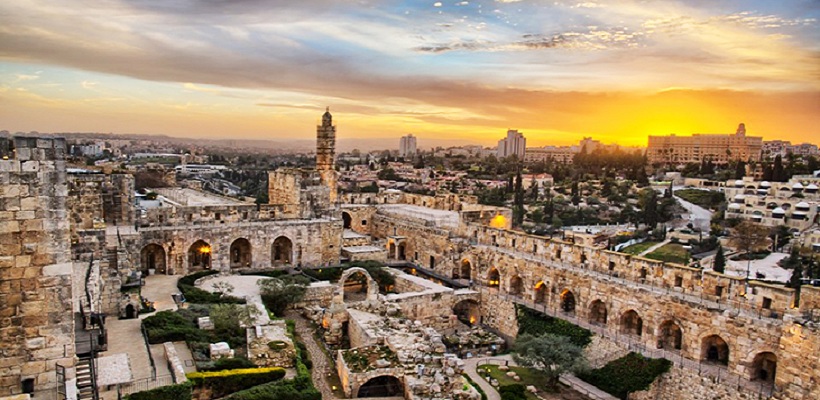
Ancient Israel

Ancient Israel

Margolis and Marx report that the “confusion” was so great “it was even noticed by non-Jews.”


My thoughts were: How did the details of this controversy and the two divergent holidays spread so quickly from Babylonia, through Palestine, to Egypt and North Africa, maybe to even to Spain, Greece, Turkey and Persia?


Was there a Jewish internet?


Information then and now was powerful and important and clever humans, with or without technology, knew how to spread it. What may be lost, however, is exactly how they did it, at what cost and to what extent. Margolis and Marx don’t get into that, but I’d sure like to know.

Sura-Iraq

The ancient school at Sura

Either way, the results were a lot like the results now.


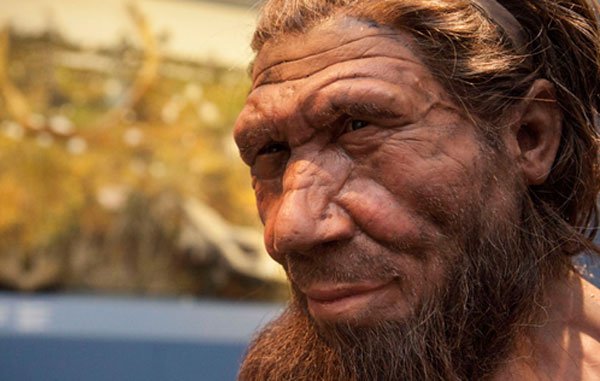
We’ve always been the same and probably always will be. If we ever clone a Neanderthal, he may fit in much better than we’d expect.

Neanderthal

Depiction of a Neanderthal

But I would have known that. The bakeries, butcher shops, whorehouses, living room art, sidewalks and curbs and everything else in Pompeii seem to suggest the truth. And now, as more evidence, we have the ancient Jewish internet.


By Lanny Morgnanesi

Thoughts about the “First People”

19 Aug
First People-hurdlers

This blog has been inactive for quite some time. I’m going to try and bring it back.


Here goes:


With high sensitivity all around us, I worry about something I hope to do soon – or rather say.


I plan to use the term “First People” in conversation. As far as I know, almost no one makes reference to the “First People.” They generally don’t get acknowledged as such, and in the rare case they do, there is almost no acclaim, credit, respect, distinction or awe given to them for being first.


The “First People,” of course, are those of African descent.  Human beings, according to a widely held theory, originated in African, migrated out and gradually but surely populated the entire globe. They are said to have gone east first, through what is now the Middle East, then into Asia, then they turned back west and went into Europe, displacing and eliminating the Neanderthals, who were human-like but were not homo sapiens.


This is the Out of Africa theory, and the average person doesn’t hear much of it or talk much about it. Worse, perhaps, I’ve never heard an African-American boast about it.


I got the idea for using the term “First People” from watching the TV show “Game of Thrones.” In that show the original inhabitants of the north are called the “First Men.” They are spoken of with great reverence. While the ancestors of the First Men seem to be gone from the “Game of Thrones,” the ancestors of our First People remain with us, but they are un-honored.


I thought about them during the Olympics, where they dominated over later-coming peoples in nearly all the running events. Could having the blood of the “First People” provide some advantage over other races, or do they just try harder? If it’s the latter, why is that? Is it a holdover quality from the “First People,” who had to try damn hard to do what they ended up doing?


In America, with race being such an inflammatory issue and with the ancestors of the “First People” historically being treated as if they were not even people, it would seem impossible for the majority to outwardly recognize a superior strain of any kind in them. That’s sad.


Would the majority even be willing to call them the “First People?” Probably not. But I hope the “First People” somehow start calling themselves that. It’s a distinction much worthy of note.


Lanny Morgnanesi

What do these two photos have in common? My closet!

27 Jun

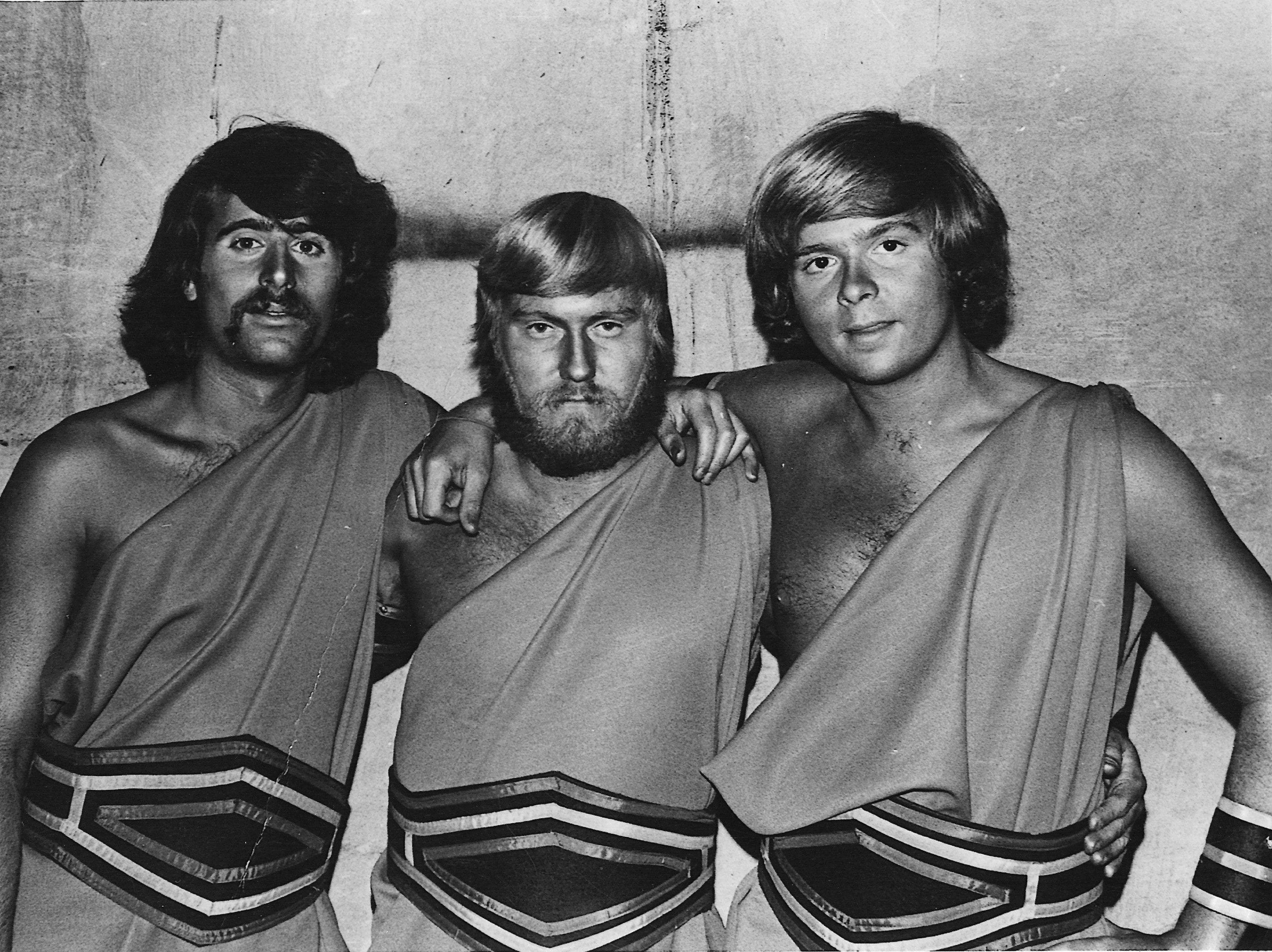
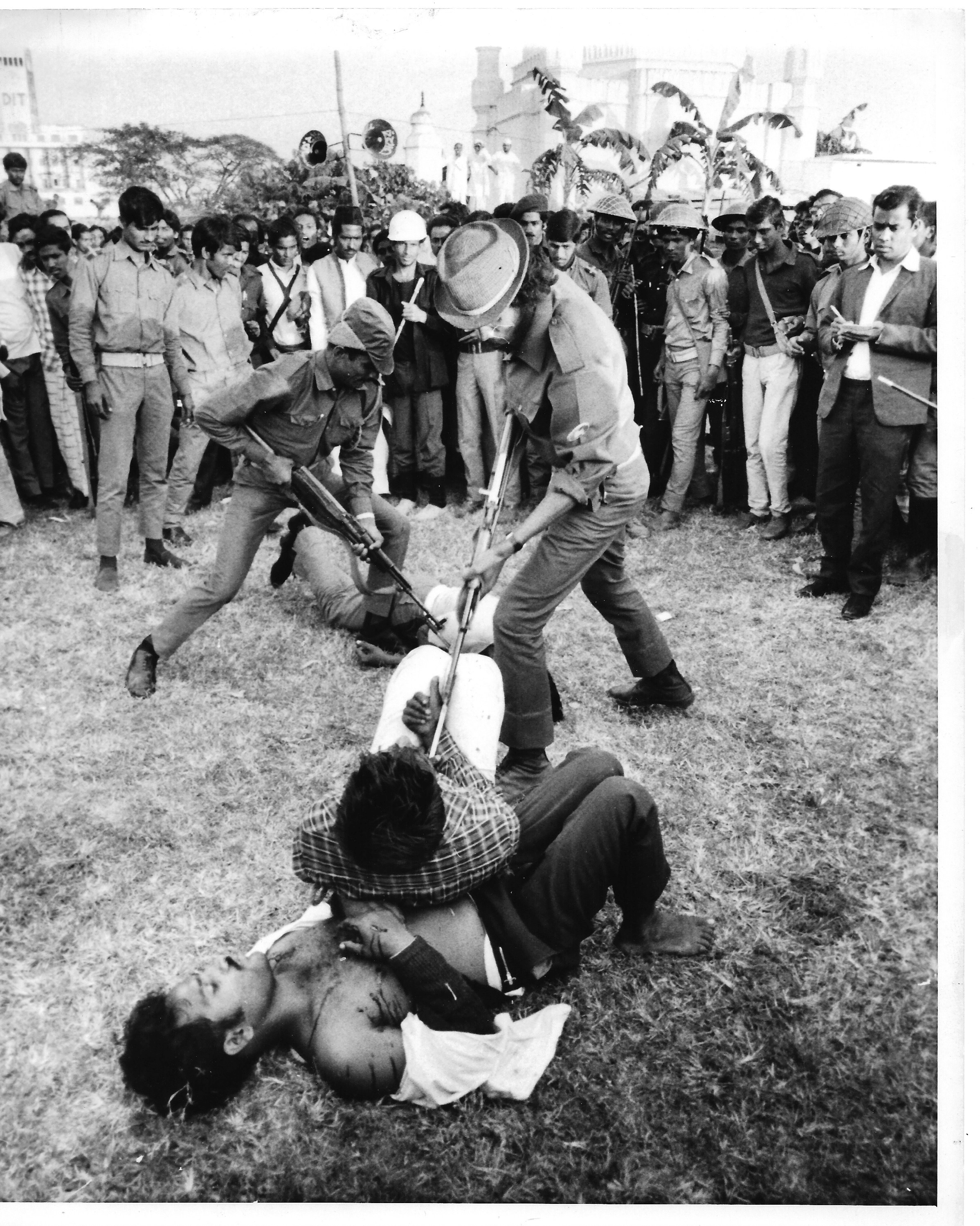
Lysistrata-LannyVietnam execution

On a Sunday when the grass had been cut and there were no great demands on my time, I organized the treasures and junk in my archive closet. There were depths to plunge, but I mostly skimmed. Still, the experience was like reliving an almost forgotten life.

There I was, in costume, in an old college photo. It was taken back stage after a performance of the bawdy Greek comedy “Lysistrata.” The play by Aristophanes is set during the Peloponnesian war. It has the women of all the city-states withholding sex from all the men until they make peace. In the photo I wore a tunic. My skin was bronzed with theatrical makeup called Texas Mud.

I had only a small part but on the last night of the run I got the biggest laugh of my life. Without meaning to or even knowing it, I had successfully improvised. And it worked.

In the scene, a group of horny Greek solders (me included) were on the ground as teasing women danced around them. As per our director’s order, we were to cover the lower portions of our body with our shields. In the center of those shields, facing outward, were tubular objects that resembled what was under the shield and under the tunic.

When one of the actresses danced over me, my recumbent body began to vibrate feverishly. I wasn’t aware of what was going on but when the auditorium erupted in laughter I knew I had done something very convincing and very funny.

Later, someone in the audience said it looked as if I had experienced an orgasm.

On this high note, I ended my show business career and never played again.

Back in the archive closet, in one of many boxes, was an orange folder containing yellow pages of text that had come from a dot matrix printer. It was a novel I started years ago and recently took up again (after devising what I hope is a slightly better plot.)

I began reading and realized the opening of the old version was much better than the opening of the new version. How disappointing! I thought time had made me better. I won’t share the new opening but just for fun here is the old:

“The hall was dirty, as was her dress. And it was dim, like her future.”

The problem is that after that, there wasn’t much worth reading.

So I went to another box.

My attention went to a curling letter from the Detroit News dated Nov. 10, 1989. It appeared to be an answer to an inquiry I had made about a women named Jeanne, a journalist from Detroit whom I met when we both worked in China. That was during the mid-80s, and Jeanne had returned later during the Tiananmen Massacre. At the time of the letter, she was sort of missing.

The letter reminded me how exciting things could be in my former profession, and how we never quite recognized danger. Danger was for the people we covered, not for us.

The letter said:

“Pat talked to Jeanne and her husband (a Chinese national) the other day. The good news is that neither of them has been arrested, although Jeanne was in some trouble for the stories she filed for the Free Press and her husband, as I told you, was in trouble for helping ABC’s news crew. The bad news is that officials won’t let them leave China. Her husband, who got a master’s at Harvard, has been accepted into a doctoral program there with a full scholarship. Someone said officials won’t make a decision because they fear that whatever they do will be perceived to be the wrong thing by the higher ups.”

Jeanne was one of the most interesting people I have ever known. She was, and I’m sure still is, a great storyteller. Her life, on its own, was a great story. It even started out interesting.

Her father was a diplomat and she was raised in Vietnam during the early stages of the war. Her family was especially good friends with Ngo Dinh Diem, then the president of South Vietnam. Jeanne’s family often had him over for dinner.

Naturally, she was shocked and horrified when Deim, on the order of President Kennedy, was assassinated. Can you image how a little girl, unschooled in politics, might feel knowing the leader of her own country had killed a family friend?

The date was Nov. 2, 1963.

Three weeks later, when JFK himself was assassinated, young Jeanne felt justice had been served and a fair punishment issued.

That’s one of her best stories. But it doesn’t top her account of the Tiananmen Massacre in 1989. She was on the front lines with the protesting students when soldiers started firing. The only thing that protected her from the bullets were the dead bodies that had fallen on top of her.

When I finally got in touch with her and she told me this, I should have felt sympathy, sorrow and concern. Instead, I was jealous. Jeanne, damn her, would have yet another good story to tell.

How great to be part of history. I’m thankful that at least a small part of it is in my closet.

There is even more history in that closet. When I took an editor’s job at the Florida Times Union in 1986, I opened the draw of my desk and found an assortment of Associated Press Photos – actual photos, not newspaper clips – from a number of world events.

Columbia take over

And there they were now in my closet:

  • A captured member of the Viet Cong being executed with a bullet to the head.
  • Heavily armed black students proudly leaving the president’s office at Columbia University.
  • Reporters standing around watching men on the ground being run through with bayonets. (This might have been Indonesia)
  • President Kennedy walking idyllically at Camp David with former President Eisenhower.

. . . and more

Bayonet killingsAll of it in my closet.

There were some newer things in there as well, like the canvas bag filled with personal files dating to 2008.

They were from my last newspaper job as an executive editor, which I lost during the Great Recession when that paper combined with two others. I had left the files behind but a colleague brought them to me.

For almost seven years, there was no need or inclination to look inside the bag.

Now, I dumped out the contents to inspect them. Nothing too interesting. A few memories. Certificates of completion from a score of ridiculous management seminars. A letter from a reader who complained, “There is no excuse for bad English in a newspaper,” citing an article with the headline, “Imagine there’s no secrets.” It was about John Lennon and his battle with the FBI. The writer noted that it should have been “there are” no secrets.

Shuffling through the files, I noticed an unopened greeting card in a bright yellow envelope. I opened it. It was from the colleague who had brought me the files. There was a cute card with Snoopy on it wishing me good luck and happiness. There also was a letter. Seeing it, and being touched by it without having even read it, I felt great regret at never having acknowledged it. Once I read it, I felt that perhaps my years as an editor may have been worth something.

A person who leads never really knows if he’s a bastard, a prick, a woefully unfair tyrant, an anti-visionary who lacks talent and relevance. One can only hope he or she is respected and followed and right for the time. People can let you believe the latter even when it is not true.

Without going into detail, I will say that from the single perspective of the letter writer, I received confirmation that I had performed my job properly.

I will continue to keep and treasure this letter.

But there was something else about this letter that woke me to a situation I may have naively overlooked: discrimination against women in journalism.

Nothing in the letter directly spoke to this. It was the tone and sincerity of the “thanks” that suggested it.

While in newspapers, I always focused on the job of producing good stories. And it was always my belief that men and women were equally capable of doing this. In some cases, a woman would be better than a man. In others, a man might be better than a woman. The essence of it was that good was good and it could come from anywhere. The only thing I looked for was good.

The letter writer, a woman, had moved up through the ranks during my tenure. She began as a temp reporter and ended up being metro editor. There was one point where our managing editor – a woman – retired and I made this person acting managing editor while I searched for a replacement.

I had forgotten this; had forgotten why I did it. But in the letter it was explained back to me:

“Thank you for giving me a chance to be an acting managing editor. I wasn’t ready to be managing editor, but I put my name forth anyway. What a classy, clever suggestion that I be acting managing editor to help bridge the gap. Thank you for the experience.”

In the letter, she thanked me for every promotion.

“No Dale Carnegie course could have ever shown me better how important it is for managers to set a tone of inclusiveness and optimism,” she wrote.

It dawned on me then that the more natural course could have been a slower ascent (or no ascent) because she is a woman. It had never crossed my mind before, but knowing it now carries value.

In just a short time, I learned a lot from that overstuffed closet, with all it frozen chunks of life. I’ll have to go back again later and learn more.

By Lanny Morgnanesi