Archive | Government RSS feed for this section

If the Republican Party were a person, Dorothy Parker would slap his face, both of them.

10 Feb


latino-obama-sign

Consider the case of the young man who hates his uncle and has always treated him dastardly. One day the uncle reveals that by living poor he was able to accumulated a small fortune. The young nephew then begins to shower the old man with kindness and attention.

For the uncle, it is easy to see that the nephew is a disingenuous louse. The real insult, however, is that the young man thought the uncle could be fooled.

The young man reminds me of the Republican Party.

Here is a party that, for the most part, staked out a very tough position against amnesty or general kindness for 11 million people living and mostly working in the United States without the legal right to do. It was a legitimate position, although it is one I considered unwise.

When President Obama was re-elected after winning 80 percent of the minority and ethnic vote, the Republican Party realized that the poor uncle they didn’t care much for was actually rich.

Now they want to be friends. Now they want legislation to assist the 11 million. Now they want those votes.

And, I guess, they don’t think the Hispanic population is intelligent enough or aware enough to see the hypocrisy.

That’s the real zinger.

Gov. Bob McDonnell, a Republican from Virginia, thinks the GOP can get those votes if it just changes its tone. That’s what reporter Thomas Fitzgerald wrote today in the Inquirer. Tone, rather than the choice of whom you truly represent in Congress, is what’s important.

Reality is always second to image.

When someone says, “People want to know we’re like them”  (which Republican Congressman Scott Perry said this weekend) it usually means “We’re not like them.” When someone says, “We can win the presidency. … We don’t need to fix the laws to make that happen (which Pennsylvania party chairman Rob Gleason said), it usually means they ARE trying to win the presidency by rigging the system.

A good rule in politics is to exercise caution and maintain skepticism.

I’m very curious to see if the GOP efforts to gain Hispanic support will work. Woody Allen once said that the lion will one day lie down with the lamb, but the lamb won’t get any sleep. That’s the kind of alliance this speaks of.

By Lanny Morgnanesi

Those who benefit from Hillary Clinton (and others) should pay more to Washington

20 Jan

Hillary Clinton

Here is what I think is a logical, no-nonsense tax policy: Those who benefit most from the government should pay the most.

Let’s say I own land on which I plant corn for ethanol. If the government decides to restrict the importation of sugar cane – which if allowed kill my sales– then I am indebted to the government in a big way. I’m a Great Benefiter.

I should not be able to get off just by contributing to the political campaigns of the few congressional leaders who pushed my bill through. I should have to pay more for the actual government, since it is working directly for me. I’ve got to pay more salaries, more electric bills, more for everything that keeps it running.

The same would be true for Amgen, the largest biotech company in the world. The New York Times recently reported that a few paragraphs in the “fiscal cliff” legislation give Amgen a two-year delay on Medicare price restraints for a drug it makes. This was its second delay, God bless them. Amgen is willing to pay 74 Washington lobbyists to get what it wants, but is it willing to pay more in taxes?

It should be.

It’s a Great Benefiter.

I’m glad our 430-ship Navy protects the sea-lanes so I can purchase imported products. That, however, is only an indirect benefit. What about the people and companies who profit from safe shipping?

They’re Great Benefiters. Charge them!

A couple weeks ago there was a somewhat surprising article in Bloomberg Businssweek. Well, maybe not so surprising. It was about Secretary of State Hilary Clinton, but the headline was: “Secretary of Commerce.” The underline was, “How Hillary Clinton turned the State Department into a machine for promoting U.S. business.”

It begins by recounting her 79th visit overseas, which took her to the Czech Republic. She discussed foreign policy but also found time to ask Prime Minister Petr Necas to choose Westinghouse Electric for a nuclear plant contract worth $10 billion.

The article says she regularly makes personal pitches to world leaders on behalf of businesses.

What is that worth? Whatever it is, it’s a lot more than the $50,000 Westinghouse might later pay Hilary to speak for an hour at a corporate retreat.

Westinghouse needs to pay more.

So, have I come up with the answer to our budget and debt problems? All we need is some accountant to figure out what is owned, and for Congress to do the right thing and pass legislation that taxes the Great Benefiters. Of course, the Great Benefiters should have the option of not paying in exchange for the not benefiting. In such cases, the government would have to permit, say, an attack on Exxon tankers by Somalian pirates.

That is an option the Great Benefiters are unlikely to choose. Hence, we have found a way to balance the budget. See, things aren’t as bad as they seem.

By Lanny Morgnanesi

Tolstoy, who wrote of aristocracy, had much in common with the Occupy movement

5 Sep

My work recently brought me to the writings of a reformed rabbi named Dr. Joseph Krauskopf. He lived around the turn of the 20th century. While not well-known today, he was friends with presidents and world leaders during his day.

In today’s light it is easy to categorize him as a visionary and possibly a radical. What may be truer is that free thinking and free speech flourished more then than now, and that others at the time were expressing similar ideas – equality and dignity for all, women’s rights, the end of poverty, a government hand in the inspection of food and housing, world peace.

In 1894 Krauskopf traveled to Russia and met with Count Leo Tolstoy, known now as a great novelist; known then as an incredibly influential, larger-than-life, cultish leader of humanists. Krauskopf, in utter awe of the man, recorded every facet of the meeting. The account is fascinating and revealing. In one exchange, the Russian asks the rabbi if he had read “What to Do,” a work of non-fiction by Tolstoy calling for the liberation of the oppressed.

Krauskopf had not, but said he did read “War and Peace” and “Anna Karenina.”

Tolstoy, according to Krauskopf, described those books as trash and said he would prefer if the world instead read his “serious writings.”

But what I really want to report here is Tolstoy’s timeless description of the United States and its faults.

“You call yourselves a republic; you are worse than an autocracy. I say worse because you are ruled by gold, and gold is more conscienceless, and therefore more tyrannical, than any human tyrant. Your intentions are good; your execution is lamentable. Were yours the free and representative government you pretend to have, you would not allow it to be controlled by the money powers and their hirelings, the bosses and machines, as you do.”

I wish someone would read this from the podium at the Democratic National Convention, or from any podium for that matter.

What are your thoughts?

— Lanny Morgnanesi

Unlike the U.S., the Danes are blissful, successful and highly taxed

18 Jul

There’s a happy little country in Europe that is so successful, foreigners pay to put money in its banks.

That’s called negative interest. Denmark, population 5.5 million, asks for it and gets it. Mounds and mounds of Euros from the troubled European nations are flowing into Denmark as a safe haven. According to Bloomberg Businessweek, the negative interest is low, with two-year debt yielding between minus .05 percent and minus .08 percent, but it shows the strength of that economy.

Unlike the U.S., Denmark has a positive trade balance, relatively low government debt and an unemployment rate of about 6 percent. (compared to about 9 in the U.S.) The Danes are said to be some of the most contented people in the world.

Oddly, or perhaps not, Denmark has the highest rate of taxes in the world.

Isn’t that ironic?

We in the United States are, for the most part, miserable and worried about our jobs, the economy and taxes. Our total taxes, according to the Organization for Economic Co-operation and Development, are 24 percent of GDP. In Denmark, people are completely satisfied with paying taxes equal to 48 percent of GDP.

“We have a luxury problem,” said Jacob Graven, chief economist at Denmark’s fourth largest bank.

Sometimes, solutions to seemingly unshakable problems can be found in the most unlikely, 180-degree alternatives. To often, however, the ether of the American culture has convinced us they are off-limits, extremely dangerous and will erode and ultimately destroy our way of life.

Why are we Americans, known for innovation, so averse to opening our minds? Who is responsible for closing them, and how did they manage to do such a great job of it?

Canada – not flashy but likeable, and with an example to follow.

23 Jun

By Lanny Morgnanesi

Gerry always tried to be funny. He’d introduce himself this way: “Hi, I’m Gerry, a Canadian, bland and inoffensive.”

Like his country, Gerry was neither.

It was during the Vietnam War that I first realized Canada was different, hardly bland and willing to offend. Without fear of U.S. retribution, it welcomed Americans dodging the war, coming off like some hippie outlaw country. Later, in another context, I remember people talking disparagingly about “Canadian socialism.” They made Canada sound evil when I think it was just trying to be nice to its people.

More recently, comedian Dave Chappell used a satirical sketch to show at least one difference between Canada and the U.S. In the sketch, he posed as a political candidate with a solution to expensive American health care: Fake Canadian ID.

Canada is the country where people have lots of guns but don’t use them on each other. Canadians seem to be more comfortable with life, more at peace with themselves and each other, and less stressed. Their cordial mantra is the simple: Eh?

Internationally, they have few enemies.

While traveling, Gerry and I once met two young women from Eastern Europe, which then was Communist. President Reagan recently had taken a strong stance against their patron, the Soviet Union, calling it the Evil Empire.

Nothing like that had occurred in Canada.

The two women were strikingly beautiful but cold and dead serious. We tried to start a conversation. It didn’t take long before I noticed they would speak to Gerry but not to me. I asked why and they said they could not understand me because I wasn’t speaking Oxford English. So Gerry, in his inoffensive way, began acted as a translator, taking my English and “translating” it into — English. He did the same for them.

Funny, eh? We had recreated a bit from the film “Bananas,” but the Eastern Europeans didn’t get it.

But back to Canada.

In Montreal this spring, thousands of students took to the streets to protest an 80 percent increase in college tuition.

According to a newspaper report, tuition for higher education in the province of Quebec was to go from $2,611 a year to $4,700. It would be instituted gradually, $254 a year over seven years.

I was sorry to hear this. My sympathies, however, were not with the Canadian students but with American students, who must pay so much more. My concern was not with the Canadian government but with the American government, which clearly doesn’t value education as much as its northern neighbor.

While I haven’t done the math, and don’t want to do the math, I’m guessing one less war a year would provide more than enough funding to make college affordable; or the end of a subsidy to one or two highly profitable industries; or – dare it be said – taxing a bit more, or just cutting a few loopholes or simply being fairer about the whole process.

The goal would be to put money where it pays national dividends, and educating the populace tends to do this.

The U.S., by its own design, finds itself in the precarious and costly position of having to police the world. Meanwhile, nations that benefit from this use their money to build vibrant economies, keeping their infrastructure modern and their industries competitive . And some allow college students to sit in a  classroom for less than it cost to go to the movies.

If this pattern continues, the natural outcome is they will get stronger and we will get weaker. In time, the great American military won’t have much of a country left to protect.

A strong defense is important. What I find of questionable value is a strong offense.

Somehow, by someone, balance will have to be restored. The richest and most powerful country on Earth should be able to educate itself. Only when we have fallen from that top position will it be easier to understand that fending for one self must be the norm.

Then fake Canadian ID will really be important. I hope they don’t put up a fence.

The NRA Votes … do you?

21 May

By Lanny Morgnanesi

The bumper sticker said something like, “I’m the NRA and I vote.”

It was similar to messages from an assortment of special interest groups on both the left and right. It could have been Planned Parenthood or the American Association of Retired People or the teachers unions.

No mater what the group, the intention is to express political power. What is obvious but unstated is this: People who get off the couch to vote have influence because most people don’t vote.

Democracy, after all these years, has never quite caught on. We’re happy it’s there, like an exercise machine in the basement, but don’t mind that it has gathered substantial dust.

Our country started out more as an aristocracy than a democracy. The leaders, including George Washington, were land speculators who owned hundreds of thousands of acres on the other side of the Allegheny Mountains. As long as the British controlled things, that land was essentially worthless.

So the aristocrats started filling the heads of artisans and common workers with ideas of democracy and revolution. They actually gave them guns and taught them to kill the British. After proving victorious, the artisans and common workers still had the guns and still had ideas of democracy – even though they remained obligated to tip their hats when passing a gentleman.

But throughout the land they formed Democratic Societies, which were looked upon by the elite like the American Communist party was looked upon in the 1950s.

The Democratic Societies, run by armed individuals, were frightening.

Historian John Ferling, in “A Leap in the Dark: The Struggle to Create the American Republic,” says James Madison reacted by designing the Constitution to preserve liberty while making it extremely difficult to bring about substantial change.

Ultimately, in the long run, the group once referred to by Washington as the “grazing multitudes” settled back and continued grazing (if you don’t count the Civil War).

Now, for the most part, they don’t even vote.

Requiring photo IDs to vote, as is done now in my home state of Pennsylvania, will mean even fewer voters.

At times, winning high office seems more about collecting money than votes. Had Madison put that in the Constitution, the Democratic Societies might have taken up arms again.

We don’t need anybody to take up arms today. But like the NRA and Planned Parenthood, the AARP and the teachers unions, we really should vote. Democracy must be preserved before it truly withers away, or, like the exercise machine, someone puts it out in the trash.

Giving Up Gambling

30 Apr

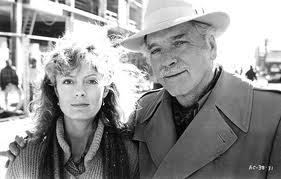
Burt Lancaster, playing an aging numbers runner.

By Lanny Morgnanesi

Years ago, before legal lotteries, small-timers from organized crime would visit neighborhoods. If you wanted to play a number, you gave them money. If the number hit, they would pay off.

When I was a very small boy, I remember my uncle getting a big new car and giving our family his old car. I asked my father why this happened and he said, “Your uncle hit the number.”

If you want to revisit the fading days of this type of gambling, watch the 1980 movie, “Atlantic City,” with Burt Lancaster and Susan Sarandon. It shows you how it worked, and how it could no longer work.

The illegal numbers system went into decline when governments decided they wanted in on the action. They saw big money in gambling; a way to raise revenue while holding down taxes. Single lotteries were approved and later expanded into multiple games and drawings.

Since then, the world apparently has gone upside down.

Governments now want out of lotteries, seeing them as an unnecessary expense. An April 29th story by Matt Katz of the Philadelphia Inquirer explains the new trend.

Governments are looking to save money in employee salaries. The lottery system in New Jersey, where privatization is being considered, employs 150, with seven people making more than $100,000. Plus, there are benefits and those very expensive pensions that are breaking the states.

There would be a short-term gain when a company (or companies) is awarded the contract. Long-term gain would come from taxing the profits of the privateers.

The Inquirer also points out the companies running lotteries for states make significant political contributions to those who gave them the contracts – a factor, no doubt, in any decision.

Still, I’m flummoxed by the economics of it all. It doesn’t work for me. I just can’t believe there is more money in not running a lottery than in running a lottery.

Organized crime never tried to get out of gambling.

Let’s not forget the possibility that privateers could rig the system. That, I think, is more likely than not. Whatever is done, is there any guarantee people will like it better? Maybe those Burt Lancaster-type guys will respond to public dissatisfaction and creep back into the neighborhoods.

Then what will government do?

New cops, after all, mean new pensions.

Best to leave things as is.