In 2004, more than a decade before Donald Trump first became president, Philip Roth published a novel entitled, “The Plot Against America.” There was an effort to make it into a TV show, but it failed — initially. After Trump was elected in 2016, it was green lighted into a six-part series.
The novel has nothing to do with Trump and takes place during World War II. It’s an alternative history. But reading it now, it carries an eerie sense of familiarity and dread. It actually gave me chills. Frankly, with Trump in his second presidency, I’m surprised it hasn’t been reissued.
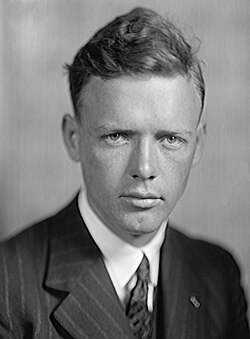
Charles Lindbergh
In the novel, President Franklin Delano Roosevelt loses his 1940 re-election bid to Charles Lindbergh, the America hero who in 1927 flew solo from New York to Paris in his small plane, The Spirit of St. Louis. In the novel and in real life, Lindbergh was an American Firster who wanted to keep the U.S. out of war. In the book, if not in real life, Lindbergh is sympathetic to the rise of Adolf Hitler and exhibits anti-Semitic tendencies.
Columnist Walter Winchell
Once in office, he signs an official truce with Hitler to keep America out of the war. Then he begins a series of programs to marginalize American Jews, mainly moving them out of urban enclaves (the book is set in Newark, N.J.) and scattering them about the Christian Midwest, hoping they assimilate and discard their Jewishness. Out of fear, some leave for Canada. The main voice of opposition – almost the singular point of dissent — is columnist and radio commentator Walter Winchell, a Jew. Frightened Jews rally around him and listen to his Sunday night broadcasts with both fear and hope.
Then, Winchell is fired from his job, runs for president, and is assassinated. Jews protest. This sets off a violent wave of anti-Jewish pogroms. Murder and mayhem come to the streets of Jewish neighborhoods while Lindbergh’s government remains silent. Antisemitism builds and spreads, bursting like a volcano. Then Lindbergh, while flying alone back from a speech (he does this frequently) disappears. He and his plane cannot be found.
Author Philip Roth
Hitler (who, we learn later and secretively, may have kidnapped him; we’re not sure) claims Lindbergh was killed by a Jewish conspiracy, and the anti-Jewish rioting further intensifies. Much intrigue and strange happenings follow. The vice president takes over and arrests the top Jewish leaders in America, including real life figures Henry Morgenthau Jr., Herbert Lehman, and Bernard Baruch. Also arrested is New York Mayor Fiorella La Guardia, seemingly the only non-Jew to condemn America’s turn toward fascism. Ultimately, a level-headed Mrs. Lindbergh, acting like a widow who knows something we don’t know, calms down the nation and announced that the Jews did not kill her husband. With her help, FDR is reelected, stops the pogroms, enters the war against Germany and Japan, and (we guess) saves America.
Joachim von Ribbentrop
What makes this story contemporary is the immense popularity of a conservative president who takes the country in an entirely new direction. Everything he does, including the relocation of Jews, is framed in a positive, pro-American narrative and is readily accepted by nearly all Americans, including – at least at first – many Jews. Lindbergh has enlisted the help of the nation’s top rabbi to convince his people that all is well and right. The rabbi is given a top position in the government, is treated and feted like a celebrity, and attends state dinners and other functions, including one where the guest of honor is Hitler’s foreign secretary, the real life Joachim von Ribbentrop.
So many people, big and small, compromise themselves because they see a winner and want to be on his team, and they assume when the government goes after people, it does so for a good reason, and will never come after them.
Newark, N.J. in the 1940s
As intra-family squabbles take place today, in the book Jewish families fight among themselves about whether or not the government is good intended, whether America is stronger by staying out of the war, whether they should move to Canada or take part in the relocation program, and more. We see how people are not worried at first, then as the Lindbergh policies take hold and escalate, the worrying begins. But people still aren’t sure. It takes violence, murder, and assassination before they realize what’s taking place is wrong.
If you can, look in on the book, “The Plot Against America” or stream the TV series on HBO or Hulu. (Here is the trailer) Perhaps you won’t see it as I see it … or maybe you will see it as an even darker specter of what is to come.
(I don’t usually publish fiction here, but I’d like to share this short story. Please let me know what you think.)
By Lanny Morgnanesi
I hope this is worth it, stewing in an airport during a five-hours delay then, after freaking out to a supervisor, getting compensated with a first-class upgrade. Well, at least I’m sitting next to someone famous.
He is one of those conservative podcasters with a thousand million followers. Goes by the name Rook Arnold. He mostly visits college campus and debates short-sighted, overzealous students who think with their hearts instead of their heads, exhibiting poor reasoning skills and coming across as mildly comic. Rook Arnold asks them things they do not know and points out – somewhat effectively – that college is a sham and a waste of time, suggest they are dumb, and that he, Rook Arnold, who never went to college, is prepared to unleash a bevy of all-convincing facts that the rolling camera can easily record and make him look, to his legions of followers, heroic.
He has the window seat. I the aisle.
A major claim in many of his online clips is that systemic racism is NOT the reason blacks, comprising 13 percent of the population, commit 26 percent of all crimes and 51 percent of all murders. The reason is culture, he explains. Black students go a little nuts when he says this. I’ve always wanted to be there and ask him: What generates culture?
I guess I could ask him now. I mean, he’s sitting right next to me.
Best to wait for an opening.
He probably would call me a liberal, but I’m not. I can’t even remember pronouns let alone use them. I don’t care about abortion, for the selfish reason I’m unlikely at my age to get anyone pregnant. And regardless of your opinion on anything, I believe you should be able to speak freely and not suffer the wrath of those you offend. Liberals are so easily offended, plus, they are way too serious. I’m not. If someone like Rook Arnold tried to debate me, I’d probably make a joke.
“Do you even know who wrote the Constitution?” he would say.
“I do know who wrote the Constitution,” I would answer. “Many credit James Madison, who only came to the constitutional convention because he had a mistress in Philadelphia. He rarely showed up. One day an angry group told him to get to work and start writing. So, he told his valet, Henry Squib, to write the Constitution and mostly copy the one used by Massachusetts, which was good enough, he said. And that’s what happened. Henry Squib, a valet, wrote the Constitution while James Madison was boinking a floozy.”
While I don’t care about much, I am bothered by racism. I’m bothered on moral grounds, and because I think racism hurts everyone. It creates a sub-stratum of people who are not permitted a proper education, who are not permitted to fully contribute to society, who are not eligible for loans to fix up their homes, whose businesses are ignored by white customers, who, with a nearly invisible hand, are kept separate, and who unleash a police response when they try to take what they feel is theirs or exercise rights that should be God given. This kind of society is not optimized. It is costly. It is dangerous. It is nonproductive and stressful. It is one hand tied behind your back. An engine not running on all cylinders.
Conservatives like Rook Arnold speak against racism but claim it no longer exists. They contend that black people are fully protected by civil rights laws and can achieve anything to which they aspire. In a way, that’s true, but difficult. Achieving what you aspire is a longshot even for whites.
The pilot comes on and tells us our altitude and speed. The weather at our destination is sunny and pleasant, he says. Then Rook leans towards me and speaks.
“Looks like we got a DEI hire.”
From the pilot’s voice, he sounds black. Rook’s well-known opinion is that programs with rules or guidelines for Diversity, Equality, and Inclusion end up hiring the less qualified and even the unqualified.
This is my opening, but I don’t want to get on his bad side right away, so I laugh and say, “Don’t worry. These planes fly themselves.”
Drinks are served.
Then I say, “You know, I’m a lot older than you. We called DEI affirmative action. I’m sure there were and are bosses given quotas to fill, and that some bosses dropped their standards because they were lazy, in a rush, or didn’t care. But affirmative action – DEI – was designed as a prod to overcome a common reluctance to hire those who are different – not cut people breaks.”
He looks at me a little funny and starts to speak. Boldly, I cut him off, but he cuts back in.
“Race should not be a factor in hiring,” he says.
“Exactly,” I say. “There should be no advantage to being white. Ever hear the joke about the bank manager trying to hire a teller?”
“I don’t think so,” Rook says dismissively, looking at a magazine on his lap.
“Well, the manager tries out three candidates. At the end of the day, the cash drawer of one is $10 over. Another is $15 under. The third comes out perfect. Which person did he hire?”
“Tell me.”
“The one with the big tits. That’s a joke. In real life the answer is the white one. That’s why we have DEI.”
He puts the magazine aside.
“I’m the first to acknowledge past discrimination, denial of rights, segregation, Jim Crow, redlining … all that,” Rook said while ordering a second drink. “But it’s over. It’s over. We all need to move ahead together, without everything being tainted by race. Your problem is your age. You remember all the bad stuff and refuse to believe it’s gone.”
“Feelings and attitudes about people linger, even after laws change,” I say. “Laws don’t erase hate, and those who hate find ways around the laws.”
He’s silent. No debate. I don’t think he wants to do for free what he normally gets paid to do. Meanwhile, I continue.
“In the mid-60s, my parents were taking me and my two sisters to a day resort in Jersey called Lake Lonnie. It may not be there anymore. There was a long line of cars trying to get in, but it moved quickly. When there was just one car ahead of us, the line stopped. They wouldn’t let the people in front of us in.”
“Yes, it happened,” Rook says. “That was yesterday.”
“Yeah, yesterday. So my father gets out of the car to investigate. He comes back and say they won’t let the people in because they aren’t members. I asked my father if we were members. He seemed disgusted. He said we were not members, but we’d get in, and we did.”
Rook put on a smirk.
“Of course, the people who didn’t get in were back. This was a different era. Today, the people denied entrance to Lake – what was it? – Lakota, would have …”
“Lonnie. Lake Lonnie.”
“The people denied entrance to Lake Lonnie would have sued, and come up with a huge settlement, more than they could expect to earn in a lifetime … maybe 10 lifetimes.”
“I guess you don’t see much of that anymore,” I say. “But on July 4th, I was back in Jersey, to the shore. Very crowded. Not an inch of sand unclaimed. I went down to the ocean, got my feet wet and walk 10 or so blocks. I could be wrong, but I didn’t see one black face. It was just like Lake Lonnie six decades earlier. Nothing had changed.”
Rook’s experience at debating uninformed college students made him quick to answer such questions.
“Culture,” he said. “Culture took them someplace else. In lots of cases, blacks continue to frequent the beaches they were restricted to during segregation. They prefer those places. Culture drives them to certain spots, just like it drives a disproportionate share of our population to commit murder, or for fathers to abandon families.”
“But what drives culture?” I ask. “Let’s switch to Jews. Why do Jews eat bagel?”
No quick answer this time, just a look of bemusement.
“A bagel is basically boiled dough,” I say. “There was a time in parts of Europe when Jews, who were barred from many trades, weren’t permitted to be bakers. So instead of baking bread, they boiled it. Often, it’s a negative, outside force driving culture.”
I don’t think Rook Arnold had heard this bagel story, and I assume he understood my implication that black crime and family abandonment are reactions — protective, defensive, vengeful, whatever – to unpleasantness put upon them by others. There are experts who study such things, with research, and data points, interviews, and intricate analysis, but even simple people know, even if they don’t admit it, that minorities face a rash of cruel and regular hardships. Comedian Chris Rock, who is black, sums it up perfectly when he tell his audience, “There’s not one white person here who would switch places with me – and I’m rich!”
Rook Arnold reacts to the bagel story with this: “My main argument, and I hope I can get this through to you, is that society today is, for the most part, just and fair. It does not hold back people who want to get ahead. Today, you bake what you want, bread, bagels, lasagna. It’s your free choice.”
“And yet Jews still eat bagels.”
With a hint of anger, Rook says, “We all eat bagels.”
Now I pause. I’ve been so busy talking I’ve not enjoyed or appreciated the comfort of first class. I guess the food will be along soon. I haven’t even looked around much. Nor have I seen my friend, a federal sky marshal on this flight. We’re both getting off in Denver for a hunting trip. He’s in coach.
“Sorry,” I say. “No more bagels.”
Rook shakes his head.
I say, “The students you debate, they often tell you poverty and the unjust incarceration of blacks cause the high black crime rate.”
“That’s right. And they are wrong,” he says.
“An ex-con I know – a white guy who committed armed robbery and is now getting his Ph.D in psychology — once told me half the guys in prison wouldn’t be there if they had been shown a shred of dignity on the outside. A person can live happily while poor, but not without dignity … not if he or she is routinely treated as a subhuman, as someone deserving of less than the average white man, as someone who isn’t wanted in that restaurant or golf club or hotel, or position of authority. In that situation, you either go crazy and kill yourself, maybe with drink or drugs, or you lash out … or you do both. Even as children, you go to broken down schools, with few books, dirty floors, clocks that don’t work, and the worst teachers. That’s a message. It carries meaning about what people think of you.”
“Well, some people don’t deserve dignity,” Rook Arnold said. “They father children, then leave. An astounding 64 percent of black children grow up in single-family homes. There’s no parenting, no guidance, no instruction for being a good, upstanding human being. These children grow up to be monsters.”
“Yes, I agree. If you treat someone like a monster, they become monsters.”
Rook’s body language was signaling that our conversation was over, and I don’t blame him.
“Can I tell you one more story?” I ask. “Then I’ll go to the restroom, come back, eat my meal, read a book and shut up.”
“One more. And that’s it. I actually have some work to do.”
“OK. There’s this NFL assistant coach. He was the first black football player at a small, rural, mostly agricultural college. Lots of students were from small towns. Aside from football, there were two things about him. He was good at math, and he washed his hands a lot. To earn pocket money, he tutored other students in math. One told him he had never met a black person before but was taught they were dumb and dirty. ‘But you’re not dumb and you’re not dirty,’ the student said. ‘So, I’ve got to think, what else have I been taught that’s a lie?’ That’s my story. Be mindful that it takes generations, if ever, for lies to dissipate. Now, I’m off to the restroom.”
“Thank you, Jesus,” Rook said.
Instead, I went back to coach and saw my friend, the sky marshal. We chatted briefly. I was back in my seat for dinner when my friend came into first class. He politely addressed Rook.
“Excuse me, sir,” he says. “I’m a federal marshal. May I see your boarding pass?”
“Why? What is this about?”
“And some identification, please,” the marshal says. “What is the reason for your trip and where is your final destination?”
Rook, under questioning, attracted the stares of his fellow passengers.
“I don’t have to answer these questions,” he says. “Do you know who I am.”
“I’m very sorry, but we’ve received some potentially threatening information about a passenger who fits your description. If you cooperate, this will be over in a few minutes. Please produce some identification, sir.”
“Are you accusing me of something?” Rook asks.
“No sir. We just want to check out a tip.”
“What kind of tip?”
“Just some identification, please.”
“What the hell is going on here?”
“Sir, if you don’t cooperate, I’m going to cuff you and take you to the back of the plane.”
This is when I step in.
“Look, I can vouch for this guy,” I say with confidence. “He’s all right. He’s famous. No threat to anyone. Could you please leave us alone so we can finish our meal?”
The marshal pauses and looks directly at me and then at Rook.
“Very well,” he says. “I’m sorry to have bothered you.”




 notebookm.com