Archive | Entertainment RSS feed for this section

This is what Lenny Bruce was talking about.

31 May

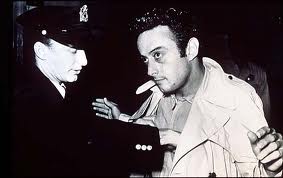
Lenny Bruce, who knew both pain and comedy

This funny line comes from a Memorial Day conversation, where people where talking about their lives. The speaker is smart and intelligent but was not trying to be funny. He was speaking from the heart, but in doing so he mouthed a Woody Allen-quality quip.

Wasn’t it Lenny Bruce who said something like, “Comedy is pain plus time.”

Here is my friend’s line, which is full of both pain and time:

“While growing up, I was so bad that when I reached the legal drinking age, I quit.”

More popular than the Beatles: A 19th Century Swede

28 Mar


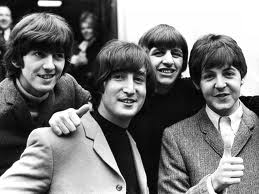
These guys were nothing, compared to ...

There were superstar performers long before mass media and one of them was named Jenny Lind.

Jenny was known as the “Swedish Nightingale.” She came to the U.S. on a whirlwind tour in 1850 after retiring from European opera at age 29. Her American promoter was P.T. Barnum, who created such a stir that 30,000 people went to New York harbor to greet Jenny’s ship.
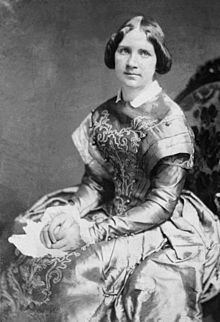
... the Swedish Nightingale

Because of the great demand for tickets, Barnum would auction them off. They would go for as high as $20 – an incredible price in 1850. By comparison, a ticket to see the Beatles in 1964 on the main floor at the Atlantic City Convention Center cost $3.90.

At some Lind concerts, a few very rich music lovers (or perhaps speculators) would offer to buy up every seat in the house. Barnum wouldn’t sell, claiming all should get a chance.

On her American tour, Jenny personally earned $350,000. She gave it all to charity. The Beatles never did that. Neither did Barnum.

Because of the illogical and unreasonable American response to Jenny, the term “Lind mania” was coined, and a songwriter named W.H.C. West composed a satirical piece entitled, “The Jenny Lind Mania.” Today there would be Internet memes and YouTube parodies about Jenny.

I learned about Jenny last Sunday when some of the songs she did on her American tour were performed by three-time Tony nominee Judy Kuhn, who appeared in Pennsylvania at a pops concert with the Bucks County Symphony.

Maestro Gary S. Fagin told stories about Jenny and the sensation she caused.

History tells us that P.T. Barnum was a master showman and probably could sell $20 tickets to watch of piece of stale cake. Still, it is hard to believe he could do what he did without the tools of TV or radio or even photographs in newspapers. It must be that people, with or without technology, on occasion enter into fits of collective madness. We clearly have a weakness for it. It must satisfy something in our nature.

There was no harm, I don’t think, when people went to see Jenny Lind. There was harm, however, when nearly everyone in American, rich and poor, wise and stupid, went out and bought homes they could not afford. That weakened a nation. An entire species was weakened when in the last century much of Europe, the rich and the poor, the wise and the stupid, embraced fascism, war and the lethal scapegoating of Jews.

Clearly, things can get horridly bad.

Hearing about Jenny Lind at the concert, I wondered what humans are capable of. I thought about the relativity of good sense, the fragile veneer of morality and the protean quality of religion. I should have just enjoyed the music. Instead I thought about the monster within me.

Not a good evening.

Yeah, Yeah, Yeah.

Where $350 gets you $19,000 — and it ain’t Wall Street

16 Mar

Image

He was short, wore a hoodie and was happy. A student at Penn, he had come in second at a World Series of Poker Tournament in Atlantic City this past week. His investment was about $350. After beating all but one of the 268 contestants, his prize was a little more than $12,000.

He was fun to watch because he smiled all the time.

The winner, a young man from Ohio, never smiled. He seemed sour and unhappy. For his efforts he received a little more than $19,000 and a huge gold ring.

Unlike most professional sports, poker is free to watch. The competition is keen and intense. Spectators can learn, and they can walk into the next room, sit at a table and apply what they’ve learned. You can’t do that at a hockey match.

The final table I watched represented a fairly low level of play. Play level rises when you pay more to get into the game. The winner of the main event, the top level, took home a ring and $191,194. I believe it cost about $1,500 to get into that game.

Some observations:

  • Watching poker in person is much better than watching it on TV, where there is selective editing, you can’t see all that is happening, and you don’t get a full grasp of the dynamics. Unlike TV, you can’t see the hole cards, so you don’t know what a person had when he folds after several raises. But that adds to the mystique.
  • I said when “he” folds. The sport is mostly male. Young and male. Mostly white, young and male, although the Asian presence is notable. At the table where I watched, however, a black guy was the chip leader most of the time.
  • Endurance is critical. There are breaks, but the tournament lasts three days. While you play, you can drink booze or coffee or orange juice or Red Bull. Whatever works. But if you don’t stay sharp, you lose. The chip leader I spoke of got tired, made bad plays in the last couple of hours and was knocked out (although he still won prize money). The Penn kid was alert and rallied back from a short stack.

The poker culture is interesting to follow; the language, the different ways to wear hoodies (almost a uniform), the ways to play with your chips, the various attitudes and poses. At Caesar’s, where the competition was held, a few players hired women to massage their backs while they played.

I’m convinced many life lessons can be learned in a poker match. I’m half tempted to start practicing and invest $350 the next time the WSOP comes around. It seems like a small price to pay for the experience.

Are there any tournament players who can share some of their thoughts here?

Don’t pull on Superman’s cape, and don’t mess with Bill Shatner

11 Mar

William Shatner is funny, very funny. But there is a tendency to laugh at him, not with him.

This happens to some people. With Shatner, it somehow is related to his role as Captain James T. Kirk on Star Trek. So many people loved that show, but with time it and the Kirk character became the butt of jokes.

The post-Trek work of Shatner, a one-time Shakespearean actor, has consistently stood out, winning top awards. I especially liked him in the TV show “Boston Legal” in the character of Denny Crane. But he remains haunted by Star Trek and appears quite sensitive about it.

Shatner has a one-person show that was on Broadway and is now on a national tour. It’s called “Shatner’s World,” and he wrote it. He recently went on the Colbert Report to plug it. Colbert opened the show saying Shatner would appear, mentioned the Kirk character and made a lame joke about Star Trek. Shatner came out later and was hostile. Really hostile.

Watching performers, I often wonder what is real and what is show business. The audience loved it when Shatner, in defensive mode, ripped apart Colbert, blunting all the attempted humor of the normally agile comedian. So it was a good bit; good for business. Maybe Colbert and Shatner worked it out ahead of time, but I doubt it.

Shatner so much as said he did not like Colbert, came on the show only for a plug, and wanted to get off as soon as possible. It was great theater. Colbert, unfortunately, came off looking like an amateur.

Shatner’s message was clear: It’s time to stop laughing at him and take him seriously.

I’d like to hear what people think of the Colbert-Shatner interview, if they agree the host was indeed an unwitting victim. Please watch the episode (linked above) and comment.

India hasn’t forgotten the English – A case of true bilingualism

10 Mar

No words in this trailer, but the movie — Guzaarish — is an example of mixed language. Watch it on Netflix.


I like language, its power, its beauty and its imperfections.

Learning about a language can tell you a lot about the people who speak it. Chinese, for example, is structured in a way that allows the speaker to say something without really saying it. It is a subtle and metaphorical tongue. This is due in part to the fact that many, many words share the same pronunciation, like the English “dear” and “deer” but on a much wider scale.

The given name of deceased Chinese leader Deng Xiao Ping, for example, sounds just like the words “little bottle.” When the Chinese people tried to convince the Communist government to install Deng as their leader, they marched through the streets holding up little bottles. This allowed them to make a point while denying they were engaged in political activity.

That’s cool.

In India, they do something even cooler, something I find fascinating but don’t understand. I hope someone can explain it to me.

I haven’t been to India and know nothing of Hindi, the official language, but I do watch Indian movies. In those movies people will be speaking a blue streak of Hindi – to a friend, to a lover, to a business acquaintance or government official – then without warning or pause switch to English. Then just as quickly, they will switch back to Hindi, then do it again and again.

Ten words of Hindi, five of English, 100 of Hindi, three of English … on and on.

I’ve tried to figure out if certain things are said in English for effect or emphasis, but it doesn’t appear that way. It appears random – totally random, without reason. But it can’t be. Or can it?

Who out there can explain?

Imagine a land where girls go to school

8 Mar

The few Iranians I’ve known I’ve liked. But they pre-date the ayatollah. Curious about what people and life are like in today’s Iran, I went to see “A Separation,” an Iranian movie that won the Oscar for best foreign film.

Here are my quick observations about what makes that country different from ours:

  1. The women cover their heads.
  2. All buildings are in need of interior and exterior paint jobs.
  3. In court there are no lawyers.

Aside from those differences, people and life are the same as in the U.S.

Husbands and wives fight. People lie and cheat. Cities are busy and crowded. There are strong women able to fix problems caused by men. There is traffic. Girls go to school. Children are valued. The unfortunate find themselves out of work and out of money. There is an attempt to see that justice prevails.

I was looking for strong evidence of Islam. Little was found, even in court. Court mainly consisted of all parties yelling and screaming and a judge (in street clothes) trying to rule without the aid of procedure.

Some people, like in America, were more devout that others. A woman hired to take care of an Alzheimer’s patient telephoned a spiritual advisor to ask if it was OK to change the man’s soiled paints. Others didn’t seem so devout and would swear in front of women and children. Someone was accused of stealing money but there was no attempt to cut off her hand.

In the end, a couple divorces and a child is forced to choose which parent to live with.

Iran could easily have been Brooklyn.

So be advised. If we bomb them, we are bombing people very much like ourselves

One thing I also should mention: Those Iranians can act. “A Separation” was a simple yet worthy film, well executed in a shockingly realistic style. You don’t even think you are watching actors.

Don’t go without a phone

4 Mar

At the Philadelphia International Flower Show, in front of the better exhibits, arms shoot up in the semi-darkness like a mass salute … a salute with glowing smart phones.

Standing among the throng, my immediate worry was for the companies that make cameras. (They’ve got to be going out of business) My second worry was for myself: How am I going to take a decent picture with all these arms in the air?

While the flower show, which I attended on opening day, was full of rich, lush plant life (the theme was “Hawaii: Islands of Aloha), the event was mostly about getting in the way of people taking pictures and people getting in your way as you try to take pictures.

Putting that aside, however, the show truly can be enjoyed as a mass display of intricate, complex natural beauty tamed and woven into poetic design by human beings.

It can take your breath away. It is well worth the trip, even if you don’t get a decent photo out of it.

Hey, Hey I’m a Monkee!

1 Mar

Image

The Associated Press obit on Davy Jones, lead singer of the Monkees, used the adjective “pre-fab” to describe his band. When it was assembled by television executives trying to rip off the Beatles – their charm, their wit and their movie “A Hard Day’s Night” – the search was for actors, not musicians. Oddly, they came together pretty well as a band, with remarkably good songs. It wasn’t until today that I realized some of the top people in the business were providing them with material and musical assistance.

The AP obit mentions such helpful luminaries as Carole King and Gerry Goffin, Neil Diamond, Billy Preston, Ry Cooder and Neil Young.

How can one not succeed with that kind of support?

A truly great performance

12 Feb

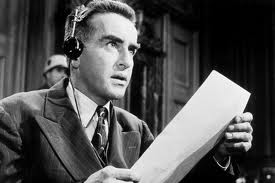
Montgomery Clift in "Judgment at Nuremberg".

Each time this year, TCM – the cable movie channel – presents, “31 Days of Oscar.” I happened to have tuned in when it was showing the 1961 film, “Judgment at Nuremberg.” I had never seen it. From the beginning, it was easy to tell this film is not only very good, it is very special and unique, with a strong, unusual perspective and a universal message.

I had been expecting anti-German propaganda.

Directed by Stanley Kramer, the film is studded with stars: Spencer Tracy, Burt Lancaster, Marlene Dietrich, Montgomery Clift, Judy Garland – even a young William Shatner pops up. The story is about the post-war trials in Germany. Top Nazis have already been prosecuted, and the film focuses on the trial of three judges who approved Nazi-ordered sterilizations (read castrations).

What motivated me to write this post, however, was Montgomery Clift.

His performance on the witness stand as a not-very-intelligent sterilization victim overwhelmed me with its power.

I was never a fan of Monti’s, who looks very different in this film. I had seen him play roles like soldiers and boxers and never felt they were right for him.

As the sad little witness, frightened and damaged, he is incredible. His screen time is a mere 12 minutes.

Please watch. (the first minute or so is missing)

Here is the interesting part, as reported on the Internet Movie Database site: Clift was having an extremely difficult time remembering his lines, so the director told him to ad lib, and that his confusion would ad to the confusion the character was going through under cross examination.

God did that work.

Clift usually cut his hair short after each movie, and didn’t make another until it grew back. In this film, there was no time for it to grow back.

Sticks, stones and free speech

10 Feb

Hateful or merely unfunny?

I’ve noticed that more and more celebrities, politicians, broadcasters and sports figures are saying things that offend people. Reporting gaffs, if they are indeed that, has become its own news genre.

What people say rarely offends me. I’m an advocate of free speech. And I like to hear what people really think. Don’t others feel this way? It is difficult for me to believe that, say, a Jew, would prefer an anti-Semitic congressman keep quiet and never be found out, rather than speak honestly and reveal himself.

Do those who complain about people like Roland Martin think Roland Martin would be a different person if he didn’t say what he said?

I once found myself among a large group of traveling North Koreans. They didn’t say a word, didn’t crack a facial expression, didn’t show they were human. Fear encapsulated them. I’d much rather be around a bigot than an automaton. I’m hoping the current tendency to castigate offensive utterances doesn’t turn Americans into North Koreans.

Can’t we just ignore celebrity offenders? That’s severe punishment, since these are people who can’t seem to live without attention.

There once was a politician in my town who probably was a good fellow at heart. He liked to make jokes and never worried about offending people. He thought himself a scream. He held a high county office and once had to deal with a small riot in a Hispanic neighborhood.

He was unable to play it straight.

During a public meting he said this: “We could have avoided the problem if someone had just put up a taco stand.”

He was roundly criticized.

At the next meeting, he took the podium to apologize, even though he was not the kind of man to do so.

“I was completely wrong,” he told his audience. “It’s the Mexicans who like tacos. The people who rioted were Puerto Ricans.”

And he belly laughed.

Was this man a racist or simply a failed comedian?

To me he was someone who refused to hide himself. If I chose to, I could have run from him, knowing more about him than I knew about most people.

He lost the next election, retired and died. Roland Martin, on the other hand, probably has followers on social media than ever before.