Archive | Economics RSS feed for this section

How long before the great income grab is reversed? Not long.

9 Mar

cbpp income inequality 2011

The first real understanding of my value as a worker came during a company Christmas party.

I was a young reporter for a family-owned media company. My fellow employees and I had already received the gift of a free turkey, and now there was this party, grand and lavish.

It was a time when newspaper margins were around 40 percent. Printing a newspaper was like printing money.

The party was held in a big banquet hall. Hundreds attended. There was a generous buffet, music, dancing and an open bar for the entire evening.

In general, the company did well by its employees. The founder was a tough, bull-headed union-buster, but when I worked there raises were given four times a year, the food in the cafeteria was subsidized and supervisors were honored at an annual dinner.

Upon the death of the old man, his four grown children took over. By chance, I was sitting with one at the Christmas party. She was somewhat shy but sincere when she said to our table, “All of you are responsible for making this company what it is. It would be nothing without you. My family owes everything to you. Our success is your success.”

Prior to that, I had seen myself as an expendable, replaceable cog.

But this co-owner, this daughter of an entrepreneurial risk-taker, was shifting my view. I hadn’t recognized it yet, but she knew that without workers a hundred printing presses could not produce a single paper.

Still, she was neither ready nor willing to change the rules and divide the profits among workers. That’s a different ideology, one totally alien to our system, one that threatens and offends.

Then I went to New York City and found out it wasn’t.

I was still learning the way of the world and on this visit to see friends I discovered how lawyers became partners.

My friends were a former reporter and her boyfriend lawyer. He didn’t go to dinner with us that Saturday night because he was working on an investment banking deal. He was trying to make partner.

When we met up later at a bar, he was in good spirits and had no complaints. As an explanation for missing dinner, he told me a joke: “Why do investment bankers love Friday? Because it is only two more work days until Monday.”

I envied his chance to become a partner. Now that I think of it, he probably was the first person I knew who was capable of using hard work to earn equity ownership in a company.

Why was law different from other professions? To begin with, there is no huge investment needed to start up, nothing like a printing press. Also, lawyers tend to see themselves as professional equals. And there probably is some precedent, a near-ancient tradition, of taking on partners rather than employees.

What’s more, it is easy for the good ones – those who bring in big clients — to leave and hang up their own shingles.

A factory worker doesn’t have that kind of leverage.

But if there exists a universal law of fairness, a standard morality for the value and worth of labor, then leverage shouldn’t be a factor.

Of course, there is no morality in the marketplace. If people will work for substandard wages, that is what you pay them. And so unions came to be.

Unions got their start in ancient Rome

Unions got their start in ancient Rome

We think of unions as a modern concept but the idea and practice go way back. The founders of Rome, in 753 B.C., may be partially to blame. As Rome grew and incorporated other provinces, the new citizens didn’t integrate. They stayed in their towns, kept their habits and traditions and failed to adopt a Roman identify. So an edict was issued requiring people to relocate to districts organized around trades. If you were a carpenter, you lived among all carpenters.

Ethnic differences faded.

Naturally, trade associations formed. It was a new unifier.

In time, these associations became quite powerful.

Even the kings of France had to contend with them. In an age when candles were the chief source of lighting and a significant expense in a large palace, money could be saved by letting them burn to the end.  Practical, but the guild in charge of candles wouldn’t allow it. It required that candles be replaced when half burned.

Unions in the modern era continue to be associated with self-serving, costly inefficiencies. Unlike the lawyers who must enrich their firms in order to become partners, unions too often weaken their companies, making workers liabilities rather than assets.

And companies today are quick to get rid of liabilities.

What unions are good at, however, is their ability to show management the true value of labor. By unifying the powerless, power is created. In speaking with one voice – “no we won’t work for poverty wages” – unions effectively alter the marketplace. They grant the common folk a degree of dignity and allow them to pursue happiness.

But with global competition so fierce, it has become impractical and unwise for unions to advocate uncompetitive practices. What they should advocate is efficiency, innovation, profit and partnership – true equity partnership. Unions gave us the weekend but if the incentive of partnership is applied (making Friday two work days until Monday) companies could get them back.

Would companies actually make their worker’s partners? Under the current climate, no. Even discussing the idea seems ridiculous and beyond farfetched.

But why?

In the golden age of unions – after resistance that included shooting strikers — companies decided there was enough growth and profit to meet the demands of organized labor. With profit in mind, there was a willingness to share. Henry Ford would benefit if he could keep cars rolling off the assembly line and meet the heavy demand.

And besides, workers with money buy things – like cars.
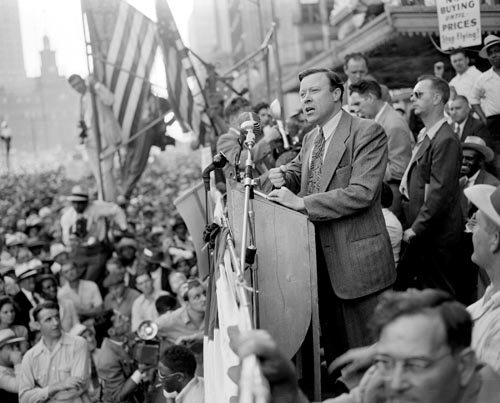
Walter Reuther knew the middle class fueled the economy.

Walter Reuther knew the middle class fueled the economy.

(There’s a great story about Walter Reuther, leader of the United Auto Workers, being shown an automated assembly line.  In a competitive dig, Henry Ford II asked him, “How are you going to get those robots to pay union dues?” Reuther retorted, “Henry, how are you going to get them to buy cars?”)

For the most part, the willingness to share is gone.

According to the Center for Budget and Policy Priorities and many other sources, a significant income gap between classes existed from the 1940s into the 1970s, but it did not grow. But after the early 70s and up to today, income concentration at the top increased dramatically. The last time the disparity was this great was prior to the Depression.

Various sources, including University of California at Santa Cruz Professor G. William Domhoff, in his blog “Who Rules America?,” report that in 2010 about 1percent of the U.S. population possessed 35 percent of the wealth. The top 20 percent had 89 percent, leaving the bottom 80 percent with 11 percent.

Also reported in various places, including the Los Angeles Times, is that from 1993 to 2012, income of the 1 percent rose 86.1 percent while income of the other 99 percent rose 6.6 percent.

As wealth became concentrated at the upper tier, billions in cash was stockpiled by American corporations.

In March, Forbes set the total at $1.45 trillion and listed the top 10 holders of cash, including:

Apple: $137 billion.

Microsoft: $68.3 billion.

Google $48.1 billion.

Pfizer $46.9 billion.

What changed?

For one, the labor market.

When Apple is ready to roll out a new iPhone, poor farmers in Katmandu drop their plows and fly to factories in Malaysia. This is not a rhetorical sentence.

Journalist Cam Simpson documents Apple’s labor supply chain in an incredible piece of investigative reporting for Bloomberg Businessweek.  His story tells how labor brokers fan out to the poor countries of Asia when Apple launches a new product. The people they find pay them for jobs and keep paying as the process continues. Often, they pay with borrowed money and go deeply in debt.

One was Bibek Dhong from Nepal. He paid a single broker the equivalent of six-months wages. The fee secured him a job in Malaysia with Flextronics, one of Apple’s chief suppliers. Before he could pay off his loans, production shifted to another country (better performance) and he lost his position.

His passport was held and he could not get home. He feared he would be arrested. Before he received help from Flextronics, he ran out of money and nearly starved.

Not exactly a union shop.

But as China has realized, when companies get richer, when commerce thrives, when corrupt leaders and their families amass great, visible wealth, expectations rise and workers lose their complacency. They demand more and often get it, until the factories move to a more accommodating country.

Sooner or later, corporations are going to run out of countries.

Sooner or later, a floor will form under the global labor market.  From there, workers will stand.

That’s when corporations are going to need a new plan.

And that’s why I’m suggesting one now.

In the U.S., people are finally waking up to the subtle yet systematic dismantling of the middle class, which has been occurring for decades. With less spending power, average families find it difficult or impossible to send their children to college – once the gateway to upward mobility. Those who do make it to college find it hard to get jobs when they graduate.

The bleakness and lack of opportunity, the malaise of our times, is truly settling in.

Books are being written with titles such as, “The War on the Middle Class,” “Screwed: The Undeclared War on the Middle Class,” and “The Betrayal of the American Dream.”

Income equality has become a topic in columns, blogs and editorial cartoons. The issue, once ignored, is now discussed by the president of the United States and the Pope. Billionaire Warren Buffett said that if class warfare truly exists, his class in winning. Even so, there are defections. One is global billionaire David Sainsbury, who calls for fairer wealth distribution through something called “progressive capitalism.”

To see inside this looming class crisis, look toward Seattle, the home of Boeing.

Timothy Egan, a Pulitzer Prize winning journalist and winner of the National Book Award, wrote an opinion piece in the New York Times Nov. 14 called, “Under My Thumb.” The title refers to Seattle’s position vis-a-vis Boeing.

Like many big corporations, Boeing hold jobs hostage as it demands and gets hefty tax breaks. As Egan points out, when anyone or anything shows resistance, companies like Boeing threaten to leave town.

Boeing is seeking concessions in exchange for keeping assembly of the new 777X jet in Washington State. For its part, the state of Washington provided a incentive package that included an $8.7 billion tax break, which Egan called the largest single state-tax giveaway in the nation’s history.

But Boeing also requires that workers accept cuts in pensions and health care benefits.

Unlike Washington, the workers said no.

Refusing to allow the “Walmartization of aerospace,” the machinists who would build the 777X turned down the offer by a 2-1 vote.

“I’m tired of being slapped in the face,” said John Gilman, who has worked at Boeing for nearly 40 years. “Building airplanes — it takes years of training and skill. The people who run this company used to understand that.”

In reaction to Egan’s piece, one reader commented, “This is just the beginning before Americans ‘storm’ any number of figurative ‘Bastilles.’ ”

Jump now, if you will, to the town of Richmond, California.

In Richmond, like most of the U.S., people were talked into taking home mortgages they couldn’t afford. When the housing bubble burst, they ended up owing more on their mortgages than their homes were worth.

Nothing unusual there.

What is unusual is the protective reaction, possibly unprecedented, taken by the town fathers on behalf of residents. Basically, they told the banks holding the bad mortgages to renegotiate the terms or Richmond would confiscate the properties through eminent domain.

Under this plan, the banks would receive 80 percent of each home’s current worth – much less than the original purchase price –and the town would reform the mortgages so owners can afford them.

Meanwhile, all across the country fast food workers are trying to nearly double their hourly wage to $15.

Not too long ago, the Occupy movement surprised everyone when it surfaced to protest almost everything. It stayed around much longer than anyone expected and started widespread discussion of the 1 percent and vast income disparities.

What else is out there waiting to bubble up? I sense there is a lot.

Nature and the human spirit, in time, tend to correct imbalances. I believe this correction has begun. When there is too much of one thing, the other thing comes.

And when the other thing comes, I hope we are ready for it. We might prepare by realizing that we all have a stake in each other’s well being, that each plays a role in the ultimate success of our society and that respect and dignity should be afforded to all. We are a tribe – we humans — and members of a tribe should look out for each other.

Right now we don’t.

I say, let’s act more like partners. Let’s all rise together.

That means valuing each other properly and recognizing that all roles are important, that we’d be in big trouble if one day no one wanted to pick up the trash.

Providing an equity interest to all workers – even a thin, thin sliver – is progressive and revolutionary. It may even be moral, wise and an effective business strategy. But for it to happen, something cataclysmic must occur, or the vision of something cataclysmic must appear.

In the meantime, it is likely that agendas will slowly change (perhaps preventing any cataclysm). This fall, for example, Bill de Blasio was elected mayor of New York after saying he would trim the gap between rich and poor.

Other politicians, in a discovering of new voting blocs, may decide to do the same and relieve the working poor of its distress, better balance wealth and create a more secure, just and – I think – more prosperous society.

A person with disposable income, after all, fuels the economy and is less of a burden on government.

Tax policy, a major cause of the wealth shift, also will have to change. An almost whimsical proposal comes from Robert Shiller, who on Dec. 8 received the Nobel prize in economics. To stop inequality from rising, he suggests raising taxes on the rich whenever their share of income starts to grow.

Should any of this actually happen, it won’t come solely out of true enlightenment. As always, it will come mostly as a way to preserve and protect – through concessions – the self-interests of the powerful. This is OK. It will come through changing market forces resulting from a shift in culture, attitudes, expectations and action. Those forces, nearly invisible now, seem to be coalescing. I don’t think they can be stopped.

When there is too much of one thing, the other thing comes. That’s the natural law.

Lanny Morgnanesi
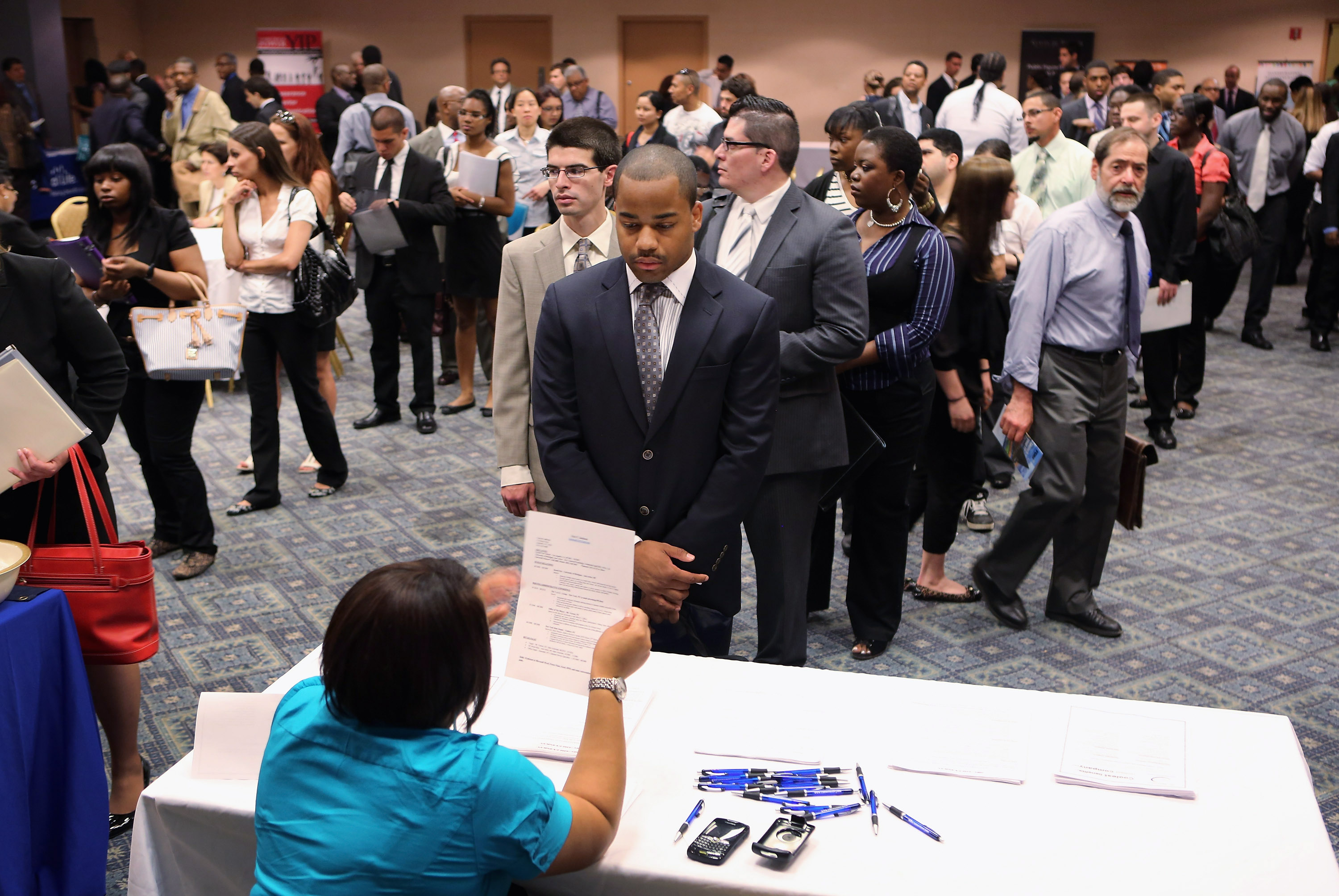
Think people don’t want to work? Post a job and see

24 Nov

Job Fair Held In Midtown Manhattan

I hear more and more people complaining about shiftless hordes who don’t want to work. Maybe they know something I don’t, but when a supermarket near my house opened, 10,000 people applied for 400 jobs.

At a convenience market where I buy coffee, a cashier was complaining about her job, remarking how things are done differently at the other two places where she works.

There was a time when nearly everyone could work a single job, or perhaps two, and survive. Not so today. Wal-Mart has made billions for its founders but in Canton, Ohio, one store found it necessary to hold a food drive for its own employees.

The poor work, but still draw resentment.

John R. Kasich, the Republican governor of Ohio, told his cabinet, “I’m concerned about the fact there seems to be a war on the poor. That if you’re poor, somehow you’re shiftless and lazy.”

When the poor ask for more, the rich counter with charges of class warfare – hiding the fact that such a war actually is being waged in the opposite direction, and with great effectiveness.

I fully understand the propensity of the rich to take and hold all they can. Despite the efforts of Christianity and the other great religions, intense greed is endemic.

But why do so many average people believe that social programs primarily serve the indolent?

For sure, there are cheats. Lots. Nothing sends off a member of the middle class like watching someone use food stamps for groceries then buy cigarettes with cash. (This isn’t even cheating.) Such stories, sadly, prevent the recognition of real need.

In America, we are all tense and frustrated and filled with resentment and fear and sometime hate. For the angry Middle Class, the easiest target is the unemployed, who have come to represent a fault-filled force that siphons off taxes. Without such targets, many people would have a tough time getting through the day.

What can we do to stop this inner angst, this potentially explosive and destructive energy? We’d be so much better off without it.

Maybe the remedy is safe, secure, fair-wage jobs and the return of a culture of opportunity and equal advancement.

People find happiness in work, not welfare.

Corporations all over the U.S. are holding billions in cash. Might there be investment and jobs somewhere in those stashes? If we’ve all got to vent, why not send a little steam up instead of down? It’s time to stop wasting energy trying to disband a phantom nation of the lazy. It’s time to get to the real problem.

Lanny Morgnanesi


On the Coming Middle Class Revolution

29 Sep

inequality

The problems of poverty and inequality have always bothered me. This is so even though I’ve not been poor nor have I ever lived among the poor.

Why then, I ask myself, do I have this strong sense that it is morally wrong to allow the sad side of civilization to exist?

Others are free of this burden, why not me?

The great religions speak against poverty and urge attention and compassion. Yet legislators who profess these faiths will happily cut  $40 billion from the food stamp program.

While my empathy for the poor and the marginal working class is hard to shake, so, too, is my view that the rich and everyone else would benefit financially, spiritually and culturally from a more egalitarian society. They key to this society is the easy ability to get and hold a job that ensures freedom from want.

In such a society, billion-dollar food stamp programs are unnecessary.

You don’t need public housing or a bloated Medicaid system.

And because people would have more pride and self-respect, society would need fewer courts, cops, prisons and mental health facilities.

There would be great savings.

People would have money in their pockets and the business community would thrive.

There is little downside, except perhaps that the very rich would have slightly less money and corporations would not be able to amass huge cash surpluses.

By contrast to this semi-utopia, I find the present oligarchical society unpleasant and dangerous. And let’s face it, Thomas Jefferson aside, that’s what it is – an oligarchy.

The decline of the Great American Cities is but one example of the damage caused by too few people holding too much money, which is unfairly channeled to them through favorable tax policy and special interest legislation. Let them keep what they earn, what they deserve, what they spent a lifetime building, just check their greed when it denies others.

Prior to the great transfer of wealth upward, average people helped keep the cities vibrant by living and working in them. It doesn’t take an archeologist to figure out what went wrong. Go there and see the shells of empty factories right next to abandoned neighborhoods.

There are complex reasons for this, but most damaging has been the systematic dismantling of the middle class.

No nation can be strong without a fully functioning, accessible middle class.

With globalization and the extreme growth of markets in developing countries, this reality has been ignored. It is ignored because the American middle class is needed less and less as consumers of goods and services. Jobs  can be eliminated and wages kept low because support can be found abroad.

A Sept. 17 report by the U.S. Census Bureau says American men who worked full-time in 2012 earned less in real dollars than men in 1973. Yet the GDP in the U.S. has tripled. Where did all that wealth go?

To the top.

fast food strikeAmericans speak well of their one revolution but don’t expect another. Even so, revolution is more common today than ever, and the oligarchy should be cautious not to push too far. For the first time in a very long time, average people are noticing that class warfare is being waged against them. Those who work in the exploitive fast food industry are slowly standing up. They are not asking for $1 more, or $2 more; they basically want their salary doubled to $15 an hour.

That’s bold.

Those fighting for a more equal society have adopted a new name for what they seek: social justice.

That’s convincing and unthreatening. Who could be against that? As a result, their influence is growing.

More than people, however, it is raw statistics – overwhelming and indisputable — that are leading the charge. These figures are so dramatic that a director named Jacob Kornbluth, working with former Labor Secretary Robert Reich, has made a movie out of them.

It’s called “Inequality for All” and is getting wide notice in the media. It won at Sundance. The people seem ready for it.

In such times, even Forbes magazine feels comfortable pointing out that in 35 states welfare payments are higher than minimum wage.

Tim Cook, Apple CEO

Tim Cook, Apple CEO

that the $378 million compensation for Apple CEO Tim Cook is equal to the combined salaries of 6,258 Apple employees.

And for the quaint people who still read books, Sasha Abramsky has written, “The American Way of Poverty: How the Other Half Still Lives.” It suggests that inequality is designed for social control and that poverty is a key component of the American system that, ultimately, will destroy democracy.

Meanwhile, in higher education – once a critical component of upward mobility — there is a great deal of hand wringing over declining enrollment. The concern is that colleges and universities are doing something wrong, and that the traditional model no longer works. In truth, there is nothing wrong with the model. What’s wrong is that without a middle class there isn’t much need for colleges.

Many will close.

Unless … the middle class fights back.

Amazingly, the democratic system allows it to do that. Even though the system is rigged with sophisticated gerrymandering and unrealistic requirements for campaign funding, there is still a way to change government.

The normally passive middle class could rise up. They would do so after watching, reading, fuming, sharing horror stories and trying to support children who can’t find jobs.

If they can begin to organize and act with conviction, they won’t even have to work up a sweat. Real revolution is unnecessary. The attentive members of Congress don’t need a weatherman to know which way the wind blows. They sway easily. They took care of the middle class and built up the economy after World War II.

They can do it again.

The golden years in America – for the middle class and nearly everyone else – were from about 1945 to 1980. Let’s bring them back. All it takes is for several hundred thousand Twitter fanatics to take to the streets, maybe even with assistance from the very poor (the saddest of all). It will be a movement the media will surely glorify as “The American Spring.”

It need not be messy.

We can call it a revolution without it really being one.

We can get people working again and get the economy moving again. Optimism will flourish again. We can reach out and reach up. We can do it all together.

The wonderful thing is the uncompassionate can do this for purely selfish reasons.

As the king said, what you do to the least of my brothers …

By Lanny Morgnanesi

Buy Detroit – now!

25 Aug

Detroit1

From ancient Athens to modern-day Antwerp, over the ages one word has come to define our cities: Commerce.

Traditionally, cities are the places where money flows. No longer, at least not in America.

Detroit has become the largest and most noteworthy of U.S. cities from which capital flees.

Oh Detroit, once so great and prosperous. How sad is your decline.

They say it’s foolish to call for a cop or an ambulance in bankrupt Motown. You’ll wait forever.

They say so much of the urban landscape in Detroit has been abandoned that people have taken to plowing it under and using it for agriculture.

Detroit2But Detroit was once an economic magnate that helped foster one of the largest migrations in American history. Between 1910 and 1970, over 6 million African Americans left the South. They settled in many places and Detroit – with its thriving auto industry – was high on the list.

Its closeness to the Canadian wilderness and the Great Lakes spurred economic development there from the very start. It boomed with the 18th century fur trade. Much later, when Henry Ford set up shop in 1903, Detroit truly came into its own, growing in the 1950s to 1.8 million people and becoming the fourth largest city in America.

Today, it has about 700,000 people and is the 13th largest city. From 2000 to 2010 its population fell by 25 percent. In addition to the incredible reverse migration and the massive loss of jobs, about 47 percent of all tax parcels are delinquent, which is why the city has really ceased to be a city.

Instead, it has become a disabled hulk that is $19 billion in debt.

This is all so bleak, especially since other cities face the same fate.

Detroit3In such times, I try to remember that life runs in cycles; that the dead do rise. I try to remember that the present is only the present and the future always brings change. I try to remember that those who bought Chrysler at $1 got rich.

If I were a person with money to invest in the long term, I would buy – steal, perhaps – Detroit real estate.

As you laugh, remember that the best financial advice ever given is the most difficult to follow: Buy low, sell high.

Prices in Detroit will never be lower.

It takes guts to buy low because most investors think only of the present. Without vision, there is no glory and little profit.

So to all those visionary investors – Warren Buffett, are you out there? – help bring back Detroit. Buy Detroit.

Buy Detroit now.

Do it before the Chinese. They’ll be over for sure, for they are the most patient of all investors.

Actually, the Hipster homesteaders probably will be first.

Look what they did for Brooklyn! They’ll test the waters, start slow; attract more of their ilk; bring the city back block by block; start a few small businesses. They won’t be looking for a return; just a lifestyle that they can create. It’s the new lifestyle that will bring in the investors.

We’ll all read about it in the New York Times or watch it develop on YouTube; they’ll be a Detroit sitcom; some of us, or our children, will eventually move there, paying rents that are no longer cheap but enjoying the comfort that even a city like Detroit can once again mean commerce.

By Lanny Morgnanesi

Communist is jealous of former Communist

3 Jul

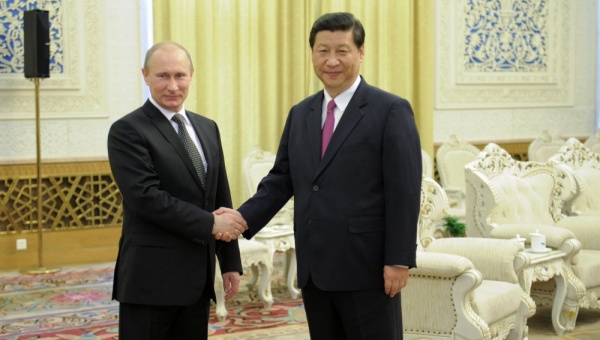
Putin-Xi Jinping

Xi Jinping, the president of China, visited Moscow in March for talks with Vladimir Putin, the president of Russia. Xi is a Communist. Putin used to be one. Still, the non-Communist impressed the still-Communist with all the things his country is doing for its people.

Back home, Xi told the Chinese how impressed he was with Russia’s ability to care for its citizens. In the U.S. we call this welfare, food stamps, handouts and the dole. Those who don’t get it resent government for giving it. But Xi thought it was noble and Putin said any government that denies its people the basic components of life has no heart. Worse, he said, doing so creates stress, anxiety, dissatisfaction, crime and turns people into animals.

Xi seemed concerned that China has not done quite as well as Russia. He told his people that Russia provides five guarantees:

  1. Free housing.
  2. Free medical care (but not medicine).
  3. Free education (including one meal a day).
  4. Free public water.
  5. Government review and approval before any company can layoff off a worker.

Putin, a tough old bastard who was a lieutenant colonel in the KGB, sees this as civilized and helpful in building the economy and keeping people happy and productive.

Would you be happier and more productive with these things? Or would you hate yourself and your government?

I always thought we didn’t have these things because the rich people had taken all the money. But in post-Communist Russia the rich people also have taken all the money.

So how do they do it?

Maybe by using what they saved from pulling out of Afghanistan.

I’ll end with a joke – a true story.

A former United States secretary of defense during the Cold War visited new Russia and was amazed.

“Everyone is rich,” he said. “They drive big cars, smoke big cigars, have money bulging out of their pockets. On their arms are beautiful women. It is just like Beverly Hills, except there are fewer Communists.”

By Lanny Morgnanesi

Should Hershey and M&M make government policy?

19 May

candy sugar lips2

I came to understand how power could ravage the individual on the day candy bars increased in price and decreased in size.

As a 10-year-old I was willing to concede that prices could go up OR size could go down. But to have both occur at once struck me as unjust and criminal. This shocking and unexpected event remained with me and prepared me for later lessons in politics, morality, pragmatism, irrationality, the market place, self-interest and hypocrisy.

In some respect then, the price I paid for that under-sized Milky Way was worth it.

Thoughts of those days, when candy was so important, came back this morning when I read a piece by Jonathan Tamari in the Philadelphia Inquirer: “Not a sweet fight: Chocolate vs. sugar.”

It details the struggle between “Big Candy” and “Big Sugar” over pending legislation governing price supports for sugar. Currently, the price of domestic sugar is kept high by a policy that limits cheaper imports from countries such as Brazil and Mexico. “Big Candy,” which must pay the higher prices for sugar, wants the restrictions removed so the price of sugar will fall. “Big Sugar” wants to maintain the restrictions to protect U.S. farmers who grow sugar and to offset the subsidies paid to foreign growers by their governments.

CandyBoth sides claim their positions save jobs. Both sides claim their positions are best for the economy. One interesting claim by “Big Sugar” is that “Big Candy” won’t lower its prices even if the cost of sugar comes down.  Why does that sound so believable?

As I read on, my thoughts turned from candy – which I no longer eat much of – to the differences between governmental policy that is piecemeal and policy that is comprehensive.

In the United States, we generally govern the first way. The second way, while enviable, is much too difficult. For now, we leave that kind of governing to the politburo of the Chinese Communist Party, which has its faults and foibles and vast problems with corruption and oppression but is made up of engineers and technocrats who take the long view.

If Congress were to act properly and strategically, it wouldn’t joust over every important piece of legislation, with one kind of action chosen in one case and an opposing kind of action in another. Rather, all actions would be supportive of an effective strategy and plan.

So instead of deciding over “Big Candy” or “Big Sugar,” government   should decide if import barriers and supports as a rule are desirable or undesirable.

Figure out what works best and employ it everywhere where it works.

It’s called National Policy and we need it in every sector.

In the end, an unhappy child may have to pay too much for too little, or his teeth may rot because sweets are cheap and abundant, but if the chosen policy boosts the nation, creating jobs and wealth, then either outcome represents reasonable pain for ultimate gain.

By Lanny Morgnanesi

How soon before McDonald’s opens in an Arctic shore town?

12 May

Ice Age

As a child I was shocked to learn there were Ice Ages. My concern was they would return.

With the globe warming up, I no longer worry.

As an adult, I’ve always been of the mind that the Earth is cataclysmic, dynamic and without care for the creatures and life forms that inhabit it. Because of this, I haven’t spent much time trying to figure out what’s going on with the current variety of climate change. I’m not even sure I could.

It is clear to me, however, that today’s Earth will not be tomorrow’s Earth. Nature has never worked that way.

There aren’t many trees on the Mid-western plains of the United States because they once were under water. Humans or pre-humans walked out of Africa and into Europe because there was no Mediterranean Sea.

So now the ice is melting and temperatures are getting warmer. Surely, the great amount of carbon gases being produced by the dominant species is a contributor. But are there stronger, natural, cyclical factors at work?

Maybe. But I wouldn’t know.

Does it matter?

Human cultures seem unable and unwilling to actively and intentionally reverse things. It is possible the market place could do the job on its own when advances make clean energy more profitable than dirty energy. Until then, we will suffer the disadvantages.

Just as past civilization have migrated due to changing climate, we will, too.  The Earth won’t even flinch.

When the shock of the coming changes wears off, we should focus on the benefits. And there are benefits.

Temperature change chartThink about it this way: If you lived in an ice world and have fully adapted and someone says they could melt it for you, you’d say no. If you lived in a world without ice and someone says they could freeze it for you, you’d say no.

No one wants change, even if their butts are as cold as mountain snow. The good in change often is obscured by the status quo and a locked-in mindset.

Since we are changing, let’s look for the good that has been ignored.

  • We can grow wheat in Canada.
  • They’re making real estate again.
  • New tourist destinations are coming.
  • There will be new access to abundant minerals and resources.
  • You can ship goods across the top of the world and save bundles of money. (The once mythical Northwest Passage is real).

Polar bearUntil recently, I hadn’t heard anyone talk about such things. It would be rather insensitive in light of the many species losing their habitats and the wealthy losing their beachfront homes.

But it is being talked about now.

The Obama Administration this week released a national strategy for the Arctic in advance of a conference of eight polar nations, where temperatures are warming twice as fast as everywhere else.

“Our pioneering spirit is naturally drawn to this region for the economic opportunities it presents and in recognition of the need to protect and conserve this unique, valuable and changing environment,” the president said.

I think the key words are “economic opportunities.”

My experience is little gets done unless there is money to be made.

While the environmentalists moan, complain and argue about climate change (not necessarily bad), visionary entrepreneurs are jumping in an investing. They see the possibilities. From a strategic and security standpoint, the U.S. cannot let other countries – Russian, for example, which has miles of Arctic coasts – get ahead or dominate in the new, warmer world.

And it won’t.

It’s just a shame the kind of mobilization and investment that is about to occur couldn’t have been used to combat the climate change in the first place.

Then again, maybe it wouldn’t have worked. Maybe nature has its own plan and our CO2 really is not a factor. I wish there was a way to know.

Either way, I’ve finally stopped worry about the coming of a new Ice Age and having to wear animal fur 24 hours a day. I guess that is some consolation.

By Lanny Morgnanesi

How lazy people can save the world

21 Apr
From Bloomberg Businessweek

From Bloomberg Businessweek

We laughed when “Seinfeld” described itself as a show about nothing because we knew it was about everything. Now there is some thought that the way to solve the environmental crisis is to do nothing.

Let’s not laugh. It could fix everything.

This process, that involves nothing, was discussed in a Bloomberg Businessweek article called, “It’s Easy Being Green.” The key to it is something called default rules. The default rules take hold only when people do nothing. But first, governments, corporations or groups larger than the individual must act to set those pro-green defaults.

Each day we live with defaults, often not knowing they are there.

If you haven’t changed things on your cell phone or computer, they look and operate the way they do because of default settings – a ring tone or a screen saver or a folder icon. Your printer probably defaults to print on one side of a page.

Suppose each printer came with a default setting that printed to both side of the page?

According to Businessweek, Rutgers University imposed a double-sided default on all printers at that institution. After four years, it reduced paper consumption by more than 55 million sheets, which saved 4,650 trees.

That was one university.

Book-SimplerShould we choose to make it so, the default system could be extensive. In two towns in Germany, 90 percent of the people use clean energy (wind, solar, etc.) because that is the default. If you want the less-expensive, less-clean power, you have to do something. You have to tell them to change it for you.

As shown, most don’t.

This natural tendency toward laziness, procrastination and acceptance can be exploited for good. It doesn’t restrict freedom. It just points everyone in the right direction. If they choose, they can turn around and go the other way.

Learn more about doing nothing to save the world by reading “Simpler: The Future of Government,” by Cass R. Sunstein.

By Lanny Morgnanesi

Biker/Writer Shares Experiences With Fracking

14 Apr
Author Seamus McGraw

Author Seamus McGraw

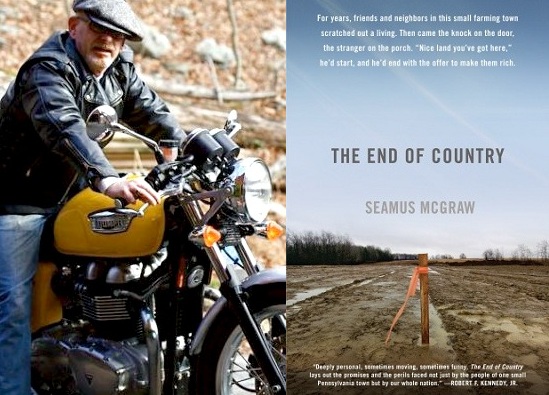
I recently attended one of those events where an author discusses his or her work in an intimate setting. From the outset, it was clear this would be interesting. After all, how many writers show up in leather pants, leather jacket, a Triumph T-shirt, shaved head, goatee and with a bike out front?

Upon entering the room, he placed a can of Drum tobacco and a pack of Zig-Zag papers on the table in front of him. He didn’t smoke during the talk, but he did roll. His best points were made while gesturing with the unlit fag.

After 45-minutes, he excused himself to go outside and feed his habit.

Lunch was served, but he said his lunch would be coffee. Do you have any?

He said he was a liberal but that 90 percent of liberals are idiots.

In the middle of the talk, he invited us – and anybody, for that matter – to a huge barbeque he holds every year.

Seamus McGraw-book coverThe man’s name is Seamus McGraw.

I’m embarrassed to say I did not read his book, but I will.

It’s about fracking.

Fracking is the common term for hydraulic fracturing, which is used to extract oil and gas from shale. It does so through a horizontal drilling process that pumps large amounts of water and chemicals, under extreme pressure, into the shale. The shale shatters and the gas and oil are released.

Fracking has put a glut of natural gas on the market and kept prices low.  It has caused coal-fired power plants to shift to the cleaner, cheaper natural gas. Most unexpectedly and perhaps most important, it will help the United States become energy independent in the coming decade.

It also may poison life forms that dwell near the drilling sites, or maybe even beyond them.

When Seamus is asked, “Are you for or against fracking?” he answers, “Yes.”

His book is, “The End of Country: Dispatches from the Frack Zone.” Those who read it said they didn’t see evidence of any leather-clad biker in it. Maybe the book is where he goes to hide.

Seamus failed at college, early careers and several marriages. He stumbled into journalism and writing, became successful, and then looked for a way to stumble out of it.

Around that time someone knocked on the door of his home in northeastern Pennsylvanian and offered him money for the fuel underneath it. He signed the papers and decided, “OK, one more book.”

What resulted got him attention, so now there is another book coming. It is on conversations about climate change — how we talk about it. Seamus believes that in politics and life we are divisive because we self-polarize. He said we are too blind or to stubborn to learn that under the surface we often believe the same things. His goal is to get to the point where we recognize this, and then move on to fixing our problems. Top on his list would be a national energy policy.

Seamus, soon to be 55, is a supreme raconteur. He seems incredibly knowledgeable on almost every subject. And, of course, his presentation is unique.

After his talk, I wished I could have seen him ride out of there. Unfortunately, I missed that. I guess I’ll have to wait until his next book.

Lanny Morgnanesi

A land once overcrowded now builds cities for no one

9 Mar


Struggling to sell real estate. -- NEW YORK TIMES PHOTO

Struggling to sell real estate. — NEW YORK TIMES PHOTO


A Chinese casino dealer from Vancouver called about an investment. He said vacation homes in China’s tropical Hainan Island, off the southeast coast, were selling for 600,000 yuan or about $92,000. A friend of his bought 16.

China once had no room for its people. Dingy one-room apartments were the norm. That was 25 years ago. Today, there is housing galore. There is so much housing that many cities are completely empty.

Shiny, modern, architecturally splendid ghost towns.

They’ve been built for no one.

According to a report on CBS’s 60 Minutes, these empty new cities are being constructed at a rate of 20 or more a year.

The ghost towns – the name used for them by the Chinese – are not modest. They are grand, with rows of skyscrapers. Many resemble Manhattan.

Why are they being built?

They are being built because people like my friend and his friend are willing to buy them whether they are empty or not. People want to buy them because they see housing as a sure investment, with prices – because of massive speculation – going up and up and up, as if there will be no end to it.

To a smaller extent, this happened in the U.S. Remember? Homeowners all thought they were rich, or would be soon. A bubble was created, and it burst, causing the recession of 2008. The thought of easy money (the easier it looks the harder it hooks) causes people in both the West and the East to lose all reason. But how in God’s name can someone look upon an empty city, knowing that many other empty cities exist, and think real estate is a good investment?

How can developers get financing for these cities? How can an economy that not long ago could not feed its people sustain such ridiculous, irresponsible and wasteful practices? It strains my mental capacity to come up with answer.

But I feel confident of this: Soon there will be great hell to pay.

As the high price of wheat caused an Arab Spring, a drop in housing prices could cause revolt and even revolution in China. I see it as that serious. Average people have invested entire fortunes that will most certainly be lost. Chaos will follow, but it won’t bring back the money.

The Chinese government has tried to cool the housing market and stop the wild speculation. Recently, it said it would apply a 20 percent tax on the sale of investment homes. The New York Times photo at the top of this post shows people struggling to sell their properties after they learned of the new tax.  The Times also reported that couples are getting divorced as a way to skirt the tax and have two people claim residence in two houses.

Some China experts say crafty people will find ways to avoid the tax or the government will end up ignoring it.

So, the frenzied buying of homes is not likely to stop soon. It’s like a contagious disease. Even I would like to have a $92,000 vacation home on lovely Hainan Island if it will be worth $200,000 in a year or so. But if I can control myself and wait a little longer, I might be able to get it for $10,000 – or maybe two for 10.

In a country of 1.3 billion people, I’ll probably have the Hainan beach all to myself. A ghost beach is so much better than a ghost town.

By Lanny Morgnanesi

http://youtu.be/KjOuDmy1ybE