Archive | Culture RSS feed for this section

I am an Etruscan!

14 Dec

Etruscans_couch

In the year 800 BC, you could earn a king’s fortune by making something good, perhaps with new materials or a new technique, putting it on a ship, sailing it around the Mediterranean, the Adriatic and the Black Sea, and either trading it or selling it.

Most of us don’t think of inter-cultural commerce when we think of 800 BC. It’s more likely we think of benighted barbarians. Of course, we’d be wrong.

In the 4.5 billion year history of the world, 800 BC is like yesterday. Much of what was done then is still being done today. (Look at the button on your shirt. It’s 5,000 years old.) What is sad is that we don’t know as much about that time as we should.

Etruscan_Map01_fullThere was an early civilization back then that excelled at trading, culture, technology and wealth accumulation. Comparatively little is know of them. They were the Etruscans, and I’m one of them.

If your ancestors are from the Tuscany region of Italy, where the Etruscans lived, you might call yourself Italian. But I’m finding that more and more people in this category are starting to classify themselves as Etruscans – the civilization that pre-dated Rome and for a time coexisted with Rome; the civilization from which Rome borrowed and then moved ahead, absorbing and eliminating its once great rival.

Much of what we do know of the Etruscans comes from the ancient writings of Greeks and Romans, who had nothing good to say about them — a sure sign of envy and jealousy. The Greeks and Romans criticized the extravagant Etruscan lifestyle, the culture’s public display of affection between men and women, and a then unprecedented equality between the two sexes.

That’s quite a culture.

At a recent party I spoke to an Etruscan friend of mine, Franca. She was born in Florence, in the Tuscany region. In a heavy Italian accent, she started talking about her ancestors and how everything that made Rome great was taken or learned from the Etruscans.

She scoffed at the Roman warriors who battled in chariots.

“Chariots were designed by the Etruscans for women,” she said.

Franca is a rare human being who by chance became my friend. She’s a marvelous storyteller. She knew Pavarotti before he became famous. He used to cook for her in his tiny New York apartment. But that’s another story.
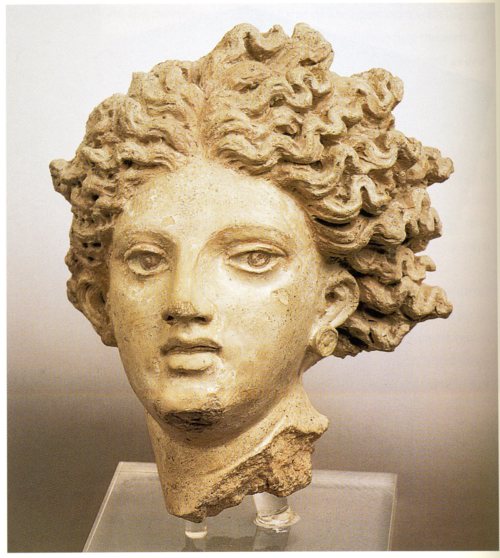
Etruscan sculptureWhile I had been aware that Franca was a fan of the ancients – she has a ring made from a coin that predates Christ — I didn’t know until this party that her son, a college president in Switzerland, spends every summer digging at an Etruscan excavation site. He is an expert on these people. I’m unsure if he taught Franca or if Franca taught him.

The discoveries at Etruscan sites come mainly from the findings within elaborate burial tombs of the rich. The Etruscan elite had the habit of building tombs that were detailed copies of their aboveground homes. The tombs were filled with domestic items of all kinds as well as great art objects and jewelry.

This provides a window into the culture, but it is heavily curtained.

The problem with unlocking all the mysteries of the Etruscans is that their writing did not survive. They had their own language and their own script, but they wrote on linen, which was easily ravaged by time. Some Etruscan writing had been found on metal and stone, but it just wasn’t enough.

Then came the mummy.

There often are quirks, mistakes and random or unusual acts that end up having a profound effect on history. This mummy is one of them.

I learned of it not from Franca but from a Time-Life book called, “Etruscans: Italy’s Lovers of Life.” The story, with many twists, begins in the late 1840s when a Croatian noble named Mihael de Barc visited Alexandria, Egypt. It was there that he bought himself a genuine mummy.

de Barc took his treasure to a home he had in Vienna, and put it on display. For some unknown reason, he found it necessary to slowly, over time, unwrap the mummy. By his death in 1859, he had completely unwrapped it.

Stay with me, please. I’m getting to the Etruscan part.

An executor put the exposed corpse and the bandages – which contained indecipherable writing — in separate cases and shipped them to the National Museum in Zagreb. In 1891, someone figured out that the unraveled linen actually was an Etruscan book.

The only way to explain this is to assume that an exiled Etruscan had once settled in Egypt and a mummy-maker grabbed one of his books to use on a client.

As mummification preserved the body, it also preserved the linen.

This chain of events, so far-fetched it could never pass for fiction, has given the world the only surviving Etruscan book. And still we don’t know enough.

Whenever I read more about these ancient yet modern people, my fasciation grows. The Etruscans called themselves by a name not used by others. To them, they were the Rasna or Rasemma. The Greeks called them Tyrrhenoi (from which we get the Tyrrhenian Sea). It was the Romans who called them Etrusci or Tusci (from which we get Tuscany).

They were great engineers, known for their roads and ambitious irrigation projects. Skeletal remains show they were exceptional dentists. (The design of the bridgework found in the mouths of tomb cadavers is still used today.) Their great wealth was the result of their talent at metalworking and the fact that they controlled vast deposits of copper, iron ore and tin, the largest in that area of the world. This was the stuff that went on their ships and gave them the foundation for one of the Western world’s greatest early civilization.

If only they had written on something more substantial than linen.

Anyway, I’m optimistic more information will be forthcoming. Franca’s son is sure to keep digging, so I may know more by the next party. But I doubt they will ever find another mummy that’s a book.

By Lanny Morgnanesi
Censorship and the self-righteous now target restaurants

26 Nov

???????????????????????????????

On a day when at least one college president was pressured to apologize for saying something rational, a minor story appeared about angry people trying to censor a restaurant.

Within just a few days, possibly while another person was making a forced apology, a second report of restaurant censorship appeared. What this means is that the movement to shut the traps of the dumb, the smart and the mediocre has reached a new and dangerous low.

While sporadic, disarrayed and multi-headed, the censorship movement is highly effective. Its practitioners sacrifice freedom for all as a way to secure kindness for all – which ends up being not so kind. Their popularity has grown with their intolerance, but God help them if they get between a hungry person and their food.

conflict-kitchen-storefrontNot going down easily is a Pittsburgh takeout joint called Conflict Kitchen. It shutdown after death threats, but has since reopened. More than 200 people – God bless them all – rallied on its behalf, singing and twisting verse from John Lennon: “All we are saying . . . is give food a chance.”

The Conflict Kitchen – little more than a kiosk – serves food from countries in conflict with the United States. Since opening in 2011, owners Jon Rubin and Dawn Weleski have prepared culinary items from nations such as Afghanistan, North Korea, Iran, Cuba and Venezuela.

The food is wrapped in paper containing information about the country’s culture and politics. The restaurant claims not to take a position but wants to present the positions of countries we may be biased against. Jon and Dawn also hold public forums to facilitate discussions.

When the Conflict Kitchen began serving Palestinian food in October, there were complaints from the Jewish Federation of Greater Pittsburgh, the B’nai B’rith and other groups. The restaurant closed after police received a letter with death threats against it, but it has since reopened. A police investigation continues.

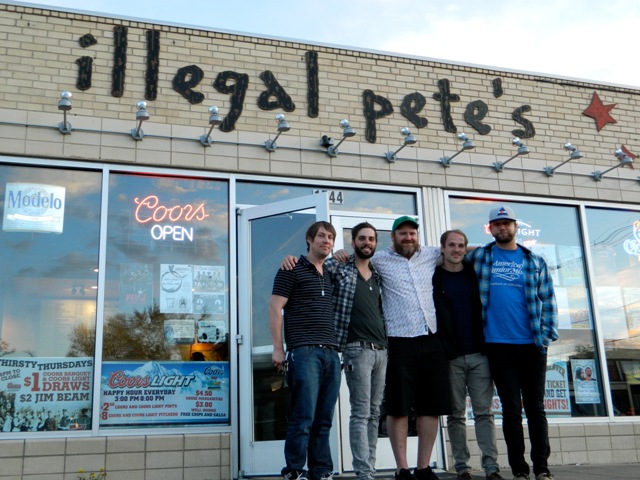
Meanwhile, out in Colorado, a fellow named Pete Turner has vowed to keep open his Mexican-style restaurants in the face of community protests. Again, the complaint is not about food but about words, in this case a single word.

Pete has been operating restaurants for 20 years and has six in Boulder and Denver. It is only recently that his trouble began.

The trouble is about the name of his restaurants: Illegal Pete’s.

It is felt by the protesters that the “I-Word” is offensive and hurtful and should be removed.

Pete’s inspiration for the name came in several forms. It’s a literary reference, he said, to a bar in a novel he read as a college student. It also pays homage to anti-heroes and the counter-culture, honors the nonconformist streak of his father (also named Pete) and keeps his own name out there as well.

Pete recently attended a community meeting with his detractors. He listened politely. Several days later, he announced he would not change the restaurant’s name.

I admire his guts.

You can’t please everyone and it’s ridiculous to try. You also can’t guarantee a person a totally inoffensive day, unmarred by an indelicate word, picture, conversation, hint or suggestion. Life as a whole is offensive. Isn’t that abundantly clear? We are an aggressive, acquisitive, violent and murderous species. Must we use the proper words in the course of our murdering?

I don’t think Pete was trying to offend, but if people are free to offend, at least we will know where they stand. To me, this is preferable to having people hide their feelings and seem like something they are not.

Sometimes all we need to do is shake our heads and continue walking – or eat somewhere else.

Milton Guevara, the Salvadoran general manager of an Illegal Pete’s in Boulder, took what I think is the right “c’est la vie” attitude. He said, “I’m Hispanic, and I’m very proud to be. People come to us because they love our food . . . The name doesn’t mean anything.”

In the end, if someone is providing you with good food, how can you not like and appreciate them? If you’ve got to picket, I say picket those who can’t cook.

By Lanny Morgnanesi
Why a normal person joins the Islamic State

26 Oct

Islamic State

In order to defeat an idea, you have to understand it.

Here’s an idea:

Millions of people who share a common heritage but live in different countries can unite under a single, benevolent ruler, with a single legal code that is fair and just, with common goals and a common view of the world. All will be treated equally; all will be protected. There will be no more bullying by dictators, thugs and secret police. There will be no more corruption. Factions will be unified. Life will be holy. There will be jobs and prosperity for all. The artificial borders imposed by outsiders will disappear. The very rich countries will now have to share with the poor countries.

This idea creates an entirely new world. It creates paradise.

The Islamic State of the Levant promises this to Muslims. It is why people leave their homes and go fight for it, and why towns welcome the rebels.

This is the idea that must be understood.

In America, we are prone to depicting enemies as psychopathic killers and leaving it at that. Rarely do we apply reason and ask: Why are so many people, normal people, following psychopaths?

Islamic State-mapPower-hungry monsters will always exist, but to a large extent they must earn the consent of the people in order to rule. The ambitions of most people rarely exceed the simple desire to raise and care for a family. If people think the monsters can help them do this, then the monsters will take on the appearance of saviors and be allowed to lead.

In nations where it is easy to raise and care for a family, this flirtation with monsters is incomprehensible. Nevertheless, it is real.

The monsters in Iraq and Syria now number about 30,000. The Iraqi army is almost 10 times larger. It is not the size of the fighting force that makes the Islamic State of the Levant strong. It is its idea of an enviable path through the chaos, tyranny and fragmentation within the Muslim world.

Much has been written about the rebels we know as ISIS, but almost none of it explains the group’s remarkable growth and success. The exception is a recent New York Times article by David D. Kirkpatrick, who did a simple thing. He went to Tunisia and asked people why they sympathize with ISIS.

Sufian Abbas, 31, a student sitting at a street café, must have given Kirkpatrick a look of disbelief before he answered with his own question, “Don’t you see it as a source of pride?”

Beheadings of innocent people a source of pride? No. The Tunisians believe the accounts of atrocities are fabrications of western media.

“The Islamic State is a true caliphate, a system that is fair and just, where you don’t have to follow somebody’s orders because he is rich or powerful,” said a fellow named Ahmed. “It is action, not theory, and it will topple the whole game.”

Kirkpatrick said people who have left Tunisia for ISIS territory often email friends and describe a better life. It is noteworthy that a good number of those attracted to the movement are unemployed and not particularly religious.

One who is religious and an ultraconservative said, “If I am going to get arrested and beaten here anyway, I might as well go where I can have an impact.”

The good news is that some Tunisians have returned home with reports that ISIS has not created paradise, that promises are false and joiners may be forced to do things against their will.

More will realize this, but by the time they do the Islamic State will have controlled more territory and be in a position to exert more force against the people who no want to give consent.

And this is why we must understand the idea of ISIS and come up with a better one — and soon. It must be a practical and convincing idea, one applicable to the culture. At all costs, we must avoid a rough and forceful attempt to sell western style democracy to Muslims. This will work about as well as ham at a bar mitzvah.

The big myth is that the world wants to be like us. Strategically, this kind of thinking gets us nowhere. It is much better to accept the undiscovered truth that other cultures can be with us without being like us.

Let’s begin at that point. From there I believe we can make progress.

By Lanny Morgnanesi

With so many in “deep poverty,” mere poverty is almost like the middle class

29 Sep

Philly poverty

If one of us, or many of us, falls behind, way behind, is it the responsibility of those ahead to pull up the less fortunate, the unfortunate and all those whom fortune has woefully forsaken?

Those living in and around Philadelphia should be giving this serious thought. In this city, the name of which means brotherly love, the economy, the culture, the dynamics, the thoughts and the ideals are too weak to sustain the population. What exists there represents gross failure.

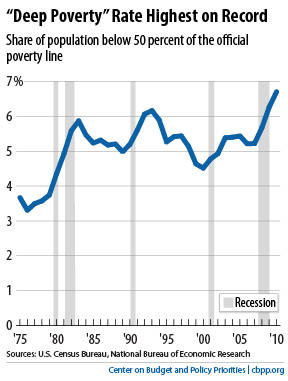
A new report says that 12 percent of Philadelphia residents live in something called deep poverty. Sadly, the times have forced us to look beyond mere poverty, which in Philadelphia is 26 percent.

The city, which I live outside of, ranked highest in deep poverty when compared to the nation’s 10 biggest cities. Nearby Camden, across the river in New Jersey, is not among the biggest and wasn’t ranked. But it has a deep poverty rate of 20 percent and a poverty rate of 43 percent.

From my little cloister, that’s difficult to even imagine.

Deep poverty chartAll these figures come from the U.S. Census’ 2013 American Community Survey, which was recently released.

By definition, a family of three is in poverty if it lives on $20,000 a year. In deep poverty, three survive on $10,000 a year.

In terms of sheer numbers, there are 184,000 people in Philadelphia who are clinging to its lowest rung. Alfred Lubrano, a staff writer for the Inquirer, said that’s about the size of cities like Tallahassee, Florida or Salt Lake City, Utah.

It strikes me as being post-apocalyptic.

But I almost never go to the neighborhoods were the 184,000 live. Camden to me is like Mars.

Still, I can’t help feel as if people like me have somehow failed those in deep poverty, even though many have failed themselves.

In any group, on any place in the world, there are people who do well and people who do not. There are those who need no help and there are the helpless. Now and in the past, however, social units like Native-American tribes or New England colonies or even extended families would try to lift up those that some might describe as laggards. They would do so simply because the unit was a unit and felt responsible for its members. To some degree, we do this in America. We have networks of social services, we have churches and synagogues, and we have government.

Lubrano, the Inquirer reporter, interviewed a Philadelphia women in deep poverty. She is 42 years old, separated with three children ages 7 to 17. Born into an Irish-Italian family, she had dropped out of high school and worked as a cashier. According to Lubrano, she fell into depression and was unable to work. So the government provided her with disability payments of $8,880 a year.

This is a nice gesture, but not a solution to the problem.

So what is? With so many types of poverty, there probably would have to be an assortment of solutions, and even then many couldn’t be reached or helped or encouraged. But it’s for certain a studied, intelligent approach would reduce Philadelphia’s Tallahassee-size problem to perhaps a problem the size of Lost Springs, Wyoming, or Bozeman, Montana.

I lack the training, depth and insight of a social engineer, but one thing I’d like to see in every poor neighborhood is a “Factory of Last Resort.” Employment would be open to all those in poverty and deep poverty who are looking for an out. They would manufacture a mundane but useful item, like brooms or soap. These factories probably would operate at a loss, but there would be incentives to keep loses to a minimum and inch toward profitability. Included with the job would be access to health clinics, day care, a dining hall and dorms.

We would be building the equivalent of an urban kibbutz.

After a time, management positions would go to employees who exhibit leadership skills, the ones who have learned and blossomed from the experience. Awakenings often come with restored dignity.

Those of us who are doing well would be encouraged to buy the brooms and soap as a sign of support. It would be a way for all of us to make our cities whole again and to keep humanity human.

And then, should we want to, we can safely and happily visit the once great and now great-again places like Camden, which spawned RCA Records and Campbell Soup. And the City of Brotherly Love can free itself from the embarrassing irony of its name. It can return to its Quaker roots of service, justice, community, self-improvement and independence.

I love a good city. This would give us more of them.

By Lanny Morgnanesi

Fran Lebowitz – a true New Yorker talking through the cheers and boos

31 Aug

Lebowitz portrait

Fran Lebowitz is a comic writer who has a difficult time writing. So instead, she speaks.


She’s the quintessential New Yorker. She loves her town. She celebrates it and it celebrates her. Real New Yorker’s like people with opinions – brash, bold ones – and brash, bold opinions are Lebowitz’ chief currency.


Her Grade A conversation makes her popular and in demand. She’s simply fun to be around.


waverly signI never met her, but her charismatic magnetism is on display in a documentary entitled, “Public Speaking.” The film is directed by her friend, Martin Scorsese. Much of the footage is of Scorsese and Lebowitz sitting and talking in her hangout restaurant, The Waverly Inn in the West Village.


<iframe width=”560″ height=”315″ src=”//www.youtube.com/embed/uLceaQuFyQE” frameborder=”0″ allowfullscreen>


In the film, Lebowitz complains that New York has gotten boring. The grit and nastiness she liked disappeared when the city cleaned up to attract tourists. Especially sanitized was Times Square, an area Lebowitz says no self-respecting New Yorker ever visits.


A second trauma that damaged New York, she says, was the AIDS epidemic. The city’s great culture, especially the performing arts, existed in such a high state only because of the demanding and enthusiastic audiences, mostly gay. In her view, the audience is just as important, if not more important, than the performers. The old New York audiences knew every nuance of ballet, opera, all of it. They wouldn’t tolerate a single flaw, and the performers were aware of this. But the caliber of the audiences fell as thousands of gay New Yorkers died of AIDS. This, she said, devastating New York culture and all of the performing arts.

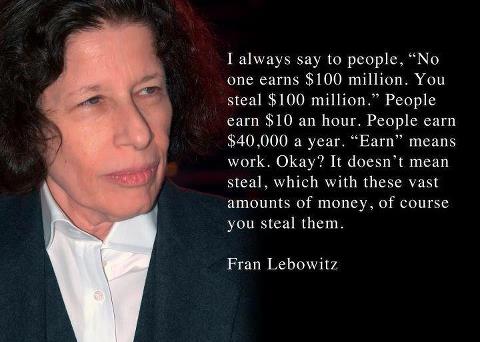
FranLebowitz-quote

Lebowitz has an interesting take on the gay rights movement. She said the best thing about being gay was you could avoid marriage and the military. Now, those benefits have been undone by foggy-headed reformers who were trying to do good.


The author of several books who has made countless public appearances, Lebowitz tells Scorsese of her most horrible experience on a stage. She was booed by over a quarter million people.


The setting was a massive rally of activists trying to convince leaders of the old Soviet Union to allow Jews (Lebowitz is one) to emigrate. Lebowitz was among the speakers who was asked to read a letter of appeal from one of thousands of oppressed Jews. But she also was asked to say a little something first.


Referring to a petition with thousands of signatures, she said something like:


“I expect the leaders of Russia to respond positively to these demands. I know I wouldn’t want this many Jewish women mad at me.”


And the boos rained down on her.


So be it. Nobody can take a joke anymore.

The theme of this blog at NotebookM is, “Speaking, because it is allowed.” What I love about Fran Lebowitz is she speaks. God bless her for that. And God bless Martin Scorsese for bringing us this film about her.


By Lanny Morgnanesi


Lebowitz Quotes


“Very few people possess true artistic ability. It is therefore both unseemly and unproductive to irritate the situation by making an effort. If you have a burning, restless urge to write or paint, simply eat something sweet and the feeling will pass.”


“Great people talk about ideas, average people talk about things, and small people talk about wine.”


“Romantic love is mental illness. But it’s a pleasurable one. It’s a drug. It distorts reality, and that’s the point of it. It would be impossible to fall in love with someone that you really saw.”


“All God’s children are not beautiful. Most of God’s children are, in fact, barely presentable.”


Big war, small peace – did Stephen Hawking really know the truth?

29 Aug

Cambridge3

I was waiting, so I picked up a book. Inside, just a few pages in, was a simple sentence with the power to uplift, encourage, and promote optimism.


It seemed to confirm the idea that there was light amid the dark; that somewhere below the horrid nature of mankind there was good trying to surface.

Sadly, that sentence – written as a statement of fact – is probably wrong. Oddly, its author is one of the world’s most intelligent men.


Hawking book jacket-bioThe book was “My Brief History,” the 2013 autobiography of physicist Stephen Hawking, the man in the wheelchair with the synthetic voice whose life is now a major motion picture called, “The Theory of Everything.”


The movie is more a love story than a science story. Still, its title comes from Hawking’s pursuit of a unified way of explaining all forces in the universe.

In the book, Hawking talks about his birth in Cambridge, England, home of one of the world’s greatest universities. His reason for being born in Cambridge is what uplifted me. His casual little sentence was a gentle piece of history I had never heard of; one of those marvelous pieces of information that suggests we maintain a small degree of civility even as we try to utterly destroy each other. It was like reading for the first time about the unofficial Christmas truce during World War I, when soldiers from both sides climbed out of the trenches, sang songs together, exchanged presents and even played soccer.


In Hawking’s case, the scene is World War II. The scientist said his family moved to Cambridge because the English and the Germans had agreed it was not to be bombed. Also under protection was Oxford, and in Germany the universities at Heidelberg and Goettingen.


I had never heard anything of the sort, but recognized that such an agreement could easily have been buried in the rubble of all the other destruction. Visualizing the leaders of these two warring countries shaking hands on this was heart-warming. I actually pictured them doing it.


But I guess even Hawking can get things wrong.


The fact-checking site Snopes.com said the agreement mentioned by Hawking had been an Internet myth. It’s likely to spread further now with Hawking’s book. Additional searches could not confirm the agreement.


Of course, Cambridge was without strategic value and bombs were precious, so it was much safer to be in Cambridge than in London. Hawking’s father probably moved the family there just to lessen the odds of being killed.


With many others doing the same, the myth of protection probably evolved and spread. I’m sure it made living in Cambridge a lot more comfortable.


Cambridge bombedMyth or not, in 2010 a BBC website ran a story on the 70th anniversary of the bombing of Vicarage Terrace in Cambridge. It has a woman named Barbara Wright remembering the incident. She was six. There’s a photo.


“Suddenly there was a huge noise,” she said. “The actual walls on either side came in and practically touched us.”


The story said nine people were killed in the attack, and that they were the first British civilian casualties of the war.


The fact that the myth exists even when there is proof that Cambridge was bombed shows the power of myth and the need to believe in good things.


If anyone can shed additional light on the myth, the truth, or Stephen Hawking, please comment. Perhaps the full story still remains to be told. Please don’t, however, write if you have info that the Christmas truce was a myth. Let’s at least leave that one in place. After all, they made a movie out of it.


The trailer is below, along with that for the new Hawking movie.


By Lanny Morgnanesi


<iframe width=”560″ height=”315″ src=”//www.youtube.com/embed/Salz7uGp72c” frameborder=”0″ allowfullscreen>


embed trailer

Hobos, happiness and the Big Rock Candy Mountain

24 Aug


Hobos

I used to think “Big Rock Candy Mountain” was a children’s song. It’s not. It’s a song by and about hobos that someone made into a children’s song.


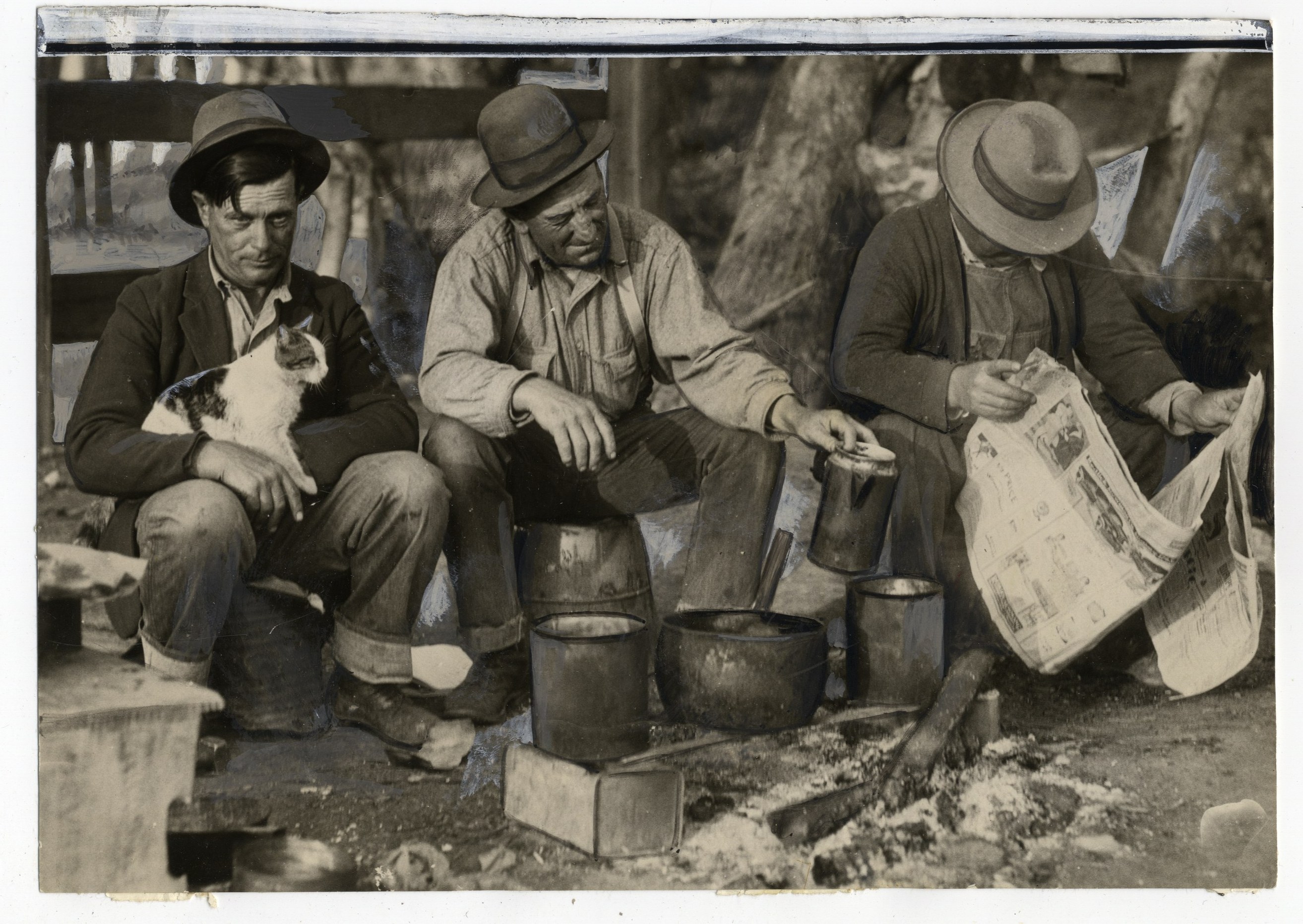
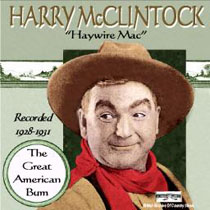
Harry McClintock, a hobo known as Haywire Mac, was the first to record it in 1928. It depicts a hobo’s paradise. You don’t see many hobos today but they were common and plentiful during the Depression.


The Coen brothers used the song in the movie, “Oh Brother Where Art Thou?” Recently, I watched the movie again on TV and gave a close listen to the lyrics of the song.


Harry-mcclintockIt describes a place where cops have wooden legs so hobos can out run them. The jails are made of tin so hobos can easily escape. On the Big Rock Candy Mountain, boxcars are always empty and lakes are filled with stew and whiskey. There are no short-handled shovels.


That’s the hobo’s idea of paradise.


After hearing the song, I though that if I were a hobo my paradise would have no cops and no jails. It would be a place where someone down on their luck could crawl out of their hole and make a good living; a place where even a hobo could be somebody.


What I failed to understand was that in my hobo paradise, a hobo would cease being a hobo. As I listened to the song again, it became clear that while hobos may want an easier life, they still want to be hobos.


Which raises the question: How true is this of other people and their lives?


Amidst our general hardship and discomfort, apart from our complaints and dissatisfaction with the small and the large, are we actually … happy?


As you think, consider this little story.


I once spent the Fourth of July at a country club. The fireworks were fantastic and the food was beyond good. There were hot dogs and hamburgers but also barbecued chicken and ribs, all you could eat. On a table the length of an interstate was an assortment of desserts.


In addition to bringing me, my host brought an African-American boy, about 12. He was from a Philadelphia neighborhood that was experiencing a rash of random shootings and killings. The little man was brought to the suburbs via a program designed to give poor children a break from the stresses of violence and poverty.

He was the only black person at the affair.


As I worked on my second helping of ribs, he sat with his head on the table, almost dozing off.


“Tell me,” I said. “Would you rather be here or home?”


He paused, apparently not wanting to seem ungrateful, then smiled and said, “Home.”


For him, happiness was the familiar, not the strange.


The familiar is comfortable and predictable. While I can’t document this, I have heard of a study showing that people, if given the chance to exchange all their problems and ills with the problems and ills of another person, would decline. If true, this is further evidence that no matter who we are, we like our lives.


Andy-Capp-Cartoon Pictures (1)It’s been said that England is defined by its class structure, and that people recognize and take pride in their station, be it high or low. They wear cloths and banners proclaiming their class – like the Jeff cap worn by the working-class cartoon character Andy Capp.


I don’t think we do that in America, but maybe I’m just blind to it. Either way, listening closely to “Big Rock Candy Mountain” has made me believe that America, for all its problems, is a land of contentment for both the haves and have-nots.


It’s so content that most don’t even vote.


While a peaceful populace has its advantages, it also has its dangers. Injustices are easily wrought upon the passive. Eventually, they create a destabilizing imbalance that will harm everyone – even their originators.


Income inequality is such an imbalance. In nations, stability and economic might are derived from a deep, viable, productive middle class, with a minimum of poverty and want. But when wealth is concentrated among the few, as has occurred in the U.S., the whole system is threatened because the many stop spending.


An alarm was sounded recently by Standard and Poor’s, the bond-rating company. It released a study showing that income inequality is responsible for a slowdown in the American economy. A headline on Fortune.com read:

More concentrated wealth means less spending than if money was spread to more people, according to a new report.


This realization, and others like it, is putting income inequality on the national agenda. Balance, to some degree, eventually will be restored. But it is because the elite acted, not the complacent.


I realize people get set in their ways; that they like routine and follow habits religiously. Still, there comes a point when routine is dispensed with in order to preserve dignity, honor and respect that were compromised by imbalance. At home, this happened in Ferguson, Missouri. Abroad, it happened in Gaza. The wise nation will avoid such flashpoints. More common is that they will act after the fact.


The better way, at least in the U.S., is self-action prior to the flashpoints.


We all need to get off the Big Rock Candy Mountain and take personal responsibility for our collective fate. Areas of concern are fairness, equal opportunity, equal treatment, social justice and civility. Legislation and tax policy must be designed for large segments of the population rather than small.


Key tools: Vocalization and voting.


Voting, real voting, is a powerful concept that has gone dormant in the U.S. We should try reviving it, just to keep the system fair and honest. Voting shows we are alive and paying attention.


There is nothing wrong with being happy and complacent. Complaisance, however, should never interfere with our ability to stop those who would chip away at our happiness.


Human rights, said Alexander Hamilton, are written “by the hand of the divinity itself.” They cannot, he said, “be erased or obscured by mortal power.”


By Lanny Morgnanesi


<iframe width=”420″ height=”315″ src=”//www.youtube.com/embed/JqowmHgxVJQ” frameborder=”0″ allowfullscreen>

Two quotes, one old, one new, about something that existed then and continues to exist now

12 Jul

Caradoc in Rome


The first speaker is Caratacus, the British tribal leader who resisted the Roman invasion in 43 AD. He eventually became a prisoner of the Romans. After a convincing speech prior to his scheduled execution, his life was spared. Caratacus was so impressed by the city of Rome that, in amazement, he said this to his captors, who conquered and occupied Britain:


“And can you, then, who have got such possessions and so many of them, covet our poor tents?”


Goldman-Sachs-CEOThis second quote was said by Lloyd Blankfein, CEO of Goldman Sachs, a man whose job it is to make abnormal amounts of money in any and all ways possible and some that are not possible:


“Too much of the GDP over the last generation has gone to too few of the people… . It’s a very big issue and something that has to be dealt with.”


In both cases, the powerful have taken and then tried to exercise at least modest restraint to make things a little better. And so it continues.

By Lanny Morgnanesi

You’re nothing, but suddenly you’ve got what everyone wants

7 Jul

Venezuelan prostitutes


Without judging, blaming, or saying I wouldn’t do it, the standard model for business is that those who dominate the financial markets rig them in their favor. That’s really not a shocker. The shocker is that once in a great while something occurs in the market place that benefits those of little means.


Right now the beneficiaries of fate’s largess are the prostitutes of Puerto Cabello, Venezuela.


Not long ago, Venezuela was flush with petro-cash and acted brashly and boldly on the world scene. Under socialist President Hugo Chavez, Venezuela even helped 400,000 poor Americans pay their winter heating bills. Chavez, however, is dead and gone and the Venezuelan economy has all but collapsed. People can no longer find things like cooking oil and flour in their local stores.


Spared from this hardship are the prostitutes of Puerto Cabello. This has not so much to do with the sex trade as it does with the currency trade.


An article by Anatoly Kurmanaev in Bloomsberg Businessweek explains the scenario.


The Venezuelan currency is the bolivar, and it has taken a nosedive. The official exchange rate is 6.3 bolivars per dollar but the going rate on the street is 71 bolivars and climbing. Either way, dollars are very hard to get. The government restricts their circulation.


But foreign sailors, the primary customers of prostitutes in Puerto Cabello, a port town, pay in dollars. This means the prostitutes now possess the most sought-after item in the country. Currency traders seek them out and lavish them with bolivars in exchange for their dollars. This enables them to purchase whatever they want on the black market.


By the way, the prostitution is legal but the currency trading is not.


Sailors are charged a flat rate of $60 an hour. With the new market conditions, one trick is equal to the monthly wage of some people. But the prostitutes also book hotels and taxis for the visiting sailors. They charge them in dollars and pay for the rooms in bolivars. This increases their salary another 50 percent.


So here’s to the horizontalists of Puerto Cabello. I think they deserve this unexpected turn of events. No word yet on anyone rushing in to deny them their windfall. That’s noble. I sense in the United States the good times wouldn’t last long. If something the poor had became valuable it would be taken away. If a commodity as unwanted as, say, rat droppings was needed to make a new cancer drug, rich investors would quickly buy up the dropping rights at all the infested slums of major American cities, leaving the tenants unable to benefit from a sad condition turned bright.


On this score, the Venezuelan elite seem much better sports than their American counterparts. The extra money earned by the prostitutes, incidentally, goes for things needed by their families. But as a prostitute named Elena points out in the article, she still has to sell her body.


By Lanny Morgnanesi


(Photo by Vladimir Marcano /Bloomberg)

A minor indiscretion that went unnoticed

24 Jun

Hot tub blur

I live in a picture-postcard town with lots of shops on and off Main Street. The merchants come and go and recent openings include a waffle-and-ice cream emporium, two vap parlors and a store made up like a pharmacy that sells “medicinal” cold-pressed juice for $7 a bottle.


People around here keep up with the shops, but there’s one that everyone overlooks. Instead of being parallel to Main Street, it’s set at an angle. When you round the corner right before it, your line of sight is directed elsewhere.


No one ever looks in that window. I know because I sat in it with two blondes wearing bikinis.


That was years ago.


The story begins at the county courthouse in the center of town. I covered the government there as a reporter. The important offices were on the fifth floor and were guarded by two sentinels sitting at adjacent desks that formed a sort of barrier. The sentinels were young, blonde and attractive. They looked alike and both had the same first name.


For the sake of this story, let’s say it was Donna.


To secure information or to speak with the people running the county, reporters had to get past the two Donnas.


On a day when I needed something special, the two Donnas were in a good mood and complied. In exchange, they demanded something of me.


“Tomorrow, meet us on Main Street at noon. Bring cheese, crackers, pepperoni and your bathing suit. We’ll bring the wine.”


They would say no more. As I think about it now, I really didn’t need to know more.


The two Donnas showed up as promised and walked me to the store that sits at an angle. We made the little turn and they explained.


“Our friend is renting this now,” one of the Donnas said. “He asked if during lunch we could help with his new business. He wants us to sit in there,” and she pointed to a steaming, redwood hot tub in the window.


This was a government town and I was fairly well known by all the government officials. Most took lunch at the local restaurants and would be passing by. While there was great appeal to the idea of being immersed in hot water with two almost-identical women who had the same name, I worried about my reputation. This was a town where people talked. I didn’t want them to be talking about me, especially when my job was to talk about them.


“Oh, c’mon,” one Donna said.


“Oh, c’mon,” the other Donna said.


And so I went on.


They were relaxed but I was tense. I watched the window as people passed, waiting for that moment when some authority figure – maybe a judge — would pause, stop, turn, point and show utter disgust. After a glass of wine, the tension seemed to boil off.


We were having a good time and had forgotten the world. But after a while we grew concerned – perturbed – that not a single person had noticed us. How odd. In an effort to draw attention, we frolicked in a more pronounced way, and still nothing. We yelled and waved, but no one waved back.


Was it us?


No, it was the store.


Hot tubs were popular around this time, but the friend of the two Donnas went out of business in just a few months.


I learned a couple of important lessons from this. First, have fun while you can. Second, before you open a business, for god sakes do a little research.


By Lanny Morgnanesi