Archive | Art RSS feed for this section

What good are crowds when you’re dead?

20 Feb

Mulberry Tree

Yesterday I stood in line with hundreds of people waiting to see a show by an artist who, while alive, sold only one painting.

The “Van Gogh Up Close” exhibit at the Philadelphia Art Museum was a collection of paintings done in the last four years of the artist’s life. Many were completed at an asylum where he was being treated for mental illness.

In the context of his time (the late 1800s), his work was revolutionary. It was unacceptable – almost a joke — to the majority of the established art world. Vincent Van Gogh, in his life, was a failure. It is a sad thing that greatness has to suffer in its time because it is so far ahead of its time.

The rest of us are so slow to catch up.

“This was done by a free mind,” my wife, an artist and teacher, said. “My young students can do work like this.”
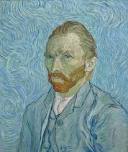
Van Gogh self-portrait

She did not mean they reach Van Gogh’s level of artistry, craft and creativity. She meant that like Van Gogh their minds are unshackled.

It takes time to shackle a mind, but in the end they get locked down pretty tight.

In many ways, the reaction to new art is like the reaction to great scientific discovery, which is said to have three stages:

  • First, people deny that it is true.
  • Then they deny that it is important.
  • Finally they credit the wrong person.

Well, at least Van Gogh got his credit … belated though it was.
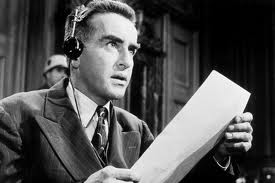
A truly great performance

12 Feb

Montgomery Clift in "Judgment at Nuremberg".

Each time this year, TCM – the cable movie channel – presents, “31 Days of Oscar.” I happened to have tuned in when it was showing the 1961 film, “Judgment at Nuremberg.” I had never seen it. From the beginning, it was easy to tell this film is not only very good, it is very special and unique, with a strong, unusual perspective and a universal message.

I had been expecting anti-German propaganda.

Directed by Stanley Kramer, the film is studded with stars: Spencer Tracy, Burt Lancaster, Marlene Dietrich, Montgomery Clift, Judy Garland – even a young William Shatner pops up. The story is about the post-war trials in Germany. Top Nazis have already been prosecuted, and the film focuses on the trial of three judges who approved Nazi-ordered sterilizations (read castrations).

What motivated me to write this post, however, was Montgomery Clift.

His performance on the witness stand as a not-very-intelligent sterilization victim overwhelmed me with its power.

I was never a fan of Monti’s, who looks very different in this film. I had seen him play roles like soldiers and boxers and never felt they were right for him.

As the sad little witness, frightened and damaged, he is incredible. His screen time is a mere 12 minutes.

Please watch. (the first minute or so is missing)

Here is the interesting part, as reported on the Internet Movie Database site: Clift was having an extremely difficult time remembering his lines, so the director told him to ad lib, and that his confusion would ad to the confusion the character was going through under cross examination.

God did that work.

Clift usually cut his hair short after each movie, and didn’t make another until it grew back. In this film, there was no time for it to grow back.

How hungry do you have to be?

8 Feb

gleaners

“The Gleaners,” by Jean-Francois Millet

I heard a little – not much – about a gleaner movement where volunteers seek permission from farmers to glean fruit and vegetables from fields, then use what they harvest to feed the hungry.

When I learned about the movement, my grandfather came to mind.

He was an immigrant, and his own gleaner. If he passed a fruit tree where apples were left on the ground, he would walk up to the door of the house and ask if he could have them. The gleaned food was in addition to what he grew in his own garden.

His son, my father, with disgust for modern life, once told me his father “fed his family on less than you spend today for paper towels.”

My grandfather was a proud, ingenious man who felt no shame in gleaning what would otherwise be wasted. If I were hungry – and I doubt he ever was – I’m not sure which I would find less tasteful: gleaning for myself or having others glean for me.

When technology kills art

29 Jan

"The Artist"

Chaplin

I never thought much about how technology can create art forms until I saw Laurie Anderson perform. I never thought much about how technology can destroy art forms until I saw “The Artist.”

In the movie, a popular star of the silent screen refuses to make talking pictures. He does so for artistic reasons. His protests aside, the studio and public really don’t want him anymore.

He’s out of work; out of a career; out of a life.

Laurie Anderson

The film’s main character is endearing, but vain and maybe not even a real artist. He is certainly not Chaplin, a historically great performer who for a time also refused to make talkies.

The old and new film mediums required such different skills. The new forced actors to give up almost everything. How could Chaplin, such a master, abandon everything he knew simply because someone invented a new machine? How does a person at the utter and absolute top of his craft retire an art form that not only made him rich and famous but defined him to the world?

It’s nearly impossible.

More important, how is it that the art consuming public allows a great art form to be retired?

Things Chaplin did are still being done by mimes and clowns and dancers and comedians. But they are not being done in such a concentrated fashion and they are not being delivered to such a mass audience.

I find this sad, as I found “The Artist” sad.

Still, the work of tech-art pioneers like Laurie Anderson makes me feel good, which is at least some compensation.

Invariably, if you give an artist a new form of expression, he or she will use it to create something so exciting that people will turn away from the past.

Ancient technologists, in pre-historic times, learned to make paint-like materials and then decorated caves with them. Since then, and perhaps even before, technology and art have been forever linked.

No one can really fault that. In a way, it’s life affirming.