Archive | Art RSS feed for this section

Artificial Intelligence as Literary Critic

26 Dec

By Lanny Morgnanesi

Artificial Intelligence recently gave me an opinion of my writing. It was more than flattering. The assessment, by the learning machine ChatGPT, made me seem almost brilliant. While I know I am not brilliant, I initially was quite proud of what it said about the unusual piece I had written. Then I became frightened. Then skeptical. Ultimately, I was confused.

My encounter with AI involved a short story that will soon appear in an anthology of mine. The story focuses on something ridiculous – a sweater that was vomited upon at a college party — but later, in contrast, asks deep philosophical questions and even doubts the nature and structure of contemporary fiction.

The story is called Sweater in a Jar. I believe it is entertaining, but I have no false hope that people will grasp what I was trying to accomplish. Last week a friend agreed to read it. Unsure of what he was reading, he ran it through ChaptGPT to get a better understanding of what it was.  Then he sent me this non-human literary review. I was stunned that the machine was able to comprehend, accurately and precisely, my intentions for the piece

Here are its comments:

The sweater’s fate serves as a metaphor for the elusive and fragmented nature of truth and memory, mirroring the way human experience is shaped by perception rather than objective reality. The story juxtaposes absurdity with profound existential questions, pondering whether art and life can ever reveal an “ultimate truth” or if their power lies in crafting meaningful illusions. Through the narrator’s musings on genetics and storytelling, the piece suggests that while science may define human potential, art provides the emotional and metaphorical lens through which we interpret and transcend that reality. It’s a meditation on how small, seemingly trivial events can carry profound, lasting impacts on identity and meaning.”

I’m a genius, right?

So, what’s with ChatGPT? How did it know? I decided to look deeper.

Taking very little time, I wrote a 500-word story with absolutely no literary merit. Then I ran it through ChatGPT to see if this time it would deem me an idiot, like it should. I apologize for burdening you with this, but here is that story:

A Weekend Visit

It was a bright and sunny day when Jerome Jeffries went to the train station to pick up his old college friend, Sidney. Jerome arrived at 3 p.m., just as the train was getting in from St Louis. Just in case the train was early, Jerome had hoped to get there at 2:30, but his older sister, Gilda, kept pestering him with questions about Sidney, and so he was later than he wanted to be. But it worked out.

Sidney took the train, a trip of two days, because St. Louis was snowed in an no planes were flying. He enjoyed the ride. “It was pretty cool,” he told Jerome. “No WIFI, but you could look out the window and see the American countryside. I didn’t know there were so many cows in Ohio.”

What Sidney didn’t tell his friend was that, while on the train, he received a compromising picture on his phone from Jerome’s sister.

From the train station they went right to a McDonald’s for a snack. Jerome had a Big Mac. Sidney had a Quarter Pounder with cheese. They both got large drinks and large fries.

“Do you think these fries are a little salty?” Sidney asked.

“They are,” Jerome said. “Cover up the salt with more ketchup.”

When they got to Jerome’s house, Sidney was introduced to everyone, mother, father, and sister Gilda, who wore a tight-fitting yoga outfit and, for some reason, did a series of bend-over stretches.

Sidney was shown his room and told to put his clothes in a dresser. He used three drawers, one for his underwear, one for his street clothes, and one for miscellaneous items like his brush and toothpaste. He wore his sneakers but put a pair of dress shoes by the bed, just in case they went somewhere fancy.

After a short time, the door to the room opened and Gilda entered. She was wearing a bikini and asked if Sidney wanted to go swimming. He paused and said no. “Your brother and I have lots of plan,” he said.

In the family room, Jerome and Sidney met up, and discussed their plans until Jerome’s mother served a dinner of meatloaf, mash potatoes, and peas. There was pie for dessert, but no coffee. Jerome’s family didn’t drink coffee.

After dinner, Jerome said, “Let’s go to a movie.” And they went to a movie. It was about time travel and alternative universes.

“Is this science fiction?” Sidney asked.

“Yes, it’s science fiction,” Jerome said.

“I like science fiction,” Sidney said.

“Everyone does,” Jerome said.

After the movie, the two friends walked the town streets.

“Tomorrow we will go to a ball game downtown, and I want to take you to a giant flea market where you can buy many things for under $5. Later, we’ve got to go to my favorite bar. There is so much to do.”

“I realize that,” Sidney said. “But sometime this weekend, do you think I can go swimming with your sister?”

Jerome paused. “Maybe. But only once. And for a short time. We’re going to be very busy.”

Ho hum, right? Here is what ChatGPT said about, A Weekend Visit.

This short story presents an intriguing narrative, though it is somewhat odd and leaves room for interpretation. Here’s an evaluation of its elements:

Strengths:

  1. Character Relationships: The dynamic between Jerome and Sidney is clear: they are old friends reconnecting. There’s an underlying sense of warmth in their reunion, especially with the mention of old college days and their shared history. Jerome’s protective nature towards Sidney also comes across—he seems to want to ensure their time together is meaningful, while Sidney seems more laid-back and open to new experiences.
  2. Humor and Absurdity: The story is sprinkled with moments of absurdity that add charm, especially the quirkiness of Jerome’s family members. Gilda’s unexpected behavior, like stretching in a yoga outfit and later wearing a bikini, feels odd but adds an element of intrigue to the family dynamic. Sidney’s casual comment about cows in Ohio and the throwaway line about the fries being too salty are small but effective moments of humor.
  3. Pacing and Structure: The story’s pacing is easy to follow. It moves smoothly from one event to the next, from the train station to McDonald’s to Jerome’s house. It has a natural flow, which helps keep the reader engaged. The decision to present the day-to-day experiences in a somewhat banal but detailed way (e.g., their meal choices or the description of Sidney’s packing) keeps the story grounded in reality.

Areas for Improvement:

  1. Underdeveloped Themes: The story doesn’t delve deeply into any particular theme. While there are moments of tension—like Sidney’s secretive interaction with Gilda—these are left unexplored. The plot feels like it hints at something more (perhaps involving Gilda’s behavior), but it never fully materializes. The story seems to build toward something deeper or more meaningful, but it doesn’t follow through.
  2. Character Depth: Jerome and Sidney’s personalities are sketched briefly, but they don’t evolve much throughout the story. The most significant development is Jerome’s brief internal conflict about Gilda’s behavior and his protective attitude toward Sidney. Sidney, on the other hand, remains mostly passive—he enjoys the trip, mentions some trivial observations, and asks about swimming with Gilda, but there’s little else to make him stand out as a fully realized character. This could have been an opportunity to explore their relationship more or to introduce a deeper tension between them, but the focus remains surface-level.
  3. Ambiguous Relationships and Subtext: The interaction between Gilda and Sidney raises questions that go unexplored. Sidney’s comment about wanting to swim with Gilda could be read as a subtle hint at something more, but it’s left hanging in the air. Gilda’s strange behavior (stretching in a yoga outfit, wearing a bikini) feels unmotivated and makes the reader question whether there is some unspoken tension between her and Sidney, or between her and Jerome. Without exploring this further, the reader is left with an unresolved and somewhat uncomfortable sense that there’s more going on than is revealed.
  4. Tone Inconsistency: The story seems to straddle different tones—there’s an almost slice-of-life casualness in the first half, but as Gilda’s actions become more peculiar, the story takes on a slightly surreal or uncomfortable edge. The narrative never fully commits to this shift, making the tone feel inconsistent. It’s unclear whether the story intends to be comedic, quirky, or darkly mysterious, which can leave readers unsure of how to engage with it.

Overall Impression:

The story succeeds in creating a comfortable, ordinary scenario that becomes increasingly strange and unsettling. There’s potential in the relationship between the characters, particularly the dynamic with Gilda and her interactions with Sidney, but the story leaves too much unexplored. If the narrative delved deeper into these relationships and played with the tension hinted at by Gilda’s odd behavior and Sidney’s secret photo, it could have been much more engaging. As it stands, it feels like a brief snapshot of a weekend that might have been more interesting with a little more depth and development.

In short: The story has charm and humor but could benefit from a stronger narrative focus and deeper character exploration.

***

ChatGPT found humor where there was none, found the pedestrian interesting, mentions charm that was absent, speaks of imagined subtext, and said its banality keeps it grounded in reality. Yes, there is a bit of well-deserved criticism, but it is too kind, a little obsequious. It reminded me of the guys in the office who sucked up to the boss.

 The review should have simply said this is juvenile, lousy, and idiotic. Yet it didn’t. ChatGPT addressed A Weekend Visit as a serious piece of writing, and wrote a serious review that would garner a good grade for any student calling the review his own. And I think that is what this is all about – providing a service for students uninterested in doing their own work.

My test confirmed there probably was no genius in Sweater in a Jar, and no genius in ChatGPT. It’s a tool, maybe impressive and useful, but only a tool. I can go to sleep tonight know it will not take over the world.

Still, I’m slightly fixated on this idea that maybe – just maybe — the banality in my deliberately bad story has – as ChatGPT suggests – meaning and merit. My banality was deliberate and written to be banal. Nevertheless, could there be something deep in my mind – the genius mind seen by ChatGPT – that unconsciously pushes me to use banality effectively, maybe as subtext, whatever that is? Can my stilted dialogue about a science fiction movie be considered, by intellectual and machines minds, as something equivalent to Andy Warhol’s globally famous soup can, which I never liked?

American poet T.S. Eliot is shown seated in his London Office on Jan. 19, 1956. (AP Photo)

Maybe there is a muse on my shoulder that won’t let me write badly, even when I try. ChatGPT, however, did get me thinking about the existence of critically acclaimed banalities. For example, T.S. Eliot, considered one of the world’s greatest poets, launched into a near-epic piece and used such common phrases as:

In the room the women come and go

Talking of Michelangelo.

… and …

I grow old … I grow old …

I shall wear the bottoms of my trousers rolled.

… and my favorite …

I have measured out my life with coffee spoons.

Admittedly, these are much better than, “Do you think I can go swimming with your sister?” but I’m beginning to realize I might have something that I didn’t know I had.

I’m going to be patient about Artificial Intelligence and see how it all plays out. If ChatGPT starts buying and recommending books based on its own reviews, I should be in pretty good shape as a writer. That’s a future to look forward to.

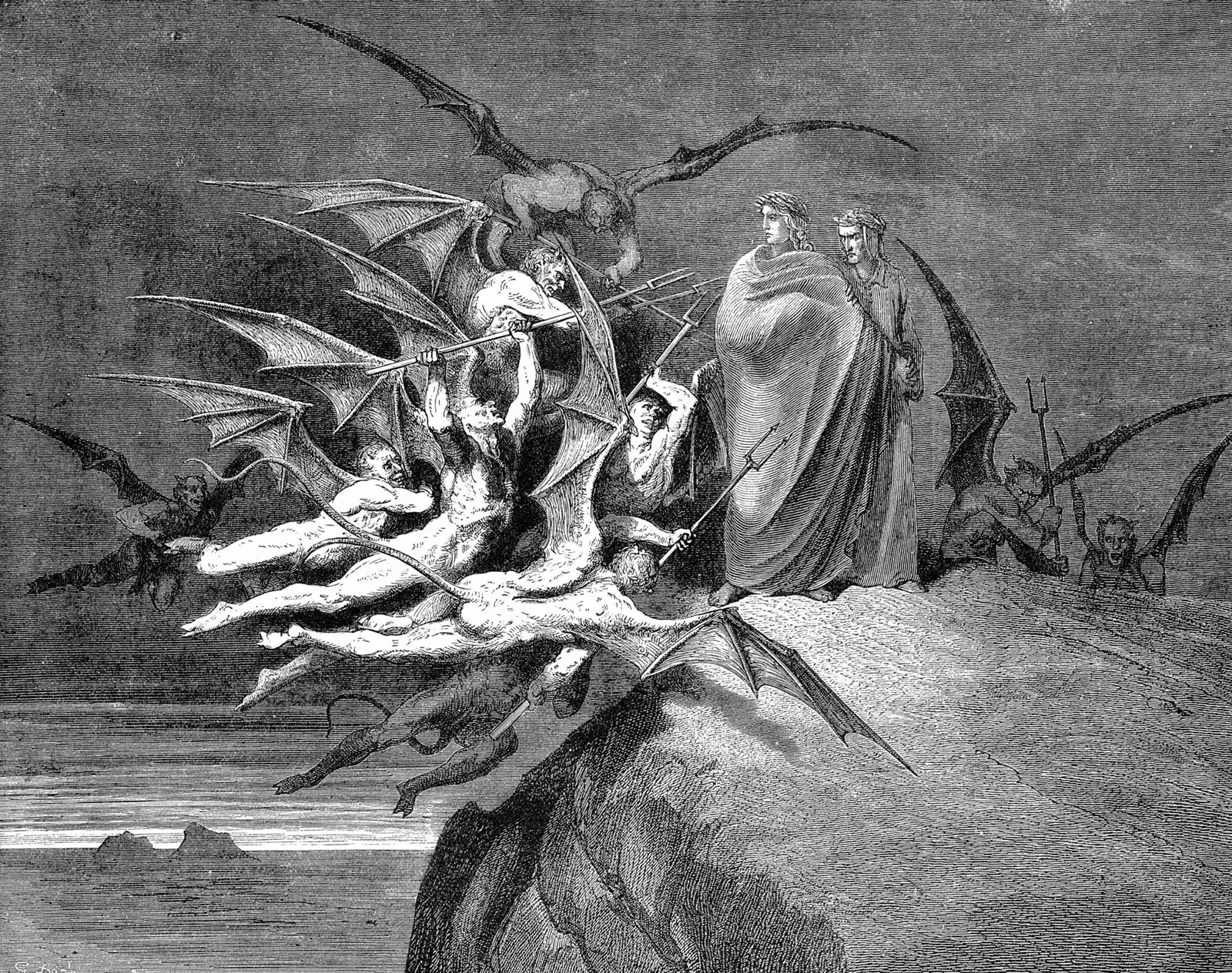
The Divine Comedy: Hard to Understand After 700 years

8 Jun

By Lanny Morgnanesi

In 1990, I wanted to name my new-born son after a writer, or at least an Italian. In the end, we named him after an Italian writer. Dante Alighieri. Just Dante. Not Alighieri. And because of this, I vowed to read Dante’s most famous work, the acclaimed Divine Comedy, written between 1308 and 1321 and divided into three parts, Inferno, Purgatorio, and Paradiso. When I was gifted by my young son with a nice leather-bound copy, I let it sit on the shelf to marinate. Or maybe I was just intimidated. When I decided to open it, it wasn’t there. Lost forever.

         Thirty years later, I am reading a free, digital version, an 1867 translation by poet William Wadsworth Longfellow. It is considered one of the best. By coincidence, at this very same time, PBS is airing a series on Dante and The Divine Comedy. The series is easy. The book is hard.

 You can’t just read the book You must look things up … constantly. There are scores of other books and websites to help with this – understanding the references, the personalities from history, the Greek and Roman legends, the pagan gods, geography, and so much more — and still it remains hard.

         The work is considered one of the finest in all of literature, even 700 years after it was published. I find this remarkable because I’m certain Dante wasn’t writing for us. For him, in my estimation, it was a strictly contemporary work aimed at a small audience, the people of his native city, Florence. I drew this conclusion because with the billion who have died and gone to hell, Dante, during his visit there, run into about three dozen people just from his little part of the world. There are others, like Ulysses, Mohammed, and lots of classical Greeks and Romans. But for Dante, hell was very much like old home week.

His encounters include those with Florentines whom history remembers, as well as some whom history never knew. A few were involved in provincial scandals (like the two adulterous lovers inspired by the romance of Lancelot and Guinevere, who were murdered by the woman’s brother) or committed poor behavior (like the glutton Ciacco). These characters no doubt were a source of 14th century tongue wagging. But now? For Dante to include them means he was not intending to entertain readers in the far future. He doesn’t even provide much context or background or explanations, assuming his readers know the full story. Often, there is just a casual hint, or the drop of a single name. For example, when Dante enters Purgatory, he is greeted by a person he obviously expects his readers to know. He never names the person, only the woman that person loves, Marcia, and the city he comes from, Utica. Apparently, his target audience knew, or were expected to know, that the person from Utica who loved Marcia is the famous Roman orator and statesman Cato.

         Confession: I did not know. I had to look it up.

         Obscure as he may seem to us, Dante wanted to reach the widest possible audience of his day, and that included the nobility and the common people. This required a revolutionary approach, and Dante was more than willing to take it. Instead of writing in scholarly Latin, he wrote in the vernacular or vulgate, basically street talk, the dialect of Tuscany. And because of this, and the influence of his work, a form of Tuscan eventually became Italian and the language of a unified nation. Aside from its poetry, this is one reason why The Divine Comedy is considered a literary landmark.

         If you read it closely, and don’t take its spirituality too seriously, you might find it quite temporal, an act of earthly vengeance by the author, who makes a habit of using the Inferno to inflict pain and punishment on his enemies.  Context is needed here.  Readers need to know that the poet had been a victim of Florence’s ceaseless civil war between the factions known as the Guelphs and the Ghibellines. He was a Guelph (although they later split as well), and when his group lost power, he was exiled from Florence and sentenced to death should he return. One of his enemies was named Farinata, a Ghibelline military leader and aristocrat. In hell, Dante conveniently entombs Farinata, for all eternity, in a coffin of fire.

         A writer can get great pleasure doing that.

At times, however, he could be merciful.  He spares a fellow name Buonconte by putting him in purgatory, allowing him to cleanse himself of sin and reach paradise. Buonconte was no friend of Dante. He was a military strategist who literally fought against Dante at the Battle of Campaldino in 1289. According to Dante’s telling, Buonconte accepted Christ at the time of his death, which I guess makes all the difference. So no punishment there.

         Aside from punishing his enemies, Dante places a few people he liked in hell, including his teacher, a known sodomite, but he expresses sympathy and sadness for him.

         Following the then-teachings of the Catholic church, Dante condemns to hell everyone in the world who was born before Christ, and therefore did not worship Christ. He places the virtuous Greek and Roman figures there, in the tame, unthreatening, limbo portion. These include Socrates, Plato, Aristotle, Homer, Horace, Cicero, Seneca, Ovid, and, of course, the poet Virgil, his underworld guide. There are always exceptions, and one of them is Cato, the Roman politician and stoic known for his virtue and defense of the old Roman republic. Cato is in purgatory, but he probably will not get to cleanse himself and go to heaven. Rather, Dante gives him a job of sorts. Cato is a greeter who welcomes and instructs the new souls.

         Although Dante, as the writer, condemns to hell those who followed the Greek and Roman gods, he shows immense respect for these deities, as if he, too, were a follower.  He seems to worship them and acknowledge them as if they were real. In fact, he punishes those who blasphemed against Zeus, the supreme god, known to the Romans as Jupiter or Jove. In one unusual passage, Dante appears to call Jesus Christ by the name Jove.

         Let’s get back to the punishments, which range in severity depending on the sin. If you were gluttonous, you are tormented with ceaseless rain. If you were lustful, there is ceaseless wind. For the really bad, you could be continually pecked by bird-like creatures, or forever bitten by dogs, or submerged in boiling blood, or be torn apart, or forced to stand head-first in stone bowls and endure flames upon the feet. While we think of hell as hot, the worst level is a frozen wasteland. In addition to all this, Dante, as poet, sometimes punishes with a type of irony known as “contrapasso,” (to suffer the opposite). False prophets who claim to see the future, for example, have their heads turned backwards on their bodies, so it is impossible for them to see what lies ahead. That kind of thing.

         Indeed, above all, The Divine Comedy is a poem, a work of art. And, at least in the Italian, it rhymes. It rhymes in such a complex fashion that, to keep their sanity, most translators of Dante don’t attempt to rhyme. Longfellow didn’t. The technique Dante used is called Terza Rima, or third rhyme. In the original Italian, each stanza is three lines. The first line rhymes with the third, then the first and third lines of the second stanza rhyme with the second line of the preceding stanza – and continues this way throughout. It’s ABA, BCB, CDC, DED, and so on.

 This means the poet never gets a fresh start. As he moves on, he must craft new information based on words he already has used. It’s difficult to imagine writing a graceful or even coherent passage using this technique, yet Dante did it.

         While I find The Divine Comedy utterly remarkable, I find it astonishing that Dante’s 14th century readers (and those who heard the poem recited by bards and troubadours) understood and appreciated the frequent references to Greek and Roman mythology. Dante uses them matter-of-factly and with confidence, as if he were communicated in the most simply, easy-to-grasp fashion. I sense he, while writing, was certain these allusions, descriptions and analogies would be as easily understood as the Tuscan version of “hello.” What is perplexing, almost depressing, is that these magnificent references, these beautiful literary devices, these moral tales of virtue, honor, tragedy, and comedy, are, for all practical purposes, impenetrable to us. Without the guide of a scholar, The Divine Comedy, in all its wonder, means little to us.

With the advent of modernism and the passing of the classical period, the elite and the common have lost the cultural bearings on which our civilization was built. And so we walk with half-empty souls, rejecting what had once been given to us, leaving behind the magic of our own humanity.

         I envy the cobbler, or the butcher, of the Florentine farrier who maybe didn’t have an education but was washed daily, through frequent and copious tellings, in the stories of genius.

         The concubine of old Tithonus now

         Gleamed white upon the eastern balcony

         This is from the purgatory section of The Divine Comedy. Very beautiful, but pretty much a casual throw-away line of introduction. What does it mean? It simply means: The dawn arrived. But today’s reader has no way of knowing that.

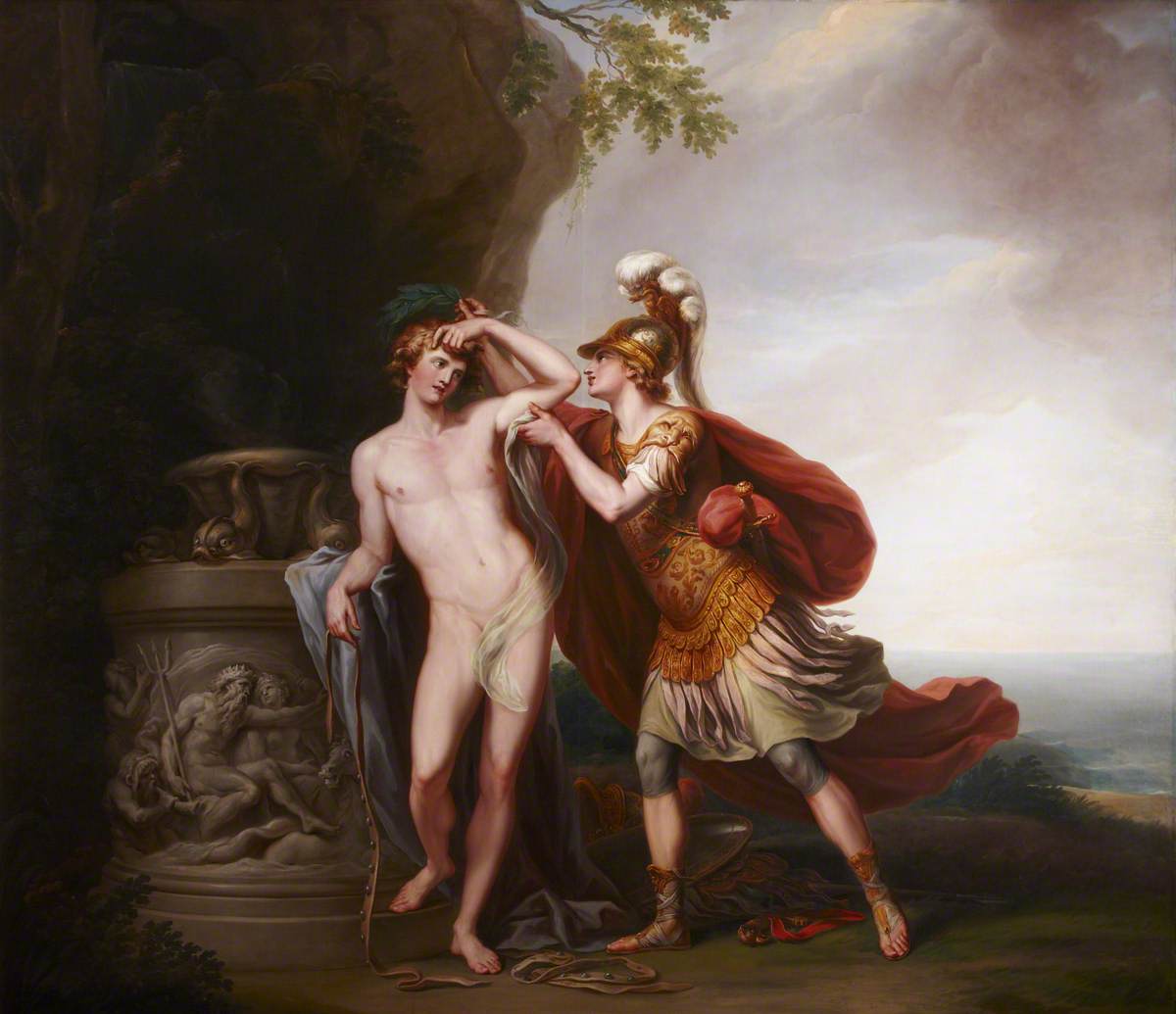
         Tithonus is the key to understanding this well-crafted little stanza. In Greek mythology, Tithonus was a Trojan prince. The goddess Eos (the Roman Aurora) fell in love with him, took him for herself, and asked the god Zeus to make him immortal. In asking, she neglected to specify that she wanted him to remain young. And Zeus, with a dose of trickery not uncommon when gods grant favors, allowed him to live forever but required that he age. To the distress of his mistress, he became decrepit.

Eos and Tithonus

Eos, the disappointed lover, is the goddess of dawn. She dresses in a saffron-colored mantle and arrives in the sky each morning on a chariot, casting out the darkness and making way for Helios, the sun god, to bring on a new day. Know that and read again:

         The concubine of old Tithonus now

         Gleamed white upon the eastern balcony

         Consider another simple passage that for us is complex. Most today are aware of the constellation Gemini. Most are aware that Gemini refers to twins. But most would not grasp the meaning of this:

Whereon he said to me: “If Castor and Pollux

  Were in the company of yonder mirror,

  That up and down conducteth with its light …

         It’s a reference to the heavens. Castor and Pollux are the twin brothers for which the constellation Gemini was named, so Dante here seems to be talking about the constellation. But the story of Castor and Pollux is deeper and illustrative of an unusual scientific phenomenon called heteropaternal superfecundation. You see, the twins are only half-brothers. They have the same mother but different fathers. Their mother was the mortal Leda. Castor’s father was the mortal king of Sparta. Pollux father was the god Zeus, who raped Leda. The story tells us that the ancients obviously knew two eggs, in rare cases, can be fertilized around the same time by two different males. And they also knew they could use the skies to education and inform.

Castor and Pollux

         I say and explain all these many things having read not even half of The Divine Comedy. Now, it is time to return to the pleasant drudgery of those pages.

         Before leaving, I’ll add one thought. It concerns the frigid ninth circle of hell, where a giant-sized Satan resides, frozen up to his waist in ice, waving his bat-like wings to maintain the cold. He has three heads and is chewing on Brutus, Cassius (the assassins of Julius Caesar) and Judas Iscariot. My question: With the much-later arrival of Adolph Hitler, which of the three would Satan spit out?

         Even hell can change after 700 years.

Lanny Morgnanesi is a journalist and author of the novel, The King of Ningxia.

A New Look at Charlie Parker’s Son, A Decade After His Death

26 Apr

By Lanny Morgnanesi

A writer may write, and may be appreciated, but for him or her there is nothing like, say, applause. So writers take satisfaction in notes sent by readers. I received such a note this week, a reaction to a simple piece I wrote 10 years ago, one that may not have been entirely accurate.

It was a sad piece, about the death of a man named Baird Parker, who at the time of his death worked quietly in a Lansdale, Pennsylvania, grocery store. In his life, Baird Parker had known fame, but it was not his fame. It was his father’s, a man named Charlie Parker, a saxophonist and one of the greatest jazz innovators of all time. The headline on my story was: “Is the son of a god a god? The problem with famous sons.”

What I wrote was based primarily on Baird’s obit and included a statement from Baird’s mother that his life, for the most part, was destroyed by the fame of his father.

That was 2014. Ten years later, on the anniversary of Baird’s death, I received an online message from his old roommate, a drummer. For a time, the two lived together with their girlfriends on Clinton Avenue in Doylestown, about five minutes from my home. The roommate told me that Baird’s life was not one of sadness, that there was success, joy, happiness; that it was a good life, one to be celebrated. It was a simple message but moved me greatly. Most important – and this was not in any obit – Baird was a musician and a composer. On the 10th anniversary of Baird’s death, I now share with you drummer Paul Bozzi’s touching account of his old friend.

Paul Bozzi

Lanny, I read your post about Charles Baird Parker. I was disappointed and I thought I would take this opportunity to fill in a few details on the 10th anniversary of his passing. His life was not a failure by any means. Here is what I know.

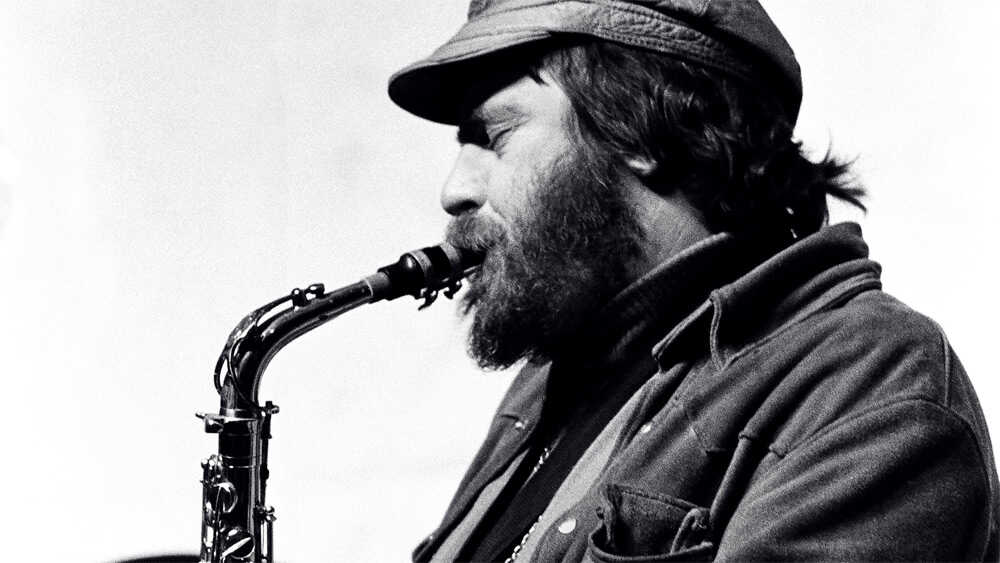
Charlie “Bird” Parker died in 1955 when Baird was only 3 years old. Shortly after that, Bird’s widow, Chan moved the family to Paris. Chan remarried another great saxophonist, Phil Woods. Baird studied guitar and created a unique style, slightly dark and moody with a relaxed groove. His guitar influences ranged from Jimi Hendrix to Django Reinhardt.  

In the early 70s, Baird moved back to Pennsylvania. I met Baird in 1973. My girlfriend had known Baird as a child when they both attended Ramblerny, a summer camp for the performing arts in New Hope, Pa., that has become a thing of legend. Other “campers” included the Brecker Brothers, Holly Cole and the recently passed Richie Cole, who after Phil Woods died had become the one remaining bearer of the bepop saxophone. Sadly, with his passing, there seems to be no successor to truly carry on that torch.

Phil Woods

We were living in Connecticut at the time and the best friend of my girlfriend was in a relationship with Baird, so we came down to visit for a weekend. The drummer in the band Baird was working with fell ill on Saturday and they asked me to sub for him. A few days later I returned to CT and picked up what I needed and moved to Doylestown, Pa. to join the band.

We moved in with Baird and his girlfriend in a two-floor apartment on North Clinton St. in Doylestown, where we stayed for a few years. During that time, we worked with a few bands, most notably, Ronnie Rinard and The Shadows.  Ronnie was a well-known Elvis impersonator, and I think he really did channel Elvis. Ronnie had a great voice and amazing stage presence, and in true form he was absolutely eccentric. From 1972 through 1977 we played some crazy joints as well as big clubs around Pennsylvania and New Jersey. Neither Baird nor I were big fans of Elvis, but we were young and happy, the money was good and the gigs were plentiful. Several nights a week, we would hop into his bright red Oldsmobile 442 convertible, he would quip “we’re off like a herd of turtles” and we would be on our merry way to another gig. Never a dull moment! If we ended up in a country joint where the clientele was rough and maybe a little racist about having a black man on stage, Baird would speak French into the mic, until his warm sense of humor would defuse the situation. He was so funny, and often had the band in stitches with jokes and witticisms about music and life in general. Often, at 3 am we would end up at Doylestown’s now-defunct Ed’s Diner (known by the regulars as “Dead’s Diner”) where we would enjoy the company of other late-night denizens and slam down a breakfast (or two sometimes)  before slipping around the corner to North Clinton St.

During that time, we also formed a group to play and record Baird’s original compositions. Unfortunately, all those recordings have disappeared. A great personal loss to me as the music was unique and now lost to the universe forever. In 1978, I took a gig touring with a band after which I returned to CT to start a family and lost touch with Baird.  Then around 2010 I went to Bucks County to ride the Delaware Canal bike trail. While there I looked him up and found him in Lansdale, Pa. where he had opened a music store, I believe it was called Birdland Music. He was doing quite well, owned a home and was living happily with a beautiful young woman and enjoying his life. Also playing with local musicians, many of whom had no idea of his lineage. I visited every summer for the next couple of years. Eventually, he closed the store and wanted to try something different. So he took a job as a baker at a grocery store. He enjoyed cooking and he wanted to learn about baking. We visited a few times after that until that day in 2014 when I received the devastating call from his girlfriend with the news of his passing. I was crushed. We had plans of the two of them coming to CT for an extended visit in the summer that year.

Charlie Parker

Baird was a joyful, humble, hardworking, extremely intelligent, talented and kind man. He was the son of a great innovator, and he had the same creative pulse running in his blood. He had been born into jazz royalty, and he accepted that and was proud of it. We talked about it a few times and you could hear the pride he had about his dad and his stepfather Phil Woods as well. Many famous jazz players knew him from his childhood, and he kept up with some of them. We once attended a Chick Corea concert where we were invited backstage and he was greeted warmly by Chick. He often spoke of his childhood relationship with Dave Lambert of the jazz vocal trio, Lambert, Hendricks and Ross. Dave was killed in an automobile accident in 1966.  Jon Hendricks’ telling of the story says that Lambert was a compulsive do-gooder and that he had stopped to assist another motorist in changing a flat tire. I can imagine Baird doing the same thing, he was just that kind of man.

Play on Baird, miss you brother!!

Paul Bozzi

After the virus, there will be decorating

20 Apr

Milan_Cathedral        

By Lanny Morgnanesi

Easter came and there were no large family gatherings or in-church services. There was only Italian tenor Andrea Bocelli, who sang for free while the world  listened.

Bocelli said his was not a performance. He called it a prayer and the event was advertised as Music for Hope.  It took place in the Duomo di Milano, one of Italy’s most breathtaking cathedral. Bocelli was accompanied by a musician playing the world’s largest pipe organ. Otherwise, save for the unseen camera crew, he was alone.

Inside the cathedral, the tenor sang a few piece of sacred music. People watching live on Youtube saw a pantheon of statues, stained glass, etchings, carvings, relief work, marble, enormous pillars, icons and more. As Bocelli sang, there were cutaways to the empty streets of great cities like Milan, Paris, New York and London. After 25 minutes or so, the blind singer stop singing and walked unaccompanied down a corridor, through an enormous door and onto the Duomo steps. There was no one outside in the locked-down city, the epicenter of the Coronavirus in Italy. The small country of 60 million has reported 159,000 cases and 20,400 deaths.

bocelli new

Andrea Bocelli

Bocelli stood on the steps and returned to his singing. In English, he sang the 18th century Christian hymn, Amazing Grace. There was no music at first. After a time, the production people layered in a full orchestra. When the song ended, there was silence, and the cameras shutdown. The prayer was over.

The concert lasted 30 minutes and, so far, has been watched by at least 37 million people.

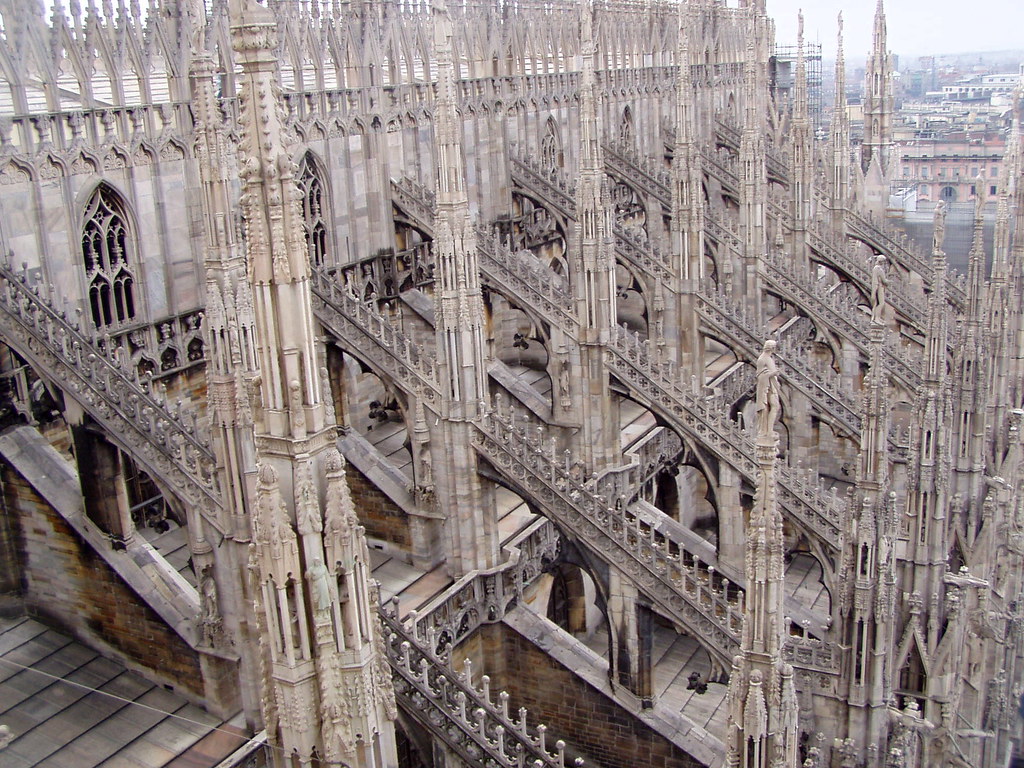
Andrea Bocelli’s music, as intended, gave us hope. Even more inspiring might have been the miracle and magnificence of the Duomo di Milano, the largest cathedral in Italy. Construction on it began in 1386, just a few decades after the Black Death killed 100 million people worldwide. Many believe the depths, damage and darkness of the plague is what spawned the creativity, commerce and optimism of the European Renaissance.

Duomo interior

Interior of the Duomo di Milano

The amazing thing about the Duomo is its utter completeness as a work of art. The virtuoso violinist Itzak Perlman has said that in the world of symphonic music there is no such thing as a casual note. With the Duomo, there is no such thing as a casual surface. Every piece of wood or stone has been slaved over and loved into a masterpiece. In Renaissance Italy, the greatest and most famed artists would fight for commissions to illustrate or decorate a surface. And great time would be spent on them. Lorenzo Ghiberti spent 27 years on the doors of the Baptistery in Florence. When Michelangelo saw those doors he called them “the Gates of Paradise.” The doors to Milan’s Duomo may not be as famous, but they are covered in jaw-dropping art work. Mark Twain, in Innocents Abroad, said this about the Duomo doors:

“The central one of its five great doors is bordered with a bas-relief of birds and fruits and beasts and insects, which have been so ingeniously carved out of the marble that they seem like living creatures —  and the figures are so numerous and the design so complex, that one might study it a week without exhausting its interest …”

            You look at a place like the Duomo di Milano and quickly comprehend that no such monument would be built today or could be built today. It’s a representation of a now unachievable achievement. The Duomo was a continuous work in progress for nearly 600 years. That’s how long it took to complete. The expense was enormous and funds were not always available. In 1805, Napoleon Bonaparte, about to become King of Italy, ordered the facade to be finished and said he’d pay for it. He never did.

Duomo doors

Door engravings, the Duomo di Milano

The art and culture of the Renaissance arose as great fortunes in banking and commerce were being made. Wealthy, influential families like the Medici and the Borgia possessed incomparable riches and used their fortunes on the arts. It was expected and something of a requirement. What was created was to be shared with regular people and offered up to God in thanks. Great new wealth also has been amassed in our era through the likes of Facebook, Google, Apple, PayPal and others. But it is used differently. There is good being done, but it’s a different kind of good.

Screenshot_2020-04-19 From Warren Buffett to Bill Gates How auto dealerships are attracting a whole new class of investor

Buffett, Gates, Soros

True, the rich create foundations to better mankind (and get a nice tax deduction for it). George Soros, Bill Gates and Warren Buffett are among a handful of billionaires who have contributed much of their wealth toward improving the human condition. The other side of this benevolence, however, are efforts to change the world in more entrepreneurial ways. The excessive profits of enormously successful companies, for example, might be channeled into no-profit or low-profit ventures, like building space ships or driver-less cars. Intentions are good and hopes for mankind are high, but the goal is ultimately money. Rarely do we see artistic creations or architecture wonders (the Brooklyn Bridge is an older example of this) that people feel part of and gravitate toward.

Apple is said to have spent about $5 billion on its campus for 12,000 workers in Cupertino, California, yet by any stretch it is not considered a great wonder of the world. (For that money is should be.) Today’s really impressive modern architecture is found mostly in the Middle East and Asia. The world’s tallest building is in Dubai. Eye-poppers are all over Singapore, Malaysia and Shanghai. Still, all this is so very different from building a church that takes 600 years to finish and is so magnificent that, even when surrounded by the sad solitude of a catastrophic pandemic, looking upon it makes us feel good.

Hearing Bocelli and seeing the Duomo I think of the Renaissance and whether a new one might be on its way. When our pandemic turns to dust, will we find a vigorous need to look upon life as new and to create things never before created, perhaps experience joy in ways that have been forgotten? Will we insist on engraving the mundane with the spectacular and seek enjoyment from even the routine?

graffiti-1

Graffiti art

Trying to fathom a modern day equivalent to the high art of the Duomo surfaces, I stumbled on a harsh and incongruous comparison  — inner-city surfaces covered in graffiti. These markings, considered art by the best of their creators, deface yet celebrate. They spring from repression but in a perverse way speak to optimism. Can anything about tomorrow be learned from the spray paint on walls, bridges and subway cars?

After the population decline of the Black Plague, wages for laborers went up (high demand, low supply) and the price of land went down (low demand, high supply). Inequality eased off. Opportunity abounded. The Renaissance (literally The Rebirth), and later The Enlightenment, burst forth, light from dark. So what happens to us and our culture when the all-clear sounds?

Duomo arches

The Duomo

This could be our big chance for change, unity and joint hope. Let Bocelli keep singing. Let the light shine each evening on the Duomo Di Milano. And let everyone else search out and lay claim to a surface in preparation for its decoration. The unadorned will no longer be accepted.


The Quiet Presence of Celebrity

17 May

PPM-blur

By Lanny Morgnanesi

A man who sold millions of records in his lifetime and entertained hundreds of thousands sat on his guitar case on the sidewalk in front of the funeral parlor. He was about three hours from his New York home and may have been waiting for an Uber to the train station. Everyone else either went home or got in their cars for the procession to the cemetery. They walked by him and around him. He seemed old, frail and alone.

The funeral was for my friend, who was also his friend. The deceased was accomplished but not famous. This was not a celebrity funeral. It took place in a quiet suburban town. About 150 people attended.

My friend had been many things in life, most notably a newspaper man. As a journalist he met famous people. He eventually struck up a friendship with a trio of folk singers who were wildly famous in the 60s and even after. The group was so well-known it popularized Bob Dylan songs in a way Dylan never could. As I entered the narrow hallway of the funeral parlor, I saw the musician, one of the two surviving members of the trio, trying to make his way through the crowd. Even at 80 he was recognizable to me. He was being unceremoniously jostled, as was I, but with a guitar in hand and extra age on his body he was finding it difficult to maneuver. I waited for people to treat him in some special way, to acknowledge him and greet him, but at that moment no one did. He eventually made his way to a room off from the viewing area where there was coffee and snacks.

After an hour or so, the service began. All seats were taken. People were standing. A few more chairs were brought in and the singer managed to get one near me. He sat down precariously. The hand holding his guitar was shaking.

The famous folk trio he belonged to broke up in 1970 and thereafter would frequently reunite, perform and even record. Years ago, my friend wrote a lyric about the Irish-English conflict and sent it to him. The performer wrote music for it, and his trio recorded the song – Fair Ireland – in 1990. After three eulogies, the singer took the microphone, talked about our friend, and sang Fair Ireland. His shaking hand had settled.

The song opens with the verse:

They build bombs and aim their pistols in the shadow of the cross
And they swear an oath of vengeance to the martyrs they have lost
But they pray for peace on Sundays with a rosary in each hand
It’s long memories and short tempers that have cursed poor Ireland

It ends with:

So we’re left with retribution it’s the cycle of the damned
And the hope becomes more distant as the flames of hate are fanned
Who will listen to the children for they’re taught to take their stand
They say love and true forgiveness can still heal fair Ireland
Only love and real forgiveness can still heal fair Ireland

There was gentle applause. The singer retook his seat, and the service ended.

I imagine that after a life of intense fame and a loss of privacy, achieving semi-anonymity in old age is welcome. Nonetheless, I felt deep sorrow for the entertainer, possibly a carryover from the sorrow I felt for my friend, but still altogether different. I fully understand that generations pass, that what once was popular fades, and that value and esteem can evaporate. But there is this hope that dignity remains intact. Seeing the musician alone, sitting on his guitar case, waiting for something, I wanted to offer him a ride as a way to preserve his dignity. That would have meant leaving my place in the funeral procession, so I didn’t do it.


From my car window I could see he was weary, worn and sad. In his early years, he had traveled the world. He married and then divorced. He had two children. There was a problem with alcohol and drugs. In the 70s he was arrested on a sex charge but pardoned by the president of the United State. I wouldn’t have felt so bad if he had just come down from New York with a friend, anyone, younger or just as old. It didn’t matter. Just someone there for support.

He most certainly has people in New York. I only wish I could have seen one. To me, that would have made his past life more meaningful, more joyful. As the long funeral procession pulled away, I was at least happy that my departed friend, highly successful, had his success elevated by intense love and caring. In the end, he was not alone, and had never been alone. This, one learns, is the enviable life.


The Old Myths Have Faded; New Ones Are Needed

11 Apr


Homer

Homer, the blind poet


Zeus, most powerful of the Olympic gods, is the protector of guests. Remember this when you sit down at diner with enemies.


An ancient Greek tradition requires you to be hospitable to all who visit under your roof, be they friends or enemies. This honored and revered tradition is known as Xenia. If a guest is not treated properly, Zeus could intervene on their behalf.

abduction-of-helen

The abduction of Helen

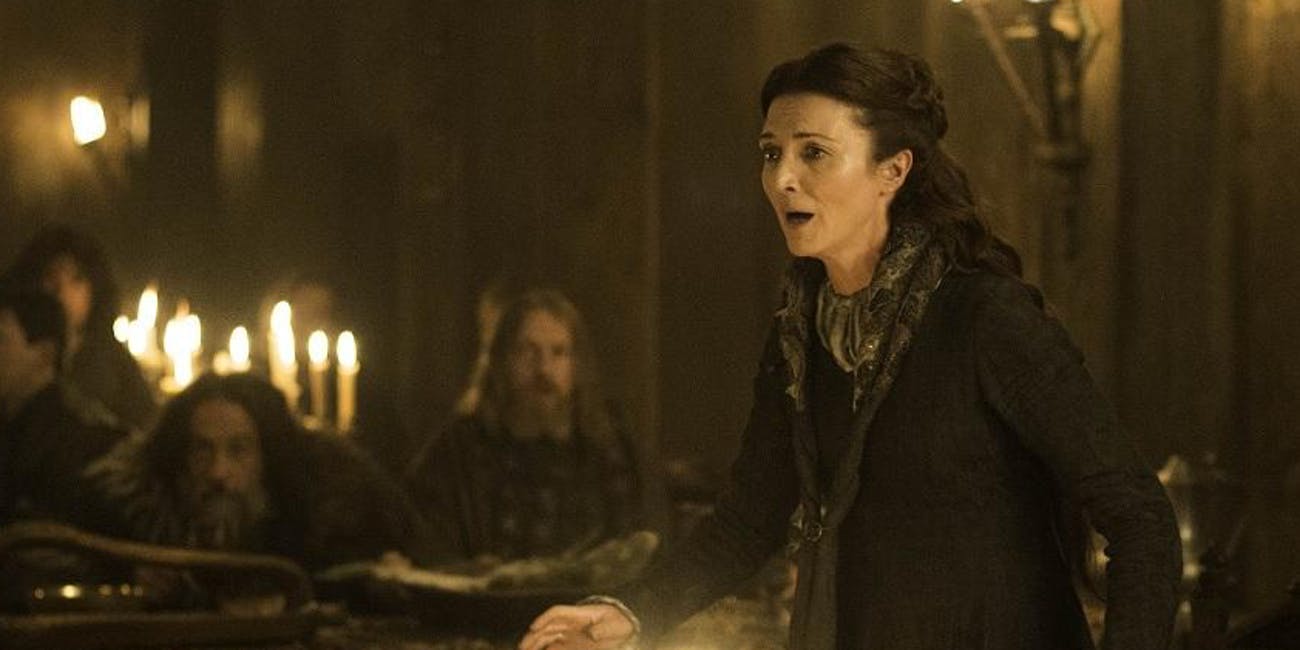
Paris of Troy ignored Xenia and ignited a war when he ran off with Helen, the wife of his Greek host.  In recent times, a ghastly violation of Xenia was depicted in the famous Red Wedding episode of Game of Thrones, where all guests were slaughtered.

Red-wedding

Shock at the Red Wedding

Xenia and other intricate facets of ancient Greek culture come down to us through myths. The myths are extensive and far reaching. They involve great heroics, tales of morality, flawed character, the foibles of gods and humans, desire, lust, misjudgment and so much more.  The myths also help explain the world and how it got here.

Pillars-of-hercules

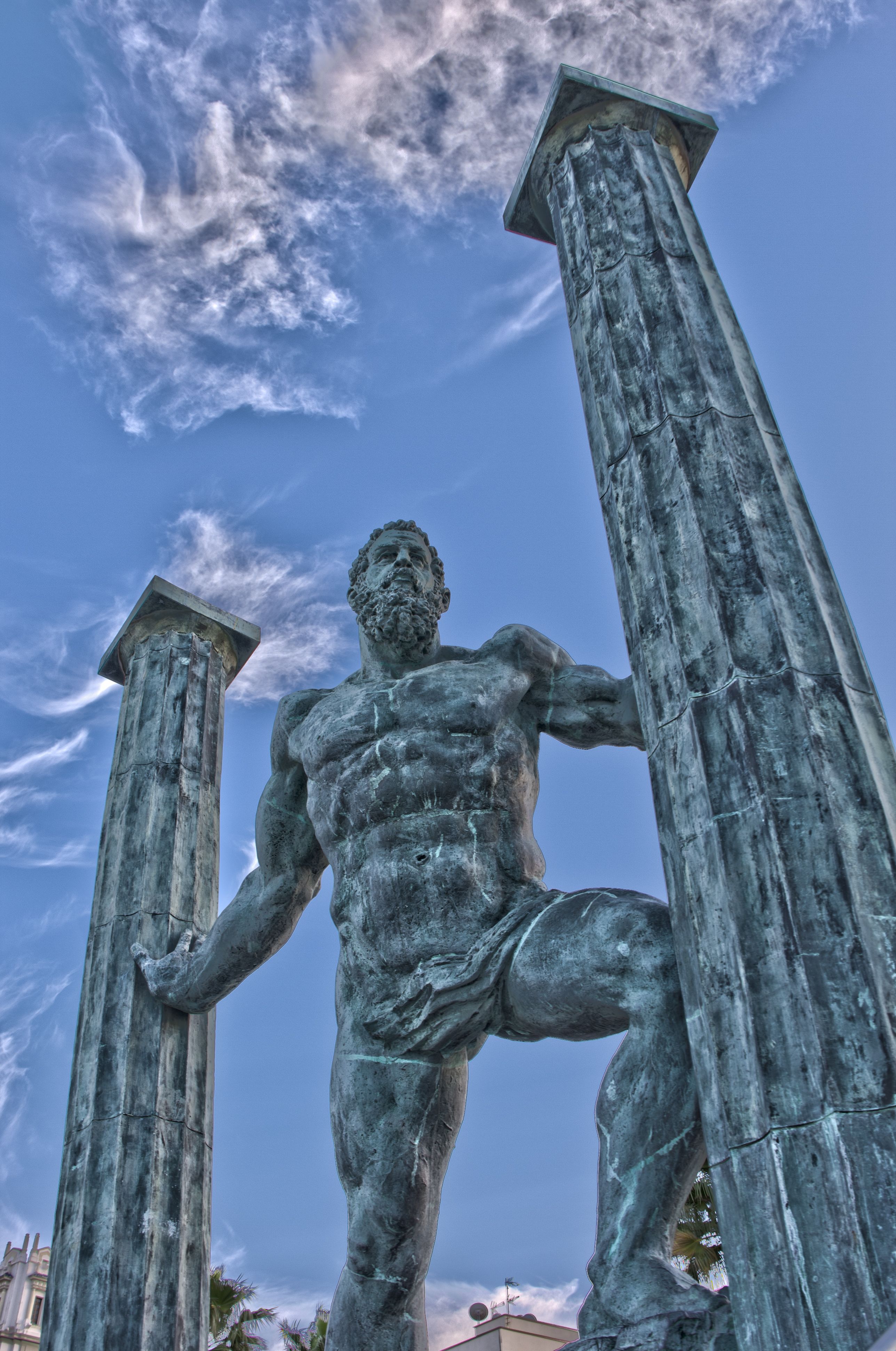
A statue honoring Heracles and his pillars

For example, it was Heracles (aka Hercules) who connected the Mediterranean Sea with the Atlantic Ocean. While traveling to the end of the known world, he reached an impasse. Rather than climb a mountain,  he broke though one and created a narrow strait to the ocean, leaving what we know today as the Pillars of Hercules. From ancient Greek stories we learn how peacocks got their colorful tails, why once-white ravens are now black, and how two people, told by the gods to build a small ark, repopulated the world after a great flood by tossing over their shoulders stones that turned into men and women.

Fight-between-lapiths-andcentaurs

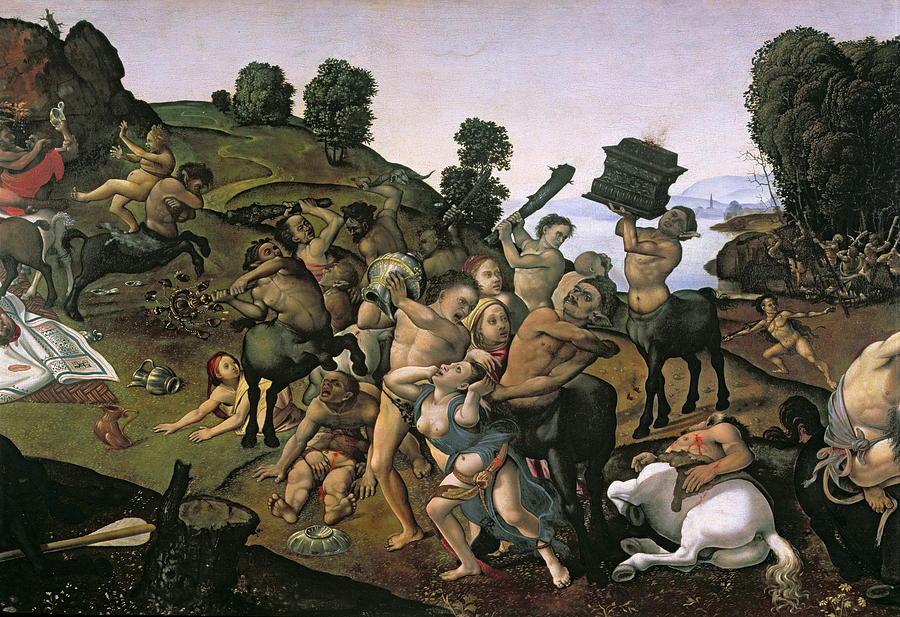
Drunken centaurs creating havoc

The importance of these myths to Greek culture, and later to Roman and European culture, is shown by the art they inspired. A piece of  pottery from the 6th century B.C. shows Bellerophon destroying the fire-breathing Chimera. A first century Roman sculpture is of baby Heracles strangling a viper sent by Hera to kill him. A 16th century painting by Piero Di Cosimo vividly captures the drunken centaurs creating violence at a wedding feast.


That artists desire to retell these stories speaks of their value, even if we don’t understand that value today. While every culture has its stories and myths, the Greek myths are undeniably special. Their depth and originality is unmatched. They took root in multiple cultures and have  persisted over centuries. When we watch Wonder Woman and Gal Gadot, we are being entertained not so much by Hollywood but by the ancient Greeks.

Wonder-woman

The warrior Amazons were a Greek creation

As I now reread some of these tales, I sense a current vacuum in contemporary western culture. With no disrespect to Gal Gadot, or Jason and the Argonauts, or Brad Pitt as Achilles, I don’t believe the legacies of Greek mythology are doing for America what the original myths did for Greece. I don’t think they educate, inspire and set a correct path for us. And I don’t think anything has effectively replaced them.


Meanwhile, we are being pulled apart by forces like politics, race and class.


In truth, the detailed and fabulous Greek legends never fully unified the Greeks. The Greek city states were almost constantly at war with each other. Yet there is something strong, powerful and wise about using engaging stories to teach people what they are and what they should be. That someone or some group was willing to do this speaks to the inner essence of a humanness that, without help, is prone to chaos. The goal of the storyteller, of course, is to civilize.

Moses

Moses leading his people

The Hebrew prophets had this intention when they wrote and compiled scripture for an uncultured, barbaric tribe. To a great extent, those prophets succeeded and the western world, thriving today in commerce and replete with interaction and exchange, is a reflection of their efforts. Even so, the impact of scripture is waning and its messages, like the Greek tales, are being lost or forgotten. What’s needed now are new insights, new stories, new guideposts. It is time for a 21st century Homer, a modern Moses, a fresh light cutting through an old fog – a Greek revival, of sorts, if you will.


Our biggest problem is we have forgotten what we are and what we can be. Teaching this anew,  we can first understand ourselves, then respect and value ourselves. Once we develop true self-respect and visualize a purpose, we can, as individuals, extend respect and dignity to others. Building a culture around respect and dignity will not only strengthen us, it will unify us. And it may do so in ways the Greeks never imagined.


So let the stories be told. Let the heroes flourish. Let us see virtue and valor prevail. Let us know all the things that lead to failure, disrepute and disfavor so a place is reserved for harmony and peace and a new meaning is brought to life.


By Lanny Morgnanesi


Acting like you’re famous and wishing you were: The Million Dollar Quartet

3 Sep

million-dollar-quartet2

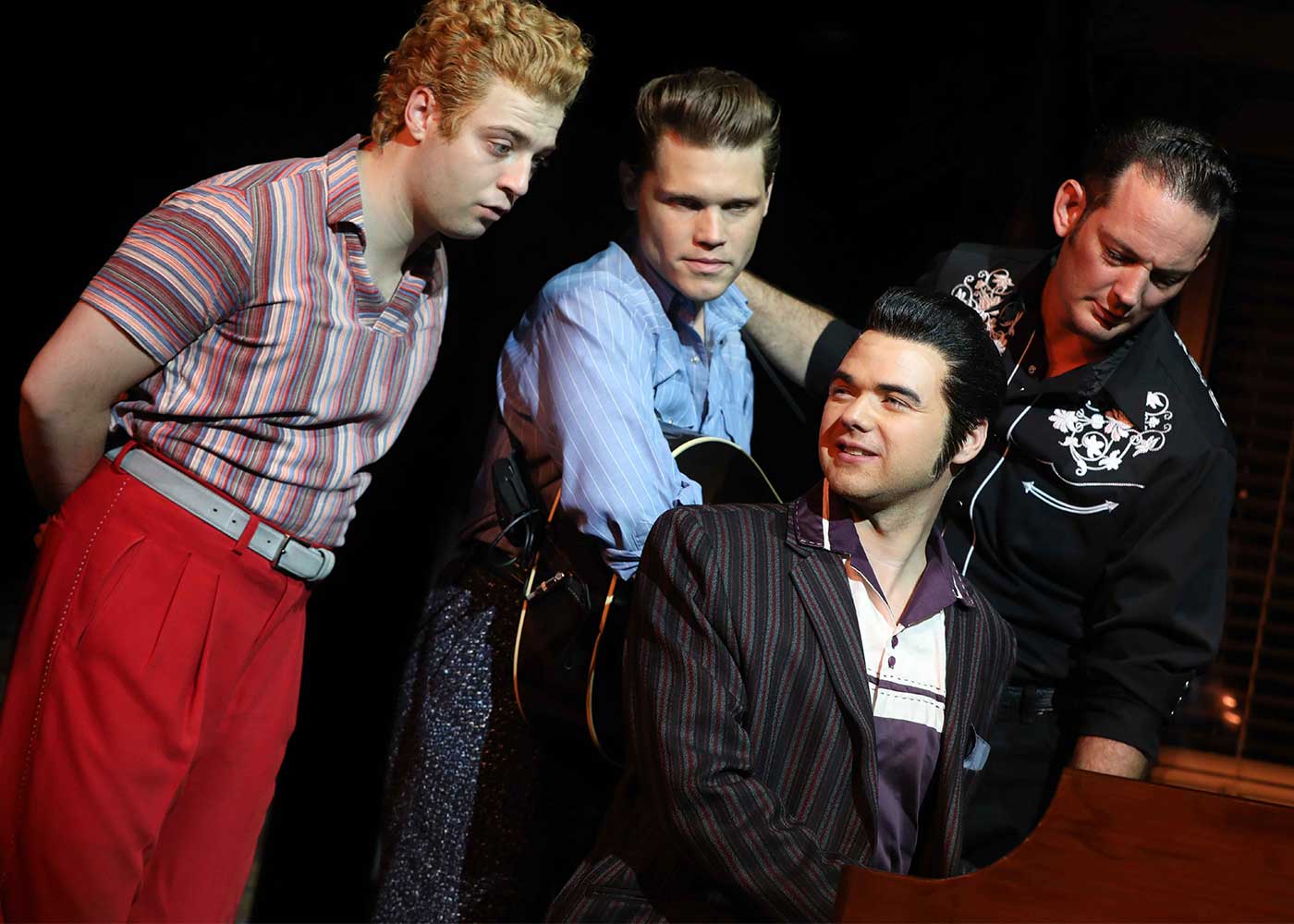
Actor/musicians (from left) Brandyn Day as Jerry Lee Lewis, John Michael Presney as Carl Perkins, Ari McKay Wilford as Elvis Presley and Sky Seals as Johnny Cash

If you’ve been to a minor league baseball game, you know it’s tame fun with a hint of sadness. What’s sad is that many of the wildly ambitious and talented players will never hear the roar of a real crowd or get the glory that accompanies fame.

For me, the experience is similar to seeing a Broadway show at a regional theater. The one difference is that on good nights the actors at a regional theater do hear the roar, a sound satisfying beyond money. Still, after the curtain falls, you’re in a bar wearing street clothes and looking normal and someone asks what you do for a living and you’re afraid they’ll laugh if you say you are currently performing on stage as Elvis Presley.

At the Bucks County Playhouse this weekend in New Hope, Pennsylvania, I saw not only Elvis but actors portraying Johnny Cash, Jerry Lee Lewis and Carl Perkins. This 50s-era group of rock and roll royalty once came together by chance at a small recording studio called Sun Records. For a few brief hours on Dec. 4, 1956, they formed what came to be known as the Million Dollar Quartet.

Million-Dollar-Quartet-hits-high-note-at-Bucks-County-Playhouse

That was the show I saw, “Million Dollar Quartet.” It was based on the recordings the four made under the guidance of legendary producer Sam Phillips. When I walked into the theater my first impression was that the set, a recreation of Sun Records, looked really good. Knowing little about what I was to see and hear, I was even more impressed when a Playhouse employee announced that all music would be live and performed by the actors on stage. Nothing had been prerecorded.

As I waited for the show to start, I assumed the audience would be kind but not overly enthusiastic, mainly because it was a very old audience. More than a few people had walkers and canes and I wasn’t feeling too good myself. When the music started playing – there are 22 numbers in the show – I was relieved that the reaction was, if not effusive, at least respectable.  The performances, however, were so good that younger people might have been up and hollering. Even so, I was confident the people who created the show were experts at pacing and that we weren’t supposed to really let go until the end. This turned out to be true.

A few points in general about the show, which continues thru September 29: Johnny Cash didn’t look much like Johnny Cash and Jerry Lee Lewis came off too much like Harpo Marx, but as a regional show is was worth the ticket price. As one of those so-called jukebox musicals, songs dominated over plot. A minimal story line involved Sam Phillips’ struggle over whether to sell out to RCA; Johnny Cash’s worry about telling Sam he was leaving Sun for Columbia Records; and Carl Perkins’ anger at Elvis for recording his song, “Blue Suede Shoes.”

milliondollarquartet_originalphotoresizedjpg

From left, the real Jerry Lee Lewis, Carl Perkins, Elvis Presley and Johnny Cash

In the end, everyone came together in mutual respect, understanding and friendship. This fresh harmony allowed the actors to finish in concert style with three strong numbers. Right before the concert, there was a touching bit that probably doesn’t sound touching if written about. Sam Phillips, the record producer, asks the four boys to pose for what he says will be an historic photo. They pose, Sam shoots, and the actual photo the real Sam Phillips took on Dec. 4, 1956 comes down from the ceiling. Everyone claps. Some tear up.

The concert consisted of  “Hound Dog” by Elvis, “Ghost Riders In the Sky” by Cash and “See You Later Alligator” by Perkins. These numbers were clearly full-tilt/high energy and the crowd, some with walker assists, finally got on its feet and went nuts. After “Alligator,” the boys proudly marched off stage and Sam Phillips urged us to demand an encore, which we already were doing.

The boys came back. They ripped it up and shook the house with Jerry Lee Lewis doing “Whole Lotta Shakin.” Sam Phillips, who so far had only dialogue and narration, coolly pulled out a harmonic and gave an incredible mouth organ solo.

It all ends, and we cheer loudly. This was the best part because you could see the actor/musicians break character, glance at each other in unexpected ways and silently say with expressions of delight and satisfaction, “Seems like we did pretty good tonight.”

The loving reception gave them hope that even if they are in the minors now, one day soon they could be called up.

By Lanny Morgnanesi

Something I recently learned

4 Jan

Rockefeller-finger

Former New York Governor Nelson Rockefeller, a presidential candidate and the grandson of one of the most successful capitalists in history, once commissioned Mexican artist Diego Rivera, a Marxist, to paint a fresco in the lobby of the RCA building in Manhattan. In that fresco Diego included a portrait of Lenin.

Rockefeller’s father, thoroughly embarrassed, had the artwork removed. With the money left over from the commission, Diego moved to other locations and painted the fresco over and over until his money ran out.

Artists Frida Kahlo and Diego Rivera

Artists Frida Kahlo and Diego Rivera

This incident is documented in a book by Richard Norton Smith called, “On His Own Terms: A Life of Nelson Rockefeller.” It also is shown in the 2002 Selma Hayek movie, “Frida.”

For younger readers who may not remember Rockefeller, he was the first divorcee to seek high office. He may or may not have been the first nationally known politician to die (at age 71) while in bed with a woman who was not his wife.

A Republican, Nelson was a big government spender and probably would not be accepted by his party today. He possessed enough courage and arrogance to flip the bird to a news photographer, as shown in the photo above.

By Lanny Morgnanesi

In the Old West, without GPS, if they wanted you, they’d find you

16 Nov

Cormac McCarthy

Everyone knows we’re being tracked. You leave a trail with credit cards, cell phones, cookies and social media. Cameras take pictures at traffic lights.Auto dealers hide GPS devices on the cars they sell. Even U.S. passports have a chip embedded in them.

But in the Old West, in the days of the horse and buggy – mainly because of the horse and buggy – it also was easy to track people. People back then left tracks, the old-fashion kind.

Blood MeridianI point this out after reading Cormac McCarthy’s 1985 novel, “Blood Meridian or the Evening Redness in the West.” In it, a band of characters travels endlessly across vast expanses of plains, desserts and mountains. They always seem to find each other. Their enemies always seem to find them, and they their enemies.

There are some major skills involved here, as Cormac suggests. But the basics are hard to miss. In today’s times, we forget about giveaways like smoke from a cook fire, dung and urine from animals and humans, the simple imprint of foot, hoof and wheel. Either way, it’s pretty much a sure thing that after crossing the dessert everyone is going to end up at the well or creek. A great place to wait for your prey.

While it is frightening to think that today’s phones reveal where we are and where we went, it’s also a scary thought that you could ride or walk for days and nights, in the heat and cold, possibly without water and food or even clothes, across the harshest terrain, and the person trailing you will find you and kill you in the most brutal fashion.

This lesson, among others, I learned from Cormac McCarthy and the book they call his masterpiece.

No country posterIf you don’t know McCarthy from his many novels – almost all of them filled with horrific violence – then you might know him from the films made from his books. Perhaps the most famous is “No Country for Old Men,” which in 2007 won the Academy Award for Best Picture.

Some see McCarthy as the equal or near equal of Faulkner. While I was amazed by “No Country for Old Men,” I’m embarrassed to say I had overlooked McCarthy, then and even after. I only came to know him after briefly watching a so-so TV movie with an unfamiliar name – one I don’t even remember — and hearing several pieces of brilliant dialogue.

I admire a good sentence and these were unlike anything I’ve heard on TV – with the possible exception of “True Detective.” They came from deep within some dark, mysterious, knowing soul.

I checked and found they came from Cormac McCarthy. And so I went on to read “Blood Meridian.”

If you read it, or even just look at it, you’ll notice some things right off. First, there are no quotation marks (even when there are quotes). Cute, but only idiosyncratic. Next, there are all these words you won’t understand because they are archaic and rarely appear anywhere. Doubly troubling are the passages in un-translated Spanish – the common tongue of Cormac’s characters, who are American, Mexican and Native American.

But the most obvious and disturbing thing about McCarthy is the violence. Nearly every page is covered in blood. I recall thinking that while the writing was terrific, the plot line had to come from a thoroughly sick and disturbed mind.

Glanton gang
Then I began to listen closer to the tone, attitude and motif phraseology of his characters. I came to realize this was not made up. This was all true. It was history, and the writer must have relied heavily on journals and first-hand accounts.

While McCarthy is not in the habit of discussing his work, I searched for confirmation of my theory and found it on good old Wikipedia:

The majority of the narrative follows a teenager referred to only as “the kid,” with the bulk of the text devoted to his experiences with the Glanton gang, a historical group of scalp hunters who massacred Native Americans and others in the United States–Mexico borderlands from 1849 to 1850 for bounty, pleasure, and eventually out of sheer compulsion . . . .


. . . McCarthy conducted considerable research to write the book. Critics have repeatedly demonstrated that even brief and seemingly inconsequential passages of Blood Meridian rely on historical evidence. The Glanton gang segments are based on Samuel Chamberlain‘s account of the group in his memoir My Confession: The Recollections of a Rogue, which he wrote during the latter part of his life. Chamberlain rode with John Joel Glanton and his company between 1849 and 1850.


Unlike many people, I try not to look for meaning in creative work. Beauty alone is enough for me, and “Blood Meridian” is beautiful. The best art is an open presentation of depth that allows the consumer to add the meaning. It really doesn’t come with it.

Still, my favorite parts of the book are the philosophical pronouncements of the character known as “the judge.” I sense he sounds a lot like Cormac McCarthy at a cocktail party. The judge accepts violence. In total, what the book does for me is calm my frustration at man’s inhumanity, convincing me – if only for a short time – that violence is NOT inhuman, but rather perfectly and intrinsically human.

I’ll end with a passage and invite comment.

“It makes no difference what men think of war, said the judge. War endures. As well ask men what they think of stone. War was always here. Before man was, war waited for him. The ultimate trade awaiting its ultimate practioner. That is the way it was and will be. That way and not some other way.”

Lanny Morgnanesi

Fran Lebowitz – a true New Yorker talking through the cheers and boos

31 Aug

Lebowitz portrait

Fran Lebowitz is a comic writer who has a difficult time writing. So instead, she speaks.


She’s the quintessential New Yorker. She loves her town. She celebrates it and it celebrates her. Real New Yorker’s like people with opinions – brash, bold ones – and brash, bold opinions are Lebowitz’ chief currency.


Her Grade A conversation makes her popular and in demand. She’s simply fun to be around.


waverly signI never met her, but her charismatic magnetism is on display in a documentary entitled, “Public Speaking.” The film is directed by her friend, Martin Scorsese. Much of the footage is of Scorsese and Lebowitz sitting and talking in her hangout restaurant, The Waverly Inn in the West Village.


<iframe width=”560″ height=”315″ src=”//www.youtube.com/embed/uLceaQuFyQE” frameborder=”0″ allowfullscreen>


In the film, Lebowitz complains that New York has gotten boring. The grit and nastiness she liked disappeared when the city cleaned up to attract tourists. Especially sanitized was Times Square, an area Lebowitz says no self-respecting New Yorker ever visits.


A second trauma that damaged New York, she says, was the AIDS epidemic. The city’s great culture, especially the performing arts, existed in such a high state only because of the demanding and enthusiastic audiences, mostly gay. In her view, the audience is just as important, if not more important, than the performers. The old New York audiences knew every nuance of ballet, opera, all of it. They wouldn’t tolerate a single flaw, and the performers were aware of this. But the caliber of the audiences fell as thousands of gay New Yorkers died of AIDS. This, she said, devastating New York culture and all of the performing arts.

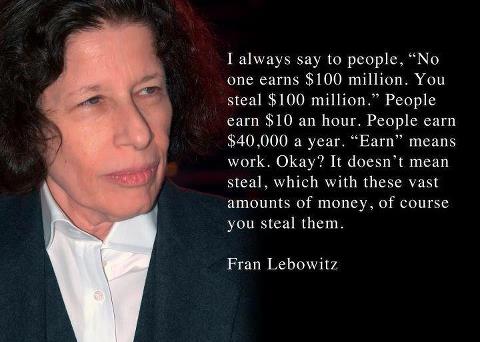
FranLebowitz-quote

Lebowitz has an interesting take on the gay rights movement. She said the best thing about being gay was you could avoid marriage and the military. Now, those benefits have been undone by foggy-headed reformers who were trying to do good.


The author of several books who has made countless public appearances, Lebowitz tells Scorsese of her most horrible experience on a stage. She was booed by over a quarter million people.


The setting was a massive rally of activists trying to convince leaders of the old Soviet Union to allow Jews (Lebowitz is one) to emigrate. Lebowitz was among the speakers who was asked to read a letter of appeal from one of thousands of oppressed Jews. But she also was asked to say a little something first.


Referring to a petition with thousands of signatures, she said something like:


“I expect the leaders of Russia to respond positively to these demands. I know I wouldn’t want this many Jewish women mad at me.”


And the boos rained down on her.


So be it. Nobody can take a joke anymore.

The theme of this blog at NotebookM is, “Speaking, because it is allowed.” What I love about Fran Lebowitz is she speaks. God bless her for that. And God bless Martin Scorsese for bringing us this film about her.


By Lanny Morgnanesi


Lebowitz Quotes


“Very few people possess true artistic ability. It is therefore both unseemly and unproductive to irritate the situation by making an effort. If you have a burning, restless urge to write or paint, simply eat something sweet and the feeling will pass.”


“Great people talk about ideas, average people talk about things, and small people talk about wine.”


“Romantic love is mental illness. But it’s a pleasurable one. It’s a drug. It distorts reality, and that’s the point of it. It would be impossible to fall in love with someone that you really saw.”


“All God’s children are not beautiful. Most of God’s children are, in fact, barely presentable.”